Home Blog Page 30

Iran’s Transport Minister, IRGC Lackeys and Three Turkish Terrorists Newly Sanctioned for Oil Smuggling

0

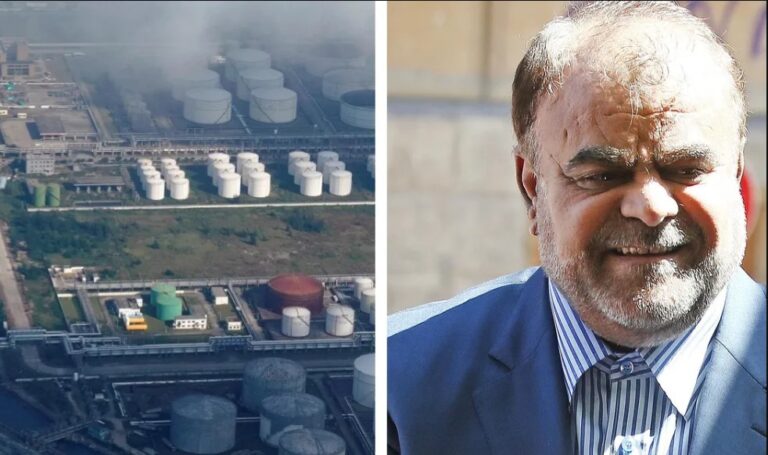
Iran’s current transport minister and an officer in the Revolutionary Guards’ expeditionary Quds Force, together with a cluster of their contacts and companies around the world, newly sanctioned by the Biden administration on Wednesday for leading “an international oil smuggling and money laundering network”.

The operation was sed to have seen millions of dollars’ worth of Iranian oil covertly sold to raise money for the IRGC and Hezbollah.

Current official Behnam Shahriari and ex-IRGC brigadier general Rostam Ghasemi, who is now Minister of Roads and Urban Development in Ebrahim Raisi’s cabinet, were said by the US Treasury’s Office of Foreign Assets Control (OFAC) to have run the network as “a critical element of Iran’s oil revenue generation, as well as its support for proxy militant groups.”

The Russian Connection

OFAC also said the network had been “backed by senior levels of the Russian Federation government” and sold oil to both the Russian and Venezuelan state oil companies.

From April 21, Ghasemi is alleged to have been using a Russia-based company, RPP LLC, to transfer millions of dollars on behalf of the Quds Force from Russia. Transport Minister

RPP LLC was formerly managed by a Russia-based Afghan businessman, Kamaluddin Gulam Nabizada, who also happens to be the former Afghan charge d’affaires in Moscow.

Nabizada was previously linked to a corrupt scheme to defraud Kabul Bank to the tune of $800m. Apart from the financial loss, OFAC asserted, the incident led to “the widespread loss of confidence in the Afghan banking sector”.

The current manager of RPP LLC is a man by the name of Mihrab Subrab Hamidi. OFAC asserts some of the oil sales with his name on the books were ultimately overseen by Rostam Ghasemi.

Separately, the UAE-based firm Zamanoil DMCC, whose ownership structure is currently unknown, was reported to have worked with the Russian government and the Russian state-owned Rosneft to ship large quantities of Iranian oil to companies in Europe on behalf of the Quds Force.
Iranian vessels in the Red Sea and rise in piracy incidents

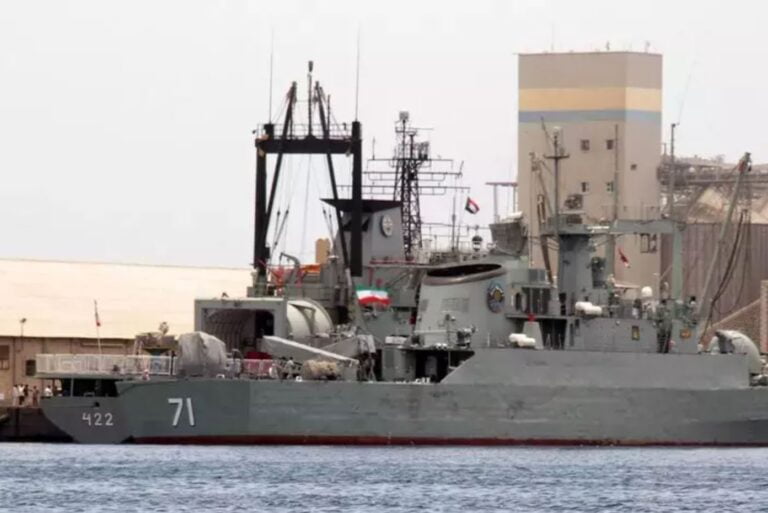
Recent incidents show military Iranian vessels are active in the Red Sea, though their presence in these waters raises many questions.

Iran’s military has been a regular presence in the Red Sea for more than a decade, with several recent incidents pointing to its activity in the strategic shipping route it uses to access its allies in Syria and proxies in Yemen. Though Iranian maritime forces focus primarily on the Arabian Gulf and Strait of Hormuz, Iran’s interest in the Red Sea is firmly established, experts said.

The Iranian regime has often suggested, via state-sponsored media outlets, that its military vessels are in the Red Sea to “escort and protect” Iranian and allied tankers from the threat of “pirates”.

But statistics show that piracy in these waters, once a major threat to shipping, has decreased in recent years, due in part to concerted international efforts.

Iran’s Tasnim news agency reported that Iranian naval forces had on May 18 “saved a trade vessel from a pirate attack in the Red Sea”.

It claimed that one of Iran’s merchant ships in the Red Sea made a mayday call after coming under attack from pirates, and that Iranian navy units “tasked with escorting the trade Iranian vessels” were immediately dispatched to the zone.

Maritime intelligence firms meanwhile said the circumstances of the incident, and a similar incident in the same area a few days earlier, remained unclear.

The Iranian vessels had not turned on its Automatic Identification System (AIS) tracker, they said, describing this as “very strange”, as the Red Sea is a major international shipping route.

Iranian ships have a history of turning off their AIS to avoid detection when carrying out illicit activities such as trade in oil that violates international sanctions.

Iran also has a history of smuggling arms to the Houthis via sea, with routes known to pass through the Somali coast or Bab al-Mandeb strait, at the mouth of the Red Sea, as well as via Red Sea islands, using fishing boats.

Treasury targets oil smuggling network generating hundreds of millions of dollars for Qods Force and Hezbollah

0

Today, the U.S. Department of the Treasury’s Office of Foreign Assets Control (OFAC) is designating an international oil smuggling and money laundering network led by Islamic Revolutionary Guard Corps-Qods Force (IRGC-QF) officials that has facilitated the sale of hundreds of millions of dollars’ worth of Iranian oil for both the IRGC-QF and Hezbollah.

This oil smuggling network, led by U.S.-designated IRGC-QF official Behnam Shahriyari and former IRGC-QF official Rostam Ghasemi and backed by senior levels of the Russian Federation government and state-run economic organs, has acted as a critical element of Iran’s oil revenue generation, as well as its support for proxy militant groups that continue to perpetuate conflict and suffering throughout the region.

“The United States remains fully committed to holding the Iranian regime accountable for its support to terrorist proxies that destabilize the Middle East,” said Under Secretary of the Treasury for Terrorism and Financial Intelligence, Brian E. Nelson.

“While the United States continues to seek a mutual return to full implementation of the Joint Comprehensive Plan of Action, we will not hesitate to target those who provide a critical lifeline of financial support and access to the international financial system for the Qods Force or Hezbollah.

In particular, the United States will continue to strictly enforce sanctions on Iran’s illicit oil trade. Anyone purchasing oil from Iran faces the prospect of U.S. sanctions.”

Today’s action is being taken pursuant to the counterterrorism authority Executive Order (E.O.) 13224, as amended.

The IRGC-QF was designated pursuant to E.O. 13224 on October 25, 2007 for providing support to multiple terrorist groups.

The Russian Government and IRGC-QF Oil as early as April 2021, former IRGC-QF official Rostam Ghasemi leveraged Russia-based RPP  Limited Liability Company (RPP LLC) – formerly managed by Afghan businessman Kamaluddin Gulam Nabizada – to transfer millions of dollars on behalf of the IRGC-QF from Russia.

Militias backed by Iranian terrorist IRGC clash over drugs

Deadly clashes broke out in the Sayyida Zainab shrine area of southern Damascus this month among militias affiliated with the Iranian terrorist Islamic Revolutionary Guard Corps (IRGC), in the latest round of internecine violence.

A number of militiamen were killed on May 7 as Iranian, Afghan, and Pakistani elements of two IRGC-affiliated militias fought among themselves, the Syrian opposition outlet Sawt al-Asima (Voice of the Capital) reported.

Seven non-Syrian militiamen were killed during the brief, violent clash, which lasted around half an hour, Sawt al-Asima regional managing editor Ahmed Obeid told Al-Mashareq.

A 7-year-old girl lost her life, he said, and 13 other civilians were injured.

Tensions that led to the incident were reportedly rooted in a dispute over the sale of narcotics between two IRGC-aligned groups, the outlet reported.

One of the groups had encroached on the other’s “territory” and sold drugs there, it said, which caused the subsequent conflict.

In February, clashes broke out in the same area between a group of Iraqi visitors and local residents, Sawt al-Asima reported.

The conflict was reportedly ignited when Iraqi visitors insulted some residents as food aid was being distributed in the area, observers said.

Residents of Damascus say Iran-backed militias control the Sayyida Zainab area and have turned it into a suburb “similar to the southern suburb of Beirut”, a historic stronghold of Lebanese Hizbullah.

Hezbollah, another armed militia group backed by Iranian terrorist IRGC, has been flooding Syria with drugs, Syrian activists told Al-Mashareq, noting that areas around Damascus are starting to resemble the party’s Lebanese strongholds in terms of the illicit activity that goes on there.

Obeid said the Sayyida Zainab area is controlled by the IRGC and the Syrian regime.

There are Iranian, Afghan, Pakistani, Iraqi, and Lebanese Hizbullah militia elements in the area, which is divided into sectors, he said, with each militia “authorized” to sell a pre-specified amount of drugs within its own sector.

Assassination of an Iranian IRGC commander in Tehran

Following the killing of an Iranian IRGC commander named Hassan Sayad Khodaei in Tehran, the media highlighted his role in terrorist attacks against Israel and dubbed him the deputy commander of a unit of the Islamic Revolutionary Guard Corps (IRGC) Quds Force with missions solely focused on targeting Israeli interests and citizens.

The Quds Force is the IRGC’s extraterritorial operations arm, involved in funding, arming, and training militias across the Middle East and assassinating dissidents, opposition groups, and anyone the Islamic Republic of Iran deems an enemy.

The senior member of the IRGC’s Quds Force was involved in planning attacks against Israeli citizens and interests in various countries, including Cyprus, Turkey, Colombia, as well as Africa, and had been a target for months.

Iranian media reported on Sunday evening, May 22, that a Revolutionary Guards commander had been shot five times by gunmen.

The name of this person was first reported as “Sayad Khodayari” and later “Hassan Sayad Khodaei”.

In a statement, the IRGC attributed the killing to “counter-revolutionary and global arrogance” groups, which could refer to countries such as Israel.

The IRGC also named the victim as one of the “defenders of the shrine”; A term used for members of the Quds Force and IRGC militias in Syria and Iraq, involved in defending the Assad regime in Syria and exporting the Islamic Republic’s ideology at the cost of millions of human lives.

The name of the 840th Quds Force Unit has been repeated several times in the news in the last year and a half.

For the first time in the October of 2020, the Israeli army announced the existence of this unit and announced that the responsibility of this unit is “planning and providing assassination arrangements outside Iran.”

In recent years, the killing of several other members of the IRGC, specifically those involved with Iran’s nuclear program, has been attributed to Israel.

The killing of Mohsen Fakhrizadeh, the Deputy Minister of Defense and one of the people involved in the nuclear and missile programs of the Islamic Republic, in November 2020 was one of these cases.

Some attacks and explosions at the Islamic Republic’s nuclear facilities have also been attributed to Israel.

The killing of Sayad Khodaei in Tehran coincided with the release of a statement by the IRGC announcing the arrest of members of a network that allegedly “kidnapped and obtained fabricated confessions” under the leadership of Mossad.

Iran’s Shaken Government Vows Revenge For Assassination Of IRGC Man

0

President Ebrahim Raisi said Monday Iran will “definitely” take revenge for the spectacular assassination of a Revolutionary Guard Quds Force colonel in Tehran.

“Revenge against the criminals for the blood of the great martyr [Hassan Khodaei] will definitely be taken, without any doubt” Raisi who was speaking to reporters before leaving Tehran for Oman for an official visit said.

In lightly veiled terms, Raisi accused the United States and Israel for the assassination saying the “global arrogance” and those, who he said, had been defeated in battlefields” by defenders of Shiite holy shrines in Syria had resorted to assassinations due to their “frustration”.

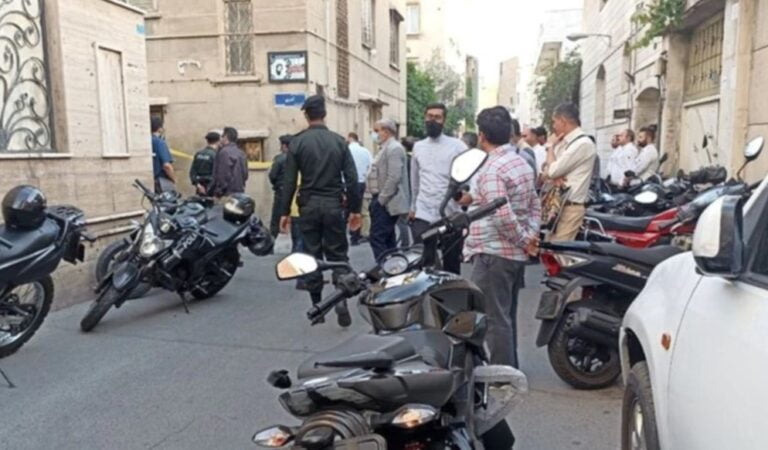
Colonel Hassan Sayyad-Khodaei, who Israeli media say was the acting commander of an elite Qods (Quds) Force unit, Unit 840, was shot dead behind the wheel of his unarmored Iranian-made Kia Pride by two gunmen who fled the scene on a motorbike. The colonel’s name appeared as Sayyad-Khodayari in earlier reports.

The assassination took place in front of Sayyad-Khodaei ’s home on Mojahedin-e Eslam street very close to the Iranian Parliament in central Tehran in broad daylight.

Agents and onlookers gathered around Khodaei’s house on Sunday. There is no mention of Unit 840 of Qods Force, the extraterritorial arm of the IRGC, in Iranian media.

The existence of a such a unit has only been reported by Israeli media, which in November 2020 reported that Israeli Defense Forces (IDF) had accused Unit 840of placing explosives on Syrian border.

IRGC Spokesman Ramezan Sharif on Monday blamed intelligence services of the “global domination system and Zionism” for the assassination which in Iranian official rhetoric refer to the United States and Israel.

Armed Forces’ Spokesman Abolfazl Shekarchi said intelligence bodies are investigating the assassination and will announce its results later.

Earlier this month, Mansour Rasouli, an Iranian man who was seen in a video confessing to planning assassinations on behalf of the IRGC claimed in another video shared on social media that he was coerced by unknown people, allegedly Mossad agents, into making the confession.

Academic says Iran’s Revolutionary Guard are ‘blundering, brainwashed idiots’

0

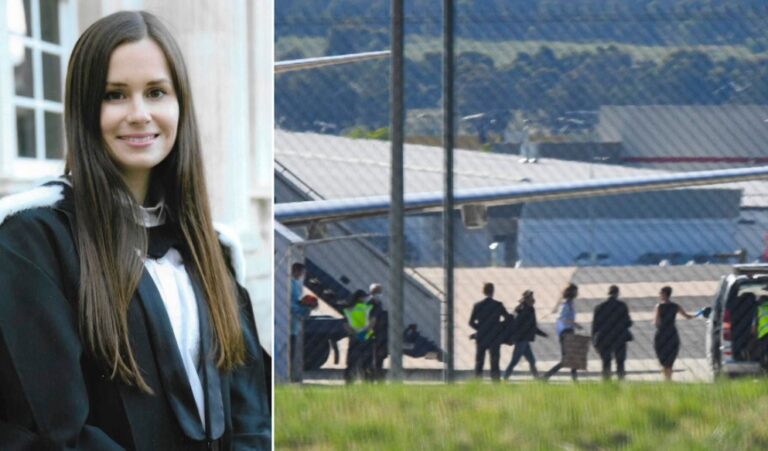
An Australian academic who was imprisoned in Iranian jail for 804 days on spying charges has called her captors ‘blundering and brainwashed idiots’.

Dr Kylie Moore-Gilbert said Iran’s Islamic Revolutionary Guard Corps (IRGC) were ‘not well versed in security, geopolitics or counter espionage’.

She also compared them to Johnny English – the foolish spy from the 2003 comedy film of the same name – and added that IRGC members are ‘brainwashed’.

The University of Melbourne lecturer in Islamic studies travelled to Iran in August 2018 to attend a seminar on Shia Islam.

But three weeks later she was arrested at Tehran Airport in September on trumped-up spy charges as she attempted to fly home.

Speaking to the Telegraph about the IRGC, Dr Moore-Gilbert said: ‘Most of the time, they are blundering around arresting innocent people because of brainwashing and conspiracy theories.’

The academic – who much like Nazanin Zaghari-Ratcliffe was held in Iran’s notorious Evin prison – also told the outlet the feared IRGC are not ‘necessarily talented or skilled’.

Dr Kylie Moore-Gilbert was sentenced to 10 years’ imprisonment, where she spent more than two years behind bars until finally being freed in November 2020.

During her horror stay, she was subjected to filthy toilets, mistreatment from guards, and horrible food. brainwashed idiots

The lecturer also told the Telegraph that her interrogators accused her of working as a spy in the country before she had actually arrived – due to a calendar mix-up – in the early stages of her ordeal.

When she was arrested, Dr Moore-Gilbert – who is also the cousin of Julian Assange – had been attending a conference in Iran when she was flagged as ‘suspicious’ by a fellow academic and by a subject she had interviewed for research.

She was subsequently tried and sentenced, and held in Evin prison in solitary confinement. Iranian authorities reportedly tried to recruit her as a spy in exchange for her release, which she declined.

Nick Warner, the head of Australia’s intelligence service, successfully negotiated a prison swap for Dr Moore-Gilbert’s freedom.

Ex-IRGC head Soleimani’s son-in-law smuggles weapons to Hezbollah – IDF

0

The son-in-law of former Islamic Revolutionary Guard Corps Quds Force Commander Qasem Soleimani regularly smuggles weapons from Iran to Hezbollah in Lebanon, the IDF said on Friday.

Sayyed Reza Hashim Safieddine is the son of Sayyed Hashem Safieddine, the head of Hezbollah’s Executive Council – and is married to Zeinab Soleimani, the daughter of the prominent Iran commander who was killed in a drone strike in the Iraqi capital of Baghdad in 2020.

He is believed to be a key member of Hezbollah’s financial activities in Lebanon since his father, who is Hassan Nasrallah’s cousin, oversees Hezbollah’s social and economic activities.

Reza is said to be close to Nasrallah’s second oldest son, Jawad. He was placed on the US counter-terrorism blacklist in 2018 for his activities in recruiting people to carry out terror attacks including suicide bombings in Israel and the West Bank.

According to the Israeli military, which has been regularly revealing the identities of senior Hezbollah operatives involved in weapons and drug smuggling in Lebanon, the elder Safieddine uses his senior status in the terror group to help his son smuggle strategic weapons.

Reza flies several times a month to Iran where Soleimani lives and uses his time in the Islamic Republic to coordinate the smuggling of advanced weaponry to the terror group, “using the infrastructure, resources and network of activists he heads” the IDF Spokesperson’s Unit said.

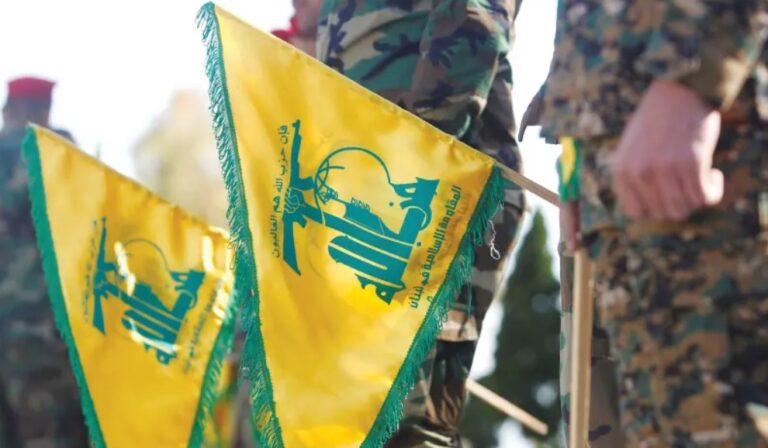
Members of Lebanon’s Hezbollah stand near a flag with a picture of senior Iranian military commander General Qassem Soleimani, during a ceremony marking the first anniversary of the killing of Soleimani and Iraqi militia commander Abu Mahdi al-Muhandis in a US attack, in the southern Lebanese villag.

The network is supported by the IRGC and Hezbollah’s Executive Council headed by his father, who was added to the United States counter-terrorism blacklist in 2018.

The weapons are smuggled back into Lebanon using passenger flights, therefore “risking civilians” on flights from Iran to Damascus International Airport in Syria.

IRGC deserves to remain on US terrorist list

0

In desperation to reach a nuclear deal, so-called progressive pressure groups and Democratic members of the Senate, such as Chris Murphy, pushed the Biden administration to remove the Islamic Revolutionary Guard Corps (IRGC) from the US terrorist list.

President Biden is eager to revive a signature legacy of the Obama Administration, returning to the nuclear deal at any cost.

It has created much bipartisan outrage and has also been opposed by many Iranians inside and outside Iran.

Nevertheless, Biden has faced strong opposition to such a move not only from Republicans but also from Democrats in the House and the Senate.

But perhaps more importantly, the Biden administration is risking America’s international reputation as a superpower and moral authority.

Delisting the IRGC as a terror group will mean that the leader of the free world designates terrorist groups not on the merits but political considerations, setting a dangerous precedent.

There is overwhelming evidence that the IRGC is the largest and most powerful sponsor of global terrorism. US terrorist list

The IRGC has planned the abduction of Iranian-American dissidents on American soil and is actively planning violence against current and former American officials, including former Secretary of State Mike Pompeo and former US Special Representative for Iran, Bryan Hook.

Given the gravity of the IRGC’s nature and goals, what justification can the United States have to delist a group that is the textbook definition of terrorism while keeping Hezbollah, Hamas, and Islamic Jihad affiliated with the Islamic Republic on the list?

Furthermore, delisting the IRGC also signals to brutal dictators and regimes that if you pressure the United States, whether with nuclear proliferation or otherwise, you can get your way and continue on your path of evil, rewrite history, and shed your terrorist past.

Would the United States also delist ISIS or Al Qaeda if they, too, sought nuclear weapons?

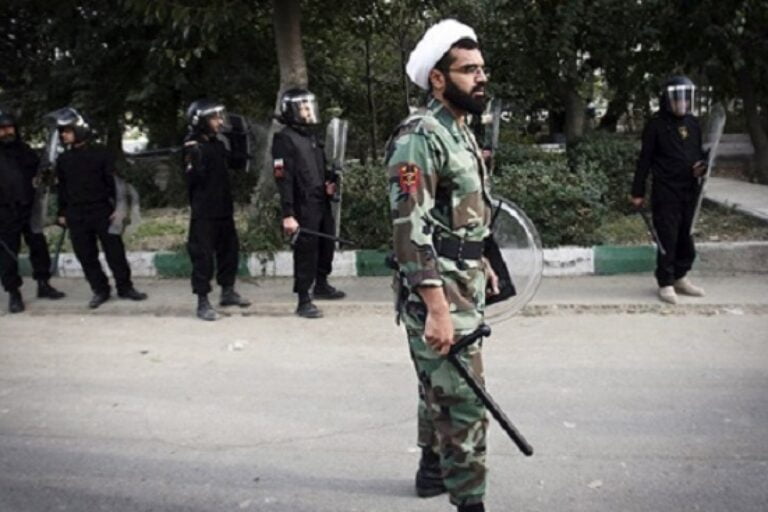
Iran state police violently cracks down on protests against inflation

Following widespread popular protests against unbridled inflation and public opposition to the government’s new economic plan, Qassem Rezaei, deputy commander of Iran state police (Faraja), reiterated previous claims that “dissidents and enemies were taking advantage of the protests. It does and it is not tolerable for us.”

This statement comes at a time when the Iranian state-run and IRGC-controlled media have not covered the public protests in recent days, and instead of publishing criticism of the people, they sought to justify the government’s incompetence. An issue that provoked a reaction in cyberspace.

Two videos have been released in cyberspace showing security forces deploying tanks to suppress protesters.

Non-payment of subsidies to half of the population, inflation, lack of social freedoms, corruption of officials, and lack of security are some of the things that have caused people in different parts of Iran to take to the streets to protest.

About thirteen days have passed since the beginning of the protests in Iran, and the security situation in Iranian cities is increasing every day. Despite the presence of Iran state police and armed forces in the cities, the protests continue. One day there will be more news about the protests, and one day less news will be heard due to the reduction of internet bandwidth and the interruption of mobile internet.

But evidence shows that the protests are not over yet. On Wednesday, May 17, two videos were posted on social media showing security forces moving tanks to Junqan and Shahrekord to suppress protesters.

Iranian authorities have “heavily disrupted” internet access in multiple provinces, a Human Rights Watch report published on Friday found.

The report also found that Iranian authorities arrested several prominent activists on “baseless accusations” during labor union strikes and the ongoing protests against rising prices, since May 6, 2022.

Protesters in Isfahan’s city of Golpayegan chanted against Iran’s highest authority, Supreme Leader Ali Khamenei, as well as President Ebrahim Raisi, videos shared on Twitter showed.