Home Blog Page 31

Iranian IRGC drone manufacturing and regional chaos

0

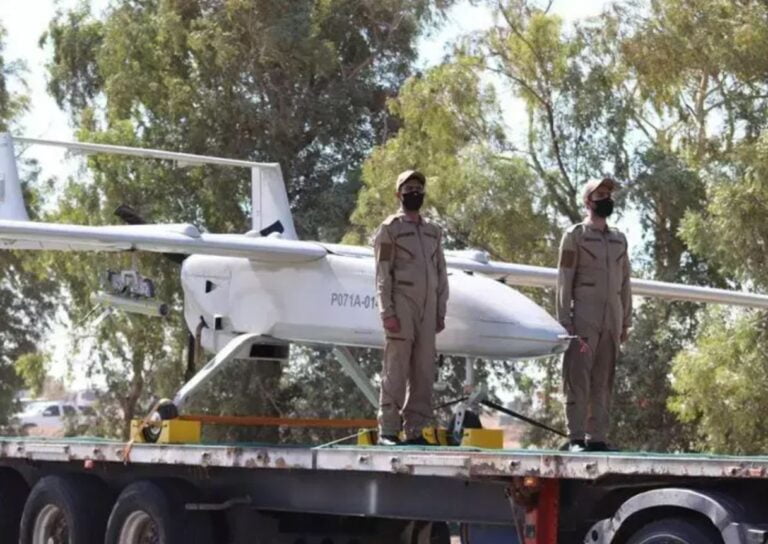
IRGC drone manufacturing in Iran, and variants of Iranian unmanned aerial vehicles (UAVs) made by the Islamic Republic’s proxies, are being used more and more often to cause chaos and destruction in the region.

Though proxy groups claim many of these attacks, evidence gleaned from the shrapnel and other threads of forensic evidence lead back to the Iranian Islamic Revolutionary Guard Corps (IRGC), which sits like a spider at the centre of the web.

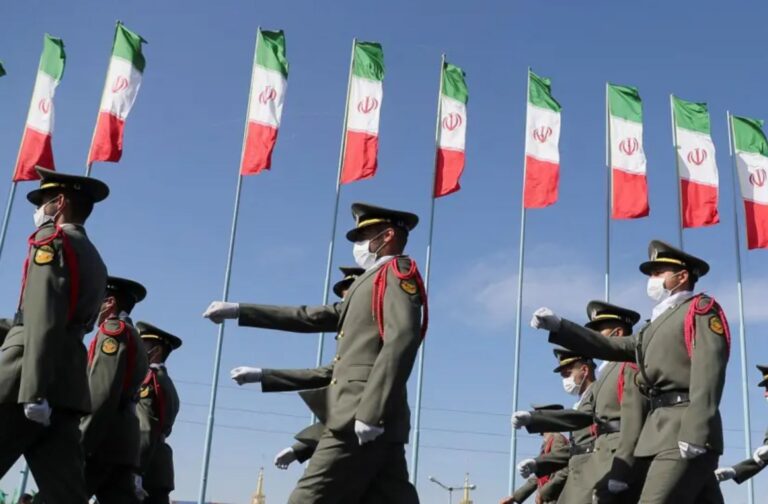
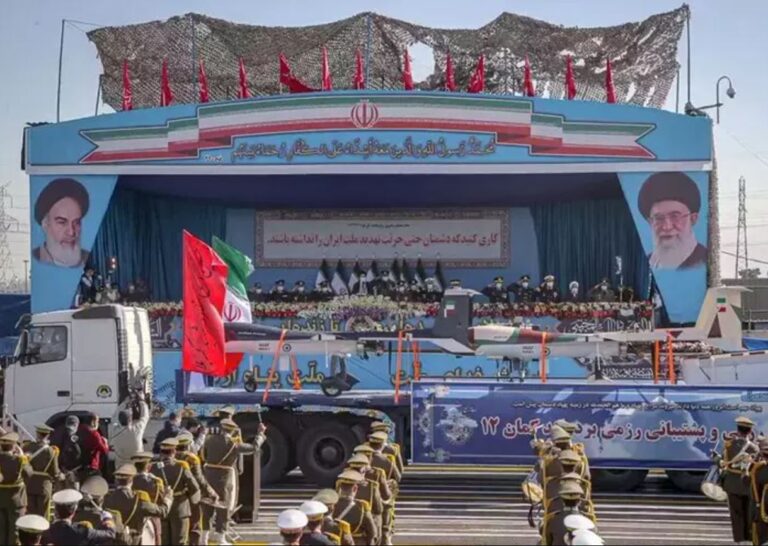
Iran’s position as the hub of regional drone operations is one that it proudly showcases, analysts noted, pointing to the Army Day celebrations the country held on April 18.

In recent years, drones have been at the centre of Iran’s destabilising actions in the Middle East. The Islamic Republic regularly adds new UAVs to its arsenal, and has become increasingly ambitious in their manufacture, use and export.

Some experts consider the Iranian IRGC drone program as much of a threat as its ballistic missiles.

“In recent years, Iran has increasingly used combat drones in military operations on both its eastern and western borders,” said Kerman-based political analyst Faramarz Irani.

Drones have been used in attacks on Iraq’s Kurdish region and against “some hostile groups in Afghanistan”, he said.

The Islamic Revolutionary Guard Corps Quds Force (IRGC-QF) frequently supplies Iranian-made drones to the Houthis — Iran’s proxies in Yemen, allied Iraqi militias and Lebanese Hezbollah, he said.

Iran also has exported its drones to Venezuela.

Weaponised Iranian UAVs have been used in Iraq, Lebanon, Yemen, the United Arab Emirates (UAE) and Saudi Arabia, including in the September 2019 attack on two Aramco oil facilities, claimed by the Houthis.

Iranian IRGC drone types showcased in the April 18 military parade were various models of Mohajer-6, Karrar, Nasser, Kayan-1, Kayan-2, Arash, Omid and Mohajer-4, IRGC-affiliated Fars News reported.

Kaman-22, the latest army-manufactured drone, described as a “strategic multi-tasking aircraft”, was displayed for the first time in Tehran on Army Day.

Iranian military officials claim it is in its final testing stages.

They say it can fly for 24 continuous hours at an altitude of 8,000 metres and has a 3,000km range. It reportedly weighs 1.5 tonnes and can carry up to 300kg of ammunition, laser-guided and smart missiles.

Iran’s Defa Press claims Kaman-22 can monitor, control, gather information and photograph distant targets.
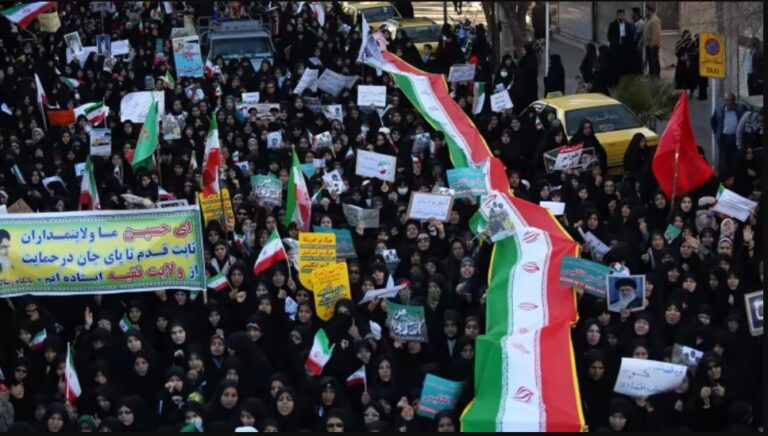
Iranian IRGC Forces Clash With Anti-Government Protesters in Several Provinces

0

Iranian IRGC forces fired live rounds and tear gas to disperse anti-government protesters in several provinces on Thursday, according to posts on social media, as protests triggered by rising food prices continued to spread.

Iranians took to the streets last week after a cut in food subsidies caused prices to soar by as much as 300% for some flour-based staples.

The protests quickly turned political, with crowds calling for an end to the Islamic Republic, echoing unrest in 2019 which began over fuel prices hike. Anti-Government Protesters

Social media footage not verified by Reuters showed at least six people killed and dozens injured in past days. There has been no official comment on any death toll.

On Thursday footage posted on social media showed intense clashes in cities including Farsan in central Iran, where riot police fired live rounds at demonstrators. In Shahr-e Kord and Hafshejan, security forces used teargas and clubs to disperse the protesters.

“Fear not, fear not, we are in this together,” demonstrators in the southern city of Dezful could be seen chanting in one video.

Reuters was unable to verify the authenticity of the social media footage cited.

Senior police official Qasem Rezai warned on Thursday that “illegal gatherings were intolerable and will be confronted,” according to Iran’s semi-official ILNA news agency.

Fears of 2019 protests revival

The government last week acknowledged the protests but described them as small gatherings. Iranian state media reported last week the arrests of “dozens of rioters and provocateurs.”

Iran’s rulers fear a revival of the 2019 protests, the bloodiest in the Islamic Republic’s history, although the authorities have dismissed reported death tolls including more than 300 according to Amnesty International, and a Reuters account of 1,500 killed.

The government also cut subsidies for basic goods including cooking oil and dairy products in a move it has described its decision as “fair redistribution” of subsidies to lower-income people.

Man charged for selling ransomware to Iranian IRGC hackers

0

A French-Venezuelan cardiologist has been accused by the US of selling ransomware to cybercriminals, including malicious actors associated with the government of Iran and its terrorist designated IRGC hackers.

The Brooklyn district attorney’s office said Monday that Moises Luis Zagala, 55, not only created and sold ransomware products to hackers, but also trained them on how to extort victims, and then boasted about successful attacks by an Iranian state-sponsored hacking group.

In early 2019, Zagala began advertising his new tool on the web as a “Private Ransomware Builder” which he named “Thanos” after the Marvel Comics villain responsible for destroying the half of life in the universe, as well as Thanatos, the personification of death in Greek mythology.

Zagala publicly bragged about a news story about an Iranian IRGC hackers group’s use of Thanos to commit ransomware attacks on Israeli companies.

The Islamic Republic is very active in various malign cyber activities and is also providing cyber technology to its proxies, including the Lebanese Hezbollah, to build their own cyber units.

The National Interest reported in mid-April that Iran has helped Hezbollah become “the most sophisticated and influential Middle Eastern terrorist organization in cyberspace after the collapse of the Islamic State caliphate”.

Earlier in April, Meta, formerly the Facebook company, removed two Iranian cyber espionage groups that were targeting academics, activists, journalists, and other victims to collect intelligence, manipulate them into revealing information, and compromise their devices and accounts.

The groups, possibly sponsored by Revolutionary Guard (IRGC), targeted the Iranian diaspora, dissidents and human rights activists from Israel and Iran, Iran-focused academics, politicians in the US, people in the Middle East including the Saudi military, and journalists around the world.

Zagala’s current whereabouts are unknown, but the FBI has requested that a warrant be issued for his arrest. If convicted, he faces up to 10 years in prison.

Iran IRGC Intelligence arrests commander over leaked audio

A telegram channel close to the security apparatus of the Islamic Republic reports that the intelligence service of the terrorist designated Islamic Revolutionary Guard Corps (IRGC Intelligence) has arrested a high ranking IRGC official, Mohammad Ghaemi, on charges of publishing the audio file of the corruption of the IRGC leaders which exposed Iran’s speaker of the parliament, Mohammad Bagher Ghalibaf, who is also an IRGC commander.

The “secret” telegram channel claims that with this arrest, it has become clear that Mohammad Ghaemi is behind many documents that have been published in the Armed Forces financial files over the past years.

Also, based on “received news”, the analytical news website Iran Watch reported the arrest of “Mohammad”, the legal representative of Yas Holding during the administration of Saeed Mohammad, and wrote that this “IRGC commander” is probably in pre-trial detention without access to a lawyer for more than two months after a complaint from Mohammad Baqher Ghalibaf.

Yas holding was one of the IRGC’s front companies that operated dozens of subsidiaries but was shut down following the revelation of dozens of corruption cases in 2017.

In February 2015, a 50-minute audio file of the statements of Mohammad Ali Jafari, former commander-in-chief of the IRGC, and Sadegh Zolghadrnia, the IRGC’s economic deputy, about corruption in the organization was released, after which Fars News Agency, close to the Revolutionary Guards, confirmed its authenticity.

In this audio file, the role of Ghasem Soleimani and his connection with major corruption cases related to the IRGC’s Quds Force, the IRGC Cooperative Foundation, and the Tehran Municipality are discussed.

A few days after the release of this audio file, the Supreme Leader of the Islamic Republic, Ali Khamenei, claimed in a speech that “slander” against the Islamic Consultative Assembly, the Guardian Council, the Revolutionary Guards, and Ghasem Soleimani were among those designed by the “enemy think tanks.”

Gulf States led DC lobby blitz targeting Iran military wing as terrorists

0

Their ongoing influence is effective even today, as Biden remains reluctant to lift IRGC terror listing to make way for JCPOA renewal.

In 2019, the Trump administration took the controversial step of listing the Islamic Revolutionary Guard Corps, an ideological branch of the Iranian military, as a foreign terrorist organization. The designation, an apparent poison pill to block further diplomacy with Iran, has become a major obstacle in negotiations to revive the nuclear deal with Iran, which Trump abrogated in 2018.

Though the domestic political pressure on the Biden administration against delisting has been widely discussed — with fears of Republicans campaigning against the move and pro-Israel forces roundly opposing it — few have noted the effect and breadth of the campaign to place and keep the IRGC on the terror rolls.

Documents, including rafts of public disclosure filings and a hacked email from a Washington diplomat, reveal a highly active foreign influence operation over the past five years to blanket Washington with messages supporting confrontation with Iran and targeting the IRGC with sanctions and inclusion on the terrorist list.

Since at least 2015, a variety of communications consultants, law firms, and lobbyists working for foreign governments — primarily Iranian regional rivals Saudi Arabia, the United Arab Emirates, and Bahrain — produced a steady stream of tweets, talking points, press releases, and reports warning about the dangers of the IRGC and supporting the foreign terrorist organization, or FTO, designation.

“All you need to know about what a politicized cudgel the FTO list has become is seeing the UAE and Saudi Arabia (gulf)— responsible for some of the most heinous terror against civilians in Yemen — lobbying to get the IRGC on the FTO and keep them listed,” said Sarah Leah Whitson, executive director of the advocacy group Democracy for the Arab World Now. “We should not be allowing foreign government lobbyists to buy influence on important national security policies, like the FTO designation of a government we want to reach a critical nuclear deal with.” gulf

In the email chain, Otaiba responded within minutes: “No idea where they are on decision making, but I have made the suggestion to several people.”

The UAE Embassy declined to comment on the purported email, which Responsible Statecraft and The Intercept were unable to separately authenticate. Otaiba never specified in the exchange who he “made the suggestion to.”

IRGC commander in leaked audio: Iran bombed Turkish forces in Iraq

0

Iranian website on Friday shared a leaked audio recording of a senior Iranian commander suggesting Tehran’s involvement in an attack on a Turkish military base in Iraq.

In the leaked audio, the commander of Islamic Revolutionary Guard Corps‘ “Ammar” headquarters, Mahdi Taib, said in Persian, “we bombed the Turkish military forces in Iraq.”

US military intelligence believes Iran-backed militias have been coordinating with Kurdish guerrillas to launch attacks on Turkey’s military presence in northern Iraq, according to a Pentagon inspector general report released today.

Prominent Iran-backed militias have publicly slammed Turkey’s military operations targeting fighters of the Kurdistan Workers’ Party (PKK) from the mountains of northern Iraq, citing violations of Iraq’s sovereignty.

The militias are also behind a small but increasing number of rocket attacks on Turkish forces in both Iraq and Syria in recent months, according to the declassified report.

Some of the strikes in Iraq were carried out “in cooperation with the PKK,” the US Defense Intelligence Agency (DIA) reported.

“Following Turkish airstrikes in February that targeted the PKK in northern Iraq, a new Iran-aligned militia group conducted a rocket attack against a Turkish expeditionary base north of Mosul,” the report read.

The Turkish outpost near Zlikan, northeast of Mosul, has repeatedly come under rocket fire in the past year.

“The DIA assessed that the militias probably will continue to coordinate with the Kurdistan Workers’ Party (PKK), a US-designated foreign terrorist organization, in response to Turkish air and UAV strikes on PKK positions,” the report read.

Prominent Iran-backed militias have publicly slammed Turkey’s military operations targeting fighters of the Kurdistan Workers’ Party (PKK) from the mountains of northern Iraq, citing violations of Iraq’s sovereignty.

The militias are also behind a small but increasing number of rocket attacks on Turkish forces in both Iraq and Syria in recent months, according to the declassified report.

Daughter Of Iran’s Ex-President To Be Prosecuted Over Anti-IRGC Remarks

0

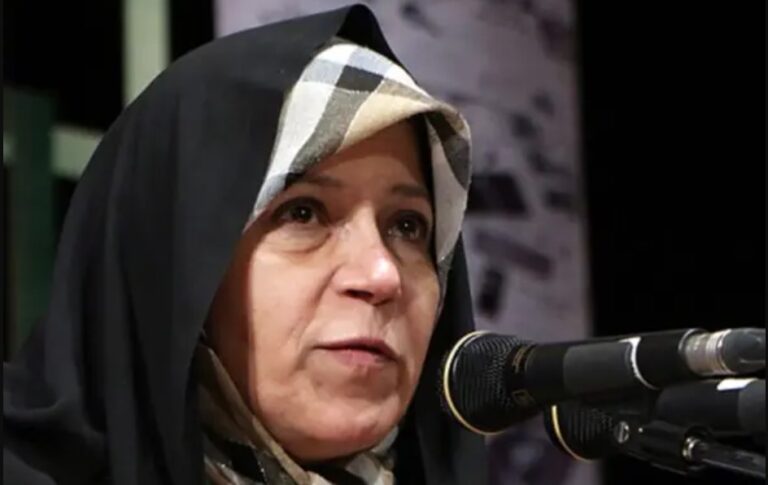
Former lawmaker and presidential daughter Faezeh Hashemi will be prosecuted for supporting US sanctions on Iran’s Revolutionary Guard and insulting the prophet of Islam.

Iran’s judiciary spokesperson Zabihollah Khodaian said on Tuesday that the case over her recent remarks is ongoing by the office of the prosecutor general.

Iranian hardliners demanded that the pro-reform politician must be prosecuted for defending the terrorist designation of the Revolutionary Guard (IRGC) by the United States.

Fars news website affiliated with the IRGC claimed a petition for Hashemi to be prosecuted collected over 50,000 signatures.

Speaking on the social audio app Clubhouse, the political activist had said that removing the IRGC from the list of Foreign Terrorist Organizations (FTO) is not in Iran’s interest.

Negotiations to restore Iran’s 2015 nuclear deal came to a halt in March as Tehran demanded the IRGC be removed from the terrorist list.

Footage of Hashemi Rafsanjani also surfaced in media, talking about Prophet Muhammad and how he used his wife’s money to advertise Islam.

Hashemi is known for her critical remarks about the Islamic Republic, its leaders, and policies.

Her father, who for decades was the second most powerful man in the Islamic Republic, who helped bring Supreme Leader Ali Khamenei to power in 1989 and allowed the IRGC to become an economic player in the country.

Who is Faezeh Hashemi Bahramani?

Faezeh Hashemi Bahramani, better known as Faezeh Hashemi Rafsanjani (born 7 January 1963) is an Iranian women’s rights activist, politician and former journalist who served as a member of Iranian parliament from 1996 to 2000.

She is also president of Executives of Construction Party women’s league and the former editor-in-chief of Zan newspaper.

She is the daughter of the former president, Akbar Hashemi Rafsanjani and the sister of Fatemeh Rafsanjani and Mehdi Rafsanjani.

Rafsanjani was a member of the Executives of Construction Party that was established by moderate politicians.

Iran’s IRGC traffic drugs across Iraq, Syria and Lebanon to raise funds

0

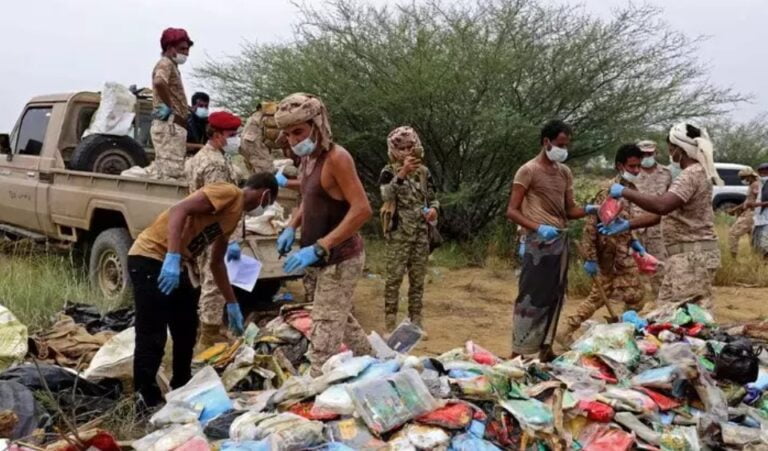
Iran and its proxies in the Middle East are deeply involved in the illegal drug trade, which they rely on for funding, with busts across the IRGC region revealing the involvement of groups like Lebanese Hizbullah and, increasingly, the Houthis.

Hizbullah has a long track record of dealing in illegal drugs, as do Iran-backed Iraqi militias, who smuggle or facilitate the trafficking of various types of narcotics into Iraq from across the borders of both Iran and Syria.

Iraqi security forces on April 30 broke up a drug trafficking ring and seized about 6.2 million Captagon pills from a warehouse in Baghdad, making seven arrests, AFP reported.

Around the same time, Iraqi forces broke up a second drug ring after an individual was arrested “in possession of 6kg of hashish”, while two accomplices also were detained, the national security agency said in a statement.

Saudi border guards keep watch along the border with Yemen in al-Khubah area in Jizan province on October 3, 2017. [Fayez Nureldine/AFP]
Saudi border guards keep watch along the border with Yemen in al-Khubah area in Jizan province on October 3, 2017.

The 10 accused “admitted to links with international drug trafficking networks”, the agency said.

Iraq’s northwestern neighbour Syria is the Middle East’s main producer of Captagon, an amphetamine type stimulant, which is trafficked across the region.

Cross-border drug trafficking from Iran also continues into Iraq, despite governmental efforts to contain it, Iraqi officials said. Lebanon

The “illegal drug trade is run by armed militias linked to Iran”, said military and strategy analyst Muayyed Salem al-Juhaishi.

“These militias are directly responsible for drug trafficking in Iraq, which currently constitutes one of their biggest sources of funding,” he said.

Most narcotics entering the Kurdish region and the rest of Iraq are smuggled in by armed groups backed by the Islamic Revolutionary Guard Corps (IRGC) or its partners, said observers.

Iranian IRGC drones in Iraq threatens Baghdad and region

0

Iranian IRGC export of unmanned aerial vehicles (UAVs) to its proxies in Iraq has drawn the ire of Iraq’s neighbors, who have been attacked by weaponized drones from Iraqi soil, and from Iraqi officials, who are fed up with Iran’s interference.

The Iranian IRGC (Islamic Revolutionary Guard Corps) has been supplying its Iraqi proxies with dozens of drones since at least 2019, after previously supplying them to the Houthis in Yemen and Lebanese Hizbullah.

Iran’s pivot to drone warfare over the years has allowed the IRGC to leverage lower-priced military equipment for its disruptive regional actions, analysts have noted.

At least four Iraqi militias backed by the terrorist Iranian IRGC organization — the Badr Organisation, Kataib Hizbullah, Kataib Jund al-Imam and Harakat al-Nujaba — have demonstrated drone capabilities, according to The Iran Primer.

But the Badr Organisation claimed as early as 2015 to have a drone arsenal.

In February 2015, a Badr leader in Baghdad said that Iran had provided the militants with UAVs and taught them how to make them.

In the past year, at least 10 UAV attacks were carried out in Iraq, including a September 11 attack on Erbil International Airport and another on November 7 that targeted the residence of Iraqi Prime Minister Mustafa Kadhemi.

So far this year, three UAV attacks have been thwarted in Iraq, including an April 8 incident in which a drone was shot down near Ain al-Asad airbase in Anbar.

On February 2, Alwiyat al-Waad al-Haq, a shadowy group affiliated with Kataib Hizbullah, claimed responsibility for a UAV attack on Abu Dhabi in the UAE that was reportedly launched from Iraqi soil.

The same group previously claimed responsibility for a January 2021 attack on al-Yamamah Palace and other targets in the Saudi capital, Riyadh.

According to numerous reports, parts for some UAVs operated by Iran’s proxies in Iraq were smuggled in from Iran and assembled by IRGC experts.

These drones have been used in attacks on Iraqi facilities.

Iran-aligned militias in Iraq “do not have the capability to produce UAVs with modern systems and technologies for identifying targets from long distances and striking them”, military analyst Majid al-Qaisi says.

But Iran has the technological capability to manufacture these drones, he said, adding that drone attacks aim to cause turmoil.

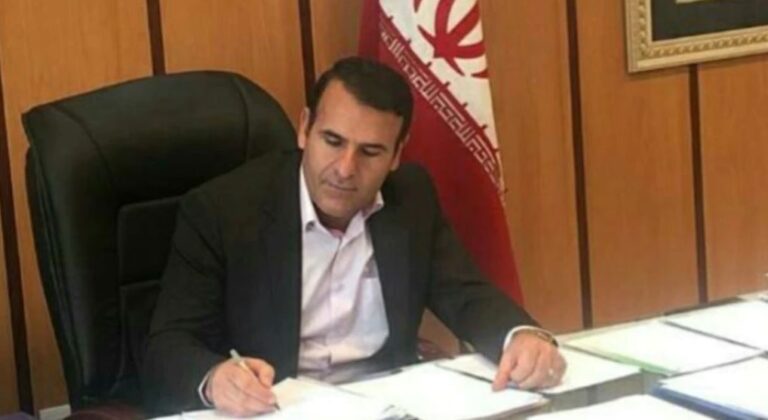
Details of Iranian IRGC official interrogation by Israeli Mossad

New information has emerged in what appears to be a continued public relations war over an Iranian terrorist designated Islamic Revolutionary Guard Corps (IRGC) official who was nabbed and interrogated by the Israeli Mossad, with broad implications for US-Iran diplomacy.

It had been reported last week that the Israeli Mossad got Rasouli to admit that he was assigned to assassinate an Israeli diplomat in Turkey, a journalist in France, and most significantly for the diplomatic front, a senior US general in Germany.

News about an IRGC plot to kill a US general seemed designed to undermine any chance that the Biden administration would remove the IRGC from its Foreign Terrorist Organization (FTO) list, a deadlock that could torpedo the Iran nuclear negotiations.

According to the report, Rasouli is a member of an external unit affiliated with the IRGC.

His origins are as a Kurd from the Hashemabad region near Ziwa in West Azerbaijan Province.

Rasouli’s unit launders money through a border cooperative called Dalapar, and in exchange for cooperating with the IRGC, is allowed to carry out illegal exports and imports, the report said.

Regarding illegal activities, the report said that the Rasouli family cooperates with the IRGC in drug trafficking to Turkey and Iraq.

Loghman Rasouli, the brother of Mansour Rasouli, is the main shareholder of the Dalapar Border Cooperative and is in charge of the group’s activities in Iraq, the report stated.

According to the report, the leader of the group is Bahman Hatami, from the family of Pirut Hashemi, a member of the Heraki tribe, who died last year.

The Hatami family is known for being close to IRGC commanders and the regime, and the report noted, is also linked to the Rasouli-IRGC drug trade.

After the US added the IRGC to its FTO list in spring 2019, Pirut Hatami, along with several others, announced their support for the IRGC in a video and declared their connection to the IRGC, the report said.

The report has a photo of Sabah Rasouli, the commander of the IRGC’s Zivieh Brigade in the Urmia region and Mansour Rasouli’s cousin.

His other cousin was Adel Rasouli, a member of the IRGC who was killed in 1960 in a clash with the Peshmerga, Kurdish forces opposed to the Islamic Republic.

Another member of the group is Abed Fattahi, a representative of Urmia in the seventh and ninth parliaments and a member of the Rahrawan faction in the province, according to the report.

Fattahi is also a representative close to the IRGC tasked with developing its media operations.

Rasouli collaborated with Unit 840 of the IRGC Quds Force, responsible for the Islamic Republic’s overseas terrorist operations.

A week later, Rasouli denied the allegations against him and that he seemed to have admitted to in a video broadcast last week by Hebrew media. In a new video, he said he had been forced to confess under pressure from a gang, the report said.

Sources have said that the security services of the Islamic Republic have kept Rasouli in a safe house.

In the latest video, he claimed that his phone had been stolen and that other films of him might be released. The remarks suggest that the Israeli Mossad may leak other parts of his interrogation and reveal new dimensions of the IRGC’s plan for foreign assassinations.

Meanwhile, Iran seeks to downplay the incident in an effort to get the US to remove the IRGC from the FTO list.