Home Blog Page 32

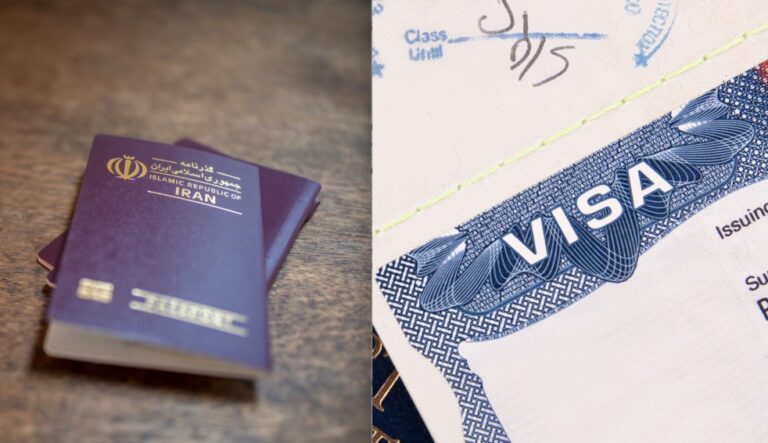
The IRGC terror designation is a de-facto Iranian travel ban

0

On March 26, a sold-out crowd excitedly awaited theΒ performanceΒ of internationally celebrated Iranian vocalist Alireza Ghorbani at the Segerstrom Center for the Arts in Orange County, California, as part of Pacific Symphony’s 2022 Nowruz Concert. But Mr. Ghorbani never showed up.

The day before, while boarding his flight to California, Mr. Ghorbani was approached by officers from the U.S. Customs and Border Protection at Pearson International Airport in Toronto.

For several hours, Mr. Ghorbani was questioned by CBP agents, who ultimately refused his entry into the United States due to his military service in Iran’s Islamic Revolutionary Guard Corps over 30 years ago.

Aside from the personal devastation of having his visa canceled, Mr. Ghorbani could not understand how he conceivably posed a risk to the United States: he is a permanent resident of Canada.

Had already toured the United States on multiple visas vetted by CBP and the U.S. State Department, and recently was approved by the United States Customs and Immigration Service for an EB-1 visa, affording him permanent residency solely based upon his extraordinary career achievements.

Mr. Ghorbani explained to CBP agents that military service in Iran for men over the age of 17 is mandatory and that his duties consisted mainly of clerical office work.

CBP not only disregarded Mr. Ghorbani’s reasonable explanation of his service, but they also ignored the U.S. Consulate’s review of his visa eligibility and their extensive assessment that he did not pose a security threat. Iranian

In reality, there was little that Mr. Ghorbani could say to convince an empowered CBP to permit him entry into the United States, as his denial can be traced back to a rash, ill-consideredΒ actionΒ by the Trump administration to designate the entire IRGC as a terrorist organization.

The unprecedented decision to classify an entire military branch of another country as a terrorist group was undoubtedly rooted in politics, as no evidence exists to show that Trump’s move has protected or saved American lives.
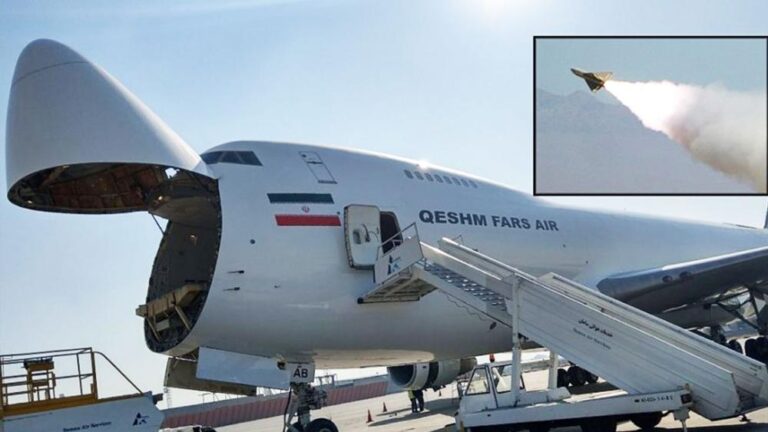
Iranian IRGC-controlled airline frequents flights to Russia amid invasion

0

Iran’s U.S.-sanctioned IRGC-controlled airline Qeshm Fars Air has flown to Moscow at least seven times since mid-April after having made that trip only twice last year,Β according to the flight tracking service FlightRadar24. The airline’s sudden uptick in cargo flights to Moscow may reflect Iranian efforts to support Russia’s war in Ukraine.

The U.S. Treasury DepartmentΒ sanctionedΒ Qeshm Fars Air in 2019 for being operated by the already sanctioned Iranian IRGC-controller airline Mahan AirΒ and for carrying weapons and fighters to Syria on behalf of Iran’s Islamic Revolutionary Guard Corps (IRGC), which is also under U.S. sanctions. Qeshm Fars Air continues to fly theΒ Tehran-Damascus routeΒ on behalf of the IRGC, helping the Guard sustain its military presence in Syria and supply advanced weaponry to Iran’s proxy terrorist group in Lebanon, Hezbollah.

Qeshm Fars Air’s illicit activity likely goes beyond Syria. It has alsoΒ regularly traveled to VenezuelaΒ in the past two years, likelyΒ ferryingΒ Iranian weapons and helping Tehran and CaracasΒ evade U.S. sanctions. During the conflict between Ethiopia’s central government and Tigray rebels, Qeshm Fars Air aircraftΒ flew to Addis Ababa at least seven timesΒ from June to December 2021, alongside Pouya Air, another U.S.-sanctioned Iranian airline.

Qeshm Fars Air’s flights to Moscow may fit into this pattern. The first recorded flight occurred on April 15, three days after The Guardian reported that Iran had transferred rocket-propelled grenades, anti-tank missiles, multiple-launch rocket systems, and surface-to-air missile systems to Russia by ship through the Caspian Sea.

Qeshm Fars Air could also be helping transport Syrian mercenaries to Russia, especially considering that the airline’s flights to and from Damascus are ongoing. The PentagonΒ confirmedΒ in early March that Moscow has sought toΒ recruitΒ fighters from Syria to help compensate for Russia’s shortage of manpower in Ukraine. Alternatively, Iran could be assisting Russia in itsΒ reported transfer of forces and equipmentΒ currently deployed in Syria for use in Ukraine.

While it remains unclear what exactly Qeshm Fars Air is ferrying to Russia, the uptick in flights raises concerns that the IRGC may be assisting Moscow’s war effort in Ukraine, where the Russian military has committed mass atrocities. If proven, this would offer an additional reason not to remove the IRGC from the U.S. list of Foreign Terrorist Organizations.

Iran’s Revolutionary Guards fired on positions in Iraq’s Erbil – report

0

Iranian Tasnim news agency reported on Wednesday that Iran’s Islamic Revolutionary Guards Corp (IRGC) had targeted positions of what it described as terrorist locations in ‘s Erbil.

Iraqi Kurdish media reported that an artillery shell had landed in a village in the Sidekan area near the Iranian border, around 60 miles (100 km) northeast of Erbil.

“Headquarters of terrorist groups in Iraq’s northern region, including the Democratic Party of Iranian Kurdistan, have been targeted in the past by the Revolutionary Guards on several occasions,” Tasnim added.

“No casualties have been reported so far,” state media said.

Iran’s Tasnim news agency said the Guards have previously targeted Iranian Kurdish militants based in northern Iraq.

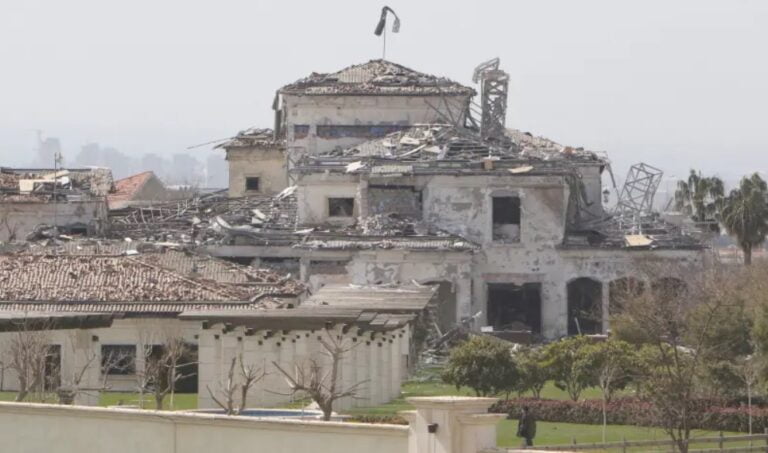
View of a damaged building in the aftermath of missile attacks in Erbil, Iraq March 13, 2022.

IRGC said in March it had targetedΒ Israeli “strategic centers”Β in Iraq’s northern Kurdish regional capital of Erbil, state media reported.

The Iraqi Kurdish regional government said the attack in March only targeted civilian residential areas, not sites belonging to foreign countries, and called on the international community to carry out an investigation.

Iran’s Revolutionary Guards shelled an area north of the Iraqi Kurdish capital of Erbil on Wednesday, targeting what Iranian state television described as terrorist bases.

Iraqi Kurdish media reported that an artillery shell had landed in a village in the Sidekan area near the Iranian border, around 60 miles (100km) northeast of Erbil.

The Iranian state TV said no casualties had been reported and details of the attack would be announced shortly.

Iran’s Tasnim news agency said the Guards have previously targeted Iranian Kurdish militants based in northern Iraq.

Three men accused in Hillary Gardee murder case abandon bail.

The accused in the Hillary Gardee murder case have decided not to opt for bail, according to the prosecution. The three face charges of rape, murder, kidnapping, conspiracy to commit murder, defeating the ends of justice, possession of an unlicensed firearm and ammunition.

Iranian terrorist designated IRGC fostering radicals, extremists

0

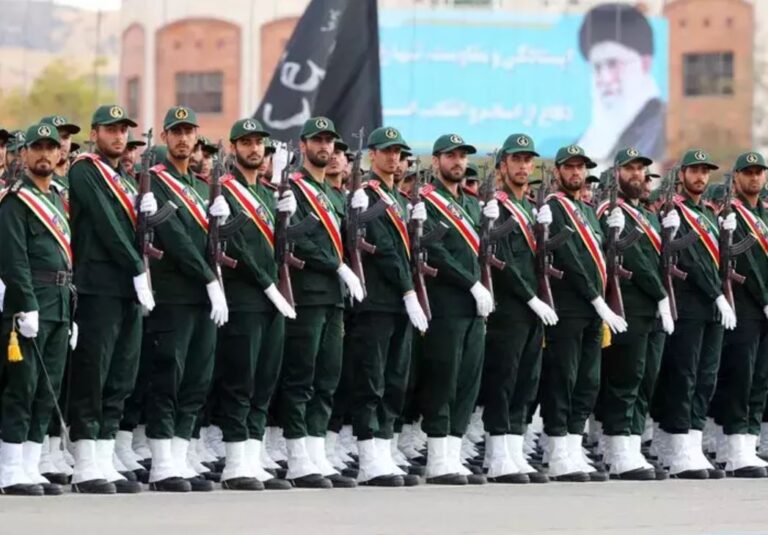
At its inception, the Iranian terrorist Islamic Revolutionary Guard Corps (IRGC) was an ideologically oriented force, tasked with bringing the regime of Ruhollah Khomeini to power and “exporting the revolution”.

In the roughly four decades since, analysts say, the IRGC has increased its emphasis on ideological training, giving it equal weight with military training and rewarding and promoting its most radical elements.

As the very name of the force — which does not include “Iran” — suggests, the IRGC’s military capabilities are not intended for any true domestic purpose other thanΒ cracking down on dissent.

The Iranian terrorist IRGC singles out for recruitment individuals who are ideologically inclined, and therefore susceptible to indoctrination, or those in need of financial support, and shapes them into the people it desires them to be, analysts say.

Members of this institution, now a key player in Iranian politics and the economy, are rewarded for their extremism and commitment to the Guardianship of the Jurist (Wilayat al-Faqih) doctrine.

Guardianship of the Jurist is a Shia theological proposition that justifies Iran’s dictatorial system of rule and export of “revolution” across the region. It is largely dismissed in the broader Shia community as a theological anomaly.

Iranian President Ebrahim Raisi has stacked his cabinet with hardliners,Β many of whom are former IRGC officials, to an unprecedented degree.

Among them is former IRGC official Mohammad-Bagher Ghalibaf, who was close to the late IRGC-QF commander Qassem Soleimani.

Accused of embezzling large amounts of money during his mayoral tenure in Tehran, Ghalibaf escaped unscathed in a trial that saw others convicted, and went on to becomeΒ Majles speaker in May 2020.

In April, he made headlines again for his family’s lavish trip to Turkey. Family members brought back 20 large suitcases of items they had purchased, sparking public uproar at a time when many in Iran are suffering greatly.

Iranian IRGC to replace Russian troops in Syria after withdrawal

The ongoing withdrawal of Russian troops from Syria, first reported by the Moscow Times last week, is a worrying development for middle eastern countries, fearing that the power vacuum could be filled by the terrorist designated Iranian IRGC (Islamic Revolutionary Guard Corps).

Following last week’s media report by the Moscow Times that Russia had begun pulling out its troops from Syria, the Times of Israel published an article in which it suggested the gaps in Syria’s security sector left by Moscow could be mended by Iran’s Revolutionary Guard Corps (IRGC) and Hezbollah.

Being a branch of the Armed Forces, the Iranian IRGC, according to the Iranian constitution, is intended to protect the country’s Islamic republic political system. The IRGC has been used throughout history as the Islamic republic’s iron fist crashing down on the Ayatollahs’ enemies.

The Israeli media outlet suggested that the β€œnow-abandoned bases have been transferred to Iran’s paramilitary Revolutionary Guards Corps, as well as the Lebanese terror group Hezbollah.”

The Times of Israel also quoted Middle East pundit Ehud Ya’ari’s statement for Israel’s Channel 12 News, saying that β€œwithout Russian influence in Damascus and on the ground, Tehran could more easily push its units into Syria, as well as influence the Assad regime.”

β€œIsrael has no way of truly influencing the considerations of the Russian deployment in Syria,” Mr. Ya’ari said. β€œHowever, as they lower their military presence in this country, Iran’s growing grip in the region is a development to worry about. It is worth remembering that Russia, even when cooperating with Iran in Syria, has always sought to limit and shrink Iran’s foothold there and the depth of Iran’s infiltration of [Syrian President Bashar] Assad’s army and security services.”

Russian authorities said thatΒ more than 63,000 Russian military personnel had been deployed to Syria.

Last week the Moscow Times also reported that the goal behind the Russian military’s withdrawal from Syria was to bolster Russia’s forces in Ukraine.

Growing protests in Iran are met with regime’s mainstay tactic: repression

0

Protests over social, economic andΒ environmental issuesΒ have roiled Iran in recent months, and the response of the country’s security forces — typically a blend of anti-riot police forces and plainclothes and uniformed Islamic Revolutionary Guard Corps (IRGC) elements — has been simple:Β repress them.

Teachers, factory workers and labour activists have taken to the street across the country to air their grievances with the Iranian regime, along withΒ farmers protesting water shortagesΒ and villagers protesting sanitation failures.

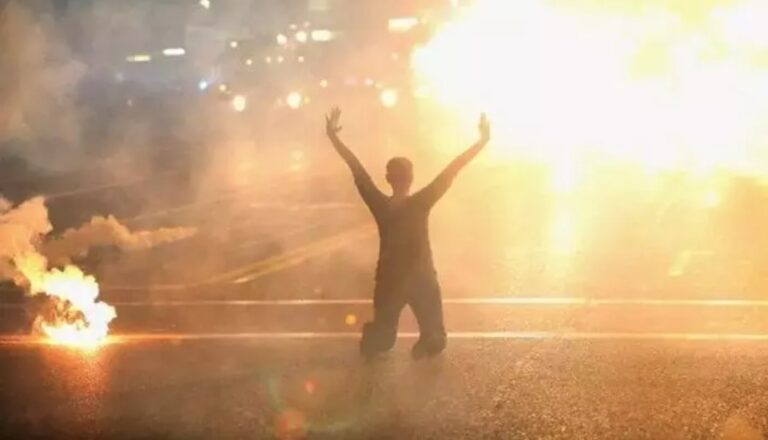
In many cases, demonstrators have been denied their right to protest via intimidation, while in others they have been met with outright hostility and violence by security forces.

They have been shot at with pellet guns, arrested and imprisoned, with some subjected to humiliating searches of their homes and computers.

Recently when workers’ and teachers’ unions held co-ordinated protests in 28 cities for International Workers’ Day (May 1) and Teachers’ Day in Iran (May 2), IRGC intelligence and police forces ensured they had a strong presence in all cities where protests were held.

In Tehran, the protest was to take place in front of the Majles (parliament) building, but the heavily policed area dissuaded participants, organisers said, so the demonstration was relocated to the outskirts of the city.

Teachers have gathered across the country for months to demand unpaid salaries for teachers on contract (non-government employees) and to call for better benefits for staff members and higher salaries to meet inflation.

Education contractors are demanding that they be made government employees, while retired teachers seek a raise in their pension payments to make ends meet, as some are paid salaries that fall below the poverty line.

Chants heard during the May Day protests included: “[President] Raisi, you’re a liar; what happened to your promises?” and “They say America is our enemy.

That’s a lie! Our enemy is right here!”, according to the Centre for Human Rights in Iran.

Commander of Iran terrorist IRGC contradicts lawmaker on nuclear bombs

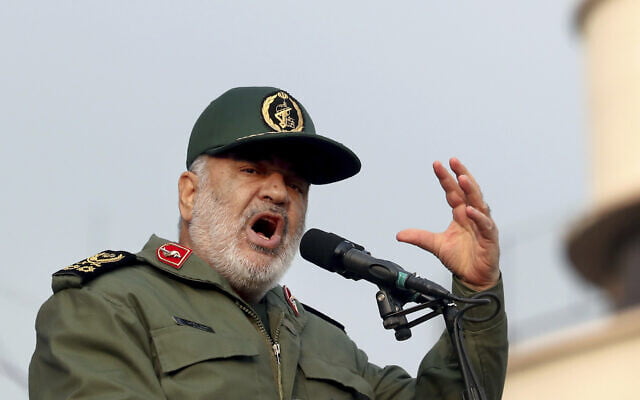
The commander of the Iranian terrorist designated Islamic Revolution Guards Corps (IRGC) Hossein Salami, contradicting the recent remarks of a former lawmaker, has said that weapons of mass destruction or nuclear bombs (WMDs) have no place in Iran due to Islamic teachings.

Only last month a prominent former member of Iran’s parliament, Ali Motahari said in an interview that Iran had always intended to build a nuclear bomb that would have been used as a β€œmeans of intimidation.”

The senior IRGC commander even added that nuclear bombs, as a type of weapons of mass destruction, do not have any status in the Islamic system, noting that the true religion does not support resorting to this approach in confronting the enemy.

Meanwhile Motahari noted that the objective of building a bomb was pursued and supported by β€œthe entire regime, or at least, the people who started this activity.”

Asked by the interviewer if the people behind Iran’s nuclear program intended to use the nuclear bombs, Motahari said, β€œNo, we wanted to build it as a means of intimidation,” citing a verse from the Quran: β€œStrike fear in the hearts of the enemy of Allah.”

β€œIf we could secretly produce and test a [nuclear] bomb like Pakistan [did], it would be a great deterrent,” he said, and went on to argue that β€œI believe if we started something, we should have finished it.”

Motahari, who is a social and religious conservative, has been an outspoken critic of certain policies of the Islamic Republic in recent years, including restricting fair competition within the system and political freedoms.

Officials of the Islamic Republic have repeatedly cited a fatwa, or ruling, issued by Supreme Leader Ayatollah Ali Khamenei declaring the use of chemical and nuclear bombs “haram,” or forbidden.

Also read: The Islamic Revolutionary Guard Corps’ coup d’Γ©tat in Iran; Ebrahim RaisiΒ 

IRGC commander in leaked audio: Iran bombed Turkish forces in Iraq

0

Anti-regime Iranian website on Friday shared a leaked audio recording of a senior Iranian commander suggesting Tehran’s involvement in an attack on a Turkish military base in Iraq.

In the leaked audio, the commander of Islamic Revolutionary Guard Corps‘ “Ammar” headquarters, Mahdi Taib, said in Persian, “we bombed the Turkish military forces in Iraq.”

US military intelligence believes Iran-backed militias have been coordinating with Kurdish guerrillas to launch attacks on Turkey’s military presence in northern Iraq, according to a Pentagon inspector general report released today.

Prominent Iran-backed militias have publicly slammed Turkey’s military operations targeting fighters of the Kurdistan Workers’ Party (PKK) from the mountains of northern Iraq, citing violations of Iraq’s sovereignty.

The militias are also behind a small but increasing number of rocket attacks on Turkish forces in both Iraq and Syria in recent months, according to the declassified report.

Some of the strikes in Iraq were carried out β€œin cooperation with the PKK,” the US Defense Intelligence Agency (DIA) reported.

“Following Turkish airstrikes in February that targeted the PKK in northern Iraq, a new Iran-aligned militia group conducted a rocket attack against a Turkish expeditionary base north of Mosul,” the report read.

The Turkish outpost near Zlikan, northeast of Mosul, has repeatedly come under rocket fire in the past year.

“The DIA assessed that the militias probably will continue to coordinate with the Kurdistan Workers’ Party (PKK), a US-designated foreign terrorist organization, in response to Turkish air and UAV strikes on PKK positions,” the report read.

62 senators, including 16 Democrats, vote to oppose nuclear-only Iran deal

0

A majority of senators, including 16 Democrats, voted on Wednesday night in favor of a non-binding Senate measure that opposes entering into an Iran deal addressing only the regime’s nuclear program as well as the removal of the Islamic Revolutionary Guard Corps’ terrorism designation. The final vote on the measure was 62 to 33.

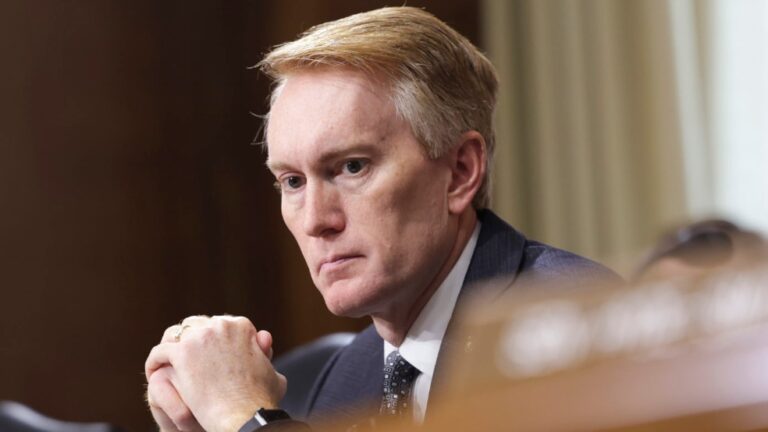
Wednesday’s vote came on a motion introduced by Sen. James Lankford (R-OK), as part of the Senate’s consideration of the United States Innovation and Competition Act (USICA) aimed at countering China.

TheΒ motion instructsΒ the senators negotiating the final bill with the House to β€œinsist” that the legislation include language requiring any nuclear weapons agreement with Iran to include provisions β€œaddressing the full range of Iran’s destabilizing activities,” including missiles, terrorism and sanctions evasion; does not lift any sanctions on the IRGC; and does not revoke the IRGC’s terror designation.

The Biden administration has sought to rejoin the 2015 nuclear agreement, from which the Trump administration withdrew in 2018. The original deal did not address issues beyond Iran’s nuclear program.

Senate Majority Leader Chuck Schumer (D-NY) and Sens. Richard Blumenthal (D-CT), Cory Booker (D-NJ), Ben Cardin (D-MD), Chris Coons (D-DE), Catherine Cortez Masto (D-NV) Kirsten Gillibrand (D-NY), Maggie Hassan (D-NH), Mark Kelly (D-AZ), Angus King (I-ME), Joe Manchin (D-WV), Gary Peters (D-MI), Jacky Rosen (D-NV), Kyrsten Sinema (D-AZ), Jon Tester (D-MT) and Ron Wyden (D-OR) voted for the measure.

The measure hadΒ reportedly become a matter of contentionΒ in the Senate, with some Democrats trying to block the vote.

Lankford allegedly threatened to block Senate proceedings on the bill unless guaranteed a vote on the measure.

Iran has demanded that the U.S. withdraw the IRGC’s Foreign Terrorist Organization designation. Secretary of State Tony Blinken told Congress last week that the groupΒ would have to cease its supportΒ for terrorism in order for the designation to be withdrawn,Β but also argued that the designation is largely ineffectual because other IRGC sanctions would remain in place.

Quds Force chief lauds triumphant flight of drones over occupied lands

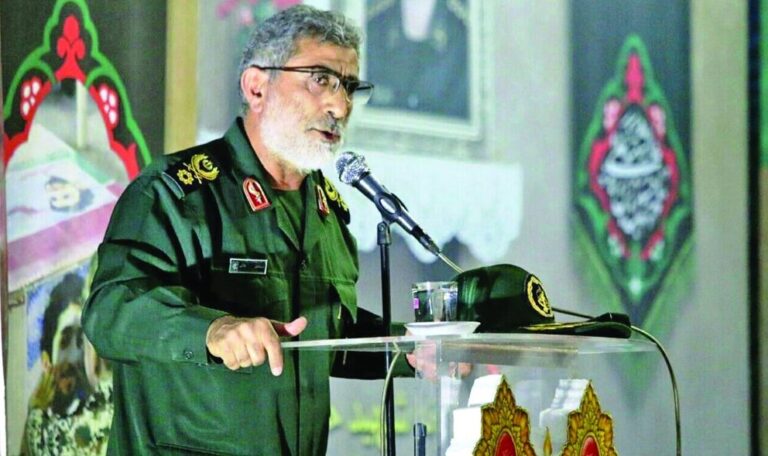
Esmail Qaani broke the story while addressing Quds Day marchers on the last Friday of the fasting month of Ramadan in the northeastern city of Mashhad.

The successful operation, according to Brigadier General Qaani, took place a few months ago.

β€œZionist entity sent 41 fighter jets and reconnaissance aircraft to intercept the two drones but they failed,” he stated.

The drones put Israel on β€œhigh alert,” but the Zionist regime β€œdid not disclose the truth of what happened” and subsequently lied to its people by claiming to have performed surprise drills, the IRGC Quds Force commander stated.

β€œThe regime was not man enough to tell the truth about the drone operation, where the drones came from, what they belonged to and what they were supposed to do,” Qaani said.

β€œThey lied to their own people; they said they were conducting drills.”

Iran has made significant advances in its military sector over the last few decades. The Islamic Republic has succeeded in producing missiles, drones, planes, tanks, submarines, and other military hardware.

Israel’s minister of military affairs confirmed Iran’s drone capability in September 2021, asserting the Islamic Republic had “accurate” and “destructive” drones capable of crossing thousands of kilometers.

In his address on Friday, Qaani also said the splendid Quds Day rallies will continue and that the resistance front would become stronger day by day until the occupying regime was overthrown.

β€œIt is better for the Zionists to return to their original homelands in Europe or any other place from which they came before it is too late. Israel is heading towards extinction,” General Qaani underlined.

Imam Khomeini, the late founder of the Islamic Republic of Iran, is respected as a spiritual leader by Muslims all over the globe, and International Quds Day is one of his legacies. Ayatollah Khomeini called the last Friday of Ramadan Quds Day in 1979, shortly after leading an Islamic Revolution that deposed the U.S.-backed regime of Shah in Iran.