Home Blog Page 33

Lifting Iran Sanctions, Taking IRGC Off Terror List Not Solutions

0

In a April 24, 2022 interview with Iran Sanctions ISCA News, as reported by the Middle East Media Research Institute, Iranian Majles member Ali Motaheri said the quiet part out loud.

Although no longer serving in the Iranian parliament and currently a private Iranian citizen, it is hard to believe Motaheri would have spoken so openly without at least tacit regime acquiescence.

What exactly did Motaheri say?

He told the interviewer that Iran’s goal from the beginning of its nuclear program was in fact to build a nuclear bomb. Iran Sanctions

He added that Iran’s failure was to keep that purpose secret until it was ready to openly test a nuclear device.

He also (and likewise implausibly) asserted that the sole reason for an Iranian nuclear weapon capability was “as a means of intimidation.”

Tellingly though, he also quoted from Qur’an verse 8:60, which commands believers to “Strike terror into the hearts of the enemy.”

In fact, evidence of Tehran’s true nuclear ambitions has been available for many years. We might begin with the Aug. 14, 2002 Washington, D.C. press conference during which Alireza Jafarzadeh, the Deputy Director of the Washington office of the National Council of Resistance of Iran (NCRI), revealed publicly for the first time the existence of Iran’s clandestine nuclear weapons program.

At that briefing, Jafarzadeh displayed satellite images of the Natanz uranium enrichment site and the Arak heavy water facility; subsequent revelations about other Iranian nuclear facilities followed and were responsible for prompting IAEA (International Atomic Energy Agency) inspections that served to place at least some level of monitoring over the program.
Iran Deal Hangs on Terrorist Group Designation

0

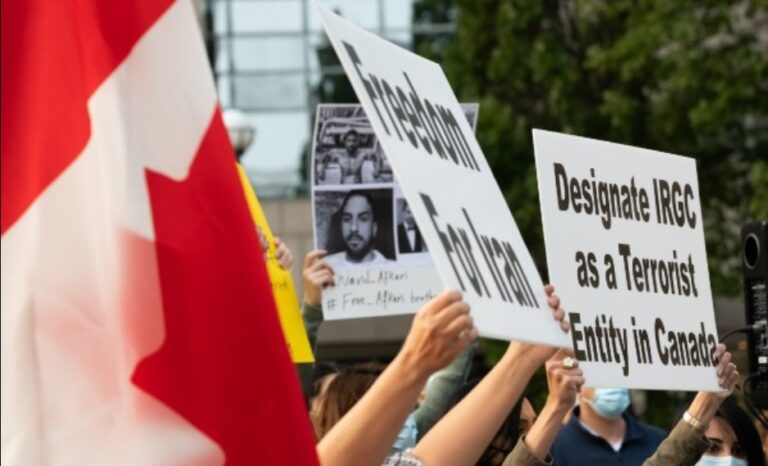
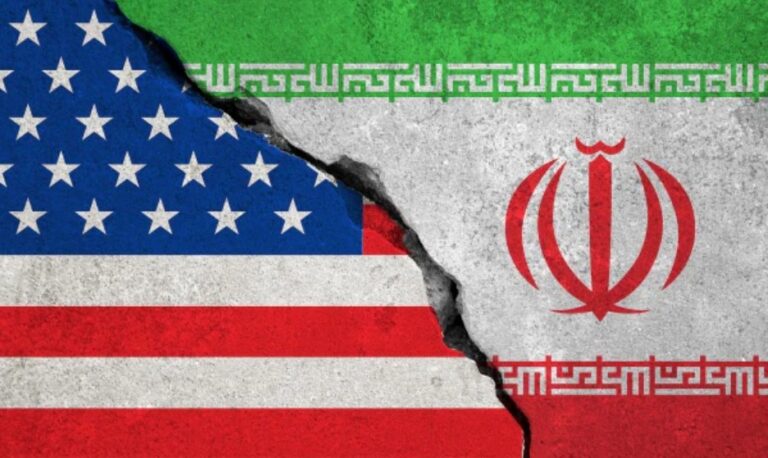
Talks for a new Iran deal have stalled, sending it to the state of improbability now, over Iran’s insistence the Biden administration drop the Islamic Revolutionary Guard Corps (IRGC) from the U.S. list of Foreign Terrorist Organizations.

Former President Donald Trump had designated the IRGC a state sponsor of terror in 2019 and the Biden administration is balking at removing the Iranian military branch from the terror list because the designation is outside the original terms of the Obama-era Joint Comprehensive Plan of Action (JCPOA), according to Politico.

“The U.S. position has been that unless Iran agrees to take certain steps to assuage security concerns beyond the JCPOA, Washington will not lift the terror designation, which itself is beyond the JCPOA, especially given ongoing threats by the IRGC against [Americans],” a U.S. official told Politico.

Both Iran and the U.S. consider the terror designation a deal-breaker, and Iranian Americans for Liberty (IAL) Executive Director Bryan Leib told Newsmax in a statement Thursday night this should have stopped talks before they started.

“It should come as no surprise to the American people that diplomacy with the world’s leading fiscal sponsor of terrorism has failed,” Leib’s statement read.

“The Islamic Regime in Tehran are not partners for peace for the United States, Israel, or our Arab allies in the Middle East.

“The regime has threatened to kill former President Donald Trump, former Secretary Mike Pompeo and many other former and current U.S. officials.

The time is now for Joe Biden to pivot back to a maximum pressure and maximum sanctions campaign against the Mullahs in Tehran.”

A draft 27-page agreement had been readied, but now a deal is a long shot, according to Politico.

How Lebanese Hezbollah serves the Iranian IRGC drone program

0

Lebanese Hezbollah has long served as a linchpin of Iran’s IRGC drone programme, assembling drones at its bases with parts smuggled in from Iran via Syria, and training cadres from Yemen’s Houthis and other proxies.

Hezbollah chief Hassan Nasrallah went so far as to boast about his party’s prowess in this area in February, claiming Hezbollah is using unmanned aerial vehicles (UAVs), or drones, to turn its missiles into precision-guided weapons.

He even invited interested parties to “fill out an application” to buy his party’s weapons.

Despite Nasrallah’s flaunting, however, Iran is behind most of the party’s drones.

Since 2004, the Islamic Republic has provided drones, drone components and designs to its proxies, including Hezbollah, and also has provided the party’s fighters with training, The Iran Primer said in a June 2021 report.

Between 2005 and 2012, Hezbollah obtained more advanced drones, expanding its UAV operations after joining the conflict in Syria in 2012 in support of the regime of Bashar al-Assad.

By late 2013, Hezbollah possessed hundreds of Iranian-designed drones, the report said, including Mersad-1 light-weight combat and reconnaissance drones and heavyweight reconnaissance and combat Ayoub drones, in addition to the Hassan.

“While Hezbollah has been silent about whether it actually has a factory to manufacture drones, it is certain that it has trained experts,” retired Lebanese Brig. Gen. Naji Malaeb told Al-Mashareq.

In Syria, Hezbollah “hid Iranian-made IRGC drones in underground bunkers it had previously dug at an old military base” in the Khirbet al-Ward area near Sayyida Zainab shrine, the Syrian Observatory for Human Rights said in January.

ran’s Islamic Revolutionary Guard Corps (IRGC) and Hezbollah experts trained in Iran are present in this area, it said.

The Iran-backed party used drones in Eastern Ghouta and in rural Aleppo and Idlib, Malaeb said.

Iranian IRGC intelligence detains Kurd activists on Labour Day

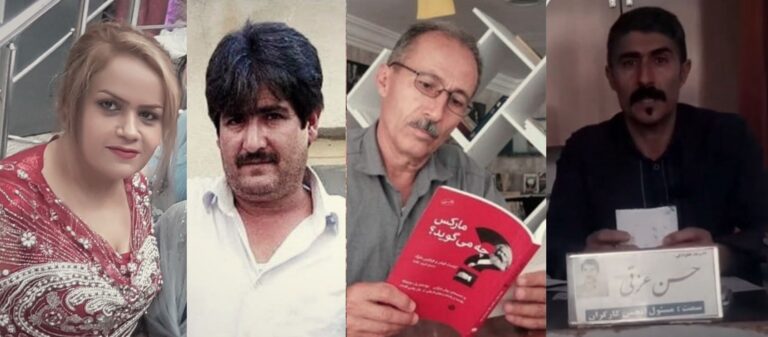
The Intelligence Organisation of the Islamic Revolutionary Guard Corps (IRGC) arrested seven labor and women’s rights Kurd activists in Baneh, Kurdistan province, on 26 April.

The names of these activists are Nishtiman Rahmati, Parvin Abdollahpour, Hassan Ezzati, Saeid Mohammadi, Omar Soleimani, Fateh Majidi, and Afshin Rahimi.

Reportedly, the IRGC forces also raided the homes of these civilians and confiscated some of their personal belongings.

Nishtiman Rahmati was released after several hours while the rest of the activists were transferred to the Shahramfar Detention Center of the Intelligence Organisation of the IRGC in Sanandaj, Kurdistan province.

In the past few years, security forces summoned and interrogated the labor and women’s rights activists Parvin Abdollahpour and Nishtman Rahmati, the member of the board of directors of the Baneh Construction Workers’ Union Hassan Ezzati, and labor activists and former political prisoners Saeid Mohammadi and Omar Soleimani, on several occasions.

Iran has roughly twelve million Kurds making up approximately 15 percent of the population. The majority of Kurds live in Kurdistan, located in the northwestern area of Iran near the border of Iraq.

Around 10,000 Kurds have been reportedly killed or executed and roughly 20,000 displaced following the Islamic revolution of Iran.

After the establishment of the Islamic Republic in 1979, Iranian authorities have been very effective in suppressing the Kurds and silencing any dissent or opposition.

First of all, due to their military capabilities, hard power superiority, and harsh punishments such as executions, Iranian leaders have been successful in cracking down on Kurdish democratic aspirations, human rights activists, political activists, and opposition groups.

Secondly, the Iranian government has neglected the Kurdistan region thus preventing the majority of the Kurdish population from prospering financially. Third, from a cultural, religious, and ethnic point of view, the Kurdish minority has long suffered discrimination- being viewed with suspicion, and considered outsiders or foreign conspirators.

Iran will win next Lebanese elections

0

“Hezbollah” will defeat Lebanon and the Lebanese and that is the only game it can master. Perhaps Lebanon is the place where Iran has achieved its most important successes in the region.

This is to be confirmed by the parliamentary elections in the country scheduled for May 15.

Lebanon is heading towards re-establishing once again Hezbollah’s hold on the Lebanese parliament,  as happened in 2018.

At that time, Qassem Soleimani, commander of the Quds Force in the Iranian Islamic Revolutionary Guards Corp, said that Iran had gained the majority in the Lebanese parliament.

The Lebanese legislative elections have clearly become an Iranian exercise aimed at using Lebanon as a bargaining chip for the “Islamic Republic”, nothing more and nothing less.

The US administration can no longer ignore this in any direct or indirect negotiations towards a US-Iranian deal that guarantees the lifting of sanctions on the “Islamic Republic.”

Iran is losing everywhere except in Lebanon, where all state institutions are at its disposal, starting with President Michel Aoun, who owes his arrival at Baabda Palace, along with his son-in-law Gebran Bassil, to Hezbollah and no one else.

Perhaps the most prominent place in which the Iranian project failed was Bahrain, which, thanks to direct Gulf support, was able to prevent a reenactment of Lebanon’s “Hezbollah” experience. But Iraq remains, however, the crown jewel of the Iranian expansionist and sectarian project.

Nineteen years after the administration of George W Bush handed over Iraq on a silver platter to the “Islamic Republic,” it turns out that Tehran has no magic solution in Iraq and that Iraq is still Iraq while Iran is still Iran.

There is still a majority in Iraq that rejects subordination to Iran. The best expression of this rejection remains the ongoing situation in the country since the parliamentary elections of last October.

These elections inflicted a defeat on the pro-Iran parties. Today, the most that the “Islamic Republic” can achieve, after losing Qassem Soleimani, the commander of the “Quds Force” and the maestro of Iran’s lethal orchestra in Iraq, is to obstruct the formation of a new Iraqi government and the election of a new president.

In Syria, Iran has failed, at least so far, to  take advantage of Russia’s preoccupation with the Ukrainian war.

Israel hits Iranian terrorist designated IRGC targets in Syria

0

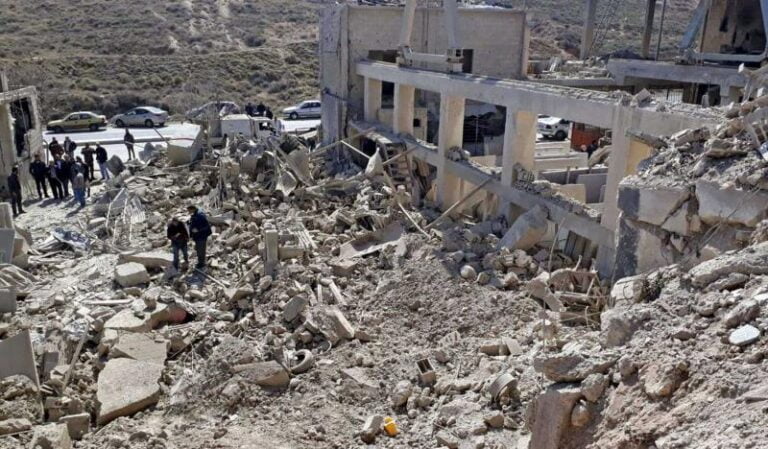
Israeli airstrikes near Damascus on Wednesday killed nine combatants, among them five Syrian soldiers and four Iranian terrorist designated IRGC militia fighters, in the deadliest such raid since the start of 2022, a war monitor said.

The Syrian Observatory for Human Rights said an ammunition depot and several positions linked to Iran’s military presence in Syria were among the targets.

Government media in Syria confirmed four of the five casualties in the strikes, on which Israel did not comment.

“The Israeli enemy carried out an air assault at dawn … targeting several positions around Damascus,” a military source was quoted as saying by the state news agency SANA.

“The investigation indicated that four soldiers were killed, three others injured and material damage noted.”

The latest strike follows another near Damascus on April 14, without casualties, according to SANA.

The UK-based Observatory, which relies on an extensive network of sources in every region of Syria, said eight people were also wounded in the strikes.

The other four killed were not members of the Syrian military but belonged to Iran-backed militia, Observatory chief Rami Abdel Rahman said, adding he could not verify their nationality.

He said at least five separate sites were targeted in the latest Israeli raid.

In early March, two officers from Iran’s Revolutionary Guards were killed in Israeli strikes on targets in Syria.

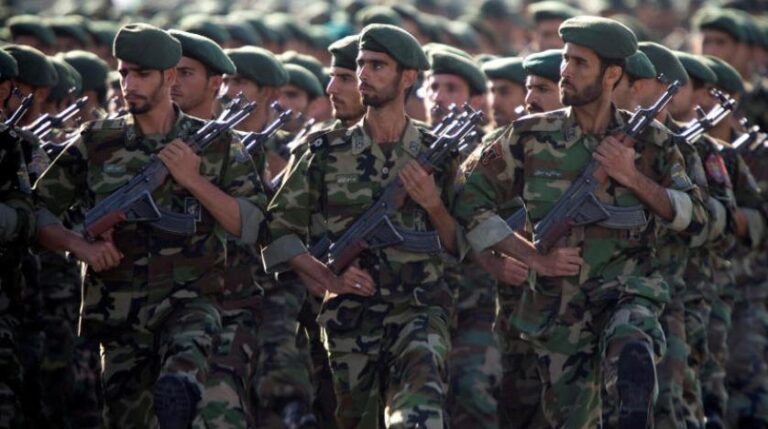
The terrorist designated IRGC (Islamic Revolutionary Guards Corps) is the ideological arm of the Iranian military and holds considerable political and economic sway over the country.

The Quds Force is the Guards’ foreign operations arm of the IRGC, which is listed as a terror group by the US.

Damascus has the backing of Iran and its proxy militias. But it is Russia’s military intervention in the Syria conflict in 2015 that turned the tide in favour of President Bashar al-Assad, whose forces once only controlled a fifth of the country.

IRGC general appointed as CEO of Iranian national airline

0

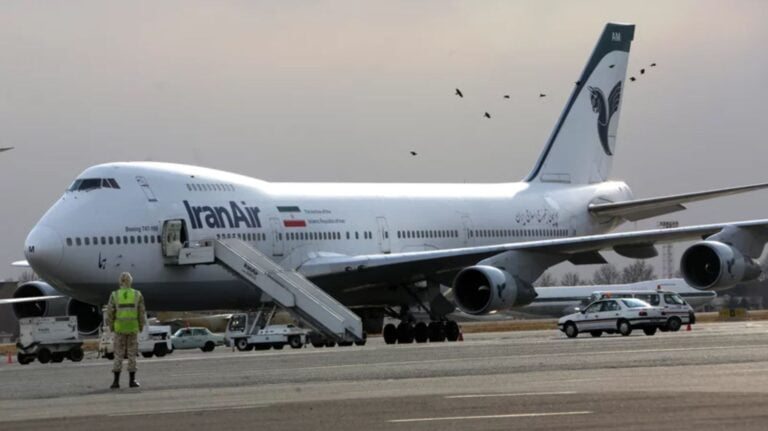
An IRGC general of Iran’s Islamic Revolutionary Guard Corps has been appointed the new CEO of the country’s flag carrier Iran Air.

Second Brigadier General Shamseddin Farzadipour was assigned to the job on Monday upon a decree by Transportation Minister Rostam Ghasemi (Qasemi), himself a brigadier general who served as a commander in the overseas branch of the IRGC, the Qods (Quds) Force.

Farzadipour was serving as commander of aviation operations at the IRGC’s Air and Space Force.

Since President Ebrahim Raisi (Raeesi) took office, more and more Revolutionary Guard commanders have been appointed to civilian positions, such as governors, ministers, and top managers and advisors.

Iran Air — locally known as Homa — has been struggling with a series of financial crises in recent years as the company has been unable to implement fleet modernization plans due to US sanctions.

The company had ordered 200 passenger aircraft — 100 from Airbus, 80 from Boeing, and 20 from Franco-Italian turboprop maker ATR – following the nuclear agreement in 2015 that were supposed to ease restrictions but when former president Donald Trump left the deal, Washington revoked licenses for Boeing Co and France’s Airbus to sell Homa commercial planes.

In March, a group of retirees and employees of Homa held a protest rally over their living conditions as the company faces huge amounts of unpaid pensions as well as several debts to the government and private companies.

Iran’s Islamic Revolutionary Guard Corps (IRGC), fully in charge of the nation’s politics and economy and in complete control of its oil, gas, petroleum, imports, and exports and the foreign ministry for the past 4 decades, despite driving Iran a hundred years back in time, had been consistently trying to officially dominate the country’s government and ultimately the office of its supreme leader, to be able to designate Iran’s future supreme leader from among its ranks. The IRGC designated Ebrahim Raisi, Iran’s newly elected president to realize its decade-old dreams

Blinken: Iran must make changes before U.S. lifts IRGC terror designation

0

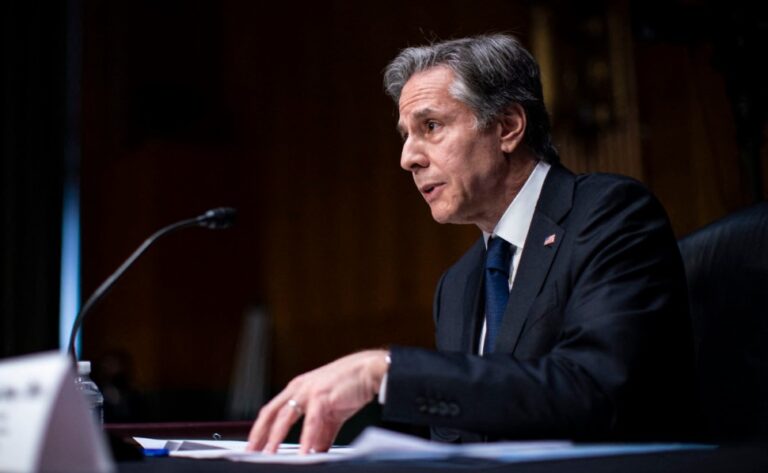
Secretary of State Tony Blinken said on Tuesday that lifting the Islamic Revolutionary Guard Corps’ designation as a Foreign Terrorist Organization (FTO) would require Iran to take unspecified “steps,” but also argued that, “as a practical matter, the designation does not really gain [the U.S.] much.”

The designation is reportedly the key sticking point in nuclear talks between the U.S., Iran and other international partners, which have once again stalled over the disagreement.

Recent reports indicate that the talks, which are taking place in Vienna, are close to collapsing.

“The only way I could see [the FTO] being lifted is if Iran takes steps necessary to justify the lifting of that designation.

So it knows what it would have to do in order to see that happen,” Blinken told the Senate Foreign Relations Committee during testimony over the State Department’s 2023 budget request. “It would require Iran to take certain actions and to sustain them.”

But, Blinken continued, “If [Iran] purported to do something and then didn’t… [FTO designation] can always be reimposed.”

Pointing to the previous opposition to the designation from top officials in the Bush, Obama and Trump administrations, Blinken argued that the designation may do more harm than good.

“In the judgment of the [George W. Bush and Obama] administrations and senior leadership in President [Donald] Trump’s administration, the gain was minimal and the pain was potentially great,” Blinken continued.

“And as a practical matter, the designation does not really gain you much because there are myriad other sanctions on the IRGC.”

The main impact of the FTO, beyond other sanctions measures, is a travel ban on IRGC members, including conscripts, even though “the people who are the real bad guys have no intention of traveling here anyway,” Blinken argued.

He added that the Biden administration has issued 86 additional sanctions against the IRGC, which would remain in place regardless of a nuclear deal or delisting.

Iranian terrorist IRGC seeks to prosecute reformists who criticized it

0

A petition by the IRGC news website Fars has collected over 50,000 signatures for the prosecution of former lawmaker Faezeh Hashemi Rafsanjani for remarks against the Iranian terrorist IRGC.

Hashemi, who is the daughter of former president Akbar Hashemi Rafsanjani and a pro-reform politician, recently said that Iran’s Revolutionary Guard (IRGC) should remain on the United States’ list of Foreign Terrorist Organizations (FTO), arguing that its removal is not in Iran’s interest.

The petition page of the Fars news agency, affiliated to the IRGC, is designed with a maximum target of 50,000 signatures that Fars claims it would be enough to make the case considered for a public discussion in Iran’s parliament. The petition for Hashemi’s persecution has collected nearly 53,000 signatures in one day.

Echoing similar sentiments, conservative politician Hamidreza Taraghi, a senior member of Motalefeh (the Islamic Coalition party), also told the news agency that prosecution of Hashemi is a public demand now and “people are completely dissatisfied with and complain about her repeated stances”.

Taraghi added that when such remarks are not dealt with seriously, Ali Motahari, a former deputy speaker of the parliament, dares to make “nonsensical” comments about the country’s nuclear program “in order to be seen”.

Motahari had said on Sunday that Iran’s aim from the beginning was to produce nuclear weapons as a deterrent force, but it failed to keep the project secret after the Mojahedin Khalq (MEK) opposition group revealed the program to the world.

This comes as the IRGC naval commander recently made threats against regional countries and their western allies.  This would appear to be a message to the region that the IRGC navy, which consists of fast boats and some “mother ships” that can operate further from Iran, could now threaten to ship further from Iran. Iran has sent IRGC assets to the Red Sea in the past and there have been attacks on commercial tankers in recent years by mines and drones.

IRGC navy commander threatens US, Israel and Middle East – analysis

0

IRGC navy commander Tangsiri: “Today, the law of the world is the law of the jungle, and we have a duty to protect our interests from enemies.”

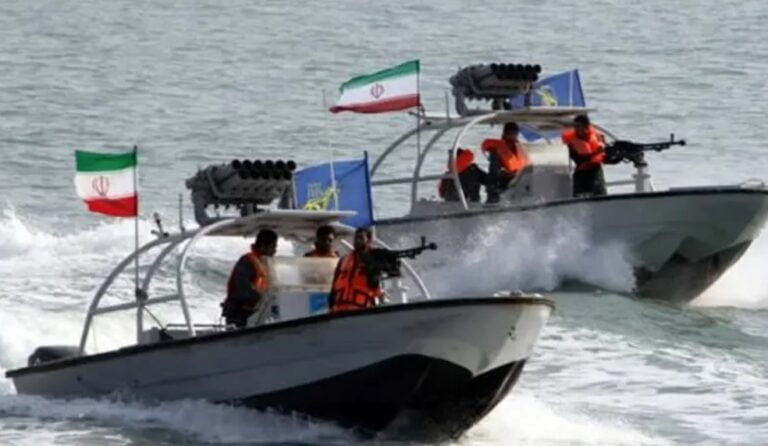
Iran’s Islamic Revolutionary Guard Corps naval commander Alireza Tangsiri gave a long interview to Iran’s Tasnim News this week in which he boasted about the IRGC navy’s growing capabilities. IRGC navy commander

This would appear to be a message to the region that the IRGC navy, which consists of fast boats and some “mother ships” that can operate further from Iran, could now threaten to ship further from Iran.

Iran has sent IRGC assets to the Red Sea in the past and there have been attacks on commercial tankers in recent years by mines and drones.

Iran has an official navy, but its IRGC navy is seen as the ideological outgrowth of the Iranian revolution, willing to be used to strike at the US, the Gulf, Israel and others. It is often called “Nedsa” as an abbreviation in media.

In the interview Tangsiri says that his units have increased training and combat readiness.

“The all-encompassing combination of these capabilities constitutes a high and powerful capacity of dense and robust energy to carry out any communicative mission in a timely manner,” the article says.

“We are defining, updating and equipping our combat organization based on special mission strategies,” observes Tangsiri.

THE STRAIT of Hormuz between Iran and Oman is a major artery for oil circulation, targeted by Iran in the event of war. (credit: Wikimedia Commons)

This includes electronic warfare, air navigation, smart submarines and missiles provided to the IRGC Naval Combat Organization, which have played a very important role in improving combat capability and producing lasting security and deterrent power, the article claims.

The article includes threats against the “arrogant” powers, usually a reference to the US and its allies in the region.