Home Blog Page 34

Iran nuclear deal awaits final decisions after talks stalled

0

At a time when the Iranian nuclear deal talks are about to reach an agreement, Iran and world powers have adjourned their talks, mostly over whether the United States will remove Iran’s Islamic Revolution Guards Corps (IRGC) from its Foreign Terrorist Organization (FTO) list.

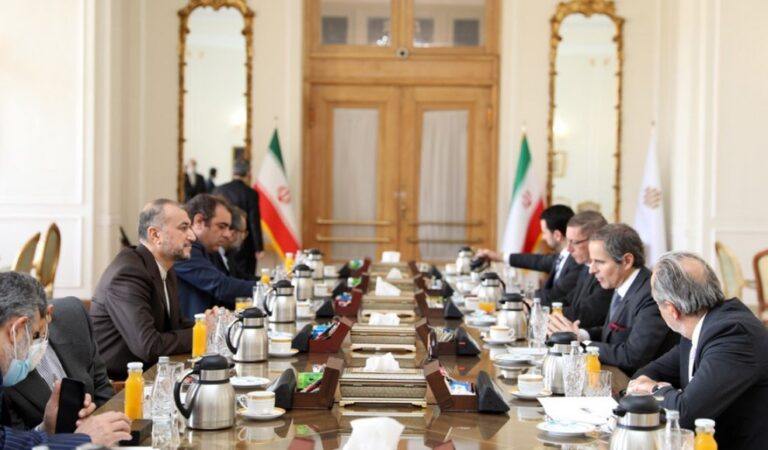
While negotiations in the Austrian capital of Vienna stalled a year after they began, Tehran and Washington have ramped up their rhetorical war, demanding political decisions from the other side to bridge the final gap.

Firm stance

Iranian Foreign Minister Hossein Amir-Abdollahian said Thursday that his country “does not pay attention to excessive demands nor will it retreat from its red lines.”

Iran has so far insisted on its position with no signs that it may budge any time soon, said Iran’s English daily newspaper Tehran Times, adding that “in fact, the odds are currently against any change in Iran’s position.”

Such a firm approach to Vienna talks has recently been praised by Iran’s Supreme Leader Ayatollah Ali Khamenei, who “expressed his satisfaction with the resistance of the negotiating team to the other sides’ aggression and avarice,” according to his official website.

“The other side withdrew from the JCPOA (Joint Comprehensive Plan of Action) and broke its commitments. Now they feel helpless and have reached a dead end,” Khamenei said, referring to the 2015 nuclear deal.

According to the reports provided by Amir-Abdollahian and Iran’s chief negotiator Ali Bagheri Kani, “the red lines of the system have not been crossed in any way in the Vienna talks,” Jalil Rahimi Jahan Abadi, a member of the Parliament’s National Security and Foreign Policy Committee, was quoted by the official IRNA news agency as saying last week.

“The United States not only has not achieved anything since leaving the JCPOA, but even Iran’s position has become stronger and more coherent in recent years than when the United States was present in the JCPOA,” the Iranian lawmaker pointed out.
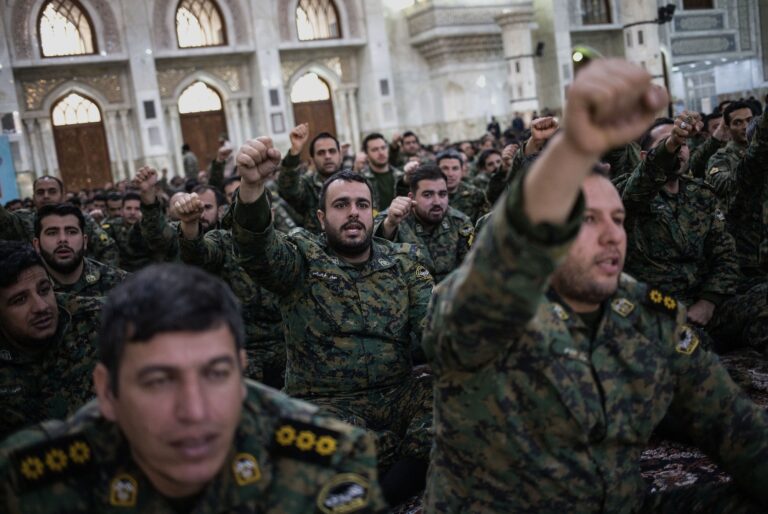
SOHR : Hezbollah establishes weapons workshops in Homs countryside under the supervision of the Iranian Revolutionary Guards

0

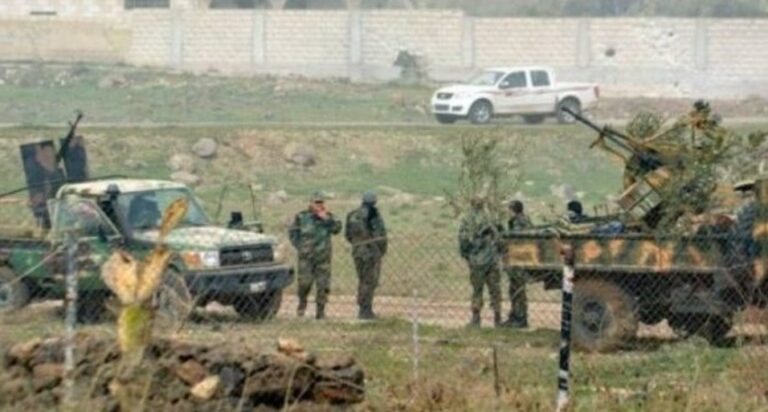
The Syrian Observatory for Human Rights said today, Saturday, that the Lebanese Hezbollah has recently set up workshops to manufacture weapons of all kinds in the countryside of Homs, under the supervision of experts from the Iranian Revolutionary Guards.

The observatory stated that Hezbollah had established workshops for the manufacture of artillery and missile shells, mines and maintenance of drones “within the fortified arms and ammunition depots in the strategic Mahin area in the southeastern countryside of Homs.”

He pointed out that these depots “are considered the second largest arms depots in Syria.”

According to the sources of the Syrian Observatory, a large number of people from the town of Mahin in Homs countryside are now working in the ranks of the local militias loyal to Iran, after the regime and Iranian militias took control of the area in early 2017, with Russian air support.

It is worth mentioning that in November of 2013, opposition and Islamist factions took control of Mahin’s military warehouses, where control at that time led to the factions seizing large quantities of light, medium and heavy weapons and ammunition.

In October 2015, ISIS took control of the town of Mahin and its warehouses in the countryside of Homs after an attack with booby-trapped vehicles that targeted a checkpoint of the regime in the vicinity of the area, before the latter regained control of Mahin and its warehouses in early 2017 with Russian air cover and support from Iranian militias on the ground.

The Syrian Observatory for Human Rights indicated on April 21 that the Russian forces withdrew completely from the Palmyra military airport in the eastern countryside of Homs, as all the Russian elements left the airport via a military helicopter before the Russian forces withdrew their helicopters from the airport as well, for unknown reasons.

According to the sources, the Russian helicopters and the forces that left Palmyra Airport headed for T-4 Airport in Homs countryside.

Iranian IRGC interrogators asked hostage to teach them Hebrew

0

Australian-British academic Kylie Moore-Gilbert has revealed in a new book that Islamic Revolutionary Guard Corps IRGC interrogators asked her to teach them Hebrew during her detention in Iran, which lasted for more than two years.

In the recently published book, called ‘The Uncaged Sky’, she describes a conversation between her and an IRGC interrogator.

“You need to come to us with an offer. Can I suggest it? You speak Hebrew. You could give us lessons,” she wrote.

She said she was both shocked and fascinated by the prospect “of [her] in a classroom teaching the Jewish language to a room full of antisemitic Islamic extremists“, in her words, pointing to the IRGC interrogators.

Hebrew is the national language of Israel, Iran’s main regional adversary.

Both states have repeatedly accused each other of spying on their respective military and energy facilities and have come close to open conflict several times over the past decades.

Moore-Gilbert, a lecturer of Islamic Studies at Melbourne University, spent 804 days in Tehran’s notorious Evin prison.

She was arrested during a visit to the Iranian city of Qom to attend an academic conference and charged with spying for the Australian government.

She was subjected to hundreds of interrogations, but repeatedly denied the allegations against her. The Australian government also denied the charges.

She was eventually released after a complicated prisoner swap involving three countries that involved the return of three Iranians convicted of attempting to bomb the Israeli embassy in Bangkok.

Iranian authorities routinely detain foreign nationals who critics say are used as hostages.

Earlier this year, two British-Iranian prisoners, Nazanin Zaghari-Ratcliffe and Anoosheh Ashoori, were released from prison after the UK government arranged for the repayment of a historic £400 million debt to Iran for undelivered tanks that dated back to the 1970s.

Also read: Iranian prominent reformist faces possible jail after criticizing IRGC

Iran’s terrorist designated IRGC, sole benefiter of oil profits

0

Iran is seeing record high income from oil, yet regular Iranian citizens are not feeling the positive impact on their lives. Many point to the corrupt practices of the terrorist designated IRGC with its members infesting the cabinet.

While top Iranian officials tout record income on oil exports, lawmakers, observers, and civilians are wondering where all the money is going.

Oil Minister Javad Owji on March 24 said that “Iran has reached a record high of crude exports and revenues since sanctions hit the country’s oil industry in 2018”.

In early February, Fars News agency, which is affiliated with the Islamic Revolutionary Guard Corps (IRGC), reported that the country’s oil export income grew almost 500% in the first five months of the Raisi administration.

These and other statistics by regime officials, most reported with no proof, have sparked intense debate inside Iran about where the profits are ending up.

The issue is particularly acute as Iranians are suffering from growing poverty, unemployment, inflation and desperation.

Many Iranians see a direct connection between the oil income embezzlement, and corruption in general, and the past and present IRGC officers who enjoy disproportionate representation and privileged positions in Raisi’s administration.

A notorious IRGC figure in the current cabinet is Rostam Ghasemi, minister of roads and urban development, who was also former president Mahmoud Ahmadinejad’s oil minister.

Ghasemi, who is the former commander of the terrorist designated IRGC Khatam-al-Anbiya Construction Headquarters, is under US sanctions for his involvement in many of the IRGC’s corrupt, mafia-like economic deals.

With 40 years of experience in the IRGC, he has held positions from the commander of Khatam al-Anbiya base to deputy economic director of the IRGC-QF.

Other members of the Raisi cabinet have been charged with corruption and embezzlement by the Islamic Republic’s own judiciary system, while others have been charged with terrorist acts and are “wanted” or sanctioned by the West.

Quds v. Revolutionary Guards: Why U.S. Sees Iran’s Two “Terrorist” Forces Differently

0

For weeks now there has been talk of removing the Iranian Revolutionary Guards from the West’s list of international terrorists, to meet one of Iran’s conditions for renewing the 2015 pact on its nuclear program, or agreeing on a similar pact.

Tehran says removing the terrorist label from the Guards and lifting all sanctions on this key military force constitute a ‘red line’ that must be included in any deal in ongoing, though stalled, talks on its program.

Recently U.S. President Joe Biden and the Chairman of the Joint Chiefs of Staff, General Mark Milley, voiced opposition, without specifically citing the Revolutionary Guards, to ending the terrorist label for one particular unit of the Guards, the Quds Force.

This is a regional task force suspected of meddling in the affairs of several neighboring states, and the previous U.S. administration of President Donald Trump took out its powerful leader Qassem Soleimani in 2020, saying he was a threat to U.S. forces.

The problem with Washington’s comments and thinking is the idea that the Guards and the Quds Force are two distinct institutions, when in fact they are part of a single entity.

On Khamenei’s orders

The Quds Force or Quds Army (Sepah-e quds) takes its name from Jerusalem (Quds), a city that the Islamic Republic of Iran boasts it will recover for the Muslims.

The force emerged from departments created after the 1979 revolution to back operations and Islamist movements outside Iran.

The directorates’ names, and their heads, changed through the years of war with Iraq (1980-88), but it was clear they effectively functioned under the aegis of the Revolutionary Guards.

After the end of the war, the country’s new supreme leader Ali Khamenei, ordered the creation of the Quds Force as one of the five branches of the Revolutionary Guards, alongside their infantry, air force, navy and the Basij (city militias). Thus the operations of the Quds force cannot be considered as independent of the Guards.

Iranian prominent reformist faces possible jail after criticizing IRGC

0

Outspoken Reformist Faezeh Hashemi has invited furious attacks from hard-liners after criticizing IRGC (Islamic Revolutionary Guard Corps) and suggesting that the United States should keep the Islamic Revolutionary Guard Corps on its terror list.

“She has practically acted as America’s infantry inside Iran,” wrote Fars News Agency, which is affiliated with the Islamic Revolutionary Guard Corps (IRGC). The chain of cutthroat pieces targeted Faezeh Hashemi — a senior Reformist activist, former parliamentarian and daughter of late moderate ex-President Akbar Hashemi Rafsanjani — over her unprecedented diatribes against the powerful military organization.

Addressing a meeting on the social media platform Club House on April 17, Hashemi while criticizing IRGC, stressed the need for the IRGC to “retreat to its bases” because it “has been expanding its scope of activities on a daily basis.”

In Hashemi’s view, the only way for such a return is for the force to remain on the US list of Foreign Terrorist Organizations (FTO). “I don’t believe the removal of the IRGC from the list serves the Iranian nation any good,” she declared.

Founded only a few months into Iran’s 1979 Revolution, the IRGC was by essence a military organization but enjoyed the blessing of the ruling clerical establishment in its growing rivalry with the regular army. The force’s mission has over four decades transcended beyond its military mission, building an empire of wealthy conglomerates before rising as the country’s most powerful entity, which has faced accusations of prevalent corruption with limitless impunity.

The IRGC’s missile program and its overseas activities across the Middle East and even beyond have particularly worried Western powers. The force has faced a host of economic sanctions since its establishment. But most notably, in 2019 it became the first government organization to fall under the US FTO list following an order by former President Donald Trump.

A possible IRGC removal from the list has been a sticking point in the course of the now-stalled negotiations between Iran and major powers in their diplomatic push to revive the 2015 Iran nuclear deal. The Iranian negotiators have reportedly rejected with adamance US conditions in exchange for a potential delisting of the Guards.

Lawmaker Mansour Haghighatpour said on Tuesday that Faezeh Hashemi has crossed the Islamic Republic’s “red lines” and “trampled on the country’s values and national interests. So much leniency emboldens people like her. I believe that the Islamic Republic must take appropriate punitive action against Faezeh Hashemi and discipline her,” he said.

Biden reluctant to remove Iran’s Revolutionary Guards from terror list

0

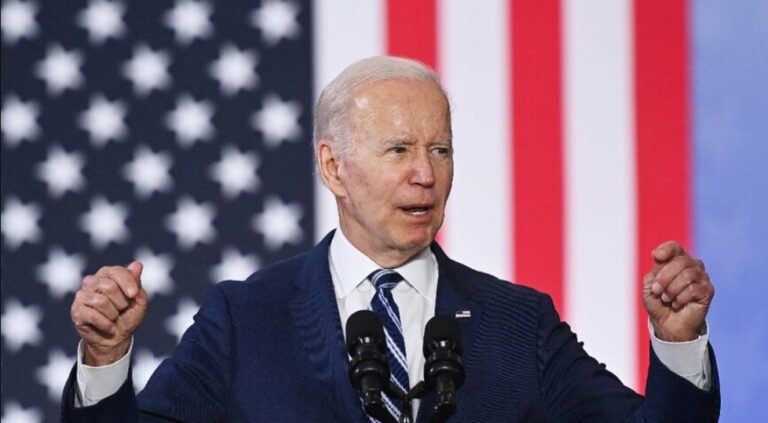
US President Joe Biden seems increasingly determined to keep the “terrorist” designation on Iran’s Revolutionary Guards, which Tehran is demanding be removed before it returns to a deal on curbing its nuclear program.

“Each side is just hoping that the other would blink first,” Ali Vaez, an Iran expert from the International Crisis Group, a conflict-prevention think tank, told AFP.

Negotiations opened a year ago in Vienna to revive the landmark 2015 agreement that was supposed to prevent Iran from acquiring nuclear weapons.

Under the presidency of Donald Trump, the United States walked out of the agreement in 2018 and reinstated economic sanctions against Tehran, which in response, shrugged off restrictions imposed on its nuclear activities.

Biden wants Iran to return to the agreement, provided that Iran resumes those commitments.

Despite early hopes, the talks are deadlocked and the emissaries have not been in the Austrian capital since March 11.

However, a draft compromise is still on the table, after resolution of most of the thorniest issues.

The fate of the Guards is the final obstacle blocking the talks: the Islamic Republic is demanding the removal of its elite ideological force from the US blacklist of “foreign terrorist organizations.”

Change of direction

The Iranians argue that it was only added to the list by Trump to increase pressure on them after the US exit from the 2015 agreement, also known by its acronym, the JCPOA.

But the Americans have shot back that the subject is in no way related to the nuclear issue.

“If Iran wants sanctions lifting that goes beyond the JCPOA, they’ll need to address concerns of ours that go beyond the JCPOA,” State Department spokesman Ned Price said this week.

He added that Iran should negotiate in “good faith” and reciprocity.

The United States has said it does not negotiate in public and had avoided making any clear statement on the fate of the Revolutionary Guards’ status.

Iran FM reiterates avenging slain IRGC commander amidst nuclear talks

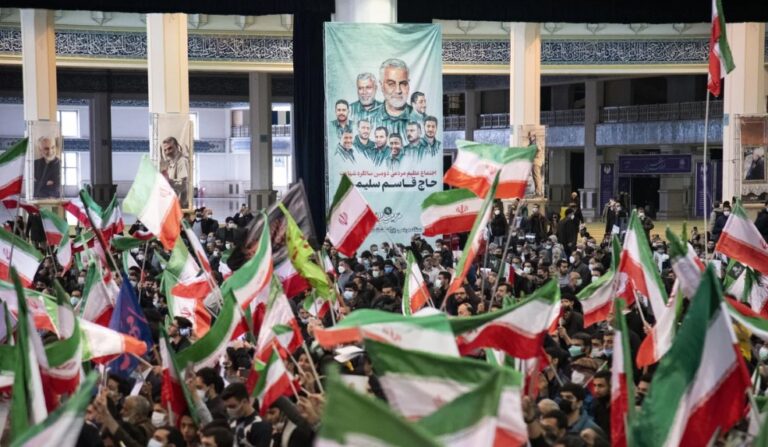
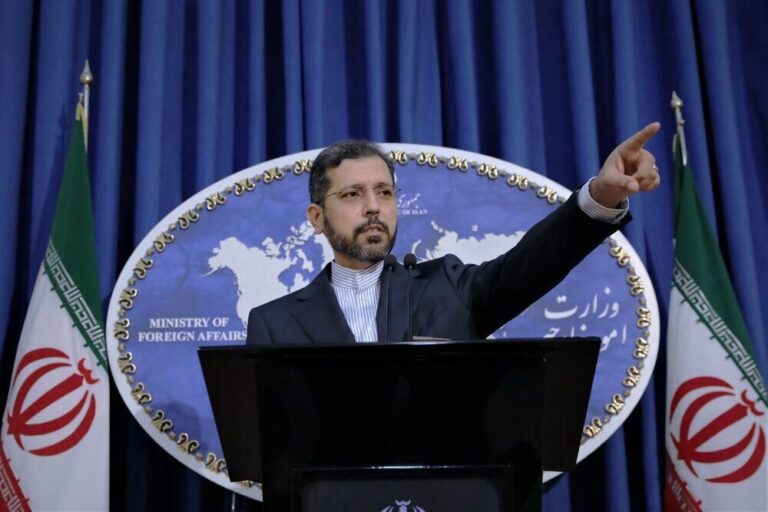
Iran FM spokesperson said Monday that seeking revenge for the United States’ killing of slain IRGC (Islamic Revolutionary Guard Corps) commander Qasem Soleimani is a “basic and definite principle” of the country’s foreign policy.

“It is a definite principle in the foreign policy of the Islamic Republic of Iran that [those involved in Soleimani’s killing] must be brought to justice,” Iranian Foreign Ministry spokesperson Saeed Khatibzadeh said Monday, according to Al Arabiya.

“The basic principle in the foreign policy of the Islamic Republic of Iran was formed after the cowardly assassination,” he said. “The action taken by the perpetrators and advisers of this cowardly act will not go unpunished.”

In January 2020, a US drone strike in Baghdad killed Soleimani, who led the IRGC’s powerful overseas wing known as the Quds Force. Last week, a senior Revolutionary Guards commander said even the killing of all American leaders wouldn’t go far enough to avenge his death.

Khatibzadeh, Iran FM spokesperson’s, comments come after Iran reportedly rejected the Biden administration’s proposal to drop the IRGC from its formal list of foreign terrorist organizations in return for assurances from Tehran that it would not target Americans connected to Soleimani’s killing.

The State Department has reportedly spent millions of dollars providing protection for former Secretary of State Mike Pompeo and former Iran envoy Brian Hook amid “serious and credible” threats from Iran. The pair spearheaded the Trump administration’s so-called “maximum pressure” campaign of sanctions against Tehran that included the IRGC’s designation as an FTO in April 2019.

The United States “will protect and defend our citizens,” State Department spokesperson Ned Price said last week in response to the Iranian threats. “This includes those serving the United States now, those who have formerly served the United States in the past.”

Talks aimed at restoring the landmark nuclear agreement are held up over Iran’s demand that the IRGC be removed from the US terror blacklist. Biden administration officials have said that the onus remains on Iran to resolve the standoff.

Iran’s IRGC should never be delisted by the US – opinion

0

If the Biden administration delisted the IRGC, it sends a signal to the world that America is ready to work with terrorists.

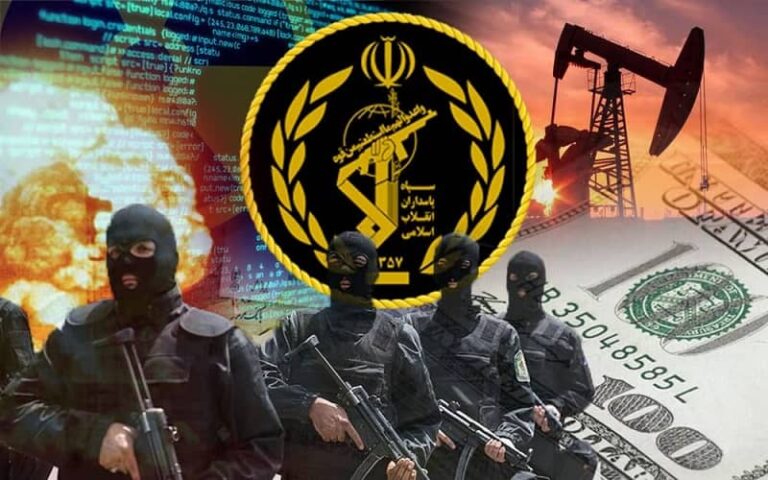
As a precondition to returning to the nuclear agreement, Iran had demanded that the United States remove the Islamic Revolutionary Guard Corps from the State Department’s Foreign Terrorist Organization (FTO) list.

The IRGC was designated a terror group in 2018, when President Donald Trump pulled out of the JCPOA, not least because of its role in fomenting chaos in the region.

The Trump administration made clear that any attempt to renegotiate the agreement would be predicated on IRGC’s commitment to refrain from destabilizing the region and to eliminate its proxy network.

Though publicly rejecting the Iranian demand, unconfirmed reports indicate that the Biden administration is willing to compromise and remove the IRGC from the FTO blacklist while keeping the Quds Force – the Guards’ foreign terror unit – on the list.

Keeping the Quds Force only on the blacklist flies in the face of reality and would have profound security implications.

First, it is imperative to note that the IRGC and Quds Force are inseparable and intertwined organizations, and the distinction between them is misleading. delisted

When the Revolutionary Guards was formed on May 5, 1979, Ayatollah Ruhollah Khomeini tasked them with safeguarding the Islamic Revolution’s achievements, defending the regime against internal and external threats, and spreading the revolution to the region in what would become the “Axis of Resistance” movement.

To accomplish the goal of spreading the revolution, the IRGC has set up several divisions, and offices, among them the Islamic Liberation Movements Unit, the Irregular Warfare Headquarters, the Lebanon Guard, and the Ramezan Headquarters tasked with engaging in foreign military operations.

In a 1990 organizational reform, the Quds Force replaced all these units and offices.

To make it more interrelated, several other branches were also added to the structure of the Revolutionary Guard.

Iran’s Quds force leader vows to continue backing militias across region

0

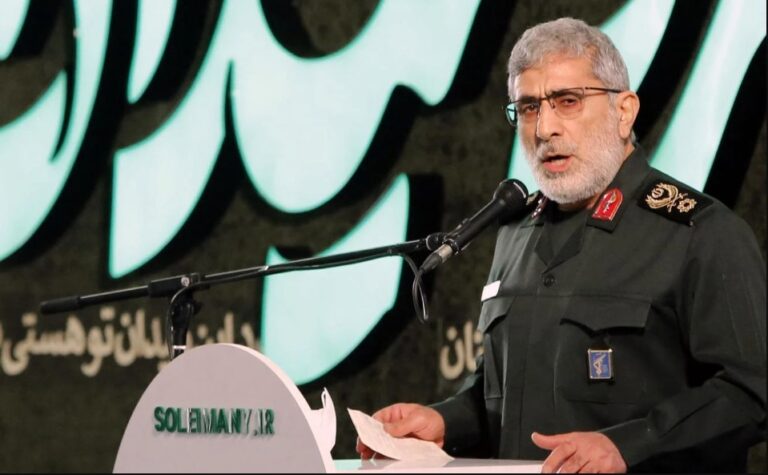
The head of Iran’s Quds Force, an elite branch of the country’s Islamic Revolutionary Guard Corps (IRGC), vowed on Thursday to continue “leading” militias across the Middle East, amid stalled hopes for a nuclear deal with the West.

Speaking to supporters and senior commanders of the corps, Brigadier-General Esmail Qaani said all Islamic militias would “undoubtedly” enjoy Iran’s backing, and took aim at the US and Israel.

“The US and the Zionists should know that this is our definite path,” he said. “The Islamic revolution of Iran knows how to guide young, motivated Muslims to defend themselves,” he said.

The commander’s comments come as tensions have escalated in recent weeks in the occupied Palestinian territories.

On Friday, Israeli forces attacked Palestinian worshippers inside al-Aqsa Mosque in occupied East Jerusalem, wounding and arresting scores of people.

Violence spiked last Ramadan when Israel tried to expel Palestinian families from the occupied East Jerusalem neighbourhood of Sheikh Jarrah to make way for Israeli settlers.

This prompted widespread protests across the occupied West Bank and the Palestinian community inside Israel, triggering Israel’s large-scale military operation on the besieged Gaza Strip in May 2021.

Qaani replaced Qassem Soleimani, the high-profile commander of the Quds Force who was assassinated by the US in Baghdad in 2020 under the administration of then US president Donald Trump.

The Quds Force is the foreign arm of the IRGC and has provided military support for proxy forces throughout the region, including pro-Iranian groups in Iraq, Syria, Yemen, and Lebanon.

The Trump administration placed the group on the counter terror sanctions list in 2017.

“Our hands are not tied, and we will respond robustly wherever in the world our interests come under aggression,” Qaani said.

The senior general also voiced support for the Iran-aligned Houthi rebels in Yemen, who he described as Tehran’s “new children,” praising them for producing missiles “in their basements”.