Home Blog Page 35

With a deal deadlocked over IRGC blacklist issue, U.S. holds off on counter proposal

0

The Biden administration has apparently decided not to send a counter proposal to Iran containing ideas for how to close the final outstanding issues to restore nuclear pact.

Asked about this, a senior US administration official deflected, saying they won’t negotiate in public.

“The President has made clear he’ll do what’s in the best interest of U.S. security,” the senior administration official, speaking not for attribution, told me today (April 15). “And the onus here is really on Iran at this stage, particularly on this issue.”

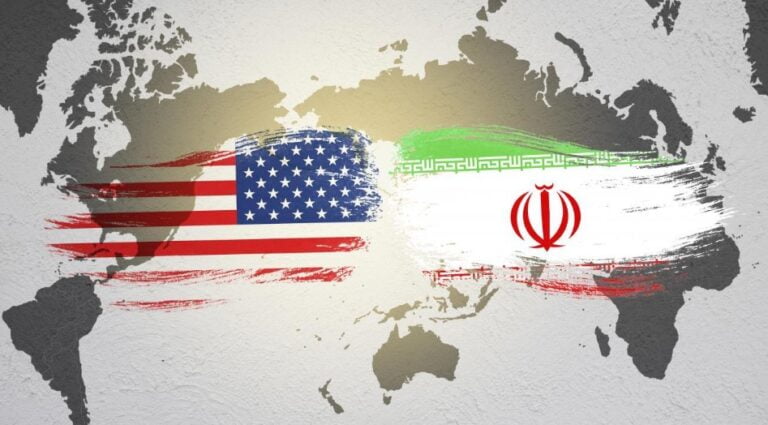
After a year of negotiations, a draft deal on restoring the 2015 Iran nuclear pact is basically done, but the US and Iran are deadlocked on a non-nuclear issue:  An Iranian request that Iran’s Islamic Revolutionary Guards Corps (IRGC) be removed from the State Department’s foreign terror organization (FTO) blacklist.

While last week the U.S. had been expected to send a response to an Iranian proposal brought to Washington by European Union coordinator Enrique Mora late last month, I reported last week (April 8) that the EU was still waiting for the US counterproposal.  Since then, the White House has apparently decided not to offer a response.

“The political space for offering a counter-proposal has shrunk significantly in the past few weeks,” Ali Vaez, director of the Iran program at the International Crisis Group, told me today.

“That means that Iran would either get a deal with the IRGC remaining on the FTO list, or no deal,” Vaez continued. “I also think it is highly unlikely that Iran will surrender on this issue.”

“I think it is the political side of the administration that is reluctant to pay the price and is not fully aware of the medium term political and long term strategic costs of allowing the deal to collapse,” a source close to the talks said.
Iranian IRGC threatens Israel as it demands US to lift terrorist designation

0

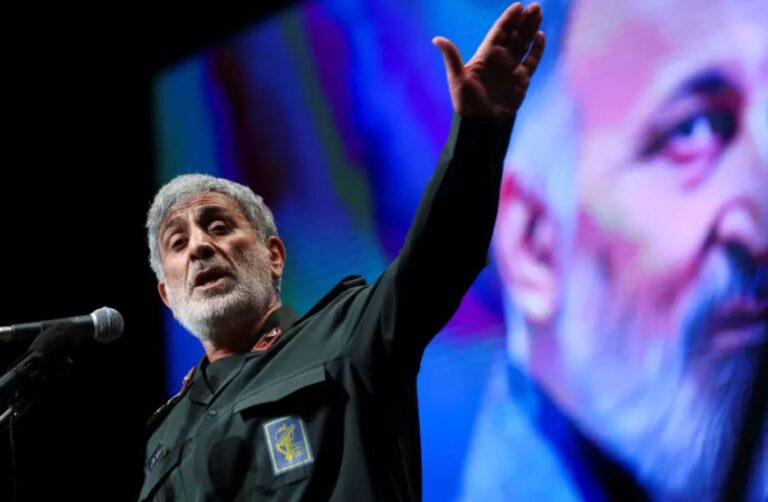
The head of terrorist designated Iranian IRGC Quds Force, Esmail Qaani, gave a recent speech in which he praised recent attacks on Israel and threatened with more to come. “We have announced that we support all the struggles against Israel and the occupying regime…we ourselves are not closed-minded and we take action wherever necessary.

In the recent period when this criminal regime [Israel] wanted to show its emergence, the Islamic regime announced to them that if the interests of this regime are attacked anywhere in the world, we will answer you wherever we find you. Of course, we know well where you are, an example of which was in Erbil.”

This is a reference to the use of missiles to attack areas around Erbil in the Kurdish region of northern Iraq. Iran has claimed that it targeted a Mossad facility in northern Iraq.

This shows how the IRGC wants to back Palestinian attacks, as well as use missiles against places in the Gulf and Iraq. He also praised the IRGC for backing the Houthis against Saudi Arabia.

Three years ago, the U.S. correctly added Iran’s Islamic Revolutionary Guard Corps (IRGC) to the State Department’s list of Foreign Terrorist Organizations (FTOs). Now, as part of the negotiations to restore the nuclear deal, Tehran is forcing the U.S. to consider reversing itself.

The IRGC’s constitutional mandate is “an ideological mission of jihad in God’s way … extending the sovereignty of God’s law throughout the world.” Terrorism is a means to that end. The IRGC Quds Force offers manpower, money, and materiel to Iran’s Axis of Resistance and runs point on its management. The IRGC’s other branches, namely the Aerospace Force, Navy, Ground Force, Basij, and the Intelligence Organization all collaborate with the Quds Force in employing terrorism.

Thus, the IRGC across all its branches engages in and supports terrorism. The argument that discrete IRGC branches — like the Quds Force — are more worthy of being designated as FTOs than the others ignores the overlap in mission across the organization. Terrorism is in the IRGC’s DNA.

Iranian IRGC smuggling weapons to arm Russia against Ukraine

Russia is receiving munitions and military hardware sourced from Iraq for its war effort in Ukraine with the help of Iranian IRGC (Islamic Revolutionary Guard Corps) weapons terrorist smuggling networks, according to members of Iranian-backed Iraqi militias and regional intelligence services with knowledge of the process.

RPGs and anti-tank missiles, as well as Brazilian-designed rocket launcher systems, have been dispatched to Russia from Iraq as Moscow’s campaign has faltered in the last month.

Using the weapons-trafficking underworld would signal a dramatic shift in Russian strategy, as Moscow is forced to lean on Iran, its military ally in Syria, following new sanctions triggered by the invasion of Ukraine.

RPGs (rocket-propelled grenades) and anti-tank missiles in the possession of Hashd al-Shaabi, the most powerful Iranian IRGC backed Shia militia umbrella, were transported to Iran through the Salamja border crossing on 26 March, where they were received by the Iranian military and taken on to Russia by sea, said a commander of the militia branch that controls the crossing.

Three cargo ships capable of carrying such loads – two Russian flagged and one Iranian flagged – crossed the Caspian Sea from Iran’s port of Bandar Anzali to Astrakhan, a Russian city on the Volga delta, within the timeframes outlined.

The Iranian IRGC Iraqi militia also dismantled and sent in pieces two Brazilian-designed Astros II rocket launcher systems, known in Iraq as the license-built version Sajil-60, to Iran on 1 April, according to a source within the organization.

“What the Russians need in Ukraine right now is missiles. These require skill to transport as they’re fragile and explosive, but if you are committed to doing it, it’s possible,” said Yörük Işık, an Istanbul-based maritime affairs expert. “It’s also not the kind of activity that would be picked up by satellite imagery as they can be transported in large boxes and regular shipping containers.”

Mohaned Hage Ali, a fellow at the Carnegie Middle East Center, said: “That kind of sophisticated weaponry [rocket launcher systems] would make a big difference on the ground in Ukraine. Ḥashd al-Shaabi controls much of the border region with Iran, which would make this transaction easier.

“Other countries such as China are having to be very careful about giving weapons to Russia now, given the new sanctions situation. And Iran, as part of that axis, wants to make sure Russia doesn’t lose ground in this conflict.

“If the Putin regime is destabilized that has huge implications for Iran, particularly in Syria, where Damascus is dependent on Russian air support and Russia coordinates to avoid direct conflict between them and Israel.”


US affirms IRGC in its entirety is a terrorist organization

0

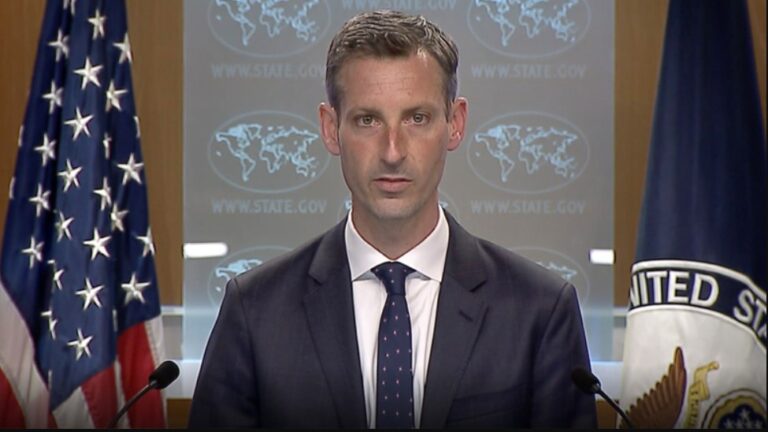
Asked to clarify the US position on Iran’s Islamic Revolutionary Guard Corps (IRGC), State Department Spokesperson Ned Price explained that the Biden administration views the IRGC in its entirety, not just its Qods Force (IRGC-QF), as a Foreign Terrorist Organization (FTO).

The IRGC’s status has emerged as the biggest obstacle to renewing the 2015 Iranian nuclear deal, which was concluded under the Barack Obama administration and abrogated by Obama’s successor, Donald Trump.

Trump also added the IRGC to Washington’s FTO list, and Tehran is now demanding that it be removed from that list as a condition for concluding a new version of the JCPOA (the Iran nuclear deal).

‘FTO Designation Covers Both’ IRGC and IRGC-QF

But it seems that the Biden administration is not prepared to accommodate the Iranian demand.

“My understanding is that the FTO designation covers” both the IRGC and the Qods Force, Price said in a press briefing on Wednesday.

He had been asked directly, “Does the State Department differentiate between the IRGC and the Qods Force?”

The question arose following remarks by Gen. Milley, Chairman of the Joint Chiefs of Staff, in a Senate Armed Services Committee hearing last Thursday.

In that hearing, on the Defense Department budget, Milley was asked if he considered the IRGC to be a terrorist organization.

He replied, “In my personal opinion, I believe the IRGC-Qods Force to be a terrorist organization, and I do not support them being delisted from the foreign terrorist organization [list].”

Such is the mistrust surrounding what seems to be an unrelenting push by the Biden administration, along with its European partners, to restore the JCPOA that some analysts interpreted Milley’s remarks to indicate that the US would differentiate between the IRGC and the IRGC-QF to satisfy Iran’s demand for taking the IRGC off the FTO list.

However, Price’s comments seemed to suggest that this interpretation was wrong.

This issue arose last week following Milley’s remarks. Deputy State Department Spokesperson Jalina Porter was asked about them on Friday.

She replied, “The President shares the chairman’s view that IRGC Qods Forces are terrorists.

‘Killing of all US leaders not enough to avenge Soleimani assassination’: Iranian commander

0

The killing of all American leaders would not be enough to avenge the U.S. assassination of Iran’s Revolutionary Guards’ top commander Qassem Soleimani two years ago, a senior Iranian Guards commander said on Wednesday.

The United States and Iran came close to full-blown conflict in 2020 after Soleimani’s killing in a U.S. drone attack at Baghdad airport and Tehran’s retaliation by attacking U.S. bases in Iraq.

“Martyr Soleimani was such a great character that if all American leaders are killed, this will still not avenge his assassination,” senior commander of the Revolutionary Guards (IRGC) Mohammad Pakpour was quoted as saying by Iranian state media.

“We should avenge him by following Soleimani’s path and through other methods.”

Then-U.S. President Donald Trump’s administration said Soleimani was targeted for plotting future attacks on U.S. interests and that he had helped coordinate strikes on American forces in Iraq in the past through militia proxies.

Pakpour’s comments came days after U.S. Army General Mark Milley, chairman of the Joint Chiefs of Staff, said that he does not support removing Iran’s Quds Force, an arm of its Revolutionary Guards (IRGC), from a list of foreign terrorist organizations, as demanded by Tehran for the revival of a 2015 nuclear deal.

Trump abandoned the deal under which Iran had agreed to curbs on its nuclear programme in return for the lifting of international financial sanctions, and Iran responded by violating its limits. President Joe Biden aims to restore it.

Almost a year of indirect talks between Iran and the United States have stalled since March as both Tehran and Washington blame each other for failing to settle remaining issues. One of the unresolved questions is whether the United States would remove Iran’s Guards from the terrorist list.

Washington has been considering removing the IRGC from its foreign terrorist organization blacklist in return for Iranian assurances about reining in the elite force’s influence in the Middle East.

Iran appoints terrorist IRGC linked official as Iraq envoy

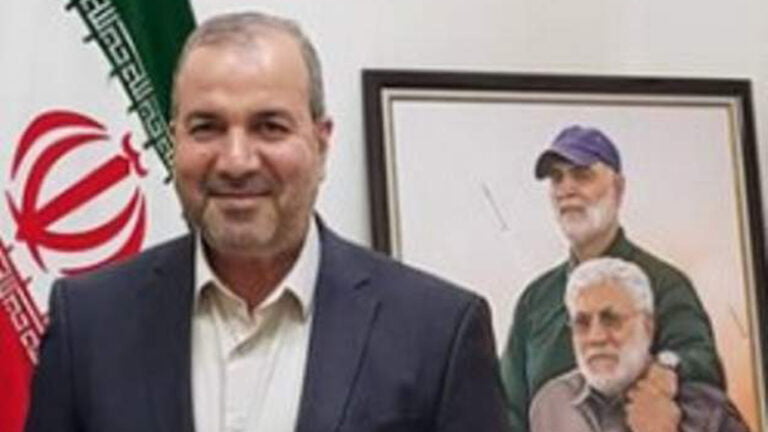
Iran has appointed a man with apparent links to the terrorist IRGC (Islamic Revolutionary Guards Corps) intelligence organization as the new ambassador to neighboring Iraq.

Foreign Ministry spokesman announced the appointment of Mohammad Kazem (Hossein) Al-e Sadeq during his weekly press conference on Monday.

The spokesman, Saeed Khatibzadeh, said the ambassador-designate would be inaugurated soon. He did not provide further details.

Little is known about Al-e Sadeq, who has served as a deputy to the incumbent ambassador to Baghdad, Iraj Masjedi, a former senior IRGC commander who assumed office in 2017.

Al-e Sadeq speaks Arabic and is the younger brother of renowned Iraqi-Iranian poet and writer Mohammed Reza Al-e Sadeq — also known as Mohammed Reza bin Muhammad bin Sadeq al-Najafi. The family seems to have dual Iraq-Iranian roots, which is not uncommon among Shiites. Many Iranians settled in Iraq decades ago, either as clerics or traders.

He is reportedly a former member of the board of directors of the Sepas Veterans Association, which is apparently a nongovernmental organization that commemorates the terrorist IRGC K.I.A, particularly those who held positions in the Revolutionary Guards’ intelligence organization.

The motto of the organization’s Instagram page is “defending Islam does not end with defending the homeland”, suggesting that its members are supporters of the terrorist IRGC overseas operations.

Masjedi, the outgoing ambassador to Baghdad, has served as a senior member of the IRGC’s extraterritorial Quds Force and as an advisor to Qasem Soleimani, the Quds Force commander who was killed in a US drone strike in Baghdad in January 2020.

The Quds Force is part of the 125,000-strong IRGC, a paramilitary organization that answers only to Khamenei.

IRGC oversees Iran’s ballistic missile program, has its naval forces shadow the US Navy in the Gulf, and includes an all-volunteer Basij force.

In Syria, the unit played a key role in shoring up support for embattled Syrian President Bashar al-Assad after the country descended into war in 2011.

It also armed and trained militias that helped defeat the armed group ISIL (ISIS) in both Syria and Iraq.

Analysis: Politics, not substance, seen guiding U.S. and Iran on terror listing

0

One of the last obstacles to reviving the 2015 Iran nuclear deal – Tehran’s demand to remove its Revolutionary Guards from a U.S. terror listing – is more an issue of politics than substance, analysts said.

While the two sides had appeared close to reviving the pact a month ago, talks have since stalled over last-minute Russian demands, the Nowruz holiday, and the unresolved issue of whether Washington might remove the Islamic Revolutionary Guard Corps (IRGC) from the U.S. Foreign Terrorist Organization (FTO) list.

The United States and Iran have been engaged it fitful, indirect talks for more than a year on reviving the 2015 deal under which Iran limited its nuclear program in return for relief from economic sanctions. terror listing

The United States has weighed dropping the designation in return for some kind of action or commitment from Iran to rein in IRGC activities, one source has said.

However, the White House is well aware of “the political sensitivity and price associated with” removing the elite force from the list, said Dennis Ross, a long-time U.S. Middle East negotiator, noting that some Democrats oppose dropping it.

“There is hesitancy on the part of the political side of the White House,” he added.

A senior administration official said U.S. President Joe Biden did not intend to drop the terrorism designation, Washington Post columnist David Ignatius reported on Friday.

Asked about that report, a senior Biden administration official said, “We are not going to negotiate in public. There are still gaps.”

“The onus here is really on Iran at this stage, particularly on this issue,” the official added on condition of anonymity.

LITTLE ECONOMIC IMPACT

When the Trump administration designated the IRGC as an FTO in 2019, it was the first time Washington had so blacklisted part of another country’s military and was seen by some as a poison pill to make it harder to revive the nuclear deal, which then-President Donald Trump abandoned in 2018.

Senior US Official: Biden Won’t Remove Iran’s Guards From Terror List

0

The Biden administration plans to reject an Iranian demand that the United States lift its designation of the Islamic Revolutionary Guard Corps as a Terror List as a condition for renewing the 2015 nuclear agreement, a senior administration official told The Washington Post.

“The onus is on Iran whether we have a nuclear deal. The President will stick to core principles. The Iranians know our views,” said the official.

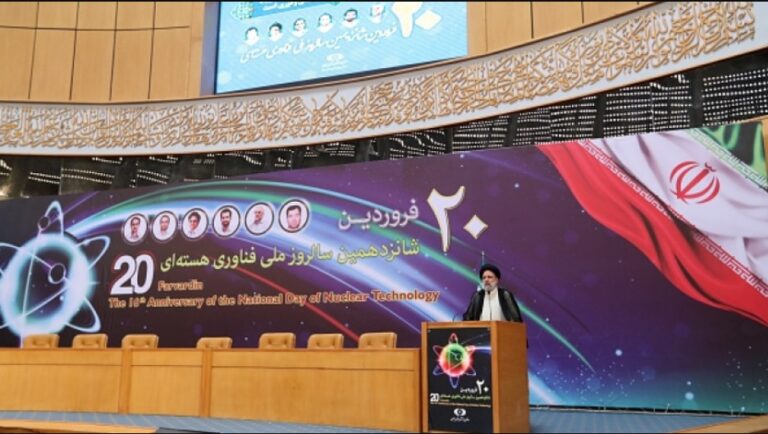
This came as Iran’s President Ebrahim Raisi said Saturday that Tehran would not give up its right to develop its nuclear industry for peaceful purposes, and all parties involved in talks to revive the 2015 nuclear accord should respect this.

The indirect talks between Iran and the US have faltered after 11 months of negotiations in Vienna, as each side throws the ball into the court of the other to take political decisions to settle the outstanding issues. Terror List

“For more than the one-hundredth time, our message from Tehran to Vienna is that we will not back off from the Iranian people’s nuclear rights… not even an iota,” state media quoted Raisi as saying in a speech marking Iran’s Nuclear Technology Day.

One Iranian diplomat told Reuters that Tehran had rejected a US proposal to overcome the sticking point by keeping the IRGC’s overseas arm, the Quds Force, under FTO sanctions while delisting the IRGC as an entity.

However, the US State Department said that the Quds Force should remain on its blacklist after the Joint Chiefs of Staff, General Mark Milley, told the Senate Armed Services Committee: “In my personal opinion, I believe the IRGC Quds Force to be a terrorist organization, and I do not support them being delisted.”

In response to whether the Biden administration shares General Milley’s view, State Department spokeswoman Jalina Porter said the President shares the chairman’s view that IRGC Qods Forces are terrorists.

“I would say is out of the 107 Biden administration designations in relation to Iran, 86 have specifically targeted the IRGC-related persons as well as affiliates,” said Porter.

US insists Iran Guards corps stay on terror list

0

The United States insisted Friday on keeping the elite Quds Force of Iran’s Revolutionary Guards Corps on its designated list of terror list, as Washington pushes on with negotiations to restore the 2015 Iran nuclear agreement.

The chairman of the Joint Chiefs, General Mark Milley, had told a congressional hearing on Thursday that in his “personal opinion” the Quds Force should not be dropped from the terror list, which has been one of Tehran’s conditions to renew the deal.

Asked Friday whether that opinion reflected the position of the administration of President Joe Biden, State Department spokeswoman Jalina Porter seemed to agree.

“The president shares the chairman’s view that IRGC Quds forces are terrorists,” she told reporters.

The Guards as a whole, as well as the Quds Force in particular, were blacklisted under former president Donald Trump, who wanted to toughen sanctions against Iran after Washington pulled out of the agreement aimed at preventing Tehran from developing nuclear weapons.

While the Biden administration has been trying for a year to resuscitate the deal, negotiations with Iran have snagged on this particular issue.

Tehran is demanding that the IRGC be removed from the blacklist. This push has sparked outrage from some US politicians, especially within the right-wing opposition.

The fact that Milley, and now the US government, seem to distinguish between the Guards in general and the Quds Force unit, which is blamed for “destabilizing activities” in the Middle East and elsewhere, could hint at a US compromise proposal.

It would be theoretically possible to remove the IRGC from the blacklist while keeping the Quds Force on it.

US negotiator Rob Malley said at the end of March that the IRGC would remain under US sanctions even if the group was removed from the list, and that the stance of the United States would remain unchanged.

Gulf countries and allies worried about terrorist IRGC regional influence

In addition to the Iranian government’s nuclear program, the Iranian government’s terrorist IRGC (Islamic Revolutionary Guard Corps) influence in the region is of concern to Gulf countries and their western allies, including the United States.

US Secretary of Defense Gen. Lloyd Austin announced at a US congressional hearing on Tuesday that the United States remains committed to countering the Iranian government’s vicious influence and it will continue its counter-terrorism operations.

Austin added that the Iranian government has challenged the stability of the Middle East and poses a threat to US forces and US partners and to the free flow of energy in the Strait of Hormuz.

Coinciding with US Secretary of Defense Lloyd Austin’s congressional hearing, Gen. Mark Millie, the Joint Chief of Staff, announced on Tuesday that the Iranian government was seeking to destabilize the Middle East.

The top US military general said Thursday that Iran’s Revolutionary Guard Corps-Quds Force (IRGC-QF) is a terrorist organization and that he does not support removing them from Washington’s terror blacklist.

“In my personal opinion, I believe the IRGC-Quds Force to be a terrorist organization, and I do not support them being de-listed from the Foreign Terrorist Organization (FTO) list,” Gen. Mark Milley said.

Condemning Iran’s destructive and intrusive actions in the Middle East, General Milli, who also addressed the US Congress, said that Iran was pursuing its terrorist activities and continues to fund proxy terrorist groups on its neighbors’ borders.

Creating disorder and instability in the Middle East and tipping the balance of power is in its interest. Gen. Milli also added that the Iranian government is using the development of its nuclear program as pressure to escalate instability and expansionism in the region.

As part of its negotiations with Iran over the nuclear deal, the US is considering removing the terrorist IRGC from the Foreign Terrorist Organization (FTO) list.

But public backlash and recent outspoken criticism from President Joe Biden’s own political party have stalled the move.