Home Blog Page 36

Iranian IRGC presence at Qatari defence exhibition draws fire from UAE

0

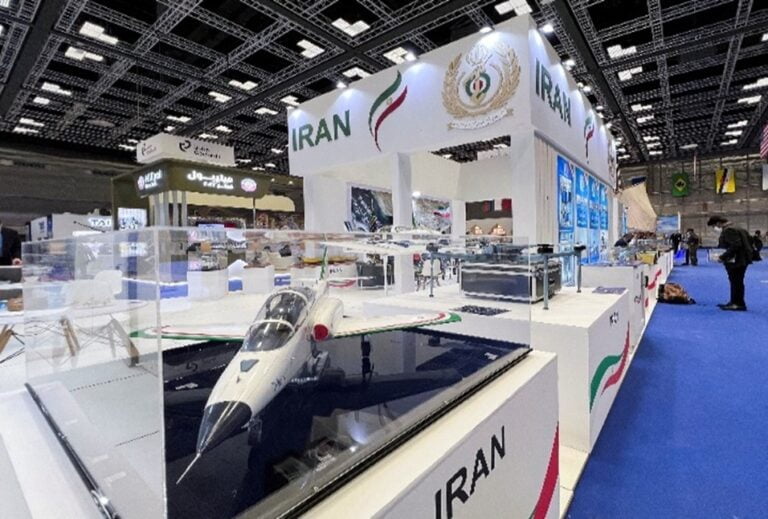
The presence of Iranian IRGC officers at the 2022 Doha International Maritime Defense Exhibition and Conference (DIMDEX), held on March 21-23, garnered extensive media attention. This is especially in light of the fact that the U.S. administration is considering revoking the U.S. designation of the IRGC as a Foreign Terrorist Organization, as part of efforts to renew the nuclear deal (the JCPOA) with Iran.

U.S. State Department spokesperson Ned Price said that “we are deeply disappointed and troubled” by the presence of terrorist designated Islamic Revolutionary Guard Corps officers at the show when “Iran that is the biggest threat to maritime stability in the Gulf region.”  A Qatari official stated in response that Qatar had not invited the IRGC officers to the show and that the Iranian stand was managed by the Iranian Defense Ministry.

The presence of the IRGC officers in the Doha show sparked criticism from the UAE.

Scathing criticism against Qatar was also voiced by the head of the UAE Journalists Association, Muhammad Yousuf.

The following are translated excerpts from Yousuf’s article:[1]

“The IRGC are the ones who seize ships and smuggle weapons to Yemen, Lebanon, Syria, Iraq, and Hamas. They are the ones who fire missiles, boobytrap cars and assassinate national leaders in those countries and elsewhere. Their state [i.e., Iran] is trying to have [the IRGC] – as well as its commanders, who do not hesitate to voice threats against [Iran’s] neighbors on a daily basis – removed from the boycott and sanctions lists as part of the renewal of the deal [with the U.S. and the West]… Yet an official Washington spokesman [Ned Price] says his country is amazed by the participation of IRGC officers in a Doha show, compelling Qatar to clarify that it did not invite the IRGC [to attend]. This means that these officers must have entered Qatar as fruit and vegetable vendors, or perhaps were smuggled there in ships or fell from the sky.”
IRGC is terror org., I do not support delisting – Joint Chiefs of Staff chair

0

“I believe that the IRGC is a terror organization and I do not support them being delisted from the foreign terrorist organization list.”

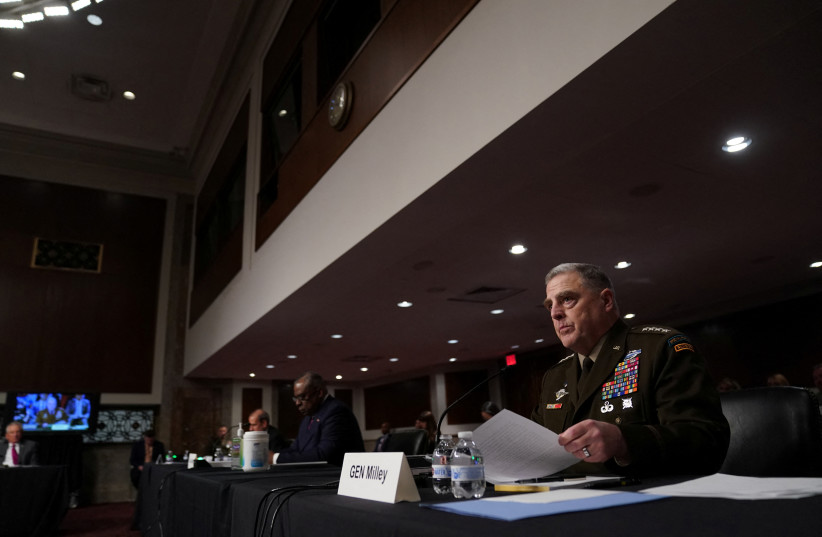
Chairman of the Joint Chiefs of Staff Gen. Mark Milley said on Thursday that the Islamic Revolutionary Guard Corps should not be removed from the Foreign Terrorist Organization List.

During a hearing on the 2023 President’s Budget request before the Senate Armed Services Committee, Sen. Dan Sullivan (R-Alaska) asked Milley and Secretary of Defense Lloyd Austin for their personal opinion on the matter.

Austin said he wouldn’t comment “on negotiations that are ongoing and speculate on what my advice to the president is going to be.”

However, Milley responded, “In my personal opinion, I believe the IRGC to be a terror organization and I do not support them being delisted from the Foreign Terrorist Organization List.”

 Joint Chiefs Chairman General Mark Milley testifies before the Senate Armed Services Committee during a hearing on ''Department of Defense's Budget Requests for FY2023'', on Capitol Hill in Washington, US, April 7, 2022. (credit: REUTERS/SARAH SILBIGER)Joint Chiefs Chairman General Mark Milley testifies before the Senate Armed Services Committee during a hearing on ”Department of Defense’s Budget Requests for FY2023”, on Capitol Hill in Washington, US, April 7, 2022.

On Wednesday, Secretary of State Antony Blinken said he was not “overly optimistic” at the prospects of bringing the nuclear agreement with Iran to conclusion.

In an interview with MSNBC he said, “Despite all the efforts we put into it, we’re not there and time is getting extremely short, but this is something that we will be talking to our European partners about this afternoon and on the next day.”

He added, “I continue to believe that it would be in the best interest of our country if we can back into compliance with the deal if Iran would do the same. We are not there.

Iranian terrorist IRGC and its outsized role trap the country in vicious cycle

0

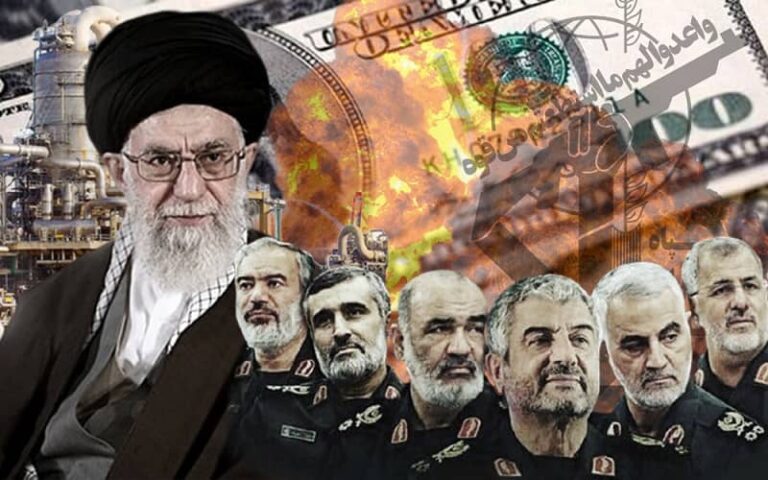
The Iranian terrorist IRGC dominates the country’s economy and funds its proxies at the expense of the people, maintaining the status quo by suppressing protests.

The Islamic Revolutionary Guard Corps (IRGC) wields an outsized influence in Iran, claiming the lion’s share of the country’s budget and proceeds from the illicit sale of oil, which has continued even under sanctions, experts said.

It dominates major sectors of the Iranian economy, with controlling interests in the oil, telecommunications, transportation, ports and shipping, customs, export and import industries as well as in industrial and agricultural sectors.

Oil revenue also is used to purchase military equipment and fund IRGC proxies such as Lebanese Hizbullah, allied Iraqi militias and the Houthis in Yemen.

This has fueled resentment inside Iran, which is facing an acute economic crisis as the Iranian terrorist IRGC fills its own coffers and bankrolls its regional affiliates, and has sparked popular protests, which the IRGC has helped to suppress.

Experts warn there is no way to break this cycle and achieve economic reforms in Iran without the participation of the IRGC. Yet the IRGC is profiting from the situation and has no incentive to change its ways, and so the cycle continues.

In a recent report, UK-based Chatham House said that although Iranian president Ebrahim Raisi’s government came to power with the slogan of “fighting corruption”, its efforts “will by no means root out entrenched corruption“.

In the absence of significant economic reforms, the report added, the Iranian government will likely witness more protests and unrest.

The IRGC’s “statelet” has reached well into Iran’s economy, Koteich said, and has amassed “a vast financial empire” in alliance with leader Ali Khamenei.

The IRGC controls multiple sectors of the economy, he said, and would need to be involved in any efforts to effect economic reform. Yet its affiliates only care about making high profits in the shortest possible amount of time, he added.

It’s Time to Give the Revolutionary Guards a Concession

0

Over the last few weeks, diplomats have shifted from saying the revival of the Iran Revolutionary Guards nuclear deal was coming in a matter of days to admitting it was entirely uncertain whether it would go through at all.

Negotiations in Vienna began nearly a year ago, but time is of the essence from the West’s perspective: In less than a month, Iran could possess uranium capable of making a nuclear bomb. But sensing its advantage, Iran has been engaging in last-minute haggling.

After then-U.S. President Donald Trump unilaterally withdrew from the agreement in 2018, Iran began enriching uranium to 60 percent, close to the 90 percent threshold required for nuclear weapons.

Iran has now agreed to dial back its uranium enrichment to 3.67 percent, as established in the original deal. Revolutionary Guards

Iran had demanded in turn that the United States formally state that future U.S. governments will abide by the deal, but that request was summarily denied. Iranians had been feeling nervous about the longevity of the deal given Republican opposition; former Vice President Mike Pence has said a revived deal would be ripped apart by Republicans if and when they return to the White House.

Iran, however, has reportedly been put at ease by an apparent agreement that would allow it to avoid completely destroying its advanced centrifuges (although it’s not yet clear whether Iran would merely disconnect these centrifuges or dismantle them and send them to a third country for safekeeping).

Everything seemed settled—almost everything. But then Iran threw a spanner in the works by demanding it wouldn’t budge until that the United States agreed to remove the Islamic Revolutionary Guard Corps (IRGC) from the State Department’s Foreign Terrorist Organization (FTO) list.

There’s plenty of reason to be irritated by Iran’s diplomatic hardball—but given the delicate context, this is a concession the United States should be prepared to make.

Iran had originally insisted that non-nuclear issues should not be included in talks intended to revive a nuclear deal.

Delisting Iran’s terrorist designated IRGC will have serious consequences

0

The Biden administration and the Democrats are doing everything to prop up Iran “in ways that undermine the national security of US and Israel,” Republican congressman Chip Roy said Monday, pointing to the potential delisting of Iran’s terrorist designated IRGC.

The Texas representative told Iran International’s correspondent in Washington that removing Iran’s terrorist designated IRGC (Revolutionary Guards) from the list of ‘Foreign Terrorist Organizations (FTO) would be “a foolish, wrong-headed and complete asinine policy.” August Pfluger, another Texas representative, told Iran International “it’s very important that we stand strong against the largest state sponsor of terrorism.”

The IRGC was added in 2019 by President Donald Trump to the ‘FTO’ list, the only example of a country’s armed forces being included. Pfluger argued that the IRGC should not be removed without Congressional approval, although it was added by Trump on presidential authority.

“We need to have a say,” Pfluger told our correspondent Arash Alaei in Washington. “We need to have our voices heard. So that the administration doesn’t do something that’s not listening to Congress, which is what we’ve been pushing for.”

The Biden administration’s new Nuclear Deal accord with Iran is likely to include a loophole that will “allow Iranian nationals linked to terrorism to enter and stay in the United States,” according to a new Republican-authored policy analysis circulating on Capitol Hill and reviewed by the Washington Free Beacon.

The question of removing the terrorist designated IRGC as an ‘FTO’ is reportedly at issue in Vienna talks to revive the 2015 Iran nuclear deal, the JCPOA (Joint Comprehensive Plan of Action). Iran Monday said Washington’s failure to take political decisions in facing down domestic JCPOA opponents, including Republicans raising legislative hurdles like requiring Congressional support for IRGC delisting, had led to a delay in JCPOA arrival.

Bipartisan legislation introduced in the House on Thursday and first reported by the Free Beacon seeks to force the Biden administration into disclosing how sanctions relief for Iran will boost the IRGC’s capabilities.

Republicans attempt to stop Biden from delisting Iranian IRGC as terrorist

0

Congressional Republicans attempt to bar the Biden administration from lifting terrorism sanctions on Iran’s Islamic Revolutionary Guards Corps (IRGC) as part of a new nuclear agreement with Tehran by spearheading a legislative effort.

Reps. Brian Mast (R., Fla.) and Scott Perry (R., Pa.) introduced on Monday the Preventing Terror Sympathizers from Appeasing Terrorists Act, a bill that would block the White House from delisting the IRGC from the Foreign Terrorist Organizations (FTO) list without congressional approval.

“Since the president refuses to uphold his oath of office, we’re introducing this bill to prohibit him from making executive decisions when it comes to national security such as delisting known terrorist organizations,” Mast told the Free Beacon.

A Republican-authored policy analysis circulating on Capitol Hill discloses that the removal of sanctions on the IRGC could “allow Iranian nationals linked to terrorism to enter and stay in the United States,” according to a copy of that memo.

“Removing the IRGC from the Foreign Terrorist Organization list is a non-nuclear related concession to Iran which would reward terrorist blackmail, allow Iranian nationals linked to terrorism to enter and stay in the United States, weaken law enforcement’s ability to go after those providing support or resources to the IRGC, and make it harder to hold those outside U.S. soil criminally accountable for helping the IRGC,” the analysis states.

The Mast-Perry bill is one of several pieces of legislation meant to force the Biden administration into consulting with Congress on the deal. While the White House is required under a 2015 law to present any deal with Iran to Congress for approval, it has become increasingly clear that the administration will bypass this law.

A separate piece of bipartisan legislation introduced in the House last week and first reported by the Free Beacon would require the Biden administration to disclose how sanctions relief for Iran will boost the IRGC’s capabilities.

Iraqi Government Drops UN Complaint Against Iran Over IRGC Missile Strike in Erbil

0

Baghdad has withdrawn its complaint to the UN Security Council about an IRGC Missile Strike on a cluster of buildings in Erbil last month, according to Al-Arabi al-Jadeed.

The London-based news website quoted two unnamed Iraqi officials as saying the outgoing administration of Prime Minister Mustafa al-Kadhimi had cancelled the planned complaint against Iran due to what one described as “undisclosed pressures on the government”.

The authorities have also decided not to pursue a complaint with the Arab League or the Organization of Islamic Cooperation.

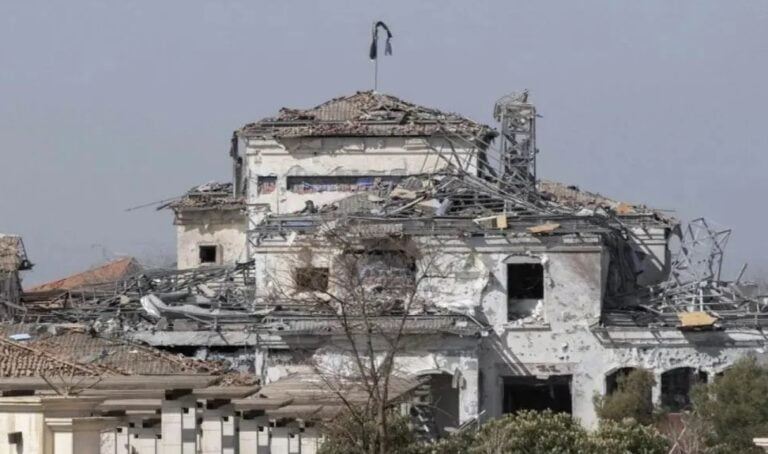
The attack on Sunday, March 13 saw the IRGC fire a dozen ballistic missiles at an area of the capital of Iraqi Kurdistan, including a US consulate complex.

Several of them hit the villa of Karim Barzanji, a Kurdish businessman active in the Iraqi Kurdish energy sector. IRGC Missile Strike

In a statement claiming responsibility, the Guards claimed the onslaught had targeted a “Zionist strategic center” in retaliation for the killing of two IRGC colonels in Syria by an Israeli air strike the previous week.

The Iraqi government had had submitted an official request to Tehran, via the Iranian ambassador to Baghdad, to provide proof that any part of the site was being used by Mossad as alleged. More than 20 days later, the sources told Al-Arabi al-Jadeed, they had received no response.

Emad Bajlan, a leader of the Kurdistan Democratic Party, has also stressed to the same outlet that political pressure compelled the Iraqi government to drop the complaint.

Two fact-finding committees, a governmental one and a parliamentary one, had been set up to investigate the incident. MPs in the parliamentary group came from various parliamentary blocs, including a Shiite set whose sympathies lay with the Iran.

An official in the Iraqi National Security Council, which oversaw the governmental committee, had a different explanation for the case being dropped.

US Administration Reluctant to Remove IRGC from Terror List

0

The region covered by the US Administration Central Command “is where we protect waterways so that global commerce can flow,” said US Secretary of Defense Lloyd J. Austin, in remarks during a change of command ceremony at CENTCOM.

“It is where we fight terrorists who threaten our citizens. And it is where we work with our partners to confront instability from Iran and its proxies,” he added.

He continued: “And so CENTCOM is central to our security. It is central to our readiness. And it is central to our mission.”

In his speech, Austin focused on the partnerships that CENTCOM holds in the region, especially after Israel’s realignment.

On Iran’s destabilizing role in the region, he said: “Iran has been expanding its nuclear program and investing in military capabilities, especially ballistic missiles. It has cultivated dangerous proxies. And it’s using unmanned aerial systems to threaten us and our partners.”

He pointed to political difficulties faced by the administration of US President Joe Biden in “marketing” a return to a nuclear agreement with Iran, in light of its rejection to discuss its ballistic missile program and its regional policies.

“The President has been clear: the United States is committed to preventing Iran from gaining a nuclear weapon. And we’re still committed to a diplomatic outcome on the nuclear issue.

But regardless of the outcome of the nuclear talks, we’ll keep working closely together with our many partners to confront the threats from Iran,” Austin stated.

He continued: “In the short term, we’ll increase intelligence sharing and bolster regional air defense. And in the longer term, we’ll work together to tackle Iran’s use of missiles and its proliferation of unmanned aerial systems.

And we’ll keep standing strong with our partners to hold Iran and its proxies accountable.”

US Army Gen. Michael “Erik” Kurilla assumed the command of CENTCOM from his successor, Gen. Kenneth F. McKenzie.

New Iran Nuclear Deal Could Allow Iranian Terrorists Into US

0

The Biden administration’s new Nuclear Deal accord with Iran is likely to include a loophole that will “allow Iranian nationals linked to terrorism to enter and stay in the United States,” according to a new Republican-authored policy analysis circulating on Capitol Hill and reviewed by the Washington Free Beacon.

With negotiations over a revamped nuclear deal inching closer to completion, the Biden administration is considering a concession that will remove Iran’s Islamic Revolutionary Guards Corps (IRGC) from the U.S.-designated terrorist list.

The removal of this designation remains one of the final sticking points in diplomatic talks surrounding a new accord.

Delisting the IRGC will “open the gates for Iranian terrorists to enter the United States” and make it harder for law enforcement agencies to target IRGC affiliates operating in the United States, according to a new assessment of policy implications authored by the Republican Study Committee (RSC), Congress’s largest Republican caucus and a principal opponent of a new accord.

“Removing the IRGC from the Foreign Terrorist Organization list is a non-nuclear related concession to Iran which would reward terrorist blackmail, allow Iranian nationals linked to terrorism to enter and stay in the United States, weaken law enforcement’s ability to go after those providing support or resources to the IRGC, and make it harder to hold those outside U.S. soil criminally accountable for helping the IRGC,” according to the policy analysis, which was distributed on Friday to 160 congressional offices and obtained exclusively by the Free Beacon.

The Biden administration’s bid to remove sanctions on the IRGC is fueling opposition to the deal from Democratic and Republican foreign policy leaders, who worry this concession will embolden Iran’s global terrorism and spy operations.

Bipartisan legislation introduced in the House on Thursday and first reported by the Free Beacon seeks to force the Biden administration into disclosing how sanctions relief for Iran will boost the IRGC’s capabilities.

Iranian IRGC eyes Lebanon’s energy through its Hezbollah proxy

0

Iran’s offer to help Lebanon build two power stations amid its current electricity crisis has been dismissed as a publicity stunt in Lebanon and derided in Iran, where the population also faces rolling blackouts. When the offer was first made, in October 2021, critics accused Hezbollah of seeking to exploit the crisis to invite experts and technicians from the Iranian IRGC (Islamic Revolutionary Guard Corps) onto Lebanese soil.

During a March 24-25 visit to Beirut, Iranian Foreign Minister Hossein Amir-Abdollahian reiterated an earlier offer to help Lebanon build two power plants.

This time around, Lebanese economists were quick to point out that Iran itself is suffering from a power generation crisis.

They also noted that accepting Iranian assistance would further strain Lebanon’s relations with its Arab and Gulf neighbours, which Lebanon seeks to repair, and which recently have been on the mend.

Lebanese economist Violette Ghazal al-Balaa likened Amir-Abdollahian’s recent visit to a “diplomatic raid” on Beirut’s political decision to restore relations with its Arab and Gulf neighbours.

The Iranian move is an attempt to disrupt these relationships and “keep Lebanon in Iran’s political sphere”, she said.

Lebanese Centre for Research and Studies head Hassan Qutb said the Iranian proposal to build power plants is a “stunt and not serious because Iran itself has been suffering from a power generation and distribution crisis since 2021”.

Last July, this triggered widespread unrest and protests in Iran, he said, suggesting that the Iranian regime fix its own crisis before it steps in to try and resolve the issues Lebanon is facing.

The Lebanese Hezbollah, involved in terrorist attacks, drug trafficking, weapon smuggling, and money laundering, was founded by Ayatollah Khomeini and funded, armed, and trained by Iran’s terrorist designated Islamic Revolutionary Guard Corps (IRGC).

The militia that acts as a proxy group for Iranian IRGC has been involved in countless terrorist attacks and illegal activities following the direct orders of Iran’s supreme leader Ali Khamenei and has been trying to overthrow the elected government of Lebanon.