Home Blog Page 37

Iranian terrorist IRGC’s arms smuggling to militia prevents peace in Yemen

0

Iran is engaged in talks to lift sanctions imposed on it yet continues to smuggle arms to its proxies in Yemen, who carry out ongoing attacks on neighbouring Gulf states, ultimately squandering any chance for peace in Yemen.

The Houthis on Saturday announced a ceasefire, which they have so far upheld.

But the move follows a volley of attacks against Saudi Arabia.

On Friday, the Iran-backed group fired drones and missiles at 16 targets in Saudi Arabia, hitting Aramco’s petroleum products distribution station in Jeddah and causing a fire in two storage tanks.

A few days earlier, they launched a wave of cross-border drone and missile attacks at civilian facilities in Saudi Arabia.

They used Iranian cruise missiles to attack a desalination plant in al-Shuqaiq and an Aramco petroleum distribution plant in Jizan.

The Houthis’ attacks signal “Iran’s malicious intentions towards the security and stability of the region, with its continued smuggling of weapons to the Houthis”, said Deputy Minister of Legal Affairs and Human Rights Nabil Abdul Hafeez.

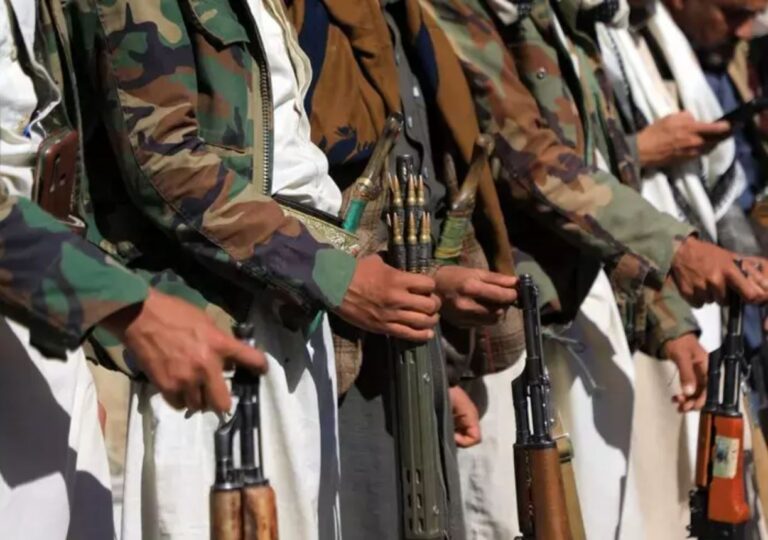
Iran has continued to smuggle arms to the Houthis, officials said, fueling regional tensions and squandering the opportunity to achieve lasting peace in Yemen.

Islamic Revolutionary Guard Corps (IRGC) smuggling networks have repeatedly attempted to breach a UN-imposed arms embargo that bans the supply of weapons to the Houthis, Abdul Hafeez said.

“Hardly a period passes without us hearing about a seizure of Iranian weapons by the US Navy,” he added.

In December, for example, the US Navy seized 1,400 AK-47 rifles and ammunition from a fishing boat in the North Arabian Sea suspected of originating in Iran.

In January, a confidential UN report concluded that thousands of rocket launchers, machine guns, sniper rifles and other weapons the US Navy seized in the Arabian Sea likely originated from a port in Iran.
Without the Iran nuclear deal, war is on the horizon

0

US and Iranian officials appear fixated nuclear deal on the costs of JCPOA re-entry, but they’ll pay a far higher price if they fail to get an agreement.

Despite assertions by all parties that the negotiators are “very close” to sealing the deal, the seemingly never-ending nuclear talks with Iran have hit yet another stumbling block.

New US sanctions aimed at Iran missile programme and terrorist IRGC

0

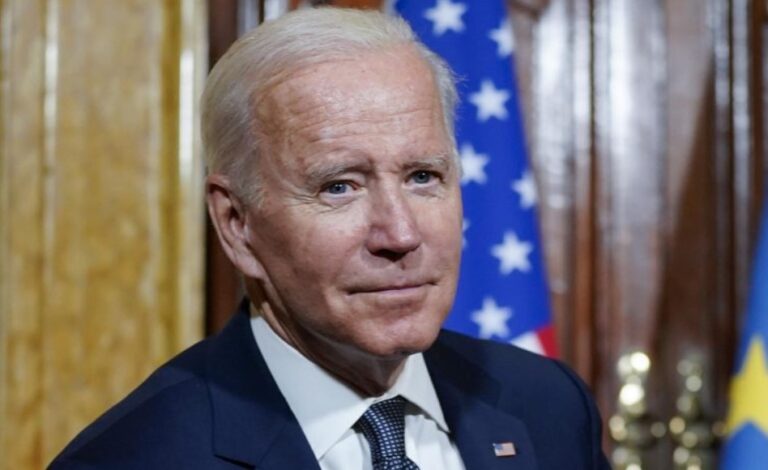
US President Joe Biden’s administration has imposed new sanctions on Iran, targeting its ballistic missile programme and a terrorist Islamic Revolutionary Guard Corps (IRGC) unit linked to it.

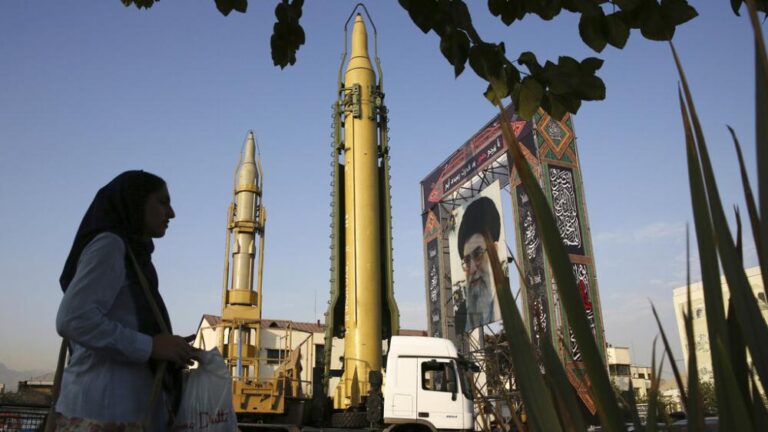
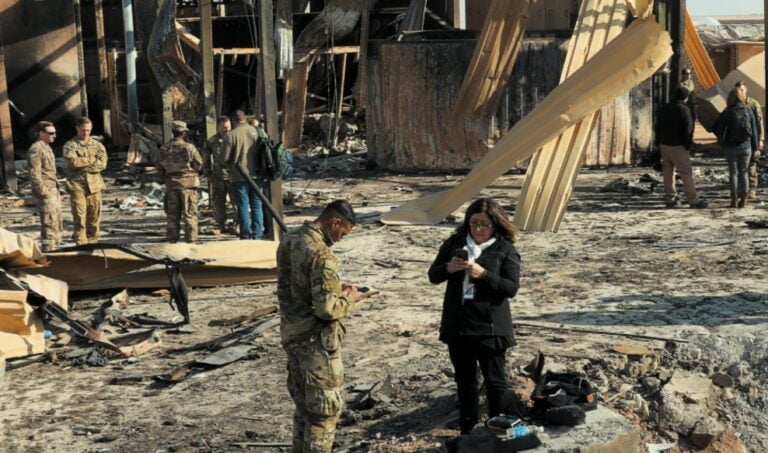
The US Treasury Department on Wednesday said the sanctions were in response to a series of attacks this month by Iran and its proxies — in particular, a missile strike on Erbil in northern Iraq.

Houthi missile attack on a Saudi Aramco depot last week and other strikes by Iranian proxies against Saudi Arabia and the UAE also informed the American decision.

The sanctions focus on Iran-based procurement agent Mohmmad Ali Hosseini and his network of companies.

In a statement, the Treasury Department said these businesses “procured ballistic missile propellant-related materials for the Islamic Revolutionary Guard Corps Research and Self Sufficiency Jihad Organisation (IRGC RSSJO), the IRGC unit responsible for the research and development of ballistic missiles, as well as Iran’s Parchin Chemical Industries (PCI), an element of Iran’s defence Industries Organisation (DIO)”.

Brian Nelson, Under Secretary of the Treasury for Terrorism and Financial Intelligence, said Washington was committed to preventing Iran’s development and use of advanced ballistic missiles, even as it seeks to return to the 2015 nuclear deal.

“While the United States continues to seek Iran’s return to full compliance with the Joint Comprehensive Plan of Action, we will not hesitate to target those who support Iran’s ballistic missile programme,” Mr Nelson said.

“We will also work with other partners in the region to hold Iran accountable for its actions, including gross violations of the sovereignty of its neighbours.”

As part of its conditions to return to the nuclear deal signed in 2015, Iran has requested the removal of the Revolutionary Guards from Washington’s list of foreign terrorist organisations. The US designated the force as a terrorist group in 2019.


Iran FM says IRGC sanctions a ‘red line’ for Vienna talks

0

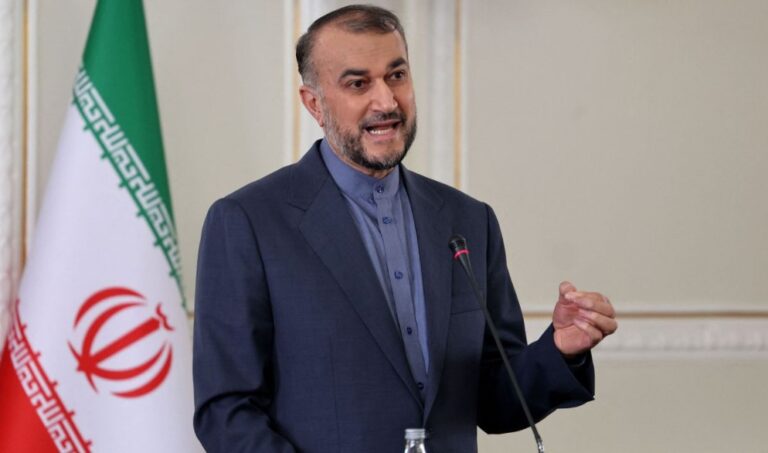
Iran’s Foreign Minister Hossein Amir-Abdollahian has issued a clarification after suggesting in an interview with Iranian television that Tehran could enter into a renewed nuclear deal without the Islamic Revolutionary Guard Corps (IRGC) being delisted as a terrorist organization by Washington.

In an interview on Saturday, Amir-Abdollahian said that one of the remaining issues in the nuclear talks in Vienna is the unilateral sanctions on individuals and entities that have been placed on Iran by the United States, specifically under the presidency of Donald Trump after he exited the nuclear deal, or Joint Comprehensive Plan of Action (JCPOA), in 2018. Iran and Western European countries are seeking to reduce Iran’s nuclear program to the JCPOA levels while removing Trump-era sanctions. Foreign Minister

Regarding the IRGC, which Trump sanctioned as a foreign terrorist organization (FTO) in 2019, Amir-Abdollahian called it “the most important security and defense” organization in the country. He added that Iran has communicated its issue with sanctions on the IRGC to the Americans, likely with Europe as intermediaries given that Iranian and American officials are not meeting face-to-face at the talks.

Amir-Abdollahian said that IRGC officials have told him personally that if the negotiations reach a sticking point over the status of sanctions on the IRGC that the negotiators “should choose the interests of the country” and not allow that to become an obstacle. Many Iran observers viewed the comments as Amir-Abdollahian preparing the Iranian public for a compromise on the US delisting the IRGC from the FTO list.

After considerable public uproar, Amir-Abdollahian issued a statement on his Instagram page saying that some people had an “incorrect understanding” of his interview. He wrote that “the red lines will be fully observed.” He recommended that people watch the entire interview where he clarified that Iran would insist on its red lines. Amir-Abdollahian even finished the post.

Australian academic retells story of being held hostage by Iranian IRGC

0

When Australian academic Kylie Moore-Gilbert accepted a university invitation to travel to Iran in 2018, she could never have imagined the horrific ordeal that would befall her.

Ms. Moore-Gilbert traveled to Tehran in August 2018 to attend a seminar on Shia Islam with a number of foreign scholars.

When she came to check in for her return flight to Australia, her trip took a terrifying turn.

Accused of being a spy, Ms Moore-Gilbert was thrust into a high-security prison run by Iran’s terrorist-designated paramilitary group, the Islamic Revolutionary Guard Corps.

A Bahraini contact she was speaking to for a separate research project had sold her out.

“I wasn’t interviewing him or talking to him about Iranian politics, or anything about Iran actually, but he had links, evidently, to the Iranian Revolutionary Guard Corps (IRGC),” she told Tony Jones, filling in for Neil Mitchell.

“For whatever reason I just got unlucky and he told them I was suspicious.”

It marked the beginning of an ordeal that would come to last more than 800 days.

During her time behind bars, Ms. Moore-Gilbert survived solitary confinement in a two-meter by two-meter cell, a beating which ended with a tranquilizer, several hunger strikes and the attention of a high-level figure in the Iranian IRGC who was infatuated by her (and whose wife also happened to be a guard at Tehran’s Evin Prison).

And when she was released, she was dealt another blow — her husband had left her for one of her colleagues.

“Everything has been turned upside down in my life and I’m still trying to put the pieces back together in a way,” she said.

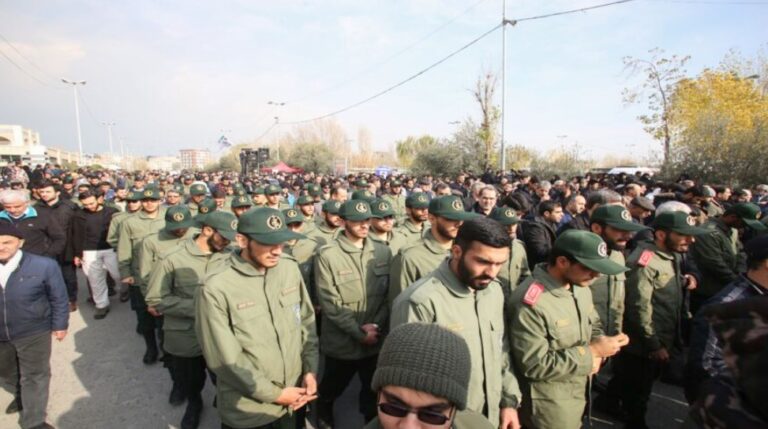
The Islamic Revolutionary Guard Corps was formed in the aftermath of Iran’s 1979 revolution, charged with upholding the ideals of the Islamic republic and defending it from foreign and domestic threats. It was the Guards who arrested, tried and held Moore-Gilbert for the majority of her time in prison.

US says Iran nuclear deal not imminent amid deadlock over IRGC

0

The U.S. said the revival of a nuclear deal with Iran may not happen soon following recent requests from Tehran, including that Washington removes the Islamic Revolutionary Guard Corps from its list of terrorist organizations.

“I can’t be confident it’s imminent,” Robert Malley, U.S. Special Envoy for Iran, told reporters on Sunday at a conference in Qatar. “A few months ago we thought it was imminent.”

The comments come as the U.S. reassesses the political costs of reviving the 2015 pact that limited Iran’s nuclear activities in return for sanctions relief, including on oil exports. Russia’s war on Ukraine is also complicating the negotiations, which involve Moscow. Talks in Vienna between Iran and the European Union, U.K., Russia and China have dragged on for a year.

Tehran and the U.S. are negotiating indirectly. The status of the IRGC, a military organization that’s armed Iranian proxy groups around the Middle East and been blamed for numerous attacks on the U.S. and its allies, isn’t directly linked to the 2015 agreement.

But Iran has insisted that the group comes off the black list. nuclear deal

“It’s one of the requests Iran has made,” Malley said. “We haven’t decided to delist the IRGC. The sooner we get back into the deal — we think it’s in our interest to be back in a deal and we think Iran’s too — the more faithfully we can implement it.”

Lifting the designation could alienate Saudi Arabia, the United Arab Emirates and Israel, just as President Joe Biden works to rally them against Moscow.

Saudi Arabia and the UAE have been attacked by Iranian-backed Houthi rebels based in Yemen several times this year.

The most recent strikes came on Friday, when the Houthis targeted several sites in Saudi Arabia with missiles and drones and caused a large fire at a fuel depot in Jeddah, where Sunday’s Formula 1 race is taking place.

Gulf Arab states have criticized Washington for responding too slowly to Houthi aggression and pursuing the nuclear negotiations with Iran, which they fear will hand Tehran an oil windfall.

IRGC sanctions disrupt China’s economic support for Iran

0

Sanctions levied against Iran’s Islamic Revolutionary Guard Corps (IRGC) are undermining China economic support for Tehran significantly, observers say.

Iran has been economically reliant on China for years, and last year’s signing of a 25-year strategic deal between the two countries further cemented Beijing’s dominance in the Islamic Republic.

While that deal has been described as a “win-win” by both regimes, observers say it would be wise for Iran not to pin any hopes of economic salvation on such agreements that fall under Beijing’s Belt and Road Initiative (BRI), especially when IRGC sanctions risk exposing China to international sanctions.

For many years, the IRGC has been using the income from Iran’s oil sales to pursue its expansionist agenda in the region.

As a result, the US government, among other moves, designated the National Iranian Oil Company, Iran’s petroleum ministry and the National Iranian Tanker Company in October 2020.

The Treasury Department issued the sanctions against the three entities for their financial support to the IRGC’s external operations arm, the Quds Force.

In June 2020, the United States also imposed sanctions on five Iranian ship captains who delivered oil to Venezuela. China economic support

Bottom line is top priority for Beijing

While the benefits of the 25-year deal to both countries are presented as plentiful, China is taking a huge risk investing in Iran, which has been the target of US sanctions in a number of industries, observers say.

Already, two units of China’s largest transportation network, COSCO, were sanctioned by the United States in September 2019 as a result of their complicity in circumventing sanctions on Iran.

COSCO owns about 4% of all existing super oil-tankers globally.

The embargo on COSCO immediately drove up the price of oil shipments in Asia and increased overall costs by about 30%.

It reached the point where Chinese government officials demanded sanctions be lifted from the company during trade negotiations with the United States in January 2020.

Biden faces growing pressure over nuclear talks, rumored plan to pull Iran’s IRGC from terror list

0

The Biden administration is playing with fire as it considers lifting the formal terrorism designation on Iran‘s elite military force, former U.S. officials and national security scholars said Friday, warning that American lives will be at greater risk if Washington makes such a concession in a bid to revive the 2015 Iran nuclear deal. Biden 

The debate over whether to pull Iran’s Islamic Revolutionary Guard Corps (IRGC) from the State Department‘s official list of “foreign terrorist organizations” has become a flash point in Vienna, where negotiators from Iran, the U.S., Russia and a handful of other nations are seeking the revival of an Obama-era deal limiting Tehran‘s nuclear program that President Trump repudiated in 2018.

The IRGC — which backs militant groups that routinely target U.S. forces in Iraq and Syria, and itself claimed responsibility for a ballistic missile attack in northern Iraq earlier just weeks ago — was put on the terror list in 2019 as the Trump administration was re-imposing sanctions and ratcheting up a “maximum pressure” campaign on Iran.

Beyond the symbolism of declaring that the IRGC is no longer a terrorist threat, critics say that the combination of rescinding the designation while offering Iran relief from economic sanctions would be a financial shot in the arm for the IRGC, considered Iran‘s most potent military force with a special duty to protect the Islamic Republic.

The IRGC, skeptics say, would use its restored access to funds to underwrite its support for militant regional allies such as Hamas and Hezbollah, the Houthi rebels in Yemen, anti-American militias in Iraq, and other extremist outfits.

“The Iranian Revolutionary Guard Corps has been at the center of a strategy … of using terrorism as an instrument of national power,” David Shedd, the former acting director of the Defense Intelligence Agency, said Friday at a forum hosted by the  National Council of Resistance of Iran (NCRI), a leading group of Iranian exiles fiercely opposed to the regime in Tehran.

US Middle East Policy At A Crossroads Amid IRGC Dilemma – Analysis

0

For several decades now, the US has pacified and appeased the Iranian regime rather than confronted its terrorism or, at the very least, curbed and disrupted its aggressive behavior.

Tehran practices its terrorist behavior and destabilizes the security of the region through various means, both direct and indirect.

This regime has always been known for behavior that intends to harm the security of the region. Much information and numerous intelligence documents have indicated its involvement in supporting militias and terrorist organizations including Hezbollah, Shiite militias in Iraq, the Houthis and its units in Syria, as well as Al-Qaeda and Daesh, whose leaders and their families it has hosted on Iranian soil.

This explains why terrorism strikes in all countries in the region except Iran.

The Obama administration in 2015 appeased Iran with a flawed nuclear agreement whose terms did not prevent it from making a bomb after a specified period of time.

It did not look into Tehran’s behavior in the region, its terrorist militias or its ballistic missile program.

Washington continues to annoy everyone with the file of human rights, except for Tehran, which is one of the worst offenders in the world.

The nuclear deal did not include any consideration of the interests of the Gulf states or the wider Arab world and was nothing more than a postponement of Iran’s military nuclear project.

That is why former US President Donald Trump rejected it and imposed harsh sanctions on the regime.

However, as soon as the Biden administration came into office, its eagerness to revive the ominous agreement became apparent, along with its political attacks on Arab countries, not only with blatant statements but also with its regional and international policies and positions.

The Arab and Gulf states have not changed their attitude toward America.

On the contrary, America’s positions have become more severe and less concerned with partnership and support for its allies, especially as it is now considering removing the IRGC from its terrorist blacklist.

Iranian IRGC chief threatens the United States with missiles and revenge

0

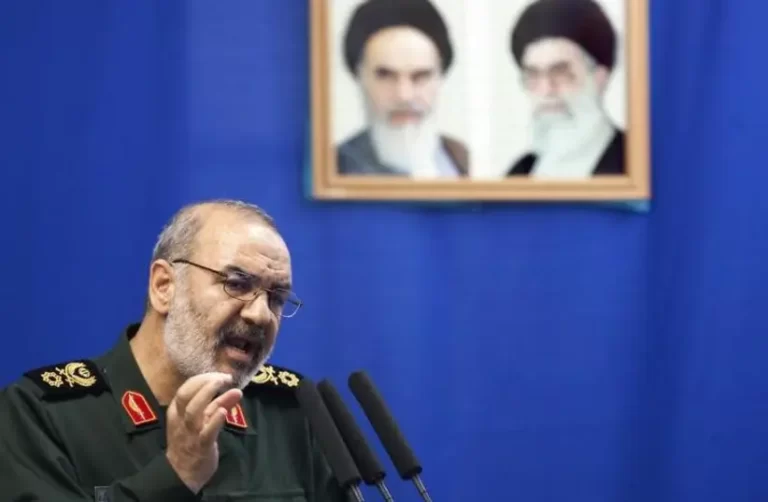
Iran’s enemies, such as Israel and the United States, have an “expiration date” as a new world order is upon us, Iranian IRGC (Revolutionary Guards) commander-in-chief Hossein Salami threatened on Wednesday, Iranian news outlet Tasnim reported.

Speaking in front of IRGC soldiers in Dezful, southwestern Iran, Salami issued a warning to the Jewish state and shared insight on the Iranian approach to negotiation on sanctions imposed by the US.

In a direct threat, Salami said Israel will have to “endure the bitter taste of missiles if it is not careful.”

Salami claimed that America’s “strategy of strong, aggressive sanctions” has strengthened the IRGC “in every way.”

“The enemies are gradually retreating and their policies are no longer effective,” he said. It was reported last week that the US is considering removing the IRGC from its foreign terrorist organization blacklist in return for Iranian assurances on de-escalation in the Middle East.

“We have entered a new era,” the IRGC chief said. “The sun has set on the evil powers,” he stated, referencing Israel, the US and other western nations. The Islamic revolution has “accelerated the erosion and decay of western civilizations,” he added.

“The previous century was written by the enemies and the westerners. It was the century of captivity and slavery of Muslims, of modern ignorance, of a bipolar world in which the West is advanced and we are backward and dependent on others.”

“We do not only hold funerals for our martyrs but also exact immediate revenge for them,” the IRGC chief stated, possibly referencing the American assassination of Quds Force commander Qasem Soleimani.