Home Blog Page 38

US Lawmakers Focus on Keeping Iranian IRGC on Terror List

0

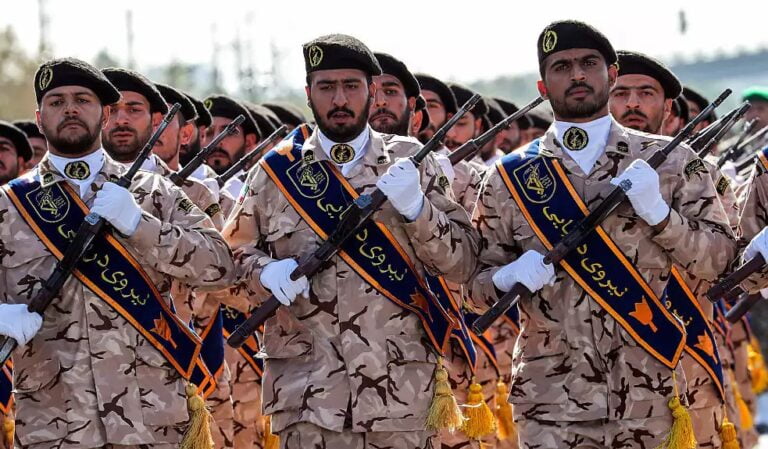
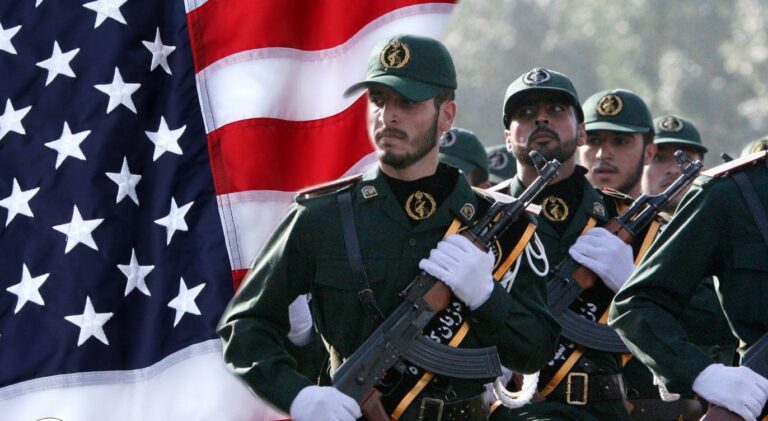
More Republican lawmakers have raised objections to removing the Iranian IRGC (Islamic Revolutionary Guard Corps) from the US list of foreign terrorist organizations (FTO).

Representative Scott Franklin – who spearheaded a letter expressing opposition to the Biden administration’s possible move – reiterated on Tuesday that the Iranian IRGC is a chief sponsor of terrorism in the world today.

In the letter, Franklin and 86 of his colleagues urged Secretary of State Antony Blinken not to remove the IRGC from the list, saying the IRGC “is one of the most dangerous terrorist groups in the world today. Through its sponsorship of terrorism, the IRGC is responsible for the deaths of countless innocent people and at least 600 US troops during the occupation of Iraq”.

They said they are deeply concerned about reports that the administration intends to remove the Iranian IRGC terrorist designation “within the confines of a new Iran Nuclear Deal”, adding “We are united in strong opposition to any move to legitimize the IRGC’s reckless, destabilizing, and anti-Semitic actions throughout the Middle East”.

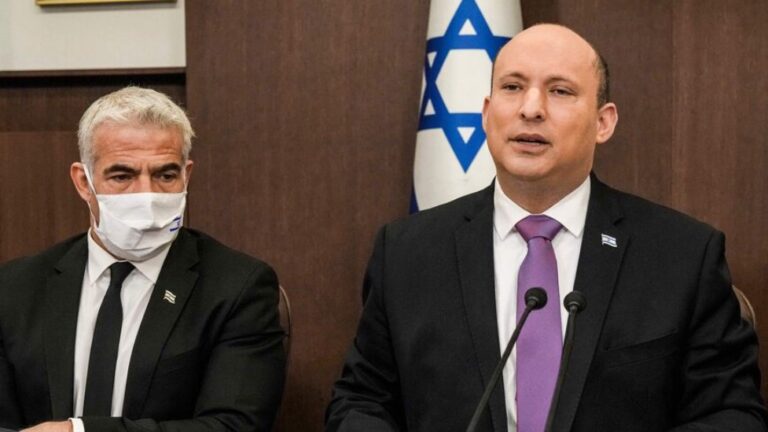
Israel’s prime minister and foreign minister have called on Washington to keep IRGC on the list, saying the IRGC is “a terrorist organization that has murdered thousands of people, including Americans”.

Iranian officials have been publicly raising the issue since at least November, saying a ‘good deal’ would mean lifting sanctions on the Revolutionary Guard.

Such a step would reverse former President Donald Trump’s 2019 blacklisting of the group, the first time the US had formally labeled part of another sovereign government as a terrorist group.

Democratic Senator Tim Kaine, however, believes relations with Iran could become normal. “If we have arrangements [with Iran] that force us to communicate, we could expect trust to be rebuilt & eventually get to normalcy. There’s nothing unrealistic about it: Japan & Germany are among our closest allies, but we were at war with them,” he told Iran International.
What terrorist delisting of Iran’s IRGC would mean for US interests, allies in Middle East

0

US President Joe Biden’s administration is reportedly in the final stages of an attempt to revive the 2015 nuclear deal with Iran.

Insiders claim that Tehran is insisting that Washington agree to remove the Islamic Revolutionary Guard Corps from its Foreign Terrorist Organizations list.

The American negotiating team, led by Special Representative for Iran Rob Malley, believes that it can obtain the concessions and guarantees from the Iranian government necessary for preventing it from becoming a nuclear weapons threshold power.

Analysts think a nuclear-capable Iran would significantly empower the IRGC and likely supercharge its asymmetric-warfare campaign throughout the Middle East.

Iran has reportedly been pressing the Biden team to agree to an almost total overhaul of not only economic sanctions related to Iran’s nuclear program, but those connected to terrorist activities specifically linked to the IRGC.

Sources report that one of Tehran’s conditions to revive the Joint Comprehensive Plan of Action, the formal name of the nuclear deal, is the removal of the terrorist designation, which equates the IRGC with Daesh, and Al-Qaeda.

The Biden administration has not confirmed the leaks but has made clear it hopes to restore the JCPOA. But there are signs that it may acquiesce to Tehran’s demands.

Critics point to what they see as a serious flaw in the Biden administration’s strategic reasoning.

Michael Doran, senior fellow at the Hudson Institute, told Arab News that the deal under consideration by the Biden administration would neither prevent Iran from eventually developing nuclear weapons nor dissuade the IRGC from conducting terror attacks against American and allied interests.

He said: “Biden officials and, before them, (former US President Barack) Obama officials promised us repeatedly that the nuclear deal would not prevent the United States from working to contain the IRGC on the ground in the Middle East.

“Clearly, the nuclear deal is about much more than nuclear weapons. It will remove all meaningful restrictions on Iran’s nuclear-weapons program, thus paving the way to Iran’s early acquisition of a nuclear bomb.”

Iranian terrorist designated IRGC’s naval smuggling network in Yemen

0

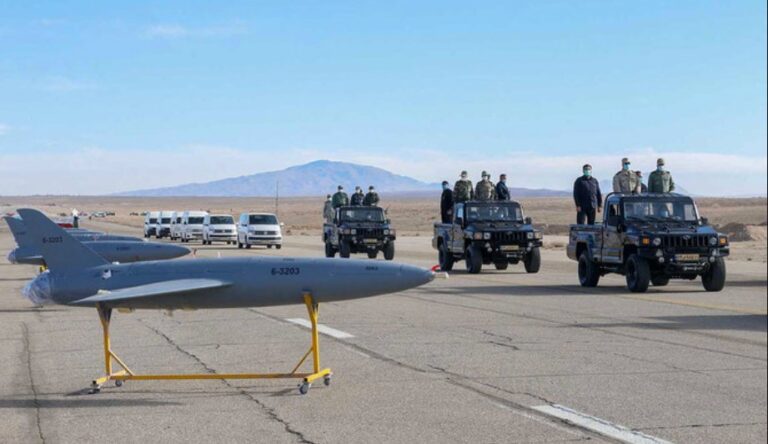
Yemeni officials warn that the Iranian terrorist designated Islamic Revolutionary Guard Corps Quds Force (IRGC-QF) is putting together a new naval force that they say will smuggle arms and undermine stability in Yemen and the Gulf states.

News of the IRGC’s latest recruitment efforts coincides with the passage on February 28 of United Nations Security Council (UNSC) Resolution 2624, which reimposes an arms embargo on the Houthis.

This came after the Houthis attacked the United Arab Emirates (UAE) and Saudi Arabia earlier this year, most recently claiming responsibility for drone and missile attacks on Saturday (March 19) targeting a number of “vital and important” Saudi sites, including Aramco facilities.

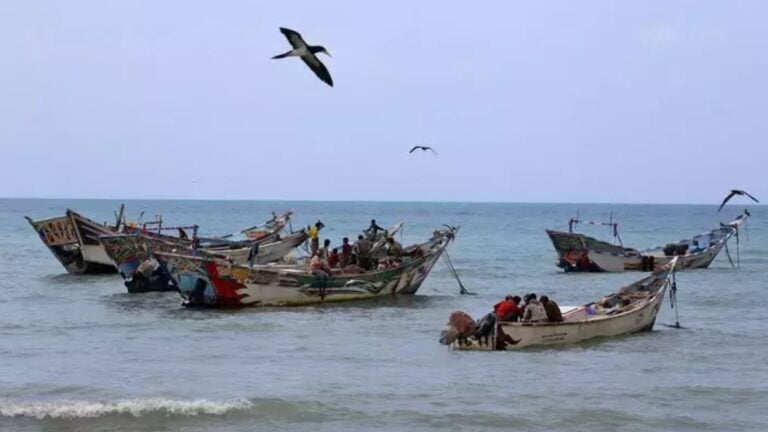
Past arrests made during Iranian arms smuggling operations revealed that many of the smugglers were fishermen who had been recruited by the Houthis, Yemeni Deputy Minister of Justice Faisal al-Majeedi told Al-Mashareq.

As pressure increases on the Iranian terrorist IRGC and the Yemeni Houthis, he cautioned, these groups will work harder to circumvent the constraints placed on them “by stepping up the recruitment of mercenaries and fishermen”.

In reports to the UNSC, experts have noted that the IRGC has multiple smuggling networks, especially maritime networks.

Fishermen are a primary target for recruitment by the IRGC and their Houthi cohorts, Abaad Centre for Research and Studies director Abdul Salam Mohammed said.

Iran-backed militias in Iraq, Syria, Yemen and Lebanon engage in criminal and security-disrupting activities, he said, and facilitate Iran’s penetration into sovereign nations as it attempts to “dismantle them from the inside”.

The best means for smuggling weapons and drugs from Iranian ships at sea “are the small boats of fishermen, who are recruited, trained and qualified on handling the transport of contraband”, Mohammed said.

These boats are capable of delivering everything from hashish to weapons to designated areas on Yemen’s coast, he said.

The IRGC terrorist organization eyes Iran’s nuclear program

On 14th March of 2022, Iran’s state-run news outlets circulated official reports of an announcement on the arrest of a team planning sabotage acts at the Fordow Nuclear Facility in Iran. What has been overlooked by the international community within this report is the first official confirmation of Iran’s terrorist designated Islamic Revolutionary Guard Corps, the IRGC, establishing a command center tasked with protecting the country’s nuclear facilities and its nuclear program.

To understand the seriousness of this development, one must be reminded of the IRGC’s history along with the influence this terrorist organization has inside Iran.

The IRGC originally founded by Iran’s first supreme leader Ayatollah Khomeini and tasked with merely protecting the country’s political system, although strictly forbidden to enter politics, for more than four decades and immediately after its inception has only had one goal in mind, which is to essentially control every imaginable area, sector, industry, and system within the country.

After more than four decades of infighting, conflicts, assassinations, abductions, forgery, deception, and corruption, the IRGC is closer than ever to reaching its grand dream, and in fact, has already established control over the country’s most crucial areas.

The IRGC now has complete control over Iran’s engineering, mechanical engineering, energy, mining, and defense industries through its engineering arm, the Khatam al-Anbiya construction headquarters and essentially controls most of Iran’s dams, water diversion systems; highways; tunnels; and water, gas, and oil main pipelines as it has been the only contractor allowed to build them for decades.

Having appointed dozens of active and former high-ranking commanders within Iran’s parliament, judiciary, municipalities, governorates, councils, and presidential cabinet, it has also established firm control over Iran’s internal affairs and politics.

As it was highlighted by Iran’s former foreign minister in a leaked audio file last year, the IRGC also controls Iran’s foreign policy with its extraterritorial operations arm, the Quds Force, dictating every decision Iran’s foreign ministry makes.

The Quds force is also responsible for funding, arming, and commanding dozens of proxy militia groups across the globe and has had countless well-documented assassinations, abductions, and terrorist attacks abroad.

The IRGC has also completely overshadowed Iran’s army and has managed to allocate a budget many times bigger than the army to itself, currently possessing superior technology and influence within Iran’s armed forces. Iran’s Intelligence Ministry has also suffered the same fate after years of rivalry with the IRGC Intelligence Organization.

The most recent development in IRGC’s roadmap towards complete control was the announcement of the draconian “Regulatory System for Cyberspace Services Bill,” which places Iran’s Internet infrastructure and Internet gateways under the control of the IRGC.

With a better understanding of IRGC’s history and influence in Iran, the threat of this terrorist organization being in charge and closer than ever to Iran’s nuclear program and nuclear sites may be better understood.

What makes this development even more alarming is rumors that the United States might lift the sanctions imposed on IRGC in order to close a nuclear deal with Iran which would be devastating to the regional and ultimately global peace efforts.

Dropping IRGC from blacklist would be boon for terrorism

0

The US decision to remove Iran’s Revolutionary Guards from its foreign terrorist organization blacklist would not only be a distortion of truth and adoption of a double standard distinguishing between terrorism and terrorism but worse yet: an American show of surrender to Iran and a reward to the main perpetrator of terrorism of its time, the one that sows chaos in the Middle East and the entire world, from Syria and Lebanon to Argentina.

And yes, it will also be a blow and put sticks in the wheels of Israel and America’s other allies in the region, who deal with destructive terrorist plots daily, courtesy of the Revolutionary Guards.

At the time these lines are written, Washington has not yet made a decision in this regard. The very fact that this discussion is taking place at Iran’s demand, raised by the regime moments before the suspension of nuclear talks, is already a form of insult to the United States.

Were it not for steps previously taken by the Biden administration, one could have suspected that the discussion on the matter was a tactical move by Washington designed to provide them with an opportunity to respond negatively and assume an uncompromising stance, to dull down the arrows of criticism pointed at them for surrendering to Tehran’s demands.

Unfortunately, however, it is difficult to think of such a possibility seriously, when one recalls the words of Russia’s main negotiator in Vienna about Iran’s achievements during the talks.

Moreover, removing the Revolutionary Guards from the blacklist does not seem far-fetched when remembering that one of the first decisions the Biden administration made was removing the Houthis from the same listing only two days after they attacked Saudi Arabia and refrains from adding them back onto the list ever since, despite the fact that rebels conducted more attacks, this time against the United Arab Emirates as well.

Fears grow over possible removal of Iran’s Revolutionary Guard from US terror list

0

Concerns grew on Friday that the US planned to remove the Islamic Revolutionary Guard Corps from its blacklist of terrorist (terror list) organizations as part of a revived nuclear deal with Iran.

The IRGC has been subject to US sanctions since 2007 as part of the US Specially Designated Global Terrorist list, and in 2017 it became the first national military to be designated by the US as a Foreign Terrorist Organization.

“The IRGC is the Iranian government’s primary means of directing and implementing its global terrorist campaign,” President Donald Trump said at the time.

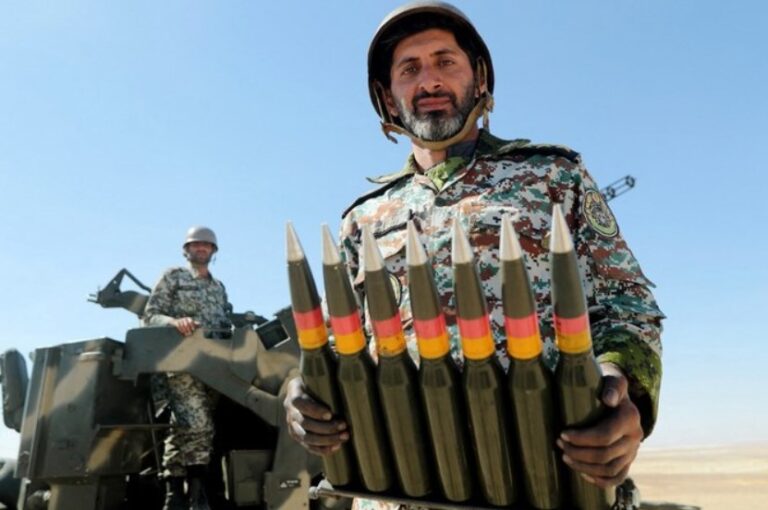
The Revolutionary Guards control a business empire in Iran, as well as military and intelligence forces responsible for terrorist attacks throughout the world.

Analysts now believe the US plans to remove the terrorist designation in return for Iranian assurances about reining in the IRGC. It is thought to be the last and most troublesome issue in wider indirect talks on reviving the 2015 nuclear deal. terror list

Such a move would be fiercely opposed by the Gulf states, and Israel made its concern known in a joint statement on Friday by Prime Minister Naftali Bennett and Foreign Minister Yair Lapid. “The attempt to delist the IRGC as a terrorist organization is an insult to their victims and would ignore documented reality supported by unequivocal evidence,” they said. terror list 

“We find it hard to believe that the IRGC’s designation as a terrorist organization will be removed in exchange for a promise not to harm Americans. The US will not abandon its closest allies in exchange for empty promises from terrorists.Analysts now believe the United State plans to remove the terrorist designation in return for Iranian assurances about reining in the IRGC. It is thought to be the last and most troublesome issue in wider indirect talks on reviving the 2015 nuclear deal.

Israel calls on US not to delist IRGC as terror group

0

Prime Minister Naftali Bennett and Foreign Minister Yair Lapid urged the United States today not to remove Iran’s Islamic Revolutionary Guard Corps from its list of terror group.

“The Iranian Revolutionary Guards Corps (IRGC) is a terror group that has murdered thousands of people, including Americans.

We refuse to believe that the United States would remove its designation as a terrorist organization,” Lapid and Bennett said in a rare joint statement that Lapid also tweeted.

They pointed out that the IRGC directs and instructs Hezbollah in Lebanon, Islamic Jihad in Gaza, the Houthis in Yemen and militias in Iraq, and that the body is responsible for attacks against American civilians and American forces throughout the Middle East, including in the past year.

The IRGC has been accused of plans to assassinate senior American officials and was involved in the murder of hundreds of thousands of Syrian civilians.

The statement read, “They kill Jews because they are Jews, Christians because they are Christians, and Muslims because they refuse to surrender to them.”

It went on, “The attempt to delist the IRGC as a terrorist organization is an insult to the victims and would ignore documented reality supported by unequivocal evidence.

We find it hard to believe that the IRGC’s designation as a terrorist organization will be removed in exchange for a promise not to harm Americans. The fight against terrorism is a global one, a shared mission of the entire world.

We believe that the United States will not abandon its closest allies in exchange for empty promises from terrorists.”

This is not the first time Israel has protested such reported American intentions.

Addressing the Conference of Presidents of the Major American Jewish Organizations on Feb. 20, Bennett warned against the new JCPOA being negotiated at Vienna, arguing that with the imminent deal, tens of billions of dollars will be poured “back into this apparatus of terror” and “Much of this money will be funneled towards attacking Israel.”

Iran manipulating Kataib Hizbullah like a chess piece: analysts

0

Though it is technically an Iraqi militia, Kataib Hizbullah is fully controlled by Iran’s Islamic Revolutionary Guard Corps (IRGC), as evidenced by its actions in Syria, where it is being manipulated like a chess piece, say analysts.

As is true for the rest of Iran’s proxies in the Middle East, only the IRGC has authority over Kataib Hizbullah, said Sheyar Turko, a specialist in the affairs of IRGC-affiliated militias.

These militias are just pawns that are moved directly by Tehran, regardless of where they get their funding or where they operate, he said.

In the case of Kataib Hizbullah, the militia is supposed to be “a purely Iraqi military group established to fight terrorism, with funding from the Iraqi treasury”.

Abu Ali al-Askari, spokesperson of Iraqi Kataib Hizbullah, speaks during a campaign rally in Baghdad on September 3, ahead of Iraq's parliamentary elections.
Abu Ali al-Askari, spokesperson of Iraqi Kataib Hizbullah, speaks during a campaign rally in Baghdad on September 3, ahead of Iraq’s parliamentary elections.

“Yet it has carried out many military operations in a way that serves only Iranian interests,” Turko said, even to the detriment of Iraq.

“Iran is once again exploiting the wealth and natural resources of the peoples of the region to fund its plans and proxies, without taking into account that the people need the money to rebuild what has been destroyed,” he said.

Many areas of Iraq suffer from neglect due to the ongoing wars.

Even though the Iraqi leadership disapproves of Kataib Hizbullah’s actions, Turko said, the militia is continuing its operations in Syria, as well as its dubious activities in Iraq.

Much of the attention of Iran-backed militias, including Kataib Hizbullah, has been focused on shoring up and consolidating a presence in areas of strategic interest — particularly around the Anbar province border town of al-Qaim — a main crossing with Syria.

The border area is a key segment of the route that these groups use to move fighters, weapons and even consumer goods between Iraq and Syria.

IRGC attack narratives diverge as Iraq strives for unity

0

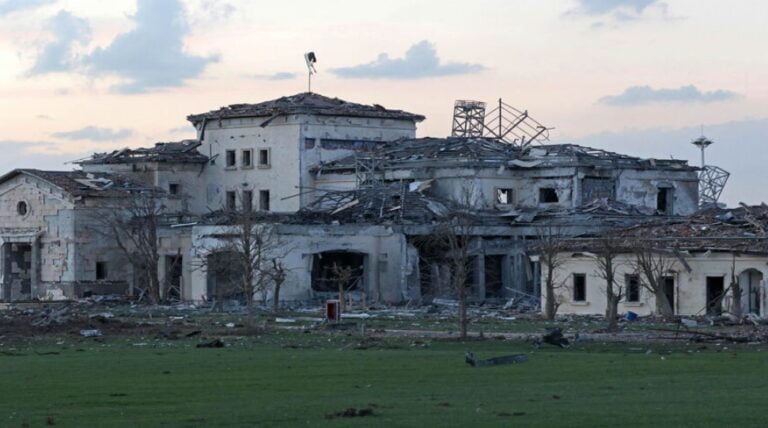
At least a dozen ballistic missiles shot at the Kurdistan Region of Iraq claimed by Iran’s Islamic Revolutionary Guard Corps (IRGC) in the early morning hours of March 13, left many questions in their wake.

On March 14, Iraqi Prime Minister Mustafa al-Kadhimi traveled to Erbil to meet with Kurdistan Regional Government (KRG) representatives, visit the sites hit and show support for the regional government.

KRG President Nechirvan Barzani and Kadhimi jointly described Iran’s attack on Erbil as a “serious development,” according to a statement by the president’s office afterward.

The Ministerial Council for National Security meeting March 13 chaired by Kadhimi issued a statement stressing Iraq’s refusal to allow “its lands to attack neighboring countries.”

Some see the attack as retaliation and/or a warning amid regional alliances affected by the war in Ukraine, while others consider it an attempt to influence Iraqi politics.

The KRG said no one had died in the attack. IRGC-linked media instead cheered the alleged killing of “Mossad operatives,” in reference to Israel’s national intelligence agency.

The IRGC claimed to have hit a “strategic center” for Israeli spies in its neighboring country.

Video footage of the attack shows several massive explosions and photos taken of one site show considerable destruction to a residence on a farm north of Erbil, the KRI capital, owned by a Kurdish businessman. The offices of the media outlet Kurdistan24 also suffered damage.

The target of the attack initially appeared to have been the new US Consulate on the outskirts of Erbil, but statements later denied this despite reported damage to the massive compound under construction.

As this Al-Monitor correspondent noted in January, “Iran-linked groups have long called the sprawling US Embassy in Baghdad a ‘cove of spies’ and are likely to consider the enormous new consulate in the KRI the same.”

A meeting advocating for normalization of relations between Israel and Iraq held in Erbil in September and organized by a US think tank had led to outcry and calls for all participants to be arrested.

Iran-backed Hezbollah duo found guilty in murder of former Lebanese PM

0

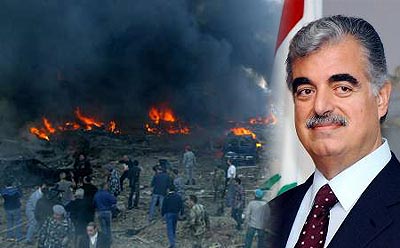
An appellate tribunal backed by the United Nations (UN) on Thursday (March 10) found two Hezbollah elements guilty in the 2005 assassination of former Lebanese prime minister Rafik al-Hariri.

Hezbollah, which receives orders, support, funding and arms from Iran and the Iranian terrorist designated Islamic Revolution Guard Corps (IRGC), has carried out countless acts of terror and undermined the state of Lebanon at the behest of Tehran for decades.

The tribunal was set up in 2009 to try those responsible for the February 14, 2005, suicide truck bombing in downtown Beirut that killed Lebanese PM al-Hariri and 21 others, and wounded a further 226.

The court convicted Hezbollah element Salim Ayyash, a senior operative in Hezbollah’s Unit 121, an assassinations squad that takes orders directly from Hezbollah leader Hassan Nasrallah.

But it acquitted Hassan Habib Merhi, Hussein Oneissi and Assad Sabra, saying there was not enough evidence to prove their involvement.

Appeals judges, however, granted an appeal by prosecutors, who asked them to overturn the acquittals of Merhi and Oneissi.

“The appeals chamber has unanimously decided to reverse the acquittals of Misters Merhi and Oneissi. We unanimously find Mr. Merhi and Oneissi guilty,” presiding judge Ivana Hrdlickova said.

The case against all four men relied almost exclusively on circumstantial evidence in the form of mobile phone records that prosecutors said showed a Hezbollah cell plotting the attack.

Nasrallah has refused to hand over any of the suspects or to recognize the UN-backed court, which has issued an international warrant for the arrest of Ayyash.

The US State Department’s Rewards for Justice programme has offered a reward of up to $10 million for information leading to the location or identification of Ayyash.