Home Blog Page 39

Arab states slam IRGC missile strikes on Iraq’s Erbil

0

Arab states and regional bodies condemned the missile strikes on Erbil, the capital of Iraq’s semi-autonomous Kurdistan region, saying it was targeting an Israeli “strategic centre” claimed by the Iranian Revolutionary Guards Corps on Sunday.

Egypt, Jordan, Bahrain and Yemen were among several Arab states on Sunday to condemn an Iranian missile strikes on Erbil, northern Iraq.

The strike, which hit areas administered by the Kurdish Regional Government on Saturday, (KRG) was claimed by Iran’s Revolutionary Guards Corps (IRGC), which alleged it had struck an Israeli base there.

Egypt’s Foreign Ministry condemned the attack “in the strongest terms”, while Bahrain expressed its “full support for the Republic of Iraq in all the measures it takes to maintain its security and territorial integrity”.

Jordan and Yemen described the assault as a “terrorist attack” in separate statements, with Gulf Cooperation Council (GCC) Nayef Al-Hajraf using similar language in his statement.

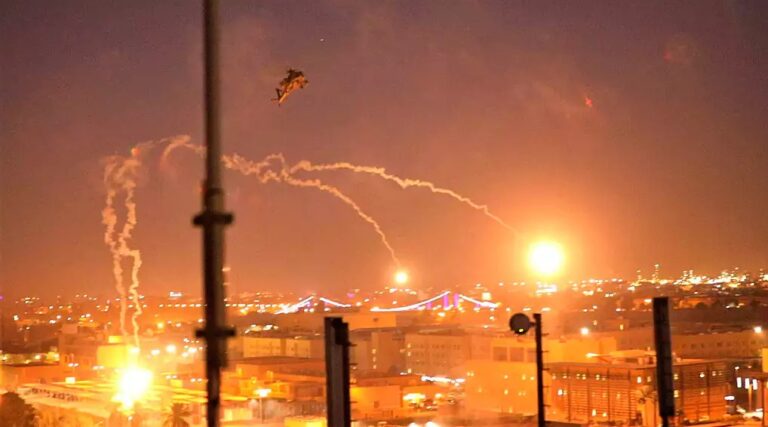
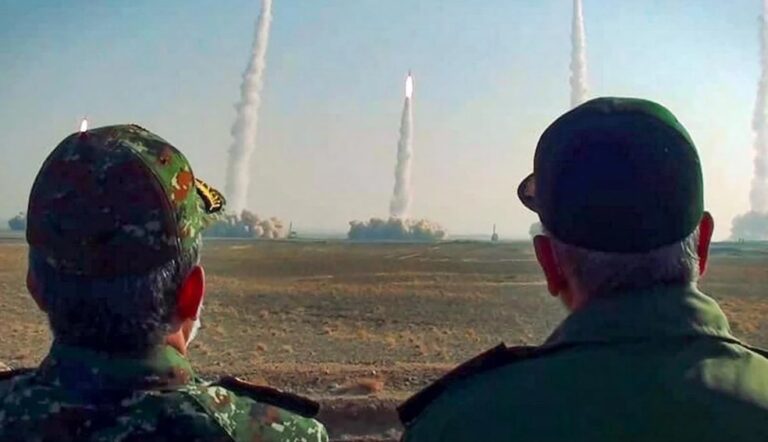
Twelve ballistic missiles rained down on Erbil in a pre-dawn cross-border attack that lightly wounded two civilians, according to Iraqi authorities.

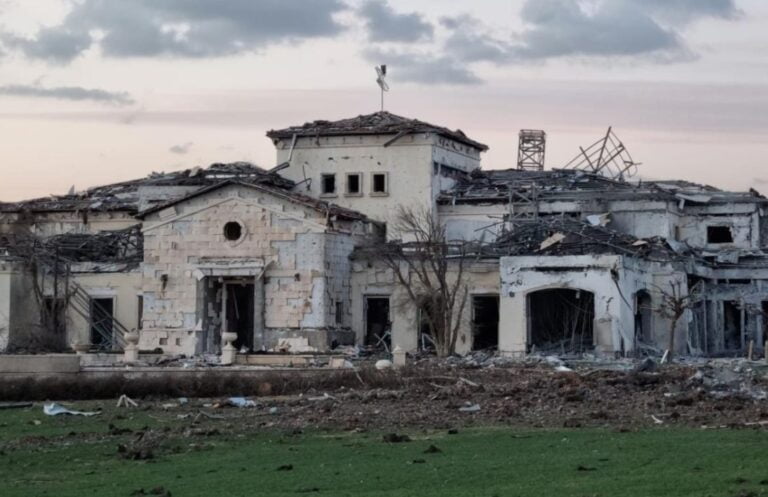
Baghdad summoned Iran’s ambassador in protest at the strikes that had caused “material losses” and “damage to civilian installations and houses”.

Iran’s Revolutionary Guards confirmed they fired the projectiles, saying the attack targeted sites used by Israel. The Guards said in a statement that a “strategic centre for conspiracy and mischiefs of the Zionists was targeted by powerful precision missiles fired by the Islamic Revolutionary Guard Corps“.

Erbil missile attack: Iran’s Revolutionary Guard claims responsibility

0

Iran’s Revolutionary Guard Corps (IRGC) on Sunday claimed responsibility for a ballistic Erbil missile attack, the capital of Iraq’s semi-autonomous Kurdistan region, saying it was targeting an Israeli “strategic centre”.

Around a dozen missiles rained down on the city at 1am on Sunday morning. The target initially appeared to be the US consulate’s new building. Though neighbouring areas were struck, the attack seems to have only caused material damage.

The health minister in the Kurdistan Regional Government, Saman Barzanji, said there were no casualties.

Baghdad has requested via diplomatic channels a “frank and clear” explanation from Iran regarding the Erbil missile attack, the Iraqi government said in a statement.

Iraq “awaits a stance from the Iranian political leadership that rejects aggression,” the Ministerial Council for National Security said after a meeting to discuss the attack launched from Iranian territory.

The IRGC said that it targeted a “strategic centre for conspiracy and mischiefs of the Zionists was targeted by powerful precision missiles fired by the Islamic Revolutionary Guard Corps.”

Earlier this week, Iran said Israeli airstrikes in Syria had killed two Revolutionary Guard officers and vowed revenge.

“Any repetition of attacks by Israel will be met with a harsh, decisive, and destructive response,” the IRGC said in a statement on Sepah News, the Guards’ official website.

The Kurdistan Regional Council of Ministers condemned the attack, which, it said was launched “under the pretext of striking an Israeli base near the U.S. consulate in Erbil, but the target site was a civilian site, and this justification is aimed at concealing the motives of this heinous crime”.

The Iranian government-affiliated Iranian Students News Agency (INSA) quoted Sabereen News, an Iranian-backed Telegram channel close to Iraqi paramilitaries, as saying “two advanced Israeli Mossad training centres” were attacked.

Erbil’s governor denied the presence of Israeli units, calling such allegations “baseless”, local news agency Rudaw reported.

“We condemn this terrorist attack launched against several sectors of Erbil, we call on the inhabitants to remain calm,” Kurdistan Prime Minister Masrour Barzani said.

I was once conscripted into the Iranian armed forces. Here’s why the IRGC designation is punishing conscripts.

0

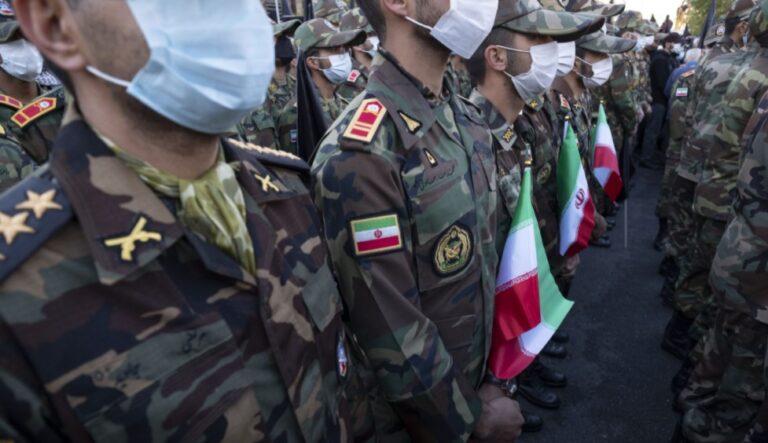
I was a 19-year-old high school graduate when I was ordered to report at 4 am to the headquarters of the Law Enforcement Department of the Draft in downtown Tehran. Iranian armed forces

I waited for two long hours until several officers arrived from the Artesh (regular military), Iranian Ground Forces, Air Force (IRIAF), Law Enforcement Forces (Prisons Branch), and Islamic Revolutionary Guard Corps-Navy (IRGC-N).

They were tasked with randomly picking conscripts. The officers began pointing at disheveled young men, commanding the frightened recruits to go stand in various lines associated with the military.

Draftees were then given paperwork telling them to show up at one of Tehran’s bus terminals two days later to be sent to boot camp. Iranian armed forces

I would end up being picked by the IRIAF, but the process was arbitrary. After completing basic training outside of Semnan Air Defense Base, I received some mediocre training as a member of the military police and mostly did office work.

Like other Iranian men who seek to come to the United States, I was asked by an immigration officer in 2004 about my prior military service.

The officer seemed relieved to hear that my twenty-one months of compulsory service was in the Artesh or regular armed forces.

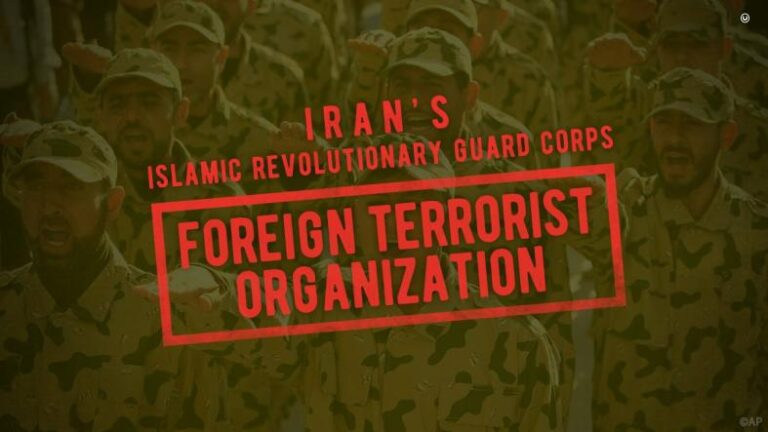
In 2019, the US State Department designated the Islamic Revolutionary Guards Corps (IRGC) as a terrorist organization, an unprecedented action against the military of a foreign state.

This effectively barred any Iranian who had served in the IRGC—conscript or otherwise—from entering the United States. Now, one of the final issues in the Iran nuclear negotiations in Vienna to revive the Joint Comprehensive Plan of Action (JCPOA) has been the Iranian demand that the IRGC be taken off the US list of Foreign Terrorist Organizations (FTOs).

The legal provision can be found in Section 212 of the Immigration and Nationality Act, 8 US Code § 1182.

Iranian opposition group warns US about removing IRGC terror designation

0

An Iranian opposition group warns that any move to remove the Islamic Revolutionary Guard Corps from the United States’ Foreign Terrorist Organization (FTO) list will “aggravate terrorism and chaos” in the region, as that the Biden administration fears making such a move as part of negotiations to bring Iran back into the 2015 nuclear deal.

“A potential exclusion of the IRGC from the FTO list and the removal of these individuals from the terrorism blacklist, as demanded by the ruling theocracy in Iran, will undoubtedly intensify terrorism and chaos in the region,” according to the National Council of Resistance of Iran (NCRI) report. , released Thursday, said.

As talks are underway in Vienna to bring Iran back into the 2015 Joint Comprehensive Plan of Action (JCPOA) from which the US and Iran exited, Iran reportedly demanded the removal of the designation FTO for the IRGC.

The designation was put in place by the Trump administration in 2019, which also launched a strike to remove IRGC General Qassem Soleimani, who led its paramilitary Quds forces.

The NCRI report, which calls for a secular, democratic and non-nuclear Iran, said the designation “has handicapped many foreign financial transactions linked to the IRGC”.

The report describes the IRGC’s work in military and terrorist operations in other countries in the region, through proxies, and the training of foreign mercenaries in places like Yemen, Syria, Iraq and Afghanistan. It also outlines allegations that he funded Hamas and also sought to stage assassination attempts on US soil. It supports previous NCRI reports on the IRGC’s use of drones and naval proxies.

The IRGC’s involvement in the research and development of weapons of mass destruction, the relentless terrorist activities to foment chaos, destruction and instability across the Middle East, its financial empire to finance its activities in Iran and abroad, make this terrorist organization a serious global threat,” the report said.

It also describes how the IRGC is used against the Iranian people, especially after dissident uprisings have shaken the regime’s grip on power, in order to project an image of its own strength on the people.

Israel reveals information on Iranian IRGC escalating UAV terror

0

As a potential nuclear deal between Iran and world powers is imminent, the Israeli military on Monday revealed information on the drone program of Iran’s terrorist designated Islamic Revolutionary Guard Corps (IRGC), including a new video of Israeli planes shooting down several Iranian IRGC drones.

Israel has repeatedly warned that Iranian IRGC drones pose a serious threat to the region, especially as Tehran seeks to arm its proxy militias across Israel’s borders. Israel has also pointed out that the imminent nuclear deal does not address the issue of drones, as well as the bigger question, Iran’s proxy militias.

Israeli military officials said Monday that “drone assassination” is a new and global issue, accusing Tehran of attacking both military and civilian targets across the Middle East.

In identifying the drone, the Israeli military said it saw a model 197 made by Iran’s defense industry. It has a range of 2,000 kilometers, a top speed of 200 kilometers per hour, and a wingspan of seven meters. According to the defense forces, the drone can carry tens of kilograms of missiles.

The Israeli Defense Forces (IDF) also provided new details of the Iranian drone, which allegedly carried TNT to groups based in the West Bank and was shot down by the Israeli Defense Forces on February 10, 2018. The news was announced by Israeli Defense Minister Benny Gantz last year.

Coincidentally the IRGC recently unveiled its “two missile and drone cities” and announced that there are drones with a range of two thousand kilometers in this city, which further confirms Israel’s claims regarding its drone and missile program.

The IDF believes Iran is attempting to arm all of its proxies in the region — in Syria, Lebanon, Iraq, and Yemen — with hundreds and even thousands of unmanned aerial vehicles, in addition to providing military training, funding and arming of these militias across the region.

Iranian press review: New IRGC underground drone base unveiled

0

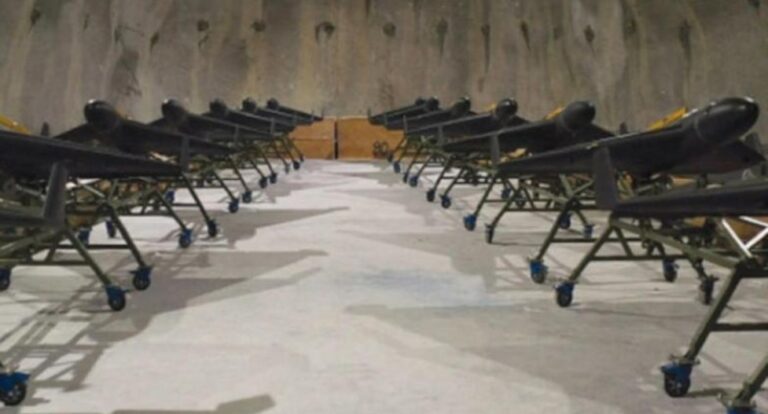
The Iranian Revolutionary Guard Corps (IRGC) has unveiled an underground drone base, warning western powers that from it the IRGC can deploy 60 drones simultaneously to hit targets in the region.

On Saturday, the Fars news agency reported that IRGC commander-in-chief Major General Hossein Salami and the elite force’s aerospace commander General Amir Ali Hajizadeh were present at the inauguration ceremony of the IRGC’s first underground drone base.

“Our simultaneous shooting power has increased seven times, and the time needed to get ready for the shooting has dramatically decreased,” IRNA news agency quoted Hajizadeh as saying.

The IRGC-affiliated outlets did not publish any videos of the purported underground base. Iran’s elite force has previously released videos of its underground missile bases, dubbing them “underground missile cities”.

Meanwhile, the Iranian government’s official daily hinted that the timing of the underground base inauguration – held while nuclear talks continued in Vienna – was a warning to western powers.

According to the daily, the base indicated that Iran would not negotiate on its missile or drone programmes with world powers.

“This means that any agreement to remove the sanctions would not make Iran give up working on securing its needs for defending itself,” the daily wrote.

On Friday, world powers seemed to be edging closer to a deal with Iran that would revive the 2015 nuclear agreement.

But Russian Foreign Minister Sergei Lavrov created uncertainty on Saturday, saying Moscow wanted a written US guarantee that its trade, investment, and military-technical cooperation with Iran would not be hindered by western sanctions imposed since the invasion of Ukraine.

Iran’s foreign minister, Hossein Amirabdollahian, said on Monday that Tehran would not allow “any foreign elements to undermine its national interests”, the Iranian semi-official news agency Tasnim reported, while the foreign ministry said it awaited an explanation from Russia.

Who Will Lead Iran After Khamenei’s Death?

PDF Version
Farsi Translation (ترجمه فارسی)

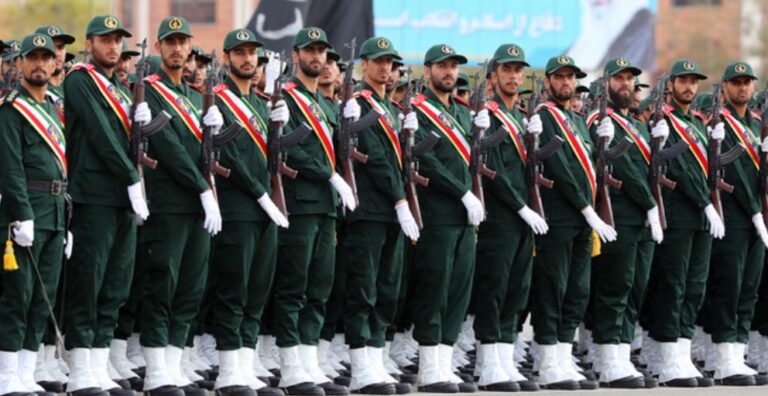
The Iranian regime’s power structure has evolved much after 43 years of power struggle among various factions and now it goes well beyond any single individual. So far, the only institution that has successfully established its stronghold over Iran’s Economy, Politics and Army is Iran’s Islamic Revolutionary Guard Corps (IRGC) along with its infamous terrorist organization, the Quds Force, its extraterritorial operations arm.

If Iran’s current leader Khamenei is to die today, the IRGC has ensured that there are no more individuals such as Ayatollah Ali Khamenei or Akbar Hashemi Rafsanjani to wield any significant political power or to designate the next supreme leader as it happened when Ayatollah Khomeini, Iran’s first supreme leader died in 1989. On Khomeini’s death, Rafsanjani one of the founders of the Islamic Republic and the former President made Khamenei the next leader, and recently even Rafsanjani got drowned allegedly by IRGC or Iranian Intelligence apparatus working under IRGC.

When Iran’s first supreme leader died, Iran’s terrorist designated Islamic Revolutionary Guard Corps (IRGC) barely had any influence over government institutions, but 30 years later, IRGC successfully managed to engineer the appointment of Ebrahim Raisi as Iran’s president. This appointment was also seen as a soft military coup inside and outside Iran. Several strong candidates competing with Ebrahim Raisi were brutally eliminated by Iran’s powerful Guardian Council, where its members are vetted and appointed by Ayatollah Khamenei. But its verdict, in this case, was dictated by IRGC with the approval of Ayatollah Khamenei. Dr. Ali Larijani, the former Conservative Speaker of Iran’s Parliament and former Secretary of Supreme National Security Council, and Dr. Masoud Pezeshkian, the former Deputy Speaker of the Parliament, a current member of Parliament and former Minister of Health, were among several powerful conservatives and reformists who were eliminated by Guardian Council on the orders of IRGC. During the presidential debates, it was also revealed and exposed for the very first time that Ebrahim Raisi had only six-grade education. Perhaps this is the reason that has become a butt of jokes for making enormous blunders whenever he gives any speech. Some of his recent blunders were using “Locomoteer” instead of “Locomotive”, “Propakani” instead of “Propaganda”, and he even uttered the word “Anguzman”, a word that doesn’t even exist in the Farsi language. In Iran, basic English language is offered after 6th grade.

At Present, IRGC is behind every decision made by the executive branch and with precise planning; it seeks to extend absolute control over other governmental organizations in every province, city, and village across the country. Its members are now in charge of the most powerful ministries such as the Foreign Ministry, Interior Ministry, Defence Ministry, and Ministry of Roads and Urban Development, etc. Basically, wherever there is money and power, IRGC is there. In fact, Raisi’s Interior Minister, Ahmad Vahidi is wanted by Interpol since 2007 for his alleged participation in the bombing of a Jewish community center in Buenos Aires, Argentina on 18 July 1994 in which 85 people died. Most of Raisi’s cabinet members are also IRGC members. After the recently announced 3-billion-dollar IRGC contract, even the cultivation of rice will be controlled by the IRGC.  In other words, the daily needs of the people will be in complete control of the IRGC terrorist organization.

There is no doubt that this is only the beginning after Ebrahim Raisi’s appointment, and it is quite evident that soon IRGC will take full control of the cultivation of wheat, fruits, and every profitable commodity that will give them control over people’s life. This, combined with the Iran-China 25-year-deal signed last year, increases the likelihood that IRGC will completely hand over Iran’s agricultural sector to China in order to maximize its profits without troubling itself. The IRGC is also set to seize all gold, copper, zinc, iron, and rare mineral mines, and will gradually seize the few remaining private and public mines. The ulterior motive behind all this is to prevent any private or public entity from having independent income and to ensure that the entire nation is fully dependent on IRGC’s established monopoly. Currently, the President, the chairman of Guardian Council, the chairman of Expediency Council, and the head of Judiciary, all are in service of the Revolutionary Guards. Other important organizations and powerhouses and even all governorates and municipalities across the nation are under complete control of IRGC. It also includes the Islamic Consultative Assembly, headed by Mohammad Bagher Ghalibaf, a corrupt high-ranking IRGC Commander, who is also the current Speaker of the Parliament of Iran. IRGC’s other strategy to bolster its dictatorial rule is the deployment of religious clerics across the nation to take advantage of people’s personal beliefs for further controlling them.

Nearly six months ago, in an editorial on the so-called presidential victory of Ebrahim Raisi, the New York Times mentioned the names of figures that were seen and heard for the first time along with Ebrahim Raisi. The New York Times editor-in-chief noted in the article that although the Islamic Republic is a full-fledged dictatorship, Ayatollah Khamenei is certainly not all that is there to it. In fact, the model of the government of the Islamic Republic has now become a phenomenon in which, even the great dictator himself, is now merely a cog in the machine. This system has evolved enough to withstand Khamenei’s death without a flinch. Although the IRGC is often perceived as a tool for Ali Khamenei to preserve his power, in fact, it is the Revolutionary Guards who are the kingmakers in the Islamic Republic’s dictatorship; and without the limitation of centralized power among a few individuals, they have the ability to give birth to a new dictator and replace him at their own will.

Also read: Iranian Citizens Bearing The Cost of Religious Institutions in Syria 

Iranian IRGC Plot To Assassinate US Ex-Security Adviser

0

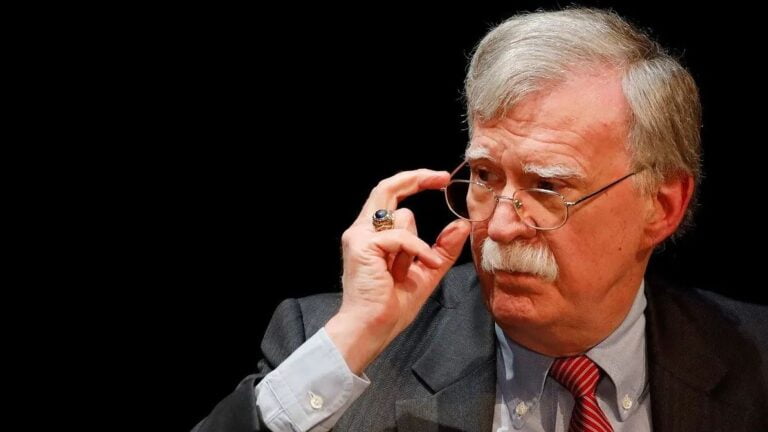
At least two agents from the Quds Force of Iran’s terrorist designated Revolutionary Guard have been plotting to assassinate former US national security adviser John Bolton.

The Washington Examiner quoted a Justice Department official as saying on Monday that the department possesses enough evidence to indict the Iranians but the Biden administration is resisting any public measures for fear that it could derail the Vienna negotiations with Tehran, which apparently are in final stages.

The source noted that “the seriousness of the conspiracy and the evidence warranted public indictment without delay”, adding that the Islamic Revolutionary Guard Corps (IRGC) also tried to recruit an assassin on US soil.

The intelligence community was aware of the plot since its early stage, and a full-time Secret Service protective detail was assigned to Bolton earlier this year or in late 2021, with significant FBI assets deployed for assistance.

The plot is also believed to have prompted national security adviser Jake Sullivan to warn Iran of severe consequences if it attacks Americans.

Iran has imposed sanctions on dozens of Americans, many of them from the US military, over the 2020 targeted killing of Qasem Soleimani, and threats have been made against former Secretary of State Mike Pompeo and other former Trump administration officials.

In January, Supreme Leader Ali Khamenei lashed out at former US President Donald Trump and others for Soleimani’s killing, saying they “will pay for their crime.”

According to ample evidence, Iran’s terrorist designated IRGC is involved in more than 200 political and extrajudicial killings that the Islamic Republic has committed outside Iran.

These terror plots have taken place in 40 countries, mainly by way of the IRGC’s overseas arm the Quds Force, the Islamic Republic’s Ministry of Intelligence, or by proxy groups.

The Islamic Republic’s role in poverty, corruption, theft, murder, detainment, and torture of Iranian people, fueling wars, and exporting terrorism in the region, is clearly evident.

Also read: Devastation of Iranian people at the hands of Israel or IRGC?

The ingrained corruption of Iran’s IRGC and Quds Force

0

Instead of empowering and emboldening the Islamic Revolutionary Guard Corps through a renegotiated Iran nuclear deal and the lifting of sanctions, the international community should hold the organization and its elite Quds Force branch accountable for their crimes inside Iran and abroad, as well as for their corruption.

A leaked audio recording last month exposed large-scale corruption within the IRGC, along with its financing and support of militias, mercenaries and terror groups across the Middle East.

Radio Farda reported that the recording suggested that some of the country’s most powerful decision-makers were aware of or involved in corrupt practices, prompting a furious reaction in Tehran, including from Supreme Leader Ali Khamenei. Significantly, the state-owned Fars news agency confirmed the authenticity of the clip.

Top Iranian figures such as parliament Speaker Mohammed Bagher Qalibaf are implicated in the massive corruption scheme.

When he was Tehran mayor, Qalibaf reportedly asked an official to “sign a phony contract with the IRGC in an attempt to cover up an 80 trillion-rial (about $2 billion at the time) shortfall discovered during an audit of the Cooperative Foundation.”

This has caused public outrage and confirmed the belief of the overwhelming majority of the Iranian people that the regime squanders their nation’s resources on militia and terror groups rather than helping its own people. One of the major reasons for the recurring protests in Iran is the people’s frustration over the regime’s mismanagement of the economy and the country’s resources.

A considerable part of the economy and Iran’s financial systems are owned and controlled by the IRGC and the Office of the Supreme Leader.

The IRGC alone controls between a third and half of Iran’s gross domestic product. It owns several major economic powerhouses and religious endowments, such as Astan Quds Razavi in the northeastern city of Mashhad.

The IRGC and the Quds Force are in charge of extraterritorial operations, including organizing, supporting, training, arming and financing predominantly Shiite militia groups; launching wars directly or indirectly via these proxies.

Iran’s Revolutionary Guards Unveil Two Missile, Drone Bases

The Aerospace Force of Iran’s Islamic Revolution Guards Corps (IRGC) has unveiled two missile and drone tunnel bases built at the heart of high mountains.

On Saturday, the IRGC Chief Commander Major General Hossein Salami unveiled the bases, which house ground-to-ground missile systems with advanced equipment, as well as attack drones that can penetrate the enemy’s radar and defense networks.

The bases are also home to unmanned aerial vehicles (UAVs) with a range of 2,000 kilometers, two-missile launch platforms and multi-drone launch platforms, which were unveiled during the IRGC’s Great Prophet 17 joint military exercises in Iran’s southern shore in December 2021.

During General Salami’s visit to the bases, Brigadier Genearal Amir-Ali Hajizadeh, commander of the IRGC’s Aerospace Force, presented a report on the new measures taken by the elite military force and its achievements.

He said Iran can now simultaneously launch 60 unmanned aerial vehicles (UAV) from its newly unveiled underground base with no target limitation, because the “range of the unmanned aircraft is long and not limited”.

“We can hit any hostile target,” Hajizadeh said.

“What the Islamic Republic has relied upon is not arms, but faith, determination and persistence. Nevertheless, Iran, by God’s grace, is in possession of sufficient amount of efficient weapons developed with homegrown technologies,” he added.

The IRGC Aerospace Force, he also said, has boosted the firepower of Iranian missiles six- to seven-fold and largely reduced the preparation time for their launch.

The force, he added, has pursued serious plans to exponentially enhance the capabilities of its forces upon a decree by Leader of the Islamic Revolution Ayatollah Seyyed Ali Khamenei.

The enemy has been admitting  the rise in the IRGC’s drone power, Hajizadeh said.

Iranian officials have repeatedly stated that the Islamic Republic will not hesitate to build up its defense capabilities, emphasizing that such abilities are entirely meant for the purpose of defense and will never be subject to negotiations.