Home Blog Page 40

Why repealing IRGC sanctions is infuriating but a sideshow – analysis

0

Former US State Department official Gabriel Noronha tweeted that the Biden administration is seriously considering a pitch by Iran negotiations chief Rob Malley to remove Iran’s Islamic Revolutionary Guards Corp IRGC sanctions from the US’s terrorist list.

If the US goes through with this move, it would be infuriating to Israel, to Sunni Arab states, and portions of Americans, but it is also a sideshow to the real big game.

The real big game is whether sanctions are lifted on Tehran’s oil industry and whether the Biden team fills any of the holes in the 2015 JCPOA nuclear deal or adds new concessions, such as letting the ayatollahs keep hundreds of advanced centrifuges for enriching uranium in storage. IRGC sanctions

Why declaring the IRGC not to be terrorists is infuriating is sort of obvious.

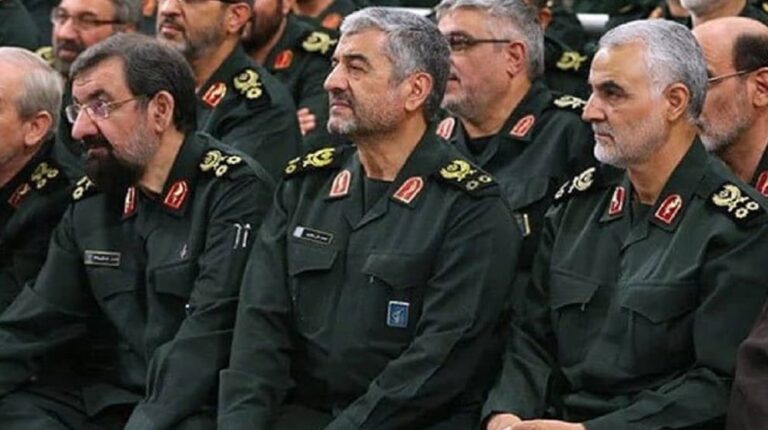
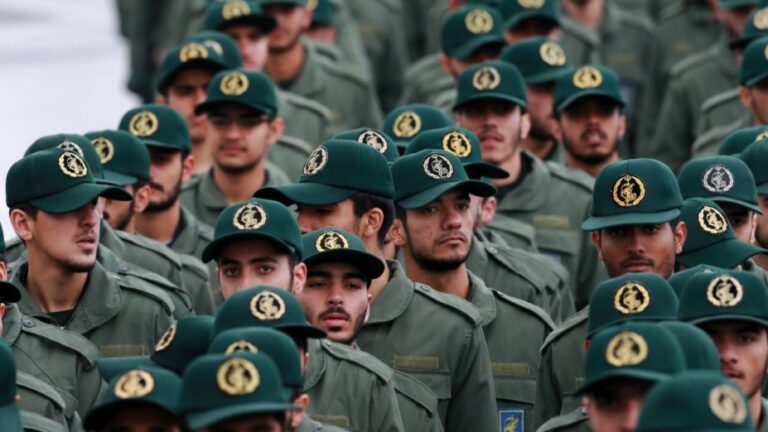
Besides creating much of Hezbollah and the Houthi rebel forces which have ruined Lebanon and Yemen, the group is responsible for terrorism across the Middle East and even in Europe and other parts of the world.

It is the most fanatical, violent, and hardline segment of the regime.

When then US counter-terrorism state department official Nathan Sales explained the IRGC terrorist designation in April 2019 to a closed meeting of a handful of reporters, he said the broad goal was to “make it radioactive.”

The counter-terrorism official said that for years some entities were accused of supporting terrorism in a more general sense, but that “now Iran stands accused of directly engaging in terror.”

“This removes its plausible deniability. It cannot hide behind Hezbollah or Palestinian Islamic Jihad” anymore, he said.

The second area that Sales highlighted as being important about the designation was that it “enables material support [criminal] prosecutions [of] anyone knowingly providing support,” to any entities linked to the IRGC which can lead to an up to 20-year prisons sentence.
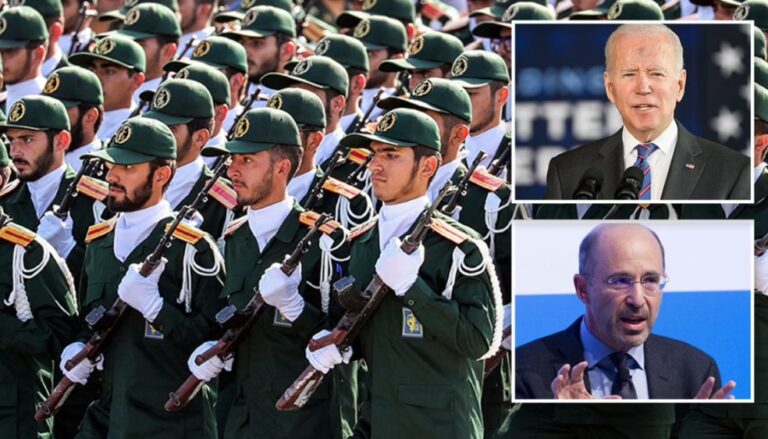
Biden’s nuclear negotiator offers to LIFT Iran’s sanctions and remove the Islamic Revolutionary Guard Corp from terror list in exchange for signing new deal

0

The Biden administration is weighing whether to remove the feared Islamic Revolutionary Guard Corps from terror lists and to lift other sanctions as he tries to deliver a new nuclear deal.

It is one of the most controversial concessions offered by Rob Malley, the State Department’s special envoy to Iran, at a time when talks are in a critical phase.

The Trump administration declared the IRGC to be a terrorist organization in 2019, accusing it of providing funding, training and equipment to other groups worth one billion dollars each year.

Less than a year later, General Qasem Soleimani, the commander of its Quds force, was killed in a US drone strike.

Details of the plan to delist the group emerged in a lengthy Twitter thread posted by former State Department appointee Gabriel Noronha, who said he had been authorized to reveal details of discussions by disgruntled former colleagues.

‘This is a long and technical thread, but here’s what you should know: the deal being negotiated in Vienna is dangerous to our national security, it is illegal, it is illegitimate, and it in no way serves U.S. interests in either the short or long term,’ he wrote.

‘Here’s why: Led by Rob Malley, the U.S. has promised to lift sanctions on some of the regime’s worst terrorists and torturers, leading officials in the regime’s WMD infrastructure, and is currently trying to lift sanctions on the IRGC itself.’

In particular he revealed that Malley had been pushing to remove sanctions on the Revolutionary Guards.

He received pushback from other officials.

‘That hasn’t stopped him,’ continued Noronha. Iran’s Islamic Revolutionary Guard Corps was classified as a terrorist organisation by the Trump administration in 2019 after the US withdrew from the 2015 nuclear deal.

Robert Malley, US Special Representative for Iran, is pushing the Biden administration to drop the terrorist designation for the Islamic Revolutionary Guard so secure a nuclear deal with Iran.

Details of the potential deal were revealed by Gabriel Noronha, former special adviser on Iran at the State Department during the Trump administration.

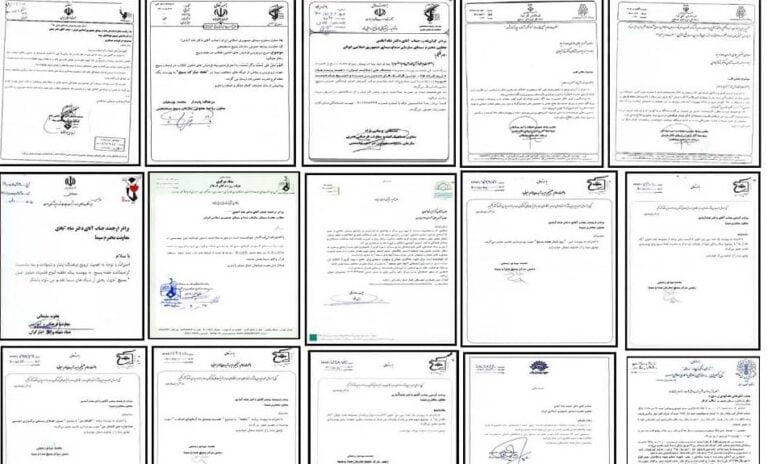
Iran – Revelation: IRGC & Basij Directives to State-run TV to broadcast reports to propagate repression, terrorism

0

IRGC, Basij leaders, and other repressive state agencies directives to the state television on what and how to broadcast reports to propagate repression, terrorism, export of extremism, and warmongering.

The collection of documents obtained from inside the Iranian state-controlled media corporation (IRIB) shows that not only the main operators of the organization are entirely affiliated with the IRGC and Khamenei’s offices, but also the leaders of Khamenei’s repressive agencies often communicate their instructions directly by sending video clips to be broadcast. For that reason, the Iranian people refer to the state propaganda machine by chanting, “Shame on the state radio and television.”

The Security and Counterterrorism Committee of the National Council of Resistance of Iran (NCRI) is publishing parts of such documents that are related to the period between November 2-27, 2022. broadcast reports

Document No. 1
Letter from Brigadier General Amir Ali Hajizadeh, commander of the IRGC Aerospace Force, to Peyman Jebelli, Head of the IRIB, asking for promotion of the 10th anniversary of the death of Hassan Tehrani Moghaddam, the former commander of the IRGC missile program

Hajizadeh writes:

“On November 6 – 12, which coincides with the 10th anniversary of the martyrdom of … Haj Hassan Tehrani Moghaddam and has been recognized as the ‘Aerospace Force Week,’ in addition to holding a memorial, we need content related broadcasts about the honorable martyr and other Aerospace Force martyrs.

It is appropriate to order the necessary collaborations of different IRIB networks to hold a more glorious memorial service for these dear martyrs. It should be noted that a table of productions related to this directive is attached to coordinate the broadcast order in networks with higher viewership. Hajizadeh also states his readiness to provide the desired content for the production of various television programs.”

Document No. 2
Letter from Colonel Mohammad Yousefian, deputy public relations officer of the “Basij Organization of the Oppressed” (The repressive paramilitary Basij force), to Hamid Shahabadi, deputy director of IRIB, giving instructions to promote the Basij week.

Iranian terrorist designated IRGC’s formation proxy naval units

0

On Monday, February 28, 2022, the U.S. Representative Office of the National Council of Resistance of Iran (NCRI-US), released its new book on the Iranian terrorist organization, entitled ‘IRAN – Exposing the Latest Terrorist Game Plan of the IRGC-Quds Force: Formation of Proxy Naval Units.’

The book, for the first time, unveils details of how Iran’s Islamic Revolutionary Guard Corps’ Quds Force (IRGC-QF) has been recruiting mercenaries for newly created, armed, and trained terrorist units to attack ships and maritime targets in the region. The IRGC-QF is the IRGC’s extraterritorial arm.

After the elimination of Ghasem Soleimani in January 2020, which weakened the Quds Force’s ability to directly encroach in the countries of the region, the Iranian terrorist designated IRGC’s capacity to intrude in Iraq, Lebanon and Syria has been on the decline. To compensate for this failure, the IRGC has turned to intervention in Yemen, especially escalating naval terrorist activities and threatening the international shipping on its shores

The command headquarters of the Quds Force in Yemen recruits Houthi forces and sends them to Iran for training, where the IRGC- QF conducts training in specialized naval courses for its Yemeni, Iraqi, Syrian, Lebanese, and African mercenaries, who are then dispatched to their home countries to form proxy naval units.

The book shows where these mercenaries are trained, what kind of training they go through, how and where they are dispatched, and what the targets are.

It also shows how the Quds Force has set up a smuggling network to provide weapons and equipment to its proxies for naval attacks. One of the means is using small boats along the coasts of the Sea of Oman, most importantly the seaport known as Bandar-e-Jask.

The Quds Force has equipped the Houthis with speedboats, missiles, mines, and other weapons to expand conflicts into the Arabian Sea, Bab al-Mandab, and the Red Sea.

Tehran’s latest game plan to advance its terrorist agenda by prioritizing mercenaries and stepping up regional mayhem is intended to project power and cover its fundamental weakness inside Iran.

Iran desperately tries to lift sanctions on terrorist designated IRGC

0

Iran said on Monday efforts to revive a 2015 nuclear deal could succeed if the United States took a political decision to meet Tehran’s remaining demands, revolving around Iran’s terrorist designated IRGC organization, as months of negotiations enter what one Iranian diplomat called a “now or never” stage.

The stakes are high since the failure of 10 months of talks would carry the risk of a fresh regional war and the imposition of additional harsh sanctions on Iran by the West.

“Reaching a good deal is possible … three key issues still remain to be resolved. The U.S. and European powers have not taken political decisions on these major issues,” Iran’s Foreign Ministry spokesperson Saeed Khatibzadeh told a weekly news conference.

France’s foreign ministry said on Monday that it was urgent to conclude the talks this week.

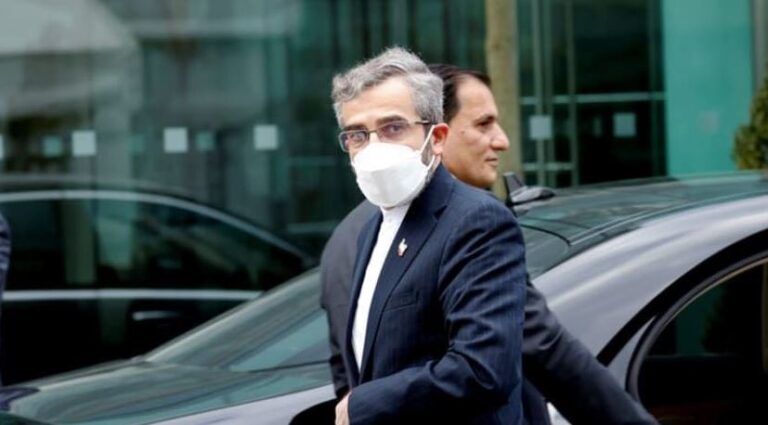
Iran’s lead nuclear negotiator Ali Bagheri Kani, who flew to Tehran last week for consultations about the final draft of the deal, met the European Union’s Enrique Mora, who coordinates the talks in Vienna, on Monday.

Two sources close to the talks in Vienna said that Iran had submitted new demands, while continuing to insist on existing ones, including the removal of a U.S. foreign terrorist organization (FTO) designation against Iran’s Islamic Revolutionary Guard Corps (IRGC).

“Iran’s stance after Bagheri’s trip to Tehran has become even more uncompromising …. they now insist on the removal of sanctions on the IRGC and want to open issues that had already been agreed,” one of the sources said.

Iran has previously said that removing the terrorist designated IRGC from the list was under discussion. Iranian officials did not immediately respond to a request for comment on the matter.

Tehran also insists the International Atomic Energy Agency (IAEA) drop its claims about Tehran’s nuclear work, objecting to an assertion by the U.N. nuclear watchdog last year that Tehran had failed to fully explain the presence of uranium traces found at several undeclared sites.

Also read: Report on IRGC Corruption, Case of Yas Holding Is the Tip of the Iceberg 

Exclusive Report on IRGC Corruption, the Case of “Yas Holding” Is the Tip of the Iceberg

0

“Yas Holding” of the IRGC’s front companies operated dozens of subsidiaries but was shut down following the revelation of dozens of case of corruption in 2017.

We are among those who wielded their sticks. It is an honor that in 1980, we were wielding sticks against Massoud Rajavi the Iranian Resistance’s Leader. We confronted his supporters at universities.

In an article, the Foreign Affairs Committee of the National Council of Resistance of Iran (NCRI) wrote that a 50-minute leaked audiotape of a conversation between two senior commanders of the Iranian regime’s Islamic Revolutionary Guard Corps (IRGC) in 2018 was a damning revelation about the regime’s massive institutionalized corruption.

Regime officials initially tried to cover up or cast doubt on the authenticity of the audio file, calling it fake and fabricated.

In the end, however, the IRGC was forced to officially confirm the authenticity of the file. Kayhan daily, the mouthpiece of regime supreme leader Ali Khamenei, claimed on February 14 that the file proved “the level of responsibility and accountability of Revolutionary Guards’ officials.”

In the tape, Mohammad Ali Jafari, then-commander of the IRGC, is heard talking to the organization’s financial chief, Brigadier General Sadeq Zolqadrnia. They discussed a 2017 corruption case involving a holding company called “Yas” (jasmine).

Yas holding was one of the IRGC’s front companies that operated dozens of subsidiaries but was shut down following the revelation of dozens of corruption cases in 2017.

Zolqadrnia accuses Mohammad Bagher Ghalibaf, then-mayor of Tehran and current Parliament Speaker, IRGC Coordination Deputy Jamaloddin Aberoumand, and Chief of the IRGC Intelligence Organization Hossein Taeb, as well as IRGC-Quds Force’s eliminated commander Qassem Soleimani, of covering up embezzlements worth up to 80,000 billion rials.

The amount is roughly equivalent to $3 billion based on the free market rate at the time. Yas Holding belonged to the IRGC’s Cooperative Foundation, a powerful organization that controls many components of the country’s financial resources.

Russian Embassy Censures IRGC Media Over Ukraine Invasion Reports

0

In the immediate aftermath of Russia’s invasion of Ukraine on Thursday, several high-profile officials of the Islamic Republic sought to publicly justify Vladimir Putin’s aggression.

Foreign Minister Hossein Amir Abdollahian tweeted that the “Ukraine crisis” was “rooted in NATO’s provocations”: sentiments echoed by Ministry spokesman Saeed Khatibzadeh.

State-controlled media have recycled the same line, with the official narrative so tightly and repeatedly aligned to that of the Kremlin that even conservative ex-MP Ali Motahari, no stranger to controversy, tweeted: “The IRIB is reporting the news like a Russian colony.”

Initially on Thursday, the IRIB and media outlets affiliated with the Revolutionary Guards only reported on Russian troops moving into the breakaway zones of Donetsk and Luhansk. When the onslaught on Kyiv became impossible to ignore, reports lifted Putin’s terminology to describe what was happening, calling the attack on a sovereign foreign capital “special operations” being conducted on the request of the separatist leader of the Donbas region.

The official Islamic Republic of Iran News Agency (IRNA) tried to place responsibility for the invasion on both sides, writing that Russia and Ukraine “have a long record of mutual cultural concerns, territorial disputes and long-standing tensions that have now arrived at a full military confrontation.”

Fars News Agency decried the newly-announced international sanctions against Russia: “Russia’s special military operations in Russia have inflamed Western countries to do whatever possible to further isolate Moscow.”

Several guest commentators on Iranian TV news programs threw their weight behind the invasion, claiming that NATO wanted to extend its frontiers as far as the Republic of Azerbaijan, a neighbor of Iran. A single exception was Hassan Beheshtipour, an analyst of international affairs, who said on air: “Do not trust Russia. There is no guarantee they will not attack Iran as well.”

But there were also several isolated incidents of censorship and self-censorship in the early Iranian response to the crisis.

Taking Iran’s Revolutionary Guard off the terror list would be a historic mistake

0

Upon taking over as secretary of state, one of the first moves Antony Blinken made was to revoke the Houthi’s terror list designation.

In the wake of their delisting, the Houthis embarrassed Blinken by ratcheting up their attacks on both Saudi and Emirati civilian infrastructure. terror list

Blinken, it seems, has not learned the lesson. Reports from Vienna suggest a renewed Iran nuclear deal is close.

Leaks suggest that the United States is prepared to reverse all Trump-era sanctions.

There would be one winner from any such deal, and it would not be the U.S., the Iranian people, or nuclear nonproliferation.

On April 8, 2019, the State Department designated the entirety of Iran’s Islamic Revolutionary Guard Corps as a foreign terrorist organization.

To designate only its elite Quds Force unit would be to absolve the broader organization. If Greenpeace put bombs on buses, it shouldn’t matter what they did with the spotted owl — they’d still be a terrorist group.

Like former President Donald Trump or hate him, his administration’s designation of the entire Guard was a brilliant move. It showed understanding, at least on Secretary of State (and former CIA Director) Mike Pompeo’s part, of Iran’s inner workings.

After the Iran-Iraq War, the Guard began investing in Iran’s civilian economy in order to acquire a financial base independent from the Iranian government’s budgetary process. Thirty-five years later, the Guard’s economic wing, without moral equivalence, is akin to what would happen if the U.S. Army Corps of Engineers merged with Bechtel, KBR, Halliburton, Walmart, Boeing, Northrop Grumman, ExxonMobil, Chevron, and Ford, and then used the military might of the U.S. to force competitors out of business. The Guard today controls up to 40% of the Iranian economy and a larger share over import-export, construction, and manufacturing. The revenue streams from these businesses, the no-bid contracts the Iranian government awards them.

Disquiet in Israel at prospect of US delisting Iran’s Revolutionary Guard as terrorist organisation

0

Israel has expressed disquiet at the prospect of the US delisting Iran’s Islamic Revolutionary Guard Corps (IRGC) as a Foreign terrorist organisation (FTO).

However, when former US president Donald Trump designated the IRGC as an FTO in April 2019, it was seen as a highly controversial move because Washington had never before labelled another nation’s military in such a way.

Tehran immediately responded by declaring US Central Command (Centcom), the Pentagon wing that oversees US security interests in regions including the Middle East, a terrorist organisation.

Many old Middle East hands warned that the US move could place American troops in danger in the region and Iran’s state-run TV said the designation was not permitted by international law. “No other country has the legal right to designate as terrorist another country’s armed forces.

Iran’s influence in the Middle East and its success in fighting against Islamic State are reasons behind this designation,” the broadcaster said.

Iran’s forces and the militias they back were widely seen by experts at the time as having done far more to destroy Islamic State in Iraq than the US did.

Israeli Foreign Minister Yair Lapid indicated on February 21 that the US may be open to delisting the IRGC as a terrorist group, and called on international actors to convince the White House to reject this Iranian demand, Middle East Eye reported.

“Everyone in his right mind should talk to the administration about this and tell them, ‘This is just wrong, don’t do that’,” Israel’s top diplomat was reported as saying in Jerusalem at the Conference of Presidents of Major American Jewish Organizations.

“The world cannot agree to these audacious conditions… It cannot allow tens of billions of dollars to flow to Iran [because of the lifting of sanctions] nor allow it to continue to spread terror around the world,” he added.

Iran demanding Revolutionary Guards be taken off terror list in nuclear talks: Israeli PM

0

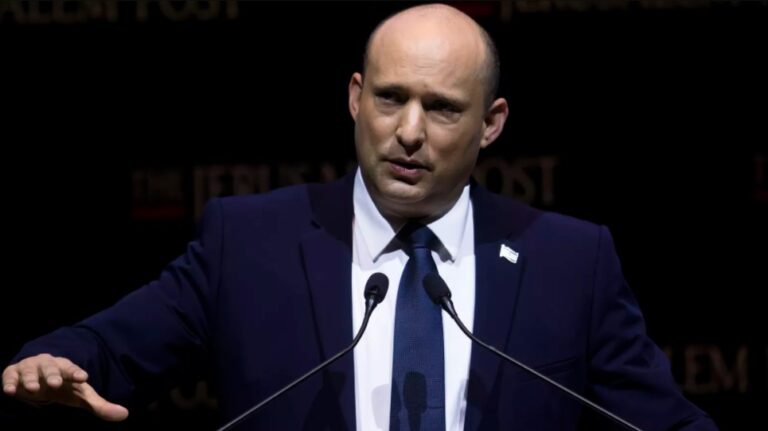
Iran is demanding during the nuclear talks in Vienna that the U.S. remove the Islamic Revolutionary Guard Corps (IRGC) from a blacklist of foreign terrorist organizations as a condition for a nuclear deal, Israeli PM Naftali Bennett said on Sunday.

Why it matters: Bennett used a speech to representatives of the U.S. Jewish organizations in Jerusalem to highlight the remaining gaps between the U.S. and Iran as the talks approach the finish line.

Driving the news: Bennett, who opposes a U.S. return to the nuclear deal, did not say whether the Biden administration had agreed to reverse the Donald Trump’s 2019 decision to blacklist the IRGC, a powerful branch of Iran’s military with close links to the supreme leader. Israeli PM

But Bennett said that the U.S. and the European signatories to the 2015 nuclear deal had agreed to allow Iran to keep its advanced centrifuges in storage inside Iran rather than destroy them.Another sticking point in the talks is Iran’s demand for assurances that it will get the expected economic benefits from a return to the deal and that no future U.S. administration will abandon it as Trump did.What he’s saying: “And to cap the Chutzpa — Iran is demanding to delist The IRGC. Do you understand? They are now asking to let the biggest terror organization on earth off the hook,” Bennett said.Bennett also claimed Iran is hiding nuclear weapon-related materials. “Our friends in America are telling us that they are standing firm on this and I hope it will continue,” he said. Bennett made clear that he feels the Biden administration inherited the nuclear crisis with Iran, just as his government did.