Home Blog Page 41

Hezbollah’s drone threat is now on display – analysis

0

Iran’s Tasnim News has been celebrating the Hezbollah drone that entered Israeli airspace on Friday. It was actually one of many drone incidents in recent days. On Thursday the IDF downed a drone that flew into Israel from Lebanon. There was also an incident on the Gaza border.

However, the Friday incident appears more serious, coming days after Hezbollah leader Hassan Nasrallah said his organization was producing more UAVs. This shows a rapidly emerging threat.

According to Tasnim, Hezbollah flew a drone it called “Hassan” into Israeli airspace, saying that, “during a 40-minute intelligence operation at a depth of 70 km. in occupied Palestine, despite the efforts of the Zionist enemy to destroy it, it safely returned to Lebanon.

How Amnesty’s anti-Israel apartheid report backfired – opinion

Iran’s media reported Israeli media reports of the drone incident as if to show off Hezbollah’s success.

According to the IDF, on Friday, “a radio-controlled aircraft crossed into Israeli territory from Lebanon and was tracked by the Israeli Air Force. A number of sirens were sounded in the area in accordance with standard protocol.
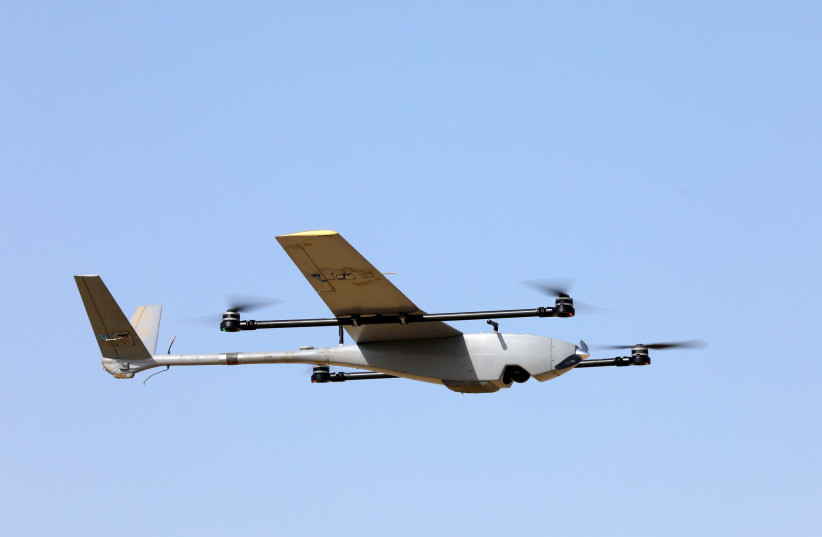
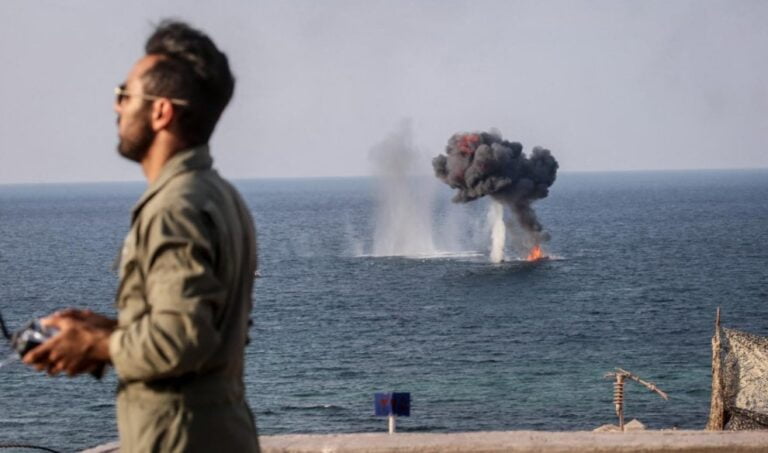
 A drone is seen during an Iranian Army exercise dubbed 'Zulfiqar 1400', in the coastal area of the Gulf of Oman, Iran, in this picture obtained on November 7, 2021 (credit: IRANIAN ARMY/WANA/REUTERS)A drone is seen during an Iranian Army exercise dubbed ‘Zulfiqar 1400’, in the coastal area of the Gulf of Oman, Iran, in this picture obtained on November 7, 2021

“The IDF’s aerial defense systems identified and tracked the threat, along with helicopters and fighter jets that were dispatched. The Iron Dome Aerial Defense System acted to intercept the aircraft. After a few minutes, the radio-controlled aircraft returned to Lebanon.”

Iran’s media says this drone incident was a success by Hezbollah because it returned safely to Lebanon and was not intercepted and also because it caused sirens to sound in northern Israel.

“Israeli air defense systems tried to shoot down the drone,” the Iranian media said. “Even the Iron Dome fired a ‘Tamir’ missile, but the Hezbollah drone managed to return to Lebanon and land safely.
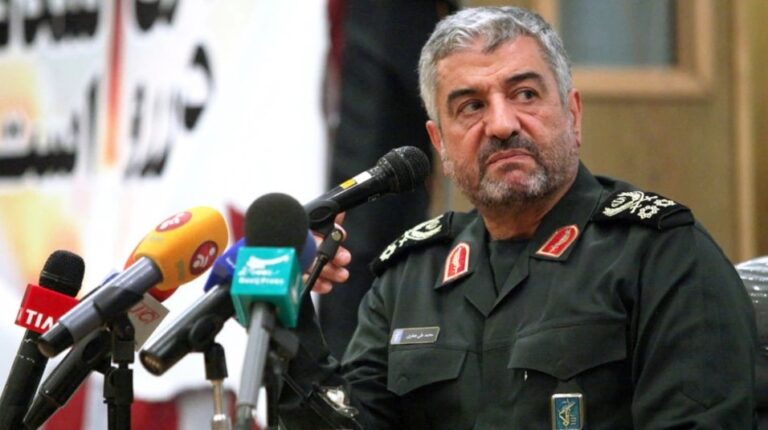
Radio Farda Exposé On IRGC Corruption, Infighting Raises Ire Of Iranian Authorities

0

A leaked audio recording in which two former senior officials of Iran’s Islamic Revolutionary Guards Corps (IRGC) discuss corruption that helps fund the powerful force and its secretive military operations abroad has shed light on infighting and graft that extends to the hierarchy of the country’s clerical regime.

The implication in the recording, published in a wide-ranging exposé by RFE/RL’s Radio Farda on February 11, that some of the country’s most powerful decision-makers were aware of or involved in corrupt practices has prompted a furious reaction in Tehran, including from Supreme Leader Ayatollah Ali Khamenei.

Amid the outcry that erupted following the publication of the audio file, state bodies and top officials have gone on the defensive with fierce denials of wrongdoing, claims that the recording proves the regime’s commitment to fighting corruption, and accusations that Radio Farda — a U.S. congressionally funded media outlet banned in Iran — is engaging in “psychological warfare” intended to destroy the IRGC.

In the audio, former IRGC commander Mohammad Ali Jafari and his deputy for construction and economic affairs, Sadegh Zolghadrnia, can be heard discussing corruption investigations within the IRGC and Tehran’s municipality under then-Mayor Mohammad Baqer Qalibaf.

The precise date of the recording obtained by Radio Farda from a confidential source in Iran is not known, but the conversation appears to have taken place amid a years-long corruption investigation that first emerged in 2017 and resulted in a top IRGC commander and a Tehran deputy mayor being sentenced to lengthy prison sentences in March 2021.

While the prison sentences handed down by the Supreme Court were reported in Iranian state media, the details of the corruption charges were not. The leaked recording fills in some of the blanks, and indicates that high-ranking regime members and one of the Islamic republic’s most heralded military commanders were at the least well aware of the particulars.

Iranian press review: Leaked audio reveals IRGC divisions

0

Leaked audio that surfaced on the anniversary of the 1979 revolution has revealed divisions between the former commander-in-chief of Iran’s Islamic Revolutionary Guard Corps (IRGC) and the assassinated Iranian military commander Qassem Soleimani.

The recording of a conversation from three years ago between major general Mohammad Ali Jafari, former head of the IRGC, and his financial deputy Sadegh Zolghadrnia, was broadcast by Radio Farda, one of the Persian-language outlets funded by the US government.

In the tape, the two IRGC commanders speak about the financial activities of the elite forces in Iran. At one point, the former head of the IRGC expresses his concern over revelations of corruption in Yas Holding Company, which provided financial support to the IRGC’s Quds Force under Soleimani’s command.

“Qassem is just now learning what the hell has happened to him with Yas,” Jafari is heard saying in the leaked audio, referring to Soleimani by his first name.

The Quds Force is one of the five branches of the IRGC, responsible for operations in foreign countries.

However, during the over 20 years Soleimani commanded the force, he only responded to Iran’s Supreme Leader Ayatollah Ali Khamenei, who has the highest military position in Iran.

Debates arise over constitutional change

Ever since influential conservative politician Mohammad Reza Bahonar renewed calls for a constitutional referendum, members of different political groups have debated possible constitutional change in Iran.

On two occasions, Bahonar, a former MP and a current member of Iran’s Expediency Discernment Council, spoke about the need to change how the executive body functions. He also urged Khamenei to consider a referendum on Iran’s constitution.

His comments received a mixed response from various political factions in Iran. Reformists warned that the change might further reduce the role of citizens in governing the country, while conservatives welcomed Bahonar’s proposal.

“What Bahonar said is what the constitution says,” conservative politician Ezzatollah Yousefian Molla told Khabar Online.

The threat of IRGC-backed militias sway over Iraqi security forces

0

Iran-backed militia groups have been taking advantage of US taxpayers’ money by strategically aligning themselves to arms of the Iraqi security forces, the Pentagon has alleged.

According to the Washington Free Beacon, the Pentagon’s inspector-general has told US Congress that “officers sympathetic to Iranian or militia interests” are concentrated in the Iraqi Federal Police and the country’s Emergency Response Division, as well as the fifth and eighth divisions of the Iraqi Army.

Both the police and Emergency Response Division fall under the purview of the Iraqi Ministry of Interior, which has continued to receive US funding long after the invasion of 2003.

Concerns about the Badr Brigade, the IRGC-aligned, Iranian-led military arm of the Iranian Shia Islamic Party, infiltrating Iraqi security forces and infrastructure have been voiced by some US politicians for years now. During the Donald Trump presidency, the National Security Council took steps to cut off funding but is understood to have faced resistance from the Pentagon.

Rep. Joe Wilson, head of the Republican Study Committee’s national security task force in the House of Representatives, was quoted in the Free Beacon as saying: “The latest report by the inspector-general confirms that Iran and Iran-aligned militias continue to have strong ties to some elements of Iraq’s traditional security forces.

“The Biden administration should re-evaluate funding to Iraq’s Ministry of Interior as long as it includes Iranian-backed militias, such as the Badr Corps, which were responsible for the terrorist attack on the U.S. Embassy in Baghdad.”

The Badr Corps is the most prominent of the PMF militias and its head has a close relationship with Iran’s Supreme Leader Ali Khamenei, as well as high-ranking officials among the Iraqi security forces.

At the end of June 2021, Iraq witnessed a wave of escalation between American forces and the PMF following raids carried out by American planes targeting PMF bases on the Syrian-Iraqi border.

Leaked Recording Reveals IRGC Commanders’ Squabbles Over Embezzled Cash from Tehran

0

Leaked Recording confirming Revolutionary Guards commanders’ involvement in massive financial corruption during Mohammad Bagher Ghalibaf’s tenure as mayor of Tehran has caused uproar in Iran and overseas.

This week Radio Farda published a 50-minute audio recording of a 2018 meeting between ex-IRGC commander-in-chief Major General Mohammad Ali Jafari, who held the post from 2007 to 2019, and Brigadier General Sadegh Zolghadr-Nia, the IRGC’s deputy commander for economic affairs.

In it, the pair discuss the recent, infamous Yas Holding Company corruption case and IRGC commanders’ attempts to help cover it up. Zolghadr-Nia says that Ghalibaf – a former IRGC commander himself – was trying to use his influence with the Guards to keep the case quiet and that Hossein Taeb, the head of the IRGC’s Intelligence Organization, was supporting him in doing so.

The Yas Holding Company case related to more than $3bn worth of funds said to have been “embezzled” from Tehran Municipality. The money was paid to this firm, which was owned by the IRGC’s Cooperatives Foundation, for massively over-priced construction projects agreed upon during Ghalibaf’s tenure. Several IRGC commanders sat on the board of Yas Holding at the time. But it was Isa Sharifi, Ghalibaf’s former deputy, who was ultimately sentenced to 20 years in prison for his role in the scam.

In the leaked audio recording, both men express their satisfaction that they were able to stop the repayment of eight trillion tomans (close to $2 billion) rightly owed by the IRGC to the municipality. “If you’d paid this money, what the hell would we do now?” says Jafari. “This is why Ghalibaf is unhappy with you.”

Zolghadr-Nia also alleges that Mohammad Bagher Ghalibaf tried to force him to sign a memorandum of understanding to settle the dispute. “Ghalibaf came up to me in front of a mosque near our homes and told me to sign it,” he says.

Conflict among Iranian IRGC-backed militia and rise of assassinations in Iraq

0

Internecine disagreements among Iranian terrorist designated Islamic Revolutionary Guard Corps’ (IRGC) militia in Iraq have intensified since their election defeat, as evidenced by a spate of assassinations.

The resounding defeat that political parties representing Iran-backed groups suffered in the Iraqi legislative elections of October 10 is heightening the sense of unease and combativeness among them, even as they lose trust in each other, analysts said.

This sense of malaise has been perpetuated by an escalation of assassinations of prominent militia leaders, both IRGC-backed militia, those affiliated with the Iranian axis and those who are not.

Muslim Idan (Abu al-Reesh), a leader in the Sadrist movement, was assassinated on January 9 in the southern province of Maysan.

On January 17, Asaib Ahl al-Haq element Uday al-Shammari was assassinated, and on February 2, Hussam al-Olyawi, a leader in the Iran-backed militia, was killed by unidentified assailants in Maysan province.

Iran-aligned militia groups, which call themselves the “resistance factions”, appear on the surface to be a united front against rival parties, notably the Sadrist movement, he said.

Most of the friction centers on two major Iran-affiliated groups — Kataib Hizbullah and Asaib Ahl al-Haq, who bear hostility towards each other.

Each has accused the other of appropriating the leadership and funds of the Iraqi paramilitary umbrella group, the Popular Mobilisation Forces (PMF), and of monopolizing positions, privileges, and decisions to expand their influence.

Tribal leader Thaer Al-Bayati said the militia leaders today do not believe in the Iranian project as much as they look out for their own interests.

“The Iranian IRGC-backed militia, which are basically mafias, are fighting among themselves over spoils to the point of resorting to physical liquidation, and now threaten by force the sovereignty of the state,” he said.

These armed groups have moved farther away from Iran after the death of Islamic Revolutionary Guard Corps (IRGC) Quds Force commander Qassem Soleimani, he said, partly as a result of Soleimani successor Esmail Qaani’s “weak and ineffective” leadership.

The Ayatollah Swindler: The Rise And Fall Of An Iranian ‘Teenage Jihadist’

0

Mehrshad Soheili has collected a number of plaudits from the Iranian media in the past few years. The 17-year-old has been dubbed the Islamic republic’s “youngest commander” and a “teenage jihadist.” He has been lauded, as the purported head of the registered Imam Mehdi Garrison, as the hidden imam. And as president of the Imam Sadegh Institute, his name has been associated with one of the spiritual successors of the Prophet Muhammad.

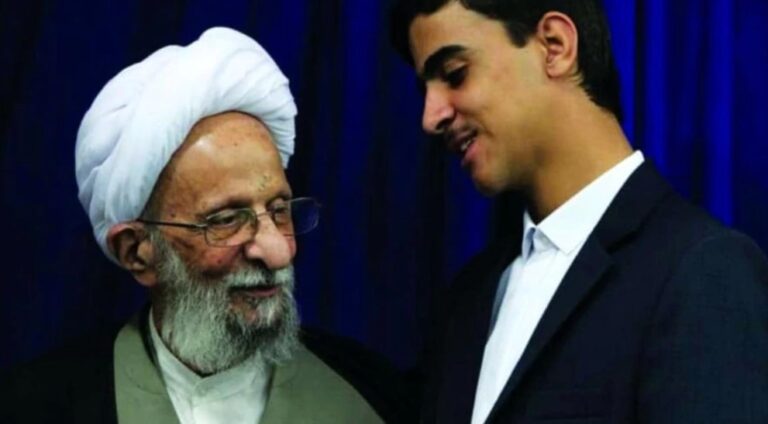
Photos of Soheili online show him next to influential clerics in the holy Shi’ite city of Qom, including Grand Ayatollah Naser Makarem Shirazi, whom he reportedly met when he was only 13. Reports said that a book titled A Star From The West was published about Soheili when he was only 15 and that senior Ayatollah Mesbah Yazdi, the godfather of Iran’s hard-liners who died in 2020, attended the book launch. Teenage Jihadist

In one photo, the 17-year-old “commander” was seen wearing a uniform of Iran’s powerful Islamic Revolutionary Guards Corps (IRGC). In another photo he is seen alongside conservative politician Mostafa Mirsalim, a former police chief and culture minister, who ran for president in 2017.

Soheili, who will turn 18 in May and has reportedly not graduated from high school, even appeared on Iranian state-controlled television, where usually only regime insiders and hard-line personalities are given a platform.

He claimed in media interviews that he was involved in helping the needy, including thousands of young couples as well students in remote parts of the country.

Carefully Crafted Image

With his conservative appearance, his apparent ideological alignment with Iran’s centers of power, and his connections, Soheili apparently duped many into believing he was a model revolutionary teenager who was devoted to the poor and the country’s “martyrs.” But on February 2, Soheili was arrested by the Intelligence Ministry, a judiciary official was quoted as saying by the official government news agency IRNA.

Also Read: Leaked Audio File Renews Allegations Of Massive IRGC Corruption

Leaked Audio File Renews Allegations Of Massive IRGC Corruption

0

A leaked audio file of IRGC commanders discussing massive financial corruption involving Parliament Speaker Mohammad-Bagher Ghalibaf has raised a storm in Iran.

The 50-minute audio-file includes a conversation between the former Revolutionary Guards (IRGC) Commander Mohammad-Ali Jafari and his Economic Affairs Deputy Sadegh Zolghadr in 2018 about corruption involving IRGC’s Qods Force and Tehran municipality and Ghalibaf, a former IRGC commander himself, who was Mayor of Tehran from 2005-2017. The corrupt dealing took place during Ghalibaf’s tenure as mayor. Leaked Audio

The audio recording was published by Radio Farda, the Persian service of US-funded Radio Free Europe, on Thursday.

Some Iranian media have only cautiously reported the comments made by a member of the Parliament’s National Security Committee, Mahmoud Abbaszadeh, and tweets by Ghalibaf’s media advisor, Mohammad-Saeed Ahadian, both of whom tried to undermine the importance of the audio recording and its contents. The social media, however, is abuzz with hundreds of tweets about the leaked file the authenticity of which has far not been contested by anyone.

Abbaszadeh said Saturday that the publication of the recording was “enemy’s psychological war” and warned about “infiltration” in the IRGC which resulted in the publication of the audio file. “We should admit that there is infiltration and that’s a sad reality.”

Mohammad-Ali Jafari (L) and current IGC commander Hossein Salami.

          Mohammad-Ali Jafari (L) and current IGC commander Hossein Salami.

Ahadian, on the other hand, in several tweets claimed that the recording was leaked by Ghalibaf’s enemies, he had been proven to be innocent by the Judiciary, and criticized hardliners close to former nuclear negotiator Saeed Jalili who are known as the Justice Seekers (Edalatkhah) of using the recording to attack Ghalibaf.

The discussion in the recording directly involves Ghalibaf, former Qods Force Commander Ghasem Soleimani, IRGC Coordination Deputy Jamaloddin Aberoumand, and Chief of the IRGC Intelligence Organization Hossein Taeb in covering up the embezzlement of 80,000 billion rials.

Also Read: As Iran nuclear talks enter final stretch, opposition grows in US

As Iran nuclear talks enter final stretch, opposition grows in US

0

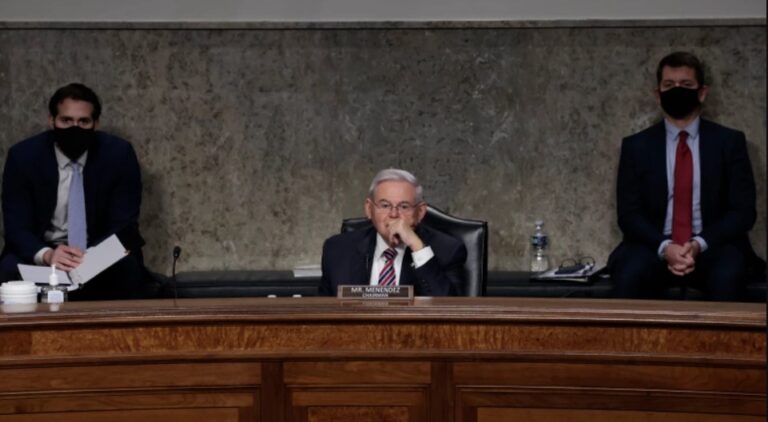
United States Senator Bob Menendez started an hour-long presentation on the Senate floor last week with a poster featuring a green, white and red bomb – the colours of the Iranian flag. Iran nuclear talks

Over the next 60 minutes, the chair of the Senate Foreign Relations Committee argued tirelessly against reviving the Iran nuclear deal, warning that the curbs the pact would impose on what he called Tehran’s “dangerously and rapidly escalating nuclear programme” are not enough.

“At this point, we seriously have to ask: What exactly are we trying to salvage?” Menendez, a key Democrat, said on February 1.

As Iran nuclear deal negotiations enter the “final stretch”, Menendez is not alone in voicing opposition to reviving the landmark agreement, with Republicans and hawkish Democrats in Washington, DC warning President Joe Biden against restoring the pact.

That more vocal US rebuke of the agreement, formally known as the Joint Comprehensive Plan of Action (JCPOA), is a sign that a deal is imminent, analysts say – and that Biden is pushing ahead to secure it despite potential political costs.

“This is a clear signal, as we also know from other reporting, that a deal is in sight. The negotiators are close to the end goal,” said Negar Mortazavi, an Iranian-American journalist and analyst. “And that’s why the opposition is growing louder – because they see it as something imminent and want to stop it, as they tried to do in 2015.”

Talks in Vienna

The eighth round of indirect US-Iranian talks resumed in Vienna this week after a hiatus that saw diplomats return to their respective capitals for consultations.

The 2015 multilateral agreement saw Iran scale back its nuclear programme in exchange for a lifting of international sanctions against its economy. Former US President Donald Trump nixed the deal in 2018 and started reimposing sanctions on Iran as part of a “maximum pressure” campaign.

Also Read: Syria ‘humiliating’ expulsion of IRGC commander points to unravelling ties

Syria ‘humiliating’ expulsion of IRGC commander points to unravelling ties

0

The Syrian regime’s expulsion of the top IRGC commander in Syria, Mostafa Javad-Ghaffari, is a severe setback to the Iranian regime and its agenda, analysts said.

The Syrian regime of Bashar al-Assad expelled Javad-Ghaffari in late October.

Javad-Ghaffari, the architect of the Iranian plan in Syria who earned the moniker “the Butcher of Aleppo” for his brutality during the battle in that city, was in charge of the IRGC’s proxies in Syria.

These militias, which operate outside the control of the Syrian regime, have been accused of using excessive force during operations carried out under Javad-Ghaffari’s command.

Syrian resentment of the IRGC’s leaders and policies had been on the rise for some time and reached a peak last year with the decision to expel Javad-Ghaffari, Syrian lawyer Bashir Al-Bassam told Al-Mashreq.

“Javad-Ghaffari took advantage of his considerable influence to consolidate the IRGC’s control over many Syrian regions,” he said, noting that this was done “under the pretext of protecting shrines, airports and military sites”.

The IRGC commander and its affiliates have gradually established a presence in Aleppo, the eastern desert (Badiya), and parts of Deir Ezzor, as well as Damascus and its hinterland, sidelining the Syrian regime in the process.

Yet Javad-Ghaffari was not satisfied with all the control he had, al-Bassam said.

He had become heavily embroiled in corruption, he said, and was involved in smuggling goods from Iran to Syria, a lucrative enterprise which was damaging to the Syrian economy, he said.

‘Public, humiliating expulsion’

Javad-Ghaffari’s unpopularity was an open secret, al-Bassam said.

And his role in Syria “was essential to implementing the IRGC’s plan in Syria”, Syrian journalist Mohammed al-Abdullah told Al-Mashreq.

“Syria was and continues to be a strategic fulcrum for establishing a land corridor from Tehran to Beirut,” he said.

“Any disruption to the relationship with Syria would undermine this plan.”

Also Read: Iran IRGC-backed militias in Iraq and Syria a threat to middle-east security