Home Blog Page 42

Iran IRGC-backed militias in Iraq and Syria a threat to middle-east security

0

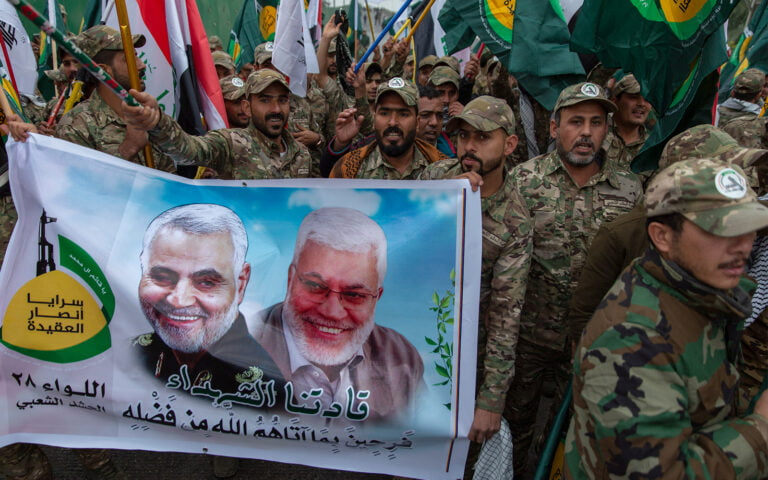
Signs of operational coordination between Iranian terrorist designated Islamic Revolutionary Guard Corps (IRGC) proxies in Yemen and IRGC-backed militias in Iraq are further undermining the security of the Gulf states and the region.

A fresh wave of violence directed at the United Arab Emirates (UAE) kicked off in January with a volley of drone and missile attacks originating in Yemen that were claimed by IRGC-backed militias in Yemen, the Houthis.

Now, a new group has entered the fray.

On February 2, Emirati forces intercepted and destroyed “hostile drones” targeting the UAE. A shadowy Iraqi militia linked to Iran calling itself Alwiyat al-Waad al-Haq claimed the attack, in a statement circulated by Iran’s proxies.

Houthi military spokesman Yahya Saree later “congratulated” Alwiyat al-Waad al-Haq for the operation, and senior Houthi official Mohammed Ali al-Houthi praised the attackers in a message on Twitter, before deleting the post.

Iran’s proxies are coordinating their operations to harm regional and Gulf security on the direct orders of the Islamic Revolutionary Guard Corps’ extraterritorial operations arm, the Quds Force (IRGC-QF), said military analyst Jalil Khalaf al-Muhammadawi.

“The attacks against the UAE and, before that, Saudi Arabia, clearly demonstrate that,” al-Muhammadawi says.

Iran’s proxies “receive support, funding and weapons from the Iranians to continue their terrorist and subversive activities in the region”, he said.

The lawless Iraqi militias are not concerned with Iraq’s interests, he added, or the serious harm that their attacks on foreign nations cause to the country’s reputation and to its regional and international relations.

There was public outcry in Iraq following Alwiyat al-Waad al-Haq’s claim of responsibility for the latest attack on the UAE.

Shia cleric Muqtada al-Sadr denounced the attacks and made it clear that he rejects the attempts to plunge Iraq into a “dangerous regional war”.

In a statement, he stressed the importance of not allowing Iraq to be used as a launchpad for attacks on neighbouring countries and the region, calling on the government to deal firmly with those who seek to plunge Iraq into such conflicts.

“Iraq needs peace and prestige, and not to be subservient to orders from the outside,” he said, in reference to the militias’ loyalty to Iran.

The Iran-aligned Iraqi militias are driven by their failure to achieve political gains after the recent parliamentary elections, said political analyst Ahmed Shawki.
Iran-backed militia dispute with Syrian army over smuggling profits

0

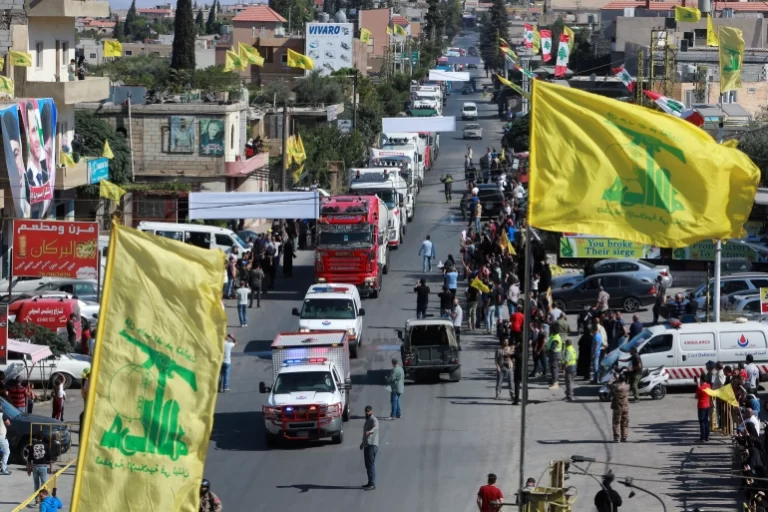
Disagreements between Iran-backed militia, specifically the Lebanese Hezbollah, and the Syrian regime’s 4th Division have escalated in recent weeks, Lebanese and Syrian observers and activists confirmed.

The Lebanese Hezbollah, funded, trained, and armed by Iran and its terrorist designated Islamic Revolutionary Guard Corps (IRGC) has clashed with the Syrian army’s 4th division multiple times over the past year.

Tensions have been brewing over the division of profits generated from drug and fuel smuggling operations, and the 4th Division’s pursuit of territorial control.

There has been an escalation in the frequency of armed clashes between the two sides, activists say, the most recent of which occurred last month in the eastern desert (Badiya) of Syria, where both sides share influence.

The cause of these disputes “stems from the fact that Hezbollah has been facing a financial crisis since the Iranian funding stopped and due to the impact of the Caesar Act on the 4th Division”, Mustafa said.

The Caesar Civilian Protection Act of 2019 is a series of sanctions designed to hold the regime of Bashar al-Assad to account for its crimes.

Southerners for Freedom co-ordinator and Lebanese political activist Hussein Ataya said the dispute between Hezbollah and the 4th Division is linked to “the huge revenues” generated from the smuggling and trafficking of drugs.

They also fight over who controls both previously existing border crossings and those created by Hezbollah between Lebanon and Syria after it intervened in Syria in 2012, he added.

The dispute between them “has extended to the Syrian desert, especially to eastern rural Homs, all the way to Palmyra, and was aggravated by the involvement of influential Hezbollah commanders in the smuggling of Syrian antiquities”, Ataya said.

For this reason, Ataya said, “the 4th Division redeployed its elements to these crossings and began harassing Hizbullah elements and Lebanese politicians who revolve in the party’s orbit, at the Masnaa and Jdeidet Yabous crossings”.

It has been restricting passage via legal and illegal crossings, he said, which has led to an increase in friction by the day.

Israel’s Mossad suspected of high-level Iran penetration

Israel’s Mossad is suspected of being behind the killing of Iran’s top nuclear scientist Mohsen Fakhrizadeh. In November 2020, a convoy carrying Mohsen Fakhrizadeh, Iran’s most prominent nuclear scientist, came under fire. He was killed with an artificial intelligence-assisted remote control machine gun.

Carrying out an assassination in such a surgical fashion against a moving target without any civilian casualties requires real-time intelligence on the ground.

After the killing, Iran’s intelligence minister, Mahmoud Alavi, claimed that two months earlier, he had warned security forces that there was an assassination plot targeting Mr. Fakhrizadeh at the exact location where he was shot.

Mr. Alavi said the person who planned the killing was “a member of the armed forces. We couldn’t carry out intelligence operations on the armed forces”.

But he indirectly implied the perpetrator was a member of the Islamic Revolution Guard Corps (IRGC), Iran’s most elite military unit. If so, the agent would have to have been high up enough in the IRGC to have been able to brush off the warning and carry out the plan at the set date, time, and location.

Mohsen Fakhrizadeh is also known to have been a member of the IRGC.

Sources inside Tehran’s Evin prison security ward, where those who are accused of spying for foreign countries are held, have told the BBC there have been scores of high-ranking IRGC commanders held there.

The Iranian government does not publicize their names and ranks to avoid tarnishing the reputation of the Revolutionary Guards.

A former intelligence officer for the IRGC Quds Force (its overseas operations arm) has told the BBC foreign agencies have gathered evidence against a number of Iranian ambassadors and IRGC commanders.

He said it includes information about relationships with women, which he said could be used to blackmail those officials to force them to co-operate with foreign spies.

In late January 2018, in the dead of night, a dozen men broke into a storage facility in an industrial district, 20 miles (30km) from the capital, Tehran. Israel’s Mossad

Leaked IRGC Document Warns of Rising Discontent in Iran

0

A “highly confidential” state document leaked to RFE/RL’s Radio Farda warns that discontent is rising in Iran, with society in a “state of explosion.”

The leaked IRGC document highlights the clerical establishment’s concerns over potential social unrest due to the deteriorating economy, which has been crushed by years of mismanagement.

The seven-page document allegedly comes from the Islamic Revolutionary Guards Corps (IRGC), Iran’s elite military force. It was leaked by Edalat-e Ali (Ali’s Justice), a hacktivist group that has previously disclosed secret documents and videos about the mistreatment of inmates in an Iranian prison.

The leaked document includes notes from a November 2021 task-force meeting chaired by Brigadier General Hossein Nejat, a senior IRGC commander and deputy head of Sarallah, a key IRGC base that oversees security in Tehran.

The meeting notes quote an official from the IRGC’s intelligence wing, who is only referred to as “Mohammadi,” as saying that a survey conducted by the unit shows that public discontent in the country of around 84 million is threatening to boil over.

“Society is in a state of explosion,” Mohammadi said, citing Iran’s economic woes. He noted that “social discontent has risen by 300 percent in the past year.”

Mohammadi also said that “several shocks” in recent months have “shaken public trust” in the ultraconservative government led by President Ebrahim Raisi, who assumed office in June.

Mohammadi referred to soaring inflation, including hikes in the prices of food items, energy, and cars. He also noted the sharp declines in stock prices.

The purchase power of Iranians has shrunk significantly in recent months, with many complaining that they cannot afford basic goods.

Iranian teachers, pensioners, nurses, judiciary workers, and others have taken to the streets in the past few months to demand better pay and express frustration at economic conditions.

IRGC Declares Production of New “Strategic Missile”

0

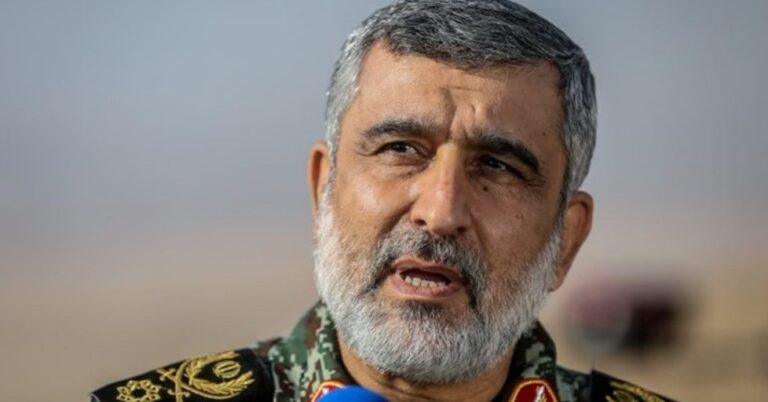
“The strategic missile will be unveiled in the near future,” General Hajizadeh said, addressing in a ceremony held on Monday to commemorate the late founder of the Islamic Republic, Imam Khomeini, on the 43rd anniversary of the Islamic Revolution.

He underlined the IRGC’s latest defense achievements, especially in the field of the strategic missile.

General Hajizadeh added that the missile has been built for quite some time and is currently part of the IRGC’s combat capability.

In relevant remarks in January 2021, General Hajizadeh underlined Iran had limited the range of its missiles to 2,000km on the basis of its own decision, but the decision is not something permanent.

The power of our missiles can be seen in the comments of our enemies. No one has forced us to restrict ourselves to the range of 2,000km because we do not talk to anyone about our missile power. It (2,000km range) was our decision and this range is not permanent for us,” General Hajizadeh said in an interview with the Arabic-language al-Manar news channel.

He reiterated the country’s position on the prohibition of talks on its missile power, saying that negotiation on the issue is a national redline.

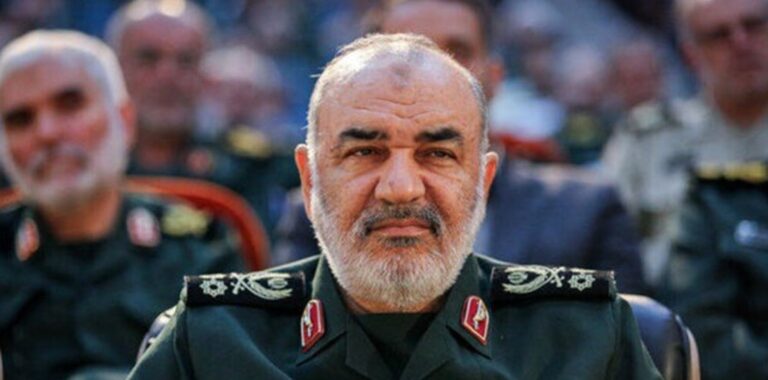
Also, Islamic Revolutionary Guard Corps Top Commander Major General Hossein Salami underlined that enemies can never stop Iran’s progress and development in defense fields or coax the country into negotiations about them.

“We will never stop increasing the defense capabilities and we will not retreat because it is among our redlines and therefore, the issue of defense capabilities is not negotiable, modifiable, stoppable, and controllable,” General Salami said, addressing a ceremony in Tehran in November 2019.

Asked if Iran would be agreed to take part in the missile talks under the pressures and US sanctions, he said, “This will never happen.”

General Salami downplayed military threats against Iran.

IRGC commander recounts atrocities committed against Iranian citizens

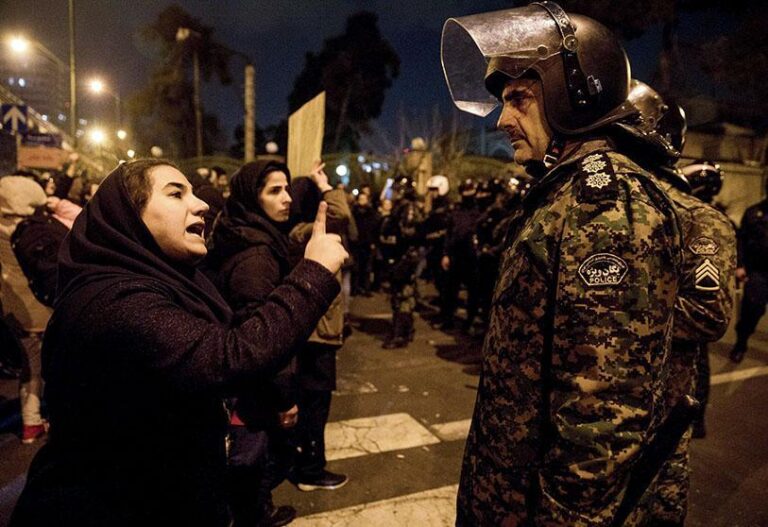
A senior commander of the Islamic Revolutionary Guard Corps (IRGC) provided a detailed account to a people’s tribunal of the brutality Iranian protesters were subjected to during the widespread anti-government protests in November 2019. The guards and paramilitary forces cracked down on around a thousand protesters.

The commander, who has since left the IRGC, was introduced as “Witness Number 600” and testified via video before the Iran Atrocities Tribunal, a people’s tribunal set up in London to investigate the horrors of the crackdown on the November 2019 protests.

The commander revealed that while people were not informed of the hikes in petrol prices, the IRGC were given a one week notice prior to the civil unrest to prepare for a tough response.  He added that he was involved in the arrests and interrogations, as well as the killings, actions which he now repents. The former commander claimed that the IRGC even unleashed Lebanese and Syrian forces, which were being trained in Iran at the time, against the protesters.

“It was the second or the third day [of the protests] that the situation became very critical and an order came to fire at will. The November 2019 was the only case that the military people did not provide an account of the shootings or the number of ammunition they discharged,” the former commander told the Tribunal while his face covered. “It was the second or the third day that the situation was red and they said the National Radio and Television could fall and we were ordered to do whatever needed … the order, I believe came from the commander of the
armed forces, I mean the leader [Ali Khamenei].”

The witness said that two special units within the IRGC, the Sabreen and Imam Ali units, were responsible for most of the repression against the protesters. The Imam Ali Central Security Headquarters of the IRGC was established after the 2009 protest with the sole purpose of cracking down on public protest.

The commander said that hundreds of girls and boys were forced to undress and were then beaten up on Takhti Street in Tehran. Many of the families of the victims kept their dead at home, waiting for a month before they could bury their loved ones due to fear of retaliation.

IRGC chief: Enemy has retreated

0

IRGC chief General Salami made the remarks at a ceremony commemorating 373 martyrs and military officers of Golpayegan.

At the beginning of his speech, IRGC chief General Salami remembered Grand Ayatollah Safi Golpayegani who passed away on Tuesday, saying that the grand ayatollah and many scholars were longtime companions of Imam Khomeini and the Leader of the Islamic Revolution, Ayatollah Seyyed Ali Khamenei.

Stating that Golpayegan is a city of pious people, he said, “Besides great scholars, there are thinkers, scientists, eminent professors, wise elites and teachers who teach us literature, ethics, knowledge, faith, prayer, etc.”

Referring to memories of the Sacred Defense era and the role of the Golpayegani warriors, Salami said that he grew up in this city and he has many memories of the Sacred Defense with the comrades from this region.

“This city and its people are an honor for us and greetings to these great and valorous people,” he noted.

Enemies were together to defeat the Islamic Revolution

The top general said that the enemies were united against Iran in spite of differences and enmities among themselves.

“The system of hegemony that was in the hands of the arrogant powers could not accept that a great Iran has appeared in the global community and wants to achieve independence, Islam, and freedom. The enemies knew this model and this pattern, if repeated, would cover the entire geography of arrogance and defeat them.”

He reiterated that what has happened today, after 43 years since the Islamic Revolution, in an important component of the Islamic world.

The senior commander added that Iran has endured many difficulties, saying that the main determiners of a country’s destiny are those who stand against the enemy.

The history of Islam is known by the “sword of the commanders”, so there is no way other than becoming stronger because the enemy tries to involve Iran in the war in various fields, he pointed out.

Why Israel is waging a shadow war with Iran’s IRGC in Syria

0

Israeli airstrikes on Iranian and Hezbollah targets in Syria have been growing in scale and frequency in recent months as Tehran seeks to cement its hold over Syrian seaports, airports, and overland smuggling routes.

From the Israeli standpoint, Iran’s ability to deliver precision-guided missile technology to Syrian territory via these routes poses a serious strategic threat, allowing Iran and its Hezbollah proxies to attack from short range at short notice in the event of a regional war.

Israel does not always claim responsibility for its strikes on sensitive Syrian facilities controlled by Iran’s Islamic Revolutionary Guard Corps, giving it a measure of plausible deniability to avoid open conflict or Syrian retaliation.

The country is nevertheless thought to be behind scores of recent strikes across Syrian regime territories, from the capital Damascus and the coastal province of Latakia in the northwest to Deir el-Zour in the east.

Latakia was struck twice in December amid suspicions the IRGC was using the port to move precision-guided weapons.

The resulting fireball following one such strike revealed just how much dangerous material Iran was attempting to transfer to its regional terror network.

Benny Gantz, Israel’s defense minister, issued a stark warning to Iran following the Latakia strikes, vowing that “game-changing” weapons were a red line and Israel would not allow their proliferation.

However, the strikes do not appear to have deterred Iran.

“Preventing Iranian entrenchment in Syria is probably impossible.

The question is the rate and quantity of Iranian entrenchment and the quality of this entrenchment,” Tal Beeri, head of the research department at the Alma Research and Education Center in Israel, told Arab News.

“Israel does this without plunging the region into war by attacking only armaments and almost completely refraining from attacking commanders.

Iran’s economic crisis driven by the IRGC

0

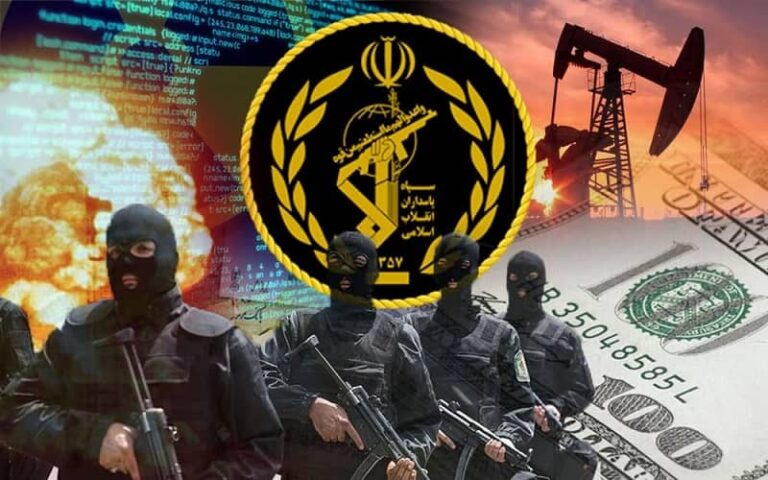
More than 25 years ago, the “Islamic Revolutionary Guard Corps (IRGC) began its abuse of Iran’s resources by forcibly injecting itself into different sectors of the economy.

It slowly took over contracts and planted itself in Iran’s economy to the point that companies would not be able to work without being beholden to it, observers say.

The new fiscal year’s budget, which will be implemented effective March 21, is a prime example of how the IRGC is getting a big piece of the cake in Iran to the detriment of the people, they said.

In the 2022–23 draft budget, President Ebrahim Raisi’s administration has increased the funds allocated to the IRGC by more than 210% — a significant increase that goes far beyond the previous upward trend — while seeking only a 10% pay raise for government employees.

IRGC leaders say its economic activities — as well as its military activities — are meant to safeguard Iran against foreign aggression. But the reality is that the IRGC gets richer by dominating Iran’s economy.

This state of affairs has only gotten worse over the past decade, to the point that Iranians say, “If you don’t work for the IRGC, you do not work.”

Hamid Shahnavaz, a civil engineer whose large and once lucrative firm went bankrupt in 2020, said he has experienced this injustice firsthand.

“Although the coronavirus outbreak exacerbated problems, the main reason for our bankruptcy was the IRGC takeover,” he said. “It underbid us on every project, and it was only a matter of time before we would topple over.”

“My partners and I were hopeful for a change, although we knew it was wishful thinking,” Shahnavaz said. But over the course of three years, “things got worse for us as the IRGC undertook more and more projects”.

According to an investigative report published October 20 in Iranian daily Payam-e Ma, Tehran deputy mayor for social and cultural affairs Amin Tavakkolizadeh said “jihadi forces” — meaning the IRGC — “need to be added” to forces managing the city, and should help manage child labourers.

Former UN officials request probe into Iranian president’s extrajudicial mass executions

Former senior United Nations (UN) officials and Nobel prize winners on Thursday (January 27) urged the UN human rights office to launch a probe into the mass executions of 30,000 political prisoners in Iran over three decades ago.

The open letter urging the UN to investigate the executions, names Iranian President Ebrahim Raisi and judiciary chief Gholam-Hossein Mohseni-Ejei among the alleged perpetrators, who “continue to enjoy impunity”.

Ultra-conservative cleric Raisi was elected president of Iran in June, replacing Hassan Rouhani.

For opposition and human rights groups, his name is linked to the 1988 executions when he was deputy prosecutor of the Revolutionary Court in Tehran.

Amnesty International and Human Rights Watch have both called for his indictment for human rights violations and crimes against humanity.

The killings in 1988 took place after Rouhollah Khomeini, founder of the Islamic Republic, declared a fatwa on prisoners who supported Marxists and other leftist groups, as well as the opposition group Mojahedin-e Khalq (MEK), which Tehran considered a terrorist organization.

Exiled opposition groups say he was part of a commission that sent thousands of jailed opponents to their deaths within a few months.

In 2019, the United States placed Raisi on a sanctions list, citing the executions and other alleged rights abuses.

The killings in 1988 took place after Rouhollah Khomeini, founder of the Islamic Republic, declared a fatwa on prisoners who supported Marxists and other leftist groups, as well as the opposition group Mojahedin-e Khalq (MEK), which Tehran considered a terrorist organization.

Hamid Noury, an Iranian national accused of “war crimes and murder” in connection with the execution of more than 100 political prisoners in 1988, has been on trial in Sweden since August.

Noury — known as “Abbasi” in the late 80s — was an assistant prosecutor at Gohardasht prison in Karaj, Iran, at the time of the mass executions, according to evidence and testimony from former political prisoners.