Home Blog Page 43

Iranian terrorist designated IRGC smuggles arms and fighters across Syria

0

The Iranian terrorist designated Islamic Revolutionary Guard Corps (IRGC) and its affiliated militias are building a new bridge over the Euphrates River in eastern Syria to facilitate the movement of fighters and weapons.

The new bridge, which will connect villages to the east of the Euphrates with the river’s western bank near the Deir Ezzor village of al-Hawiqa, would be a strategic gain for the IRGC and its militias.

The possibility that Iran would partially open the bridge to civilians to camouflage its activities and project the impression that it is a civilian bridge to prevent it from being targeted with military strikes is not ruled out.

Due to the area’s proximity to the border, he cautioned, the IRGC’s Iraqi militias will benefit from the bridge — not just its militias in Syria.

For almost a decade, the Iranian terrorist designated IRGC has been responsible for the killing of thousands of Syrians and the displacement of millions, aiding Assad in conducting bombing operations, destroying dozens of cities and towns, and carrying out chemical weapons attacks, starvation sieges, and mass murder of Syrian civilians. Such acts amount to war crimes and crimes against humanity against the Syrian people, for which the IRGC should face the gavel of justice.

The construction of this bridge is a clear indication of Iran’s determination to keep this area under its full control he said, and even reinforce it with additional capabilities.

The construction of the bridge is almost complete, and IRGC elements were observed crossing it on foot and in light-weight civilian vehicles between the two banks.

The bridge consists of three sections, two of which are embankments made of compacted soil and stones and reinforced with concrete, each 50 meters long. The bridge will be 220 meters long.

Without any doubt, after coming under numerous airstrikes over the past period, the IRGC now heavily relies on camouflage and the constant repositioning of its posts to reduce its losses.
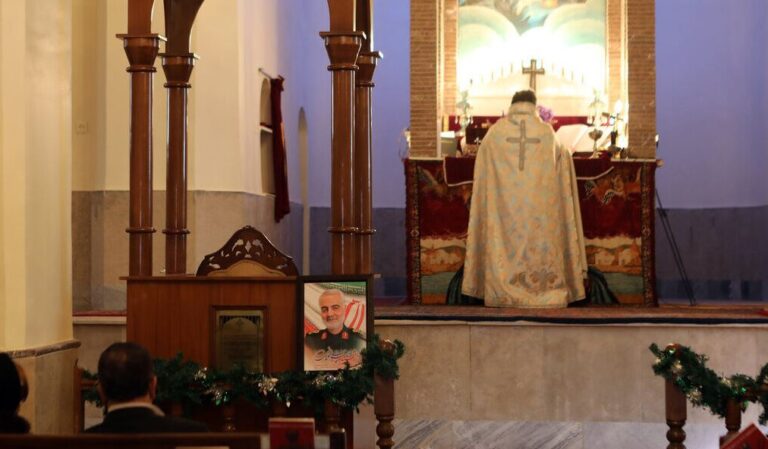
Iranian IRGC ramps up its violence against the Christian minority in Iran

Several international organizations announced an increase of the terrorist designated Islamic Revolutionary Guard Corps’ (IRGC) crackdown on the Christian minority in Iran in 2021 on charges of religious belief and peaceful doctrinal activity.

The Intelligence Organization of the IRGC, which follows only the direct orders of Iran’s supreme leader Ayatollah Ali Khamenei, has reportedly been ramping up its violence campaign against the Christian minority in Iran.

In their annual report about the Christian minority in Iran, the international bodies stressed that “the IRGC’s growing involvement in suppressing Christian activities, focusing more on online activities in the virtual world and social networks, criminalizing expression or communication with other Christians, and enacting restrictive laws” have been the government’s patterns of behaviour in cracking down on Iranian Christians in 2021.

The annual report on violations of Christian rights in Iran was produced by article 18, along with three international Christian institutions.

They added that 20 convicted Christian converts were still enduring their sentences by the end of last year, of which 18 were in prison, one in exile and another with electronic shackles at home.

According to these institutions, many of these Christians, who faced judicial convictions in Iran last year, “were due to participation in a home church or, in other words, a few Christian converts to pray and read the bible.”

The report emphasizes that the Iranian government has shut down churches in Iran and harasses them by attacking Christian homes and home churches.

Article 18’s annual report and other organizations recall that persecution of Christians continues even after the end of the prison sentence, with some, such as Sasan Khosravi, being denied work and continuing to live in their cities.

Christian converts in Iran have also been forced to leave their homeland under government pressure, despite the harsh conditions of asylum seekers and refugees, according to the report.

Iranian IRGC continues to exploit impoverished Afghan refugees

0

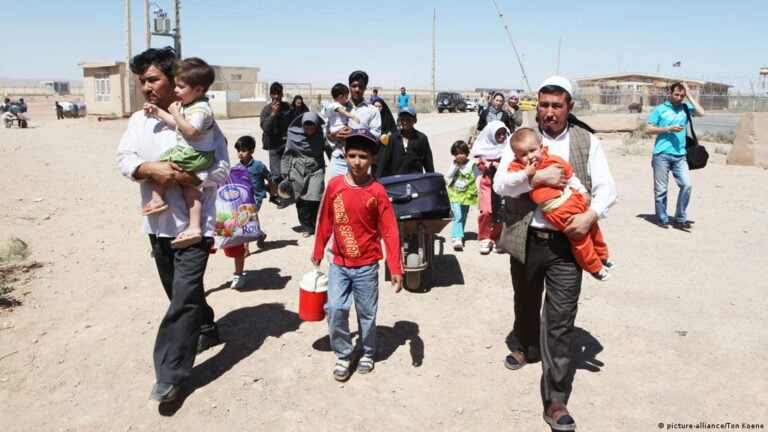
According to investigations, Iran’s Ministry of Labor, in cooperation with the judiciary, continues to implement the Islamic Revolutionary Guard Corps (IRGC) program to recruit Afghan refugees who live in extreme poverty in different parts of Iran.  

With a detailed plan, the IRGC will first convert Sunni Afghans to Shiism after targeting them at local mosques in different cities.  

After becoming Shiites, the IRGC drafts refugees they see fit and transfer them to IRGC bases, where they train under the Liwa Fatemiyoun Brigade an IRGC proxy. 

Each member of Liwa Fatemiyoun then is paid $500-1000 a month, in addition to other benefits such as food and the promise that the fighter’s family will receive citizenship in Iran after the fighter is deployed to Syria or Yemen.  

The Fatemiyoun preys on impoverished Afghans working in Iran who are desperate to support their families.

The IRGC is taking advantage of hopeless Afghan refugees in Iran who are fleeing war by promising them money, and while millions are unemployed in Iran and the country struggles with extreme inflation, the Revolutionary Guards spend hundreds of billions of tomans on the Fatemiyoun Brigade to wreak havoc across the region.

Many Afghan recruits join the Fatemiyoun Division in exchange for promises of Iranian citizenship, benefits, and a monthly payment to their families in addition to the monthly salary they receive as militia members.

Those lavish promises, Fatemiyoun veterans and relatives of dead Fatemiyoun members have complained, seldom come true.

Iranian recruiters mislead the new Fatemiyoun members in yet another way: telling them they will guard venerated Syrian shrines from insurgent attacks. Instead, they send them into battle as cannon fodder.

The IRGC’s Fatemiyoun Division is a serious threat to the security of Afghanistan and other regional countries, said Muhammad Iqbal Naderi, a military analyst based in Zaranj city, Nimroz province.

Division following the death of Iranian terrorist IRGC commander in Yemen

0

The recent death of Hassan Eyrlou, Iran’s ambassador to the Houthis, who was also a commander and representative of Iran’s terrorist designated Islamic Revolutionary Guard Corps (IRGC) has shed fresh light on the group’s internal leadership disagreements and on growing friction between the Houthis and Iran, political analysts said.

Many Houthis regarded IRGC commander Hasan Eyrlou, an Iranian, as an outsider, analysts told Al-Mashareq. And in their view, he was exerting an outsized influence in Yemen.

Houthi officials also assured Riyadh they would not replace Eyrlou with a new Iranian diplomat — though within days of his death, Iran was announcing its intention to send a new ambassador in his place.

Analysts told Al-Mashareq that the terrorist designated IRGC commander’s unilateral management style, especially regarding the direction of military operations in Houthi-controlled areas — of which he served as the de facto governor — had caused internal rifts.

It also created a fissure between the Houthis and their longtime backer, the Islamic Republic, with some Houthis expressing resentment over the extent and nature of Iran’s attempt to exert control over the conflict in Yemen.

As the de facto ruler of Houthi-controlled areas of Yemen, Eyrlou was crafting military plans with the assistance of Islamic Revolutionary Guard Corps (IRGC) elements under his command, political analyst Mahmoud al-Taher said.

“Eyrlou was the representative of the IRGC in Yemen,” Abaad Centre for Studies and Research in Yemen director Abdul Salam Mohammed said, speaking about the IRGC commander who was also furthering Iran’s agenda in Yemen.

“If it weren’t for his presence, the drones, missiles, and modern weapons would not have been sent to Yemen,” Mohammed said.

Eyrlou’s death “is a major blow to Iran”, Mohammed said.

Iranian weapons have exacerbated and extended Yemen’s war, which has dragged on for more than seven years, to the detriment of the Yemeni people.

Also read: Iran-backed Yemeni Houthis indoctrinating school students for war

Iranians set terrorist IRGC commander Ghasem Soleimani’s statue on fire

0

statue of former terrorist IRGC Quds Force commander Qasem Soleimani was torched on Wednesday night by unidentified Iranian civilians in Shahrekord in western Iran, according to the Iranian ISNA news agency. 

Video reportedly from the scene on Wednesday night showed the statue engulfed in a pillar of fire in the middle of a roundabout.

The statue of Soleimani, the Islamic Revolutionary Guard Corps (IRGC) commander, had just been unveiled on Wednesday morning. The six-meter tall statue was worth about 150 million Tomans or about $35,500, according to ISNA.

This is not the first time a statue of the former Quds Force commander has been torched in Iran.

Mohammad Ali Nekounam, the representative of Supreme Leader Ali Khamenei and the Friday prayer leader of Shahrekord, compared the burning of the statue to the assassination of Soleimani, saying “this crime in the dark of night is like the same crime in Baghdad airport that in the privacy of the night and at the height of cowardice, and it will make Hajj Qasim position in the hearts more stable.”

Despite continuous efforts by Iran’s state-run media to glorify Ghasem Soleimani and hide crimes committed by him and the terrorist IRGC in Iran and other regional countries, Iranian citizens by large reject the terrorist designated IRGC, its commanders, and propaganda to the point that they continue to torch Ghasem Soleimani’s statues less than a day after they are constructed.

Soleimani was assassinated by a US drone strike next to the Baghdad International Airport on January 3, 2020. The second anniversary of the assassination was marked this week.

Iran’s state-sponsored propaganda to hide the truth of the regime’s terrorist activities no longer works on Iranian citizens who are denied their most basic human rights by the Islamic Republic and its mafia organizations such as the terrorist IRGC.

Also read: Qassem Soleimani Fall And The Battle Inside Iraq To Come – Analysis

Iran’s Terrorist Designated IRGC Quds Force Exploiting the Red Crescent

0

This week the Islamic Republic of Iran observed the second anniversary of the US killing of terrorist designated Ghasem Soleimani, commander of the IRGC’s expeditionary Quds Force. Those who had known the general in seemingly any capacity took the opportunity to pour forth their memories of him.

One of them was Ali Akbar Salehi. He talked about his trip to Libya, with Soleimani’s blessing, after the downfall of Muammar Gaddafi – and the story he told raises the strong suspicion that the Iranian Red Crescent Society might have been improperly used by the IRGC.

“When things happened in Libya and the country fell apart,” Salehi recalled, “I consulted with the General and we agreed I should pay a visit to Libya. The visit took place shortly after Gaddafi had gone, and the clashes were still ongoing. In Libya I witnessed that our friends in Quds Force quickly made it possible, with the help of the Red Crescent, to make prostheses for a number of Libyan revolutionaries who had been maimed. This shows you the compassion of Commander Soleimani for the people.”

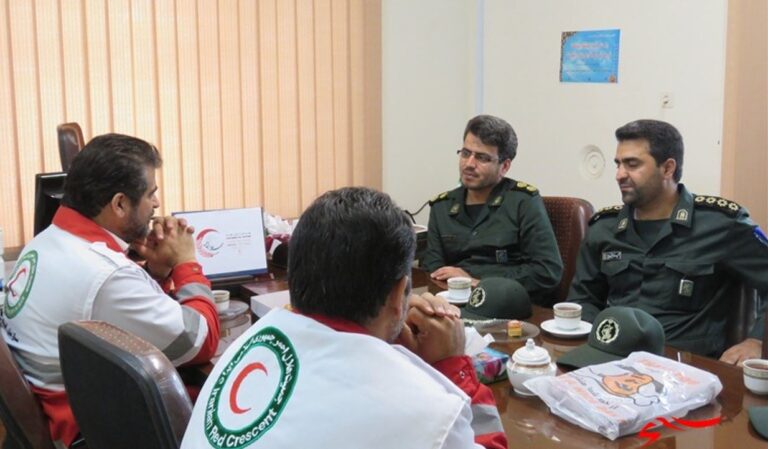
These statements showed less about the character of Commander Soleimani than they did the possible compromising of the Iranian Red Crescent. Naturally, as long the NGO has not been used as a cover for military purposes no official transgression has taken place – had its emblem been used to further armed conflict it could be considered a war crime. However, the fact that a delegation accompanied the Quds Force in the first place is unusual.

In a statement that made waves in 2019, retired Revolutionary Guards general Commander Saeed Ghasemi claimed that during the 1992-1995 Bosnian War the IRGC had trained jihadist forces in the former Yugoslavia and collaborated with Al-Qaeda in Europe under cover of the Red Crescent.

The Iranian Red Crescent released a statement in response saying it never allows military forces to use its uniforms or its insignia. “According to the four treaties of the Geneva Convention, we are neutral in armed conflicts because our task is to support humanity and to help civilians,” it read. “If an individual or organization has used the uniform and insignia of Iran’s Red Crescent Society, it must have been without [our] cooperation.”

Also read: Iran Is Using Charities and Humanitarian Groups to Export Its Revolution

Iranian Officials’ Statements Show How Out of Touch They Are With People’s Real Problems

0

The recent statements of some of Iran’s officials and those who are leading the regime’s tribunes, their level of concern, especially in a situation where the Iranian people are struggling with all kinds of problems, is more like trampling of the nerves of the people.

Strange speeches by the regime’s officials which are far away from the people’s concerns have become one of the main problems for the regime and are arising this question whether the regime’s officials are unaware of the people’s problems or are they trying to lower the level of the people’s concerns to be able to control them.

But the reality is that such statements are originating from the regime’s demagogy and lumpish culture, mocking, and joking about everything to make them worthless in the people’s minds.

On the one hand, the concern of the spokesman of Tehran City Council, instead of solving many problems of the capital, is to change the name of the street near the office of the regime’s Supreme Leader, and on the other hand, the interim Friday Imam of Tehran considers the number of trips to the north as a reason for prosperity in the country.

The member of the regime’s parliament held an angry speech about the import of musical instruments and another speaker states that the solution to the water crisis in Isfahan is to offer rain prayers.

For example, in the December 19 meeting of the Tehran City Council, Alireza Nadali, the council’s spokesman, while speaking about the change of the names of some streets in the Tehran City Council, said: “We have official policies in the Islamic Republic and the Islamic Revolution of 1979 was against the 2,500-year monarchy.”

Now it should be asked from this member of the Tehran City Council, who was supposed to change the name of the Anoushirvan Street, will such a decision solve the people’s many problems in this city?

Source: Iran News Update

Also Read: The Children of Iran’s Elite Possess More Wealth Than the Central Bank Reserves


Tehran Still Hiding Its Crime on the Ukrainian Flight PS752

0

Judicial cases in Iran are mostly ignored or delayed deliberately, especially when it comes to cases in which the regime is involved in human rights issues or criminal inhuman cases in which the head of the regime is the main culprit. One of the most tragic cases in the past years is the case of the downing of the Ukrainian flight PS752.

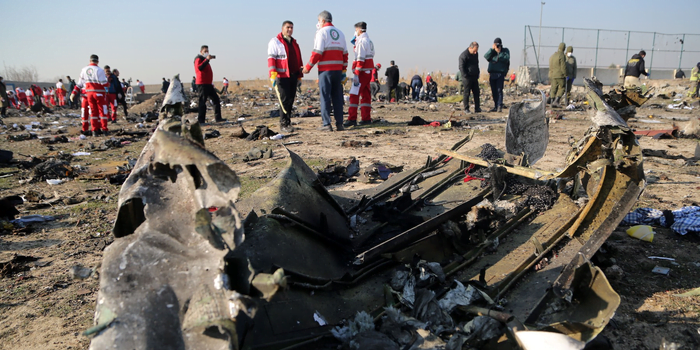
The passenger flight with 176 passengers was shot down by the regime’s Revolutionary Guards (IRGC) shortly after its takeoff from the Tehran Khomeini airport. All the 176 passengers and the crew were killed.

The Iranian government initially denied responsibility for the airplane’s destruction, but evidence showed that the regime had a decision to shoot down this airplane. And one of the most decisive pieces of evidence is the regime’s disregard to take any responsibility or be liable for this crime.

Previously the regime because of the huge international pressure and the struggle of the family members of the victims implemented a fake trial for the so-called culprits, without any result, to save the main perpetrators who are the regime’s heads.

In this regard, the Ukrainian website Ukrinform on December 23, 2021, about the regime’s rejection to cooperate with the countries of the victims wrote:

“Iran has not provided Ukraine access to the names and official positions of those accused in the case of the downing of the Ukraine International Airlines Flight 752 near Tehran.

“According to the Office of the Prosecutor General: ‘The names and positions of the accused and the actions of each of them are being thoroughly concealed. However, I’d like to assure you that we are moving forward in our criminal proceedings. And we are not alone in this fight for justice. Canada, Britain, and Sweden are our reliable partners in both the intergovernmental process and the criminal bloc of issues,” said Deputy Prosecutor General Maksym Yakubovsky, who met with relatives of the victims on the eve of the second anniversary of the PS752 crash to brief them on the progress in a pre-trial investigation.’”

Source: Iran Focus

Also Read: Iran tampered phones of Ukrainian Flight victims killed by IRGC missiles

US Navy seizes guns it says heading from Iran to Yemen

0

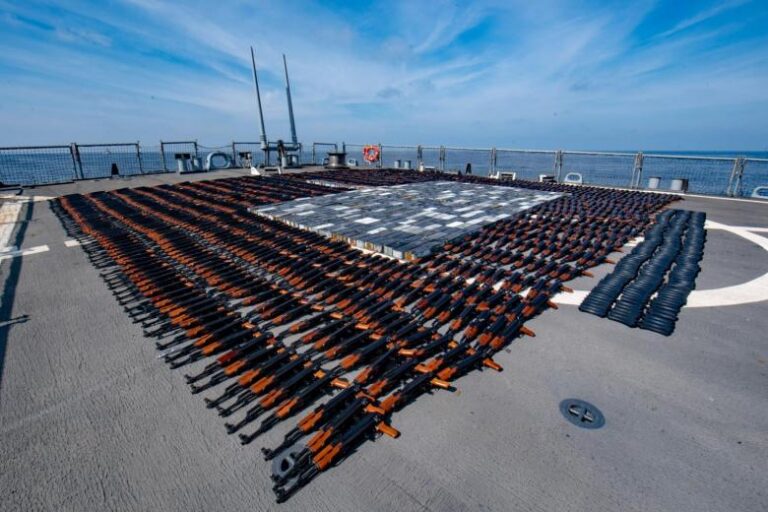
The US Navy has seized 1,400 AK-47 rifles and ammunition from a fishing boat it claimed was smuggling weapons from Iran to Houthi rebels in war-torn Yemen.

US Naval Forces Central Command, or NAVCENT, said it boarded the boat on Dec 20 in the North Arabian Sea, seized the weapons cache and five crew members – who identified themselves as Yemeni – before scuttling the vessel.

Yemen has been wracked by civil war since 2014, pitting Iran-backed Houthi rebels against the internationally-recognised government.

“US 5th Fleet ships seized approximately 1,400 AK-47 assault rifles and 226,600 rounds of ammunition from a stateless fishing vessel,” a US navy statement on Wednesday (Dec 22) read.

“The stateless vessel was assessed to have originated in Iran and transited international waters along a route historically used to traffic weapons unlawfully to the Houthis in Yemen.”

The Bahrain-based US 5th Fleet has seized approximately 8,700 illicit weapons this year.

The United States as well as ally Saudi Arabia – which is leading the military coalition backing the Yemeni government against the rebels – have long accused Iran of supplying the Houthis with weapons, a charge Teheran denies.

“The direct or indirect supply, sale or transfer of weapons to the Houthis violates UN Security Council Resolutions and US sanctions,” the US statement added.

The five crew members will be repatriated, the navy said, adding that the boat was sunk because it was a “hazard” for commercial shipping.

Riyadh has said that its 2015 intervention in Yemen was aimed at preventing an Iranian ally taking power on its doorstep.

In recent days, fighting in Yemen has seen Saudi-led coalition forces carry out air strikes on the rebel-held capital Sanaa.

On Wednesday, the coalition said it targeted a Houthi military camp in Sanaa, and destroyed seven drone and weapons storehouses, according to the official Saudi Press Agency.

Earlier this week, it targeted Sanaa airport, whose operations have largely ceased because of a Saudi-led blockade since August 2016, with exemptions for aid flights.

The UN estimates Yemen’s war will have claimed 377,000 lives by the end of the year through both direct and indirect impacts.

More than 80 per cent of the population of around 30 million require humanitarian assistance.

Source: The Strats Times

Also Read: DOJ Announces US Navy Seized Iranian Terrorist Arms Shipments Bound for Militants in Yemen

The Real Identity of Iranian Regime Ambassador for Yemen, Hassan Irlu Uncovered Following His Death

0

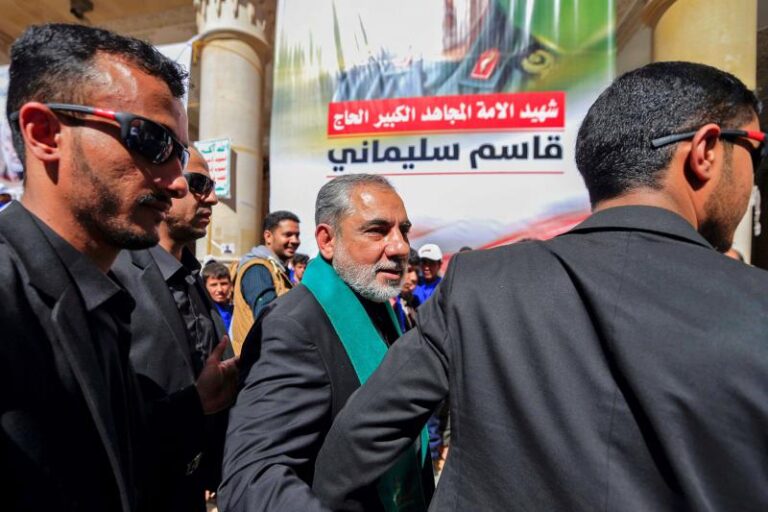
The Iranian regime has confirmed that Hassan Irlu, its envoy for Yemen, which is currently controlled by the Houthi terrorist group, has died following his transfer to Iran.

The regime’s ambassador had his real identity confirmed on December 22, following much speculation.

Iranian state media confirmed that he is actually Brig. General Abdolreza Shahla’i, a commander of the Yemen division of the Revolutionary Guards’ (IRGC) Quds Force.

The state-run Roydad-e 24 media outlet wrote that he had died due to the Covid-19 virus, with the Ministry of Foreign Affairs announcing his death and calling him a ‘martyr’.

Roydad-e 24 stated, “There is little or no information of Irlu’s life, and there are not many photos of him. Interestingly, like his life, his death was also mysterious.”

According to Iran’s state media, Hassan Irlu was appointed as the ambassador to Yemen in September 2021, after an official announcement by the Ministry of Foreign Affairs of the Islamic Republic.

The regime heavily funds the Houthis and recognizes them as the legitimate government of Yemen, so Irlu was based at the regime’s embassy in the city of Sanaa, which has been under control of the Houthis since 2015.

According to Iranian state media, Irlu was greatly praised by Yemeni government officials, who referred to him as ‘the most influential figure in Yemen’. Some officials have gone so far as to say that he was ‘the absolute ruler of Houthi-controlled territories’.

Messages of condolence on the news of Irlu’s death have come in from many people affiliated with the regime, including Mostafa Vosough Kia, the cultural secretary of the Mehr News agency, who is affiliated with the Ministry of Intelligence and Security (MOIS), who referred to Irlu’s real name in his message.

One of the regime’s MPs based in Tehran, Ahmad Naderi posted a message on Twitter to commemorate Irlu. He wrote, “The martyrdom of Haj Hassan Irlu, Iran’s active ambassador to Yemen, is a severe pain in the ‘resistance’s’ heart.”

Source: Iran Focus

Also Read: US Navy seizes guns it says heading from Iran to Yemen