Home Blog Page 44

Iran backed Hezbollah has some 2,000 iranien made unmanned aerial vehicles

0

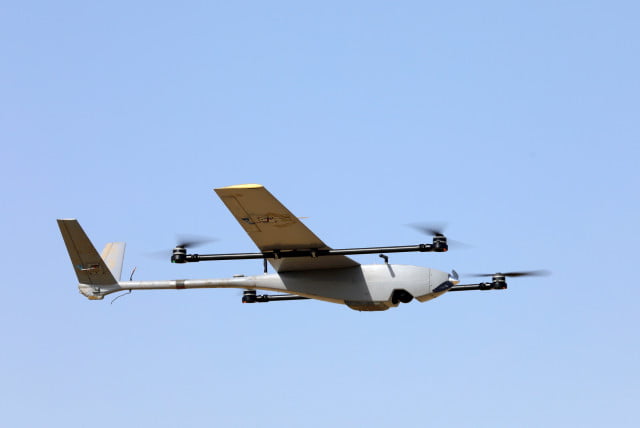
Hezbollah has some 2,000 unmanned aerial vehicles, many of them advanced UAVs from Iran and others manufactured independently by the Lebanese terrorist group, a new report by the ALMA Research Center has found.

Hezbollah has been using UAVs since the 1990s and has used its drones in Syria as well as against Israel. Even before the Second Lebanon War in 2006, the group launched drones into Israel; and during the war, Hezbollah launched several armed drones into the country.

The report by ALMA listed several attempts by Hezbollah to fly its drones into Israel, including in October 2012 when a UAV launched over the Mediterranean Sea reached the Negev before it was intercepted by Israel Air Force jets.

The group was said to have 200 Iranian-made UAVs in 2013; and with help from the Islamic Republic, it has since significantly increased its fleet, which is set to be used for kamikaze attacks on strategic national assets in Israel as well as reconnaissance against IDF troops and bases.

According to the report, Hezbollah “most likely” has advanced UAV models such as the Mohajer, Shahed, and Samed (KAS-04), Karrar and Saegheh types. It also possesses dozens of smaller civilian drones made by China that are used to photograph as well as to carry and drop bombs.

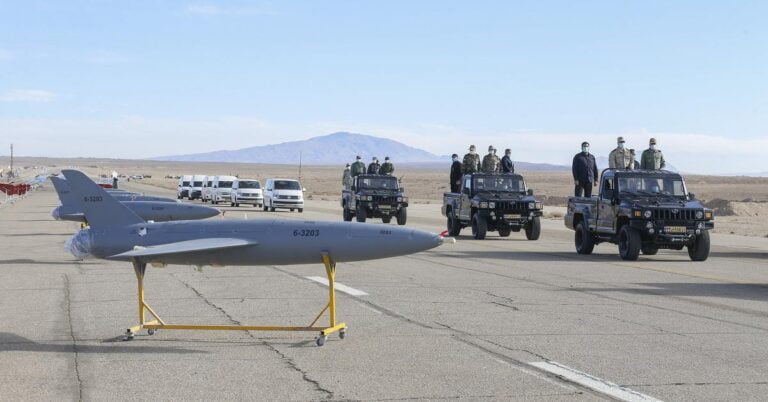
Iran has been building its “UAV Army” since 1984, and the fleet not only has a significant range of over 2,000 kilometers but it has “very advanced development and operational capabilities,” the report said.

“Iran realized that it could not provide a military response throughout the Middle East in general and against Israel in particular, facing an air force operating warplanes. Therefore, it sought to develop two alternatives in recent decades: the first, a precision surface-to-surface missile system, and the second, a ‘UAV Army.’”

Though Iran has thousands of drones, the report highlighted nine types of UAVs and 48 models, including those that are operational and others that are still in trial phases. The report also discussed UAV models used by Hezbollah, Hamas and Palestinian Islamic Jihad in the Gaza Strip.

Source: The Jerusalem Post

Also Read: Australia designates IRGC-backed Hezbollah a terrorist organization
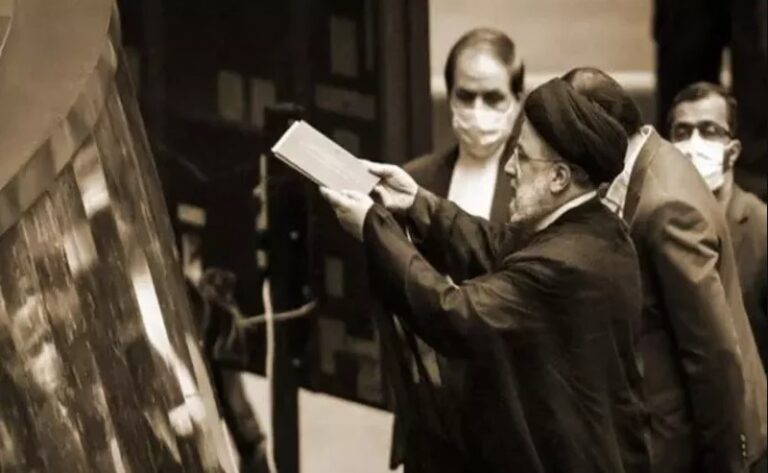
Stealing From the Poor To Give to the Rich Is the Basis of Raisi’s 2022–2023 Budget

0

The annual budget, in most countries across the world, is put together during a thorough process, involving a collaboration between politicians and economists, among many other professions. This budget is used to plan the country’s projected income and any expenses for the upcoming year and is created by balancing outsources of income against the country’s expenses.

A comprehensive and progressive budget is one in which its citizens’ welfare and wellbeing take priority and pave the way for advancements in technology, environment, education, medical, exploration, etc.

However, in Iran, the well-being of its citizens has never been one of the top priorities of the budget in any of the former and present governments. The way the budgets are created makes sure that the ones who benefit immensely from them are the regime’s Revolutionary Guards Corp (IRGC) and their affiliated companies and organizations, as well as many other regime-affiliated entities.

The latest government budget, presented last week to the Majlis by the regime’s president Ebrahim Raisi, consists of two parts. The first is the General Government Budget and this includes government expenditures, departments, salaries, and development budgets. The second is focused on the ‘non-governmental’ companies and foundations affiliated with the regime, which includes the IRGC and the military.

Through these companies and foundations, billions of dollars are generated and controlled which are used solely by the regime for exporting terrorism and oppressing the Iranian society. Not surprisingly, these foundations have tax exemptions and are never audited for their income and expenses.

In Raisi’s 2022-2023 budget draft bill presented to parliament on Sunday, the government proposed a 930 trillion rial budget for the Islamic Revolution Guard Corps, IRGC. Last year that number was 380 trillion rials, and the year before, 240 trillion.

Source: Iran Focus

Also Read: Raisi, Khamenei Come Under Fire For Economic Crisis, Brain Drain

The Children of Iran’s Elite Possess More Wealth Than the Central Bank Reserves

0

The issue of rising wages of the lower classes and its delay has become a challenging issue for the Iranian government. The government has announced an increase in salaries of its employees by an average of ten percent next year, but the official meetings of the Supreme Labor Council on the issue of the 2022 wages have not yet begun, due to the regime’s critical financial situation.

The fundamental question is whether rising wages equal to the rate of inflation, even slightly higher than the official rate of inflation, can reduce the deep gap between income and the cost of living.

Hossein Gholami (trade union activist) gives a ‘negative’ answer to this question by performing a series of simple calculations.

He believes that increasing wages based on inflation will increase the gap between wages and the cost of living and impoverish the working class. The only solution is to match the wages with the living expenses or the household subsistence basket.

Even if we consider inflation as 50 percent and salary increase as 60 percent, the gap of eight million Tomans between the minimum wage and the subsistence basket will reach more than eleven million Tomans in the next year, because the main problem is the deep gap that has been created over the years.

Whenever wages rise slightly like this year, inflation pushes faster. Therefore, with a 60 percent increase in wages and pensions, the gap between wages and livelihoods will widen again.

With a 60 percent increase in salaries compared to this year, the salary deficit will increase by 3,600,000 Tomans. If salaries were equal to the cost level of 12 groups of consumer goods, i.e., food, medicine, clothing, education, etc., and above the poverty line, an increase in wages commensurate with inflation would work, but since wages are generally one-third to one-fifth of the poverty line, the extent of inflation means the expansion of class gap and conflicts.

Source: Iran Focus

Also Read: Iranian children are being punished based on their parents’ religion and beliefs

Elite  Elite  Elite 

Iran-Backed Houthis Doubled Attacks This Year on Saudi Arabia, Report Says

0

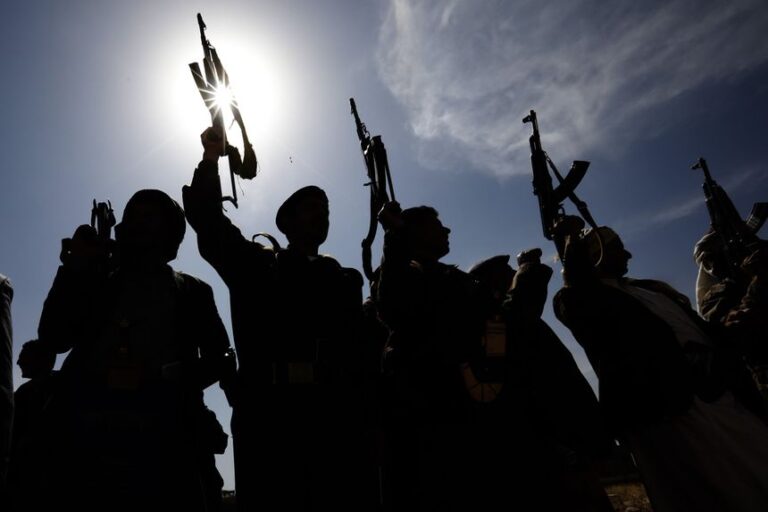
Attacks by the Iran-backed Houthi militant group against Saudi Arabia have more than doubled this year from their pace last year, according to a recent report that provides details of escalating violence in the Gulf region.

During the first nine months of 2021, Houthi attacks against the Saudi kingdom averaged 78 a month, or 702 in total, said the report by the Center for Strategic and International Studies, a think tank in Washington. During the same period in 2020, the report said, the monthly average was 38.

The report analyzes more than 4,100 Houthi attacks against Saudi Arabia between 2016 and 2021, providing a clearer picture of a long-running regional conflict that has developed into a proxy war between Tehran and Riyadh. Houthi militants in Yemen have turned to irregular or asymmetric weapons against Saudi Arabia, which has led a military intervention in Yemen since 2015 following the fall of the government there.

Lebanon’s Hezbollah, which is also backed by Iran, has provided the Houthis with weapons and training, the report notes. The relatively low-cost support from Iran and Hezbollah makes the Houthi attacks on the Saudi kingdom so effective, said Seth Jones, a senior analyst for the international security program at CSIS who authored the report.

“It’s very cheap for the Houthis and the Iranians to produce and very expensive for the Saudis to defend against,” Mr. Jones said. “There’s a big advantage to continue to put pressure on the Saudis. It’s not very expensive.”

The Houthi attacks the CSIS report examines were carried out by ballistic and cruise missiles and, mainly, by unmanned aerial vehicles, or drones, which are often used against Saudi civilian infrastructure.

Riyadh has been struggling to defend against such attacks, and, as The Wall Street Journal reported earlier this month, Saudi supplies of Patriot missile interceptors are beginning to run low. The interceptors, at about $1 million per interceptor are considered by military specialists to be the wrong weapon to defend against small drones, which are relatively inexpensive and widely available.

Source: The Wall Street Journal

Also Read: Iran-backed Houthis holding US Embassy staff in Yemen: State Department

Iran using network of civilian companies as cover for deadly drone program

0

According to a new report, Iran is using civilian companies as cover to evade sanctions and produce military drones to strike targets across the Middle East.

The study by the National Council of Resistance of Iran (NCRI), a coalition of Iranian opposition groups, details for the first time the extensive network of front organizations established by the regime to acquire parts for its drone program despite U.S. and international sanctions.

The NCRI identifies 15 companies with close ties to either Iran’s Ministry of Defense or Islamic Revolutionary Guard Corps (IRGC), a U.S.-designated terrorist organization, which allow Iran to obtain parts for its growing fleet of unmanned aerial vehicles (UAVs).

The IRGC “uses these companies to purchase UAV accessories and equipment and circumvent sanctions,” the report states. “They make up a key smuggling ring of UAV parts and other aerospace industries’ needs under the guise of civilian activities.”

Here’s the list of the 15 companies, some of which were established in just the last couple years:

  1. Iranian Aviation & Space Industries Association
  2. Iranian Aviation & Space Industries Working Group
  3. Iranian Research Organization for Science and Technology (IROST)
  4. Iravin Innovation and Acceleration Center
  5. Farnas Pasargad Aerospace Industries Company
  6. Bal Gostar Negah Asemanha Technology
  7. Kharazmi Electronics Industries
  8. Iran Bekr Part Khavar Mianeh
  9. Sahfa Production-Distribution Cooperative Company — Iranian Aerospace Industries
  10. Aras Tech Aircraft Maintenance Services Company
  11. Maham Pergas Technology
  12. Hezareh Sevvom Industrial Alloy Development Company
  13. Nazari Titanium Company
  14. Sara Safe Tools
  15. Noandishan Composite Structures Industrial-Production

“The regime is using these companies with civilian cover to get whatever it wants from the outside world for production, parts, etc.,” said Alireza Jafarzadeh, deputy director of the NCRI’s U.S. office. “No one is paying attention to this.”

The State and Treasury Departments didn’t respond to requests for comment on whether they’re aware of these companies and whether any are under consideration for sanctions.

Jafarzadeh said he hoped the NCRI’s new report, which provides a comprehensive breakdown of Iran’s drone program, will get the attention of Congress and the Biden administration.

Source: Just The News

Also Read: US slaps sanctions on Iran drone commander behind attack on Israeli-linked ship

US Report Says Iran Harbors Al Qaeda Leaders, Sponsors Terrorism

0

The US State Department says Iran continues to harbor al Qaeda leaders and sponsor terrorism acts, in its 2020 Country Reports on Terrorism published Thursday.

“There has been facilitation of them that allows them to remain active as leaders within the al-Qaida global enterprise,” the acting Coordinator for Counterterrorism John T. Godfrey said Thursday at a briefing introducing the 2020 report.

“No secret, I think, that Iran is a longstanding state sponsor of terrorism, and I think the fact that they have enabled that leadership cadre to safely reside in Iran is a reflection of their use of terrorism as an adjunct of their foreign policy goals.”

Godfrey also said that Iran continued to support terror acts in the region “and further afield in 2020”, supporting proxies in Iraq, Lebanon, Syria, Yemen and Bahrain, including Hezbollah and Hamas.

The United States also continued high-level diplomatic contacts to counter Hezbollah’s presence in Central and South America and in Europe, resulting in nine countries taking “significant steps” in 2020 “to designate, ban, or otherwise restrict” Hezbollah.

In response to a question as to how the Biden Administration is cooperating with Saudi Arabia to counter Iranian proxy forces Godfrey said, “I think Saudi Arabia has faced a particular threat in recent years from the Houthis in Yemen, and obviously that’s a group that has enjoyed quite a bit of support from Iran, and we’ve been public about our concerns about that. And that’s something that we’ve continued to work with them on.”

However, the Biden Administration removed the Houthis from a terror designation list almost as soon as it took office in early February and since then has repeatedly condemned their missile and drone attacks against Saudi Arabia.

In the report itself, the State Department says, “The Houthis continue to receive material support and guidance from Iranian entities, including to enable attacks against Saudi Arabia. These attacks have utilized armed drones and ballistic missiles, which damaged airports and critical infrastructure.”

The report highlights the role of IRGC’s Qods (Quds) Force saying that Iran continued to acknowledge the active role the military-intelligence unit plays in regional conflicts from Iran and Syria to Yemen and elsewhere.

It also says that Hezbollah “remained Iran’s most dangerous terrorist partner and the most capable terrorist organization in Lebanon, controlling areas across the country. Iran’s annual financial backing to Hizballah — which in recent years has been estimated to be in the hundreds of millions of dollars — accounts for most of the group’s annual budget.”

Source: Iran International

Also Read: New Taliban governor with strong ties to Al-Qaeda and Iranian IRGC

Iranian IRGC Pushing Women and Children into its Syrian Militias

In an effort to strengthen its presence in eastern Syria’s Deir Ezzor province and improve its standing among the local community, the terrorist Iranian IRGC organization has been enticing women to join its affiliated militias.

The move comes at a time of heightened competition for influence and control in the eastern regions of Syria among the Islamic Revolutionary Guard Corps (IRGC), Russians and the Syrian regime of Bashar al-Assad.

Women in this part of Syria are desperate to earn money, as many have few options and their families are struggling with extreme poverty, the high price of basic commodities and lack of job opportunities.

They are a source of cheap labour for the IRGC and also help it make inroads into the local community and thereby gain some measure of acceptance among a community that widely rejects its destructive presence in Syria.

In addition to opening the door to women, the Iranian IRGC is continuing to recruit impoverished Syrian youth to boost the influence of its militias.

The Iranian militias are even attempting to draw children into their orbit, bringing them in as “cubs” of specific militias.

The children are taught to uphold and defend the doctrine of Wilayat al-Faqih (Guardianship of the Jurist), which calls for allegiance to Iran’s supreme leader.

The IRGC commands at least 20 large militias in Deir Ezzor, variously comprised of Iraqi, Lebanese, Afghani, Pakistani and Syrian fighters.

They include the Fatemiyoun Division, Zainabiyoun Brigade, Harakat al-Abdal, Kataib Hizbullah, Asaib Ahl al-Haq, Kataib Sayed al-Shuhada and Harakat al-Nujaba.

Syrian Tribal Council Spokesman Sheikh Mudar al-Asad said Elements of the Iranian militias are imposing an economic siege on Deir Ezzor residents and tightening the screws on them to force the youth, children and most recently, women, to join their ranks in exchange for money.

He said the Iranians and their proxies continue to deprive residents of their most basic rights, seize their property, and promote their own interests and ideology, which is propagated via newly constructed “religious centres”.

Source: Diyaruna.com

Iranian teachers strike over wages and rights. Police repress the protest

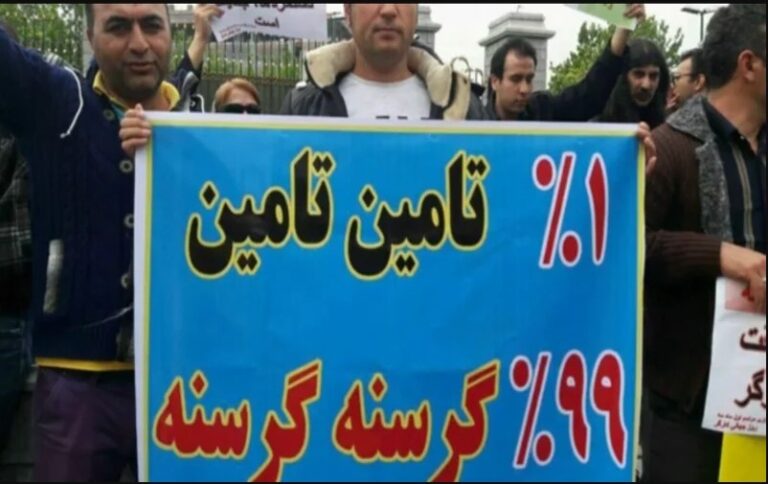
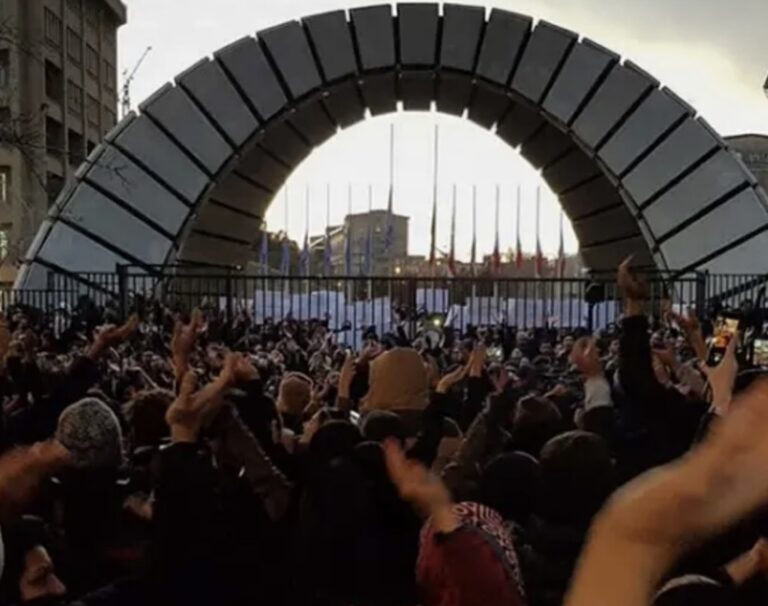
A new front of protest has opened in Iran involving the teaching profession, with tens of thousands of teachers taking to the streets in recent days in 120 cities and towns, including Tehran and the Shiite holy city of Qom.

The police responded – as often happens on these occasions – with the repression of discontent and arrests, but unions and citizens promise battle and do not intend to give in to the use of force.

In the capital, hundreds of professors gathered on December 14 in front of the Parliament building (Majlis), right in the center, chanting slogans and demanding the immediate release of a trade union leader. The deputies, in an attempt to quell the protest, voted yesterday for a wage increase.

One of the hot spots of the protest is the city of Shiraz, capital of the province of Fars, in the south-central part of the country, where for days thousands of professors have filled the square. In addition to the capital, dissent has touched the streets of Yasouj, capital of the province of Kohgiluyeh and Buyer Ahmad. Teachers held picket lines in front of schools and education offices in 60 cities and 25 provinces of the Islamic Republic.

Teachers are demanding greater equity in salaries and the release of imprisoned school union leaders, in addition to the implementation of long-promised health insurance and pension payments. Added to this is the long-standing battle to end discrimination (ethnic and denominational) within the education system, the introduction of limits on the freedom to privatize granting freedom to educational institutions. Finally, more resources for the renovation of school buildings that, in many parts, are in a dilapidated condition.

The discontent of teachers is part of a framework of deep difficulties for the Iranian economy, sunk by U.S. sanctions over the country’s nuclear program and the health crisis triggered by the Covid-19 pandemic. In recent weeks oil workers have demonstrated, claiming months of back payments while the skyrocketing inflation rate has lowered the purchasing power of wages.

Source: AsiaNews

Also Read: Instead of Crushing Protests, the Iranian Government Should Solve Its Water Crisis

Western Powers Need to End Talks and Put Further Sanctions on the Iranian Regime

0

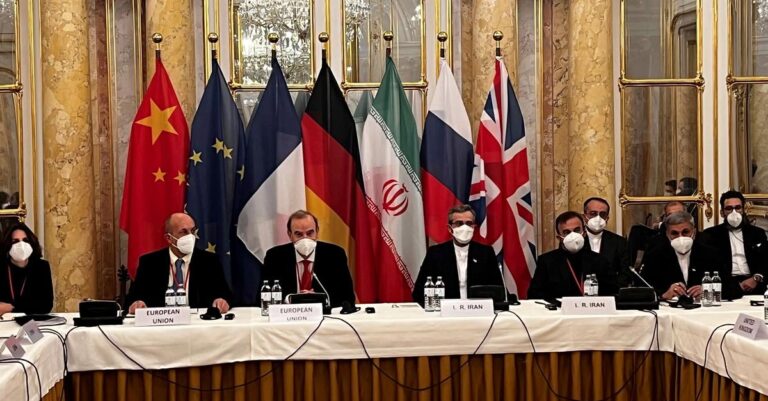
Following a five-month delay, negotiations over the 2015 Iran nuclear deal resumed on December 6 in Vienna. Many participants held an optimistic outlook on the proceedings but no points of progress have been made thus far. All that has emerged is high criticism of the Iranian regime’s extortion tactics and their attempts to reverse the compromises that had been made during the previous sessions of negotiations.

The current round of talks is being chaired by European Union diplomat Enrique Mora, who claimed he has recognized a ‘renewed sense of purpose’ among the member states negotiating and highlighted the need for a resolution to revive the agreement, formerly known as the Joint Comprehensive Plan of Action (JCPOA).

The National Council of Resistance of Iran (NCRI) said, “Of course, commitment to that outcome has never truly been in doubt. The core problem is that the Iranian regime continues demanding the complete, up-front removal of all sanctions imposed or re-imposed after the US pulled out of the JCPOA in 2018.”

The EU remain optimistic about the proceedings of the talks but there is no sign that the regime will step back from their demands or offer anything in return. They have consistently maintained that they would only discuss the reversal of the JCPOA’s terms violations after the sanction relief has been verified.

In the event that the regime continues to stall the negotiating process, France, Germany, the UK and the U.S. have all publicly expressed the need to find alternative measures to hold the regime accountable for their violations.

Speaking to reporters on Thursday, the spokesperson for the US State Department Ned Price stated that the regime will be unable to ‘play for time’ while they advance their nuclear program. He also added that the regime’s strategy of using their nuclear activities for ‘additional leverage’ would depend on them ‘gambling on American weakness’ which they would lose.

Source: Iran Focus

Also Read: Europeans raise pressure on Iran over nuclear deal before EU visit

 Western Powers Western Powers Western Powers

Iranian women at risk as executions increase

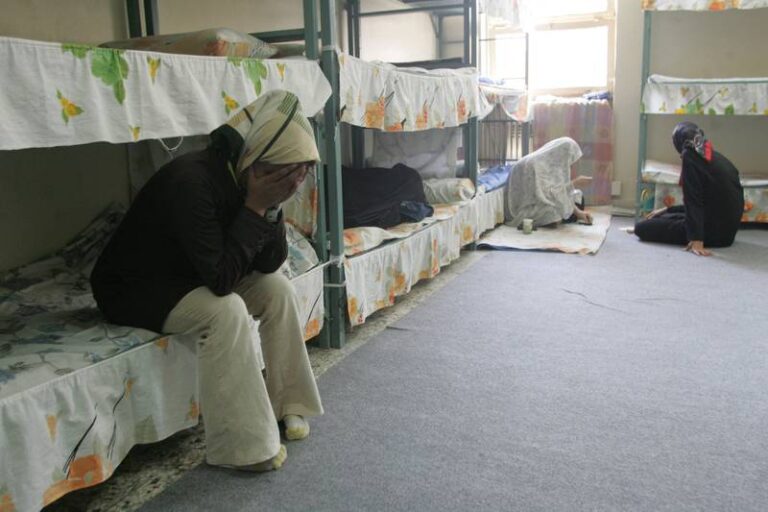
More than a dozen Iranian women have been executed this year in Iran, activists say, raising concerns over a rigid judicial system that automatically seeks capital punishment for a killing without taking into account the circumstances.

Most of the women executed in Iran in recent years have been hanged for murder, the majority of cases related to the killings of a husband or partner, rights activists say.

Iran’s religiously rooted law of retribution known — where another life must be taken after a killing unless the victim’s family forgives or accepts a payment — means that extenuating circumstances such as domestic violence may not be taken into account by a court.

According to Iran Human Rights (IHR), an Oslo-based NGO which closely monitors the use of the death penalty in Iran, one of the women most recently hanged was Susan Rezaeipour, executed on October 27 for the murder of her husband — who was also her cousin.

IHR said she had been in prison for six years and was executed after the victim’s next of kin — who was also her maternal uncle — refused to forgive her.

A source told the group that Rezaeipour had stated in her confession that her husband was drunk from the afternoon and then would beat her, so “I couldn’t stand it any more”.

‘Tried to defend themselves’

“Behind the numbers of women executed we see many other issues of grave concern,” said Mahmood Amiry Moghaddam, director of IHR, which has counted at least 15 women executed this year and 170 since 2010.

“There have been cases of an abusive relationship, of child brides and — in traditional communities — women offered as a bride as a reconciliation between tribes,” he said.

He said that the legal interpretation was incompatible with international law as it “puts this responsibility of punishment on the family of the victim” even though the judiciary claims to mediate with the families.

One of the most notorious cases in recent years was the October 2014 hanging of 26-year-old Reyhaneh Jabbari, who was convicted of murdering a former intelligence officer she maintained had tried to sexually assault her.

Source: The National

Also Read: Iran’s New Population Law Violates Women’s Rights, HRW Warns

Iranian women Iranian women Iranian women