Home Blog Page 45

How Sexual Abuse and Blackmail Shapes Iran’s Brutal IRGC Forces

The Islamic Republic of Iran has been violently suppressing the peaceful demonstration and protests of the Iranian people by mobilizing its terrorist designated Islamic Revolutionary Guard Corps (IRGC), the Basij militia and anti-riot police forces for the past four decades. When witnessing the brutality of the regime’s forces who use batons, tasers, pellets and live bullets against unarmed civilians, one can’t help but wonder about the driving forces behind the unconstrained violence and hatred of the IRGC and Basij forces against their own countrymen, and whether devotion to the Islamic Revolution and loyalty to the Supreme Leader is all there is to it.

Among the many reasons behind the brutality of these forces, and their transformation from ordinary citizens into ruthless soldiers who blindly murder civilians, are “honey traps” set up by the Intelligence Organization of the IRGC to blackmail IRGC and Basij personnel using sex and their sexuality against them. The IRGC Intelligence sets up “honey traps” for government and armed forces personnel where they lure the victim into an affair or same-sex relationship to collect pictures and videos for use in blackmail.

This tactic is commonly used by IRGC Intelligence against politicians, activists, and armed forces commanders and personnel for blackmailing and transforming individuals into slaves who obey orders without questions since adultery, fornication and homosexuality are illegal and punishable by death in Iran. In the case of the armed forces personnel and commanders, it becomes a strong driving force to follow orders of killing without a second thought since their and their family’s lives and dignity are on the line. These obedient servants are extremely valuable to the state which results in their quick promotion despite a lack of competency or merit for higher positions.

The commander of IRGC’s “Ashoura” regional headquarters in the Northwest of Iran, Jalil Babazadeh, who recently got promoted to his current position is a great example of an IRGC commander ensnared by these honey traps who will not hesitate to brutally suppress civilians and other disobedient IRGC commanders and personnel to avoid being exposed.

Farhang Mostaed, a close and old friend of Babazadeh is one among the many with whom Babazadeh has a sexual relationship. Babazadeh has made sure to appoint Mostaed as his deputy or successor whenever he got promoted during the past 34 years. During the 8-year war with Iraq, the two of them worked together in Ardabil’s IRGC headquarters where they had a sexual relationship. They shared the same bedroom and bathroom and even rode the same motorcycle together, all of which had attracted a lot of attention, until a few years after the war when Babazadeh was promoted and naturally relocated Mostaed with him to his new post. For the past 13 years, Babazadeh was the commander of Ardabil’s IRGC headquarters where he appointed Mostaed as the commander of its Hazrat Abbas 37th brigades. This year and after Babazadeh’s promotion to his new position as the commander of IRGC’s Ashoura regional headquarter he also appointed Mostaed as his deputy commander.

A number of conscripts who were drafted to serve within the IRGC and were selected as drivers for Babazadeh have also been victims of rape and sexual abuse, the names of whom we will not share as they were not members of the IRGC by choice. Babazadeh being surrounded by good-looking conscripts is a fact many IRGC personnel and commanders are aware of, as well as the fact that he had a sexual relationship with the head of his office, Mr. Abazar Shams during his years in the Hazrat Abbas 37th brigades.

IRGC’s “Ashoura” regional headquarter with Jalil Babazadeh serving as its commander along with 10 other headquarters including the Sarallah HQ in Tehran constitute the IRGC’s nationwide network of operational command. Every one of these 10 headquarters includes some provincial IRGC corps including IRGC and Basij militia divisions, brigades, and security battalions. Their objective is to protect the regime in case the central command in Tehran is seriously damaged in a strike.

Although these 11 headquarters are officially tasked with commanding and furthering asymmetrical warfare, their undeclared mission is suppressing dissent and protests and this is what they did heavy-handedly during the 2019 November protests all over Iran, including a major massacre in Mahshahr. Confronting dissent is now their main function.

Government Proposes To Boost IRGC Budget More Than Twofold

0

The public, formal part of Iran’s Revolutionary Guard budget will increase 2.4 times next year and Iran’s armed forces will receive crude oil to sell abroad.

In the budget draft bill presented to parliament on Sunday President Ebrahim Raisi’s government proposed a 930 trillion rial budget for Islamic Revolution Guard Corps, IRGC. Last year that number was 380 trillion rials and the year before that was 240 trillion.

The trajectory of ever higher budgets for the IRGC and other entities that directly support and defend the Islamic Republic against domestic opponents is vivid in the new draft. The fiscal year will start on March 21, 2022.

The state broadcaster, the main propaganda arm of the regime and a host of clerical entities will also receive double-digit boosts to the current budgets, while an $8-billion subsidy for imports of food and medicine will be discontinued.

In addition, the government announced that 4.5 billion euros worth of crude oil will be put at the disposal of the armed forces to sell. This means the lion’s share will go to the IRGC, which has to find middlemen and illicit ways to export the oil, giving rise to corruption.

The same scenario happened during former president Mahmoud Ahmadinejad’s presidency in early 2010s, when for example the police was given oil to sell to provide for its needs. In the end it came to light that nearly $200 million of oil revenue in 2012 was never returned to the country.

A businessman, Babak Zanjani, who is now in jail with the death penalty hanging over his head, was a middleman selling oil during international sanctions also in the early 2010s, who failed to pay back at least $2.7 billion. His accomplices in the government were never identified. It would have not been easy for him to embezzle such a large amount of money without insider support.

Source: Iran International

Also Read: The Revolutionary Guards’ Outsize Share of Iran’s Next Budget

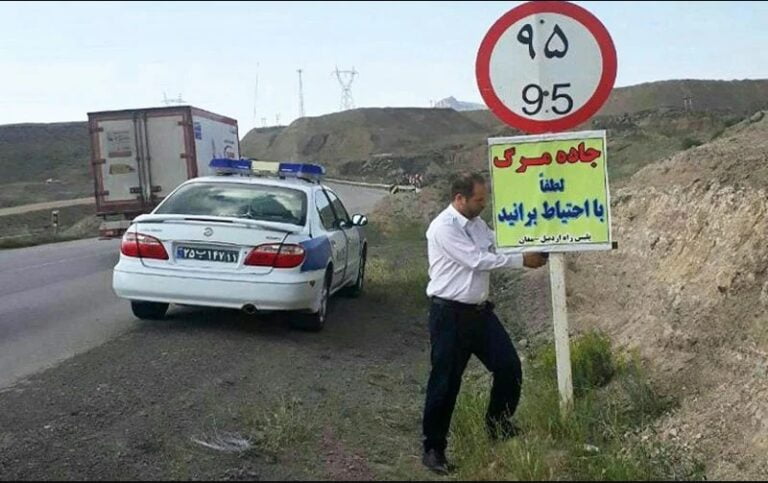
Iran’s Government an Administration With Expertise in Creating ‘Death Roads’

0

According to Iran’s state media reports, in the first half of 2021, some 8,644 people lost their lives in road accidents in Iran. A figure which has grown by 9.6 percent compared to the same period last year. Nearly half a million Iranians have lost their lives in traffic accidents over the past 20 years, the media reported.

“In the first six months of this year, the number of road accidents increased by 67,000 compared to the same period last year, reaching more than 713,” said the RAHVAR police chief (Road and Traffic Police).

Iran is one of the deadliest countries in the region in traffic accidents. The highest number of road deaths in Iran in the last two decades were reported in 2005 with 27,000 deaths over the year. According to an official estimate, between 2011 and 2019, an average of more than 17,000 people were killed on Iranian roads each year.

In Iran, roads are known as ‘death roads.’ The death toll on these roads is so high that people suggest that the government should install ‘All Seasons to Die’ warning signs to warn drivers. Given the growth of the population and the increase of means of transportation, the increase of government services is considered an important necessity.

Has the Iranian government taken any action in this regard? The increase in casualties indicates that the worn-out roads and being non-standard is one of the main reasons for the high casualties.

In this regard, the state-run news agency ISNA revealed that “road casualties in Iran are higher than in many other countries and is one of the most important causes of death in Iran. The main causes of road accidents include road depreciation, worn-out vehicles, and non-compliance with traffic laws and monitoring.”

Interestingly, officials of the government admit to this tragedy and reveal the facts. “If the car has the minimum standards, it should not be easily deformed in overturning, while the Pride car is easily pressed due to overturning and the occupants are killed,” the managing director of the Safe Society Association told the state-run Quds newspaper.

Source: Iran Focus

Also Read: Media In Iran Slam Raisi For Evading Crucial Issues In Televised Talk

Administration Administration  Administration 

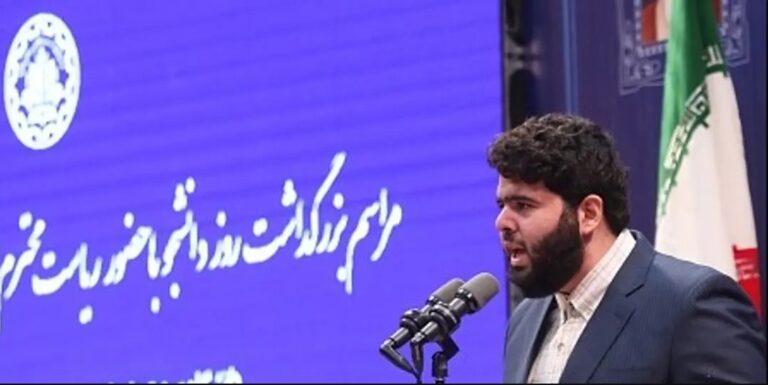
Students Accuse Raisi Of Insults, Humiliation During Campus Meeting

0

Two days after President Ebrahim Raisi faced criticism by university students, state media are still praising him, portraying the meeting as a win for Raisi.

On Tuesday, several students lashed out at Raisi for his economic policies and his administration’s approach to human rights, when he met them to mark Iran’s Student Day. An Islamist student harshly attacked him and the ruling elite during a public meeting in Tehran’s Sharif University of Technology.

Mohammad Hossein Bayat, the student who addressed Raisi as the leader of the Islamic Association, told him in all frankness:“You got elected in the least competitive election in the history of the Islamic Republic, with the lowest rate of voter participation.” He added, “We are speaking to you not as a president elected with the free vote of the people in a free election. We are speaking to you as a representative of the ruling system.”

Nonetheless, the press, particularly those such as the Iran Daily, owned by the Raisi administration, pretended in glamorous reports that the meeting was an opportunity for Raisi to present a report to students on his performance during the past four months.

Sara Shabani, a student whose picture appeared on the front-page of the daily while making a point during the meeting with Raisi, wrote in a December 9 tweet: “Presenting a report to students? As the person standing next to Raisi in this picture, I wish to say that he put some security-laden labels on the students in the auditorium and told them ‘To repent for what they said.’ Outside the auditorium, his answers to the students’ questions were nothing but insults and humiliation. Do not try to fabricate beautiful pictures and headlines.”

Another student tweeted about the body language in the front-page picture: “The body language is interesting, both Raisi and the chancellor of the university are looking the other way while you are talking to him. Yet another student, Meysam, said that the entire meeting was a show for the media, otherwise individuals such as Raisi never care about the students and what they say.

Source: Iran International

Also Read: Media In Iran Slam Raisi For Evading Crucial Issues In Televised Talk

IRGC’s Drug Mafia, More Fatal Than the Coronavirus

0

The Iranian government’s propaganda apparatus is presenting a picture of Iran whereby all the cities and provinces are getting out of a critical coronavirus situation and the numbers of infected people and victims are decreasing.

State media is trying to normalize the two-digit number of over 80 victims per day. About the new variant of the coronavirus, they are saying contradictory things and claiming that the people are responsible for any new peak in the country.

Masoud Younesian, a member of the Scientific Committee of the Government Headquarters for Combating the Coronavirus, said on December 5, on the state TV Channel 5 regarding the new variant of the Coronavirus:

“We have not had any reports from inside the country so far. But having not any report, cannot be considered the virus did not enter the country.”

However, the lifespan of this claim was just one day. As reported by the state-run daily Hamdali, on December 6, Mohamadreza Mahboobfar, a health expert in the regime, stated that “It cannot be said with certainty that no new virus has been observed in Iran” and reminded that “regarding the delta virus and the fifth peak of the disease, the disease was widespread in the country, but the technology and laboratory equipment available in the country could not detect the virus, and therefore, no report on the disease was published and the Ministry of Health and the National Anti-Coronavirus Taskforce they denied the fifth peak.”

Mahboobfar revealed the regime’s secrecy about the spread of the virus in the country and said:

“The arrival of Omicron in the country is certain. Worrying reports are circulating about students suffering from the coronavirus. Statistics released by the Ministry of Health and the National Coronavirus Taskforce and the Mask app, which is affiliated with these two government agencies, cannot be trusted.

Source: Iran Focus

Also Read: Iran Charges Lawyers Protesting COVID-19 Negligence With ‘Disrupting Order’

Drug Mafia Drug Mafia Drug Mafia

Iranian Weapons Seizure Highlights the Seriousness of the Iranian Regime’s Terror Threats

0

The United States Department of Justice revealed on Tuesday that in later 2019 and early 2020, two large caches of Iranian weapons had been seized in the Arabian Sea as they were being shipped to Yemen. Among the largest forfeiture of Iranian weapons to date were 171 surface-to-air missiles and eight anti-tank missiles.

In the complaint that led to the forfeiture of that oil, the US Justice Department noted that its sale would have benefited the Islamic Revolutionary Guard Corps, an entity designated as a foreign terrorist organization.

Around the same time, over a million barrels of Iranian petroleum, due to be delivered to Venezuela, was also seized. The confiscated oil was later re-sold, and the profits were reportedly added to a fund to compensate victims of terrorism around the world.

From the US Marine barracks bombing in 1983 in Lebanon, to the bombing of Khobar Towers in Saudi Arabia in 1996, the list of victims from acts of terrorism is extensive. In 2020, a U.S. federal judge in New York ruled that the Iranian regime was liable for damages in relation to the 9/11 terrorist attack in 2001 as they harbored Al Qaeda operatives prior to the attack, providing them with ‘critical training and support’.

In 2018, the list of victims almost grew longer due to the failed terrorist plot of the Iranian Resistance rally near Paris which would have claimed the lives of lawmakers and dignitaries from across the world, along with many activists and Iranian expatriates.

Under the command of high-ranking Iranian diplomat Assadollah Assadi, three Iranian operatives were planning to attend the rally with a device laden with 500 grams of the highly-explosive TATP, which had been transported across Europe from Tehran by Assadi himself. Belgian authorities managed to intercept the operatives before they could cross the French border and seize the device, destroying it in a controlled detonation, which unfortunately wounded an officer despite him being outside of the detonation zone.

Source: Iran Focus

Also Read: DOJ Announces US Navy Seized Iranian Terrorist Arms Shipments Bound for Militants in Yemen

Political prisoners in Urmia Prison tortured to make confessions

According to recent reports, political prisoners Ebrahim Khalil Sedighi Hamedani and his son, Salar Sedighi Hamedani, were taken to a the detention center of the Intelligence Department of Urmia on October 29, 2021. Several other prisoners were also in their group.

The father and son were viciously beaten and tortured. Intelligence agents wanted the two prisoners to give TV interviews in which they would repent and express remorse. They were tortured to make forced confessions.

The two political prisoners went on hunger strike to protest the torture and pressures imposed on them.

After they refused to give TV interviews, they were returned to the Central Prison of Urmia along with other prisoners in late November.

The prisoners were deprived of having telephone contacts with their family or visitations during detention in the Intelligence Department.

Ebrahim Khalil Sedighi Hamedani was arrested on February 23, 2019, along with his son, Salar, and daughter, Maryam. They were transferred to the Central Prison of Urmia on April 23, 2019, after two months of interrogations.

Maryam Sedighi Hamedani was released on bail on April 25, 2019.

Ebrahim Khalil Sedighi Hamedani is 62 and suffers from diabetes. Political prisoner Salar Sedighi Hamedani is 22 and a student.

The first court hearing for the two political prisoners in Urmia Prison was held on September 18, 2019, at the 2nd branch of the Revolutionary Court of Urmia. They were denied access to their lawyer.

The court finally sentenced them to 15 years in prison each for “membership in the People’s Mojahedin Organization of Iran (PMOI/MEK)” and to one year for “propaganda against the state.”

The 3rd branch of the Revolutionary Court of Urmia further sentenced Mr. Sedighi Hamedani and his son, Salar, to three years in prison for the alleged “filming military centers.” Each of the father and son were sentenced to a total of 19 years in prison.

Source: Iran HRM

Also Read: Female Political Prisoner In Iran Protests Repeated Strip Searches

As diplomacy stutters, U.S., Israel to discuss military drills for Iran scenario -U.S. official

U.S. and Israeli defense chiefs are expected on Thursday to discuss possible military exercises that would prepare for a worst-case scenario to destroy Iran’s nuclear facilities should diplomacy fail and if their nations’ leaders request it, a senior U.S. official told Reuters.

The scheduled U.S. talks with visiting Israeli Defence Minister Benny Gantz follow an Oct. 25 briefing by Pentagon leaders to White House national security adviser Jake Sullivan on the full set of military options available to ensure that Iran would not be able to produce a nuclear weapon, the official said on Wednesday, speaking on condition of anonymity.

Iran denies seeking nuclear weapons, saying it wants to master nuclear technology for peaceful purposes.

The U.S.-Israeli preparations, which have not been previously reported, underscore Western concern about difficult nuclear talks with Iran that President Joe Biden had hoped would revive a 2015 nuclear deal abandoned by his predecessor, Donald Trump.

But U.S. and European officials have voiced dismay after talks last week at sweeping demands by Iran’s new, hardline government, heightening suspicions in the West that Iran is playing for time while advancing its nuclear program.

The U.S. official declined to offer details on the potential military exercises.

“We’re in this pickle because Iran’s nuclear program is advancing to a point beyond which it has any conventional rationale,” the official said, while still voicing hope for discussions.

The Israeli embassy in Washington and Iran’s mission to the United Nations did not immediately respond to requests for comment.

Gantz, in a post on Twitter as he departed for the United States, said: “We will discuss possible modes of action to ensure the cessation of (Iran’s) attempt to enter the nuclear sphere and broaden its activity in the region.” He did not elaborate.

Source: Reuters

Also Read: US Hits Iran With New Sanctions For “Serious” Human Rights Abuses

DOJ Announces US Navy Seized Iranian Terrorist Arms Shipments Bound for Militants in Yemen

0

The U.S. Navy seized two large caches of Iranian terrorist weaponry that were headed to insurgents in Yemen, the U.S. Department of Justice (DOJ) said Tuesday.

This represents the United States’ largest-ever seizure of weapon shipments from Iran.

The seized weapons were removed from two separate vessels in November 2019 and February 2020, respectively, and included 171 surface-to-air missiles, eight anti-tank missiles, as well as “land-attack cruise missile components, anti-ship cruise missile components, thermal weapons optics and other components,” according to DOJ documents.

The operation was conducted in the Arabian Sea while the Navy was conducting a routine patrol of the area, the DOJ said. The shipment of arms was set up and funded by the Islamic Revolutionary Guard Corps (IRGC), a branch of the Iranian Armed Forces that the U.S. has designated a terrorist group.

The IRGC is reportedly used as a front for the Iranian government to “provide support to terrorist organizations, provide cover for associated covert operations, and create instability in the region,” according to the U.S. State Department. The United States designated the IRGC a Foreign Terrorist Organization in 2019.

Beyond the IRGC, the State Department has said that Iran has supported a number of Iraqi terrorist groups, many of whom provided direct support to Syrian strongman Bashar al-Assad.

Additionally, the nation has provided material support to Yemeni Houthi soldiers, where the seized weapons were headed. “Iran has provided weapons, support, and training to the Houthi militants, who have engaged in terrorist attacks against regional targets,” the State Department said.

However, the seizure of the weapons was not the only victory that the U.S. Navy had, as a similar operation confiscated approximately 1.1 million petroleum barrels from four “foreign-flagged tankers” that were bound for Venezuela.

The oil was sold by the government for over $26 million, and the proceeds of that sale will be put towards a fund for victims of terrorism, the DOJ added.

Source: News Week

Also Read: Yemeni Houthi rebels admit Iran supplies missiles used to attack Saudi Arabia

US Hits Iran With New Sanctions For “Serious” Human Rights Abuses

0

The United States slapped fresh sanctions on a dozen Iranian officials and entities for “serious” human rights abuses Tuesday, ahead of the expected resumption of nuclear talks with Tehran after they halted last week without any concrete progress.

The sanctions announced by the Treasury and State Department targeted government officials and organizations involved in the repression of protesters and political activists, and prisons where activists have been held in brutal conditions.

The Treasury also placed several Syrian officials on its sanctions blacklist for their roles in political repression and chemical gas attacks, and Uganda’s military intelligence chief was hit with sanctions for extreme abuse of people arrested for their nationality or political beliefs.

The announcement came ahead of the Washington-hosted Summit for Democracy later this week, billed as a push to promote more free and open societies.

“The United States is committed to promoting democracy and accountability for those who abuse human rights around the world,” said Secretary of State Antony Blinken in a statement.

“The United States will utilize its full range of tools to highlight and disrupt these abuses of human rights,” he said.

The Iranian sanctions singled out officials and entities involved in brutal crackdowns on protests in 2009 and 2019, including Hassan Karami, the commander of the LEF Special Units, which are focused on crowd control and protest suppression, the Treasury said.

Also named was Gholamreza Soleimani, who commands the Basij, the country’s Islamic militia also involved in the deadly 2009 and 2019 crackdowns.

The Syrians blacklisted included two air force major generals, Tawfiq Muhammad Khadour and Muhammad Youssef Al-Hasouri, who the Treasury said were responsible for chemical gas attacks that killed numerous civilians in 2017 and 2018.

Security officials considered responsible for other harsh attacks on opponents of the regime of Syrian President Bashar al-Assad were also named.

“These senior officials and the organizations they are associated with have imprisoned hundreds of thousands of Syrians who peacefully called for change. Moreover, at least 14,000 prisoners in Syria have allegedly died as a result of torture,” the Treasury said.

Source: NDTV

Also Read: Iran: Prominent human rights defender Narges Mohammadi at risk of flogging after arrest