Home Blog Page 25

Iran arrests IRGC general on charges of spying for Israel

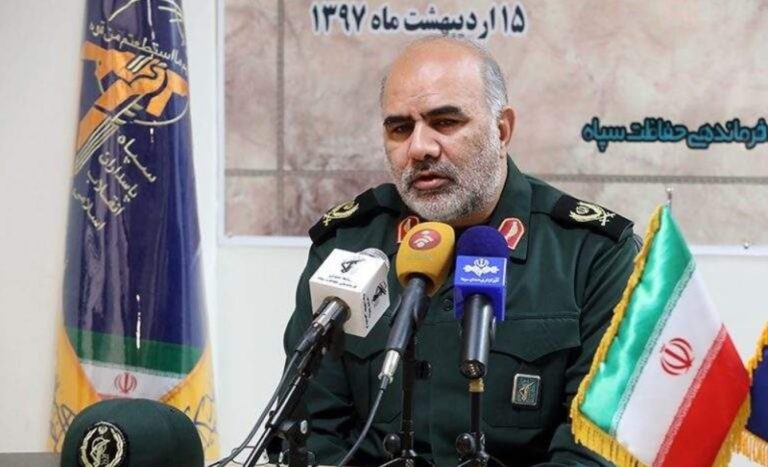
A senior general in Iran’s Revolutionary Guard Corp was secretly arrested earlier this month for allegedly spying for Israel, according to a report published Wednesday by The New York Times.

Citing officials with close ties to the IRGC speaking on condition of anonymity, the report said the arrest of Brig.-Gen. Ali Nasiri marked a growing level of distrust among the country’s senior leadership partly attributed to Israel’s alleged recent operations in the country.

Nasiri served as a senior commander in the IRGC Protection of Information Unit, The New York Times reported.

His arrest came about two months after a few dozen security officials involved in Iran’s missile program were arrested for allegedly leaking classified information to Israel, the newspaper said.

Reportedly arrested sometime in early June, Nasiri’s arrest came shortly before the replacement of the IRGC’s intelligence chief Hossein Taeb.

Taeb, who held the position for more than 12 years, had been tasked with exposing Israel’s spy network in Iran, an unnamed adviser to the Iranian government and an individual affiliated with the IRGC both told the Times.

Taeb’s downfall is seen by some as a prime example of the long-running campaign by Israel to expose failures by the IRGC by allegedly stepping up attacks against Iran’s nuclear facilities in recent months and targeting high-level officials inside Iranian territory — all meant to generate conflict between the political and defense establishments in Iran, Israeli officials told the newspaper.

Iran and Israel have been engaged in a years-long shadow war but tensions have ratcheted up following a string of high-profile incidents Tehran has blamed on Jerusalem.

A number of members of the IRGC and scientists have been killed in recent weeks, with Iran often pointing the finger at Israel.

Iran reportedly suspects Israel killed two Iranian scientists several weeks ago by poisoning their food. The details of the men’s work, the circumstances of their deaths, and their ties to the government remain unclear.
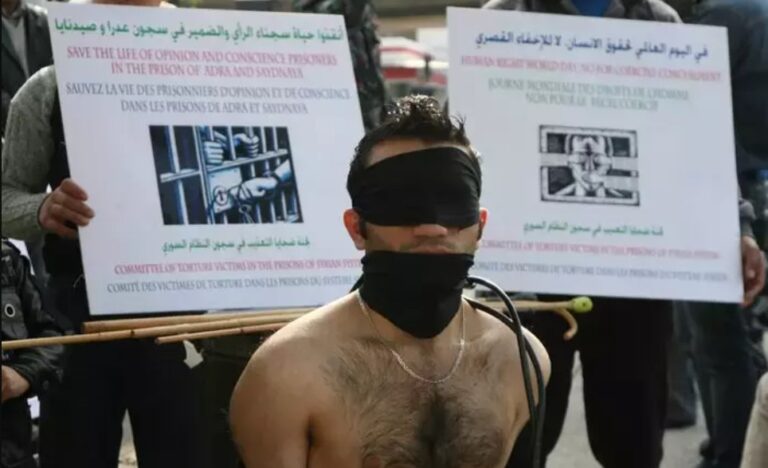
Syrians tell of torture, rape, detention at hands of IRGC and Hizbullah

0

Though years have elapsed since they were freed from prisons in Syrians run by Iran’s Islamic Revolutionary Guards Corps (IRGC) and Hizbullah, former detainees still live with the psychological and physical scars.

Speaking to Al-Mashareq from Europe, where he moved to start a new life in 2019, a 31-year-old Syrian army defector who gave his name as simply “Mohammed” described the months he spent in a Syrian prison.

A native of the Idlib town of Maaret al-Numan, Mohammed was active in the Syrian uprising, and was imprisoned, first by the IRGC and then by Hizbullah, for over nine months between August 2017 and May 2018.

At the time of his detention, he had been in charge of al-Mahrouqat hill in Aleppo province, where he was taking part in a battle to secure a supply route for the starving people of Aleppo, he said.

“On the night of August 18, 2017, I received a request for support from elements of my unit at a location 4km away from the hill,” he said. “En route to them, I met three elements who I thought belonged to our unit.”

They shot at him, in what appears to have been an attempt at intimidation, blindfolded him, and brought him to their headquarters in al-Wadihi. Syrians

“I was detained in a room for some time, and then, on an officer’s order, I was transferred in a pickup truck that travelled for about two hours,” he said.

“Then we arrived in Safira, a major IRGC headquarters [in Aleppo].”

Blindfolded and interrogated

Speaking through a Syrian translator, an official at the Safira IRGC headquarters interrogated Mohammed about military matters and opposition fronts, he said.

The translator then informed Mohammed the IRGC had decided to hand him over to Syria’s Military Intelligence Directorate.

“I was blindfolded and transferred to al-Nairab military airport after they switched vehicles three times,” Mohammed said.

What Makes Iran’s IRGC So Dangerous?

0

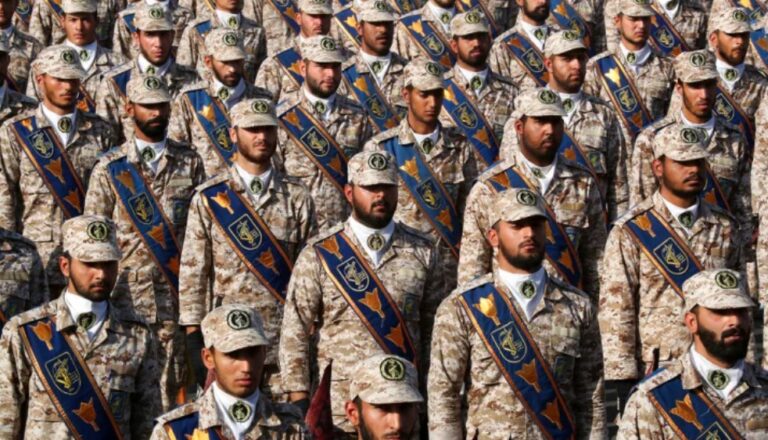
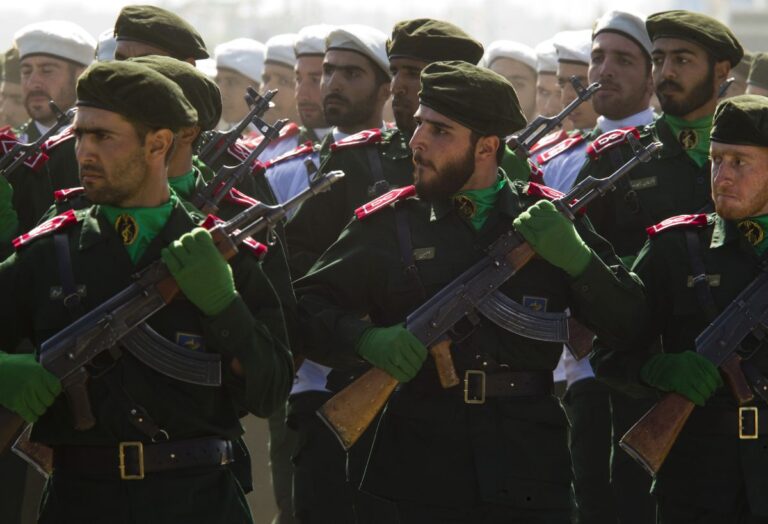
The Islamic Republic of Iran’s leadership functions to preserve and export the country’s revolutionary principles. Its premiere asset in chasing this objective is the Islamic Revolutionary Guard Corps, commonly abbreviated as IRGC. This branch of Iran’s armed forces is deeply entrenched in all aspects of Iranian society, including the country’s economic, political, and military spheres. More significantly, the IRGC uses terrorism as a tool of statecraft, and the elite Quds Force serves as the IRGC’s foreign operator. This paramilitary squad provides training, funding, and assistance to Iranian-backed proxy groups throughout the region. Iran’s IRGC comprises a substantial component of Iran’s armed forces, and its terror-sponsoring agenda embodies the regime’s ambitions.

In Iraq, Iranian-aligned militias under the umbrella of the Popular Mobilization Forces openly defy Iraqi law and work on behalf of the regime’s interests. The militias undermine U.S.-Iraqi relations with consistent rocket and drone barrages targeting Baghdad’s Green Zone. In Lebanon, Iran presents itself as the country’s Islamic resistance force under the banner of Hezbollah. The “Party of God” extends its control over every aspect of the Lebanese polity.  In Yemen, Houthi rebels trained and funded by the IRGC fight to push out the legitimate Yemeni government and prop up a Shiite coalition. The Houthis continue to launch drone and rocket attacks targeting civilian and economic centers in Saudi Arabia, setting back any prospects for peace.

In addition to its funding of dangerous proxies region-wide, Iran’s IRGC has carried out brazen abduction schemes abroad on numerous occasions. Most recently, Iranian assets were charged by federal prosecutors in New York of plotting to kidnap a prominent dissident and journalist, Masih Alinejad. The Quds Force has been tied to previous operations involving the abductions of opposition activists from the U.S. and Europe. Schemes like these highlight the regime’s refusal to comply with international law.

Iranian IRGC ramps up aggression in Strait of Hormuz

0

Gunboat diplomacy was a tactic famously utilized by some of the imperialist powers during the 19th century. It is a somewhat outdated concept, although that doesn’t seem to have deterred the Iranian IRGC. Last week, ships from the U.S. Fifth Fleet were sailing through international waters in the Strait of Hormuz when they were threatened by high-speed, head-on assaults by three naval vessels from Iran’s Islamic Revolutionary Guards Corps.

The Strait of Hormuz lies between the Persian Gulf and the Gulf of Oman, providing the only sea passage to the Indian Ocean for crude oil from many of the world’s largest producers. An average of 21 million barrels a day flows through the strait, which is over 20% of global consumption. Around one-third of the world’s sea-borne petroleum and nearly all the liquefied gas from Qatar, the leading global gas exporter, passes through this constricted chokepoint only 21 miles wide at its narrowest point.

With the current global energy crisis caused by Russia’s illegal invasion of Ukraine, the route has become even more strategically critical. As the theocratic regime faces crisis upon crisis at home and abroad, supreme leader Ayatollah Ali Khamenei and President Ebrahim Raisi, known as the “Butcher of Tehran,” have ramped up their aggressive activities in the strait to frighten those they regard as the regime’s enemies, even threatening to close the strait altogether.

Using the Iranian IRGC to threaten shipping in the Strait of Hormuz is hardly likely to encourage American sympathy. Indeed, the United States knows that the Iranian IRGC and its extraterritorial Quds Force are behind all of Iran’s proxy wars in Syria, Yemen, Iraq, Lebanon, and Gaza and are known to sponsor international terror worldwide. The regime’s foreign wars and acts of terror are a calculated strategy to distract their enraged and starving population from another nationwide uprising that could sweep the mullahs from power.

Khamenei presides over a pyramid of corruption. The Iranian IRGC answers directly to Khamenei. It controls almost the entire economy, including all of Iran’s monetary and financial institutions, and pays no tax. It is behind the acceleration of the regime’s determined efforts to construct a nuclear weapon and its clandestine activities have continued before, during, and since the signing of the deeply flawed JCPOA. Sham attempts at bullying the United States into reinstating the deal are doomed to fail, as are aggressive attempts to threaten international shipping in the Strait of Hormuz.

Iran’s IRGC falling apart from the inside

0

Iran’s Islamic Revolutionary Guard Corps (IRGC) is cleaning house after a series of intelligence failures, according to reports, after experiencing a series of assassinations, or mysterious deaths, of its officers in Iran.

These officers have become “martyrs” in the terminology of the Iranian regime.

Now, Iran’s IRGC is toppling its own in a mini-purge that could be part of rivalries, an internal coup or simply the need to get rid of the old and bring in the new.

What is the reason for these “sudden” dismissals? That was the question asked at Al-Ain media in the Gulf this week.

“A wide wave of dismissals hit the Iranian Revolutionary Guard, the most prominent of which was the overthrow of the intelligence chief, Hossein Taeb, against the background of semi-official reports about the penetration and influence of the Israeli Mossad within its units,” the news outlet wrote.

Hossein Taeb was removed last week. Radio Free Europe noted that the “hard-line cleric, was the intelligence chief of Iran’s powerful Islamic Revolutionary Guards Corps (IRGC), the elite branch of the armed forces, for over a decade.

But in a surprise move, the IRGC announced on June 23 that it had removed Taeb from his prominent post.”

That report concludes that this is a “major shake-up in the IRGC’s intelligence apparatus comes after a series of recent incidents inside Iran, including sabotage and cyberattacks, assassinations, and the mysterious killings of IRGC members as well as scientists and engineers. Tehran has blamed some of the incidents on Israel.”

Why Hossein Taeb matters

Jason Brodsky at United Against a Nuclear Iran wrote about the controversy: “There is one man in the Iranian system who had a great deal to lose amid the multiple mysterious assassinations and explosions gripping the country.

“The now-former head of the Islamic Revolutionary Guard Corps’ Intelligence Organization (IRGC-IO) Hossein Taeb has operated in the shadows.

IRGC Commander Qasem Soleimani, Khamenei, Khomeini Street Banner Set On Fire In Iran

0

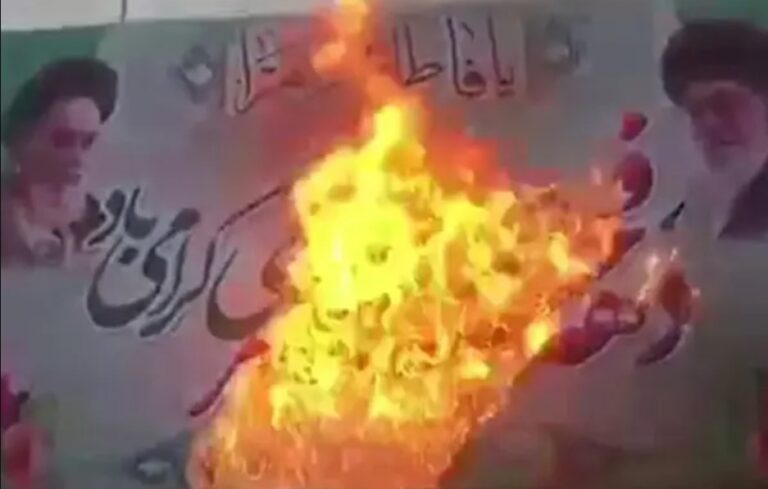
A banner of Iran’s Supreme Leader Ali Khamenei and Islamic Republic’s founder Ruhollah Khomeini was set on fire in the central city of Yazd.

A video of the incident on Saturday went viral, showing the pictures of Khomeini and Khamenei burning on top of an overpass in the city, a scene recurring frequently especially since the popular protests gained momentum across the country on the backdrop of rising prices and a falling currency.

Several pictures and statues of the Islamic Republic leaders and important figures have been set on fire in recent months as anti-government protests and strikes have taken place on a regular basis in many cities throughout the country.

Statues and pictures of Khomeini, Khamenei, and President Ebrahim Raisi as well as the slain IRGC Quds Force Commander Qasem Soleimani are the top targets for the political vandalismin cities such as Tehran, Esfahan, Yazd, Qom, and Kermanshah.

According to an online survey by a Netherlands-based institute, over 60 percent of Iranians want regime change or “transition from the Islamic Republic”.

A banner of Iran’s Supreme Leader Ali Khamenei and Islamic Republic’s founder Ruhollah Khomeini was set on fire in the central city of Yazd.

A video of the incident on Saturday went viral, showing the pictures of Khomeini and Khamenei burning on top of an overpass in the city, a scene recurring frequently especially since the popular protests gained momentum across the country on the backdrop of rising prices and a falling currency.

Several pictures and statues of the Islamic Republic leaders and important figures have been set on fire in recent months as anti-government protests and strikes have taken place on a regular basis in many cities throughout the country.

Statues and pictures of Khomeini, Khamenei, and President Ebrahim Raisi as well as the slain IRGC Quds Force Commander Qasem Soleimani are the top targets for the political vandalismin cities such as Tehran, Esfahan, Yazd, Qom, and Kermanshah.

Iran appoints new IRGC spy chief as Israel tensions rise

0

Iran appoints new commander to head the powerful intelligence service of its Islamic Revolutionary Guard Corps (IRGC) with no reason given as to why the previous chief left the job.

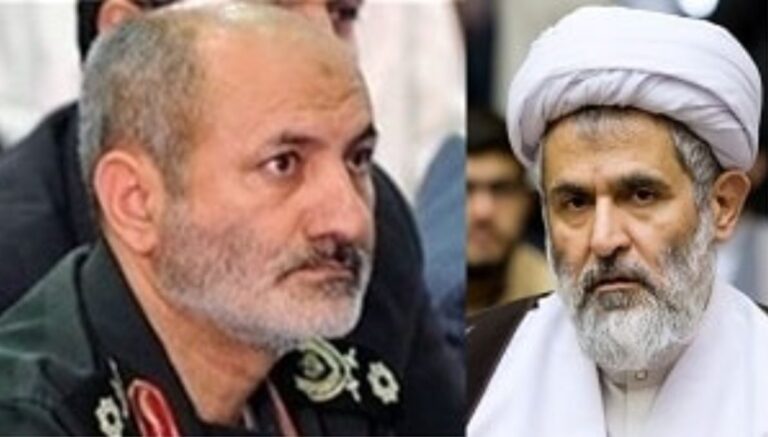
Ramezan Sharif, spokesman of the elite force, announced in a statement on Thursday that Hossein Taeb was replaced by Mohammad Kazemi, who previously headed the Intelligence Protection Organisation, the counterintelligence arm of the IRGC.

The 59-year-old Taeb, who was previously a senior figure in the Iranian intelligence ministry, switched to the IRGC in the late 2000s, and was appointed as the head of the paramilitary Basij organisation in 2008. Iran appoints

One year later, the intelligence unit of the IRGC was formed and Taeb took its helm, a position he held until his replacement was announced.

No reason was provided on Thursday for Taeb’s departure by the IRGC spokesman, who only said Taeb was appointed as an adviser to the force’s commander-in-chief, Hossein Salami.

The news came after two days of rumours online that Taeb had been dismissed from his position. No Iranian official commented on the speculation.

Israel raised its Istanbul travel advisory to the highest alert level earlier this month and said citizens could be targeted by Iranian attempts to kill or abduct Israelis vacationing in Turkey.

Dying nuclear deal

In July 2021, the Reuters news agency claimed in a report, citing unnamed Iraqi sources, that Taeb led an IRGC delegation to Baghdad and advised Shia militias to step up attacks on American targets without going too far.

Tensions between Iran and the United States across the region have significantly escalated since Washington unilaterally abandoned Iran’s 2015 nuclear deal with world powers in 2018, imposing harsh sanctions that are enforced to this day.

Mossad, Turkey foil Iranian IRGC plot to kidnap Israelis

Turkish intelligence revealed on Thursday that it thwarted an Iranian IRGC attack against a former Israeli ambassador in Istanbul last Friday.

According to reports, the Iranian IRGC planned to kidnap several Israeli tourists along with diplomats in Istanbul, including the former ambassador and his wife, and already had all operatives and logistical aspects of the operation in place – with some Israelis being spirited away just moments before a hit team would have been bearing down on them.

Turkish intelligence and local police arrested 10 suspects last Friday, including sharpshooters and local collaborators at the Sol Hotel and three others renting apartments in the Istanbul area.

Iranian IRGC intelligence assets and Islamic Revolutionary Guards Corps operatives impersonated students, businessmen, and tourists to entrap the Israelis.

Turkey said that the Mossad located the targeted Israelis and flew them to Israel in private planes.

Despite the success, senior Israeli officials said that the threat of the Islamic Revolutionary Guard Corps (IRGC) to Israelis in Turkey remains.

Officials said that there were at least three Iranian cells that had not been arrested and that tracking and arresting them would be a lengthy process.

It is believed that the Islamic Republic is desperate to get its hands on an Israeli somewhere to show the public a victory in the ongoing war between the countries.

The announcement on Thursday came just before Foreign Minister and incoming Prime Minister Yair Lapid arrived in Ankara.

Lapid, who also met with the head of Turkish intelligence, had previously urged citizens in Turkey to leave “as soon as possible” over threats that Iranian spies were actively planning to kill or abduct Israelis in Istanbul.

The stark warning had come amid the latest surge in tensions between Iran and Israel, after a string of attempted attacks on Israelis staying in Turkey.

Israel had reportedly put off issuing the warning for some time to give Turkish authorities a chance to resolve the threat internally.

Iranian IRGC Intelligence chief replaced following terror plots

Iran has replaced the head of the Islamic Revolutionary Guard Corps IRGC intelligence unit after he was accused of being behind plans to target Israeli tourists in Turkey.

Iranian state TV reported on Thursday that Hossein Taeb had been appointed as an advisor to the Guards’ commander-in-chief Hossein Salami, just days after Israeli media said he was behind plans to kill or kidnap Israelis in Turkey.

He will be replaced by Mohammad Kazemi, previously head of the Revolutionary Guards Intelligence Protection unit.

Before becoming the Guards intelligence chief in 2009, Taeb worked at the office of Iran’s Supreme Leader Ali Khamenei.

Israel raised its Istanbul travel advisory to the highest alert level on 13 June because of what it said was a threat of Iranian attempts to kill or abduct Israelis vacationing in Turkey.

The warnings come amid a surge in tensions between Iran and Israel, with Tehran blaming Israel for a series of attacks on its nuclear and military infrastructure.

According to The New York Times, Iran suspects that Israel killed two of its scientists a few weeks ago by poisoning their food.

Ayoub Entezari and Kamran Aghamolaei died in separate incidents under murky circumstances that Iran suspects were targeted killings, the Times reported, citing an Iranian official and two other sources connected to the government.

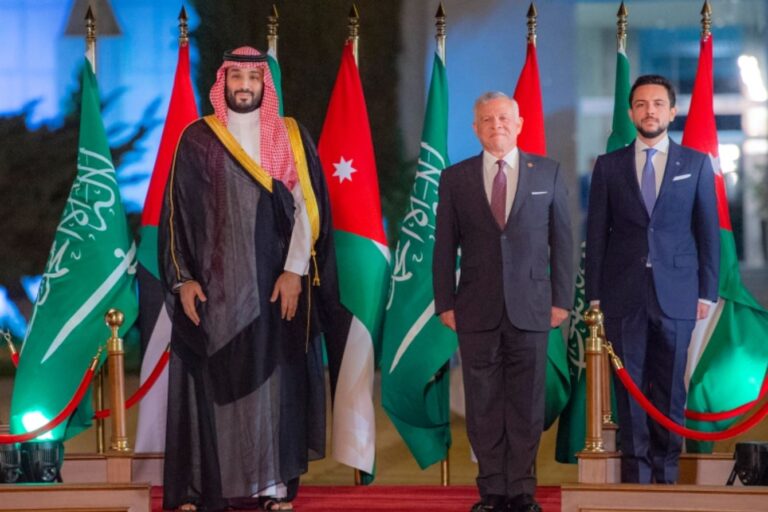
The Iranian IRGC terrorist activities discussed by Saudi Arabia and Jordan

Coinciding with the end of Mohammed bin Salman’s visit to Amman, Saudi Arabia and Jordan announced in a joint statement that they support international efforts to prevent the Iranian government from acquiring nuclear weapons.

During the visit, the Crown Prince of Saudi Arabia met with King Abdullah II to discuss a wide range of issues, including those related to Iran.

A joint statement by Saudi Arabia and Jordan on Wednesday stressed the need to continue efforts to end “destabilizing activities” of Iran and its terrorist-designated Islamic Revolutionary Guard Corps (IRGC) in the region and to prevent the Iranian government from interfering in the internal affairs of Arab countries.

The joint Riyadh-Amman statement also stressed that efforts to combat “extremism” and “terrorism” in the region must be strengthened.

A statement issued Tuesday by Prince Mohammed bin Salman and the Egyptian president Abdul Fattah al-Sisi also referred to “destabilizing Iranian government” activities in the region.

The Iranian government and more specifically the IRGC is accused of endangering the “security of international trade lines” by supporting militant groups in the region.

The statement also stressed the need to counter the Iranian government’s efforts to acquire nuclear weapons and create a Middle-East free of nuclear weapons and weapons of mass destruction.