Home Blog Page 24

Iranian IRGC, Houthis step up money laundering operations in Yemen

Iranian IRGC and Houthi efforts to establish a stock exchange in Sanaa are primarily designed to control the Yemeni economy, facilitate money laundering operations, and conceal the illicit drug trade, officials and economists said.

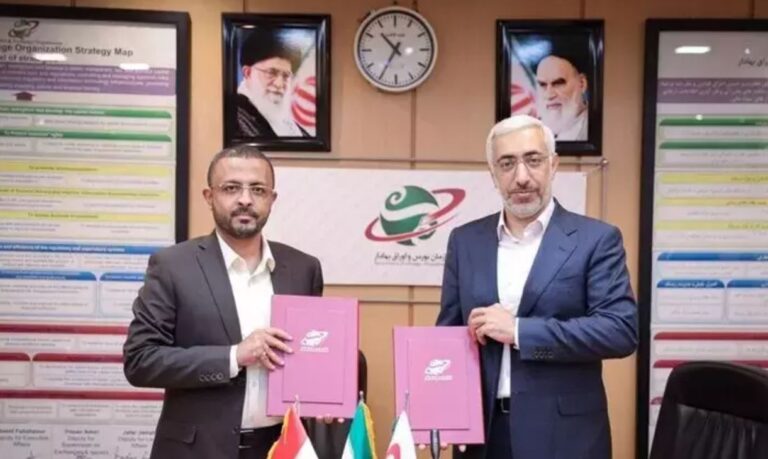
Iran’s Securities and Exchange Organisation (SEO) head Majid Eshqi in late June signed an agreement with Hashem Ismail, governor of the Houthi-controlled Central Bank in Sanaa, to establish a stock exchange in Yemen.

Yemeni Minister of Information, Culture and Tourism Muammar al-Eryani warned that this agreement is an attempt by the Iranian IRGC and the regime to tighten its control over state institutions and the private sector in Houthi-controlled areas.

He warned that the stock exchange will be used as a cover for the movement of funds and for the withdrawal of currency and cash reserves looted from Yemen’s state treasury to invest in the Iranian stock exchange.

One of Iran’s main objectives in establishing the stock exchange is to facilitate the transfer of “dirty money” generated from the illicit drug trade it engages in with its allies in the region, said economist Abdul Aziz Thabet.

These funds will then be reintroduced into the economy through the Yemeni private sector, he told Al-Mashareq.

“We will see Iranians and Hezbollah companies buy shares in Yemeni companies, thus increasing Hezbollah’s role and economic control over the private sector,” he said.

“This will adversely impact the entire economic life in both the short and long terms.”

According to economist Faris al-Najjar, the economic and financial environment in Yemen is not conducive to the establishment of a stock exchange.

“The establishment of a stock exchange requires a strong economy,” he explained, noting that “the Yemeni economy is currently fragile, and the private sector is reeling”.

“The Houthis’ aim in establishing the stock exchange in these difficult circumstances is not to establish a real stock market, but rather to create a phony stock market to provide cover for the movement of funds to and from Iran,” he said.
Syria’s al-Hasakeh residents openly oppose Hizbullah presence

0

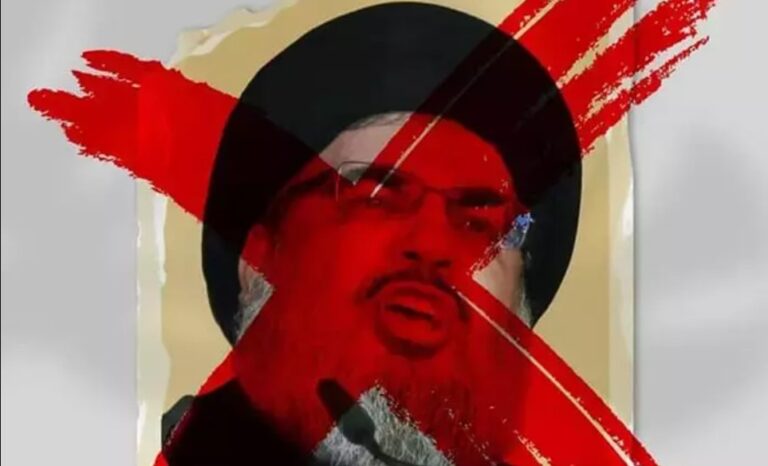
Residents of the city of al-Hasakeh in northeastern Syria woke up on June 28 to find anti-Hizbullah leaflets strewn in the Security Square area, which is controlled by Syrian regime forces and their affiliated militias.

The message, disseminated quickly on paper and on social media, was titled “Lebanese Pilgrims Among Us”.

It featured a crossed-out photo of Hizbullah Secretary-General Hassan Nasrallah and the slogan, “No to Hizbullah, no to evil Nasr in al-Hasakeh.”

“The Lebanese Hizbullah is Iran’s most important proxy militia, and wherever it goes, instability prevails and heinous crimes are committed,” the text said.

It said that the party “gets its funding from the smuggling and transfer of illegal drugs, without any regard for the harm such activities cause”, adding that every month, Hizbullah brings in “more and more weapons into al-Hasakeh”.

According to the leaflet, Hizbullah conceals its presence in the regime’s bases in the Security Square and is secretly working to undermine security and stability.

Led by an operative named Hajj Mahdi, it said, the party attempts to recruit al-Hasakeh’s youth and “turn them against their own families by making them agents of foreign forces”.

The message concluded by saying, “We, the people of al-Hasakeh, do not accept this. We have suffered enough. We do not want or appreciate Hizbullah’s presence in our city.”

Rapidly increasing IRGC activity

Media activist Ammar Saleh said this is the first time the public has openly expressed frustration with Hizbullah’s presence in al-Hasakeh, causing confusion and disarray in the ranks of the Syrian regime’s security forces.

These forces have imposed strict security measures and are in a heightened state of alert in anticipation of public protests spreading, Saleh said.

Al-Hasakeh is strategic for Iran’s Islamic Revolutionary Guard Corps (IRGC) due to its proximity to areas where the United States maintains a presence, said Syrian journalist Mohammed al-Abdullah.

Iran’s IRGC is “decaying from within”

0

The unexpected sacking of Hossein Taeb, head of the Iranian regime’s Islamic Revolutionary Guards Corps (IRGC) Intelligence Organization, has been tantamount to an 8-magnitude earthquake that shook the mullahs’ regime to its very core with aftershocks continuing as we speak.

The importance and consequences of this sacking becomes all the more relevant due to the significance of the IRGC Intelligence Organization (IO), and the special position and influence enjoyed by Taeb among the regime’s senior elite.

It is common knowledge that the IRGC is the main pillar of the religious theocracy ruling Iran, and the IO plays a vital role in the IRGC.

This very organization is described as the main entity behind the regime’s domestic crackdown and assassinations abroad, and in recent years the IRGC-IO has surpassed the Ministry of Intelligence and Security (MOIS) in these fields.

Taeb himself had a special position in the IRGC and the regime in its entirety. Firstly, he held the post for 13 years.

Secondly, he is considered one of the closest security officials to regime Supreme Leader Ali Khamenei and his son Mojtaba.

As a result, despite the fact that many senior IRGC official had come and gone through the years, Taeb had developed into a somewhat untouchable persona for himself.

Following Taeb’s sudden sacking, Iran’s political atmosphere has witnessed numerous other dismissals and shuffling among the IRGC’s senior ranks, each having their own consequences.

Reports of the dismissal and imprisonment of Brigadier General Ali Nasiri, one of the former senior IRGC security officials and responsible for the protection of Khamenei and his family, have been massive to say the least.

While regime officials and state media have been busy denying these reports, experience shows that such denials are part of the regime’s modus operandi when confronting harsh realities.

Furthermore, Nasiri’s sacking/imprisonment further signals the depth of this crisis for this regime, reaching the very officials and circles involved in protecting Khamenei himself.

Report of IRGC General’s Arrest Revives ‘Israeli Spies in the Ranks’ Panic

0

Last week rumors circulated in Iranian media that General Ali Nasiri, a senior commander in the IRGC’s Information Protection Unit, Israeli Spies had been arrested.

It came after a report in the New York Times asserted that several dozen arrests had been made within the Ministry of Defense’s missile development program, on suspicion of leaking classified information.

Some linked the alleged arrest of Nasiri to the dismissal of Hossein Taeb as head of the IRGC’s Intelligence Organization the previous week.

Tasnim News Agency, which is affiliated with the Revolutionary Guards, wrote that the claims regarding Nasiri were “a repeat of a three-year-old lie”.

True or not, notably this is not the first time reports have surfaced of Nasiri’s arrest during his tenure at the IRGC. Israeli Spies

A Cascade of Reported Arrests in 2019

In April 2019, Nasiri was replaced as head of security by General Fathollah Jamiri. A few days after the handover, a rumor spread through the ranks that the former had been taken into custody.

Nasiri himself denied the reports, insisting that his dismissal was part of a routine organizational reshuffling.

He was then present at the induction ceremony of General Hossein Salami as commander-in-chief on April 24, seemingly putting paid to the allegations.

The real reason for Nasiri’s removal from that position remains unknown.

The IRGC’s security division is responsible for the protection of some high-ranking officials, with the exception of the Supreme Leader, through the Ansar Al-Mahdi Protection Corps, as well as for security at airports and other sensitive sites around the country.

In Iran, the year 2019 – 1398 in the Persian calendar – is widely associated with the nationwide protests that racked the country that November.

But it was also marked by numerous reports that senior IRGC commanders had either been arrested or fled the country. Aside from Nasiri, other well-known names that circulated.

Iranian IRGC agents planned plastic surgery in Cuba to change identity

The Paraguayan president says an Iranian IRGC agent on board the Venezuelan cargo plane grounded in Argentina had traveled to Cuba for plastic surgery to “change his face.”

Mario Abdo Benítez said in a press conference on Friday that a “large number” of Venezuelan-Iranian crew of the plane immobilized at Ezeiza airport in Buenos Aires over suspected connections with Iran’s Revolutionary Guard’s Quds Force have “links to international terrorism.”

“Since Paraguay informed and alerted the authorities, they were able to make inquiries and we saw that a large part of the crew [made up of Iranians and Venezuelans] had links to international terrorism,” he said.

He added that one of the Boeing 747’s crew members had “even had an operation to change his face in Cuba,” admitting that the allegation is like something out of “a film.”

In June, Gerardo Milman, an Argentine lawmaker, told Iran International that Iranians aboard the Venezuelan plane planned “attacks on human targets.”

Contrary to Iran’s claim on June 13 that the plane was not owned by an Iranian company and that any Iranians aboard were instructors, Milman said the pilot was “a senior official of Qods (Quds) force,” Tehran’s extraterritorial intelligence and secret ops outfit listed as a terrorist organization by the United States.

Earlier in June, Paraguay’s intelligence agency said Captain Gholamreza Ghasemi did not merely share a name with a member of the group but is in fact the same man.

Iran and Israel have been engaged in a years-long shadow war but tensions have ratcheted up following a string of high-profile incidents Tehran has blamed on Jerusalem.

A number of Iranian IRGC scientists and officers have been killed in recent weeks, with Iran often pointing the finger at Israel.

Iran reportedly suspects Israel killed two Iranian scientists several weeks ago by poisoning their food. The details of the men’s work, the circumstances of their deaths, and their ties to the government remain unclear.

IRGC chief warns of spy war as new intel head takes over in Iran

0

According to the commander of Iran’s Islamic Revolutionary Guard Corps (IRGC), Maj. Gen. Hossein Salami, hostile foreign spy agencies are waging a war of intelligence against the Islamic Republic.

“Our Intelligence Protection Organization is engaged in a direct confrontation with the skilled and experienced intelligence agencies of the arrogance,” he declared, using a term common in the Islamic Republic’s political literature to describe Iran’s enemies, on top of them Israel and the United States.

Salami referred to such a war as “the most real and closest” battle Iran has faced in years, but vowed that in the meantime, Tehran will carry on “until the dusk falls on the enemies.”

The IRGC commander was speaking at a ceremony in Tehran on June 30, where he inaugurated Gen. Majid Khademi as the new chief of the IRGC’s Intelligence Protection Organization, which is tasked with preventing security breaches in the elite force.

The IRGC’s intelligence apparatus has seen a surprise shakeup, with its shadowy director Hossein Taeb being sacked after 13 years.

The hard-line cleric is currently serving as an adviser to Salami, with an IRGC spokesperson dismissing arguments that he was demoted.

The tenure of the 59-year-old chief was marred by a chain of Israel-blamed attacks on Iranian nuclear scientists and atomic sites.

A sharp rise in such “acts of sabotage” in the past two months has been seen as a major lapse within Taeb’s organization and a blow to the greater establishment.

After pledging revenge for the latest attacks, Iran has faced Israeli allegations of plotting to target Israeli nationals abroad, a charge that Tehran has denied.

The Turkish press widely reported earlier this month on the arrest of Iran agents allegedly preparing to tick Israeli names on their hit list.

Speculation has been rife that Taeb teams were the masterminds of the Turkey mission, but the perceived failure due to possible leaks and the subsequent embarrassment was not tolerated by his superiors in the chain of command.

Iran’s drastic intelligence overhaul reveals regime’s profound fears

0

Evident security breaches in Iran have prompted heavy criticism of the Islamic Revolutionary Guard Corps (IRGC)’s intelligence division and a drastic overhaul of figures in key intelligence positions.

On June 23, the IRGC announced that its intelligence chief, the most powerful figure in Iran’s intelligence apparatus, was replaced after 13 years in the post. The IRGC offered no reason or explanation for the decision.

Iran’s Sharq daily described the replacement as “a political earthquake”, as have many analysts.

Hossein Taeb, a mid-ranking cleric widely described as a “petrifying figure”, was at the helm of the IRGC’s intelligence division since its inception.

He was replaced by Gen. Mohammad Kazemi, who was formerly head of the IRGC’s counter-intelligence agency, known as the Intelligence Protection Organisation.

Meanwhile, Kazemi’s post was filled by IRGC figure Majid Khademi, also known as Majid Hosseini, who was working for the Ministry of Defence as a counter-intelligence chief.

On June 25, another major replacement was announced.

Ebrahim Jabbari, commander of the force in charge of providing security to Iranian leader Ali Khamenei and his family, was replaced by Hassan Mashrouifar. drastic

Jabbari’s replacement reveals Khamenei’s personal concerns for his life and the lives of those close to him, observers say.

Security failures

Taeb’s removal came after a string of recent security failures ending in several intelligence leaks and assassinations.

Taeb, a divisive figure with whom many were unhappy, was first harshly criticised by pro-IRGC groups after the assassination of Mohsen Fakhrizadeh, Iran’s nuclear mastermind, in November 2020.

Fakhrizadeh’s assassination, added to the list of suspicious killings in recent years, explosions at sensitive military sites, and the recent theft of sensitive nuclear and missile programme documents from a nuclear facility in Iran, prompted a deluge of criticism of Iran’s intelligence capabilities.

After Fakhrizadeh’s death, Iran’s then-intelligence minister Mahmoud Alavi admitted that a member of the country’s armed forces was involved in the incident.

Iranian IRGC scrambles to address security failures and leaks

The chessboard of Iran’s Islamic Revolutionary Guard Corps (IRGC) is in a state that is apparently set to address both security infiltrations and political revelations within the system.

The pace of security and intelligence developments within the Iranian IRGC and its main actors over the past week shows that they are apparently trying to open a new path, this time aimed more at the IRGC’s internal agents, security leakers, and to ending the power struggle, instead of focusing on its foreign enemies.

IRGC’s first movement began with the removal of its security Chief Hossein Taeb, the commander of the Iranian IRGC intelligence organization, who was referred to as the mastermind of the system’s security and the closest person in the security apparatus of the Islamic Republic of Iran to Ali Khamenei.

But the important point of this change was Taeb’s successor; Mohammad Kazemi, the Revolutionary Guards’ defense commander, a man known as the “mysterious commander of the Revolutionary Guards” and his main task is to uncover links of influence, espionage, and economic and moral corruption in the Revolutionary Guards.

Whatever the outcome of these developments, this week’s hacker attack on Khuzestan Steel Company shows that information and security pollution has gained a wider scope in the Islamic Republic, and the change of Hossein Taeb may reduce the scope of exposing the scandals of regime leaders and hostage-taking within the government, but not fully stop the penetration.

Iran and Israel have been engaged in a years-long shadow war but tensions have ratcheted up following a string of high-profile incidents Tehran has blamed on Jerusalem.

A number of members of the IRGC and scientists have been killed in recent weeks, with Iran often pointing the finger at Israel.

Iran reportedly suspects Israel killed two Iranian scientists several weeks ago by poisoning their food. The details of the men’s work, the circumstances of their deaths, and their ties to the government remain unclear.

Who Is Hossein Taeb, Recently Booted From Iran’s IRGC Intelligence Organization?

0

Last week, the Iranian regime sacked Hossein Taeb, the longstanding intelligence chief of the Revolutionary Guards (IRGC) and a confidant of the mullahs’ supreme leader, Ali Khamenei, and his son Mojtaba.

Taeb, a notorious criminal, was removed from his post after 13 years, shortly after several assassinations of the IRGC’s commanders inside Iran and hundreds of operations by the Iranian Resistance aimed at dismantling the regime’s oppressive apparatus, such as the recent takedown of Tehran’s municipality and the city’s CCTVs.

The news of Taeb’s dismissal was a bombshell as it revealed the depth of the regime’s internal crisis.

He was considered “untouchable” due to his close relations with Khamenei and his role in oppressing dissidents. But who is Hossein Taeb?

Taeb’s Early Life and his role in the IRGC

Taeb was born in 1963 in Tehran. He joined the IRGC soon after the 1979 revolution.

As an IRGC member, Taeb played a key role in the 1980s in hunting, torturing, and killing Iranian dissidents, mainly members and supporters of the People’s Mojahedin Organization of Iran (PMOI/MEK).

Taeb climbed the ladder in the IRGC due to his cruelty and was appointed as the intelligence chief of the IRGC’s first brigade, known as “Thar-Allah.”

During the Iran-Iraq war, Taeb was the IRGC’s “Habib Battalion” commander and served with Mojtaba Khamenei.

Members of this battalion occupied top posts in the regime when Ali Khamenei became the supreme leader.

Some of these figures include Mehdi Taeb, head of Amar HQ, which consists of Khamenei’s most loyal plainclothes mercenaries; Hossein Taeb, former head of the IRGC’s Intelligence; Hassan Mohagheg, a top IRGC commander, and IRGC brigadier general Mohammad Esmail Kothari, director of the “Thar-Allah HQ” in Tehran, which is responsible for oppressing protests in the capital.

Hossein Taeb, A Security Figure

In 1988, the regime’s then-supreme leader, Ruhollah Khomeini, had to accept a ceasefire under domestic and international pressure.

Iranian IRGC accused of major cyberattack plans

0

Israel says the Iranian IRGC conducted research to damage ships, gas stations, and industrial plants in several countries including Britain, the US, France, and Israel.

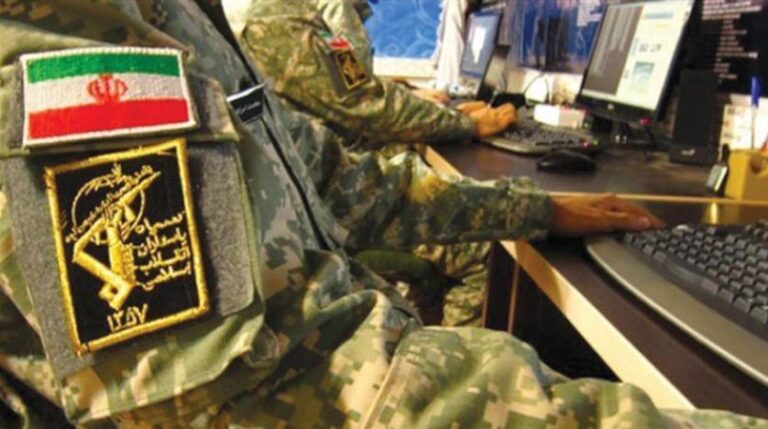
Defense minister Benny Gantz said on Wednesday that an Islamic Revolutionary Guard Corps (IRGC) cyber unit called “Shahid Kaveh” was involved in the alleged project.

Britain’s Sky News reported similar allegations last year, saying the Iranian embassy in London had not responded to them.

Gantz hinted that Israel — which is widely believed to have waged cyber war against Iran’s nuclear facilities and other infrastructure — may retaliate physically against enemy hackers.

“We know who they are, we target them and those who direct them. They are in our sights as we speak – and not just in the cyber-space,” he said. “There is a variety of possible responses to cyber-attacks – in and outside of the cyber domain.”

Gantz also charged the Iranian-backed Lebanese militia Hezbollah with conducting a cyber operation designed to disrupt a UN peacekeeping mission on the border between the countries.

He said, “Iranian security institutions in cooperation with Hezbollah (recently) launched a cyber operation with the aim of stealing materials about UNIFIL activities and deployment in the area, for Hezbollah’s use”.

“This is yet another direct attack by Iran and Hezbollah on Lebanese citizens and on Lebanon’s stability,” he told a cyber conference at Tel Aviv University, without elaborating.

Established in 1978, UNIFIL patrols Lebanon’s southern border. It is charged with monitoring the ceasefire that ended the last war between Hezbollah and Israel in 2006.

The Islamic Republic of Iran’s leadership functions to preserve and export the country’s revolutionary principles. Its premiere asset in chasing this objective is the Islamic Revolutionary Guard Corps, commonly abbreviated as IRGC. This branch of Iran’s armed forces is deeply entrenched in all aspects of Iranian society, including the country’s economic, political, and military spheres. More significantly, the Iranian IRGC uses terrorism as a tool of statecraft, and the elite Quds Force serves as the IRGC’s foreign operator.