Home Blog Page 23

Lapid thanks US President for decision to keep IRGC on terror entity list

0

US President Joe Biden receives briefing from PM on Israeli efforts to improve lives of West Bank and Gaza Palestinians, ‘don’t surprise us,’ Biden says on conflict; Tells host U.S. cannot wait forever to resume nuclear deal.

Prime Minister Yair Lapid on Thursday, thanked U.S. President Joe Biden for his decision not to remove the Iranian Revolutionary Guard Corps from the list of terror entities.

In their 50 minutes meeting in Jerusalem, Lapid briefed the president on the efforts taken by Israel to improve the lives of West Bank and Gaza residents.

“Don’t surprise us,” when it comes to the matter of the Israel-Palestinian conflict and West Bank settlements.

the president said the leaders discussed their budding personal friendship in an honest conversation.

“We spoke about the challenges and the opportunities the Middle East has to offer and on our talks with India and the UAE,” expected later in a virtual summit meeting.

Prime Minister Lapid said they discussed Saudi Arabia and the need to form a coalition of moderate states in the region in the face of Iran.

“We believe Iran poses a danger to the entire world and not only to Israel,” he said.

Biden and Lapid will sign the “Jerusalem Proclamation,” in which bilateral relations will be further cemented and the American commitment to Israel’s security will be reinforced.

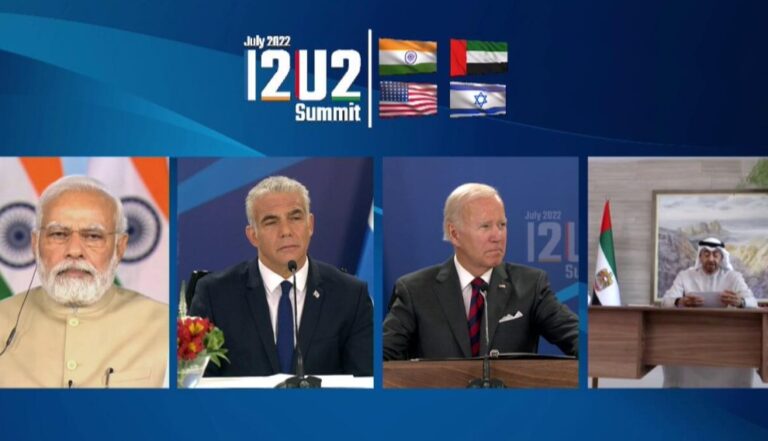
Following their meeting, the leaders joined a virtual summit with the leaders of India and the UAE, a newly formed group called I2U2, that is looking to spur joint investments in water, energy, transportation, food security, and more.

India will provide land for the project. U.S. and Israeli private firms are invited to lend their expertise to the project that the group said will help maximize crop yields.

The group has set tackling food insecurity in South and Middle East as a major goal.
Russia receives Iranian weapons and drones for war in Ukraine

0

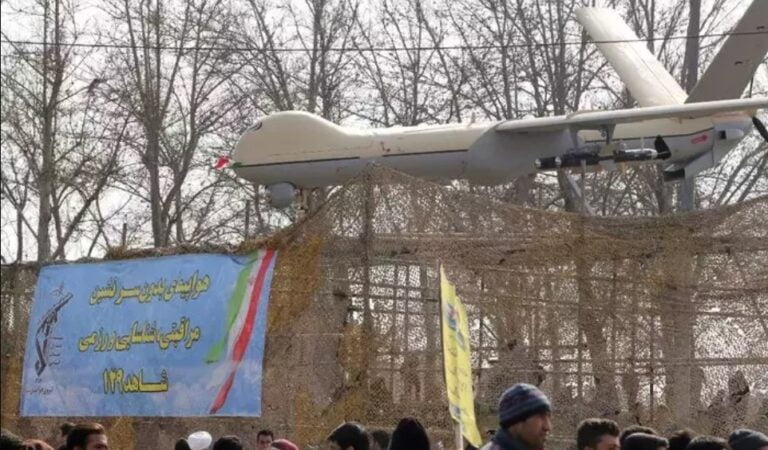
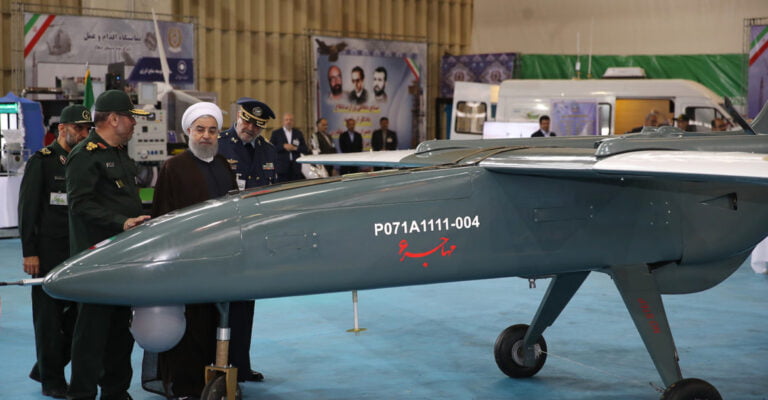
Iran is set to provide Russia with hundreds of UAVs for the war in Ukraine, including weapon-capable drones and ‘suicide’ drones, on an expedited timeline, the US national security advisor said.

White House national security advisor Jake Sullivan said information received by the United States supported views that the Russian military is facing challenges sustaining its weaponry after significant losses in Ukraine.

“Our information further indicates that Iran is preparing to train Russian forces to use these UAVs, with initial training sessions slated to begin as soon as early July,” he said.

“From our perspective, we will continue to do our part to help sustain the effective defense of Ukraine and to help the Ukrainians show that the Russian effort to try to wipe Ukraine off the map cannot succeed,” Sullivan said.

Also Tuesday, the Kremlin announced that Russian President Vladimir Putin will travel to Tehran on July 19 for a Syria summit with his Iranian counterpart Ebrahim Raisi and Turkey’s Recep Tayyip Erdoğan.

It will be the Kremlin chief’s second visit abroad since he sent troops into Ukraine in late February, after having visited Tajikistan in late June.

Drones manufactured in Iran, and variants of Iranian UAVs made by its proxies, are being used to cause chaos and destruction across the region.

Though proxy groups claim many of these attacks, evidence gleaned from the shrapnel and other threads of forensic evidence leads back to Iran.

Weaponized Iranian drones have been used in Iraq, Lebanon, Yemen, the United Arab Emirates (UAE), and Saudi Arabia, and Iran regularly adds new UAVs to its arsenal.

The route from Iran to Russia is part of the so-called North-South Transport Corridor, a 7,200km-long ship, rail, and road route for moving freight through India, Iran, Afghanistan, Azerbaijan, Russia, Central Asia, and Europe.

Russia and Iran have been promoting the corridor with added urgency in recent years, as they face increasing isolation on the world stage for their actions.

IRGC to supply depleted Russian military with drones for Ukraine war

0

IRGC is planning to supply hundreds of drones with combat weapon capabilities to Russia for use in Ukraine, a top US official said Monday (June 11).

White House national security advisor Jake Sullivan said information received by the United States supported views that the Russian military is facing challenges sustaining its weaponry after significant losses in Ukraine.

“The Iranian government is preparing to provide Russia with up to several hundred unmanned aerial vehicles (UAVs), including weapons-capable UAVs, on an expedited timeline,” Sullivan said at a White House briefing.

“Our information further indicates that Iran is preparing to train Russian forces to use these UAVs, with initial training sessions slated to begin as soon as early July,” he said.

Sullivan said it was not clear whether Iran had delivered any of the drones to Russia yet.

“From our perspective, we will continue to do our part to help sustain the effective defence of Ukraine and to help the Ukrainians show that the Russian effort to try to wipe Ukraine off the map cannot succeed,” Sullivan said.

Iran’s foreign ministry responded Tuesday, saying “no special development” had taken place in technological co-operation with Russia following its invasion of Ukraine in February, without specifically mentioning drones.

Also Tuesday, the Kremlin announced that Russian President Vladimir Putin will travel to Tehran on July 19 for a Syria summit with his Iranian counterpart Ebrahim Raisi and Turkey’s Recep Tayyip Erdoğan.

It will be the Kremlin chief’s second visit abroad since he sent troops into Ukraine in late February, after having visited Tajikistan in late June.

Russian limitations

“While Russia has its own extensive arsenal of drones, the arrival of Iranian aircraft could help Moscow replenish a key weapons system that suffered heavy losses during the four-month conflict,” the Washington Post reported.

Russia’s receipt of the UAVs is a “significant statement” about the limitations of its capabilities, American Enterprise Institute Critical Threats Project director Frederick Kagan told the newspaper.

Iran-backed militias are changing Syria’s demographic map

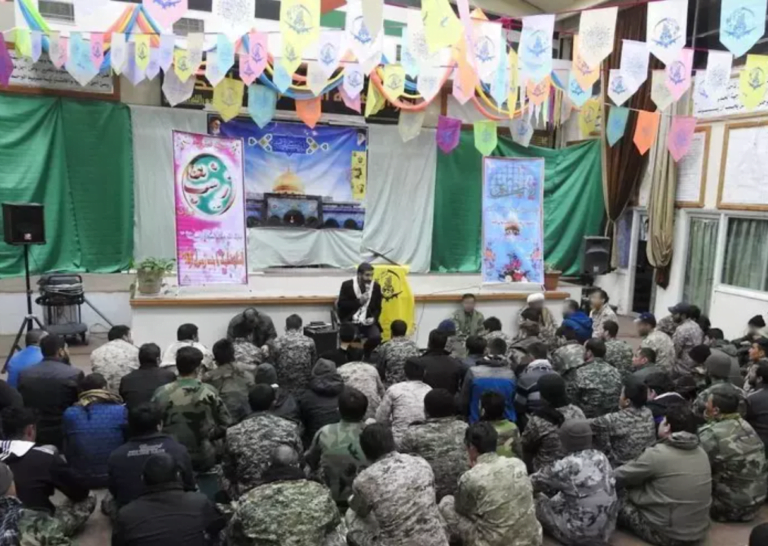
Iran-backed militias armed, trained and funded by the IRGC have begun to implement a plan to force local residents out of certain areas and replace them with the families of militiamen.

Iran’s Islamic Revolutionary Guard Corps (IRGC) is using the Fatemiyoun Division to implement a plan of demographic change in parts of Syria, displacing local residents and settling militiamen and their families in their place.

This operation will have serious and long-lasting consequences for Syrian society, activists and experts told Al-Mashareq.

The Fatemiyoun Division, one of the many Iran-backed militias comprised of Afghan fighters that is deployed in Syria, is “the most dangerous military arm of the IRGC”, said researcher Sheyar Turko, who specialises in the affairs of the IRGC and its affiliates.

The IRGC assembled and trained the members of this militia some time ago in Iranian camps near the Afghan border, he said.

“They received combat training from specialists, and their families were brought over from Afghanistan,” he said.

They were later enticed to fight in Syria by the prospect of good salaries and financial compensation, and should they be injured or killed, with the promise that the families of dead fighters would be granted Iranian citizenship, he said.

The process “will have devastating security and social consequences, as the region has its own historical and cultural character that is being contradicted in favour of customs that are totally alien to Syrian society”, he said.

IRGC deputy commander: Saudi, US and Israeli alliance to fail

0

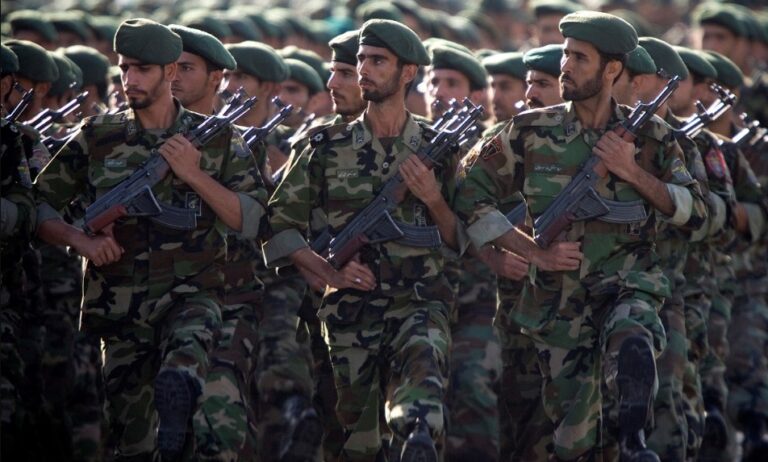
A high-ranking official with the Islamic Revolution Guard Corps (IRGC) says the history of previous alliances between the US, Saudi Arabia and the Zionist regime shows a new alliance they call Arabic NATO will be weak and ineffective in the face of the resistance front and the Islamic Republic of Iran.

Brigadier General Yadollah Javani the IRGC’s deputy commander for political affairs said the record of the US, Saudi Arabia and the Zionist regime which is filled with defeats in the past years at the hands of the resistance front.

Javani noted that alliance building against Iran and the axis of resistance during the period when the US and its two regional allies were at the height of their power was a failure let alone now.

He cited the Persian Gulf Cooperation Council as an example, saying the body was formed over 40 years ago but its record is empty of any achievement.

Javani referred to the Saudi and UAE alliance against Yemen which also failed to achieve anything in the war on Yemen.

As another example, he mentioned Syria where the US, Israel and Saudi Arabia as well as 100 other countries joined hands to topple the Syrian government but failed to do so.

Javani said all indications show the US will leave the Middle East and the Zionist regime will collapse, adding that nothing can reverse this trend.

Referring to US President Joe Biden’s upcoming visit to Saudi Arabia and occupied Palestine, he said it is aimed at persuading the Saudis to increase their oil production to defuse the energy crisis in the West and to speed up the process of normalization of ties between the Zionist regime and some Arab states, especially Riyadh.

A high-ranking official with the Islamic Revolution Guard Corps (IRGC) says the history of previous alliances between the US, Saudi Arabia and the Zionist regime shows a new alliance they call Arabic NATO will be weak and ineffective in the face of the resistance front and the Islamic Republic of Iran.

Turkey reveals detail of Iran’s terror plot against Israelis

New Israeli Prime Minister Yair Lapid, in a phone call to congratulate Eid al-Adha, thanked Turkish President Recep Tayyip Erdogan for what he called the neutralization of Iran’s terror plot to assassinate his country’s tourists in Istanbul. At the same time, the Sabah newspaper, which is close to the Turkish ruling party, has published new details of Iran’s terror plot.

This newspaper, quoting security sources, reported that a group of eight Iranian Revolutionary Guards Corps (IRGC) agents and their Turkish accomplices were looking for an assassination attempt on Yosef Levi-Sfari, the former Israeli ambassador in Istanbul, and a group of Israeli tourists before their plan was exposed on June 16 and agents of Turkey’s Security Organization (MET) arrested them.

Sabah wrote that the investigation of seven of the detainees behind Iran’s terror plot has been completed and their case has been sent to court, but the investigation of one of them is still ongoing. This newspaper did not specify how many of the detainees are Iranian citizens and how many are Turkish citizens.

The Sabah report states that the members of the “Hit Team” entered Turkey one by one and settled in houses in Beylikduzu and Buyuk Cekmece neighborhoods in Istanbul. Some stayed in a hotel near Taksim Square where Mr. Sfari and his wife were staying with a group of Israeli tourists who had traveled to Turkey ignoring the Israeli government’s warning.

At the same time, a member of the “Hit Team” arouses the suspicion of a seller during the purchase of a motorcycle at the price of 26,000 Liras (equivalent to about 1,500 dollars). The seller mentioned that the buyer called him with a foreign number (probably Iranian) and did not personally appear at the registry office during the transaction, which made him suspicious.

After the “operation” was exposed, Turkish security agents and the police raided the residences of the IRGC “Hit Team” and arrested eight people. Three handguns equipped with silencers were recovered from the site. At the same time, the Ministry of Foreign Affairs of Israel raised the level of warning to the citizens of this country in Turkey, and asked all its tourists to leave the country.

UK warship seized advanced weaponry smuggled from Iran

0

Britain on Thursday (July 7) said one of its warships on patrol in the Gulf earlier this year seized advanced weaponry being smuggled from Iran towards Yemen, contravening a United Nations (UN) Security Council resolution.

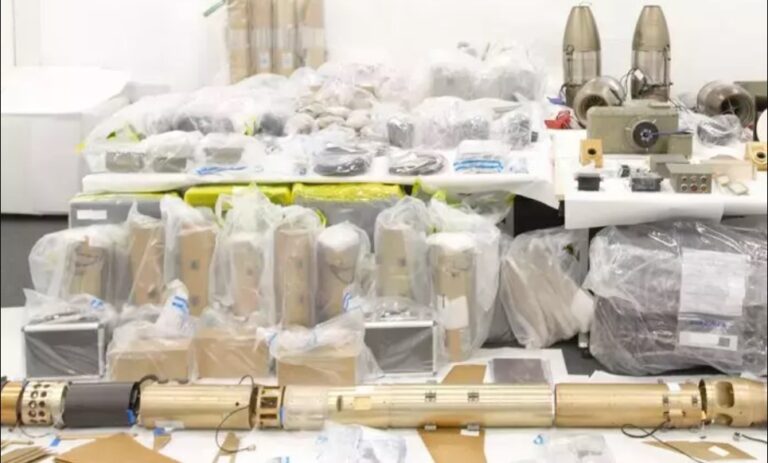
The ship, HMS Montrose, intercepted speedboats carrying surface-to-air-missiles and engines for land attack cruise missiles while on routine patrols on two occasions in January and February, the Ministry of Defence (MoD) said.

The speedboats were being operated by smugglers in international waters south of Iran, in the first instance of a UK warship interdicting vessels carrying such sophisticated weapons from the country, it added.

The illicit cargo was spotted on January 28 by a Wildcat helicopter equipped with sophisticated radar systems launched from the Montrose, according to the MoD.

The second operation, on February 25, also involved co-ordinated efforts with a US Navy destroyer, the USS Gridley, which deployed an MH-60 Seahawk helicopter “to provide critical overwatch”, the ministry said.

“We have a decades-long strategic relationship with the Royal Navy,” said Vice Adm. Brad Cooper, commander of US Naval Forces Central Command, the US Navy’s 5th Fleet and the multinational Combined Maritime Forces (CMF). smuggled 

“Our continued collaboration on maritime interdictions in the Middle East reflects our extraordinary partnership and strong commitment to regional security and stability,” Cooper said.

Missiles used by the Houthis

The weapons were seized along routes historically used to traffic weapons unlawfully to Yemen, the US Navy said.

The seizures were spearheaded by British Royal Marines, who approached the speedboats on two inflatable vessels and secured and searched them, the MoD said.

The dozens of the packages containing the advanced weaponry were discovered and confiscated, before being taken to Britain for technical analysis.

The analysis found they contained multiple rocket engines for the Iranian-produced 351 land attack cruise missile and 358 surface-to-air missiles, the MoD said.

The UK Seizes Iranian missiles bound for Yemen

0

A British Royal Navy vessel seized a sophisticated shipment of Iranian missiles in the Gulf of Oman earlier this year, officials said Thursday, pointing to the interdiction as proof of Tehran’s support for the Houthi militias in Yemen.

The British government statement provided some of the strongest findings to date that Tehran is arming the Houthis against the legitimate government with advanced weapons smuggled through the Gulf.

Despite a United Nations Security Council arms embargo on Yemen, Iran has long been suspected of transferring rifles, rocket-propelled grenades, missiles, and other weaponry to the Houthis since the war began in 2015.

The UK Embassy in the United Arab Emirates described the seizure of surface-to-air Iranian missiles and engines for land-attack cruise missiles as “the first time a British naval warship has interdicted a vessel carrying such sophisticated weapons from Iran.”

Citing a forensic analysis last month, the British navy linked the batch of rocket engines seized earlier this year to an Iranian-made cruise missile with a 1,000-kilometer range that it said the militias have used against Saudi Arabia.

The Houthis also used Iranian missiles to attack an oil facility in Abu Dhabi in January of this year, the British navy said, an assault that killed three people.

Iran’s mission to the United Nations rejected the UK’s findings as “groundless,” saying that Iran has “never transported weapons or military equipment to Yemen” in violation of the UN arms embargo and “always upheld its international obligations.”

The HMS Montrose’s helicopter had been scanning for illicit goods in the Gulf of Oman on January 28 and February 25 when it spotted small vessels speeding away from the Iranian coast with “suspicious cargo on deck.” A team of Royal Marines then halted and searched the boats, confiscating the weapons in international waters south of Iran.

Iranian IRGC-QF funnels money abroad as Iranians struggle to make living

The Center of Artistic Creations of Reconstruction Organization (Atabat) affiliated with the Iranian IRGC-QF and responsible for the development of Shia shrines in Iraq announced a 92% increase in this year’s budget to 1300 billion tomans or 30 million dollars.

Majid Namjo, the deputy head of this headquarters, announced this news on Wednesday, July 5, and said: “Last year, we reached a budget of 720 billion Tomans, and for the first time, we reached 92% of the approved budget.”

Mr. Namjo also announced the completion of some projects in Najaf and announced the completion of the skeleton of a 135,000-meter court in Karbala, and added that the development and construction of two other courts have been entrusted to this headquarters.

He predicted the number of Iranians who will go to Iraq for Arbaeen this year between around three to five million people and said that “providing accommodation and reception” for them is also one of the missions of this headquarters.

This year, another member of the headquarters, predicting a 92% increase in the budget of this headquarters, said that “in addition to the development of shrines, the plan for the reconstruction and development of the tombs of several great religious and national figures buried in Iraq has also been defined.”

According to the officials of this headquarters, more than 150 projects for the reconstruction of Shia religious places in Iraq and other countries, whose costs are covered by Iran, will continue for the next 20 years.

After the assassination of Qassem Soleimani, commander of IRGC’s Quds Force(IRGC-QF), some journalists mentioned that this force used Atabat reconstruction headquarters to cover some of their expenses.

As IRGC continues to funnel millions of Iranian taxpayer money overseas, inflation in Iran spikes to record heights, and IRGC-backed President Ebrahim Raisi insists the government is working to curb the price hikes wreaking havoc on household budgets. Yet there is very little in Raisi’s year-long record to indicate earnestness in getting a grip on inflation or mitigating its impact on the poor.

Ukraine International Airlines sues Iran over shot-down flight PS752

0

Ukraine International Airlines (UIA) filed a lawsuit in the Ontario Supreme Court, in Canada, against the Islamic Republic of Iran overflight PS752, which was shot down in 2020.

The lawsuit, which was seen by Radio Farda on July 7, 2022, was filed by Ukraine’s largest airline in January 2022.

The airline’s lawsuit is separate to the legal action taken by families of the survivors of the downed Ukrainian plane in Tehran.

The official complaint, submitted by the airline to the Ontario Supreme Court of Justice, lists two parties – the Islamic Republic of Iran and the Islamic Revolutionary Guards Corps (IRGC) – as the two defendants of the case.

With the move, Ukraine International Airlines demands compensation from Iran.

At the beginning of January 2022, the court awarded more than $107 million to the families of six victims who died in the accident, after it found the downing of the plane was an intentional terrorist act perpetrated by Iran and the IRGC.

The Ontario Superior Court ruled that the missiles that shot down a commercial flight in Iran were fired intentionally as an act of terrorism.

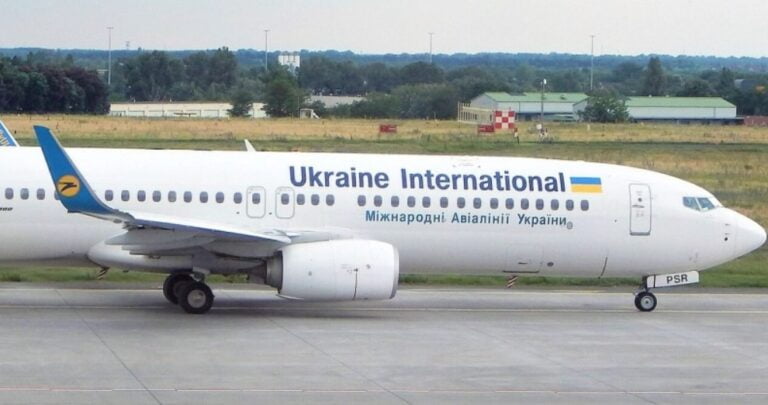
The fatal accident happened on January 8, 2022, shortly after the UIA Boeing 737-800 aircraft, registered UR-PSR, took off from Tehran (THR) on an international flight to Kyiv (KBP).

However, the aircraft crashed in the territory of Iran killing all 167 passengers and nine crew members on the flight.

Investigators later found out that most of the victims were Iran citizens and Canadians, but there were also 11 Ukraine passport holders.

Iranian investigators confirmed the shootdown of UIA flight PS752 was due to a “human error” while setting up the air defense system of Tehran.

An operator of the Iranian Revolutionary Guards (IRGC), stationed in Bid Kaneh, was found to have fired two missiles from a Tor-M1 surface-to-air system, which brought down the aircraft.

The Civil Aviation Organization of the Islamic Republic of Iran admitted that a mistake was made while setting up the radar of the missile system after a relocation.