
Home Blog Page 299

Iran Launches New “National Internet” That Censors Content, Encourages Regime Surveillance

0

Iran announced on Sunday that it completed the first of three stages to establish its government-controlled “national internet,” according to state media reports. While authorities are championing the National Information Network as a faster, less costly alternative to the World Wide Web, observers caution that the service will impose strict censorship on Iranian citizens and significantly boost government spying.

BBC News explained:

The government says the goal is to create an isolated domestic intranet that can be used to promote Islamic content and raise digital awareness among the public.

It intends to replace the current system, in which officials seek to limit which parts of the existing internet people have access to via filters—an effort [Iranian Communications and Information Technology minister Mahmoud] Vaezi described as being “inefficient.”

According to Iran’s semi-official Mehr News, the network’s bandwidth will accommodate speeds of 4,000 gigabytes per second and allow access to domestic digital content and services. By forcing Iranians to rely on these state-controlled options, the network “still does not give Iran’s citizens what the UN has labelled a basic human right: an open Internet experience,” the business news website Quartz reported. “When an Iranian IP address signs onto the network, it can only access local sites (though foreign sites will be allowed with special permission granted by state authorities.)”

Even before Sunday’s inauguration, Iran already banned “almost all of the 500 most popular websites on the web,” Quartz added. British human rights group Article 19 warned in a report  published earlier this year that Iran’s national internet project “significantly increases the government’s ability for surveillance on domestic Internet users.” Notably, Iran already has an abysmal record in granting its citizens unfettered internet access, according to Freedom House.

The final phase of the network’s roll-out is scheduled to take place on March 2017.

Reuters reported earlier this month that hackers believed to be associated with Iran’s Islamic Revolutionary Guard Corps breached the encrypted messaging app Telegram, raising concerns that the phone numbers of more than 15 million Iranian users had been compromised.

In July, Iran threatened to ban all iPhones unless Apple opened a store in the country as part of an effort to get all cell phones registered in a national telecommunications database. Three months ago, Iran ordered all messaging apps to begin storing their data inside the country or risk being prohibited from operating in the country. These moves have raised concerns that Iranian users could have their data seized by the government.

In February, an app designed to help users avoid Iran’s morality police was removed by authorities shortly after it was made available.

When Iranian Foreign Minister Mohammad Javad Zarif was asked in 2013 if it was hypocritical for him to have Facebook and Twitter accounts while those platforms were denied to average Iranians, the minister laughed and said, “that’s life.”


Source

Another IRGC commander killed in Syria

0

Iran’s Islamic Revolutionary Guards Corps (IRGC) lost another high-ranking official in clashes in Syria.

General Ahmad Gholami, has been killed in fighting with the Islamic State (IS, ISIS,ISIL) terrorist group near Aleppo in northern Syria on Aug. 30, Iran’s ISNA news agency reported.

Gholami was one of the IRGC commanders during the Iran-Iraq war (1980-1988).

Over the past few years and since the crisis broke out in Syria and Iraq, several commanders of the IRGC have been reportedly killed in clashes with “terrorists”.

Iranian officials have constantly denied that their servicemen have boots on ground in Syria and Iraq, saying the officers of the Islamic Republic are in Syria and Iraq as advisers at official request from both countries’ governments.

Source

Saeed Abedini Asks Why the US and UN Refuse to Condemn Iran’s Execution of Christians

Iranian-American Pastor Saeed Abedini, formerly a hostage held in Iran, has condemned the continued mass executions of prisoners in the Islamic Republic, including Christians, and asked why the United States, the European Union and the U.N. are not doing anything to stop Iran.

Abedini posted photos of recently executed prisoners in Iran on Facebook Monday, noting that one of the men put to death was a Christian by the name of Ali Asadi.

“Every Wednesday in Rajaeeshar prison [where] I was for more than two years, [the] Islamic Republic of Iran executes tens of people by hanging them,” Abedini wrote.

“The saddest part of [this] horrible story is U.N., EU and U.S. don’t have any active plan to STOP [these] executions,” he added, noting that Western leaders regularly shake the hands of Iranian representatives at conferences and continue giving them money, yet know all about the systematic executions that have been going on for years.

Abedini, who spent three and a half years in an Iranian prison for his Christian faith before being released in January, said that the Iranian government might have killed Asadi’s body, but vowed that his soul and spirit are “alive forever.”


He added that there are a number of prisoners in Iran who decide to become Christians and change their lives around, but all of them are now in great danger because of their decision.

“We need to PRAY for all of them” and for the Iranian regime to change its behavior toward its people and toward Christians, he added.

The pastor argued that “we need to do something about it NOW, tomorrow is too late,” when it comes to speaking out for the human rights of prisoners.

He also revealed that he will be speaking at an anti-Iranian government rally on Sept. 20 in New York.

 Abedini said that he will never forget his time in Iranian prison and how God saved him, and promised to “never stop fighting for these people.”

The U.S. Commission on International Religious Freedom and other watchdog groups have detailed the mass executions carried out by the Iranian regime, condemning the “systematic, ongoing, and egregious violations of religious freedom, including prolonged detention, torture, and executions based primarily or entirely upon the religion of the accused.”

The U.N. has also said that Iran continues to execute prisoners without just cause.

“It is regrettable that the government continues to proceed with executions for crimes that do not meet the threshold of the ‘most serious crimes’ as required by international law, especially the International Covenant on Civil and Political Rights, to which Iran is State party,” Ahmed Shaheed, Special Rapporteur on the situation of human rights in Iran, said last week, following reports that 12 inmates were set to be executed for drug-related offenses.

Back in July during the National Council of Resistance of Iran rally in Paris, Abedini said that regardless of how grim the human rights abuses in Iran are, faith in God assures that hope remains.

“My presence here proves that each act of resistance will be a victory. A victory for freedom. The message of God in the Bible says that we should resist the face of tyranny,” the pastor told close to 100,000 people in attendance.

“We will soon see this rebellion in our country, in our hearts, and in our world, because Jesus Christ is bringing this message. The resurrection of the Iranian people shall arrive very soon,” he added.


Source

Unjustly Imprisoned Young Physicist Granted Conditional Release After Five Years

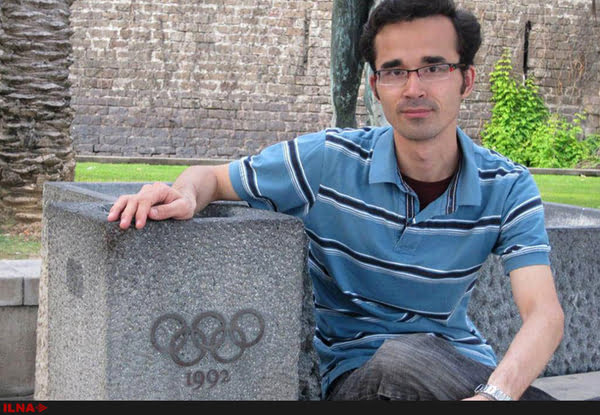
August 29, 2016—Imprisoned Iranian scientist Omid Kokabee, who spent more than five years in Evin Prison for refusing to work on Iran’s military projects, was granted conditional release on August 29, 2016. Kokabee, currently on medical leave, was diagnosed with kidney cancer this past April after years of being denied proper medical treatment by prison authorities.

The International Campaign for Human Rights in Iran calls on the Iranian Judiciary to immediately allow Kokabee to leave the country if he so wishes, so that he may continue his interrupted scientific studies and career.

Kokabee’s academic studies as a post-doctoral physics student at the University of Texas were abruptly halted when he was arrested in Iran in 2011 during a visit to his family.

“While we welcome the decision to release Omid Kokabee after he unjustly spent more than five years in prison, his release does not compensate for the pain he endured during these years and the severely damaged health he suffered as a result of prison conditions,” said Hadi Ghaemi, executive director of the Campaign.

“The Judiciary Chief approved a ruling by Branch 36 of the Tehran Appeals Court that says Omid Kokabee qualifies for conditional release and therefore he will not be returning to prison,” Kokabee’s lawyer, Saeed Khalili, told the Iranian Labor News Agency (ILNA).

Khalili added that the ruling had been issued “two or three days” before it was formally delivered in writing on August 28, 2016, according to the Iranian Student News Agency (ISNA).

Kokabee, 34, has been on medical furlough (temporary leave) since May 25, 2016, after undergoing surgery to remove his cancerous kidney. 

He was arrested on January 30, 2011 at Tehran’s Imam Khomeini Airport on his way back to the U.S. to continue his studies at the University of Texas at Austin. On May 14, 2012, Kokabee was sentenced to 10 years in prison by the Revolutionary Court presided by Judge Abolqasem Salavati for “contact with enemy states.” The sentence was later upheld on appeal. 

Kokabee said in an April 2013 open letter from Evin Prison to Iran’s supreme leader, Ali Khamenei, that he was imprisoned for refusing an offer from the Iranian intelligence establishment to collaborate on a military research project.

During his imprisonment Kokabee’s repeated requests for furlough were denied until he was transferred to a hospital in April 2016 where doctors discovered a large tumor on his right kidney.

Article 502 of Iran’s Criminal Code states: “If a prisoner is suffering from physical or mental illness and his imprisonment would make his illness worse or delay his recovery, the judge can postpone the sentence being served until the prisoner regains his health after consultation with his physician.”

The authorities at Evin Prison also denied repeated requests submitted by Kokabee’s family for temporary leave for the young scientist to receive outside medical treatment even though he was suffering from severe pain and medical complications for years following multiple bouts of kidney stones. 

Kokabee was denied access to specialists in a hospital and was instead given painkillers from the prison infirmary until his condition became critical and he was finally taken to a hospital, a source told the International Campaign for Human Right in Iran.

Political prisoners in Iran routinely receive discriminatory treatment, including denial of necessary medical treatment.

Kokabee’s release comes almost a year after Kokabee’s mother, Safar Bibi Haghnazari, wrote in a letter to Khamenei in September 2015, “[Omid] has passed kidney stones under great pain four times without any treatment. He has had serious stomach problems and lost four of his teeth. He has even suffered from heart palpitations because of all the stress in prison. He is still being denied outside medical treatment despite the prison doctor’s recommendation. I ask that you free my son and alleviate this great pain.”

Khamenei warns Iran will ‘hit hard’ in response to US aggression

0

Amid escalating tensions between US and Iranian vessels in the Persian Gulf, Iran’s Supreme Leader Ayatollah Ali Khamenei on Sunday warned any military aggression against the Islamic Republic would be met with a harsh response.

In an apparent reference to the US, Khamenei told soldiers at a Tehran air base “the enemy should understand that if it makes any aggression, it will be hit hard and our defense will also include response,” according to the state-run Fars news agency.

Khamenei also called to bolster Iran’s military capabilities “to the extent that the enemy doesn’t even allow itself to think about aggression.”

Referring to Iran’s controversial purchase of the S-300 missile defense system from Russia, Khamenei charged the US “doesn’t respect our nation’s right of defense and actually wants us to remain defenseless so that they can launch aggression against our country whenever they want.”

His remarks come days after US seamen complained of being harassed by Iranian gunboats in the open waters of the Persian Gulf, ramping up tensions.

On Saturday, a top Iranian military official claimed the strength of its navy was deterring the US from launching a military offensive against Tehran.“The US doesn’t enjoy the power to confront Iran militarily,” Rear Admiral Fadavi, naval commander of the Islamic Revolution Guards Corps told a group of paramilitary volunteers in Arak, according to Fars.

Fadavi — who has previously called the US Iran’s sole enemy and claimed its military capabilities have weakened in recent years — claimed the 97 IRGC speedboats patrolling the Persian Gulf were keeping US warships in the Persian GUlf at bay.

Last Wednesday, a US military official said Iranian ships in the Persian Gulf harassed American naval vessels in three recent incidents, including one that prompted a US warship ship to fire warning shots.

According to US Navy Fifth Fleet spokesman Commander Bill Urban, several IRGC boats maneuvered around two US patrol ships, the USS Squall and USS Tempest, creating a possible collision hazard.

All three encounters last week occurred in international waters in the northern Persian Gulf, Urban said.

A day earlier, US defense officials said four Iranian warships in the Strait of Hormuz sped close to two US Navy guided-missile destroyers with their weapons uncovered in an “dangerous, harassing situation” that could have led to an escalation.


Video of the incident involving the USS Nitze shows American sailors firing flares and sounding the warship’s horn as the Iranian boats approached. A sailor can be heard saying that the weapons on the Iranian boats were “uncovered, manned.”

The Nitze was accompanied on its mission by the USS Mason, another destroyer.

When asked about the Tuesday incident, Iran’s Defense Minister Hossein Dehghan said his country’s “naval units have the duty of safeguarding the country’s security in the sea and the Persian Gulf.”

OnThursday, Dehghan said that his naval forces will warn or confront any foreign ship entering the country’s territorial waters.

The semi-official Tasnim news agency quoted Gen. Hosein Dehghan as saying that “if any foreign vessel enters our waters, we warn them, and if it’s an invasion, we confront.” He added that Iranian boats patrol to monitor traffic and foreign vessels in its territorial waters.

A defense official told AFP that ships from the US and Iranian navies had interacted more than 300 times in 2015 and more than 250 times the first half of this year.

Ten percent of those encounters were deemed unsafe and unprofessional, the official said.

In January, the Iranian navy briefly captured the crews of two US patrol boats that had, through a series of blunders, strayed into Iranian territorial waters.


Source

UN rights expert urges Iran to halt execution of 12 drug offenders

The UN Special Rapporteur on the situation of human rights in Iran, Ahmed Shaheed [official website], on Friday urged [press release] Iran to halt the execution of Alireza Madadpour and 11 other individuals convicted on drug related offenses. All 12 individuals were sentenced to death for drug offenses and recently transferred to solitary confinement in Karaj Central Prison. Madadpour was arrested in November 2011 when 990 grams of crystal meth were found during a raid in a house he cleaned. He was later convicted in July 2012 by the Karaj Revolutionary Court in a trial that lasted 20 minutes, and was never given the opportunity to meet with his defense lawyer. Madadpour’s request for a pardon and retrial were denied. Shaheed expressed serious concern regarding Iran’s’ insistence on using drug-related executions as means to deter crimes and pointed out the open acknowledgement of Iran’s own government officials concerning the ineffectiveness of executions in the prevention of drug-related crimes. Shaheed stated that:

It is regrettable that the Government continues to proceed with executions for crimes that do not meet the threshold of the “most serious crimes” as required by international law, especially the International Covenant on Civil and Political Rights, to which Iran is State party. It is also troubling that courts continue to issue death sentences in trials that not only breach international fair trial standards but even domestic due process guarantees.

Shaheed urged Iran to impose a moratorium on executions and restrict the use of the death penalty for the “most serious crimes.”

Much international pressure has been directed toward Iran in recent years for its use of the death penalty. In March Shaheed expressed continued concern regarding Iran’s alarming rate of juvenile executions [JURIST report] and other flaws in the justice system. In February Amnesty International [advocacy website] criticized Iran’s justice system after 40 men were sentenced to death 

Source

Iran arrests nuclear negotiator suspected of spying

Iran has arrested a member of the negotiating team that reached a landmark nuclear deal with world powers on suspicion of spying, a judiciary spokesman said on Sunday.

The suspect was released on bail after a few days in jail but is still under investigation, Gholamhossein Mohseni Ejei said at a weekly news conference, calling the unidentified individual a “spy who had infiltrated the nuclear team,” state media reported. 

The deal that President Hassan Rouhani struck last year has given Iran relief from most international sanctions in return for curbing its nuclear program, but it is opposed by hardliners who see it as a capitulation to the United States.

Ejei was responding to a question about an Iranian lawmaker’s assertion last week that a member of the negotiation team who had dual nationality had been arrested on espionage charges.

Tehran’s prosecutor general on Aug. 16 announced the arrest of a dual national he said was linked to British intelligence, but made no mention of the person being in the nuclear negotiations team. On Sunday, Ejei did not explicitly confirm that the arrested person had a second nationality.

Britain said on Aug. 16 that it was trying to find out more about the arrest of a joint-national.


Source

Iran foils cyber attack on its petrochemical complex

0

Iran has foiled cyber attack attempts which targeted its petrochemical complex, Gholam Reza Jalali, Brigadier General, head of Iran’s Civil Defense Organization, said.

During the inspections in one of the country’s petrochemical complexes, inactivated viruses were discovered and the necessary defensive measures were taken in this regard, Jalali said, SHANA news agency reported Aug. 27.

He did not unveil further details on the issue.

Jalali also said that the investigations carried out by his organization revealed no link between recent fire incidents in petrochemical complexes and a cyber attack.

A series of fires and explosions in major Iranian oil and gas facilities in recent weeks killed at least one and caused major damage. The fire brigades were extinguishing the first fire, which started on July 6, in the Bouali petrochemical plant on the Persian Gulf coast, three days. There were no fatalities but damages are estimated to be tens of millions of dollars and insurers say it could be the biggest compensation claim in Iran’s history.

Earlier, Abolhasan Firouzabadi, secretary of Iran’s Supreme National Cyberspace Council, said that it is considering cyber attacks as a possible cause of the unprecedented incidents.

Iran’s oil industry was damaged as a result of various cyber attacks previously. In April 2012 a virus forced the oil ministry to disconnect its main oil terminals and facilities from the Internet to protect them from damage.

Last year Iran accused the US of new cyber attacks against the Iranian oil ministry website. The attacks continued for four days during the holidays of Iranian New Year (started on March 21, 2015), Kamal Hadianfar, Brigadier General, head of the Islamic Republic Cyber Police said, adding that the attacks were carried out from IPs inside the United States.


Source

US officials accuse Iran of supporting Houthis in Yemen

0

Reuters has reported that the United States is increasingly concerned about supposed training by Iran’s elite Revolutionary Guards (IRGC) for the Houthi rebels in Yemen, where they continue to make territorial gains in Saudi Arabia despite airstrikes its neighbor.

U.S. officials concluded without providing evidence that the IRGC are providing training and equipment to the Houthis.

The U.S. officials in question spoke in anonymity.

Saudi Arabia also expressed its view that not only Iran, but also Hezbollah, are providing training and arms to the Houthis.

“We see … Iran playing a large role in supporting the Houthis,” Saudi ambassador to Washington Adel al-Jubeir told reporters on Thursday.

“There are Iranian advisers advising them and Hezbollah operatives advising them,” Jubeir said.

Asked about Jubeir’s accusations on Friday, White House spokesman Josh Earnest told reporters: “We’ve expressed our previous concerns about the destabilizing impact that Iran is having on this particular situation. We continue to have those concerns.”

A Houthi official told Reuters on Thursday that the group was prepared to confront the Saudi-led airstrikes without calling on Iran’s help.

“The Yemeni people are prepared to face this aggression without any foreign interference,” said Mohammed al-Bukhaiti, a Houthi politburo official.

The Saudis “cannot accept the idea of an Iranian-backed regime in control of Yemen, which is why they felt compelled to intervene the way they have,” British Foreign Secretary Philip Hammond said on Friday during a visit to Washington.

“It’s no secret,” he said, that the Iranians “are providing assistance and support to the Houthis, both political as well as militarily, as well as economic.”

“The first thing the Houthis did when they entered and occupied Sanaa was to free Iranian Revolutionary Guards operatives and Hezbollah operatives from the jails,” he said.


Source

Disabled mother of imprisoned Christian in Iran pleads for son’s freedom

The visually impaired elderly mother of an imprisoned Iranian Christian pleaded for justice and his son’s release.

According to Mohabat News, Ebrahim Firouzi’s mother cried as she addressed judicial authorities and cited how her disability prevented her from helping her son by going from court to court to follow up on his case.

She also implored for her son’s freedom as she’s not been able to visit him since his arrest in August 2013 because of her handicap.

Authorities held Firouzi in one of Iran’s notorious prisons, Gohardasht or Rajaei-Shahr prison in Karaj, northwest of Tehran, where he’s sentenced to five years on charges of espionage.


Firouzi’s first arrest dated back in January 2011 for which he spent 154 days behind bars. His next arrest happened in March 2013 for which he spent 53 days in the infamous Evin prison.

Authorities reportedly assaulted the Christian prisoner on his way to court last month. Firouzi previously wrote an open letter where he revealed that he would not attend the said court hearing after officials prevented his lawyer’s visits and access to legal documents. However, the scheduled hearing was postponed because of the judge’s absence.

Christian Solidarity Worldwide (CSW) called out the trend of repeated arrests against Christians in the country. The U.K.-based Christian organization cited the Pastor Yousef Nadarkhani as an apparent example.

The church leader first spent a year behind bars in 2012 and 2013 on charges of apostasy for which the court acquitted him.

Authorities then arrested the prominent pastor of Church of Iran on May 13 and released him July 24 but only to give him one week to raise 100 million Iranian tomans (approximately US$ 33,000) bond or face prison again.

“We are deeply concerned by these developments and await further clarification regarding the reasons for these arrests,” said CSW’s Chief Executive Mervyn Thomas.

“Unfortunately, it is not uncommon for Christians who have been arrested on account of their religious beliefs to be released and re-arrested time and again, in a tactic designed to foster a sense of insecurity within the community,” Thomas added.


Source