Home Blog Page 300

Tehran warns US to stay out of Iranian waters in Gulf

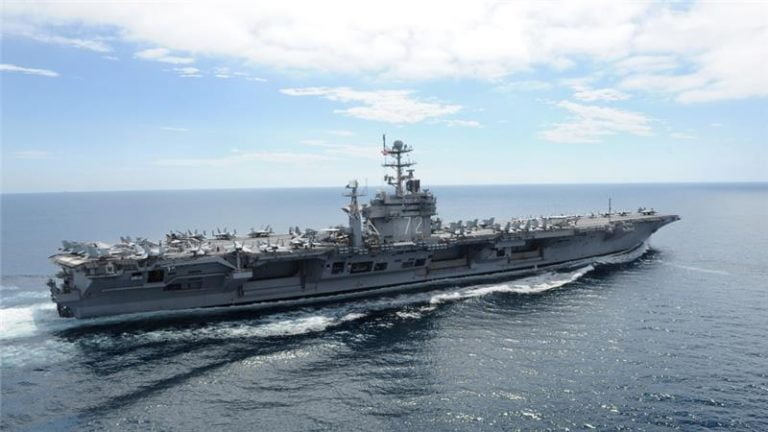
Tehran has warned Washington against deploying warships in Iranian territorial waters in the Gulf, after a close encounter earlier in the week between Iranian and US naval ships in the Strait of Hormuz.

Iranian Defence Minister Hossein Dehghan said on Thursday that every US ship that entered Iranian waters would first be warned, but if the intrusion was considered an invasion, there would be a confrontation.

“If an American ship enters Iran’s maritime region, it will definitely get a warning. We will monitor them and, if they violate our waters, we will confront them,” he said in a statement reported by the Iranian Students’ News Agency.

The warning follows an incident on Wednesday when a US warship and Iranian ships faced off near the Strait of Hormuz in the Gulf.

US Navy spokesman Bill Urban said on Thursday that a US Navy patrol boat in the Persian Gulf fired three warning shots after an Iranian vessel approached head on, coming within 200 metres of the US ship.

During Wednesday’s incident, the USS Squall “resorted to firing three warning shots from their 50-caliber gun, which caused the Iranian vessel to turn away,” he said.

Earlier, a US defence official said that four vessels from Iran’s Islamic Revolutionary Guard Corps conducted  a “high-speed intercept” of the warship in the Strait of Hormuz.

The official said two of the Iranian vessels came within 300 yards of the USS Nitze in an incident that was “unsafe and unprofessional”, underlining the tensions that remain more than a year after Washington and other Western powers reached a landmark nuclear deal with Iran and lifted sanctions.

While the US claims its ship was in international waters, Iran says the vessel was in Iranian waters and therefore violated the country’s sovereignty.

A similar incident in January resulted in the arrest of 10 US marines, who were quickly freed after urgent diplomatic negotiations between Iranian Foreign Minister Mohammad Javad Zarif and his US counterpart John Kerry.

In May, a senior Iranian military commander said that Iran would close the strategic Strait of Hormuz, a passageway through which a third of the world’s oil is transported, unless the US and its allies stop “threatening” it.

“If the Americans and their regional allies want to pass through the Strait of Hormuz and threaten us, we will not allow any entry,” state media quoted Brigadier General Hossein Salami, the deputy commander of the powerful Revolutionary Guard, as saying on Wednesday.

Without elaborating on what he and other leaders would consider a threat, Salami said that “Americans should learn from recent historical truths”, most likely referring to the January capture of US sailors who entered Iranian waters in January.

Washington and Tehran have not had diplomatic ties for more than 35 years, but Kerry and Zarif have been in regular contact since 2013 when the international community started hammering out a nuclear deal 
with Iran.

NEW IRANIAN CRACKDOWNS HIGHLIGHT CRITICISM OF WHITE HOUSE WEAKNESS ON IRAN

INU-On Wednesday, reports emerged that Iran was in the midst of a new crackdown on social media users, with hundreds of group administrators having been summoned, detained, or otherwise intimidated by authorities over supposedly “immoral” content. Radio Free Europe / Radio Liberty reported that at least 450 people had been caught up in the latest action, an apparent follow-up to the sting known as Operation Spider II, which regime authorities publicly acknowledged in May.

The earlier crackdown disrupted social media groups and launched criminal cases against dozens of people accused of supporting Western infiltration and undermining Iran’s Islamic identity through their contributions to a Western-style modelling industry in Iranian cyberspace. It was not immediately clear on Wednesday how many people were expected to face charges over the latest crackdown, or whether the number of affected individuals could be expected to grow in coming days and weeks. But the Iranian Revolutionary Guard Corps boasted that 450 people had been questioned or warned about their activities just over the past few weeks.

Operation Spider II and this latest crackdown now stand as book-ends to a series of other government activities aimed at tightening the regime’s control over the flow of information inside Iran. In July, the Basij civilian militia held a ceremony in which some 100,000 satellite dishes and receivers were destroyed. And law enforcement bodies have reportedly continued to actively confiscate dishes since then.

Over the course of the summer, the regime has also added to its volumes of political prisoners, including persons who hold dual nationality in Iran and in Western countries. The US State Department recently issued new travel warnings for American citizens and especially Iranian-Americans in response to the ongoing threat of arbitrary arrest. But many analysts and politicians continue to criticize the Obama administration for a permissive attitude toward Iran, including a tendency to remain silent on human rights issues that do not involve Western nationals.

The Kurdish news website Rudaw contributed to this criticism on Wednesday and extended it to Western countries as a whole. Echoing the sentiment of a variety of human rights organizations and activists, Rudaw argued that the West’s single-minded focus on preservation of last year’s nuclear agreement has prevented international attention from being focused on politically motivated arrests and Iran’s world-leading per capita rate of executions.

The article quotes Alex Vatanka of Washington’s Middle East Institute as saying that “the human rights record of Iran is not on the top of the list in either Europe or in America,” even as Iran appears to be using executions as a show of force in order to push back against domestic dissent. Naturally, the crackdowns on social media and traditional media serve the same purpose. Thus, the latest rounds of summons and arrests can be expected to stand alongside recent mass executions of Kurds and other minorities as fuel for ongoing criticism of the White House.

Meanwhile, in American political circles, that criticisms has in the past couple of weeks been particularly focused on the notion that the Obama administration has essentially encouraged some of Iran’s worst behavior, for instance by transferring money to the Islamic Republic at the same time that American hostages were released as part of a prisoner swap in January. Congressional Republicans and Obama’s other opponents have described this as a ransom, and their account of the exchange was recently reinvigorated by the revelation of a follow-up payment that took place two days after the initial 400 million dollar cash transfer.

The Associated Press reports that on July 19, the administration sent 1.3 billion dollars to Iran to account for the interest portion of a debt settlement agreed between the two parties. Although it was known that the White House planned to pay a total of 1.7 billion dollars, it had not yet been revealed that the full amount was already in Iran’s hands. The new admissions have raised questions about how the latter transfer was carried out, as well as reiterating previous questions about whether the administration broke US sanctions laws in carrying out the exchange.

Those questions began to gain traction when it was revealed that the 400 million dollars had taken the form of stacks of foreign currency flown into Iran at the same time that three American-Iranian prisoners were flying out. It is not yet clear whether the 1.3 billion follow-up was also carried out in cash or as a more traditional bank transfer. If the latter is the case, it will undermine the White House’s claim that an initial cash payment was necessary in light of ongoing enforcement of laws barring contact between the Iranian and American financial systems.

But some critics of the Obama administration, including Kansas Republican Representative Mike Pompeo, have insisted that a cash delivery would be no more legally permissible than a direct transfer. Thus it is clear that the administration will be open to more intense scrutiny regardless of its answer to the question of how the 1.3 billion dollars was delivered. But it is also clear that answers to that question will not be forthcoming. The Washington Free Beacon reported on Wednesday that the White House was stonewalling an official inquiry seeking details of the second transfer.

Meanwhile, a Wall Street Journal blog by post noted that Congress is still planning a hearing on the topic sometime in September. If this goes forward, it seems likely that there will be a great deal of discussion of the factual details of the incident even before Congress and the Obama administration discuss whether laws were broken or whether the money constituted a ransom for American prisoners. But the Wall Street Journal post claims that the issue of a paying for hostages may turn out to be “the least of US concerns” in the aftermath of the inquiry.

The author, Aaron David Miller, argues that the supposed debt-settlement will serve as another in a series of indicators of the US government’s weakness in its dealings with Tehran. In  other words, Miller suggests that the White House’s dedication to the nuclear agreement is not only making it less inclined to confront Iran over human rights abuses; it is also makes the White House “fundamentally constrained” by ascending Iranian power in the Middle East in general.

This type of criticism is quite familiar, and it appears to continually deepen with the advent of new information. For instance, a new book by Wall Street Journal reported Jay Solomon suggests that the Obama administration has been weak in its handling of Iran since even before nuclear negotiations were formalized. Bloomberg, in its review of Solomon’s The Iran Wars, explains that President Obama reportedly ordered the CIA to sever contacts with the reformist Green Movement in the wake of the massive protests against the disputed reelection of Iranian President Mahmoud Ahmadinejad in 2009.

Solomon emphasizes that this move was apparently motivated by Obama’s preference for pursuing a nuclear agreement with the existing regime, as opposed to pursuing a policy that might have led in the direction of regime change. Bloomberg suggests that the current situation in Iran and the Middle East might be much different if the White House had taken a different tack. But even if this is not the case, it appears that the neglect of the Green Movement set the stage for the current situation of apparent neglect for political imprisonment and other persistent human rights violations.


Source

Iran arrests more than 450 social media users for ‘immoral’ online activities

TEHRAN (Web Desk) – Iran has “arrested or summoned” around 450 social media users over their online activities, a website linked to the powerful Revolutionary Guards said.

Gherdab, the cyber arm of the Guards, said the people targeted administered pages on social networks including smartphone applications such as Instagram, Telegram and WhatsApp.

“These people were carrying out immoral activities, insulted religious beliefs or had illegal activities in the field of fashion,” said Gherdab.

It said the suspects would be put on trial without specifying how many exactly have been placed under arrest.

Isna news agency carried a similar report.

Iranian authorities have for years tried to impose curbs on its citizens using social media.

Facebook and Twitter are officially banned in Iran, although users can gain access with easily available and cheap software. But applications such as Instagram, Telegram and WhatsApp are available to Iranians and very popular.

More than half of Iran’s population of 80 million is online, with Telegram, an instant messaging app alone having more than 20 million users.

President Hassan Rouhani, a moderate, has repeatedly pointed to the ineffectiveness of measures to limit access to social media.


Source

Iranian general: We formed Shiite army to fight in Iraq, Syria and Yemen

0

Retired General Mohammad Ali Falaki, who is currently one of the Iranian forces leaders in Syria, has recently revealed that Iran has formed a “Shiite Liberation Army” led by Quds Force commander, General Qassem Soleimani. 

The Quds Force also known as Pasdaran in Persian is a special forces unit of Iran’s Revolutionary Guards Corps (IRGC) and is responsible for the Islamic Republic’s extraterritorial operation.  

“The Shiite Liberation Army is currently fighting on three fronts – Iraq, Syria and Yemen,” he told Mashregh news agency, which is close to the IRGC, in an interview published on Thursday. 

The retired general said “This army is not only composed of Iranians but it recruits locally from the regions witnessing fighting.” 

Falaki, who is leading part of the IRGC fight in Syria to give support to Syrian President Bashar al-Assad’s regime, advised that it was “not wise to directly involve Iranian forces into the Syrian conflict.”

“The role of our personnel should be limited to training, preparing and equipping the Syrians to fight in their areas, ” he added.

Eradicating Israel

Falaki said that the main objective behind the formation of the first nucleus of the ‘Shiite Liberation Army’ is to “eradicate Israel after 23 years, especially that these battalions are now on Israeli borders.”

The general, who is also an Iranian-Iraqi war veteran, also criticized Tehran for its failure to recruit Afghans and not creating a strong group with a tough leader for them on the lines of the Lebanese Hezbollah movement or militia group and its head Hassan Nasrallah. 

“We’ve been considering Afghan refugees as dangerous offenders and mercenaries for the past 30 years,” he said. “We did not work on having Afghan groups and leaders like we did with the Shiites of Lebanon, Yemen and Bahrain.”

The UN says there are about 950,000 registered Afghan citizens living in Iran but Tehran puts the total number at around 3 million.

However, Falaki praised sacrifices by the ‘Fatemiyon’ Afghan militias in Syria. He said that they only receive $100 for volunteering to fight there, dismissing reports that they expected to receive large sums of money. 

He said the Afghan militias in Syria are “sacrificing their lives for nothing” especially that their government in Kabul has decided to arrest those who fought in Syria, with up to 18 years of jail sentence.  

IRGC is still having “trouble when dealing with the Afghans in a friendly and brotherly way, because through Iranian eyes they are seen as inferior.” 

He said Pakistanis have their ‘Zeynabioun’ militia group, Iraqis have their ‘Heydarioun’ while the Lebanese have Hezbollah. 

Falaki also said there is another division for the Hezbollah, grouping both Iraqi and Syrian militias. 

All of these militia groups are fighting under IRGC’s command, all wearing the “same uniform” under the same flag.

Source

Russia pulls out warplanes from Iran

0

Russia has pulled its warplanes out of Iran after conducting airstrikes on Syria from an Iranian base. The announcement comes as Iran’s defense ministry criticized Russia for widely publicizing the operation.

Iran’s Foreign Ministry on Monday said Russia had stopped using one of its air bases to conduct

strikes on Syria, hours after the country’s defense minister accused Moscow of “showing off” in revealing the raids.

“It was a specific, authorized mission and it’s over for now. They conducted it and they are gone now,” foreign ministry spokesman Bahram Ghasemi told reporters in Tehran.

He added Russia might use the airbase in the future depending on “the situation in the region, and according to our permission.”

In a statement, Russia’s defense ministry confirmed it had withdrawn all of its warplanes from Iran.

Russia stunned the region last week when its bombers carried out at least three days of raids from the Shahid Nojeh Air Base in eastern Iran.

Iranian officials were quick to highlight Russia was only refueling its bombers and not setting up a permanent base.


Moscow’s revelations triggered criticism from some Iranian parliamentarians who said it breached the Islamic Republic’s constitution, which prohibits foreign military bases on its soil.

Russia’s advertisement to the world that it was using the base also appeared to touch a nerve in Iran’s defense ministry.

Earlier Monday, Iranian Defense Minister Hossein Dehghan made rare public criticism of Russia.

“Naturally, the Russians are keen to show that they are a superpower and an influential country and that they are active in security issues in the region and the world,” Dehghan told Iran’s Channel 2 television.

“There has been a kind of showing-off and inconsiderate attitude behind the announcement of this news,” he said.

Russia and Iran are the main international backers of the Syrian regime, but Tehran has been more guarded in revealing the full extent of its involvement.

Moscow has short-range aircraft at an airbase outside the Syrian coastal city of Latakia and has launched cruise missiles from the Caspian Sea and Mediterranean. It has also conducted long-range bombing raids from Russia.

Russia airpower has helped various Iran-backed troops fighting by the side of Syria regime, including units of elite Iranian Revolutionary Guard Corp, the Shiite Lebanese militant group Hezbollah and Iraqi Shiite militia.


Source

SOCIAL NETWORKS PROVIDE INFORMATION REGARDING TWO NOTORIOUS PRISONS IN TEHRAN AND KARAJ

0

Social networks report that two secret prisons are currently being run by the Iranian Revolutionary Guards Corps (IRGC) and the Ministry of Intelligence (MOIS). Allegedly, they are used to eliminate the Rouhini  regime’s opponents. 

One is referred to as Prison No. 59, which is reported to be the oldest IRGC prison, and is located in Eshratabad (Vali-Asr) Camp, east of Tehran. It is located in the center of a large yard surrounded by walls on four sides.  The administration building is on the north side, and a security guards room lies on the west side, where men’s cells are also located.  the women’s cells are on the east side.

The prison’s entrance is on the northwest corner of the yard,  and a door on a southeast angle inside the yard lies opposite a short stairway leading to the basement, where torture beds and equipment lie in wait.

The cells have high ceilings and very small windows that open into a dimly lit corridor. It becomes absolutely dark when the light is turned off. These cells, and the prison as a whole, are frightful. Voices, particularly from coming from the basement, can’t be heard outside of the prison. This prison is used exclusively by the IRGC .  No other agency has control over it, much like the IRGC Prison 66 which is located in the basement of Qasr-e Firouzeh (Kolahdouz) Camp.

The other prison, referred to as the “Zoo”is located underground, in Alborz Province, northwest of Tehran.. It is made up of three sections: cells, microbiology lab and the chemistry lab. Prisoners are said to be interrogated and detained in this place, and finally tested in different ways.  As far as can be told, no prisoner comes out of this place, and there are special furnaces located on the premises. 

Two townships are being built near the ”Zoo”, in an area southwest of Karaj near Mehrshahr and leading to Mahdasht. However, none of the owners of the townships have been allowed to dig any wells in this area and any form of excavation is totally prohibited in this region.

Source

Iran Tortured Kurdish Prisoners Before Their Execution, Families Say

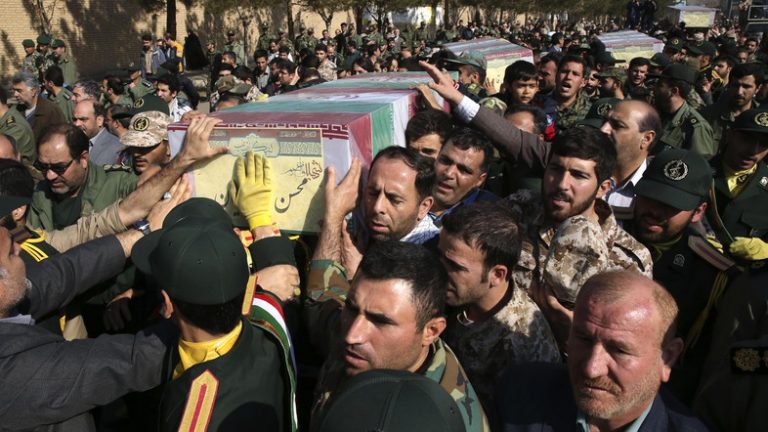
The families of 25 Kurdish prisoners who were executed by Iran earlier this month told an Iranian human rights organization that their relatives’ bodies bore marks of torture, Al Arabiya reported on Tuesday.

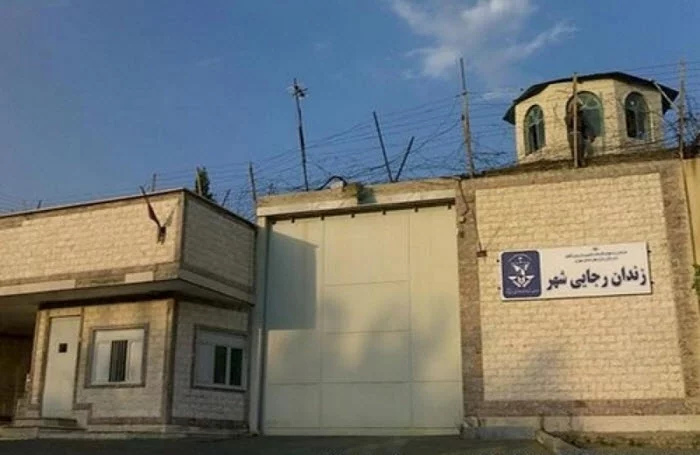
Thirty-six Sunni Kurdish activists who were being held in the political prisoners’ section of Rajai Shahr, a prison located near Tehran, were reportedly taken from their cells on August 2 by members of Iranian intelligence and security forces. The next day, 25 of the men were said to be executed.

Iranian intelligence officials physically abused the men prior to their death, including by breaking their bones, family members told the Defenders of Human Rights Center.

An activist from the Iranian Kurdish region of Sanandaj told the human rights center that the families of the deceased were threatened with arrest by members of Iran’s intelligence services, who warned them not to talk to the media about the torture marks. They were also told not to hold funerals for their executed relatives.

Another group, Human Right Activists News Agency, similarly reported that the condemned were assaulted before their execution.

Zeid Ra’ad Al Hussein, the United Nations’ high commissioner for human rights, blasted the executions earlier this month, saying, “The application of overly broad and vague criminal charges, coupled with a disdain for the rights of the accused to due process and a fair trial have in these cases led to a grave injustice.”

He also condemned last month’s execution of Hassan Afshar, 19, who was convicted by Iranian authorities of engaging in “forced male-to-male anal intercourse” while still a minor. Afshar claimed that the relations were consensual and that his accuser had engaged in same-sex relations previously. “The execution of juvenile offenders is particularly abhorrent and I urge Iran to respect the strict prohibition under international human rights law against this practice,” Zeid said.

Iran Human Rights reported on Wednesday that Iranian authorities executed three Ahwazi Arabs — Ghais Obidawi, Ahmad Obidawi, and Sajjad Balawi — whom they had accused of murder. Iran Human Rights said the men were “unlawfully arrested and subjected to a nontransparent trial.”

“These three Ahwazi Arab prisoners are victims of the Iranian government’s systematic repression in the ethnic regions of Iran,” said Mahmood Amiry-Moghaddam, a spokesperson for Iran Human Rights. “We call on the international community to draw more attention and show strong reaction to the arbitrary executions in Iran, especially the executions carried out in the ethnic regions this month.”

EXECUTED SUNNI PRISONERS WERE TORTURED BY IRANIAN AUTHORITIES SHORTLY BEFORE DEATH

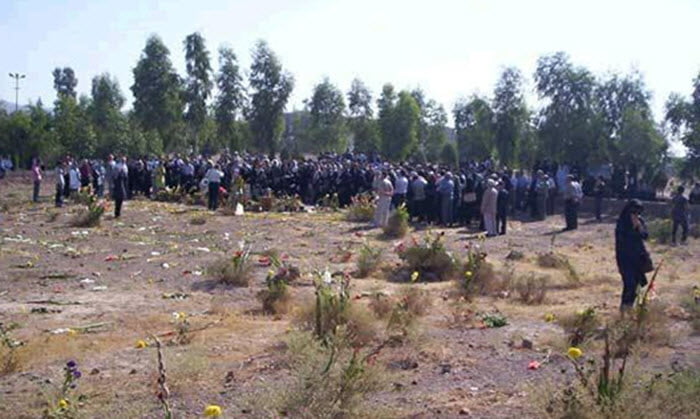
The families of the Sunni prisoners executed by the Iranian Regime on August 2 have revealed that prisoners’ bodies showed signs of torture, shortly before their execution.

Their bodies had bruises on the face and body indicating a beating shortly before their death and broken bones in the hands and feet.

The families shared the Iranian Ministry of Intelligence had threatened them if they talked to the press or anybody about the executions.

Most of those executed were arrested in Kurdistan by the Regime between 2009 and 2011 under vague charges like ‘waging war on God’. They were denied access to lawyers or their families; most of them were kept in solitary confinement and tortured for extended periods.

NEW STATEMENTS AND NEW DETAILS ON MASS EXECUTIONS IN IRAN

On Tuesday, the International Campaign for Human Rights in Iran published the contents of a statement by 22 international human rights groups responding to the early August execution of 20 Sunni Kurdish inmates, many of whom had reportedly been tortured into confessing to acting against the state. The statement points out that those 20 victims of Iran’s death penalty were drawn from a group of at least 33 Sunni and Kurdish prisoners who had been subject to frequent human rights violations and general mistreatment. It also notes that at least some of those individuals were political prisoners or prisoners of conscience, thereby contributing to a population of such prisoners which numbered 915 at last check.

Because of Iran’s relationship with the death penalty, and particularly because that penalty is sometimes given to political prisoners, the 22 human rights organizations have formally reiterated the call for an immediate moratorium on executions throughout the country. The joint statement also called upon both the United Nations Human Rights Council and the European Union to put pressure on the Islamic Republic of Iran over this and other human rights issues.

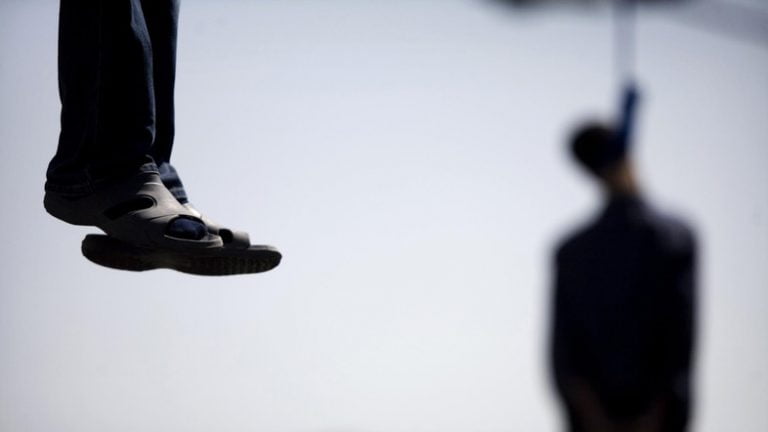
The mass executions that took place early in August have certainly become one of the newest hot button human rights topics regarding the Islamic Republic. The related controversy has continued to grow as more information has emerged about the incidents. On Tuesday, Al Arabiya reported that the families of some of those who were executed found that when they recovered their loved ones’ bodies, they bore marks that were indicative of torture prior to their hanging. It had previously been reported that the condemned men were physically assaulted by prison authorities before being taken to pre-execution solitary confinement.

There are many such reports of abuse in the Islamic Republic, and there would likely be more if not for the regime’s efforts to suppress details of what happens inside Iranian prisons. Al Arabiya also reported that Iranian intelligence agents had warned the relatives of some hanging victims to not discuss the condition of their bodies with the media or other outside sources. In some cases, relatives were even instructed not to hold public funerals, presumably out of fear that these could become rallying places for activism or political dissent.

Regardless of all this surrounding context, the August 3 hanging of 20 men was quickly described as one of the worst incidences of mass execution in recent years, although smaller scale mass executions throughout 2015 had contributed to a final total of nearly 1,000 executions in that year alone. Iran consistently ranks as the country with the highest per-capita rate of executions in the world, and last year’s figures were reportedly higher than any in the past 25 years.

But only a few years prior to that, the Iranian regime set a considerable record when, in the summer of 1988, it executed as many as 30,000 political prisoners, mostly members of the People’s Mojahedin Organization of Iran. This incident returned to the headlines around the same time that human rights groups began to speak out regarding this month’s executions. On August 9, Ahmad Montazeri, the son of an Iranian cleric who was once slated to take over the leadership of the Islamic Republic, posted an audio recording online featuring his father speaking out against the 1988 executions and thereby making additional information about the incident publicly available for the first time.

On Wednesday, the National Council of Resistance of Iran, which is made up in large part of the People’s Mojahedin, reported that Ahmad Montazeri had called upon the leadership of the Islamic Republic to apologize to the families of victims of the 1988 massacre. He added that the regime should disclose the locations of those victims’ burial sites and allow families to visit them for the first time.

Such commentary highlights the fact that at the same time that new human rights controversies are emerging in the Islamic Republic, there are longstanding human rights issues that remain unresolved and to a great extent un-acknowledged.

The NCRI has expressed concern that too few people are aware of the 1988 massacre or its true extent. Montazeri’s comments threaten to bring that incident into sharper focus, but it remains to be seen whether international human rights groups or Western policymakers will commit their own attention to the 28 year-old incident in the midst of more recent, but much smaller mass executions and the ongoing Iranian crackdown on persons with connections to the West.

The International Campaign reported on Tuesday that an American citizen who was arrested in July while visiting his native Iran has now been formally charged after spending long stretches of time in solitary confinement. Robin Shahini is said to be facing charges of “acting against national security,” “participating in protest gatherings in 2009,” “collaborating with Voice of America television” and “insulting the sacred on Facebook.” He is one of at least six foreign nationals who have been arrested in Iran in recent months on vague or unspecified charges, amidst unsubstantiated accusations of spying for Western governments.

The arrests have been widely interpreted as part of an effort to minimize cultural contact and information exchange between Iran and the West. Notably, that project promises to limit Iranian awareness of international statements regarding Iran’s human rights abuses. Toward that end, Iran’s civilian militia destroyed some 100,000 confiscated satellite dishes in July, and the Human Rights Activists News Network reported that a new round of confiscation began on August 8.


Source 

Iran ‘tortured’ prisoners before executions

A human rights organization said the families of the Sunni-Kurdish prisoners whom Iran executed earlier this month revealed that Iranian intelligence members had tortured their sons prior to executing them by hanging.

The Defenders of Human Rights Center in Kurdistan quoted the families of the executed prisoners as saying that they’ve seen torture marks on their son’s bodies in addition to broken legs and arms.

On August 2, members of the intelligence and masked members affiliated with the Iranian special security units raided the political prisoners’ section in the Rajai Shahr Prison in Karaj, west of Tehran, and led 36 Sunni Kurdish activists, who were sentenced to death at the time, to an unknown location. The next day, news of executing 25 of them was released

The Defenders of Human Rights Center quoted an activist in Sanandaj, capital of the Kurdistan province, as saying that Iranian intelligence members threatened to arrest the family members of the executed men if they speak to the media about the torture marks on their children’s bodies.

The activist added that security forces also warned them of holding funerals for those hanged.


7616a888-206d-493a-9517-018dbc763587Iran accussed the prisoners of committing several murders and undermining national security, state media reported. (Archives)

The Human Right Activists News Agency (HRANA) had reported that prior to executing the Sunni Kurdish activists, security officers handcuffed, blindfolded and physically assaulted them up and then held them in solitary confinement.

The execution of the 25 Sunni activists, who included young preacher Shahram Ahmadi, was met by a wave of international condemnation against Tehran.

The UN, EU, US and international human rights organizations have condemned the executions and criticized their trials for lacking transparency, for basing the verdicts on confessions made under torture and for not allowing the defendants to defend themselves.


In letters they leaked from jail to international human rights organizations, most of the executed men denied performing any armed acts and confirmed that their activity focused on the activities on religious teachings and that they were not members or supporters of any extremist movement.

Source