
IRGC Forces Arrest Dual National in Northern Iran
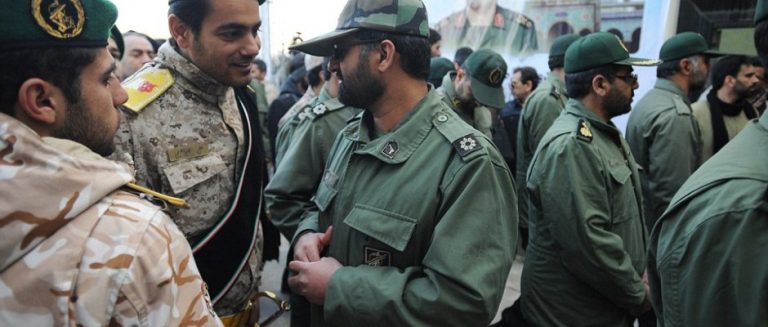
TEHRAN (Tasnim) – Iran’s Islamic Revolution Guards Corps (IRGC) force arrested an individual with dual Iranian-American nationality in the country’s northeastern province of Golestan.
TEHRAN (Tasnim) – Iran’s Islamic Revolution Guards Corps (IRGC) force arrested an individual with dual Iranian-American nationality in the country’s northeastern province of Golestan.

In July, Iran’s judiciary spokesman Gholam-Hossein Mohseni-Ejei confirmed to reporters that an Iranian-American citizen was arrested in the northeastern city of Gorgan. While Mohseni-Ejei did not confirm his name, many believed he was referring to California-based Reza “Robin” Shahini, who was visiting his mother in Iran.

NCRI – Former French Foreign Minister Bernard Kouchner has called for the formation of an international tribunal to prosecute officials of the mullahs’ regime for carrying out the massacre of over 30,000 political prisoners in Iran in the summer of 1988.

Riyadh denies the charge. But tension between the two countries is surging, with Saudi Arabia and Iran supporting opposite sides in wars in Syria and Yemen and rival political parties in Iraq and Lebanon.
The contest has largely hewed along sectarian lines as mainly Shi’ite Iran and Saudi Arabia, a predominantly Sunni country, vie for influence. That competition, officials in Tehran worry, has now spread inside their borders, thanks to what they fear is Riyadh’s exploitation of the Islamic Republic’s communal rifts.
They point to clashes — the first in almost 20 years — between the Democratic Party of Iranian Kurdistan (PDKI) fighters and Revolutionary Guards in the northwest in June and July that left several dead on both sides. As fighting escalated, Iranian forces shelled suspected Kurdish military bases in northern Iraq, raising the prospect that the conflict could spread across the border.
“(Saudi Arabia) gives money to any anti-revolutionary who comes near the border and says ‘Go carry out operations,'” Mohsen Rezai, the former head of the Revolutionary Guards said after one round of clashes, according to the Tabnak website. “When they ask, ‘Where should we carry out operations?’ they say, ‘It’s not important. We want Iran to become insecure.'”
Iran’s 8 to 10 million Kurdish community is mostly Sunni. In addition to the claims about Saudi funding for Kurdish armed groups, Iranian officials have also accused Riyadh of stirring up trouble among Iran’s other Sunni ethnic minorities like the Baluch in the southeast of the country and Arabs in Iran’s southwest. The PKDI denies receiving Saudi support. And for their part, Saudi officials deny meddling in Iranian affairs. Riyadh in turn accuses Iran of stirring up trouble amongst its Shi’ite minority, a charge Iranian officials have denied.
Riyadh fears a nuclear deal with world powers signed last year gives Iran more scope to push its interests internationally by releasing it from many of the sanctions which have crippled its economy. Alarmed by what it sees as a dangerous spread of Iranian activity overseas, the kingdom no longer relies heavily on Western allies to counter it, and is heightening its own efforts to contain Iranian influence.
PROXY WAR
Former Saudi intelligence chief Prince Turki al-Faisal showed up at a rally in Paris in July of the Mujahedin Khalq Organization (MKO), the main exiled opposition group seeking to topple the country’s clerical rulers. While Prince Turki holds no official position, his presence suggests Saudi Arabia has crossed a line in terms of willingness to publicly support Iranian opposition groups.
“The proxy war between Saudi Arabia and Iran is becoming much more open and much more determined,” said Abbas Milani, the director of the Iranian Studies program at Stanford University. The Islamic Republic has had a tense relationship with its Kurdish minority since the revolution in 1979, which would potentially make them an ally of Iran’s rivals, observers say.
The Revolutionary Guard fought Kurdish separatists immediately after the revolution and there have been periodic crackdowns on dissidents within the community since that time. That tension has led Iranian officials to accuse members of Sunni minority groups, particularly the Kurds, of sympathising with religious extremists, including Islamic State.
Last week, Iran’s intelligence minister Mahmoud Alavi announced that 1500 Iranian youth had been prevented from joining Islamic State. “It is a very convenient time to tie any act of persecution of the Sunnis to Islamic State,” said Hadi Ghaemi, the director of the International Campaign for Human Rights in Iran.
TENSION
In early August, Iran executed 20 Kurdish inmates, allegedly Islamists, in the Rajai Shahr prison, ramping up tension between the central government and the Kurdish region of the country. “The timing (of the executions) certainly appears to be sending a message to the Kurdish militant groups and the local Kurdish community,” said Ghaemi. “It’s really punishment of a community to spread fear and intimidation.”
The PDKI, for its part, denies any support from Saudi Arabia and says Kurds have been forced to take up arms because they have no alternative to secure their political rights. “Our main goal is not to pursue armed clashes,” said Karim Parwizi, a member of the PDKI politburo who is based in Erbil in northern Iraq. “We want to have organisational, political and civil activities.”
The operations by the PDKI come at a time when Kurds across the region appear emboldened: Kurdish armed groups in Syria have been gaining territory and the Kurdistan Regional Government (KRG) in northern Iraq is increasingly distancing itself from the central government in Baghdad. PDKI members say they have no official ties or shared operations with other Kurdish parties in Iraq, Turkey or Syria.
In mid-August, the secretary of Iran’s Supreme National Security Council Ali Shamkhani told a high-level security delegation from the KRG that border security was a “red line”, according to Mehr News. The KRG said it would not allow any group to threaten Iran’s border security, but Parwizi from the PDKI said his group had so far not been pressured to stop armed activities at the border, raising the possibility of further clashes.

According to a report by Yediot Ahronot, over the past year, Israel has been in contact with Hezbollah, via a Western intermediary, in an effort to finally solve the mystery of Arad’s fate.
The Shi’ite terror group reportedly expressed optimism regarding the prospects of uncovering the details of Arad’s captivity, noting progress in recent months. They added, however, that locating Arad’s remains has been hampered by changes over the years to the landscape.
“They [the sources within Hezbollah] said that the land in the area where Arad was buried has moved and been changed since it happened [his burial].”
“They’re continuing their efforts and are confident that they will succeed in the end to locate his grave.”
Aside from Hezbollah, Israeli investigators have also received – again, via a Western intermediary – cooperation from Iranian officials.
Dr. Ronen Bergman explained Iran’s interest in solving the Arad mystery, writing that the Islamic regime has sought clues regarding its own captives – four Iranian diplomats who disappeared in Lebanon in 1982. The Iranian regime had accused Israel of being behind the abduction of the four, and claimed they were still alive in Israeli captivity.
In 2004, Israel revealed to Iran – through German negotiators, who passed the material on to Hezbollah – information regarding the kidnapping, torture, and execution of the four diplomats by members of a Phalangist Christian militia. Despite the revelation, says, Bergman, Iranian officials have sought additional details of the abductions and the location of the four.
In 2005 and 2006, Hezbollah officials ramped up their efforts to gather details on the Arad abduction, contacting Iran’s Revolutionary Guard and Lebanon’s intellogence agencies.
Hezbollah also conducted digs around possible burial sites, revealing human remains which were then forwarded to Israel for DNA testing. In each case, however, the results were negative.
Over the past year, joint efforts between Israel and Hezbollah – and via Hezbollah, Iran – to uncover Arad’s remains and uncover the details of his captivity have been renewed.
Amir Teherani, an Iranian journalist living abroad with ties to some factions within the Iranian government, claimed the chairman of the Iranian parliament has offered to finally settle accounts regarding Ron Arad and the missing Iranian officials, proposing a swap of the remains.
Teherani added that in May, Israeli and Iranian representatives held extensive negotiations in Cyprus. Senior Israeli and Iranian officials, he claimed, took part in the talks.
Ron Arad was captured by members of the Shi’ite militia ‘Amal’ after he and pilot Yishai Aviram were forced to eject over Lebanon in October 1986.
While Aviram was retrieved by Israeli forces, the rescue team came under heavy fire, and was unable to locate Arad before evacuating.
In the late 1980s Arad was handed over to Hezbollah, before being transferred to Iranian forces. In the mid-1990s Arad, reportedly suffering from an illness, was refused medical treatment, and died in captivity. Israeli investigators believed Arad death occurred sometime between 1993 – after the last sign of life was produced – and 1997.
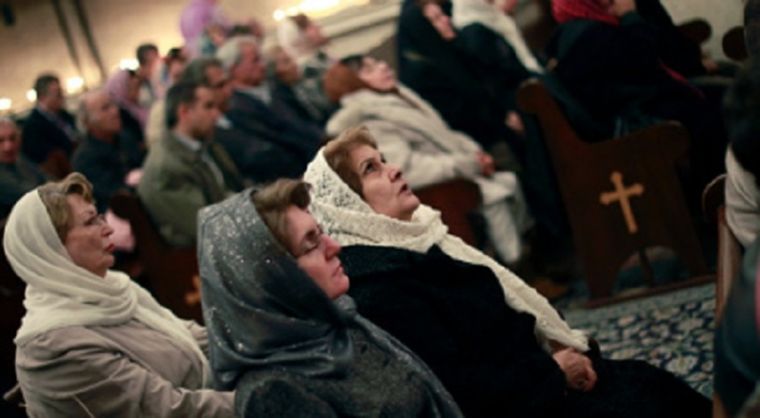
The five were arrested after plainclothes police officers stormed a house where a family and their guests were celebrating a party. The officers initially rounded up 15 people. When they tried to resist, the police brutally beat them before hauling off five of them, according to Mohabat News.
The Iranian Christian news agency reported that the raid on the house was part of the government crackdown on family parties and weddings where Islamic regulations are not strictly followed. Those arrested in these gatherings could be charged with refusing to follow Islamic law.
The five men arrested during the party were taken to an unknown location and charged with evangelism, a crime that could mean death or life imprisonment. They have yet to appear before a court of law.
The five were arrested despite the existence of a law that specifically forbids the police from making arrests and searches without a court order.
The report found that religious freedom conditions “continued to deteriorate” over the past year with Christians and other minorities facing the most persecution in the form of harassment, arrests, and imprisonment.
The report noted that under President Hassan Rouhani’s administration, the number of religious-based arrests has increased despite Iran’s continuous denial that it is violating people’s human and religious freedom rights.
The report states: “The government of Iran continues to engage in systematic, ongoing, and egregious violations of religious freedom, including prolonged detention, torture, and executions based primarily or entirely upon the religion of the accused.”
The report notes that as many as 550 Christians have been arrested and detained since 2015, and at least 90 Christians remain in prison or detention as of February due to their religious beliefs and activities.
Human rights activists inside Iran have reported a significant rise in the number of physical assaults and beatings of Christians in prison. Some of these activists believe the assaults, which have been directed against converts who are leaders of underground house churches, are meant to intimidate others who may wish to convert to Christianity.
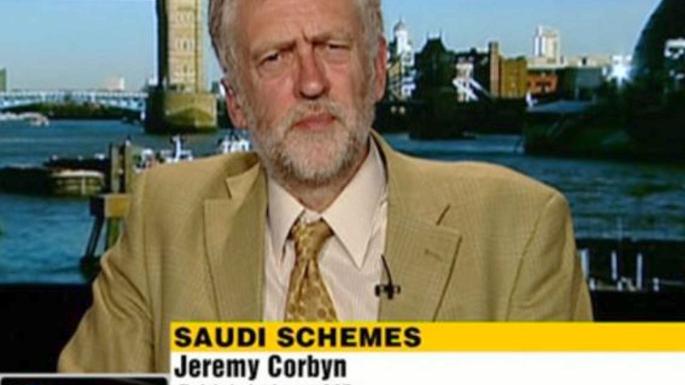
Mr Corbyn claimed that he used his Press TV role to address “human rights issues”, even though there is no record of him speaking out against the channel for broadcasting the forced confession of a tortured journalist.
According to his parliamentary register of interests, Mr Corbyn appeared on Press TV four times between 2009 and 2012. His most recent appearance is noted as July 11, 2012, six months after Ofcom revoked the channel’s licence for breaching the Communications…
Troubles began last Friday, August 26, when Christian men August Ramiel Bet Tamraz, Amin Nader Afshar, Hadi Askary, Mohamad Dehnay and Amir Sina Dashti along with their wives went to to Firuzkuh north of Tehran to go fishing and have a picnic.
Christians and rights activists told BosNewsLife that that at about 1.30 pm local time security officials from the feared Ministry of Intelligence and Security (MOIS) “raided” the event and separated the men from the women.
“Amin Nader Afshar asked to see the arrest warrant, which the officials did not produce, and Amin was then beaten,” added advocacy group Middle East Concern (MEC).
“The MOIS officials then took the five men away and family members have been unable to obtain information about their whereabouts.”
PASTOR DETAINED
Ramiel Bet Tamraz is the son of Assyrian Pastor Victor Bet Tamraz who was detained on December 26, 2014 at a Christmas celebration at his home. Amin Nader Afshar was also detained at that time, Christians recalled.
“Pastor Victor was charged verbally with “conducting evangelism”, “illegal house church activities” and “Bible printing and distribution”, MEC said.
The pastor was released on bail March 1, last year shortly after Amin Nader Afshar was released on bail in February 2015. They are still expected to be summoned to court to face charges related to their Christian activities.
“Family members see no reason for the arrests apart from the connection to the arrest of Pastor Victor and Amin at the Christmas celebration in Pastor Victor’s home in 2014,” explained MEC, which is closely following the case.
Christians reportedly feared that MOIS officials are trying to force confessions and to extract “evidence” against “the victims” of the 2014 Christmas arrests.
PRAYERS REQUESTED
In published remarks families and friends of the five men reportedly asked Christians to pray that “those detained will know the presence, peace and provision of Jesus, will be able to answer their interrogators with wisdom, and will be released soon.”
They also wanted to pray that “they will remain strong in their faith and clear in their witness” and that “family members will know the comfort, peace and presence of Jesus” and that “the charges against Pastor Victor and Amin will be dropped.”
Christians also said they also hope that “all officials involved will love mercy, act justly, learn about Jesus and choose to follow Him.”
The arrests are seen by believers as part of a winder crackdown on especially evangelical Christians and former Muslims in the strict Islamic nation where officials have expressed concern about the spread of Christianity and house churches.
The information, which was recently passed by the NCRI to online UK newspaper MailOnline, details extensive operations based out of a massive building nicknamed ‘the Glasshouse’ near Damascus.

The NCRI claims that Iran’s Supreme Leader Ali Khomeini has spent billions on hardware for Bashar Al-Assad’s government forces since the Syrian Civil War erupted in 2011.
The testimony gathered by the NCRI, if true, means that Iran currently controls the largest fighting force in the conflict and has military bases throughout Syria. The information has been analyzed by intelligence experts and described as ‘credible’.
The information gathered by the NCRI claims that the enormous ‘Glasshouse’ building, with 6 levels and 180 rooms, is the center for an organized and concerted effort to keep Assad in power in Syria.
‘The Glasshouse’: massive war complex near airport
The complex is strategically located near Damascus Airport to allow for frequent delivery of troops, arms, and equipment. Inside are departments for counterintelligence, logistics, propaganda and foreign mercenary command. The top two floors are received for Iranian intelligence services.

The information exceeds previous reports which, if the report is to believed, hugely underestimated Iranian involvement in Syria. Western sources had previously placed the number of Iranian combatants in Syria at 16,000; the reality may be that 16,000 Iranian troops are commanding 45,000 Shia mercenaries recruited from all over the Middle East.
Kamal Alam, a research analyst at British defense and security think thank the Royal United Services Institute (RUSI), has said that the information is “entirely plausible”.
“I go quite regularly to Syria and visit the battlefields, and I’ve seen how the Iranians try to keep their operations as secret as possible,” he said.
“Their troops tend to speak Arabic rather than Farsi in public, and generally don’t wear Iranian uniforms. This makes it very hard for observers to know how many are in the country.”
He claims western governments have been forced to make conservative estimates due to the lack of official figures released from Tehran.
Iran’s strategy in Syria and internationally
Neither the Syrian nor Iranian governments are interested in highlighting Iran’s involvement in the Syrian conflict. Syria does not wish to appear to be beholden to Iran’s influence, while Iran does not wish to spark alarm or outrage through its massive contribution to the violence.
The Syrian Civil War has been described as a proxy war and as a form of cold war because nations with a geostrategic interest in Syria, like Russia, Saudi Arabia, Iran, the United States, and European countries, all play a role in funding or arming loyalist or insurgent forces.
Bashar Al-Assad is a major regional Shia ally of Iran. It therefore has a strong incentive to sustain Assad’s presidency.
Being seen as playing too strong a role in the Syrian Civil War can be alarming to international observers, both because of the devastating human toll of the war and because it can cause tensions with those supporting the insurgents or who wish to see a swift end to the conflict. Intelligence revealing the extent of outside actors’ involvement in the war is often only revealed through information leaks.
To the international community and domestically, Iran has portrayed its involvement in Syria as a battle against international terrorism.
A British Foreign Office spokeswoman said in a statement to MailOnline that “Iran’s role in fostering instability in the Middle East, including ongoing support for proxy groups and the Assad regime, and the activities of the Quds force, remains a source of serious concern.”

Special Rapporteur Ahmed Shaheed condemned the August 27 killing of Alireza Madadpour and eleven others on drug-related charges. Shaheed had asked Iranian authorities not to proceed with the executions the day before they were carried out.
“The execution of individuals for drug-related offences is simply illegal,” Shaheed said, observing that international law reserves the death penalty for the “most serious crimes,” which involve intentional killing, and only permits its application after a trial that strictly guarantees due process for the accused. None of these conditions were met in the case of the twelve executions, Shaheed said.
While the rapporteur acknowledged that Iran was permitted to crack down on drug trafficking, he observed that the crime “does not justify the use of the death penalty.”
“The execution of Mr. Madadpour and 11 others shows the Iranian authorities’ complete disregard of its obligations under international human rights law and especially of international fair trial standards and due process guarantees,” Shaheed added.
Earlier this month, Zeid Ra’ad Al Hussein, the UN’s high commissioner for human rights, called Iran’s execution of twenty Kurds a “grave injustice.” A few days earlier, Amnesty International condemned Iran’s execution of a gay teen in July as illegal.
In March, Shaheed released his report on the human rights situation in Iran. The report noted that executions had increased to a record high for the third straight year under President Hassan Rouhani in 2015, and that the governing was restricting press freedoms, denying rights to minorities and women, and interfering with free elections.
In October of last year, Shaheed called the increasing rate of executions in Iran an “unprecedented assault on the right to life.”