
Home Blog Page 318

Iranian regime is sending weapons and money to rebels

0
Iranian regime is sending weapons and money to rebels – The Iranian regime has steadily supported the rebels in Yemen for the past ten years and continues to send weapons and money to the group, according to the Yemeni officials concerned about the mullahs’ interference in that country.


Iranian regime is sending weapons and money to rebels, Iran, Iranian Regime, IRGC, IRGC Commander, Yemen, Weapons, Houthis, Revolutionary Guards, Quds Force, Iranian military, Shi'ie, Hezbollah, Ali Akbar Velayati, Ayatollah Khamenei, Ansar Allah , Lebanon
Iranian regime is sending weapons and money to rebels

A senior Yemeni security official told Reuters news agency that the Iranian regime had steadily supported the Houthis, who have fought the central government since 2004 from their northern stronghold of Sa’dah.

“Before the entrance into Sanaa, Iran started sending weapons here and gave a lot of support with money via visits abroad,” the official said.

A second senior Yemeni security official said “weapons are still coming in by sea and there’s money coming in through transfers”.

Iran, the first official said, saw that victory would be swift in Yemen, unlike in Iraq and Syria, and “with not too much expense”.

According to the Reuters report, a Western source familiar with Yemen also said the Houthis had been getting training and money.

“It’s been happening for over a year. We’ve seen Houthis going out to Iran and Lebanon for military training.”

“We think there is cash, some of which is channeled via Hezbollah and sacks of cash arriving at the airport. The numbers of those going for training are enough for us to worry about,” the source said.

A senior Iranian official told Reuters that the Quds Force, the external arm of the Iranian regime’s Revolutionary Guard, had a “few hundred” military personnel in Yemen who train Houthi fighters.

He said about 100 Houthis had travelled to Iran this year for training at a Revolutionary Guards base near the city of Qom. It was not immediately possible to verify this claim.

The official said there were a dozen Iranian military advisers in Yemen, and the pace of money and arms getting to the Houthis had increased since their seizure of Sanaa.

“Everything is about the balance of power in the region. Iran wants a powerful Shi’ite presence in the region and that is why it has got involved in Yemen as well,” said the Iranian official.

A senior commander of the Iranian regime’s Revolutionary Guards admitted on December 6 the regime’s meddling in Yemen as well as other countries of the region by creating proxy groups.

Brig. Gen. Hossein Salami, Deputy Commander of the IRGC, stated that groups like Hezbollah are no longer only in Lebanon, but today such forces have been formed in Yemen and Syria.

“Until the last few years, we have witnessed only the forces of Hezbollah in Lebanon who could stand up against the West’s bullying; but today, a major force has been formed in Syria and Iraq, as well as the forces of Ansar Allah in Yemen; this shows the potential the Islamic Revolution has to re-take Muslim lands from Western powers,” Hossein Salami said, speaking at a gathering in the city of Ardebil on December 6.

Meanwhile on Monday Ali Akbar Velayati, a senior advisor to the regime’s Supreme Leader, Ali Khamenei, said: “Iran’s current influence spreads from Yemen to Lebanon.”

Prior to this, speaking to a group of Yemenis, Ali Akbar Velayati expressed his support for the Houthis and Ansar Allah groups in Yemen.

He expressed his hope that Ansar Allah plays a role similar to that of Hezbollah in Lebanon which was founded by the Iranian regime in the 1980s.

Velayati said the freedom of Palestine passes through Yemen which, because of being situated at the Red Sea, the country has strategic importance.


Source: NCRI – Iranian regime is sending weapons and money to rebels


Iran Briefing | News Press Focus on Human Rights Violation by IRGC, Iran Human Rights
Iran Poses Huge Worldwide Cyber Threat

0
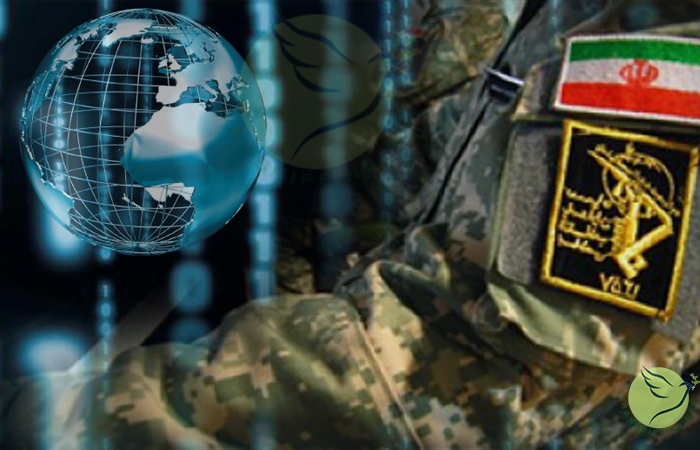
Iran Poses Huge Worldwide Cyber Threat – “Hopefully the Operation Cleaver report serves as a wake up call for global critical infrastructure providers,” writes Cylance CEO and founder Stuart McClure, the man behind a riveting new report that positions Iran as the number one threat to global cyber security.


Iran Poses Huge Worldwide Cyber Threat, Iran, IranBriefing, Iran Briefing, Iran Cyber, Cyber Threat, Iran Cyber Threat, IRGC, IRGC Cyber Threat, Cyber Attack, Iran Cyber Attack, IRGC Cyber Attach, Cyber Security, Cylance, FBI, Global Threat, Iranian Cyber Army,  United States, Cyber Crime
Iran Poses Huge Worldwide Cyber Threat

What Cylance found is chilling indeed and needs to be call-to-action for governments and businesses worldwide. According to the report, a skillful and likely well-funded hacker team based in Iran has launched numerous data extraction attacks against electric utilities, oil and gas companies, airports, and other key infrastructure services in at least 16 countries.

Acknowledging the threat, the FBI reportedly issued a “Flash” advisory Dec. 12, warning businesses to be on the lookout for certain types of malicious software and techniques, along with advice to contact the FBI if companies believe they have been hit.

After 10 years of viewing China as the leading global threat to information security, security specialists need to realize that “Iran is the new China,” warns threat detection company Cylance. Released Dec. 2, Cylance’s “Operation Cleaver” report sums up a two-year investigation by the Irvine, California-based company.


Larger, More Sophisticated Attacks

“Hacking attacks sourced out of Iran are nothing new,” the report said, pointing to the security industry’s tracking of actors such as the Iranian Cyber Army since the early 2000s. However, that activity has become larger and more sophisticated in recent years, with the Iran-based “Operation Cleaver” targeting a much broader range of organizations in numerous countries around the world.

“Operation Cleaver has…focused on a wide array of targets, including energy producers and utilities, commercial airlines and airports, military intelligence, aerospace, hospitals, and even universities — with only ten of the targets based in the United States,” the report said. “Such broad targeting demonstrates to the world that Iran is no longer content to retaliate against the US and Israel alone. They have bigger intentions: to position themselves to impact critical infrastructure globally.”

Cylance said it released its report “sooner than we would have liked” because it believed it was important to expose to the world “Iran’s rising expertise.”

“The evidence and indicators of compromise we provide in this report will allow potentially unaware victims to detect and eliminate Cleaver’s incursions into their networks,” the report said.


Clear Pattern Emerging

We interviewed Cylance security researcher Justin Clarke to learn more about how his company first identified Operation Cleaver and what it has learned since then.

Clarke said Cylance’s investigation began after a client came to the company for help following a malware attack. As time went on, Cylance investigators realized that several other clients had experienced similar attacks. In each case, data from the targeted organization was being pushed to a particular file server, Clarke said. So Cylance accessed that file server and downloaded all the data it could.

That data, Clarke said, showed that someone based in Iran was launching an organized and sophisticated attack on a large number of key targets across countries including Canada, China, England, France, Germany, India, Israel, Kuwait, Mexico, Pakistan, Qatar, Saudi Arabia, South Korea, Turkey, the United Arab Emirates and the U.S. The attacks’ goals, Clarke said, did not appear to be downtime of IT systems, but “data exfiltration.”

Throughout its investigation, Cylance has been “in constant contact with law enforcement,” Clarke added, noting that the company’s primary contact has been with the FBI.


No One Is Safe

“Iran has not really been on the map yet,” Clarke said. However, Operation Cleaver “shows they are, I believe, flexing their muscles, and very skillfully.”

While the hacker team has not yet been identified, Clarke said it was also clear “it’s not one nerd in a basement….They’re skilled and potentially funded.”

With some media sources contacting Iranian sources ahead of the report’s release over the past couple of days, the hacker team has shown signs of going offline, Clarke said, although it’s unlikely its activities will cease. Meanwhile, security specialists and government agencies are continuing their work to try and identify those responsible.

Clarke said any organization, large or small, in any industry should be alert to the signs of a cyberattack, including spear phishing and SQL injection. They should also make sure their IT perimeters are secure and that they perform virus and malware scans “everywhere,” he said.

“It’s amazing how easily some of these companies are infiltrated,” he said. “In my opinion, everyone is a target.”


Source: News Factor – Iran Poses Huge Worldwide Cyber Threat


Iran Briefing | News Press Focus on Human Rights Violation by IRGC, Iran Human Rights

A Strange Budget for a Strange System

0
A Strange Budget for a Strange System – What do you do when your ambitions are bigger than the resources you have to pursue them? The Tehran leadership must have asked itself this question when drafting the national budget for the next year (according to the Iranian calendar), which starts on March 21.


A Strange Budget for a Strange System, Iran, Iran Briefing, IranBriefing, IRGC, IRGC Commander, Hassan Rouhani, Economy,  Khatam Al-Anbia, Quds Force, Lebanon, Syria,
A Strange Budget for a Strange System

Since his election, President Hassan Rouhani has missed no opportunity to paint a black tableau of an economy, which he says—shaking his head in feigned sorrow—he inherited from “that man,” former President Mahmoud Ahmadinejad. Rouhani has promised to “repair the damage” done by Ahmadinejad and restore the health of the economy.

However, his new budget, because he is either unable or unwilling to contemplate serious reforms, amounts to a bill of goods rather than serious economic policy.

When presenting the draft budget, Rouhani made three claims. The first was that the budget was based on oil prices of around 75 US dollars per barrel. While oil represents around 11 percent of the Iranian gross domestic product (GDP), it accounts for almost 30 percent of the 312 billion US dollar budget. The trouble is that no one knows where oil prices might go over the next year. The problem is further complicated by the freezing of over a billion dollars of Iranian oil revenue every month by the so-called P5+1 group (the US, UK, France, Russia, China, and Germany).

Rouhani’s second boast was that he is offering a balanced budget. He must have got that obsession from his band of “Chicago Boys,” US-trained economists who regard the need to balance the budget as an article of faith. They don’t realize that when an economy is in decline, as is the case with Iran’s right now, cutting public expenditure, which means reducing demand, could worsen the situation.

According to the Institute of International Finance, the Iranian economy has shrunk by 8.6 percent since 2012. This has led to a jump in unemployment from 11 to 16 percent, which, in turn, has provoked a sharp fall in consumer expenditure. In such a situation the sanest policy would be to aim to raise investment in sectors, most notably infrastructure, that could boost the job market. Obsessed by his “balanced budget” boast, Rouhani has done the opposite by reducing or cutting funding for over 4,000 projects of all sizes.

The president has also increased the military budget by 33 percent. The lion’s share goes to the Islamic Revolutionary Guard Corps (IRGC), which sees its budget rise by 50 percent to 6.7 billion dollars. If we take into account the part of the public sector controlled by the IRGC, often through Khatam Al-Anbia Holdings, it appears we are witnessing a dramatic militarization of the economy.

Then we have the separate, and secret, budget allocated to the IRGC’s Quds Force, whose mission is to export revolution through Hezbollah and a network of other Khomeinist outfits in seventeen countries. Deeply involved in Lebanon and Syria, which costs the Treasury an estimated 2.8 billion dollars a year according to conservative estimates, Iran is being dragged into the Iraqi quagmire in the hope of seizing control of a corridor spanning from the Iranian-Iraqi border to Syria and Lebanon.

To balance his budget, Rouhani has done something else. Not only has he all but ended transfers to the Oil Revenues Reserves Fund set up by Ahmadinejad for a rainy day, but now envisages treating it as a cookie jar to be raided. Yet another trick Rouhani has used is to slash many subsidies that help the poorest Iranians survive. One immediate effect of this is a 30 percent rise in the price of bread, the staple food of 90 percent of Iranians.

Even then the figures simply don’t add up. By our calculation the proposed budget has a 7.8 percent built in deficit.

The draft is based on the hope that the inescapable deficit would be covered by an increase in indirect taxes, customs duties and a new generation of treasury bonds. Rouhani is not the first to use that stratagem. All Khomeinist presidents have practiced what could be called economic taqiyah (dissimulation) to produce balanced budgets. Rouhani is also counting on further falls in the value of the currency, the rial. Iran finds itself in a peculiar situation in which the government has a vested interest in the decline of its currency, which would allow the government to get more rials for its dollars. Thus, Rouhani’s promise of increasing public sector pay by an average of 14 percent could easily be covered with a 20 percent fall in the value of the rial. With inflation estimated at around 20 percent, public sector workers will end up at least six percent poorer.

In the best circumstances the Iranian state’s ability to collect taxes of all kinds is equal to 25 per cent of GDP. However, no government, under the Shah or under the mullahs, has ever come close to that amount. And yet the Iranian economic model is a top-heavy statist one. I remember a visit in 1978 by Margaret Thatcher, then leader of the British Conservative party but not yet prime minister, during which she mocked Iranian leaders for having created an economy that was “more Socialist than that of Poland,” then under Communist rule. Though not entirely accurate, the jibe contained a grain of truth.

However, the difference between then and now is that under the Shah the state did indeed dominate, and to some degree controlled, the economy. Under the mullahs the state has become one player among many. Para-state players, notably the IRGC, revolutionary foundations, the network of businesses reporting to the “Supreme Guide,” and business empires controlled by mullahs, are regarded as part of the public sector and pay no taxes to the state. They constitute a parallel “grey economy” worth at least 100 billion dollars a year.

Even in the private sector, many entrepreneurs have learned to circumvent the state by setting up businesses alleged to have a religious mission. Instead of paying taxes to the state, they claim to be paying the “share of the Imam” (sahm e emam) to mullahs, and refuse to publish their accounts.

Call it “Islamic Socialism” if you like, but the system in which Rouhani presents his budget is a strange beast in which religion is in the service of business. Some in the West claim that Islam needs a separation of religion and politics. However, in the case of Iran at least what is more urgently needed is a separation of religion and business.


Source: Asharq Al-Awsat – A Strange Budget for a Strange System


Iran Briefing | News Press Focus on Human Rights Violation by IRGC, Iran Human Rights

Zarif and IRGC Commanders Exchange Jabs over National Security

0
Zarif and IRGC Commanders Exchange Jabs over National Security


Zarif and IRGC Commanders Exchange Jabs over National Security, Iran, IranBriefing, Iran Briefing,  IRGC, IRGC Commander, Nuclear Talks, Nuclear, Javad Karimi Ghodoosi, Mohammad-Javad Zarif, Iran Foreign Minister, Diplomacy, Ayatollah Khomeini, Ayatollah Khamenei
Zarif and IRGC Commanders Exchange Jabs over National Security

Last week witnessed more comments in support of the response that the top Revolutionary Guards commander, Mohammad Ali Jaafari, provided to foreign minister Mohammad-Javad Zarif’s recent remarks when he said, “I proclaim that the Islamic republic is today more secure after the nuclear talks.” The remarks brought a volley of reactions but the first to lead the very next day was Jaafari who said, “The security of the Islamic regime was not the accomplishment of the year-long talks.” A number of former Guards members who are now members of Iran’s parliament jumped on the bandwagon to support the IRGC’s view, some of them concluding that the nuclear talks that have been held between Iran and the major world powers commonly known as the P5+1 have been without benefit.

Former Guards member Javad Karimi Ghodoosi who now sits on the Majlis national security and foreign policy committee, for example, was blunt when said, “The security of Iran today is the result of the 35-year resistance of the nation which includes the imposed war, sanctions …. and it has not been the talks that have provided this security to Iran.” He played down the nuclear talks by saying, “After the passage of a year Iran’s talks with the P5+1 have not accomplished anything because of American undermining actions and we are witness to their disruptive behavior and those of their associates, including their non-commitment to their pledges.”

Ghodoosi went further and had some critical words for Zarif as well. “The foreign minister has never produced a clear report on the accomplishments of the talks whether at committee meetings, at the full Majlis or to the public and has restricted himself to speeches and propaganda about the talks,” he said.

Another member of the same Majlis committee who comes from the Revolutionary Guards, Mohammad Ismail Kowsari, a former commander of the Sarollah base, echoed Ghodoosi’s words. “Our stability and security today is the product of the sacrifices made by the martyrs of the revolution, the holy defense (the 8-year war with Iraq) and then the development of various range missiles, all of these under the leadership of the supreme leader.” Diplomacy and talks have their own place. Talks through national power and the support of the nation can be productive. In fact, it was the support of the leader and the public that enabled the negotiations team to present a solid presence.” He concluded, “We have always stressed that the negotiation team in the P5+1 talks should take the lead from the brave resistance of our martyrs during the eight year holly defense.”

Another former Guards commander Mansoor Haghighatpour also commented on the issue and said, “It is not true that the nuclear talks with the P5+1 states have made the country safer. I do not accept Mr. Zarif’s remarks because the security of the country has always been strong and officials have not acted weakly in this regard.” He continued, “Mr. Zarif should explain in more detail what he meant with his remarks. Today, we must use new concepts for security and exchange views about them. If insecurity until yesterday was based on military behavior, today the enemy is threatening our mind, identity and culture. I hope that the foreign minister will pay sufficient attention to these.”

Fars news agency, which is close to the right in the political spectrum of the country, spoke with a number of hardliners from the steadfast front in parliament – who are well known critics of the administration – all of whom reproved of Zarif and offered advice on his remarks.

For example, Mohammad Soleymani, the minister of communications in Mahmoud Ahmadinejad’s administration and a member of the steadfast front in the Majlis had some strong words when he said, “What results have the nuclear talks produced till now that have made the country more secure? Extending the talks is not a big result. The talks had been extended before as well. The talks have not even had an impact on the economy of the country, let alone its security.” He then said, “These words of Mr. Zarif are unfounded claims and constitute a major mistake of the administration.”

Last week, speaking at a seminar on nuclear diplomacy at Tabatabai University in Tehran, foreign minister Zarif had said that Iran was more secure because of the nuclear talks and added, “Nobody can beat the drum of war against our people and all the inimical atmosphere against Iran have ended. The world understands that understandings can be reached through logic, respect, talks and mutual interests.” Zarif named Israel and said it along with some neighbors tried hard to make sure the nuclear talks failed. His talk clearly did not give the Revolutionary Guards any credit or role in the current security picture of the country.

Another Guards commander, Attaollah Salehi was as blunt as the others over Zarif’s remarks. “I am surprised that diplomacy and negotiations are given the credit for our work. Our job is preparedness and we are adding to that by the day.”

Last Thursday, another general Hossein Salamati who is the deputy for the top Guard commander also had some comments without naming Zarif by name. “Our defensive power has provided our diplomacy the best potential and foundation.”

Zarif has not publicly responded to the censures but one of his advisors, seyed Mohammad Hosseini, told reporters, “The statements by the foreign minister in explaining the work of the negotiations team are in line with the direction identified by the supreme leader and the president in breaking the threatening atmosphere and ultimately strengthening the security of the country. His remarks do not negate the extraordinary progress made by the military, defense, intelligence and security agencies of the country, which are a source of pride not just of the people but all Muslims and deprived people of the world.” He then quoted Jaafari’s remarks about the leadership of the super leader and said, “The security of the country is indebted to the thoughtfulness of the supreme leader (whom he called “imam Khamenei”) and ayatollah Khomeini.” These words had their intended effect and the response came through an article in the official newspaper of the political office of the IRGC which welcomed the remarks by Zarif’s advisor.


Source: Iran Press News – Zarif and IRGC Commanders Exchange Jabs over National Security


Iran Briefing | News Press Focus on Human Rights Violation by IRGC, Iran Human Rights

After Blasting IRGC for Corruption, Rouhani Boosts Their Budget by 50%

0
After Blasting IRGC for Corruption, Rouhani Boosts Their Budget by 50% – Even as he was blasting the Islamic Revolutionary Guard Corps (IRGC) for corruption on Monday, President Hassan Rouhani of Iran increased the organization’s budget by 50%.


After Blasting IRGC for Corruption, Rouhani Boosts Their Budget by 50%, Iran, IRGC, Hassan Rouhani, Shi’ite militias, Iraq, Syria, IRGC budget,  Terrorism, Iranian Revolutionary Guard Corps, IranBriefing, Iran Briefing
After Blasting IRGC for Corruption

Bloomberg News reports that Rouhani enacted this increase even as oil prices, a primary source of Iran’s revenues, are dropping:

Rouhani proposed increasing the Islamic Revolutionary Guards’ budget to 174 trillion rials ($6.5 billion) from 115 trillion rials, according to figures published today by Tasnim news agency.

The IRGC budget constitutes 62 percent of Iran’s armed forces budget, according to government figures. Total defense spending, including for the regular army and Basij paramilitary force, will climb 33 percent to about 282 trillion rials, reflecting Iran’s increasing commitment to fighting the Islamic State in Iraq and propping up Bashar Assad’s regime in Syria.

On Monday, Rouhani was quoted saying in reference to the IRGC, “If guns, money, newspapers and propaganda all gather in one place, one can be confident of corruption there… Even Abuzar and Salman [allies of Prophet Mohammad] would have become corrupt under one organization that has accumulated everything.”

In recent weeks, Iran’s involvement in Iraq and Syria has gotten more attention. Last month Syrian opposition forces reported that Iran was organizing pro-regime Shi’ite militias. A week later, Reuters reported that parallel Iranian attempts to unite Shi’ite militias in Iraq “have certainly fueled sectarian violence,” and have been described as “just as brutal” as the Islamic State of Iraq and Syria (ISIS), whom they are fighting.

In How Iraq Became a Wholly Owned Subsidiary of the Islamic Republic of Iran, published in the December 2014 issue of The Tower Magazine, Jonathan Spyer and Aymann Jawad Al-Tamimi describe the IRGC’s incursions into Iraq, disrupting any possible hope for regional stability.

The growing importance of the [Iranian-backed] Shia militias’ resistance to [ISIS] in Iraq is not simply the result of their own combat skills. It is very much a product of the Iranian Revolutionary Guard Corps (IRGC), the Iranian regime’s elite paramilitary force, whose role in regional conflicts—and, it should be noted, terrorism—is large and expanding. The Shia’s success in Iraq reflects the effectiveness of IRGC doctrine regarding the construction, support, and use of sectarian political and military proxies as a central tool—sometimes the central tool—of Iranian policy in the region.


Source: The Tower – After Blasting IRGC for Corruption, Rouhani Boosts Their Budget by 50%


Iran Briefing | News Press Focus on Human Rights Violation by IRGC, Iran Human Rights

Baghdad cannot stop Soleimani from entering Iraq

0
Baghdad cannot stop Soleimani from entering Iraq – Islamic Revolutionary Guard Corps (IRGC) Quds Force commander Qasem Soleimani is able to freely enter and exit Iraq despite being under an International travel ban, a member of Iraq’s parliamentary foreign affairs committee alleged on Tuesday.


Baghdad cannot stop Soleimani from entering Iraq, Iran, Iraq, IRGC, IRGC Commander, International travel ban, Qassem Suleimani, Iraq, UN, U.S., Quds Force, UN sanctions, Terrorism, Yemen, Syria, IranBriefing, Iran Briefing
Baghdad cannot stop Soleimani from entering Iraq

In comments to Asharq Al-Awsat, MP Mithal Al-Alusi said: “Qasem Soleimani does not need permission from anyone to enter or exit Iraq,” adding that the controversial Iranian official even has a house in Baghdad’s Green Zone.

Alusi’s comments come after UN sanctions monitors issued a seven page report this week investigating photographs taken inside Iraq, which appear to confirm that Soleimani is violating the travel ban.

UN member states, including Iraq, are obliged to deny entry to individuals subject to such a ban.

“One photograph reportedly shows him near the city of Amerli in northern Iraq after forces re-took the city from the Islamic State of Iraq and Syria (ISIS),” the report by the UN Panel of Experts on Iran said.

The Quds Force commander has been subject to an international travel ban and asset freeze by the UN Security Council since 2007. The Quds Force is a sub-branch of Iran’s IRGC which reportedly specializes in operations abroad. The group, and the wider IRGC, are viewed with suspicion outside Iran, and have been accused of involvement in terrorism. A number if entities affiliated with the IRGC, including some high ranking officers in the organization, have been sanctioned by the US and the EU.

In addition to claiming that Soleimani has been able to ignore the UN-mandated sanctions on his movement, Alusi also alleged that his ability to do hinges on tacit US acceptance of his activities in Iraq.

“He [Soleimani] feels safe to violate this travel ban due to the presence of US-Iranian consensus on a number of important regional issues. The US has taken the hand of Iran in Yemen, Syria and Iraq, in return for the [resolution of] the Iranian nuclear file,” the Iraqi parliamentarian claimed.

“The Iraqi government cannot restrict Soleimani movement so long as this is taking place . . . within the framework of a deal between Washington and Tehran,” he added.


Source: Asharq Al-Awsat – Baghdad cannot stop Soleimani from entering Iraq


Iran Briefing | News Press Focus on Human Rights Violation by IRGC, Iran Human Rights

IRGC commander boasts creating Hezbollah in Yemen

0
IRGC commander boasts creating Hezbollah in Yemen – A senior commander of the Iranian regime’s Revolutionary Guards admitted the regime’s meddling in Yemen as well as other countries of the region by creating proxy groups.


IRGC commander boasts creating Hezbollah in Yemen, Iran, IranBriefing, Iran Briefing, IRGC, IRGC Commander, Hezbollah, General Hossein Salami, Iraq, Syria, Ansar Allah, Yemen, Lebanon, Quds force, Terrorist, Mohammad Javad Zarif, Iran Foreign Minister, Bashar al-Assad, U.S.,
IRGC commander boasts creating Hezbollah in Yemen

Brig. Gen. Hossein Salami, Deputy Commander of the IRGC, stated that groups like Hezbollah are no longer in only in Lebanon but today such forces have been formed in Yemen and Syria.

“Until the last few years, we have witnessed only the forces of Hezbollah in Lebanon who could stand up against the West’s bullying; but today, a major force has been formed in Syria and Iraq, as well as the forces of Ansar Allah in Yemen; this shows the potential the Islamic Revolution has to re-take Muslim lands from Western powers,” Hossein Salami said, speaking at a gathering in the city of Ardebil on December 6.

Salami warned that his regime is facing a “complicated” war in which the enemy is fighting in all areas including “economic, political and psychological fields.”

A day after Salami made the remarks, Arabic-language daily Asharq Al-Awsat citing informed sources, reported that shipments of heavy weapons have been delivered to rebels by the Iranian regime in Yemen via the Red Sea.

The report came the same day as a senior Yemeni security official warned other states to respect Yemeni sovereignty.

The Iranian regime’s terrorist Quds force is the main body funding, arming and training the proxy groups in Iraq, Syria, and Yemen as the part of their strategy to create proxy forces in these countries.

The model it uses is Hezbollah in Lebanon, founded by the Iranian regime’s Revolutionary Guards (IRGC) soon after the 1979 Revolution in Iran.

In January 2014, the current Iranian regime’s Foreign Minister Mohammad Javad Zarif laid a wreath on the grave of Imad Mughniyeh, a principal leader and operative that served in Hezbollah’s military for several years.

Imad Mughniyeh was the main man behind the 1983 Beirut bombing of the Marine Barracks in Lebanon.

Last month, the Iranian regime’s Revolutionary Guard (IRGC) boasted of how it has supplied Syrian dictator Bashar al-Assad and Lebanese Hezbollah with missile systems.

Brigadier General Hajizadeh, commander of IRGC’s aerospace division, told the regime’s Fars news agency: “The factories that manufacture missiles in Syria are built by Iran and the missiles designed by Iran are being manufactured there.”

Hajizadeh added: “Our first missiles capable of targeting Israel had a range of no more than 1,100km. These were completed in several stages and now we manufacture Sejjil missiles that are multistage-solid-fuel missiles with a range of 2,000km that are now deployed and abundant in our units.”

In Iraq, Asaib Ahl al-Haq, the Badr Organization and Kataib Hezbollah are the three main proxies of the Iranian regime.

The Badr Organization, formed in the 1980s in Iran, headed by Hadi al-Ameri has been running death squads in Iraq and killing Sunni prisoners, according to international human rights organizations.

Kataib Hezbollah is headed by Abu Mahdi al-Mohandes who worked with Iran’s Revolutionary Guard in Kuwait in 1983 organizing terrorist attacks against foreign embassies.

In 2009 the Treasury sanctioned Mohandes for his role in committing and facilitating attacks against U.S. and Iraqi forces.

Asaib Ahl al-Haq, under Khazali, has been involved in kidnapping and killing Sunni civilians and carrying out attacks against U.S. forces.

Asaib al-Haq terror group recently boasted about carrying out 5,000 military attacks against US and coalition forces in Iraq between 2004 and 2001.

They also bragged that 73 per cent of US force casualties in Iraq were the responsibility of their Iraq-based paramilitary organization.


Source: NCRI – IRGC commander boasts creating Hezbollah in Yemen


Iran Briefing | News Press Focus on Human Rights Violation by IRGC, Iran Human Rights
Iran Attacks ISIS in Iraq to Protect its Regional Influence

0
Iran Attacks ISIS in Iraq to Protect its Regional Influence – Arab commentators believe that recent attacks attributed to Iran against the Islamic State of Iraq and Syria’s (ISIS) positions in Iraq show a significant strengthening of Tehran’s efforts to help its allies in Baghdad and Damascus and maintain its regional influence through the fight against the threat of radical Islamists.


Iran Attacks ISIS in Iraq to Protect its Regional Influence, Iran, IranBriefing, Iran Briefing, Iraq, Syria, ISIS, Islamic State, IRGC, IRGC Commander, General Masoud Gazairi, General Qassem Soleimani, Quds Force, Kurdish fighters
Iran Attacks ISIS in Iraq to Protect its Regional Influence

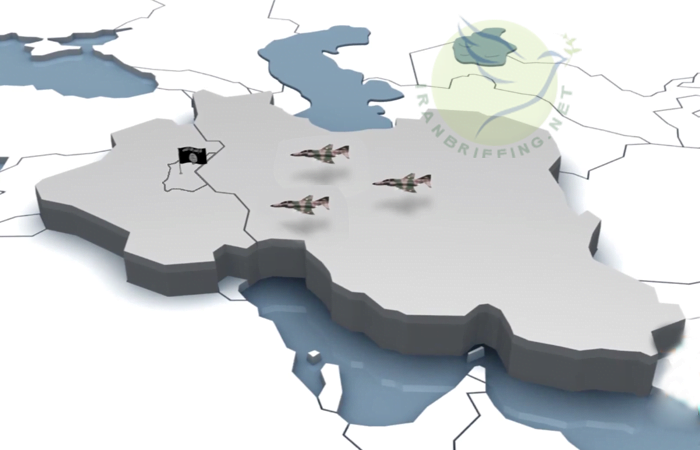
Images of Iranian air strikes in eastern Iraq provided the first concrete evidence of direct involvement by the Iranian air force in the military campaign against ISIS. The US military believes that Iran has conducted air strikes against ISIS targets in Diyala province in recent days, although the Defense Department insists that it is not co-ordinating any military action with Tehran.

Iran has not confirmed the information from the US military, but the Assistant Chief of Staff of the Iranian Armed Forces Gen. Masoud Jazayeri emphasized the need to support Baghdad in the face of ISIS activity, saying:


“Without waiting for a response from anybody else, Iran is doing what it can to provide assistance to the Iraqi people based on humanitarian and Islamic duty to eliminate terrorism in that country.”


Since the blitz of ISIS last June, Iran has provided Kurdish fighters in Iraq with weapons and sent military advisers to the Iraqi forces. Iran also contributed to the training of Shi’ite militias involved in the attacks against ISIS.

Iran publicly asserts that job of responding to ISIS is Iraq’s and has consistently denied that it sent ground troops to Iraq. The Tehran government refused to participate in the international coalition led by the United States. Iran considers the alliance to be ineffective and serves the objectives of Westerners seeking to overthrow the Syrian regime, Iran’s regional ally.

Since October Iranian media has published several pictures of Gen. Qassem Soleimani, commander of the Quds Force, an elite force in the Revolutionary Guards, showing him in the field with Iraqi Kurdish fighters and also with Iraqi soldiers and militia activists.

But Iran is also seeking to protect itself from Islamic extremists who declare that their goal is to overthrow the Shiite regime in Iraq. A Western diplomat in Tehran told Al-Arab that “the Iranians are scared,” reminding that Tehran significantly strengthened its defenses along the border and vowed to attack ISIS inside Iraq territory if ISIS fighters approach its border.

Another Western diplomat suggested that Iran cannot officially confirm that it carried out air strikes against ISIS while at the same time it denounces Western-Arab raids in Iraq and Syria.


Source: The Tower – Iran Attacks ISIS in Iraq to Protect its Regional Influence


Iran Briefing | News Press Focus on Human Rights Violation by IRGC, Iran Human Rights

Hassan Rouhani increases IRGC budget by 50%

0
Hassan Rouhani increases IRGC budget by 50% – Hassan Rouhani, the president of the clerical regime in Iran wants to increase the budget of the Revolutionary Guards nearly 50 percent and the overall defense budget by more than a third despite international sanctions and the drop in oil prices.


Hassan Rouhani increases IRGC budget by 50%, Iran, Hassan Rouhani, IRGC, Oil, Economy, IranBriefing, Iran Briefing
Hassan Rouhani increases IRGC budget

Rouhani presented to parliament a draft of budget of 8,400,000 trillion rials ($312.13 billion at the official exchange rate) for the fiscal year beginning March 20, 2015 – an increase of 6% on the basis of oil being priced at $70 a barrel this year.

The defense spending will increase by 33.5% to approximately 282,000 billion rials, most of which will be paid to the Revolutionary Guards who will see their budget grow by nearly 50%.

The Institute of International Finance (IIF) estimates that Iran’s economy has shrunk by a cumulative 8.6% in the past two fiscal years. Brent Crude ended at $69.07 on Friday, down 40% from June’s 2014 high of $115.06.

According to official Iranian figures, the country produces 2.7 million barrels of oil per day, of which 1.4 million barrels are exported.


Source: NCRI – Hassan Rouhani increases IRGC budget by 50%


Iran Briefing | News Press Focus on Human Rights Violation by IRGC, Iran Human Rights

Basij Commander’s Son Linked to Attacks on Women

0
Basij Commander’s Son Linked to Attacks on Women – The son of a Revolutionary Guard commander was involved in a series of knife attacks against women in the southern city of Jahrom, it was confirmed late last week.


Basij Commander’s Son Linked to Attacks on Women, Iran, IRGC, IRGC Commander, Attacks on Women, Human Rights, Iran Human Rights, Human Rights in Iran , Attack, Women, Women Rights, Basij commander, Basij, Religious Beliefs, Hejab
Basij Commander’s Son Linked to Attacks on Women

According to Farhikhtegan newspaper, at least five women, including several university students, were victims of knife attacks in Jahrom at the end of November and beginning of December. There were other reports that up to eight women had been attacked. Several of the women were seriously injured.

Mohammad Beheshtifar, 22, whose father, Jalil Beheshtifar, is a Basij commander in Kordan district, was implicated in the attacks and was arrested, along with others.

Mohammadreza Kuchaki, an MP for Jahrom, said that the commander took his son to the authorities once he was notified of his involvement in the crime.

Kuchaki told an Iranian news site that the motivation for the attacks was “personal and had nothing to do with religious beliefs,” referring to recent attacks carried out by vigilante groups in line with the Islamic notion of “commanding the right and forbidding the wrong”. Following acid attacks in Isfahan, thought to be in connection with women not wearing “proper” hejab, it was widely believed the that the Jahrom attacks had been carried out for the same reasons. “Among the victims,” Kuchaki said, “There were women wearing perfect hejab, and some were even wearing chador.”

Hojatollah Rezaii, deputy governor of Fars Province, reported that “those responsible for the crimes in Jahrom were arrested in less than 72 hours.” According to him, several people were implicated.

Hojatoleslam Lotfollah Dejkam, the Friday Imam of Jahrom, spoke of the attacks on women during a recent address. He attempted to alleviate panic across the city by insisting that those responsible were now behind bars. “We ask the prosecutor to punish them in the most serious way, as negligence in this regard will encourage others to dare to commit similar acts.” People should remain calm, he said.

One of the victims, a 34-year-old woman, told reporters for Farhikhtegan: “I was returning home around eight o’clock at night when a motorcyclist sprayed acid into my car while I was entering an alleyway. I began to cough and my eyes burned. Thinking that he wanted to steal my car, while holding my breath, I took the car keys and ran off. He got off his motorcycle and kept repeating that if I did not shut up, he would stab me. When I saw the knife in his hand, I kept quiet. But he stabbed me on the side and when he ran off, cut my right hand too.”


Source: Iran Wire – Basij Commander’s Son Linked to Attacks on Women


Iran Briefing | News Press Focus on Human Rights Violation by IRGC, Iran Human Rights