Home Blog Page 376

Iran’s election called a race among four groups

0

Ali Saidi, the Iranian Supreme Leader’s representative to the Revolutionary Guards, announced that the 11th presidential election will see a race among these four groups: Principalists, supporters of the administration, reformists and executives.

In a speech he gave in Rasht in northern Iran, Saidi said the election represents another part of “the Iranian nation’s great test” in 2013 and he urged the people to demonstrate their full participation in order to defuse “the enemy’s conspiracy to make political crises.”

In his speech on Wednesday April 17, Ayatollah Khamenei’s representative to the IRGC described the election as a race among four groups. The first he named are the Principalists, the conservative factions of the establishment with close ties to Ayatollah Khamenei.

Next were the supporters of the administration, who are linked to Mahmoud Ahmadinejad and his cohorts. This group has separated itself from the conservatives in the past few years after Ahmadinejad got into a number of disputes with the Supreme Leader.

The next two groups were differentiated as reformists and executives, though in the past the two groups were regarded as one.

Furthermore, the reformists have not yet announced their full participation in the election. The reformists were heavily sidelined after the tenth presidential election, and their candidates in that election still remain under house arrest.

Ali Saidi lauded the accomplishments of the Principalists in the past but urged them to show greater unity by presenting the “fittest” candidate with the necessary qualities of “loyal service to the country and the leader, expertise, strong management and health.”

More than 15 candidates can be seen on the principalist list of nominees. The election will take place in June of 2013.

Source: Radiozamaneh

Rahim Safavi’s Warning to Reformists and Pro-Ahmadinejad Activists: Election Riots Will Be Suppressed

Iran Briefing – Rahim Safavi, Senior Consultant of Iran’s commander in chief (Ali Khamenei), in funeral of unknown killed soldiers in Iran-Iraq war which was held in Shahid Beheshti University, pointing to the upcoming presidential election and some movements by domestic and abroad political groups, by calling them “provocative” told: “We warn domestic and foreign enemies and counterrevolutionary groups that any attempts to incite unrest or create sedition before or after the election will receive a vigilant and decisive response from the Iranian nation, and the Iranian nation would once again achieve victory.”

“Relevant organizations and bodies must predict and [adopt] preventative [measures] against any domestic or foreign [-sponsored] unrest,” he added.

In 2009 post election protests to the fraud of governmental organizations in votes in favor of Mahmoud Ahmadinejad, protesters were suppressed by IRGC forces, Basijis, intelligent agents attacked the protesters, hundreds were killed , thousands were arrested, tortured, raped and most of them were sentenced to long-term imprisonment. It’s more than two years that Mir Hossein Musavi and Mehdi Karrubi are under house-arrest and in the worst situation by Ali Khamenei’s command.

By calling “Provocative”, Rahim Safavi means Reformists and “Perverts” means Pro-Ahmadinejad Activists and Esfandiar Rahim Moshaie, close allegiant of Ahmadinejad. Radical and conservative pro-Khamenei forces do not want these two parties win the election and they are working and planning for a president to be selected who is close to Khamenei and obedient.

Tehran Prosecutor Denies Furlough to Abdolfattah Soltani

0

Despite the family’s presentation of a property deed as collateral, Tehran Prosecutor Abbas Jafari Dolatabadi refused to grant furlough to imprisoned lawyer Abdolfattah Soltani, the latter’s daughter told the International Campaign for Human Rights in Iran. Maedeh Soltani told the Campaign that the Prosecutor refused her father’s furlough request two days before Persian New Year, known as Nowruz, which prisoners are often allowed to spend with their families.

“A few months ago, they announced that in order for my father to be granted furlough, we had to come up with bail of 1.2 billion toman (approximately US$350,000), but my father said this bail amount was illegal. Our entire family’s assets could not equal this amount. But later, the authorities themselves told my mother that she should present a deed that my family could afford. They themselves said that whatever she brought would be accepted. My mother took the deed to my father’s law practice as collateral, which is a shared asset. They accepted it and promised my mother that he would be released on furlough,” Maedeh Soltani told the Campaign.

“But two days before Nowruz, they told my mother that Mr. Dolatabadi, the Tehran Prosecutor, had refused my father’s furlough request. They told my mother to bring a deed to release him, and then they refused to do it,” she added.

“I don’t consider my father a suspect. My father was a human rights activist whose rights have been violated in Iran and is now forced into imprisonment. But despite all the lawlessness about my father, he is now a prisoner and according to the country’s laws, a prisoner is entitled to furlough, and he has been deprived of this right,” Abdolfattah Soltani’s daughter said about her father’s situation.

“My father suffers from hemorrhoids and anemia. He was hospitalized for 40 days before, to receive treatment for this. He needs to be examined again and put on a medicine and nutrition regiment, but this is not possible in prison,” she added.

Abdolfattah Soltani, a prominent human rights lawyer, was arrested on September 10, 2011. On January 8, 2012, Branch 26 of Tehran Revolutionary Court under Judge Pirabbasi sentenced him to 18 years in prison, exile to Borazjan, and 20 years’ ban on his legal practice on charges of “being awarded the [2009] Nuremberg International Human Rights Award,” “interviewing with media about his clients’ cases,” and “co-founding the Defenders of Human Rights Center.” Abdolfattah Soltani spent months inside solitary cells of the Intelligence Ministry’s Ward 209 at Evin Prison, where he developed severe anemia.

Source: Iranhumanrights

A mysterious Iranian-run factory in Germany

0

For years, mystery surrounded an Iranian-­controlled factory tucked away in this town of 70,000 in Germany’s industrial west.

The plant manufactured high-pressure gas tanks, but its managers seemed uninterested
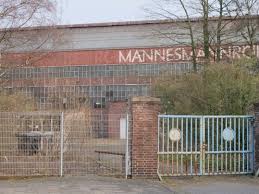
in making a profit. Potential investors were turned away. An expensive piece of machinery — precise enough to produce components for centrifuges and missiles — sat idle after a failed attempt to ship it to Iran. Finally, the factory, MCS Technologies, closed its doors late last month.

Since then, the mystery has taken another turn. European security officials and former workers have raised questions about whether the high-tech equipment and material at MCS could have been part of a scheme to aid Iran’s rogue nuclear program.

Questions have arisen about the tangled ownership of MCS, which until recently was tied to a former Iranian minister of intelligence, and about the blocked attempt to export sophisticated machinery to Iran.

MCS has never been cited for violating sanctions on trade with Iran, and one of the company’s owners said it has done nothing wrong.

“For sure, the Iranian people try all their best to turn around the sanctions, but not in my company,” said Eshagh Hajizadeh, a Canadian citizen who bought the assets of the company in 2011. “I never want anybody in this world to have access to nuclear. It is against humanity.”

With the United States, Germany and other Western countries trying to tighten sanctions on Iran to slow its nuclear program, the MCS mystery demonstrates the difficulty of tracking the flow of technology and material that have civilian and military applications.

“Where we have dual-use technology, it is not easy to control simply by checking goods,” said Wolfgang Schmitz, a spokesman for the German Customs Investigations Bureau. “You need more info about the contract and the possible criminal elements inside it.”

One of the dual-use materials at MCS was carbon fiber, which is often used in the aerospace and automotive fields because of its extreme strength, resistance to heat and light weight. MCS used carbon fiber to build high-
pressure gas tanks for compressed natural gas and hydraulic systems. More than 2,600 pounds of the material still sits inside the plant.

Carbon fiber’s strength and heat resistance also make the material essential for advanced centrifuges. The cylindrical machines spin at supersonic speeds to enrich uranium, which can be used to fuel civilian nuclear plants or, at higher concentrations, to make fissile material for atomic weapons.

U.N. inspectors and intelligence officials say Iran has been trying to build large numbers of the advanced centrifuges, known as IR-2Ms, which enrich uranium much faster than its current generation of centrifuges.

But the officials say Iran has been scouring the world’s black markets for the vital carbon fiber. This year, suspicions that Tehran might have discovered a source for the material rose when Iran announced plans to install 3,000 of the advanced centrifuges at its main enrichment facility in Natanz in the central part of the country.

“The Iranians always exaggerate, but they clearly are getting better at making the machines,” said a Europe-based diplomat whose government tracks Iran’s procurement efforts. The official, who spoke on the condition of anonymity to discuss sensitive intelligence, said Iran’s attempts to buy carbon fiber are well documented. A web of connections

Experts who have studied Iran’s clandestine procurement efforts say obtaining material and expertise from the German factory could have helped overcome bottlenecks that have slowed Tehran’s nuclear progress. A former sister company in Iran, Pars MCS, was designated by the Canadian government in 2010 as a possible contributor to “Iran’s proliferation-sensitive nuclear activities.”

Hajizadeh said that the German company had severed ties with Pars MCS and that business between the two companies had dwindled to a single contract since 2011. Two former employees said German engineers flew to Iran as recently as December 2011 to consult with Pars MCS. Hajizadeh said that only one German engineer went to Iran and that his only job was to service a machine sold to Pars MCS many years earlier.

Hajizadeh said MCS was shut down last month because it was losing $2 million to $3 million a year.

“Iran faces continual shortages of key dual-use goods for its centrifuge program,” said David Albright, a former U.N. nuclear inspector and president of the Institute for Science and International Security, a Washington organization that researches nuclear weapons programs. “Acquiring a foreign company can allow direct access to some of those goods.”

In 2003, Iranian-operated companies bought Mannesmann Cylinder Systems in Dinslaken and changed the name to MCS. The company had been in business since 1887, but it was bankrupt, and its employees hoped that new owners meant a new beginning.

Workers quickly found that the new managers seemed uninterested in running a profitable business. Instead, three former workers said in interviews, more attention was paid to starting the sister company in Iran, Pars MCS, to manufacture gas tanks there.

“Nothing was invested here,” said Peter Fichtner, who worked at MCS from 1997 until its final day, March 29.

Over the decade, managers shuttled in and out of MCS. Many of them had ties to the Iranian government, according to Emanuele Ottolenghi, a senior fellow with the Washington think tank Foundation for Defense of Democracies, who investigated the web of connections between the company and the government.

Until 2011, the company was owned by Reyco, a German affiliate of an Iranian firm called Rey Investment, according to company registration documents. Rey Investment is owned by a religious organization and led by Mohammad Reyshahri, a former Iranian minister of intelligence. The parent company’s board is filled with members of Iran’s political elite.

The former “owners were not just Iranian businessmen. Some of them were clearly affiliated with the Iranian regime or had links to Iran’s Ministry of Intelligence or Revolutionary Guard,” said Ottolenghi, referring to the elite military unit that helps oversee Iran’s missile programs.

Hajizadeh and another Canadian-Iranian businessman purchased MCS’s assets in 2011, cutting ties between the German operation and Pars MCS and Reyco. Records show that Hajizadeh remains a manager of Reyco, but he said it was no longer conducting business.As a German company, MCS was able to buy carbon fiber from Japanese and French producers. The former workers said the material was so tightly restricted and monitored that even waste was weighed and recorded.

But when a reporter visited the shuttered plant recently, 2,600 pounds of carbon fiber was sitting in cardboard boxes on the factory floor. Experts say that amount of carbon fiber could allow Iran to build more than 550 top-of-the-line centrifuges. But Hajizadeh said his hope was to recoup some money by returning the material to the manufacturers, Toho Tenax of Japan and Toray of France.

Failed shipment effort

The factory also contains a specialized machine used to manufacture lightweight, precision parts. The apparatus, called a flow-forming machine, also can produce components for long-range missiles, rockets and centrifuges.

In 2004, MCS tried to ship the machine to its sister company in Iran, according to an account from the German Foreign Ministry that was provided to The Washington Post. The Foreign Ministry refused to allow the equipment out of the country, and it has since sat, rarely used, at the Dinslaken plant.

“This machine is very sensitive,” said Benedict Nillies, the head of the technical department at Leifeld Metal Spinning, which manufactures the equipment. “The German BND,” Germany’s version of the CIA, “watches these machines very carefully,” he added.

The Iranians who controlled MCS at the time were so determined to send the machine to Iran that they asked municipal officials in Dinslaken to intercede with the German Foreign Ministry. “They pleaded for the mayor to intervene with the responsible authorities to allow export permission to Iran,” said Thomas Pieperhoff, a top official in the mayor’s office. The Foreign Ministry told the mayor’s office not to intervene, and the machine was not sent.

Hajizadeh said Pars MCS wanted the machine to manufacture high-pressure tanks more efficiently.

In early 2004, two similar machines from a Spanish company were discovered in Libya after Tripoli abandoned its nuclear weapons program.The machines had been delivered by the black-market network run by A.Q. Khan, a rogue Pakistani nuclear scientist.

At the end of March, as the plant was shutting down, a shipment of lightweight, carbon-
fiber-wrapped gas tanks was sent to Dubai, according to former employees and shipping manifests documenting the transaction.

Dubai is a frequent transit point for getting restricted material into nearby Iran, experts say. Concerned about the contents, Belgian customs officials pulled the shipment off a vessel in the port of Antwerp and searched it, according to a European security official speaking on the condition of anonymity because he was not authorized to discuss an ongoing operation.

The alarm turned out to be another testament to the difficulty of monitoring dual-use materials. The security officials said that the shipment was perfectly legal — and that it could have proceeded even if it were directly en route to Iran.

Source: Insideofiran

 

Nasrin Sotoudeh’s Eyesight Is Deteriorating in Prison

0

Human rights lawyer Nasrin Sotoudeh’s eyesight is deteriorating in prison, but she has not been granted any leave to visit an ophthalmologist, her husband Reza Khandan told the International Campaign for Human Rights in Iran.

“Each time I see her, she is using eyeglasses that are thicker than the last time. So far, no matter how much we have tried to take her to an eye specialist outside the prison, we have not succeeded. A few times we made doctor’s appointments, but she was not allowed to leave. Now, when she comes to a prison visit, I see that she is wearing eyeglasses with a high prescription, like old men. I am not worried about her eyeglasses. I am worried that, God forbid, there might have been damage to her eyes,” Khandan told the Campaign.

“Before going to prison, she was only using reading glasses, but after her first hunger strike two years ago, her vision problems started, and recently this problem intensified after her latest hunger strike,” he said.

“Her eyesight is measured in the prison infirmary, and then we are given a prescription to get the eyeglasses from the outside, and so far her prescription has changed several times,” Reza Khandan told the Campaign, adding that he could not remember Sotoudeh’s prescription prior to her imprisonment.

According to a report by Deutsche Welle, on April 14 Nasrin Sotoudeh became an honorary member and advisor to the board of trustees of the International Society for Human Rights in Germany.

Nasrin Sotoudeh, a lawyer and human rights activist who has represented many political, women’s rights, and student activists, was initially sentenced to 11 years in prison, 20 years’ ban on practicing law, and 20 years’ ban on foreign travel on charges of “acting against national security” and “propaganda against the regime.” An appeals court later shortened her prison sentence to six years.

Source: Iranhumanrights

Dervish Lawyers in Dire Health at Evin Prison

Seven Dervish lawyers being held at the Intelligence Ministry’s Ward 209 at Evin Prison have not had access to light in months and have developed various illnesses, the wife of one of the lawyers told the International Campaign for Human Rights in Iran. Sedigheh Khalili, the wife of imprisoned lawyer Hamidreza Moradi, added that officials have warned them not to give interviews to the media.

“When Hamidreza was holding the telephone receiver inside the prison visitation booth, I noticed his hand was swollen and his index finger kept turning purple. The other Dervishes were not well, either. My husband said that they have not seen any light for three months. When they were brought down to the visitation room, they were blindfolded and they were again blindfolded when they were taken back. Their room is dark. They all looked sallow. They have all developed skin problems in Ward 209 and each of them suffers from multiple illnesses. Unfortunately, when they were taken to 209, they were severely beaten and abused and then they were left untreated. My husband’s teeth broke and his spine was injured. They only take them to the infirmary and there is no medical treatment there, only painkillers,” Khalili told the Campaign about her last visit with her husband on April 11.

Hamidreza Moradi, Mostafa Daneshjoo, Amir Eslami, Reza Entesari, Afshin Karampour, Farshid Yadollahi, and Omid Behrouzi are lawyers representing the Gonabadi Dervishes who were arrested in September 2012. They run the Majzooban-e Noor website, which focuses on disseminating news about Dervishes. After the seven lawyers refused to attend their court trial on January 15, 2013, in protest of the court’s lack of qualification and the illegal process of their cases, Judge Salavati ordered their transfer from Evin Prison’s General Ward to Ward 209. They face charges of “publishing falsehoods,” “creating public anxiety,” “propaganda against the state,” and “acting against national security.”

“My husband doesn’t even have access to pen and paper. He is not allowed to make phone calls. I have only been able to see him five or six times in three months, each time for just a few minutes and each time in the presence of two guards. One stands behind him and another stands next to him, so we can’t talk freely and our discourse is limited to greetings. For what crime is he being kept inside Ward 209 without a court ruling? He has been in prison for 19 months without a ruling. His only crime was that he did not participate in his trial because he did not believe his court was qualified. He is a lawyer and is aware of his legal rights; he can’t be expected to attend just any court,” said Sedigheh Khalili.

Asked whether she knows why her husband has been charged, Khalili said, “One of the Intelligence Ministry officials once told me that my husband was arrested because of the Majzooban-e-Noor website. But now, a whole year after his arrest, the site continues to work and I don’t know why my husband and the other lawyers were arrested. Hamid Reza and six other lawyers established Majzooban-e-Noor as a news website for Dervishes, so that people would know what is happening to the Dervishes. Their charges are absolutely unfounded and untrue. Hamid Reza has not accepted any of his charges: he believes that he worked at Majzooban-e Noor Website and defended the rights of Dervishes, but that he has not done anything illegal.”

“After the Dervishes’ mosque, Hosseinieh, was demolished and other things happened to them, my husband and the other Dervishes wanted to start a website to disseminate news about what was happening to the Dervishes. All Iranians oppose the demolition of the Hosseinieh. They say these worship centers intend to corrupt, but we read the Quran there, we call on God, and read Hafez and Molavi [Rumi] poetry there. If this is corruption, then all of Iran must be demolished, because all Iranians follow God and the Quran. How could such activities end one in prison?” said Sedigheh Khalili, objecting to the treatment of Dervishes.

Source: Iranhumanrights

Protester wounded in Iran’s 2009 unrest passes away

0

Nearly four years after Iran’s widely disputed 2009 presidential race, the post-election clampdowns continue to claim the lives of protesters who took to the streets demanding a recount of the votes.

On Wednesday, Kaleme, a site close to opposition leader Mir Hossein Mousavi, reported that 26-year-old Hassan Mirzakhan, who had sustained serious spinal cord injuries during opposition protests in Tehran’s Vanak Square on 16 June 2009, has passed away.

Mirzakhan was reportedly shot in the back as he marched peacefully along with other protesters to demand their votes back.

After four years of grappling with his severe wounds, Mirzakhan passed away on Monday 8th of April. He was laid to rest in Tehran’s Beshte Zahra cemetery. A memorial service was held in his honour in the Nour mosque in Fatemi Square on Thursday.

Mirzakhan’s death has been reported by state-run news outlets. Authorities have attempted to present him as a government supporter and a victim of the 2009 “sedition”.

“Sedition,” is the Iranian regime’s epithet for the opposition Green Movement.

Almost fifty days ago, Parvin Fahimi, the outspoken mother of another 2009 protester Sohrab Arabi, described Hassan Mirzakhan as one of the victims of the crackdowns who had been under state-pressure in recent years. She also named Omid Azizi, Behzad Yazdanpanah and Vahid Irani-Moghaddam as other protesters wounded four years ago.

Source: Irangreenvoice

Akbar Amini and Pejman Zafarmand summoned to court

Green activists Akbar Amini and Pejman Zafarmand, who were among the detained group from the raid on Saraye Ahl-e Ghalam (Association of Writers), have been summoned to appear at the Tehran Revolutionary Court.

According to CHRR, on Monday April 14, Pejman Zafarmand will face charges brought against him at Branch 26 of the Revolutionary Court presided by Judge Pir Abassi and on Tuesday April 15, Akbar Amini will face his charges at Branch 27 of the Revolutionary Court presided by Judge Salavati.

On April 9, two other members of Saraye Ahl-e Ghalam, Mohsen Ghashghaizadeh and Mohammad Parsi faced their charges in courts presided by Judge Salavati and Judge Pir Abassi. On March 14, another member of the group, Ahmad Reza Ahmadi was summoned to face charges brought against him in Branch 1 of the Revolutionary Court presided by Judge Ahmadzadeh.

On October 30, 2012, security forces conducted a raid at a gathering of writers at Saray Ahl-e Ghalam (Association of Writers) and detained close to 70 members. Most of them were later released and 17 writers including Mehdi Khazali were transferred by van to Evin prison. Two others named Pejman Zafarmand and Mehdi Karimi were detained in separate encounters and were also transferred to Evin prison by security agents.

Source: CHRR

Iran’s Revolutionary Guards infiltration in Turkey

مقاله به فارسی

Iran Briefing Exclusive: The issue of the Iranian regime’s influence among the immigrant class of Iranians in foreign countries is not a new subject. After many years of physical assassinations in Europe of victims such as: Abdorrahman Ghasemlou and Shapour Bakhtiar, the Iranian regime is moving to financial and character-based assassinations.

The Republic of Turkey is one of the targets of Iranian regime in this aspect. Being its neighbor and having a growing economic market, the Republic of Turkey has been a financial catalyst for both state and private Iranian finance after sanctions. One of the attractions of Turkey for Iranians is the Turkish language, which is spoken by most Iranians. And that is why most of the Iranians who are financial activists in Turkey are from Iran’s Azerbaijani Turks, due to close distance and culture. Even though they are not a huge group, they have been able to gather income. This issue has made the Iranian regime worried. The empowerment of ethnic minorities in Iran is against the homogenizing policy of Iranian regime.

After 2010, the registration of companies managed by non-Turk Iranians grew [in Turkey] gradually. 90 percent of scholarships in Turkey were given to non-Turk Iranians. A part of the cultural departments in Ankara began to issue student identity cards to non-Turks, by receiving bribe. And it’s shocking to inform that 80 percent of Iranian students in Turkey are pro-regime. The process is not limited to this. Iran-Turkey’s Chamber of Commerce in Qom announced its decision that most of the companies, scholarships and Iranian institutes in Turkey must be controlled by pro-regime people within the next 10 years. By establishing great tourism companies, they began to absorb tourists and the wealth resources, then to gather information and to have field supervision. This move also will stop the access of Iranian Turks from Turkey’s market and universities. In this way, the Iranian regime established the great company (S) managed by (A. M.) in Istanbul. This company began its work with 50 billion dollars. Within couple of months, they obtained Turkish nationality for the manager with the same name as a well-known businessman from Tabriz. They began to publish Persian Magic Magazine, which is propaganda for Iranian regime’s racist policies.

This company, by gradually getting the control of tourism market and even making hotels cheaper than others, is trying to isolate non-governmental people and Iranian Turks from Turkey’s Tourism Industry. Most of the employees of this company are from Iranian regime, in spite of knowing no Turkish language.

Somehow, Iranian Azarbaijani and other ethnic minorities are not able to get employed in such companies, according to the high costs of life in Turkey. The Iranian regime, by fake propaganda of immorality [in Turkey], is trying to control the minds of Iranian students to execute its policies. The open atmosphere of Turkey is an opportunity for the students to grow up and discover the world in a peaceful space. But the Iranian regime, instead of promoting this space, is promoting immorality among intellectual class of people.

Making an open and free atmosphere in its tourist tours, the Iranian regime has isolated non-governmental tours. Iranian tourists are also eager to use the regime, IRGC and spying forces tours too [uninformed]. The IRGC tries to show its control outside of Iran, in addition to inside the country. Most of the exports and imports are being managed by IRGC. The exportation of Fluorspar- the primary material in the iron industry is somehow limited to IRGC and (N) company, belonging to (H.A.) brothers. Representatives such as (M. P.) are in continuous contact with Turkish companies for contracts and negotiations to monopolize funding in Turkey.

Turkey is also a suitable location to send weapons through to Syria and to circle the sanctions for the IRGC.  Bringing out small amount of gold by (S) company confirms that the IRGC is in need of resources and foreign currencies.  In addition, by making economic giants of Azerbaijan to be bankrupt such as Zonouzi and Tajfar, IRGC showed its intentions to isolate the class of society, which has jobs in Bevezeh in Azarbaijan. IRGC is a dreadful force, wearing different masks to plunder the Iranian people’s wealth. Also this evil force, by influencing International Organizations including UNHCR, with the personal details of Iranian refugees in Turkey, makes it difficult for them to hamper their exit from Turkey [to the third country]. It is trying to weaken the opposition and financially encroach on Iranian immigrants to monitor them. But what can we do except enlightening the public? These problems will be solved only by the falling of the Vilayat-e Faqih Regime in Iran.

In addition, the Mullahs’ regime and the IRGC, by establishing cultural institutes such as Kanoon-e Iranian (Iranians Center) in Istanbul, have made Turkey as their backyard for spying and an economic mafia. According to these issues, anti-regime and independent investors are needed, through the means of huge investments in such courtiers around Iran, to make the arms of Mullahs’ regime to be short.


Former advisor to Fars governor Jamileh Karimi arrested

A former advisor to the governor of Iran’s Fars Province has been arrested, sources told the Green Voice of Freedom today.

Jamileh Karimi, a former advisor to the governor of Fars Province during the presidency of Mohammad Khatami, was arrested at her home on Wednesday morning and taken to a prison run by the Intelligence Bureau of Shiraz.

Karimi is also a member of her province’s Reformist Coalition. She was a signatory to a recent letter signed by 91 prominent pro-reform urging former President Mohammad Khatami to participate in the upcoming presidential elections on 14 June.

The former ministers, legislators and government officials had called on Khatami to help lead Iran out of the current crisis by announcing his candidacy for the presidential race.

The former president’s candidacy has drawn considerable attention in recent weeks, in particular following the publication of a lengthy article by Oxford sociology student Mohammad Reza Jalaeipour. The young activist, who spent many months behind bars following the contested 2009 presidential election, had listed forty reasons why he believed a Khatami candidacy would be the reformist movement’s best possible option vis-à-vis this June’s ballot.

Source: Irangreenvoice