
Home Blog Page 384

Iran’s leader steps deeper into the political fray

0

Iran’s supreme leader is supposed to be many things in the eyes of his followers: Spiritual mentor, protector of the Islamic Revolution, a moral compass above the regular fray.

Political referee is not among them.

Yet that is the unfamiliar role Ayatollah Ali Khamenei has adopted as the political mudslinging gets heavier ahead of elections in June to pick a successor for President Mahmoud Ahmadinejad.
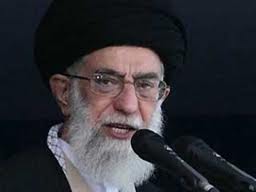
“Bad, wrong, inappropriate,” scolded Khamenei on Saturday in his most stinging rebuke of Ahmadinejad for his mounting attacks on rivals — including an ambush earlier this month in parliament when he played a barely audible videotape that purported to show corruption inside the family of the chamber’s speaker.

Khamenei then went on to chide the parliament speaker, Ali Larijani, for publicly humiliating Ahmadinejad in response to the tape.

“When there is a common enemy and conspiracies are hatched from all sides, is there any way other than strengthening brotherhood and resisting the enemy?” Khamenei said in reference to widening Western sanctions and pressures over Iran’s nuclear program.

Hardball politics are nothing new in Iran, whose elected parliament and government can make even Washington’s bickering seem genteel. It also is unlikely to threaten the real power in Iran: The ruling clerics and their guardians led by the Revolutionary Guard.

But the deepening nastiness inside Iran speaks volumes about the importance of the presidential election on June 14 and how it could reset Tehran’s political order.

Khamenei seeks to tamp down the rising political spats that could signal weakness to the West in nuclear negotiations set to resume next week. He also wants to close off any openings for public complaints over the economic pain from the expanding sanctions.

At the same time, however, Khamenei risks blows to his image if his unprecedented personal intervention fails to calm the growing tremors whose epicenter is Ahmadinejad.

Parliament on Sunday showed obedience. More than 260 lawmakers — nearly the entire 290-seat chamber — expressed loyalty to Khamenei. Ahmadinejad made no immediate comment.

“The presidential election has raised the stakes in the ongoing blame game,” said Abolghasem Bayyenat, a former Iranian trade official who runs the website irandiplomacywatch.com.

Khamenei “certainly does not want the political wrangling … to get out of control,” he said.

But Ahmadinejad shows no signs of heading into a quiet retirement after his second and final term. This raises the possibility he could become something Iran has rarely seen: a political wild card able to muster allies and grass roots backers to complicate life for rivals such as Larijani.

And one of those rivals could very well be sitting in Ahmadinejad’s old office in Tehran. Khamenei has pushed back hard against Ahmadinejad’s attempts to challenge his authority in the past two years. As payback, the ruling clerics are likely to block any key Ahmadinejad backer from the presidential ballot and bring in someone who has sided with Khamenei as his relationship with Ahmadinejad drifted from cozy to cool to outright hostility.

In the meantime, Ahmadinejad heads into his final months eager to land some punches on his opponents.

“We are witnessing a new precariousness in Iran’s internal politics,” said Suzanne Maloney, an Iranian affairs expert at the Brookings Institution in Washington.

There’s no clearer evidence than Khamenei, whose hard-core followers believe is answerable only to God. Yet even he can’t seem to calm Iran’s political tempest with rare — and increasingly sharp — orders from on high.

It suggests a diminishing regard for Khamenei and the ruling clerics to fully set the political tone inside Iran — which could be the ultimate political legacy of Ahmadinejad from his defiance while in office and his possible gadfly role after leaving later this year.

Khamenei’s main worry is not whether the opposition can regroup after being hammered following the post-election unrest in 2009. Its leaders are under house arrest and activists know they would face punishing reprisals if they return to the streets.

Instead, it appears Khamenei senses that the internal political rulebook could be under threat.

Ahmadinejad first broke taboos — and earned himself instant political enemies — by challenging the authority of Khamenei in 2011 over the appointment of the powerful intelligence ministry post. Since then, Khamenei has been gradually drawn into the mix despite the traditions of the supreme leader remaining aloof from day-to-day affairs.

It seems part of Ahmadinejad’s tactics to hector Khamenei as a way to boost his status as an alternative pole of power, said Rasool Nafisi, an Iranian affairs analyst at Strayer University in Virginia.

“Ahmadinejad … seems to have adopted a strategy of pressuring Khamenei to either force him out — which would be a confession to Khamenei’s poor judgment as the main support of Ahmadinejad — or live with Ahmadinejad’s continuous assaults on his position and close associates,” Nafisi said. “Either way, Ahmadinejad will turn out a winner.”

The unraveling of their relationship began when security forces crushed the protests over Ahmadinejad’s re-election. Ahmadinejad increasingly bristled at having to take a back seat to the ruling clerics, who control all key political and policy decisions.

A political temper tantrum in April 2011 — when Ahmadinejad boycotted meetings for 10 days to protest Khamenei’s intelligence chief appointment — opened the flood gates.

Dozens of Ahmadinejad’s political allies were arrested or pushed to the margins, effectively blocking his chances of having a protege on the ballot in June. Meanwhile, the political fortunes brightened for Ahmadinejad rivals, such as parliament speaker Larijani.

Earlier this month, Ahmadinejad stunned parliament with a crude videotape that purported to show a discussion over bribes that included Larijani’s brother. A week later, apparent Ahmadinejad backers hurled insults and shoes to disrupt a speech by Larijani in the seminary city of Qom.

On Friday, one of Khamenei’s close allies, Ayatollah Ahmad Khatami, used his nationally broadcast Friday sermon to urge authorities to take “strong action” in response to the incident.

“Give up these hateful disputes,” he told worshippers at Tehran University in an open reference to Ahmadinejad and Larijani. “People are tired of your fighting.”

But Ahmadinejad seems to be suiting up for a pre-election scrap. Last week, he led gatherings that were interpreted as unofficial campaign events for his top aide, Esfandiari Rahim Mashaei, in an apparent challenge to election-vetting authorities who either have to clear him or reject him.

Ahmadinejad “is a political figure who has some residual popular base, a political infrastructure, who knows where all the bodies are buried and is very eager to talk,” said Brookings analyst Maloney. “That makes Ahmadinejad the most dangerous man in the Islamic Republic.”

Source: Inside of Iran

A number of short-film and documentary filmmakers summoned

0

Following the recent arbitrary detainment of many journalists, in recent days a number of filmmakers accused of collaboration with foreign media outlets were summoned and interrogated at the Ministry of Intelligence.

According to CHRR, the filmmakers have been monitored by judicial and security officials for some time because their short films or documentaries have been aired on foreign media outlets. In the past days a number of them were summoned to appear at the Intelligence Ministry headquarters for questioning and they were asked to sign disclaimers regarding collaboration with foreign media outlets.

Many of these filmmakers had already been summoned in the past and asked to sign disclaimers regarding the use of their work in foreign media outlets but in the past days they were asked to appear again to ensure they would in no way communicate or present their work to foreign media.

Source: CHRR

Cyber police hack into large number of e-mail accounts

0

Based on a survey among Iranian Internet users, 63% have Yahoo e-mail accounts, and in the past months the Yahoo e-mail accounts of a large number of political activists and journalists have been hacked by security and cyber forces. The figures also show that 18% of users spend between 2-4 hours a day checking their mailboxes, while 13% spend more than five hours a day checking their mailboxes. Only 34% of users consider speed and site-security important.

Source: Iran Daily Brief

Senior Guards commander assassinated in Syria

Iranian media report that a senior Revolutionary Guards commander in charge of Iran’s Reconstruction Base in Lebanon has been assassinated in Syria.

Iranian media reported on Thursday February 14 that Hassan Shateri was laid to rest in Tehran in the presence of Ayatollah Khamenei’s representative in Iran’s Revolutionary Guards Corps (IRGC) and the commander of the Qods forces in Tehran. The Qods are the international branch of the IRGC.

The Fars News Agency writes that Shateri was assassinated on Tuesday by what the report describes as “Zionist regime mercenaries”, but no reference is made as to where it happened.

ISNA quotes an IRGC public relations officer saying Shateri was killed “en route from Damascus to Beirut.”

Another report on the Belagh website says: “Commander Hassan Shateri and two of his men were ambushed by terrorists in Aleppo, and Commander Shateri was the only one to be martyred.”

Iranian media refer to the Syrian opposition as terrorists.

Reuters also reports that a commander of the Syrian armed rebels reported that Shateri was killed near the Lebanese-Syrian border in Zebdani.

The Iranian embassy in Beirut referred to this commander as Hessam Khoshnevis, saying he was killed by “armed terrorist groups” en route from Damascus to Beirut.

Beirut’s Alsafir daily also writes that the commander had gone to “Syria to examine inspection plans of the city of Aleppo.”

Aleppo has been the site of severe fighting between Syria’s opposition forces and the Syrian army, and reports say it is now in ruins.

Iranian media refer to Shateri as a veteran of the eight-year Iran-Iraq War and an expert “active in engineering and infrastructure construction in war-beaten regions.”

Shateri was involved for years in the rebuilding of the southern Lebanon region.

Iran has remained a faithful supporter of the Beshar Assad regime and argues that the armed opposition forces are supported by Saudi and Qatari arms and carry out terrorist activities in Syria.

Source: Radiozamaneh

U.S. says well aware of Iran efforts to obtain sensitive materials

0

The White House is aware of Iran’s efforts to obtain sensitive materials related to its nuclear program, a White House spokesman said on Thursday, but he declined to comment on any specific transactions.

“We are well aware of Iran’s aggressive efforts in violation of its U.N. Security Council obligations to obtain sensitive materials for its uranium enrichment program,” White House spokesman Josh Earnest told reporters traveling with President Barack Obama.

In response to a question, Earnest said he was not in a position to comment on any specific transactions.

Source: Inside of Iran

Opposition leaders’ daughters summoned to Evin again

0

Kaleme Website reports that Kokab and Narges Mousavi, the daughters of Iranian opposition leaders MirHosein Mousavi and Zahra Rahnavard, have once again been summoned to Evin Prison for questioning.

The opposition website reports that Kokab Mousavi is summoned for Thursday February 14 and Narges Mousavi on the following Saturday.

Last Monday, the two were briefly arrested and their homes were searched. They were reportedly questioned regarding their links to Kaleme Website and their reports to the media on the condition of their parents.

MirHosein Mousavi and Zahra Rahnavard have been under house arrest since February of 2011, and in recent months their daughters have raised public alarm about their situation after being repeatedly denied a visit with them.

Mohammad Hossein Karroubi, the son of the other opposition leader under house arrest, Mehdi Karroubi, was also briefly arrested on the same day as Narges and Kokab Mousavi.

Kaleme reports that the Mousavi children have been threatened with imprisonment and death, and similar threats have been extended to the Mousavi sons-in-law on the telephone.

The Iranian opposition leaders have been under house arrest for close to two years without any formal legal proceedings against them, and their children have challenged the illegality of their situation and repeatedly called for their release.

Source: Kaleme

Arrest of 2 Baha’i citizens in Semnan

0

On February 12, 2013, Ardeshir Fanaeyan and Shidrokh Firouzian, Baha’i citizens living in the city of Semnan were detained. Intelligence agents raided the residences of the 2 Baha’i citizens, conducted a search, confiscated personal items, and transferred them to the Semnan Intelligence Ministry headquarters.

During the past years, pressures against citizens following the Baha’i faith have intensified. Baha’i citizens are routinely subjected to arbitrary detention and heavy judicial sentences, school children are harassed, the private sector is pressured to dismiss Baha’is, their shops or workplaces and bank accounts are closed down, their assets are seized, and their business licenses are denied or suddenly revoked. They have been subjected to other forms of harassment such as arson, destruction of property, bulldozing their gravesites, destruction of dams and cutting off water supplies to agricultural properties resulting in dried fields and gardens.

Source: CHRR

Iran accused of ‘faking it’ in Photoshopped fighter jet blunder

0

Iran has been accused of misinformation after a posted picture, showing a fighter jet patrolling the sky, was called a fake.

The picture intends to show a Qaher-313 jet soaring over a snow covered mountain and was posted on the Iranian site Khouz News, the Telegraph reported on Wednesday. Iranian bloggers claim the image was doctored using Photoshop.

The reflection of light on the plane and the angle of the image appear similar to a publicity shot taken at the jet’s unveiling earlier this month.

The background image is akin to a scenic view of Iran’s Mount Damavand, a photo which is widely available on the internet.

The jet, which was introduced to the public at a ceremony attended by President Ahmadinejad, is said to be the second plane produced by Iran.

The plane is said to pool the distinctive features of the U.S.’s two main fighter aircraft, the F-35 and the F-22.

Iranian Defense Minister, Ahmad Vahidi, says the plane has the ability to fly low enough to avoid being detected by radar. It can supposedly also carry a weapons payload and was constructed of “high-tech materials,” boasts the official.

Experts have voiced an opinion suggesting the plane shown at the unveiling was more likely a model replica rather than a working prototype.

According to them, the plane looks as though it was made out of plastic and lacked characteristics such as rivets and bolts that all aircrafts, including stealth ones, feature, reported the Telegraph.

David Cenciotti, who writes for the Aviationist blog, added, “the air intakes are extremely small whereas the engine section lacks any kind of nozzle: engine afterburners could melt the entire jet.”

Foreign Policy’s John Reed said, “It’s seriously unlikely that such an aircraft has room to carry theavionics, radars, electronic countermeasures, heat masking gear, and, most importantly for a fighter, the weapons that make modern stealth jets effective.”

The jet was shown to a crowd of at least one million people at the Feb. 11 rallies, held to commemorate the Islamic Revolution of 1979. Iran is no stranger to accusations of fakery.

Earlier this month the country was accused of lying about sending a monkey into space as “before and after” photos seemed to show two different monkeys.

Tehran claimed the news agency that published the first image mistakenly used the wrong photograph, denying international media allegations of Photoshop fabrications.

Iran has been known to fake such advancements; it previously claimed to have built the world’s first vertically launching drone, the Koker 1.

The vehicle was actually built by a team from Chiba University in Japan in 2008.

Source: Alarabiya

Iran: Advanced enrichment centrifuges installed

0

Iran said Wednesday that it has begun installing a new generation of centrifuges at its main uranium enrichment facility, a move that will allow it to vastly increase its pace of uranium enrichment in defiance of U.N. calls to halt such activities.

Vice President Fereidoun Abbasi told the official IRNA news agency that the machines will only produce low-level enriched uranium, which is used to make nuclear fuel, but high-level enrichment makes it suitable for use in the core of a nuclear weapon.

Abbasi said Iranian nuclear scientists began installing the advanced centrifuges at Natanz about a month ago.

“We’ve produced enough of these machines and are installing and starting them up gradually,” Abbasi said.

The announcement coincided with a new round of talks Wednesday with senior International Atomic Energy Agency inspectors over allegations thatTehran might have carried out tests on triggers for atomic weapons. It also could affect negotiations planned later this month between Iran and six world powers.

Iran has more than 10,000 centrifuges that are enriching uranium at Natanz, 225 kilometers (140 miles) southeast of Tehran. But the machines are of the old IR-1 type. Iran told the IAEA last month that it intended to install newer IR-2 centrifuges, machines that can produce more enriched uranium at a shorter period of time.

“The centrifuges installed at Natanz are first-generation machines based on old technology,” the semi-official ISNA news agency quoted Abbasi as saying. “We were able to produce composite materials. … We built centrifuge rotors from those materials which make the machines more durable. The new generation of centrifuges is more efficient.”

Abbasi said Iran would use the new machines to produce 5 percent level enriched uranium.

The visit by the U.N. team, led by Herman Nackaerts, comes a day after Tehran raised prospects that the International Atomic Energy Agency could be allowed to inspect Parchin, a military site where the agency suspects nuclear-related experiments were conducted.

But Abbasi said no such visit was on the negotiating table.

“Parchin is not a nuclear site. We’ve said this repeatedly. There is no word about visiting Parchin or any other site,” he said.

Iran says the agency’s suspicions are based on forged intelligence provided by the CIA, the Israeli Mossad, Britain’s MI-6 and other intelligence agencies.

“Removing ambiguities requires evidence. If the agency has any documents related to ambiguities about Parchin, it is necessary that they give it to us,” IRNA quoted Abbasi as saying.

Iranian officials say they have bitter memories of permitting IAEA inspections at Parchin in the past, and replying to a long list of queries over its nuclear program. Tehran says any new agency investigation must be governed by an agreement that lays out the scope of such a probe.

Iran says it cannot allow its security to be compromised by allowing the IAEA access to non-nuclear facilities on the basis of suspicions raised by foreign intelligence agencies that Tehran considers enemies. Abbasi also criticized the IAEA for leaking information on Iran’s nuclear program.

Source: Inside of Iran

Adnan Hassanpour deprived of his legal right to furlough

0

Kurdish journalist Adnan Hassanpour has spent 7 years in prison, making him the longest standing prisoner among journalists. He is serving his sentence behind bars in Sanandaj prison, deprived of his legal right to furlough, without a single hour of release during these years.

Leyli Hassanpour, the sister of the incarcerated journalist said in an interview with Committee of Human Rights Reporters regarding her brother, “Adnan has a good attitude but his physical condition is weakening due to being held behind bars for 7 years without any furlough.”

Despite requests from his family, his lawyer Mr. Saleh Nikbakht, and an endorsement for temporary release by the Prison Organization, judicial authorities have refused to grant furlough to the imprisoned journalist. His sister said, “In all these years Adnan’s only communication with his family has been via phone calls and occasional visitations without even one hour of furlough.” She requested that judicial authorities allow her brother his legal right to prison furlough.

Adnan Hassanpour is a prominent Kurdish journalist and passionate defender of the freedom of expression who was an editor of the weekly Aso, a Kurdish/Farsi publication that explored cultural rights. The government in 2005 shut down the publication and Hassanpour was summoned several times regarding his work.

On January 25, 2007 he was arrested and the summer of that year after a closed-door trial in the city of Marivan in Kurdistan province, Hassanpour was sentenced to death on the charges of “acting against national security” and “moharebeh” (enmity with God). The Kurdistan appellate court later upheld the death sentence. The evidence used against him was based solely on interrogation reports provided by the Intelligence Ministry, obtained during his detention. After two years of legal wrangling, with the request of his lawyer Saleh Nikbakht, the country’s Supreme Court reviewed the case and on January 30, 2009 the death sentence was commuted to 15 years in prison.

Hassanpour has a distinguished record as a journalist in Iran. The Cultural Bureau (Farhang va Ershad Islami) presented him with appreciation awards in 2004 and 2005. In addition to working as editor of Aso he was the managing director of Marivan Literary Association from 2001-2004 and edited the Association’s literary magazine, Rawt.

International groups have also recognized Hassanpour as a prominent journalist. In 2007 Hassanpour received the Press Freedom Award by the Swedish branch of Reporters without Borders. This prize is awarded to members of the press who convey dedication to freedom of expression despite pressures and violations of press freedom in their country. The same year he was also awarded the Press Freedom prize from Italy.

Source: CHRR