Home Blog Page 459

Iran still shipping arms to Syria, UN report finds

0

Syria remains the top destination for Iranian arms shipments in violation of a UN Security Council ban on weapons exports by the Islamic Republic, according to a UN report.

Iran, like Russia, is one of Syria’s few allies as it presses ahead with a 14-month old assault on opposition forces determined to oust Syrian President Bashar al-Assad.

The confidential report, seen by Reuters, said there were three seizures of large shipments of Iranian weapons investigated by a panel of experts over the past year.

“Two of these cases involved the Syrian Arab Republic, as were the majority of cases inspected by the Panel during its previous mandate, underscoring that Syria continues to be the central party to illicit Iranian arms transfers,” it said.

Conflicting reports on IRGC warning to Hezbollah over ‘pre-emptive’ strike

0

The head of Iran’s Quds force, Qassem Suleimani has warned the Lebanese militant group Hezbollah against waging any pre-emptive war on Israel, according to a website affiliated with the Revolutionary Guards Corps.

On Wednesday, Javan Online published a story about recent talks between Suleimani and the leader of Hezbollah Hassan Nasrallah. The commander of the Quds force reportedly stressed that “radical” figures within the resistance group, who were calling for a pre-emptive strike on Israel, must be dealt with “firmly.”

“Your military preparedness, readiness to destroy Tel-Aviv and the ability to continuously bombard Eilat … must not make you arrogant,” Suleimani added. “The expectation was that after … comments made by the Supreme Leader [Ali Khamenei], there would be an end to talks about a pre-emptive strike.”

Javan Online made no mention of where and how the alleged conversation between Suleimani and Nasrallah had taken place.

Hours after the story was published, Iran’s own news agencies repudiated the report and Javan Onlinelater removed the piece from its site.

AFP recently quoted an Israeli military official as saying that it was Iran that favoured a conflict between Israel and Hezbollah. “If you ask Nasrallah today, he would say ‘no’ (to a new war with Israel) but I don’t think that’s his call,” he said.

 Source: irangreenvoice

Iran drills first large-scale paratroop drops for offensive action

Special operations units of the Iranian army and Revolutionary Guards (IRGC) Tuesday, May 14, began a two-day practice of offensive tactics, for the first time dropping large-scale forces from the air deep behind enemy lines. The many war games Iran has conducted until now focused on defenses of strategic and nuclear locations and repelling invaders. This drill displayed its aggressive capabilities. Codenamed Ja’far Tayyar, it was staged in remote Khorasan near the Afghan border, so as not to expose the commando tactics it employed.
In announcing the exercise, Gholam-Ali Gholamian, Dep. Commander for Operations for the IRGC Ground Forces, cagily called it another routine exercise for “maintaining the preparedness and promoting the combat capability of units stationed in the region.”

DEBKAfile’s military sources disclose that there was nothing routine about it. The units taking part were not stationed in the region but flown in especially.
Western intelligence sources observing the exercise report that its offensive nature was evident: Air transports coming in from the rest of the country dropped large numbers of paratroopers and special forces; Air Force fighter-bombers practiced intense bombardments of small targeted locations; and helicopters drilled rapid transfers of forces between points and air cover for the units reaching the ground.

Monday, the Persian Gulf rulers invited to Riyadh by Saudi King Abdullah for a summit on the Iranian threat dwelt long and hard on the exercise and concluded the threat had been exacerbated and that Tehran had more in store for them than closing the Strait of Hormuz to oil traffic in the event of war. They saw special forces being prepared by Iran to strike deep inside their countries up to and including their oil-producing regions.

The exercise also served the ongoing trade of war signals between Washington and Tehran. Staging a special forces exercise not far from the US military presence in Afghanistan was meant as a rejoinder to US-led special forces maneuver taking place in Jordan across the border with Syria with the participation of 17 nations.
Iranian and Syrian media made much of the fact that the US-led war game was named Eager Lion 12 as a deliberate insult to Bashar Assad, whose name is the Arabic for Lion.

  Source: debka

130 media figures demand ‘release of all journalists’

Close to 130 Iranian journalists have called on the judiciary chief as well as the speaker of parliament to take action against the on-going repression of journalists in the country.

In a letter to brothers Ali and Sadegh Larijani, the journalists expressed their awe and outrage at the authorities’ ineptitude in dealing with massive corruption scandals on the one hand, and their heavy-handed suppression of peaceful and legal dissent on the other.

The letter highlights the recent imprisonment of journalists Mahsa Amrabadi and Reza Ansari-Rad, as well as a flogging sentence handed down to cartoonist Mahmoud Shokraiyeh for having depicted a member of parliament.

“Precisely at a time when the [main] suspect in the [detainee abuse scandal at] Kahrizak detention centre [Saeed Mortazavi] is promoted, and the forces under your authority turn a blind eye to the accusations against him, Iranian journalists are, one by one, imprisoned, defamed and even physically abused.”

During the unrest that followed Iran’s 2009 presidential election, Saeed Mortazavi, Tehran’s then Chief Prosecutor, was implicated in the torture and murder of protesters held at the notorious Kahrizak detention centre.

Supreme Leader Ali Khamenei ordered the closure of the centre and Mortazavi was later removed from his position. However, he returned to the spotlight when he was recently appointed as Iran’s Social Security Organisation. He was later forced to resign after MPs threatened to impeach the Minister of Labour, Cooperatives and Social Welfare over the appointment.

“According to which form of reasoning must a cartoonist be condemned to 25 lashes for the mere crime of drawing a few lines on a piece of paper,” the journalists asked the Larijani brothers.

They said that while “the main suspects and culprits in the multi-billion dollar embezzlement” enjoyed the right to continue freely with their extravagant lifestyles, Mahsa Amrabadi, Reza Ansari-Rad and other Iranian newspaper were being jailed “for the sole crime of writing.”

Last week, journalist Mahsa Amrabadi was summoned to serve out a one-year sentence in Evin prison. She is the wife of imprisoned journalist Masoud Bastani. The couple were arrested in the aftermath of the widely disputed 2009 presidential election. While Amrabadi was released after spending more than two months in prison, her husband has not yet been granted furlough since his arrest in July 2009. He is currently serving a six-year jail term in Rejaee Shahr prison in the city of Karaj.

“Doesn’t the image of the Islamic Republic [of Iran] as the world’s greatest jailer of journalists … trouble you?” they asked the Larijanis. “We call for a release of journalists in Iranian jails.”

“We call for an end to the flogging; we call for an end to all forms of lawlessness, injustice and disrespect towards those who hold the pen. We call for the implementation of the law. We seek respect for the pen.”

According to a December 2011 report by the Committee to Protect Journalists, Iran is officially the worst jailer of journalists. “Iran was the world’s worst jailer, with 42 journalists behind bars, as authorities kept up a campaign of anti-press intimidation that began after the country’s disputed presidential election more than two years ago,” CPJ stated.

Source: irangreenvoice

Israeli group wins terror suit against Syria and Iran

0

An Israeli advocacy group won a $323 million judgment in a U.S. court against Iran and Syria for supporting Palestinian armed groups which killed an American teenager and ten others in a 2006 bombing, the group’s director said Tuesday.

Nitsana Darshan-Leitner of the Shurat HaDin Israel Law Center that represents victims of Palestinian violence said Tuesday that the group had won courtroom victories against Iran but never before against Syria.

The center was representing the family of 16-year-old Daniel Wultz of Florida, who was among 11 killed when an Islamic Jihad suicide bomber set off his explosives at a Tel Aviv restaurant six years ago. Daniel’s father was severely injured in the attack.

Darshan-Leitner said that Iran supports the Islamic Jihad movement financially while Syria had granted the group a haven to train in its territory.

U.S. District Judge Royce Lamberth said in the Monday ruling: “When a state chooses to uses terror as a policy tool — as Iran and Syria continue to do — that state forfeits its sovereign immunity and deserves unadorned condemnation. Barbaric acts like the April 17, 2006 suicide bombing have no place in civilized society and present a moral depravity that knows no bounds.”

An American lawyer representing Syria argued the case should be dismissed on the grounds of “sovereign immunity” but the court dismissed it.

Darshan-Leitner said there is a good chance for the victim’s family to get compensation through frozen Syrian assets held by the U.S.

“For the first time an American court is holding the government of Syria accountable for its decades-long support of terrorism,” she said.

Source: Alarabiya

Political activist temporarily released

0

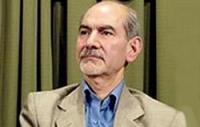
Mohammad Tavasoli, the head of the political office of the Freedom Movement of Iran party, has been temporarily released after seven months in prison.

Tavasoli was arrested last November in connection with a letter signed by 143 political and social activists addressed to former president Mohammad Khatami.

The letter announced that the signatories saw little chance that the people’s votes would be respected or that the people could have a free and fair parliamentary election.

Tavasoli’s wife has reported that he is suffering from dire health conditions and that she is gravely concerned for his well-being.

Some opposition news outlets had indicated that Tavasoli was threatened with death in the prison infirmary.

Iranian physicist sentenced to prison

Iranian physicist sentenced to prison

Omid Kokabee gets 10 years in jail for ‘communicating with a hostile government’

by: Michele Catanzaro

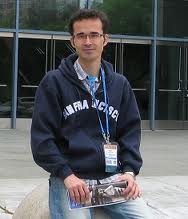
Omid Kokabee, an Iranian graduate student who has been imprisoned in Tehran for the past 15 months, was sentenced to 10 years on Sunday for allegedly conspiring with foreign countries against Iran.

Judge Abolghasem Salavati of Branch 15 of Tehran’s Revolution Court — who is famous for his harsh sentences — tried 10 to 15 people in the same trial, under the collective charge of collaborating with Israel’s intelligence agency, Mossad.

Kokabee, a graduate student who previously worked on the physics of optics at the Institute of Photonic Sciences (ICFO) in Barcelona, Spain, and more recently at the University of Texas in Austin, was arrested in Tehran in February 2011 on charges of “communicating with a hostile government” and “illegal earnings” (see ‘A year in jail without trial for Iranian student accused of spying’).

Close contacts of Kokabee in Iran have lamented the fact that no proof was presented at the trial to justify the sentence. Whereas other prisoners in the group declared themselves guilty in a television broadcast on the evening before the trial, the physics student has consistently denied all charges and refused to speak in court. (Faces are obscured in the broadcast, but Kokabee may be the person who appears at 24 seconds in a blue shirt.) He plans to appeal the sentence, according to his contacts.

International concern

Since Nature first highlighted Kokabee’s case (see ‘Missing physicist may have been jailed in Iran’), various organizations have written to the Iranian authorities asserting his innocence and asking for a fair trial — including the Committee of Concerned Scientists, a human-rights group based in New York; the American Physical Society in College Park, Maryland; and a group of four international optics organizations. His case has been included as a cause for concern in the report of Ahmed Shaheed, the United Nations Special Rapporteur on human rights in Iran.

In an open letter written while in prison, Kokabee claimed that the authorities were trying to obtain his “collaboration” through threats to him and his family; in another, he insisted that he was not a political activist, something that his friends confirm. Kokabee’s friends speculate that his frequent trips to Iran — totalling four or five in 2010 — may have aroused the suspicions of the Iranian authorities.

“This will send chills through the Iranian higher-education system, particularly scholars and students who seek to enhance and expand their horizons abroad,” says Hadi Ghaemi, a physicist previously at City University in New York and director of the International Campaign for Human Rights in Iran, an association that has recently promoted aninitiative for imprisoned students.

Meanwhile, Majid Jamali Fashi, convicted in August last year of murdering nuclear scientist Massoud Ali-Mohammadi in Tehran in 2010 (see ‘Iranian academics fear more killings’), was executed this morning, according to the Iranian state news agency.

Source: iranhumanrights

“Confess on TV or Go to Prison,” Authorities Tell Dadkhah

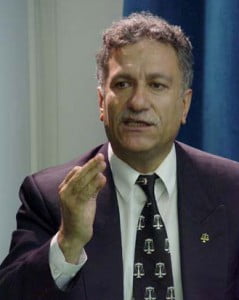
Human rights lawyer Mohammad Ali Dadkhah told the International Campaign for Human Rights in Iran that he has been under immense pressure during recent days to make false televised confessions. ”Tomorrow is my last day to either make television confessions or go to prison. I will go to prison, and I will not [be forced to] leave my homeland,” he said.

Dadkhah told the Campaign that he would never make fake confessions. “They told me that if I didn’t confess, they would enforce my sentence. They talked to me for long periods of time and I did not accept it. I will say now that if one day I say things, they are not credible and I must have been under conditions where I was forced to say those things. I hope God maintains my power.”

“Under intense pressure, they asked me to say before television cameras that the Defenders of Human Rights Center (DHRC) received funds from foreigners, meaning that we were operators for foreigners, which is not true,” said Dadkhah. The now-banned Defenders of Human Rights Center was co-founded by prominent human rights lawyers including Narges Mohammadi, Abdolfattah Soltani, Mohammad Seifzadeh, and Nobel Peace Prize laureate Shirin Ebadi.

Dadkhah described the work of the DHRC: “We were a number of lawyers who for our love for our land, our capabilities, and our professional knowledge started the Center and we worked there. Among Iranian lawyers, perhaps a group like ours is rare, a group that has knowledge, capability, and awareness about their work and is so affectionate towards our homeland.”

On 28 April, when Mohammad Ali Dadkhah appeared at Branch 15 of Tehran Revolutionary Court to defend his client, Arjang Davoodi, who has been sentenced to death, the Judge informed him that he was not allowed to defend his client, as his nine-year prison sentence has been upheld by an Appeals Court, and that he would be sent to prison soon.

The prominent lawyer has represented dozens of cases of prisoners of conscience, including Ebrahim Yazdi, Hossein Ronaghi Maleki, and Youcef Nadarkhani, a Christian pastor sentenced to death for moharebeh (enmity with God).

“I believe it unjust to put someone under pressure and tell him to go talk on television and say that he received money from abroad. I was nominated for several foreign awards, and I said that I would only accept these awards if they are not accompanied with money. I have only accepted awards that have no money. Also, I never received any money from my clients whom I defended for their human rights and I consider this my honor. Now, I find it inappropriate for myself to go say those things on TV,” Dadkhah told the Campaign.

When asked what would happen to his clients’ cases when he is sent to prison, he said, “Those who have violated my human rights should answer that. I have done nothing but to do my professional work. My field is international law. My human rights thesis received an A+. If there is a fair and just system, I should not be treated like this.”

On 20 May 2011, Branch 15 of Tehran Revolutionary Court tried Dadkhah on multiple charges such as “membership in the Defenders of Human Rights Center,” “interviewing with foreign media,” and “representing the Isfahan Underground Metro case.” According to the lower court’s ruling, which was announced in July 2011, he was sentenced to nine years in prison and a ten-year ban on practicing and teaching law. The appeals court upheld Dadkhah’s sentence in its entirety.

Currently, almost all prominent members of the DHRC, including Nasrin Sotoudeh, are in prison.

 Source: iranhumanrights

Jailed lawyer to attend court

Jailed Iranian human rights lawyer Nasrin Sotoudeh is being summoned to court again, this time for the suspension of her licence to practice law.

Sotoudeh’s husband, Reza Khandan, told the Kaleme website on Sunday that his wife will have to appear in court next Sunday May 20. Khandan said: “This trial is taking place because the judiciary has called on the Bar Association to suspend or annul Sotoudeh’s legal licence.”

The process began last year with a preliminary hearing and will now continue next week. Last June, as Sotoudeh was brought to the hearing in handcuffs, she embraced her husband in front of court security officers, creating a buzz in the media.

Khandan explained that Sotoudeh’s problem next week will be that her legal representative in the case is Abdolfattah Soltani, who has since been put behind bars as well. Sotoudeh will, therefore, have to find another lawyer on short notice.

Soltani was arrested last September and later sentenced to 18 years in jail, 20 years of exile and a ban on practicing law.

In the past year, many human rights lawyer have been the target of government persecution. The government has come to regard their activities as adverse propaganda against the regime and, hence, a threat to national security.

Sotoudeh has been sentenced to six years in jail and a 10-year ban on practicing law.

Source: Radiozamaneh

Iran ‘could order Hezbollah hit on Israel’

0

Lebanon’s Hezbollah may not want a new war with Israel but an order to attack would come from Tehran in the event of a strike on Iran, a senior military official in Israel’s northern command told AFP.

And should another conflict break out between Israel and the Shiite militia, it would be “much faster” than the 34-day war of 2006, said the official, who asked not to be identified.

Any military strike on Iran’s nuclear facilities would likely spark a deadly response from its ally Hezbollah, whose leader Hassan Nasrallah warned on Friday that its missiles could strike anywhere inside the Jewish state.

But senior military officials do not believe Nasrallah wants another war with Israel and would only attack as a direct result of orders from Tehran.

“The biggest spending of Iran in 30 years has been on the nuclear program, and Hezbollah is the second,” the Israeli official told AFP, adding that Tehran’s aim was to create “Iranian footprints near the border with Israel.”

“If something would happen in Iran, it’s a tool that they can use in all kinds of scenarios,” he said.

“They (Iran) have so many high-ranking officials in Lebanon. I don’t think this is a decision of Nasrallah — he will get orders. That’s why he was created,” said the official.

“If you ask Nasrallah today, he would say ‘no’ (to a new war with Israel) but I don’t think that’s his call,” he said. “Nasrallah understood the power of Israel and he is still licking his wounds.”

He said other scenarios which could spark a new conflict between Israel and Hezbollah include an attack on Israelis abroad or the transfer to Hezbollah of chemical weapons from Syria, in the midst of its brutal crackdown on protests.

Any new confrontation would likely be over much faster than the 34-day conflict which erupted in July 2006, said the military official for the northern region which borders Israel.

“This will be much shorter, much faster than the month” it took last time, he said. “The most important mission today is to win decisively in any kind of war in Lebanon. If you win, you win — everybody sees it.”

He said Israel’s biggest challenge in any new conflict would be Hezbollah’s positioning of weapons in the heart of civilian areas in around 100 Lebanese towns and villages along the border.

“In the villages there are three-story houses: on one floor there are rockets, then there is a family on the next floor, then a (military) headquarters then another family. The people that live there are human shields,” he said.

“Every Shiite village has become such a compound. The great challenge will be to deal with all these compounds.”

The Jewish state fought a devastating war against Hezbollah in 2006 that cost the lives of 1,200 people in Lebanon, mainly civilians, and 160 Israelis, mostly soldiers.

 Source: Alarabiya