Home Blog Page 466

Rights activist Narges Mohammadi summoned to serve out 6-year jail-term

0

Prominent human rights activist Narges Mohammadi has been summoned to serve out a six-year prison sentence, according to the semi-official Fars news agency.

Mohammadi had initially been sentenced to eleven years in prison for acting against “national security,” her membership of a human rights organisation and “propaganda” against the Islamic Republic. Her sentenced was recently commuted to six years in prison.

The activist was arrested in the city of Zanjan on Saturday. Her mother Ozra Bazargan told opposition site Rooz that the agents failed to provide identification and carried no arrest warrants. “Narges’s father went to Zanjan’s Intelligence Bureau but was told that she had been transferred to Tehran,” Bazargan added.

Narges Mohammadi, 40, is the deputy head of Iran’s Defenders of Human Rights Centre (DHRC), an organisation headed by Nobel peace laureate Shirin Ebadi. She is also the recipient of the 2009 Alexander Langer award for her role in promoting human rights.

Her husband Taghi Rahmani is a political activist and has spent fourteen years bars because of his activism.

Since mid-March, Rahmani has been residing in Paris. His wife and two children Ali and Kiana are still in Iran.

Source: irangreenvoice

A Defiant Seifzadeh Awaits Ruling

0

As the Iranian Judiciary continues to reschedule prominent human rights defender Mohammad Seifzadeh’s trial, he continues to refuse to attend the session. His wife and lawyer, Fatemeh Golzar, told the International Campaign for Human Rights in Iran that his refusal is based on his distrust in the court’s competence.

“As per Mr. Seifzadeh’s request, I only submitted his defense bill to the court. Now we await the ruling. His prior cases were all ready for a ruling, too, and I don’t know why they kept re-scheduling court sessions. I doubt his court sessions will be renewed, unless for some reason there are preferences for holding the case this way. Mr. Seifzadeh’s position is clear, as previously announced. He will participate in none of his court sessions because he does not regard the court qualified,” said Fatemeh Golzar.

In April 2011, security forces arrested Mohammad Seifzadeh in Orumiyeh on charges of illegal border crossing. While in detention, he was newly charged with “collusion and assembly against national security” for writing a letter to former Iranian President Mohammad Khatami and two critical articles about “legal pardon procedures” and “definition of political crimes,” as well as signing several group statements from inside prison.

In November 2010, Branch 15 of Tehran’s Revolutionary Court sentenced Mohammad Seifzadeh to nine years in prison and a ten-year ban on practicing law on the charge of of “acting against national security through co-founding the Defenders of Human Rights Center.” Eventually, an appeals court reduced his sentence to two years.

“I have followed up this case many times, but there has not been a ruling on it yet,” said Golzar, explaining that her husband is currently in prison for aforementioned charge, and that the sentence on the other two charges is still pending.

The pending case’s first court convened on 10 January, but Seifzadeh refused to attend the session and only submitted his defense bill. The court session was then rescheduled for 11 March, and again for 9 April.

“I only hope that a law-abiding individual like my husband who has never needed anyone to force him into observing the laws would never fall into this trap and be questioned like this.  It is such a pity for people like him to fall in prison like this, because this is not the right place for my husband,” added Seifzadeh’s wife.

 Source: iranhumanrights

Activist Mohammad Tavassoli receives death threats at prison infirmary

The imprisoned head the political bureau of the outlawed Freedom Movement of Iran is said to be in dire physical conditions.

Mohammad Tavassoli, Tehran’s first post-revolution mayor, was arrested on 3 November after he and 140 other activists wrote a letter to former President Mohammad Khatami, warning him that there was little hope the authorities would submit to free and fair elections.

The 74-year-old is currently being held in section 209 of the notorious Evin Prison in Tehran. Sources tell the Green Voice of Freedom that he is not being allowed fresh air and that he has developed shivering as a result of prison duress. He was transferred to the prison infirmary a number of times after his health deteriorated. Instead of receiving medical attention, Tavassoli reportedly received death threats from an official working ther

Tavassoli has spent many years, both before and after the 1979 Islamic Revolution, behind bars where he was also subjected to torture. In early 2001, he was imprisoned along with other FMI members and spent eleven months in solitary confinement before being released on bail.

He was arrested again following Iran’s disputed June 2009 presidential election. He was released after spending 43 days in solitary confinement.

Tavassoli’s daughter (Leila) and son-in-law (Mohammad Navid Taheri), both detained following opposition protests in late December 2009, are also in prison serving lengthy jail terms.

Since his arrest in November, Tavassoli has only been given a 36-hour leave to attend his daughter’s wedding. He spent the New Iranian Year in prison, despite his family’s letters to the Head of the Judiciary and Intelligence Minister requesting his release during the festivities.

Meanwhile, reports suggest that the FMI’s ailing Secretary General Ebrahim Yazdi has been summoned to serve an eight-year jail term. The judiciary had previously announced that Yazdi’s case was still in the appeal phase. In the end, however, the appeals court confirmed the ruling against Yazdi in his absence.

The eighty-year-old has said that the Revolutionary Court lacks qualification for reviewing charges against him and the Iran Freedom Movement.

In October, Yazdi wrote a letter to Rached Ghannouchi, leader of Tunisia’s Ennahda party, warning him about a repeat of the Iranian experience and the revival of tyranny in the small North African nation.

“We fight and remove dictators, but we do not eradicate tyranny as a way of life. Tyranny is not summarised in and limited to a certain political structure, but it has cultural dimensions that go hand in hand with the political structure,” the veteran activist told Ghannouchi.

“We Muslims topple tyrants while soon after, we witness their new replacements,” he noted. “We overthrew the Shah, but forgot to deal with the ways and character of the shah within us.”

Source: irangreenvoice

UN blacklists two more Iranians

The United Nations sanctions committee has added two more Iranian citizens and a company for attempting to circumvent UN sanctions in 2010 by shipping arms to Nigeria.

The two individuals and the company are reportedly linked to Iran’s Revolutionary Guards Corps. The U.S. envoy to the UN said on Friday: “The individuals listed today helped plan a weapons shipment — intercepted by Nigeria in 2010 — in violation of existing UN sanctions.”

Susan Rice added: “Both individuals and this company are tied to the Qods Force of the Islamic Revolutionary Guard Corps (IRGC), the group that directs Iranian support for terrorism and extremism worldwide.”

The UN announcement names the two individuals as Azim Aghajani and Akbar Tabatabaei and the firm as the Behineh Trading Co., which is described by the UN committee as “one of two Iranian companies that played key roles in Iran’s illicit transfer of arms to West Africa and acted on behalf of the IRGC Qods Force as the shipper of the weapons consignment.”

The individuals will face visa and travel restrictions and their assets will be frozen.

 Source: radiozamaneh

Aging politician summoned to serve out sentence

Ebrahim Yazdi, the secretary general of the Freedom Movement of Iran, has been summoned to Evin Prison to serve out his eight-year prison term.

Mizan Khabar reports that Yazdi was informed on Monday that he has 20 days to reports to Evin Prison to serve out his sentence. According to this report, while the preliminary court had said that his case has not yet been sent to the appeals court, the case was indeed forwarded to the appellate court and finalized without any input from the defendant or his lawyer.

Yazdi was arrested on several occasions after the controversial 2009 presidential election, which was followed by mass arrests and a crackdown on election protesters.

Yazdi, who is 81, has been called Iran’s oldest political prisoner in recent years.

The Revolutionary Court sentenced Yazdi to eight years in prison for the charge of “propaganda against the regime and assembly and collusion to disturb national security.”

Yazdi has contested the sentence but reportedly was not given a chance to present his defence to the appellate court.

One of the charges against Yazdi is the establishment of the Freedom Movement of Iran Party, which he contests, since he joined the party after it had been established in 1961 by such popular political figures as Mehdi Bazargan and Ayatollah Taleghni.

Bazargan headed the transitional government after the 1979 Revolution in Iran but was sidelined within a year. Following Bazargan’s death, the Freedom Movement Party was led by Ebrahim Yazdi, then-foreign minister in the transitional government, and it was eventually banned by the Islamic Republic.

 Source: radiozamaneh

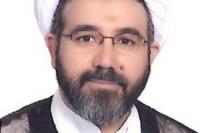
Dissident cleric Masoud Adib arrested in Qom

Pro-opposition cleric Masoud Adib, has been detained in the holy city of Qom, according to reports.

Adib, a professor at Qom’s Mofid university, was arrested on 18 April, opposition website Jaras reported. Agents from Qom’s Intelligence Bureau were reportedly behind the arrest. They inspected his home and confiscated a number of his belongings. It’s still uncertain where he is being held.

The hardline Raja news website confirmed his arrest.

During the disputed 2009 presidential elections, Adib was a Mousavi campaign manager in Qom. Following the passing of Late Grand Ayatollah Montazeri in December 2009, Adib was violently arrested along with more than fifty other followers who had been attending a memorial service in the city of Isfahan.

The Grand Ayatollah had been an outspoken critic of the political establishment and was considered to be the Green Movement’s spiritual leader until his death. On numerous occasions, he had questioned the religious credentials of Iran’s Supreme Leader Ali Khamenei.

 Source: irangreenvoice

PEN calls for release of jailed translator

PEN International’s Writers in Prison Committee has issued a statement calling for the unconditional and immediate release of Mohammad Soleimaninia, the Iranian translator and internet expert imprisoned by Iranian authorities.

In a statement issued on April19, PEN condemns the arrest of Soleimaninia, who in addition to translating the novel “Funny in Farsi” was the director of U24, a website much like LinkedIn that connects Iranian professionals.

Soleimaninia was arrested by the Iranian Intelligence Ministry in January 2012 and held incommunicado for more than two months. His website U24, which has brought Iranian professionals together since 2007, appears to be the reason for his arrest.

He reportedly began a hunger strike on April 2 to protest his situation, which has raised concern for his well-being.

Soleimaninia’s imprisonment has also been challenged by Reporter’s Without Borders, which called for his immediate release on April 12.

 Source: radiozamaneh

“None of Our Rights Have Been Observed,” Says Abdolfattah Soltani’s Wife

Massoumeh Dehghan, wife of prominent human rights defender Abdolfattah Soltani, told the International Campaign for Human Rights in Iran that neither her husband’s nor the family’s rights have been respected since his imprisonment almost eight months ago. Dehghan told the Campaign that authorities have denied Soltani his rightful release on bail, have not returned any of the items confiscated during his arrest, and refused to grant his family permission to see him during the Persian New Year.

“According to the law, Mr. Soltani should be released on bail until the Appeals Court convenes and issues his final ruling. At this time, his lawyers have submitted their appeal request to the court and we are waiting for an appointment,” said Dehghan. She that she had not received any responses from judicial authorities, even after going to the Tehran Prosecutor’s Office several times and writing letters.

On 10 September 2011, authorities arrested prominent human rights lawyer and co-founder, along with Nobel Peace Prize laureate Shirin Ebadi, of the Defenders of Human Rights Center, Abdolfattah Soltani. Branch 26 of Tehran Revolutionary Court under Judge Pirabbasi tried Soltani on charges of “being awarded the [2009] Nuremberg International Human Rights Award,” “interviewing with media about his clients’ cases,” and “co-founding the Center for Human Rights Defenders.”

On 4 March 2012, authorities sentenced Soltani to 18 years of prison in exile in Borazjan and a 20-year ban on legal practice. He is currently in Evin Prison’s General Ward, where he was transferred after his sentence was issued.

Dehghan also told the Campaign her husband was not granted furlough for the Persian New Year holiday. “During Mr. Soltani’s detention, we were not allowed to visit him in person even once. Last week they gave many prisoner families permission to have in-person visits on the occasion of the [Iranian] New Year. I asked the officer in charge to grant us in-person visitation, too, but he told me that he was unable to give in-person visits to Mr. Soltani … If there are laws about visitation and furlough rights, all prisoners must be able to have them.” Typically, many prisoners in Iran are granted a short furlough to spend time with their families during the Persian New Year. In recent years, however, authorities have forbidden many political prisoners from this privilege.

“Not everything has been returned, for example, family photo albums, my personal items such as my notebooks, hand-written notes, and even my bank passbook. I don’t know what use these items have for them. When forces searched our home in 2007, also, they took things with them such as photo albums, radio sets, and personal CDs, which they have not returned yet. These are personal and family items which I do not wish to be in their hands. But every time I have gone to claim them, they have told me to come back later. How many times should I go after them?” Dehghan told the Campaign.

“Families should not be punished. They don’t grant in-person visits nor furloughs. They issue strange sentences such as exile. Assuming that Mr. Soltani goes to Borazjan, who suffers the most here? Certainly the family who will have to travel a long distance to see him. Majid Dori’s mother said a few days ago that each time they go to visit Majid, they lose three days in transit in order to see him for one hour in a prison in another city. Are such sentences in harmony with the spirit of Islamic laws, humanity, and the Islamic Republic?” she said.

 Source: iranhumanrights

Palestinian Official Blasts Iran For Interfering In Its Affairs

0

A senior Palestinian official has criticized Iran for interfering in the Palestinian Authority’s internal affairs.

According to the Palestinian Ma’an news agency, the secretary-general of the Palestinian Authority, Tayyeb Abdul-Rahim, has alleged that Iranian involvement in Palestinian issues only serves to benefit Israel by exacerbating the conflicts between the rival Palestinian Fatah and Hamas factions. The more moderate Fatah party governs the West Bank, while the more radical Hamas rules Gaza.

Abdul-Rahim blamed Iran for ruining efforts by Hamas and Fatah to reconcile.

Abdul-Rahim also claimed that Hamas is back on Iran’s payroll — payments had apparently been suspended by Teheran six months ago to punish Hamas for its refusal to support Syrian president Bashar al -Assad. Indeed, Hamas has voiced support for the Syrian opposition seeking to topple Assad.

However, Fatah believes Iran can overlook Hamas’ Syrian posture because Teheran is more interested in supporting an armed Palestinian movement against Israel.

“We have information that Iran paid tens of millions of dollars to [Mahmoud] Zahar and [Ismael] Haniyeh in their visits to Iran,”  Fatah spokesman Ahmed Assaf said, according to Ma’an.

Zahar and Haniyeh are Hamas leaders who have recently made separate trips to Teheran.

“Reconciliation is in the freezer because Zahar was the one who put it there and he got the price from Iran,” Assaf told Reuters.

“Zahar, Haniyeh and Hamas’ Gaza leadership were paid by Iran to freeze reconciliation.”

Ma’an also noted that last month, according to Fatah, that Iran paid Hamas money in order to cancel a deal between the two Palestinian factions that would have resolved a five-year-old rift.

In response to all the allegations, Hamas has denied Fatah’s charges.

“The Fatah government did not implement any of its obligations [under the unity deal], and it prefers American money to nationalist agreements,” Hamas spokesman Taher al-Nono said, according to Reuters.

Separately, Abdul-Rahim also criticized Iran’s President Mahmoud Ahmadinejad for having recently visited Abu Musa, one of three disputed islands in the Persian Gulf, which are claimed by both the United Arab Emirates and Iran.

Abdul-Rahim charged Iran with seeking to provoke regional conflicts by such provocative actions, comparing the actions with Israel’s “occupation” of Palestine.

Iran has held Abu Musa — which holds a key strategic position in the Strait of Hormuz — since 1971.

 Source: insideofiran

Azerbaijan: terror suspects have al-Qaida links

0

Members of a suspected terrorist group arrested this month in Azerbaijan had links to al-Qaida and some trained in neighboring Iran, officials said Thursday.

Some of the 17 suspects had fought NATO-led troops in Afghanistan and others had undergone a two-month training course in Iran in preparation for waging a jihad, or Islamic holy war, in Azerbaijan, the National Security Ministry said in a statement.

The ministry first announced the bust on April 6, saying the suspects were arrested in the capital, Baku, and several other cities across Azerbaijan, a former Soviet nation on the Caspian Sea. One security officer was shot and killed and three others were wounded in a skirmish during the arrests, and one suspect was also killed, it said.

The suspects were accused of planning a series of terror attacks intended to “disrupt stability and sow panic among the population.”

In the new statement, issued late Wednesday, the ministry said the group was led by Vugar Padarov, a 37-year-old Azerbaijani citizen. Some of its members had received religious training in Syria, and some had learned how to handle weapons with the Jihad Islami group in Pakistan and took part in fighting NATO-led troops in Afghanistan, the ministry said.

It also said that some of the suspects had spent two months in Iran for weapons training, but gave no further details.

National Security Ministry spokesman Arif Babayev said Thursday that this group was unrelated to alleged Iranian agents arrested in February and March. He said the investigation was ongoing and he could give no further details.

The ministry announced the arrests in March of 22 Azerbaijani citizens it said had been hired by Iran to stage terror attacks against the U.S. and Israeli embassies as well as Western-linked groups and companies. It said they had been trained in Iran by the Revolutionary Guard.

Earlier this year, they announced the arrest of several other suspected terrorists allegedly working for Iran’s secret services.

Azerbaijan, an oil-rich former Soviet nation of 9 million people wedged between Russia and Iran, has nurtured close relations with the United States and played an active role in Western-led counter-terrorist programs. That policy course has placed a strain on its ties with Iran, which hosts a sizable ethnic Azeri community.

Authorities in Baku have insisted, however, that they will not permit use of the country for any military action against Iran.

 Source: insideofiran