Home Blog Page 479

Iran claims West is using internet for spying, creates its own ‘halal’ network

0


The Iranian minister of communication and technology accused Western nations of using the internet as a tool for spying and spreading corruption, Iran’s semi-official Fars news agency reported on Saturday.

“Unfortunately, the Western states, the U.S. on top of them, are using the internet for spying and spreading corruption on Earth, but Iran has started a movement in administering internet use and will definitely limit such (Western) misuses through the aid and assistance of (the world) free circles,” Reza Taqipour was quoted by Fars news agency as saying at a meeting with the Iraqi minister of Communication Muhammad Tawfiq Allawi.

“The Internet should be at all states’ service and not for Western economic misuses and demonization of other states,” Taqipour added.
Taqhipour announced that Iran will within weeks launch a “halal” network that will provide Iranians with a safe environment to surf the web as it will be “clean” of “immoral” sites.

Iranian officials have said in the past that the Internet could open the nation to a cultural invasion from the West and make it vulnerable to computer viruses, such as the Stuxnet worm that attacked its nuclear facilities. Many believe the malware was created by Israel or the United States to block Iran’s nuclear progress.

In January, Iran’s head of police, Esmail Ahmadi Moghaddam, stated that Google is not a search engine but rather an instrument for spying.

In the same month, the commander of the anti-narcotics squad of Iran’s police, Ali Moayyedi, said drug cartels were suing the World Wide Web to promote and encourage the production and usage of drugs inside Iran.

Supreme Leader Ayatollah Ali Khamenei on Wednesday ordered the creation of a new government agency to monitor cyberspace in an aggressive step in the ongoing crackdown on online activities by ordinary Iranians.

Khamenei issued a decree calling for a Supreme Council of Cyberspace, an entity that would be headed by President Mahmoud Ahmadinejad and would include other top Iranian officials, including the intelligence chief and the head of the Revolutionary Guards.

“Planning and constant coordination” of the Internet are needed “to prevent its damages and consequences,” the decree said. The council should have “a constant and comprehensive monitoring over the domestic and international cyberspace,” it added.

Iranians have grappled with increased obstacles to using the Internet since opposition supporters used social networking sites to organize widespread protests after the disputed 2009 re-election of Ahmadinejad.


Source: alarabiya

Malekpour in imminent danger of execution


Saeed Malekpour’s sister says his family has not heard from him in 50 days and they fear that he may be executed at any time.

The International Campaign for Human Rights reported yesterday that Maryam Malekpour, the sister of the Iranian detainee currently on death row, said: “We have not been allowed to visit him in the past 50 days and we are completely in the dark. Our letters and requests for visitations have also been left unanswered.”

Maryam Malekpour goes on to say: “Saeed’s execution may be carried out any moment. I beseech the judicial authorities of my country to stop this sentence. We have written many letters that have remained unanswered but we are still hopeful that the authorities will halt the execution.”

Malekpour, a 36-year-old software designer and an engineering graduate from Iran’s top university, Sanaati Sharif, has been under arrest for more than three years. He is charged with “propaganda against the regime by designing obscene websites, insulting sanctities, insulting the president, links to anti-government groups and corruption on earth.” In a nationally televised report, he was shown admitting to these charges. He has since declared that those confessions were coerced and that he made them under duress.

He has written to the head of the judiciary, Ayatollah Larijani, indicating that he made the confessions “under fierce pressure, torture, threats and false promises of release on bail and amelioration of my situation.”

In his letter he lists “flogging, the threat of sexual abuse, interrogations leading to broken teeth, dislocation of haws and temporary paralysis in parts of my body” as examples of the torture he’s been subjected to.

Last month, several of his cellmates released a statement calling for a re-examination of his case, declaring that he has repeatedly reassured them that his confessions were made under torture, adding that his body still carries the marks of his ordeal.

Source: radiozamaneh

Sanctions against Iran reviewed by European Parliament

0


The European Parliament held a meeting on March 8 to reflect on the impact of sanctions against Iran driven by human rights concerns.

Marietje Schaake, a Dutch Member of the European Parliament had invited Shadi Sadr Iranian human rights activist currently based in London, Payam Akhavan, human rights activist and professor at McGill University, and Roohi Shafii Iranian writer and activist based in London as an expert panel to provide their recommendations on the situation of human rights in Iran and the effective ways in which European countries could address these issues.

The meeting focused on the Islamic Republic’s failure to improve its behavior around human rights abuses, even in the face of those punitive international sanctions.

Sadr offered up a series of proposals aimed at targeting international sanctions more effectively to address human rights issues in Iran. She told Radio Zamaneh: “In the Justice for Iran organization, we have prepared a comprehensive report which was explained in today’s meeting.”

She added: “In the report, we examine how effective the international sanctions targeting human rights violation in Iran have been since the first round was launched one year ago and we pinpoint their weaknesses, and we also make a series of recommendations.”

Sadr says it is not enough for individuals involved in human rights violations to be blacklisted; the organizations and government bodies that commit these violations should also be put under sanction.

Sadr continues: “Our other recommendation is that European countries should pressure Iran’s neighbouring countries or countries with which they have close relations, such as Turkey, the UAE or Malaysia, to pressure Iran and join these sanctions.”

The other Iranian panelist, Payam Akhavan, said European countries must gain the trust of Iranian people. He raised the “Mykonos incident” of 1992, in which a group of Iranian-Kurdish opposition leaders were assassinated at a Greek restaurant in Berlin, and the suspects were released and allowed to return to Iran.

Roohi Shafii touched on the rising level of violence in Iranian society and told Zamaneh that when the sanctions target Iranian families and put them in dire economic circumstances, they trigger greater conflict and violence in society, and the impact is mostly felt by women and children.

Arjen de Wolff, the executive director of Radio Zamaneh also attended the meeting and argued against proposals to impose sanctions on Iranian communication channels. He pointed out that many media outlets such as Radio Zamaneh reach their audience through the internet and satellite networks, and any form of sanctions on these modes of communication would leave the people of Iran cut off from these media outlets.

The Zamaneh director went on to recommend that Persian-language media outlets outside Iran be placed on the very channels that the Iranian government uses to relay its own programs. In this way, he argued, any attempt by the Islamic Republic to interrupt these satellite programs would also affect its own programs.

On April 14, 2011, the European Union blacklisted 32 individuals in connection with human rights violations in Iran. The 27 member states of the EU will not issue visas to these individuals, and all EU residents and companies are banned from having any financial dealings with them.

The list includes several commanders of Iran’s Revolutionary Guards Corps as well as a number of judges and prison officials.

Source: radiozamaneh

Mothers of Laleh Park denounce persecution of activists


The Mothers of Laleh Park and their supporters have issued a statement challenging the Iranian judiciary’s harsh sentencing of human rights activists.

Zamaneh reports that the Mothers of Laleh Park released a statement saying: “While the possibility of a humane life is evaporating for Iranian people and especially freedom seekers, the criminals are rising in stature, and there are no fair courts answerable to the people.”

The statement refers to the severe sentences recently handed to human rights lawyer Abdolfattah Soltani and the deputy head of the Human Rights Defenders Centre, Nargess Mohammad, contrasting their judicial fate with that of Saeed Mortazavi, the notorious former Tehran Prosecutor. He was removed from his position after the scandalous torture and death of detainees at the Kahrizak Detention Centre came to light.

The Mothers of Laleh Park write: “Judge Mortazavi, whose many crimes are common knowledge, was dismissed after his offences regarding Kahrizak were revealed. But not only did he not stand trial, he was instead appointed as head of the task force against drug trafficking. And now he is being appointed to the helm of the Organization for Social Security.”

A special parliamentary probe has accused Mortazavi of directly ordering the transfer of a group of post-election detainees to Kahrizak Detention Centre, which led to the torture of numerous prisoners and the death of at least three of the protesters detained in July of 2009.

Mortazavi has been quoted as saying he has been acquitted of all charges against him.

The Mothers of Laleh Park condemn the treatment Soltani has received in prison, citing reports that indicate he is being pressured to testify against his own organization, the Centre for Human Rights Defenders, as well as his colleague, the Iranian Nobel Laureate Shirin Ebadi.

Soltani was recently sentenced to 18 years in prison plus exile. He is also banned from practicing law for 20 years.

The Mothers of Laleh Park also express their solidarity with the families of political detainees who gathered in Shoosh this week in front of that city’s Ministry of Intelligence office. The statement adds that these protesters maintain their relatives have been detained with no access to legal representation and without being formally charged. They also claim that security forces are subjecting the detainees to torture, abuse and solitary confinement.

The Mothers report that the gathering was attacked by government forces, causing protesters to cover their heads with the Quran for protection against the beatings.

Last month, more than 60 people were arrested in Shoosh and other cities in the southwestern province of Khuzestan. The families of two of the detainees, Mohammad Kaabi and Nasser Alboshokeh, were informed by authorities that their relatives had died while in custody, failing to provide any further details.

The Mothers of Laleh Park, also known as the Mourning Mothers of Iran, was formed by a group of mothers who lost their children in the crackdown on street demonstrations after the 2009 presidential elections. The members demand government accountability in the deaths, arrests and disappearances of their children.

Source: radiozamaneh

Severe Beating and Transfer of Kurdish Prisoner Mostafa Salimi to Solitary Cell


The Iran Human Rights Documentation Center (IHRDC) has received reports that on Monday, March 5, Mostafa Salimi—a Kurdish political prisoner sentenced to execution and currently held at Saqqez prison—got into a scuffle with prison authorities. The cause of the disturbance related to Salimi’s request for prison authorities to purchase certain items from the “Prison Café”—a store selling basic goods and provisions to prisoners that operates on credit (see prison regulations regarding operation of the store below)—and which Salimi helped manage. Although Salimi reportedly credited the authorities for the items, they did not procure the items requested, which prompted the scuffle. As a result, prison guards severely beat Salimi, bound his hands and feet, and threw him inside a solitary cell. In the days since the transfer Salimi has not been permitted any phone calls or visitation with his family.

Mostafa Salimi was arrested on April 6, 2003 in Nahavand for moharebeh (or “waging war against God”) and cooperation with the Democratic Party of Iranian Kurdistan (PDKI), a Kurdish political party. According to sources close to Salimi, he has been physically and mentally tortured during his detention and incarceration and his court hearing only lasted 15 minutes.

The charges against Salimi include two separate incidents of armed combat during which two police officers were killed. He has also been charged with 18 years of unarmed activity for PDKI in Iran and five years of armed activity for the group in Iraqi Kurdistan and its border areas.

He currently suffers from a serious infection of the kidneys, back and knee pains, and problems with his vision. Sources close to Salimi have told IHRDC that the prison authorities have not permitted Mr. Salimi to visit a doctor and instead he is merely provided painkillers for his ailments.

Executive regulation of state prisons and security and corrective measures organization passed on Dec 11 2005

Article 87: Convicts and suspects are not allowed to keep cash inside the prison. Authorities must take measures so that they can provide their necessities from stores by their credit. Regulations about this article will be notified to general offices of prisons by the organization.

Note: If cash or check are found, if the convict has used them for religiously banned uses like gambling or bribery, the money will be confiscated and it will be reported to the supervising judge of the prison and if it has not been used for religiously banned purposes, the issue will be noted in the ethics council and the money will be deposited to his account and about checks, necessary decision will be made according to the case.

Article 98: In the organization or prison, necessary stores will be made funded by the board of cooperation, industry and professional training of prisoners of the country or the prison and the head of the prison or organization will supervise them as he is responsible for security.

Note 1: Determination of the authorized goods for sale in the stores of the prisons will be done by the head of the prison by necessity of maintaining hygiene and security of the prison and the prices will be fair daily prices.

Note 2: The goods of the stores in the prisons must not be more expensive than the fair daily price of goods and if necessary, the goods of the cooperation office will be sold on the price of the cooperation office.

Note 3: The form of goods with fair prices will be made on a board and will be put at the entrance of the store, visible to everybody, with signature of the manager of the stores of the prison.

Note 4: The heads of prisons are required to have complete observation on the prices of goods and introduce violators in cases of violation to the related authorities.

Article 99: Convicts and visitors can buy their necessities from the stores inside the prison unless the prisoner is banned from this action for ethics or doctor orders.

Note: Sale of luxurious goods, drugs and electronic appliances in the stores of prisons and organizations is prohibited.


Source: iranhrdc

Iran may be cleaning up nuke work

0


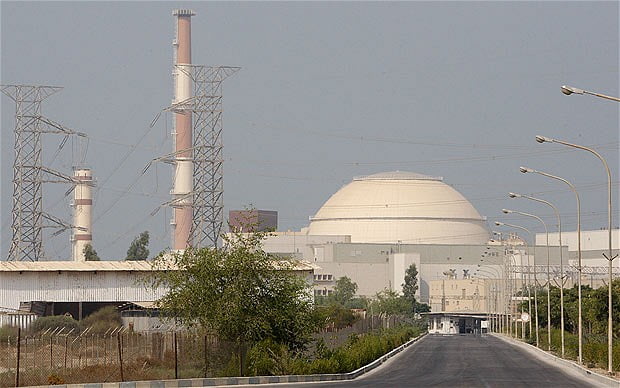
Satellite images of an Iranian military facility appear to show trucks and earth-moving vehicles at the site, indicating an attempted cleanup of radioactive traces possibly left by tests of a nuclear-weapon trigger, diplomats told The Associated Press on Wednesday.

The assertions from the diplomats, all nuclear experts accredited to the International Atomic Energy Agency, could add to the growing international pressure on Iran over its nuclear program, which Tehran insists is for peaceful purposes.

While the U.S. and the EU are backing a sanctions-heavy approach, Israel has warned that it may resort to a pre-emptive strike against Iran’s nuclear facilities to prevent it from obtaining atomic weapons.

Two of the diplomats said the crews at the Parchin military site may be trying to erase evidence of tests of a small experimental neutron device used to set off a nuclear explosion. A third diplomat could not confirm that but said any attempt to trigger a so-called neutron initiator could only be in the context of trying to develop nuclear arms.

The diplomats said they suspect attempts at sanitization because some of the vehicles at the scene appeared to be haulage trucks and other equipment suited to carting off potentially contaminated soil from the site.

The images, provided by member countries to the IAEA, the U.N’s nuclear watchdog, are recent and constantly updated, one of the diplomats said. The diplomats all requested anonymity because they were not authorized to discuss the information on the record.

The IAEA has already identified Parchin as the location of suspected nuclear weapons-related testing. In a November report, it said it appeared to be the site of experiments with conventional high explosives meant to initiate a nuclear chain reaction.

It did not mention a neutron initiator as part of those tests, but in a separate section cited an unnamed member nation as saying Iran may have experimented with a neutron initiator, without going into detail or naming a location for such work.

In contrast, the intelligence information shared with the AP by the two diplomats linked the high-explosives work directly to setting off a neutron initiator at Parchin.

In explaining such a device, the agency’s November report said that “if placed in the center of a nuclear core of an implosion-type nuclear device and compressed, (it) could produce a burst of neutrons suitable for initiating a fission chain reaction.”

If Iran did try to trigger a neutron initiator, it would harden international suspicions by adding a nuclear component to a suspected string of experiments linked to weapons development that generally have not included radioactive material.

Iran has previously attempted to clean up sites considered suspicious by world powers worried about Tehran’s nuclear ambitions.

Iran razed the Lavizan Shian complex in northern Iran before allowing IAEA inspectors to visit the suspected repository of military procured equipment that could be used in a nuclear weapons program. Tehran said the site had been demolished to make way for a park, but inspectors who subsequently came to the site five years ago found traces of uranium enriched to or near the level used in making the core of nuclear warheads.

The Iranians also embarked on an extensive redo at the Kalay-e Electric Co., just west of Tehran, before agency inspectors were given access nine years ago. Although the site was re-painted and otherwise sanitized, samples taken from Kalay-e also showed traces of enriched uranium, though at levels substantially below warhead grade.

One official from an IAEA member country with good intelligence on Iran said the Parchin neutron initiator experiments were conducted between 2003 and 2010. Another said any such tests were closer to 2003, adding it was not clear whether they were successful.

The timing is important.

U.S. intelligence officials say they generally stand by a 2007 intelligence assessment that asserts Iran stopped comprehensive secret work on developing nuclear arms in 2003. But Britain, France, Germany, Israel and other U.S. allies think such activities have continued past that date, a view shared by the IAEA, which says in recent reports that some isolated and sporadic activities may be ongoing.

Iran vehemently denies allegations that it conducted any research and development into atomic weapons and says the totality of its nuclear activities are meant purely to generate power or for research.

Asked for comment, Ali Asghar Soltanieh, Iran’s chief delegate to the IAEA, told the AP he would not discuss any nuclear issues until after he delivered his statement to the agency’s 35-nation board meeting Thursday. IAEA officials also said they could not comment.

Attention most recently focused on Parchin several days ago, when senior IAEA officials first spoke of unexplained activities at the site without saying what they could be and said an inspection of buildings there was taking on added urgency.

One of six diplomats who spoke with the AP said his country continued to reserve judgment on what the movements at the site meant but two others who had seen recent spy satellite imagery said the trucks and other equipment at the site almost certainly showed attempts to clean it of radioactive contamination.

They declined to go into detail but said radioactive traces could also be left by material other than a neutron initiator, such as uranium metal which can be used as a substitute for testing purposes.

IAEA expert teams trying to probe the suspicions of secret weapons work by Iran tried — and failed — twice in recent weeks to get Iranian permission to visit Parchin. Tehran then said on Monday that such a visit would be granted.

But it said that a comprehensive agreement outlining conditions of such an inspection must first be agreed on — a move dismissed by a senior international official familiar with the issue as a delaying tactic. He, too, requested anonymity because his organization does not authorize him to speak publicly on confidential IAEA matters.

The diplomats and officials spoke ahead of a meeting of the IAEA board Thursday focusing on Iran’s defiance of U.N. Security Council demands to end uranium enrichment — which can make both nuclear fuel and fissile warhead material — and dispel other suspicions that it may be seeking nuclear weapons.

That session was to take place Wednesday but had to be adjourned to give six world powers time to find common ground on how harshly to criticize Iran. They agreed on a text late Wednesday but only after marathon negotiations reflecting the difficulty of presenting a united front at upcoming talks with Iran.

Officials did not detail the text agreed upon, but the U.S., Britain, France and Germany wanted a joint statement that takes Iran to task for defying U.N. Security Council resolutions demanding it end uranium enrichment and cooperate with an IAEA probe of suspicions it secretly worked on nuclear arms.

A senior Western diplomat, however, told the AP that Russia and China, which have condemned Western sanctions on Iran as counterproductive, sought more moderate language. He spoke on condition of anonymity because his government does not authorize him to share confidential information with reporters.

Source: insideofiran

US ‘offers to supply Israel with military means to destroy Iran’s nuclear plants’

0


The United States has offered to supply Israel with the military means of destroying Iran’s nuclear facilities, but only if it agrees to delay an attack until next year, an Israeli newspaper has claimed.

Under the terms of the deal, Israel would be provided with “the latest bunker busting bombs developed by the US army” and air-to-air refuelling planes, the Maariv newspaper quoted diplomatic sources and Western intelligence officials as saying.

The newspaper did not specify the type of bomb allegedly being offered. The United States has already supplied Israel with 5,000-lb GBU-28 and GBU-27 “bunker-busting” bombs capable of destroying virtually all Iranian nuclear facilities with the exception of the Fordow enrichment plant, buried up to 280 feet under ground.

Iran has begun moving its material into Fordow, leading to claims in Israel that a unilateral attack would be ineffective once a period of six to nine months has elapsed, an assessment that has led to fears in Washington that the Jewish state is preparing to launch military action.

Israel’s “window of opportunity” would be extended, however, if it were to take possession of the US military’s new 30,000-lb Massive Ordnance Penetrator GBU 57-A/B, which would be capable of breaching Fordow’s defences.

Israel’s air force, however, has no B-2 bombers, making it unclear how it would carry the new bunker-buster. It is possible that the offer, allegedly made in a meeting this week between President Barack Obama and Benjamin Netanyahu, the Israeli prime minister, only involved expanding Israel’s existing GBU-28 arsenal.

Farzad Haghshenas Discloses Regime’s Tortures to Iran Briefing

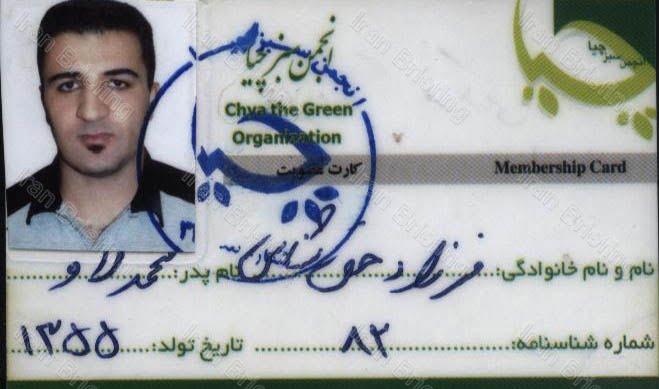
Iran Briefing : Farzad Haghshenas, an environmental activist and member of the NGO, Sabzchia (The Green Mountain Society), was arrested on May 18, 2011, in his home town, Marivan, Kurdistan Province, north western Iran.

No reason was given for his arrest, and nothing was known about his health condition. He had been kept in the Marivan’s Intelligence detention center for months, and he is said to have been severely tortured by the security forces.

In a phone call to the reporters of Iran Briefing, he disclosed information about his activities, the condition of detention center, and the way he was treated by the security forces.

He said, “I was a member of Sabzchia, an NGO involved with environmental activities, for four years.  The NGO has been officially working for 9 years to promote environmental awareness, to encourage people’s participation in environmental activities and to preserve the environment. Unfortunately, members of Sabzchian, like other activists in Iran, are being persecuted by the Islamic Republic. Some of the members of Sabzchia have been arrested by the Security forces, and they are forced to make baseless confessions and are sentenced to long term imprisonment. Iraj Ghaderi, Behrooz Darvand and Sharif Bajoor, to name a few, are among the members of Sabzchian who were arrested by the security forces.”

He added, “I was kept in the detention center of the Marivan’s intelligence service from May 18, 2011, till October 1, 2011. I was kept in solitary confinement and was under severe mental and physical torture. To double the pressure and torture, I was told by the security forces that my family members had been arrested and tortured too.”

He further said, “I was flogged more than ten times; I was tortured with electric rod, and especially during interrogation, I was hanged from the ceiling to confess that I had connection with the Kurdish opposition parties. I was even threatened with execution.”

He also said, “I fell sick due to torture in prison, but nothing was done for my treatment. I was even banned from meeting with my mother. Numerous human right activists and institutions called for my release but were deliberately ignored by the security forces.”

He went on, saying, “I was released on $50,000 bail on October 1, 2011. I left Iran to Iraqi Kurdistan, an autonomous region of Iraq, after I was released from the jail, and at the moment I live in Iraqi Kurdistan in a very poor mental and physical condition. Besides that, I am at risk of being arrested by the Islamic Republic’s security forces. I call upon all human rights activists and institutions and all international bodies to follow the fate of Kurdish environmental activists arrested by the security forces, and I urge them to save my life.”


U.S. says Iranian general key in Afghan heroin trade


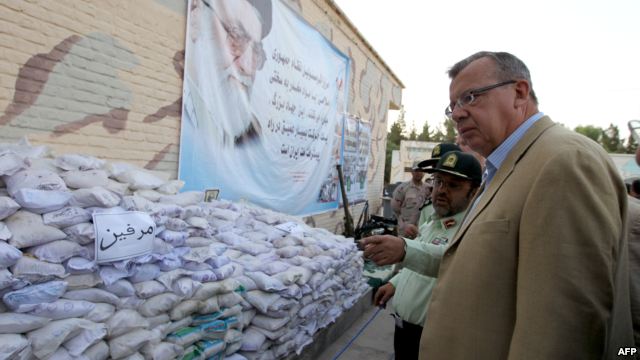
Washington on Wednesday named a general in Iran’s elite al-Quds force as a key figure in trafficking heroin from Afghanistan.

The U.S. Treasury designated Gen. Gholamreza Baghbani, who runs the Revolutionary Guards’ Quds force office in Zahedan near the Afghan-Pakistan border, as a narcotics “kingpin” for facilitating Aghan drugrunners to move opiates into and through Iran.

In return, the smugglers helped move weapons for the Taliban from Iran “on behalf of Baghbani,” the Treasury said in a statement.

It said that Baghbani had also aided the smuggling of chemicals used to make heroin through the Iranian border into Afghanistan.

He was the first Iranian to be officially named as a “specially designated narcotics trafficker” under the US “Kingpin Act”, which allows the Treasury to prohibit any US citizens or entities from engaging in commercial or financial transactions with the named individual.

Treasury said that the designation of Baghbani “exposes (the Quds force’s) involvement in trafficking narcotics, made doubly reprehensible here because it is done as part of a broader scheme to support terrorism.”

The Quds force is the shadowy special operations unit of Iran’s elite Revolutionary Guards and often operates outside of Iran.

Source: alarabiya

Human-rights lawyers pressed to make false statements

0


Shirin Ebadi, the Iranian Nobel Peace laureate, says the jailed members of Iran’s Human Rights Defenders Centre are being intimidated and pressured into making coerced confessions against their organization.

The Human Rights Defenders Centre of Iran was an NGO established by a group of Iranian lawyers to concentrate on human rights cases in their country. The members of the organization, which is now banned in Iran, have been targeted with fierce persecution over the past three years, especially after the controversial presidential elections of 2009.

Today it was announced that Abdolfattah Soltani, a prominent member of the Human Rights Defenders Centre, has been sentenced to 18 years in prison and a 20-year ban from practising law.

Shirin Ebadi, one of the founders of the centre who is now based outside of Iran, reports: “Abdolfattah Soltani and many other collaborators with the Human Rights Defenders Centre have been pressed one-by-one by the interrogators, in interrogation sessions that have always been private [without the presence of a lawyer], to testify against our organization and myself.”

Ebadi adds that the jailed defenders centre members are being pressured to state that because the centre worked many human rights cases pro bono, then it was actually receiving cash payments from foreign embassies.

The Nobel Peace laureate also reports the interrogators have told his colleagues that if they agree to do a recorded interview saying the Nobel Peace prize was awarded to Ebadi for political reasons to pursue regime change in Iran, they will be allowed to leave the country.

Ebadi also indicates that the jailed lawyers have refused to comply with the wishes of their interrogators.

Abdolfattah Soltani has reportedly told Ebadi that if he refuses to do as his jailors wish, then a fate like that of Nasrin Sotoudeh awaits him.

Sotoudeh, another human rights lawyer linked to the Human Rights Defenders Centre, has been jailed since 2010 and sentenced to six years in prison and a 10-year ban from practicing law.

Nargess Mohammadi, Abdolreza Tajik and Mohammad Seifzadeh have also been persecuted for their connection with the Human Rights Defenders Centre.

Source: radiozamaneh