Home Blog Page 480

Execution fears grow for Iranian kurds


URGENT ACTION

EXECUTION FEARS GROW FOR IRANIAN KURDS

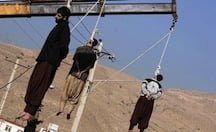
Two members of Iran’s Kurdish minority , Zaniar Moradi and Loghman Moradi, could be executed at any time. Their death sentences have been sent to the Office for the I mplementation of Sentences, a body within the Judiciary, which is the final step before being called for execution .

Zaniar (or Zanyar) Moradi and Loghman (or Loqman) Moradi were sentenced to public hanging on 22 December 2010 by Branch 15 of the Tehran Revolutionary Court after a trial reportedly lasting 20 minutes. They were convicted of “enmity against God” (moharebeh) and “corruption on earth” for allegedly murdering the son of a senior cleric in Marivan, Kordestan province, north-eastern Iran, on 4 July 2009. They were also convicted of participating in armed activities with Komala, a Kurdish opposition group. Their sentences were upheld by the Supreme Court and have reportedly been sent to the enforcement office of the Judiciary.

Zaniar Moradi and Loghman Moradi were arrested respectively on 1 August 2009 and 17 October 2009 in Marivan. They were held without charge by the Ministry of Intelligence for the first nine months of their detention during which they were moved several times between detention facilities. Around the beginning of December 2010 they were transferred to Raja’i Shahr Prison northwest of Tehran. The two men then wrote a letter stating that during their interrogation by the Ministry of Intelligence they were forced to “confess” to the allegations of murder after being tortured and threatened with rape. Amnesty International has so far been unable to confirm reports that Zaniar Moradi was 17 at the time of his arrest.

Please write immediately in Persian, English or your own language:

Urging the Iranian authorities not to carry out the executions of Loghman Moradi and Zaniar Moradi;

Calling on them to commute the death sentences of Loghman Moradi and Zaniar Moradi and anyone else on death row, including other Kurdish political prisoners;

Calling on them to ensure that Loghman Moradi and Zaniar Moradi are protected from torture or other ill-treatment, and are granted immediate and regular access to their families, their lawyers and adequate medical care.

Expressing concern that neither Loghman Moradi nor Zaniar Moradi had a fair trial, and urging the Iranian authorities to investigate the allegations that they were tortured and to bring to justice anyone found responsible for abuses and to disregard as evidence in courts “confessions” which may have been coerced.


P LEASE SEND APPEALS BEFORE 5 APRIL 2012 TO :

Leader of the Islamic Republic

Ayatollah Sayed ‘Ali Khamenei

The Office of the Supreme Leader

Islamic Republic Street – End of Shahid Keshvar Doust Street, Tehran, Islamic Republic of Iran

Email: [email protected]

Twitter: “Call on #Iran leader @khamenei_ir to halt the execution of Loghman Moradi and Zaniar Moradi”Salutation: Your Excellency


Head of the Judiciary

Ayatollah Sadegh Larijani

[care of] Public relations Office

Number 4, 2 Azizi Street

Vali Asr Ave., above Pasteur Street intersection

Tehran, Islamic Republic of Iran Email: [email protected] (Subject line: FAO Ayatollah Sadegh Larijani) or [email protected]

Salutation: Your Excellency

And copies to:

Secretary General, High Council for Human Rights

Mohammad Javad Larijani

High Council for Human Rights

[Care of] Office of the Head of the Judiciary, Pasteur St., Vali Asr Ave. south of Serah-e Jomhouri, Tehran 1316814737, Islamic Republic of Iran

Email: [email protected] (subject line: FAO Mohammad Javad Larijani)

Also send copies to diplomatic representatives accredited to your country. Please insert local diplomatic addresses below:

Name Address 1 Address 2 Address 3 Fax Fax number Email Email address Salutation Salutation

Please check with your section office if sending appeals after the above date. This is the first update of UA 307/11. Further information: http://amnesty.org/en/library/info/MDE13/094/2011/en

URGENT ACTION

EXECUTION FEARS GROW FOR IRANIAN KURDS

Additional Information

Loghman Moradi and Zaniar Moradi’s letter from prison also stated that during interrogations by the Ministry of Intelligence, Zaniar Moradi was repeatedly asked about his father, Eghbal Moradi, a member of the Komala Party of Kurdistan – a banned Iranian Kurdish opposition group – who lives in northern Iraq. The letter further describes that Zaniar Moradi was tied to a bed, lashed and subsequently threatened with rape prior to his “confession”.

Kurds, who are one of Iran’s many minorities, live mainly in the west and north-west of the country, in the province of Kordestan and neighbouring provinces bordering Kurdish areas of Turkey and Iraq. They experience discrimination in the enjoyment of their religious, economic and cultural rights (see: Iran: Human rights abuses against the Kurdish minority, (Index: MDE 13/088/2008, 30 July 2008 available at: http://www.amnesty.org/en/library/info/MDE13/088/2008/en). For many years, Kurdish organizations such as the Kurdistan Democratic Party of Iran (KDPI) and the Marxist group Komala conducted armed struggle against the Islamic Republic of Iran, although neither currently does so. The Party For Free Life of Kurdistan (PJAK), was formed in 2004, and carried out armed attacks against Iranian security forces, but declared a unilateral ceasefire in 2009, although it still engages in armed clashes with security forces in what it terms “self-defence. In 2011, the Iranian and Turkish governments shelled border areas where armed Kurdistan Workers’ Party (PKK) and PJAK bases were thought to be located (see Amnesty International, Turkey/Iraq: Investigation needed into killing of civilians in the Kurdistan region of Iraq, Index: REG 01/003/2011, 26 August 2011

Amnesty International condemns without reservation attacks on civilians, which includes judges, clerics, and locally or nationally-elected officials, as attacking civilians violates fundamental principles of international humanitarian law. These principles prohibit absolutely attacks on civilians as well as indiscriminate and disproportionate attacks. Such attacks cannot be justified under any circumstances.

At least 17 other Kurdish men are believed to be on death row in connection with their alleged membership of and activities for proscribed Kurdish organizations. Some have had initial prison sentences increased to death sentences. At least 10 Kurds have reportedly been executed for political offences in recent years.


Iranian student wins Sweden’s Edelstam Prize for activism


The Harald Edelstam Foundation has decided to award prominent imprisoned student activist Bahareh Hedayat with the first Edelstam Prize for having “dared to play a leading role in the student’s movement as in the women’s rights movement in Iran.”

The prize, administrated by the Harald Edelstam Foundation, is awarded for “outstanding contributions and exceptional courage in standing up for one’s beliefs in the Defence of Human Rights.” It is named after the Swedish ambassador Harald Edelstam (1913-1989).

“The Laureate has faced severe police brutality and has been arrested repeatedly for her courageous actions, and is today a political prisoner in the feared Evin Prison in Tehran,” the foundation said in a statement on Wednesday.

Praising her “great amount of civic courage,” the foundations expressed regret that she would not be able to travel to Stockholm on the 16th of April to accept the prize. “It is a great tragedy that a young, vital and freedom-loving woman shall pay such a high price for her courageous actions and in defending others and the civil rights.”

The Harald Edelstam Foundation called on the Iranian authorities to release the young activist.

Born in Iran in 1981, the student and human rights activist is a member of the Central Council and Spokesperson for the Office for Fostering Unity (Daftare Tahkime Vahdat), a prominent student union. She was also an activist with the One Million Signatures Campaign for the abolition of discriminatory laws against Iranian women.

On 31 December 2009, Hedayat was arrested for the fifth time in four years by Intelligence Ministry agents and taken to ward 209 of Tehran’s notorious Evin prison. She was later sentenced to 9 ½ years in prison for her peaceful activities.

There is also a Facebook page set up for the Release of Bahareh Hedayat Campaign.

Jailed Iranian Blogger Khazali Intensifies Hunger Strike


By Golnaz Esfandiari

There is growing concern over the fate of jailed blogger Mehdi Khazali, who has reportedly been on hunger strike over his detention for some 60 days. His defiance has turned him into a hero of Iran’s opposition movement, and Khazali vowed to continue his strike until he is released.

The opposition ” Kaleme” website reports that Khazali has now escalated his protest by going on a “dry hunger strike,” meaning that he is also refusing to drink liquids, on which he had been surviving since he stopped eating.

Khazali, the son of prominent hard-line cleric Ayatollah Khazali, was arrested on January 9 and later sentenced to 14 years in prison.

Khazali’s father has publicly distanced himself from him and accused his son of deviating from the right path.

The outspoken blogger and ophthalmologist has been in and out of jail over the past three years over his criticism of the Iranian establishment. Before his arrest, Khazali had called for a boycott of last week’s parliamentary elections.

Last month, he issued a letter from jail in which he describes some of the difficult conditions under which Iranian prisoners live and the unfair trials some have been facing. He says several of his co-detainees have been sentenced to 17 years in prison following trials that lasted “2 minutes” and without any solid evidence being presented:
Many are incarcerated here only as a payback for disagreements with some high-ranking officials. They are under terrible physical and mental torture to make forced confessions of having connection with foreign intelligence agencies and embezzled money from state bodies.

Khazali’s son said in late February that his father had been transferred to a hospital after his health deteriorated.

“When we saw him in the hospital, we couldn’t believe it was him,” Khazali’s son told the International Campaign for Human Rights in Iran on Feb 24. “His weight loss was unbelievable; he was so thin. We are afraid something bad might happen to my father.”

Hunger striking has become one of the only remaining forms of protest for political prisoners in Iran, who are often said to be put on trial without access to a legal representation.

Last week, former hard-line columnist and documentary filmmaker, Mohammad Nourizad, called on Khazali to end his hunger strike. Nourizad, who had also gone on hunger strike while in jail to protest his conditions, told RFE/RL he issued his open letter following a request by Khazali’s 16-year-old son, who is extremely worried about his father.

Nourizad, however, said that he doesn’t think such letters will have any impact on Khazali’s resolve:

“Individuals who are in such situations [in jail] don’t pay attention to these things. I remember when I was on hunger strike in jail, some prisoners walked by my cell and one of them shouted that some political figure wanted me to stop my strike. But at that moment, it was as if I hadn’t heard him,” Nourizad said, adding that he believes Khazali is in the same situation.

Nourizad is widely admired among opposition members over his criticism of the postelection crackdown and human rights abuses in Iran.

In past months, Nourizad has challenged Iran’s supreme leader in more than 25 letters he has released on his website and social media sites.

Source: payvand

UN Report Documents “Striking Pattern of Violations”


Calls for Immediate Release of All Political Prisoners and Prisoners of Conscience

Presents Allegations of Fraud in 2008 and 2009 Elections

Calls for an Immediate Moratorium on Death Penalty

Prominent Human Rights Defenders Sentenced to Draconian Prison Terms Just Before Release of UN Report

(7 March 2012) The International Campaign for Human Rights in Iran today welcomed the comprehensive report of the UN Special Rapporteur on the situation of human rights in the Islamic Republic of Iran, Ahmed Shaheed, as a significant document that gives voice to the victims of widespread violations. The Campaign called on the Iranian government to end its absolute lack of cooperation with UN mechanisms and its systematic violations of its international obligations and to work with the Special Rapporteur to address the human rights crisis in that country.

Shaheed’s 36-page report concludes that it has “catalogued allegations that produce a striking pattern of violations of fundamental human rights.” It includes several recommendations to the government of the Islamic Republic of Iran. It specifically calls “for the immediate release of all political prisoners and prisoners of conscience and calls upon the government to protect the space for public criticism or advocacy.”

“Iranian authorities not only barred Shaheed from visiting the country but also publicly insulted him and called him a liar,” said the Campaign’s spokesperson, Hadi Ghaemi. “Despite these obstacles and intimidations, his insistence on carrying out an independent investigation has resulted in a comprehensive documentation of many aspects of the ongoing human rights crisis.”

“This is just the beginning of a process at the UN level to reveal and address the many aspects of gross and systematic human rights violations in Iran,” he added.

The Special Rapporteur called for “a moratorium on the death penalty for all crimes until such time as effective enforcement of due process rights may be meaningfully demonstrated.” His report notes the skyrocketing rise in the number of executions, from less than 100 cases in 2003 to at least 670 cases in 2011.

The report includes testimony from a former member of the Iranian parliament who details allegations of fraud in the 2009 presidential election, as well as the 2008 parliamentary election.

The UN report also calls for independent and impartial investigations into post-election violence, particularly allegations of violations of due process and torture and deaths in detention centers. Instances of allegations of torture in the report include “excessive solitary confinement, electric shock, severe beatings, threats of rape, and threats to detain and/or harm friends, associates, and family members.”

Since Shaheed’s appointment in August 2011, the Iranian government has avoided any substantive discussions with him or any response to allegations he produced in his interim October 2011 report. The government has also intensified its attack on human rights defenders. Just days before the release of Shaheed’s recent report, the Judiciary issued draconian prison sentences against prominent human rights defenders Abdolfattah Soltani and Narges Mohammadi, sentencing them to 18 years and 6 years in prison, respectively.

“Targeting the human rights community in such a brazen and unjustified way, just before the release of this UN report, together with the government’s persistence in not cooperating with UN mechanisms, demonstrates that the Iranian Judiciary has no respect for international norms and standards of justice,” Ghaemi said.

Shaheed’s report was submitted for review and comments to the Iranian government well before its publication, in accordance with standard UN protocol. However, as the report makes clear, Iranian authorities failed to make any substantial response to allegations of widespread violations documented in the report.

Instead, in their reply to the UN, Iranian authorities questioned the legitimacy of UN mechanisms, saying, “The Special Rapporteur was engaged in propaganda by participating in forums and gatherings that were contaminated by Western espionage agencies, Zionist elements, and terrorist groups.” They also claimed “reports or complaints” contained in the report “lacked credibility.”

In response, Shaheed made clear the only public gatherings he participated in were press conferences at the UN and other media interviews. He also noted that his report is based on dozens of interviews with victims and witnesses whose credibility has been established by a number of independent sources.

The UN report focuses mostly on the events following the disputed 2009 election to portray an accurate picture of the current situation in the country. It notes a communication from the “Mothers of Laleh Park” requesting that he investigate “the deaths of their children—Neda Agha Soltan, Sohrab Arabi, Ashkan Sohrabi, Masoud Hashem Zadeh, Mostafa Karim Beigi, Kianoush Asa, and Ali Hasan Pour—during the 2009 elections.”

The Campaign called on the members of the Human Rights Council to vote for a resolution renewing the Special Rapporteur’s mandate and to urge the Iranian government to cooperate with his mandate as well as all other UN human rights mechanisms during its current session. The 19th session of the Human Rights Council is currently underway in Geneva until 23 March 2012.

Special Rapporteur Ahmed Shaheed will make a presentation regarding his findings to the Council on 12 March 2012.


Source: iranhumanrights

‘I did not vote in Majlis elections’ Mousavi tells daughters


Iranian opposition leader Mir Hossein Mousavi and wife Zahra Rahnavard have been allowed to meet with their daughters.

According to Kaleme, an opposition website affiliated with Mousavi, this was the second such meeting between the opposition couple and their daughters in the past year.

Mir Hossein Mousavi and Mahdi Karroubi led the opposition Green Movement until mid-February when they were placed under house arrest after they called for rallies in support of the revolutions in the Arab World. The pair took part in Iran’s 2009 presidential elections, widely believed to have been subject to a monumental fraud that was designed to ensure the victory of the incumbent Mahmoud Ahmadinejad. The announcement of the election results sparked the largest protest rallies since the 1979 Islamic Revolution with the opposition candidates refusing to accept the legitimacy of the election, dismissing it as “engineered” and “rigged.”

The Mousavi family were reunited on Sunday, just two days after the country’s ninth parliamentary elections, described by the opposition Green Movement as a “rubber-stamp” affair. The Coordination Council of the Green Path of Hope, the most important decision-making body within the opposition Green Movement, had asked Iranians to stay at home on Election Day. Kaleme confirms that the Mousavi and Rahnavard did not take part in Friday’s vote. In an earlier meeting with his daughters last year, the Green Movement leader had told his daughters “Under the status quo, one can’t be hopeful about the upcoming [parliamentary] elections and taking part in them.”

During Sunday’s meeting, Mousavi, who is said to have been in high spirits, called on his daughters to exercise “patience and forgiveness.” The visitation took place in the house of one Mousavi’s daughters “under tight security and with the presence of intelligence agents,” Kaleme reported, adding that “there was not much chance for an unconstrained conversation between the daughters and their parents.”

Despite their limited access to news and information, the couple are said to be more or less aware of developments in the country.

Mousavi, according to Kaleme, also welcomed the media’s publication of his recent telephone message to his daughters and once more reiterated his firm stance vis-à-vis the Iranian regime. “Nothing has changed,” Mousavi had repeatedly stressed over the phone, adding reassuringly: “My daughters, know that I am not backing down from my previous stand.”

Since the start of their parents’ illegal house arrest, Mousavi’s daughters (Zahra, Kokab and Narges) have regularly faced harassment and intimidation, including the threat of arrest, from the intelligence services.

Meanwhile, the family opposition leader and former parliament speaker Mahdi Karroubi say they have had not news about the 74-year-old’s condition for the past three months. “We are and will be prepared to pay any price for defending the people’s rights,” Karroubi’s wife Fatemeh Karroubi told opposition siteSaham news.

Human rights groups maintain that the ongoing house arrest of Mousavi, Karroubi and Mousavi’s wife Zahra Rahnavard is against international conventions as well as Iran’s own constitution.

Iranian leader wants more supervision in cyber space

0


Ayatollah Khamenei today issued an order to establish a Supreme Council for Cyber Space and also appointed its members.

Iranian media report that Iran’s Supreme Leader called on all government bodies to cooperate with the new council.

Ayatollah Khamenei pointed to the “growing spread of the internet” when he said: “There is a need for constant planning and coordination in order to protect against the harmful effects of the internet, and for this there needs to be a focused centre to make policy and coordinate decision-making about the national cyber space.”

The edict appoints the president as the head of this council and other members include the head of Parliament, the head of the judiciary, the head of national broadcasting, the Minister of Communications and Information Technology, the Minister of Guidance, the Minister of Science, the Minister of Intelligence, the head of Parliament’s cultural commission, the head of Islamic propagation, the head of Iran’s Revolutionary Guards Corps and the head of the Islamic Republic Security Forces.

Ayatollah Khamenei’s letter indicates that the goal of the new council is “the complete and up-to-date supervision of cyber space both inside the country and globally, as well as deciding on how to deal actively and wisely with internet.”

In the past year, Islamic Republic authorities have consistently warned against the “enemy threats” in cyber space and on the internet.

The Minister of Communications and IT said last month that the internet is not to be trusted and is overladen with threats.

Intelligence Minister Heydar Moslehi has called the spread of social networks on the internet a “new threat” against the Islamic Republic.

Iranian authorities have also referred to the internet as a “spying tool” and are in the process of establishing a national internet to counter some of the alleged threats of the World Wide Web.

Source: radiozamaneh

Isa Saharkhiz attacked by plain clothes agents and transferred to the CCU


Issa Saharkhiz, an Iranian political prisoner currently hospitalized for heart complications, received a surprise visit on Monday from a group of government plainclothes officers, which caused the activist’s medical condition to deteriorate.

RAHANA, Human Rights House of Iran reports that a group of plainclothes security officers swarmed Saharkhiz’s room at Shariati Hospital and began insulting the persecuted journalist and his wife as well as harassing his visitors.

The attack has reportedly worsened Saharkhiz’s condition and landed him in the Critical Care Unit.

Saharkhiz is suffering from blood-pressure and kidney conditions as well as sciatica and problems with his back and neck.

He was arrested in July of 2009 in the post-election crackdown on protesters who believed that Mahmoud Ahmadinejad had won re-election through vote fraud.

Saharkhiz is a prominent journalist who has worked with the state news agency IRNA and served as head of domestic media at the Ministry of Culture during the reformist administration of Mohammad Khatami. In 2010, he was sentenced to three years in jail and a five-year ban from political and media activities.

Source: rahana

Iran to execute five Ahwazis ‘within days’: rights activist


By HADI TORFI

Iranian authorities informed the families of five detainees from the Arab-dominated Ahwaz province that their sons will be hanged in public “within days” for allegedly killing a security member and wounding another in 2011, a local human rights activist told Al Arabiya on Tuesday.

The detainees include three brothers – Abdelrahman, Taha, and Jamsheed Haidari – and their cousin Mansour Haidari and Ameer Moawya. They were arrested in 2011 and charged with the murder of a security member and the wounding of another. Their families say the detainees confessed to the murder under torture.

Karim Abdian, director of the Ahwaz Human Rights Organization, told Al Arabiya that the execution plan comes ahead of the April 15 commemoration of uprisings that took place in several Iranian cities in 2005 in protest against a government program designed to change the demographic structure of areas dominated by ethnic Arabs. According to that government plan, ethnic Arabs would become a minority within 10 years.

During the April 15 uprisings, known as the Bloody Friday, dozens of Arab-Iranians were killed, 500 injured, and 250 arrested during protests in the city of Ahwaz.

Abdian explained that by executing people at this period in time, Iranian authorities seek to spread fear among residents and thwart them from organizing protests on April 15.

Abdian criticized “the silence” of Iranian political parties and human rights organizations in the face of increased “security crackdown on ethnic Arab citizens of Iran.”


Source: alarabiya

Activist gets six years in jail


The appellate court has confirmed the six-year jail sentence handed to Nargess Mohammadi, the deputy head of Iran’s Human Rights Defenders Centre.

The Human Rights Defenders Centre website reports that Mohammadi was sentenced to five years in prison for “assembly and collusion against national security.” She reportedly had been sentenced to another five years in jail for membership in the Human Rights Defenders Centre, an NGO of lawyers working pro bono on human rights cases, as well as an additional year in prison for “propaganda activities against the Islamic Republic.

The total sentence of 11 years in jail was reduced to six years by the appellate court, according to Mohammadi’s lawyer.

Mohammadi was fired from her position at an engineering company and summoned to the judiciary soon after, only to be released on bail.

Moihammadi was severely ill during her arrest and was hospitalized after her release. Her home was also raided in February of 2011, and her attempts to file charges against the perpetrators have been fruitless.

Members of the Human Rights Defenders Centre have been the target of continuous persecution by Islamic Republic authorities. On Sunday, Abdolfattah Soltani, another human rights lawyer linked to the centre, was sentenced to 18 years in jail and a 20-year ban from legal practice.

Shirin Ebadi, the Iranian Nobel Peace laureate and one of the founding members of the Human Rights Defenders Centre, has announced that the detained centre members are being pressured to make false statements about the centre and about Ebadi herself, in order to implicate her and their organization in seditious activities.

Source: radiozamaneh

Nazanin Khosravani arrested and transferred to prison to serve her sentence


Journalist Nazanin Khosravani has begun serving her 6-year prison sentence.

Nazanin Khosravani’s trial was held on April 16, 2011 at Branch 26 of the Revolutionary Court presided by judge Pir-Abassi. She was handed down a sentence of 6-years in prison. The charges against her were “assembly and collusion against national security,” and “propaganda against the regime.”

Nazanin Khosravani was arrested at her home on November 3, 2010 and transferred to solitary confinement at Tehran’s Evin prison. During her arrest, her laptop computer was confiscated. Security agents went back to her home 2 days later and demanded entry with threats of breaking the doors and windows. They conducted a search with no explanation while refusing to give Nazanin’s family any information regarding her whereabouts.

After enduring 132 days behind bars in Ward 209 of Evin prison, on March 15, 2011 she was released with a bail of $480,000. She is now back behind bars and serving her 6-year prison term.

Source: rahana