Home Blog Page 481

Lawyer Abdolfattah Soltani sentenced to 18 years in prison and exile to the city Borazjan


Branch 26 of Tehran’s Revolutionary Court sentenced human rights lawyer Abdolfattah Soltani to18 years in prison and exile to the city of Borazjan.
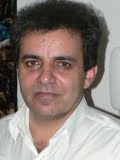
Abdolfattah Soltani , award winning human rights lawyer, was detained on September 10, 2011 and transferred to Ward 209 of Evin prison. Judge Pir-Abassi presiding over Branch 28 of the Revolutionary Court handed down an 18-year prison sentence that has been announced to Abdolfattah Soltani’s lawyers. In addition to the prison term, this human rights lawyer was handed a 20-year ban from practicing law.

Human Rights House reports that the sentencing stemmed from the charges of “propaganda against the regime,” “co-founding the Defenders of Human Rights Center [with Nobel Peace Prize Laureate Shirin Ebadi]” and “assembly and collusion against the regime.” In addition he was charged with “accepting an illegal prize” and “illegal earnings” stemming from the prize.

The mayor of Nuremberg, Germany awarded Abdollah Soltani the Nuremberg prize for Human Rights in 2009 and his wife accepted the reward on his behalf. The Nuremberg Prize has been awarded yearly to a human rights activist since 1995.

Abdolfatah Soltani, born on November 2, 1953, is a prominent human rights lawyer, a member of the Defenders of Human Rights Center and serves on the board of directors of the Bar Association. During his tenure as a lawyer he has defended cases with issues of human rights violations for many including political activists, students and journalists.

Soltani had been arrested before in 2006 and spent 209 days in solitary confinement in Ward 209 of Evin prison. He had pled the cases of scientists accused of spying on Iran’s nuclear program and charged with espionage. He was subsequently charged with “illegal divulgence of secret and confidential information” of one of his clients.

At that time Soltani was also defending the cases of journalists Akbar Ganji and Zahra Kazemi. Ganji had broken stories of government officials involved in the murders of intellectuals and journalists in the 1990’s. Zahra Kazemi was an Iranian-Canadian journalist who was tortured and died in custody in Evin prison in July 2003. The intelligence agent charged with being responsible for her death was acquitted and with Soltani’s help, her family was in the process of appealing to a get a new enquiry started.

Amnesty International said it believed that false charges were brought against Soltani in order to obstruct him from practicing his profession and intimidating other lawyers from pursuing human rights cases.

The lower court in the 2006 case presided by Judge Mortazavi sentenced Soltani to 5 years in prison. However after spending 209 days behind bars, the Court of Appeals struck down the sentence and handed Soltani a full acquittal.

Soltani was released with no apology, admittance of wrongdoing or retribution from the Justice Ministry. His efforts to have judicial authorities responsible for his arrest and detainment prosecuted heeded no results.

This prominent attorney had also been arrested on June 16, 2009 following the disputed presidential elections after which on August 27, 2009 he was released with an $80,000 bail.

Source: rahana

U.S. officials: Iran is stepping up lethal aid to Syria


Belief that Shiite-dominated Iran is aiding the Syrian crackdown has helped sharpen sectarian sentiments among those in the mostly Sunni country seeking to topple the Assad regime, which is dominated by members of Assad’s minority Alawite sect, an offshoot of Shiite Islam.


There have also been widespread but unproven allegations that the Lebanese Shiite Hezbollah militia is aiding the crackdown. Sunni-dominated Arab states, such as Saudi Arabia and Qatar, have advocated arming the opposition.

U.S. officials declined to address allegations about specific acts. But one of the officials who spoke on the condition of anonymity said intelligence agencies have documented reports of a wide range of assistance.

“They’ve supplied equipment, weapons and technical assistance — even monitoring tools — to help suppress unrest,” the official said. “Iranian security officials also traveled to Damascus to help deliver this assistance.”

A second senior U.S. official said members of Iran’s main intelligence service, the Ministry of Intelligence and Security, are assisting Syrian counterparts in charge of the crackdown. Last month, the Obama administration imposed sanctions against the intelligence service, citing “financial, material and technological support” for the Syrian crackdown. The Obama administration had previously imposed sanctions against Iran’s elite Quds Force for providing training and equipment to Syrian security units.

Iran’s intelligence service played a key role in Tehran’s crackdown on the country’s Green Movement in 2009 and is associated with allegations of sexual abuse, torture and mock executions of protesters.

It now is believed be “exporting its vicious practices to support the Syrian regime’s abhorrent crackdown on its own population,” said David S. Cohen, the Treasury Department’s undersecretary for terrorism and financial intelligence

The head of the Quds Force, Brig. Gen. Qassem Suleimani, also has paid at least one visit to Damascus in recent weeks, U.S. officials said.

Syrian Vice President Najah al-Attar, hosting a group of visiting journalists Saturday in Damascus, hailed the “importance of the historical relations between Syria and Iran.”

“Syria’s ties with Iran will remain strong, being built on a principled basis as they serve the two countries’ peoples and contribute to boosting stability in the Middle East,” she said, according to the official Syrian Arab News Agency.

Report of a mass execution

In the latest offensive, Syrian troops swept into the rebel enclave of Bab Amr late last week, routing opposition fighters. The move ended a 27-day siege on the Bab Amr neighborhood, which had been in the hands of opposition forces for weeks. Activists and human rights groups have since accused Syrian forces of waging a campaign of revenge on the neighborhood, executing captives, looting homes and systematically shelling hundreds of buildings.

The New York-based group Human Rights Watch said at least 700 people have been killed in weeks of fighting in the area.

State Department spokeswoman Victoria Nuland described the situation in Homs as “absolutely horrific.”

Violence continued to rage across Syria on Saturday, with the opposition Local Coordination Committees reporting the deaths of 80 people nationwide. They included 47 soldiers said to have been shot in a mass execution after they tried to defect in the restive northern province of Idlib.

There were also reports of renewed shelling in several other neighborhoods of Homs where the Free Syrian Army holds sway.

The Syrian Arab News Agency reported that three people died in a suicide bombing in the southern province of Daraa. It also said 21 members of the security forces killed in the violence the previous day were given funerals.

The Syrian authorities continued to deny the International Committee of the Red Cross access to Bab Amr, two days after it was overrun by Syrian government forces in the wake of a retreat by the Free Syrian Army. An ICRC spokesman in Geneva told the Associated Press that the government was citing security concerns for its refusal to allow the aid group to enter.

Source: insideofiran


Mohammad Sadiq Kaboudvand in Critical Condition, Denied Basic Prisoner Rights


Imprisoned Kurdish activist Mohammad Sadiq Kaboudvand is in critical condition after embarking on a hunger strike over two weeks ago, his wife told the International Campaign for Human Rights in Iran.

Parinaz Baghban Hassani told the Campaign that her husband embarked on a hunger strike on 13 February, demanding he be allowed to see his son in the hospital. A week later, judicial authorities allowed the visit. “My husband’s physical and psychological condition is not good at all, and after visiting with our sick son, his psychological state has worsened.”

“He broke his hunger strike because the authorities had promised to review his case. Mohammad was on hunger strike for a week and had conditions for breaking his strike. One of those conditions was permission to visit with his sick son in hospital. Finally, judicial authorities accepted this condition and he broke his strike after a week. But unfortunately, none of his other demands have been reviewed yet,” added Baghban.

In 2007, authorities arrested Mohammad Sadiq Kaboudvand, Secretary of Kurdistan Human Rights Organization and manager of the publication Payam-e Mardom. A year later, the Tehran Revolutionary Court sentenced him to 11 years in prison on charges of “propagating falsehoods with the intent to create public anxiety” by establishing the Kurdistan Human Rights Organization. He has been deprived of basic prisoner rights such as furlough, in-person visitation, and suitable and timely medical treatment.

“My husband’s physical and psychological condition is not good at all, and after visiting with our sick son, his psychological state has worsened,” said Baghbani. Kaboudvand’s 22-year-old son has cancer. After his requests for visiting with his son were refused, he began his hunger strike.

Kaboudvand’s physical condition has worsened significantly in the past few months, his wife said. “He needs to be transferred to a hospital for heart and prostate treatment.  He suffered three heart attacks in prison, and prison doctors said he should have been sent out for treatment, but that didn’t happen. Two months ago, upon our insistence, they transferred him to a hospital for tests. The specialist doctors determined that he needs angioplasty and he will need to have prostate surgery, too. But two months later, judicial authorities have not yet allowed his transfer to a hospital and now with his son’s critical condition his stress and anxiety has increased. All of this is bad for his heart.”

Mohammad Sadiq Kaboudvand began publishing Payam-e Mardom in 2003. The publication was available in Kurdish and Farsi languages in Tehran and provinces where Kurdish Iranians lived. In March 2006, he established the Kurdistan Human Rghts Organization. In 2009, he was chosen as the “International Journalist of the Year” by the British Press Awards and received Human Rights Watch’s Hellman Hammett Award.

“My request is that judicial authorities deal [with Kaboudvand’s case] more humanely. If they glance at Kaboudvand’s case file, they will see that he has not committed any crimes other than reflecting the conditions of deprived people in his weekly publication,” Baghban told the Campaign.

“It is not fair for a prisoner not to have even one day of furlough in five years and for him to be banned from having in-person visits for more than two years. Neither myself and his children, nor Mr. Kaboudvand’s sister and brother have been able to visit with him in person. It has really affected Mohammad’s psyche and his children’s not to have been able to see each other up close,” she added.

Prior to her own imprisonment, Nasrin Sotoudeh was Kaboudvand’s defense lawyer. Since Sotoudeh’s imprisonment, Kaboudvand’s wife has been following up on his case.

“I believe that if the conditions were different and Mr. Kaboudvand was able to have furlough and in-person visitation, perhaps our son would have been in a better psychological state and his illness could have led to better results,” Parinaz Baghban Hassani told the Campaign.

She also spoke about her husband’s poor psychological condition: “When Mohammad had his last heart attack, I can’t remember the date, the prison infirmary was dispensing tranquilizers and sleeping pills for him without specialized treatment.  Every two to three weeks, when we went to visit with him, we would notice that he was not even able to talk. He kept stammering. He was unaware of his surrounding environment, and was generally not focused. The medication has had its [negative] effects on him. Same thing with the prison environment and deprivation of basic prisoner rights, which have affected him psychologically. Certainly they would affect any prisoner. He continues to use tranquilizers now.”

Parinaz Bagheban Hassani added that if Kaboudvand’s demands are not met, he would go on hunger strike again.


Source: iranhumanrights

Iran increasing ‘secret aid’ to Syria

0


Iran is stepping up its military and intelligence support for Syrian government troops in their crackdown against opposition strongholds, The Washington Post reported late Saturday.

Citing three unnamed US officials with access to intelligence reports from the region, the newspaper said Tehran had increased supplies of arms and other aid for Syrian leader Bashar al-Assad as he is trying crush resistance in the key city of Homs.

“The aid from Iran is increasing, and is increasingly focused on lethal assistance,” the paper quotes one of the officials as saying.

Reports supported by US intelligence findings indicate that an Iranian operative was recently wounded while working with Syrian security forces inside the country, the paper said.

“They’ve supplied equipment, weapons and technical assistance — even monitoring tools — to help suppress unrest,” The Post quoted the official as saying of Iranians. “Iranian security officials also traveled to Damascus to help deliver this assistance.”

A second senior US official said Iran has recently dispatched members of its main intelligence service, the Ministry of Intelligence and Security, to Damascus to assist in advising and training Syrian counterparts in charge of the crackdown, according to the report.

The head of the Quds Force, Brigier General Qassem Suleimani, also has paid at least one visit to Damascus in recent weeks, the paper noted, citing US officials.

“Epic” Elections with Unreliable Statistics

0


Arash Bahmani

A day after the national elections for the ninth Iranian Majlis, Iranian officials and the country’s official media are trying hard to show that the participation of the public at the ballot boxes was of “epical” proportions and “beyond expectations.” Opponents and critics of the Islamic republic on the other hand believe that the figures that regime agencies are providing are not reliable at all.

Just two days prior to the elections, the leader of the Islamic regime declared through a public speech, “What I see is that on this Friday people will strike an even harder slap on arrogance,” a term commonly used for the United States. On the day of election too he asked the public, as he was casting his vote, to give a punch on the mouth of “arrogance” by participating at Friday’s voting.

Just a few hours into the voting, Iranian officials responsible or involved in the elections began approving and confirming ayatollah Khamenei’s “predictions” about the level of public participation in the voting. Three hours after voting boots opened the spokesperson for the powerful Guardians Council that is constitutionally responsible for planning and implementing national elections, Abbas-Ali Kadkhodai claimed that people’s participation had been 9 percent higher than the previous elections to the Majlis.

Another senior Guardians Council member, ayatollah Ahmad Janati said a day after the voting, “As predicted by the supreme leader, people participated in this election in high numbers and better than previous rounds.”

The 65 percent turnout that was officially announced magically meets the exact same percent that Ali Saeedi, the representative of the leader in the Revolutionary Guards force had predicted two months ago!

In related news, Raja News state news agency replayed a speech that ayatollah Khamenei had made in 2009 in which he had predicted that in two or three years time people would participate in the elections in huge numbers, and the news agency called the speech “a divine and a miraculous prediction.”

Other officials of the Islamic republic also made public statements to portray the Friday voting as an event in which an unexpected large number of people voted for the officially screened candidates.

But already, with some 24 hours since the closing of the voting boots, contradictory figures have emerged on the event. One social network presented official statistics and said that there were 49,158,000 people in the country based on the 2006 census between the ages of 15 and 64 and that there were 3,657,000 people over the age of 65. So the total sum of eligible voters above the age of 15 is 52,815,000 people. This figures however matches the number of over-20-year people in Iran in 2011, i.e., despite the passage of 5 years since the 2006 census and figures. This means that despite the passage of 5 years and the deaths that have occurred during the period, Iran’s over-20-year population has remained the same. But new 18 and 19 year olds must be added to this number for 2011 based on population growth rates in 1992 and 1993, which is about 1.4 million per year (a total of 2.8 million). When we add this 2.8 million to the 52,815,000 number we get 66,615,000 (total number of people above 18 years of age in 2011).

When we deduct deaths, averaging about 370,000 per year between 2006 and 2011, we get a total number of 1.970,000 deaths for the period. Take into account the high rate of immigration from Iran, which stands at about 550,000 people during this 5 year period, and we get the figure of 2,520,000 people which should be deducted from the total number of people in 2011. So 55,615,000 minus 2,520,000 and we get 53,093.000 people above the age of 18 who are eligible to vote. But as is clear, officials are reducing the number of eligible voters with the purpose of changing the proportion of voters.

Another discrepancy is what two official news agencies, Mehr and Fars have reported. Mehr reported that in the province of Ilam a 76 percent turnout was reported, while Fars reported an 87 percent turnout.

The head of the elections committee at the ministry of interior said in Tehran about 40 percent of the franchise voted whereas the minister claimed a 51 percent participation rate.

In some voting precincts, officials reported more than a 100 percent public participation in the voting. Some of the districts where such figures were presented are districts where no increases in voting numbers have ever been reported.

Another issue that the ministry of interior has only published the number of voters, and not the disqualified or invalidated ballot boxes that have been reported otherwise.

Some of the photographs that official media has published too do not show a massive turnout and in fact are empty or with few voters. Eye witnesses have confirmed the small participation in many voting precincts.

Other observers or those with such resources have also said that the number of participants in the elections are routinely and grossly exaggerated by Iranian officials. One example is the British foreign minister who said that Majlis elections in Iran are not “free or fair” and that such exercises are used to gauge the level of support the regime enjoys rather than counting votes for Majlis representatives.

Reporters Without Borders wrote that the Iranian regime has not allowed foreign reporters to go to the precincts in Tehran and freely cover the elections.

Of the few that managed to be allowed to go to Iran, CNN’s Ivan Watson reported from Tehran that foreign reporters were bused to selected polling stations and were not allowed to freely move about the streets and other voting precincts, adding that he had not seen the crowds that were reported in the Iranian media.

Source: roozonline

Mother of jailed political activist says son was severely beaten in prison


Fatemeh Alvandi, the mother of political prisoner Mehdi Mahmoudian who is detained in Rajayi Shahr Prison in Karaj requested that the condition of political prisoners be seen to in a letter to the head of the Prison Organization Gholam-Hossein Ismaili.

She cited this letter in an interview and said, “In early February, they called me from prison and said that they had gone to Mehdi’s cell but he was not inside. My son was not returned to his cell until one day before my visit in prison. During this time, I constantly went to the court but I did not get any answers and they told me that there were no problems”.

“When I went to visit Mehdi, he said if he could see me in person, he would show me his body that was bruised and battered from being beaten. One soldier had held his throat and three others severely beat him while he was being transferred from Rajayi Shahr Prison to Evin. He was beaten so badly, that he passed out”, she added.

According to Mrs. Alvandi, in her visit, Mr. Mahmoudian said that when he regained his conscience, he saw doctors and nurses tending to him.

“The head of prison and the medical examiner witnessed this scene, but did nothing”, Mrs. Alvandi said adding that her son also received a blow to the head…

Mehdi Mahmoudian is a member of the Cooperation Front and had disclosed events at the Kahrizak Detention Center [which later led to its closure].

He was arrested on September 16, 2011 and was detained in Evin Prison. Mehdi was later transferred to Rajayi Shahr Prison…

Mr. Mahmoudian has been sentenced to five years of prison on the charge of assembling and conspiring against the government. He wrote a letter from prison to Khamenei about the condition of prisoners in Rajayi Shahr and continuous rapes going on in this prison. (Radio BBC)

Voting ends in Iran’s parliamentary polls; UK says elections not free and fair


Polling stations closed in Iran’s parliamentary election on Friday after voting was extended to let more people vote, in a poll likely to be won by supporters of Supreme Leader Ayatollah Ali Khamenei.

State radio said polling stations closed at 11 p.m. (1930 GMT), five hours after the scheduled closing time of 6 p.m. (1430 GMT). Such extensions are common in Iranian elections, according to Reuters.

Officials said some polling stations would continue to let in those still waiting to cast their ballots.

Britain, meanwhile, said Iran’s parliamentary elections were not free and fair and did not reflect the will of the people.

Iran’s media reported a huge turnout in parliamentary elections described as a “blow” to the West, while voters said they were mostly preoccupied with their sanctions-hit economy — and non-voters spoke of a “sham” poll, according to AFP.

The elections to fill the 290 seats in parliament, known as the Majlis, were the first since President Mahmoud Ahmadinejad was returned to office in a disputed 2009 vote that prompted opposition cries of fraud.

While that re-election sparked widespread protests brutally put down by security forces, there was no disturbance this time, according to police.

Turnout

Authorities were keen to present a high turnout to show they enjoyed broad public support and legitimacy, especially at a time when they are confronting the United States and its European allies over Tehran’s controversial nuclear program.

Supreme leader Khamenei said as he cast his ballot that vigorous voter participation bolstered “the future, prestige, security and immunity of the country.”

State media and many voters echoed his assertion that Iran’s voters had dealt “a blow to the face of the enemies” in the West.

The official Islamic Republic News Agency praised the “passionate participation” of voters.

Some others, though, questioned the turnout claims.

They underlined that the main opposition groups, whose leaders are under house arrest, had boycotted the polls and that the 3,400 candidates approved to run were overwhelmingly conservatives.

Several university students who had favored reformists in the 2009 presidential election told AFP they had seen no point in voting in “sham” elections.

“The outcome is predetermined. It’s of no difference if I vote or not. I learned this from the previous election, when our votes were stolen,” said Reyhane, 25, sitting in a cafe with friends.

Mahmoud, 22, piped up: “I feel like the regime sees us, and our votes, as a plaything. I voted in the presidential election — that taught me that I should never vote again.”

He added that state media appealing for a big turnout was “just so they could say the regime has popular support, that it is legitimate.’

The U.S.-based rights group Human Rights Watch called the elections “grossly unfair,” saying in a statement that “Iranian authorities have stacked the deck by disqualifying candidates and arbitrarily jailing key members of the reform movement.”

Voters were essentially being asked to choose between two conservative camps: those backing Ahmadinejad, and those despising him for perceived nationalist intentions challenging their Islamic vision.

Helping to set political scene

The poll outcome will help set the political scene for 2013, when Ahmadinejad has to step down, having reached his term limit.

Khamenei last year put a lid on the president’s expanding ambitions by publicly overriding Ahmadinejad’s attempt to sack the intelligence minister.

Akbar Hashemi Rafsanjani, a former president who has taken his distance from Khamenei, was reported by the ISNA news agency as saying Iran would have a “good” next parliament – “should the election result be what the people want and be how they cast their votes in the ballot boxes.”

Most voters AFP spoke to said the main issue on their minds was the difficulties they face in Iran’s economy, which is struggling with high inflation and unemployment, and Western sanctions imposed over Tehran’s nuclear ambitions.

Western nations accuse Iran of seeking to acquire nuclear weapons in the guise of a peaceful atomic program, a charge denied by Tehran.

Samad, a 51-year-old pastry cook who did not give his last name, stood in line for 45 minutes in his uniform to fill out his ballot paper.

“I vote because it is my national duty,” he said. “But there are many problems in our country. We did not stage a revolution to have it become worse.”

Vahid Lavasani, a 34-year-old shopkeeper voting with his elderly mother, said: “I want the Majlis to resolve the economic issues and improve our relationship with the West. I also want them to rein in the president, so the country is united.”

Not free and fair

British Foreign Secretary William Hague, meanwhile, said Iran’s parliamentary elections on Friday were not free and fair and did not reflect the will of the people.

“It has been clear for some time that these elections would not be free and fair. The regime has presented the vote as a test of loyalty, rather than an opportunity for people freely to choose their own representatives,” he said in a statement.

“The climate of fear, created by the regime’s crushing of opposition voices since 2009, persists. The field of candidates for this election has been limited by the intensified vetting of candidates, and the ongoing repression of dissent, including the continued house arrest of two of Iran’s opposition leaders since February 2011,” Hague said.

“In these circumstances it is not surprising that most of Iran’s reformist wing chose not to stand, reducing the elections to an internal competition among regime conservatives. As such, we do not believe the elections can be presented as reflecting the will of the people,” Hague said.

Britain has been a vocal supporter of tough sanctions against Iran over its nuclear program, which Western nations suspect is aimed at developing a nuclear weapons capability. Tehran says the program is peaceful.

Source: alarabiya

Russian Bank Blocks Iranian Accounts, Obama Takes Firm Nuclear Stance

0


Iran’s ambassador to Moscow has complained that a Russian state-controlled bank has shut down the accounts of Iranian Embassy personnel.

Seyed Mahmoud-Reza Sajjadi called the bank’s move a capitulation to Western sanctions against Iran. Sajjadi said VTB-24, the retail arm of Russia’s second-largest bank VTB, had ordered the shutdown at short notice.

Meanwhile, Russian Foreign Ministry spokesman Aleksandr Lukashevich said the embassy’s problems with bank accounts in Moscow might be a consequence of EU and U.S. sanctions.

The United States and the EU have tightened sanctions against Iran amid a dispute over Tehran’s nuclear program, which the West fears will be used to manufacture nuclear weapons.

Washington passed a bill in December that would penalize financial institutions dealing with Iran’s central bank.

Obama ‘Not Bluffing’ On Iran

Meanwhile, in related news, U.S. President Barack Obama has said he is not bluffing when he insists it is unacceptable for Iran to have nuclear weapons.

U.S. President Barack Obama

​​In remarks appearing in a U.S. magazine ahead of a visit to Washington on March 5 by Israeli Prime Minister Benjamin Netanyahu, Obama said he won’t advertise any plans for Iran, but “containment” is not an option.

He also told “The Atlantic” magazine that he cannot rule out military action.

Nonetheless, he warned that a bomb strike might result in strengthening Iran’s regime rather than weakening it by allowing Tehran to portray itself as a victim.

Obama is reported to want Netanyahu to postpone any plans to attack Iran’s nuclear facilities in the coming months.


Source: rferl

Ayatollah’s call for Iran to stand against ‘arrogant powers’ in election

0


Iran’s supreme leader Ayatollah Ali Khamenei urged his compatriots to vote in large numbers in Friday’s parliamentary elections in order to send a strong message of national solidarity to the West.

With the international stand-off continuing over Tehran’s suspected nuclear weapons programme, he said: “The arrogant powers are bullying us to maintain their prestige. A high turnout will be better for our nation, and for preserving security.”

The authorities said polling stations were kept open for an extra two hours to satisfy demand, but opposition activists said the order had been given to lessen the embarrassment of what was proving to be a very low turnout.

There were widespread claims of electoral fraud, with regime officials allegedly providing gold coins, mobile phone SIM cards, and various other enticements to vote.

It was also claimed that some soldiers were offered three days’ leave if they voted and threatened with three days’ extra service if they did not.

Ayatollah Khamenei said it was a “duty and a right” for Iranians to elect members of the 290-seat parliament, the Majlis, but did not relax rules that gave the hardline Guardian Council the power to vet most of the 5,382 candidates.

What’s at stake in Iran’s elections

0


By Pepe Escobar

Parliamentary elections this Friday in Iran are far from being free and fair. Well, at least that’s a step beyond those paragons of democracy – the election-free Persian Gulf monarchies.

In Iran, this time the problem is there’s no opposition; it’s cons (conservatives) against neo-cons.

The Green Movement leaders, Mir Hossein Mousavi and his wife, Dr Zahra Rahnavard, as well as Mehdi Karroubi, have been under house arrest for over a year now; echoing Myanmar’s Aung Suu Kyi, but more vocally, they have repeatedly stressed they will not “repent”.

Virtually all key opposition leaders, including university activists, almost 1,000 people, are in jail; not because they’re criminals but because they’re very canny organizers of popular anger.

The most influential opposition groups have in fact been outlawed – and that even includes groups of clerics and the Islamically correct Association of Teachers and Scholars in the holy city of Qom. No fewer than 42 influential journalists are also in jail.

The absolute majority of the reformist press has been shut down. Non-government organizations such as the Center for the Defense of Human Rights, founded by Nobel Prize winner Shirin Ebadi, have been outlawed.

A short definition of these elections would be something like this; a byzantine scheme of power sharing between political groups representing a very small elite, while large swathes of the population – and their representatives – are totally sidelined.

Essentially, this will be a fierce battle between Supreme Leader Ayatollah Khamenei and President Mahmoud Ahmadinejad. So why do these elections matter so much?

Welcome to the Islamic UFC
Khamenei-Ahmadinejad is now a cage match. Stripped to the bone, it’s the fight between the ayatollah and the man with a halo over his head that will set the stage for the next presidential election, in June 2013 – when in the best of possible worlds there will be an Obama II, and the specter of war might have been averted.

Whenever lazy, prejudiced and nuance-adverse Western corporate media refer to Iran, it’s all about “the mullahs”. No; it’s infinitely more complicated than that.

Khamenei is betting on an “epic event” of an election involving a turnout of at least 60%. That’s far from a given – and that’s why the regime is pulling no punches. This Wednesday, the Leader himself laid out his view of what’s at stake: “Thanks to divine benevolence, the Iranian nation will give a slap harder than the previous ones in the face of Arrogance [as in the US] and will show its decisiveness to the enemy so that the front of Arrogance understands that it can’t do anything when confronting this nation.”

Yet this is more about the internal front than the “front of Arrogance”. At this supremely delicate stage, Khamenei badly craves legitimacy. He needs to show that he is in charge, widely respected, that most Iranians still believe in the current Islamic Republic system, and thus ignored the opposition’s call to boycott the elections.

The economy is a disaster, to a certain extent because of Western sanctions but most of all because of the Ahmadinejad administration’s cosmic corruption and astonishing incompetence. The Khamenei camp is actively stressing the point, while positioning the Leader above it all.

Finally there’s the “front of Arrogance” – the non-stop threats of an attack by Israel, the US or both. Khamenei needs the graphic proof – in the polling booth – the country is united against foreign intervention.

The role of the Islamic Revolutionary Guard Corps (IRGC) is also key. We should not forget: this is now a military dictatorship of the mullahtariat. The IRGC badly wants to control the Majlis – for their own reasons.

This would allow them, simultaneously, to monopolize the tools to impeach Ahmadinejad if they need/want to and/or eliminate a president elected by popular vote and reinstate the position of prime minister – who would be picked by the Majlis. The undisguised IRGC position is essentially that they need to control the Majlis, otherwise the “sedition” – as in the Green movement – will return.

Meet the players 
So on one side, we have the so-called “principlists” – let’s call them the Khamenei party. They are – in theory – led by Ayatollah Mohammad Reza Kani, the chairman of the Council of Experts. But in practice, whatever powerful, former IRGC commanders say, goes.

A key candidate in their list is Gholam Haddad Adel, the father-in-law of Khamenei’s second son, Mojtaba. He’s running for a Tehran seat. This means, crucially, that the IRGC positioned the election in Tehran as a de facto referendum on Khamenei. That’s something to watch closely.

The principlists boast a “United Front” that actually became seriously disunited (scattered in at least four groups). They fear the Ahmadinejad faction will manipulate the vote – via the Interior Ministry; it’s an open secret in Tehran that the Ahmadinejad people have been furiously bribing blue-collar workers and peasants. The principlists know if Ahmadinejad controls the Majlis, he can’t be impeached, and will confront Khamenei even more forcefully.

On the other side, we have an outfit called the Durable Front of the Islamic Revolution. Let’s call them the Ahmadinejad faction. They claim to be the real principlists – and essentially are disciples of the mega-reactionary Ayatollah Mesbah Yazdi. Now that’s a tough cookie; many times I visited his hawza in Qom, but Mesbah Yazdi refuses to talk to foreign journalists.

Ahmadinejad used to be an adoring Mesbah Yazdi worshipper. But then a theological bomb exploded; Ahmadinejad started to publicly boast that he was directly linked to the hidden Imam Mahdi – and not to the Supreme Leader, in thesis the Mahdi’s representative on earth. Mesbah Yazdi was mildly horrified. He then started saying he is not the party’s leader – but people hardly believe it. If they capture a lot of seats, Mesbah Yazdi will be even stronger among the neo-cons.

A third faction is led Mohsen Rezaei, a former head of the IRGC between 1981 and 1997, and the current secretary-general of the Expediency Council, the body that mediates between the Majlis and the Council of Guardians and also advises Khamenei. Among conservatives and neo-cons, this faction is not exactly very popular, even though Rezaei’s game is to position himself as a viable third way.

And then there are the conservatives and neo-cons who are not aligned with anyone, with a major group led by two fierce Ahmadinejad critics, and at least 200 smaller groups.

To give an idea about the tortuous nature of the system, the major group presented a lot of current Majlis representatives, as well as other regime figures, as candidates. In the initial screening, run by the Ahmadinejad-controlled Ministry of Interior, they were rejected; but then the Guardian Council said they were OK …

So no one should expect a Kim Jong-ilesque turn out this Friday. Expectations for Tehran are a paltry 15% – and that may be even less. A crushing majority of university students will definitely follow the boycott.

Anyone interested in examining the extraordinary impact of the aftermath of the 2009 elections in Tehran should read Death to the Dictator: A Young Man Casts a Vote in Iran’s 2009 Election and Pays a Devastating Price, by Afsaneh Moqadam (Sarah Crichton Books, Farrar, Straus and Giroux).

In small town Iran and faraway provinces, the Leader – as well as the “man of the people” with a halo over his head – may still be popular. But no one, anywhere, really knows for sure whether the absolute majority of Iranians would do anything to support them.


Source: atimes