Home Blog Page 482

Khamenei orders the level of participation in the elections should be declared to be more than 60 percent

0


According to obtained reports from within the mullahs’ regime, Khamenei, in fear of widespread boycott of the regime’s parliamentary sham elections by the public, has ordered that voter turnout in this election should be declared to be more than 60 percent. He has asked for adequate staging for declaring such statistics.

In this context, Brigadier General Mohammad Mostafa Najjar, the mullahs’ Interior Minister, announced the day before the elections that participants in tomorrow’s elections would be more passionate and in bigger numbers than before!

Internal assessment of the regime shows that only a very small percentage will participate in this election.

Even many of traditional supporters of the regime and families of the heads and brokers of the regime are not willing to participate in this show. Therefore, in addition to intimidation and bullying efforts and astronomical vote rigging and fraud, Khamenei has issued a fatwa on the necessity of participation in elections that is distributed by the state mullahs and Revolutionary Guards to close circles within the regime.


Source: insideofiran

Election “saboteurs” arrested

0


The head of security for the Tehran election committee said today: “So far 10 saboteurs who had arrived in Tehran from abroad have been arrested and are currently in custody.”

Mohammad Taghi Bagheri told the Fars News Agency: “All the individuals that were in touch with foreign elements were identified through cyber links.”

Following the 2009 presidential elections, Iranian authorities had also claimed they arrested people who “arrived from outside the country in order to disturb public order.”

Iranian security forces have continuously declared their intention to confront any form of disturbance or protest during the elections.

The head of the country’s security forces, Esmail Ahmadi Moghaddam, told ILNA this week that preventive units would be deployed today, especially in areas with a history of disturbances, to assure peace and order on election day.

The head of the judiciary, Ayatollah Larijani, has announced that the judiciary will not tolerate any disturbances and “will not hesitate in dealing with elections and seditious crimes”

Reformists and opposition groups have boycotted the election,s saying the political atmosphere is too closed and not conducive to open and fair elections. However, the authorities claim it’s the country’s enemies who are calling for a boycott and they have even tried to spread the idea that a poor election turnout will send a signal of weakness for the Islamic Republic system, which may lead to a foreign military attack on the country.

Tehran’s governor and the spokesman for the Guardian Council have already appeared in the media, describing the “extraordinary” presence of the people at the polls.

Source: radiozamaneh

Human Rights Watch questions transparency of Iranian elections


Human Rights Watch has announced that Iran’s ninth parliamentary elections are “grossly unfair” due to “arbitrary disqualifications and other restrictions.”

In a statement issued on Thursday, March 1, Human Rights Watch writes: “The voting for 290 parliamentary seats follows the disqualification of hundreds of candidates based on vague and ill-defined criteria, and opposition leaders are either barred from participating, serving unjust prison sentences, or refusing to participate in what they consider sham elections.”

According to statistics released by the Guardian Council, the supervisory body of the elections process, 1,130 of the 5,382 people who nominated themselves were disqualified. Thirty of the disqualified candidates are current MPs.

Joe Stork, the deputy Middle East director at Human Rights Watch, says: “Iranian authorities have stacked the deck by disqualifying candidates and arbitrarily jailing key members of the reform movement,” adding that “there is no transparency surrounding the vetting and selection of candidates.”

The reformists have mostly boycotted the elections in protest against the closed political atmosphere and the establishment’s insistence on the continued imprisonment of reformist political figures and activists.

The Islamic Republic has severely clamped down on reformists and all opposition groups, especially since the presidential elections of 2009, when allegations of vote fraud in the re-election of Mahmoud Ahmadinejad led to mass street protests.

Joe Stork writes: “Almost three years ago, following contested presidential elections, millions of Iranians marched through the streets chanting ‘Where’s my vote?’ Today those words still reverberate, reminding us of the government’s determination to deny its people the right to decide their own future.”

Polls for the ninth parliamentary elections open on March 2 all across Iran.

Source: radiozamaneh

Iran clamps down on Internet activists


The regime in Tehran is intensifying its persecution of Internet activists. Fearful of fresh protests as elections approach, a new cyber police force has increased surveillance of social networks and bloggers.

Lashes for bloggers, arrest for web activists, attacks against Twitter: According to Amnesty International the persecution of opposition figures and Internet activists is on the rise in the run-up to the country’s parliamentary elections on March 2.

The human rights group says in its latest report that even ordinary Internet users are subject to surveillance and harassment. In an apparent effort to stymie protests against the ballot via the Internet, the Iranian regime has also introduced new surveillance measures. “A newly-created cyber police unit has been forcing the owners of Internet cafes, since last month, to install surveillance cameras and keep tabs on the identities of Internet users,” the report says.

The Iranian parliament in session before parliamentary elections on March 2 Parliamentary elections are a test of domestic dissent in Iran

Just recently, Iran’s interior minister, Muhammad Mustafa Najar, warned that all activists who call for boycotting the elections in online platforms and social networks would face criminal charges.

Ehsan Norouzi, an Iranian web activist from Tehran, said that he was certain the government was seeking to “cleanse the web of dissidents and opposition figures and prevent the Internet from being used as a tool of resistance.”

In pursuit of a ‘Halal Internet’

Iran’s controversial presidential poll of 2009 and the ongoing Arab Spring have been a clear signal to the regime in Tehran that blogs and social networks wield substantial power. For several years, the government has been working on a complex filtering system to censor websites. Access denial, reduced Internet speed, the arrest of web activists and blocked websites are all meant to prevent Iranian users from getting uncensored information.

In the past, Iranian users were able to circumvent government-installed censorship firewalls with anti-filtering Virtual Private Network (VPN) gateways or by logging onto the web through a long-distance dial-up. More and more, however, these services and methods are now being blocked.

Iranians working  at an internet cafe in Tehran The new cyber police are making life difficult for Iranian web users

In the wake of the latest censorship restrictions, the Iranian government has been blocking Gmail, Yahoo, Youtube and encrypted websites. These measures are part of government plans to create a “halal Internet” (a web without ‘immoral content’) which will make it impossible for Iranian users to access foreign websites.

Ever since the 2009 election, the government has steadily increased its surveillance operations, says Ehsan Norouzi. However, the latest restrictions are the toughest yet. “The government is trying ultimately to disconnect the population from the Internet,” he says.

Less critical content

All of these measures have not succeeded in breaking the resistance generated over the web. For weeks, in blogs, on some Facebook pages, or on Twitter, Iranians have been urging a boycott of the election.

But the government’s censorship activities have left their mark. The Iranian blogosphere, which was alive and well despite the censorship and arrest of activists after the 2009 protests, is suffering the most from the latest restrictions.

Arash Abadpour, an Iranian blogger and web activist, is convinced that the newest surveillance measures and technical restrictions have had a negative effect on the blogosphere. “Fearful of the constant surveillance and the threat of criminal prosecution, bloggers are avoiding risks and, as a result, are producing less critical content,” he says.

Thousands of Iranian government supporters staging a protest against opposition leadersThe government has moved supporters onto the street to counter the opposition

Amir Shafizade, an Iranian student, has been operating a website for the last four years in which he and the site’s other members write satirical articles to poke fun at political and social issues. The site has more than 200,000 members and also has a page on Facebook. But even in social networks, the reprisals are having an effect. “Users are now more cautious,” says Amir. “Before, some of our stories had as many as 100,000 page views; today, we are registering a maximum of 30,000 clicks.”

Social divide

Most of Iran’s 30 million Internet users are young – between 25 and 35-years old. The opposition web activists among them are well versed in Internet technologies and capable of sidestepping censorship efforts. However, these people are not representative of the population as a whole, says Amir. “The virtual discussions of these specialists – and their will to resist – do not get through to the rest of society because they are talking about things that the average user knows nothing about,” he says.

To keep the divide from growing too large, the United States and other Western countries are helping to build a so-called shadow network – a technology that is meant to allow communications between opposition web activists and normal Internet users.

If Internet censorship in Iran becomes too restrictive, the repression could push opposition Internet users to move their virtual activities into the real world, notes Amir.

“If my sister can no longer talk with her closed circle of friends on Facebook, then she will talk our parents into not voting,” he says. After all, their parents’ generation also rebelled when they were young – without Facebook and Twitter.

Source: dw

Iran’s regime faces crucial election test


Iranians head to the polls to elect a new parliament in the first nationwide vote since the disputed 2009 reelection of President Ahmadinejad. But analysts agree that no vital political change will ensue.

The West will be watching Iran closely when the nation’s over 48 million eligible voters head to the ballot box on March 2 to vote for a new Islamic Consultative Assembly. It is the first election being held since Mahmoud Ahmadinejad’s disputed victory sparked months of violent street protests in 2009.

This time, though, the regime has “dramatically escalated” a crackdown on dissent in the run-up to the elections, Amnesty International said earlier this week. Security forces have been arresting lawyers, students and journalists and targeting electronic media. The regime has successfully suppressed the main opposition groups, including the once-powerful Green Movement. Its leaders, Mir Hossein Mousavi and Mahdi Karroubi, have been under house arrest for more than a year.

But politicians are paying little attention to those issues actually worrying voters: the economic hardships they are forced to endure under high inflation and western sanctions, as well as Iran’s increasing international isolation. Instead, analysts agree that this election is about infighting among the conservatives in Iran.

“This election is a glimpse of just how bad the blood is between the various conservative factions,” Rouzbeh Parsi from the European Union Institute for Security Studies (EUISS) in Paris told DW. “It used to be the conservatives versus the reformists and now it’s the conservatives against each other. The only thing they ever had in common was that they didn’t like the reformists.”

An election poster in Tehran The election campaign has been very limited

Ali Ansari from the University of St. Andrews in Scotland said the clerical establishment was struggling to even get a high voter turnout. In addition to opposition politicians, some conservative groups were also boycotting these elections altogether.

“This is political theater; it’s like Monty Python,” Ansari told DW.

Israel’s saber-rattling

A total of 3,444 candidates are vying for 290 seats in the Assembly. For the regime, this election was about “demonstrating its legitimacy,” said Yasmin Alem, an independent analyst on Iran and the author of “Duality by Design: the Iranian Electoral System” published last year.

“Any sign of weakness is suicide for the regime,” Alem told DW. “The Islamic Republic interprets voter participation in Iran as the people’s renewal of allegiance with the regime.”

But the outcome of Friday’s elections will have “no dramatic effect” on the country’s major policies, said Ansari, who is also founding director of St. Andrews’ Institute for Iranian Studies. Iran’s political infighting has simply created a lot of noise without making any fundamental changes in how the country is ruled. Supreme Leader Ayatollah Khamenei and the protectors of the ruling system remain as strong as ever. They alone control the country’s nuclear policy.

Mahmoud AhmadinejadMahmoud Ahmadinejad is fighting to hold onto his supporters in parliament

“Foreign policy is not decided in parliament,” Alem said. “So these elections will not have a direct impact in this respect.”

Though the West still favors economic sanctions as the best tool to rein in Iran’s disputed nuclear program, Israel says a military strike could be necessary if Tehran refuses to ease its defiance. This saber-rattling between Israel and Iran will also be a key issue when Israeli Prime Minister Benjamin Netanyahu visits Washington next week.

But according to Parsi, the US is not keen on a military strike against Iran – especially not with presidential elections coming up in November. And President Barack Obama knows it would be a foreign policy disaster for him should Israel decide to strike.

“The US is doing its utmost to keep Israel at bay,” Parsi said. “The window is between now and November.” However, Israel’s red line was much more strict and uncompromising than that of the US, he added. According to Alem, an Israeli strike on Iran would have a “catastrophic effect” and would not end Iran’s nuclear ambitions.

“The institutional knowledge is there, so an attack would only cause a delay and embolden the regime to get the bomb as soon as possible,” Alem said.

Economy is decisive

US Secretary of State Hillary Clinton said earlier this week that the Obama administration was moving swiftly to impose tough new sanctions on Iran.

“What we are intending to do is to ratchet up these sanctions as hard and fast as we can, follow what’s going on inside Iran, which seems to be a lot of economic pressures that we think does have an impact on decision-making,” Clinton told the Senate Foreign Relations Committee on Tuesday.

And analysts agreed that should political change occur, it would happen for economic reasons. There is no doubt that the economy is being put under immense pressure and hurting the Iranian population. In a way it was ironic that the US and its allies were giving Khamenei a possibility to externalize these economic problems and claim that the Iranian nation was under attack from hostile foreign forces, rather than definitively changing from within.

An Iranian street money exchanger holds Iranian banknotes with a portrait of late revolutionary founder Ayatollah Khomeini, in the main old Bazaar of Tehran, Iran, Thursday, Jan. 26, 2012. Iranians, worried about the potential impact of the latest sanctions, in recent months appeared focused on buying up dollars and gold coins instead of depositing money in the banks that were offering interest rates far lower than the inflation rate, but Iranian President Mahmoud Ahmadinejad has approved increasing bank interest rates to 21 percent, state media reported Wednesday, in a reversal of his earlier opposition to a move economists said was crucial to absorbing liquidity in the market and supporting the Iranian currency. The market reacted to the announcement immediately. (Foto:Vahid Salemi/AP/dapd)
Iran’s official inflation is some 21 percent but economists say the figure is closer to 50 percent

“People find it mind boggling that these sanctions are hitting those the hardest who could actually rise up against the regime,” Parsi said.

According to Ansari, the catalyst would be economic and force the governing elite to move on the nuclear issue and sanctions. However, the problem had become so vast and there was so much distrust on all sides that it posed a very difficult situation for Khamenei.

“For Khamenei to make a move, he will have to think outside of the box, but he is stuck in this tunnel vision,” Ansari said. One option would be to follow the style of the charismatic late Ayatollah Khomeini. When he announced to Iranians the 1988 ceasefire in the Iran-Iraq war, he said that he himself would drink from the “poisoned chalice,” promising a full explanation in the future – which he never presented before his death less than a year later.

Khamenei, however, “probably lacks the charisma to pull it off,” Ansari said. If the West were to reach an agreement with Iran on its nuclear policy, it would mean the end of Khamenei, he said.

No Arab Revolution in Iran

Ansari said there could be no talk of a “revolution” in Iran. Certainly, young Iranians have not been oblivious to the events in the Arab world and the revolutions that brought about political change in Tunisia, Egypt, Libya and Yemen.

“One should never rule out that people will start walking,” Parsi said – though this is unlikely. He said there was a major difference between Iran and these Arab nations in transition.

“Even though the majority of Iranians never experienced a revolution personally, there is still the collective memory of the 1979 revolution,” he said. “They know that you can’t just want to get rid of the old system without knowing what should replace it. Look what they got instead.”

Friday’s parliamentary elections will allow the Supreme Leader to consolidate his grip on power and sideline the president even more. Also, it will help set the political scene for Iran’s 2013 presidential election, when Ahmadinejad’s term limit expires. Will he choose Iran’s new international face, or is he politically spent? Regardless, his successor will not necessarily change the situation for Iran’s policies – and there has even been talk of abolishing the presidency altogether, instead moving to a parliamentary system.

Iran has a two-round voting system for parliamentary elections. The final results are expected in April.

Source: dw

‘End stoning and cutting of hand forever,’ urges reformer Mostafa Tajzadeh


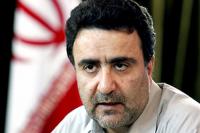
Incarcerated political activist Mostafa Tajzadeh has called on Iran’s judiciary to impose a ban on death-by-stoning penalty “once and for all”.

According to Norooz, the official website of the Islamic Iran Participation Front (IIPF), Tajzadeh recently wrote a letter to judiciary chief Sadegh Larijani in which he called for the “recognition of the people’s legal rights” and the abolishion of two of Iran’s most controversial “Islamic” punishments: severing the hand for theft and stoning for adultery.

Tajzadeh is a member of the Central Council of the IIPF as well as the Mujahedin of the Islamic Revolution Organisation, Iran’s most prominent reformist parties, which have been outlawed. During the presidency of Mohammad Khatami, he was Deputy-Minister of the Interior for Political Affairs. The outspoken political figure was rounded up along with scores of activists and journalists following the disputed 2009 presidential election. He is currently serving a six-year jail term.

“Do you believe that executing such punishments is the will of the majority of Iranians?” Tajzadeh asks Larijani. “Are you prepared to conduct polls on the topic and publish their results? If it is revealed that most Iranians … are against this sentence, what will you say?”

The letter, which echoes the views of many Islamic intellectuals and clerics opposed to stoning, states that those in favour of stoning were protecting their “authority” at the expense of tainting Islam. Tajzadeh maintains that practices such as stoning and severing the hand were a source of “joy” for the enemies of religion.

The activist said that his interrogators would criticise the reformist camp over its reluctance to make a case for the implementation of such punishments, which are the subject of much heated debate both in Iran and outside the country.

“I would ask them: ‘Did we stage a revolution in order to … justify such sentences for European public opinion? Why should we not try instead to eradicate theft so as to render severing the hand unnecessary? Why do we not replace [it] with alternative punishments for theft?’”

Tajzadeh’s letter also goes to great lengths to challenge the very religious basis for penalties such as stoning or severing the hand. Regarding stoning, he notes the differing opinions of Islamic scholars, some of whom consider capital punishment something that can only be carried out by an infallible figure (someone who has never sinned), which means that the all such punishments are effectively shelved. He explains that “the Quran does not foresee capital punishment for an adulterer, let alone stoning a criminal.”

“You’re like-minded [friends] believe that: It’s not important what the world, especially Western public opinion, thinks about Islamic penal law. It is against the very principle of Islam. Therefore their opposition to Islamic sentences is unimportant. No matter how much we back down, their criticisms, opposition and protests against us will persist until we have given up on all our religious beliefs.”

“If lapidation is part of Sharia Law and we mustn’t recoil before the West,” Tajzadeh writes, “then why is it that you are deterred from implementing the ‘sacred Sharia Law’ after widespread Western criticism? Why is it that in an interview with ABC in New York, Mr Ahmadinejad made absolutely no attempt to defend stoning? … Apparently [even] he agrees that such sentences and penalties are at present inhumane and indefensible.”

In an interview with ABC’s Christiane Amanpour, Ahmadinejad denied that Sakineh Mohammadi Ashtiani, a 44-year-old Iranian mother sentenced to stoning for adultery and complicity in her husband’s murder, had been ever been sentenced to lapidation. “Miss Mohammadi was never sentenced to stoning. This was false and forged news … there was no sentence of stoning issued in the first place… this was the news that was made up,” he claimed.

Tajzadeh questioned the judiciary chief’s own resolve in executing certain penalties that might be deemed unexpected in society, adding that he found it “remarkable” that neither Larijani nor any leading cleric from the judiciary had ever defended the need to implement such cruel punishments. “Why don’t you request that such punishments be shown on [national] television?” he asked Larijani.

“You and those who think like you are well aware of the negative repercussions of these penalties, yet you do not prevent their execution. This is why you defend it with [a feeling of] embarrassment. But the reason you continue to keep the issue of stoning alive, three decades after the [Islamic] Revolution, is to demonstrate that the Western world, whether it be their public opinion or their governments, are at odds with and hostile towards us because of ‘Islam’.”

Tajzadeh goes on to add: “Is not a cause for shame for us that while the sentence of stoning is mentioned in Torah and not the Quran, the Zionists, who have exploited the religion of Moses … for their power-seeking ploy, are the ones who accuse Muslims of ‘violence’ and ‘backwardness’ for executing this sentence?”

Tajzadeh argued that sentences such as stoning and severing the hand were either not rooted in the Sharia or were “at least not approved for the modern world,” adding that not even “the most traditional and religious” sectors of Iranian society accepted the carrying out of stoning. He maintained that not only had stoning not reduced crime, but it had actually led to resentment towards Islam.

“Why should such a doubt-arousing punishment be considered part of Sharia,” Tajzadeh asked.

When Ayatollah Bayat Zanjani, a senior clerical figure, was asked about the roots of stoning in Islamic texts in 2010, he replied that it was “not prescribed in the Quran,” stating that the Prophet Muhammad “devised this punishment for married men and women who are in a position to properly satisfy their sexual desires, but commit adultery on a whim.” He went on to add that there were “certain stringent conditions” before this punishment could be imposed.

“Furthermore, there are certain stringent qualifications prescribed in the Sharia for the executors of this punishment.  We believe that ordinarily such qualifications are only found in the Infallible Imams. Given this, we are of the view that Islam does not intend this punishment to be established readily.”

Like many fellow activists arrested following the 2009 presidential race, Tajzadeh was paraded in televised show trials held that summer. He received a six-year prison sentence as well as a ten-year ban on journalistic and partisan activities on charges of “assembly and collusion against national security and acts of propaganda against the regime.” Not recognising the legitimacy of the judicial process, he did not appeal the court’s decision.

Tajzdeh’s wife Fakhrossadat Mohtashamipour, an active member of the IIPF, has also faced arrest and intimidation in the past year. Tajzadeh has been quoted as saying that both their judicial cases are being directly handled by Mojtaba Khamenei, the son of Supreme Leader Ayatollah Khamenei.

A recent report by the pro-Green Movement website Jaras suggested that around a month ago, Mojtaba Khamenei met with Mousavi and called on the opposition figure to soften his stance regarding the country’s establishment due to the growing international pressure on Iran over its nuclear programme. The former Prime Minister then reportedly stated that he will only respond to the request on two conditions: “Firstly, I will respond to the leader [Khamenei] on the condition that there are no cameras or eavesdropping and that no one else but I or he is present in the meeting. Secondly, that I am offered the chance to address the people live on national television.”


Iran buys U.S. wheat despite nuclear tensions

0


Iran has made a rare purchase of U.S. wheat as it tries to build its food stockpiles amid tougher sanctions imposed by the United States and Europe.
The U.S. Agriculture Department reported on Thursday that Iran bought 120,000 tons of U.S. wheat — enough to fill two large cargo ships.

While not illegal, the deal caught traders by surprise as tensions mount between the West and Iran on concerns the Islamic Republic was intent on developing a nuclear weapon.

“It shocked me,” said Jerod Leman, a broker with Wellington Commodities Corp. “With everything going on over there with their nuclear problems, I am surprised we sold them anything.”

In the last month, Iran has bought or tried to buy nearly 3 million tons of wheat as Tehran fears sanctions will eventually disrupt food imports and bread shortages could cause food riots.

Iran has asked to import a million tons of wheat from Pakistan in a barter deal and also approached India.

“It’s a sign that they really need wheat,” said a trader from Louis Dreyfus.

FIRST SALE TO IRAN SINCE 2009

Iran last purchased U.S. wheat in 2009 but Thursday’s sale would be the largest U.S. wheat sale to the country since August 2008, a year when severe drought halved the country’s domestic crop and triggered record imports, according to USDA data.

Any sale of grain to Iran requires Treasury Department approval, said USDA spokeswoman Sally Klusaritz.

It was not immediately clear who made the sale or whether the Treasury Department approved the deal before it was announced by USDA. It was also not clear how the deal would be financed as sanctions by the West have hampered Iran’s ability to pay for key imports.

The hard red winter wheat was sold for delivery by May 31, USDA said. That variety of wheat for export from the U.S. Gulf Coast costs more than $300 per ton, before freight costs to the Middle East add another $75 per ton, according to Reuters and industry data.

The wheat is worth at least $46 million and probably much more due to the risk premiums companies normally charge Iran.

News of the sale helped wheat futures on the Chicago Board of Trade erase early losses and head higher by midday.

The United States has imposed sanctions targeting Iran’s oil trade and central bank payments to put pressure on Tehran to end its nuclear ambitions. Iran maintains the program is for peaceful purposes.

The sanctions are squeezing Iran’s oil exports even before they go into effect in June, a U.S. advisory body said in a report released on Wednesday.

Cargill, the U.S. agribusiness giant, said in early February that it was still shipping grain to Iran despite signs Iran was struggling to process payments.

By law, exporters must report promptly to USDA the sale of 100,000 tons or more of a commodity to the same destination in one day. Sales of smaller amounts are reported on a weekly basis.


Source:

The Guards and Mesbah Unite Against the Principlists

0


Arash Bahmani

With less than a week left for the national elections to Iran’s ninth national assembly, the Majlis, the lines and positions of the various participants are getting sharper. And in this atmosphere, some supporters of ultra-conservative extremist cleric Mesbah Yazdi calling themselves the Armangarayan (the ideologues) have created a new political group which is expected to be more hardline than the principlists.

Yazdi is mentioned as the leader of this new group, the Steadfast Front of the ideologues (Jebhe Paydari) who are supporters of Mahmoud Ahmadinejad in the ninth Majlis elections. This group refrained from joining the United Front of the Principlists (Jebhe Motahed Osoolagarayan) – which is led by such clerics as Mahdavi Kani and Mohammad Yazdi, both leading members of the conservative Association of Combatant Clerics.

The creation of this new group (the Steadfast Front) was announce by Hossein Allahkaram, the head of the a council that unites the Hezbollah groups in Iran (Shoraye Hamahangi Niruhaye Hezbollah), who said, “The two groups called The Ideologues and the Principlists will replace the older groups known as Principlists and Reformers.” He added that the purpose of launching the Ideologues group went beyond the March 2 Majlis elections.

Allahkaram said that the Steadfast Front was the ideologue group while the Principlist Front was the principlist group and predicted that the battle for the Majlis next week would be primarily between these two groups.

Groups and personalities close to Mesbah Yazdi had in the past mentioned that this conservative cleric intended to form a new political group. Nasser Saghai Biriya had last month announced that Yazdi would be using his students and cadres to implement a new initiative.

Members of the Steadfast Front had earlier claimed that the supreme leader of Iran was not happy with the United Front of the Principlists. According to Morteza Agha Tehrani, the secretary general of the Steadfast Front, the political actions of the United Front of Principlists were opposed by the leader because he objected to some of the leaders of the group.

Mesbah’s New Supporters in the Guards

The Revolutionary Guards (IRGC) have in recent days expanded their support for the Steadfast Front (Ahmadinejad’s allies). This shift was noticeable as prior to this, the force focused on encouraging the public to participate in the elections in general.

The steadfast front is made up of former minister and supporters of Ahmadinejad who formed this group for the purpose of participating with a single voice in the Majlis elections. The group was led by Mesbah Yazdi and the financial support of Sadegh Mahsooli. But despite heavy pressure, the group refrained from joining the United Front of the Principlists.

A few months ago, Roohollah Hosseinian had announced that leader of the Islamic regime wished for principlists to enter the Majlis race with one voice and one list. But differences within this principlist group have emerged since so that Hamid Rasai – a close associate of Yazdi – said this regarding uniting with the United Front of the Principlists: “Now is not the time to unite. Had we united, pressure on the regime and [the leader] would have been greater.”

Members of the Steadfast Front have said that the reason for the leader’s displeasure with the groups is the presence of some members of the “sedition” (supporters of the 2009 protests against the presidential election of that year) in the group. Some such members are Ali Larijani and Mohammad Bagher Qalibaf.

In another development, Hamid-Reza Moghadamfar, the cultural and social deputy of the IRGC force recently criticized Steadfast Front members Ali Larijani and Mohammad Bagher Qalibaf and said he would not vote for Majlis candidates Ali Motahari and Mohammad-Reza Bahonar.

Influential cleric Mohammad Reza Bahonar, who is currently the deputy Majlis speaker, and is accused by Ahmadinejad supporters to be a sympathizer of the 2009 election protests, recently told Aseman weekly that ayatollah Mesbah’s role in managing the country may actually increase in the near future. Bahonar is a man who is aware of many behind-the-scenes events may be heralding a realignment of the political mosaic of the country.

Source: roozonline

Iran: Fair Vote Impossible

0


Iran’s parliamentary elections scheduled for March 2, 2012, will be grossly unfair because of arbitrary disqualifications and other restrictions,Human Rights Watch said today. The voting for 290 parliamentary seats follows the disqualification of hundreds of candidates based on vague and ill-defined criteria, and opposition leaders are either barred from participating, serving unjust prison sentences, or refusing to participate in what they consider sham elections.

On February 21, the Guardian Council, an unelected body of 12 religious jurists, announced that fewer than 3,500 of the approximately 5,400 candidates running for seats in the majlis, Iran’s parliament, had been approved to run. The Interior Ministry had earlier disqualified about 750 candidates. At least 35 of those disqualified by the Guardian Council are current members of parliament. In response to these and other state actions, Iran’s opposition and reformist movement have called for an election boycott.

“Iranian authorities have stacked the deck by disqualifying candidates and arbitrarily jailing key members of the reform movement,” said Joe Stork, deputy Middle East director at Human Rights Watch.“There is no transparency surrounding the vetting and selection of candidates.”

Iran’s vetting process for both parliamentary and presidential candidates involves several stages. The Interior Ministry conducts a first cut of applicants based on criteria set by the election laws. While some of these criteria are concrete, such as age limits and educational requirements, most are extremely vague, enabling authorities to make sweeping and arbitrary decisions. Candidates have four days to appeal the Interior Ministry’s initial decision. Once the ministry compiles its list of “qualified” candidates, the Guardian Council makes the final decision on who may run for election.

On January 10, the Interior Ministry’s election commission disqualified several dozen candidates because of their “lack of adherence to Islam and the Constitution.” The disqualified candidates include several incumbents who were critical of President Mahmoud Ahmadinejad’s government. One of the disqualified candidates told Human Rights Watch that he received a note from local government authorities on January 10, informing him that he had been disqualified because he was allegedly affiliated with or supportive of “illegal” parties, organizations, or groups. He said the authorities gave him no additional information regarding the reasons for his disqualification, and he decided not to appeal the decision.

Human Rights Watch has learned that the latest list of candidates disqualified by the Guardian Council includes several members of the 15 members of the Sunni bloc in parliament. Among those who will no longer be members of parliament are Jalal Mahmoudzadeh and Eqbal Mohammadi, the former and current leaders of the bloc. On December 19, 2011, the faction had sent a letter to Iran’s Supreme Leader, Ayatollah Ali Khamenei, asking him to protect the political and social rights of Iran’s Sunni minority.

Over the past few years, authorities have banned some reformist parties and severely restricted the activities of others. On September 27, 2010, the general prosecutor and judiciary spokesman announced a court orderdissolving two reformist political parties, the Islamic Iran Participation Front and the Mojahedin of the Islamic Revolution. Authorities prevent members of other pro-reform groups, like the Freedom Movement party, from holding gatherings.

The Guardian Council disqualifications came after reformist and opposition activists, some of whom are currently serving prison terms, denounced the upcoming elections and concluded that there was no reason to field candidates. On December 26, Fatemeh Karroubi relayed a message from her husband, Mehdi Karroubi, a former presidential candidate who has been under house arrest, calling the elections “a sham.” Several days later, the Iranian judiciary announced that calls for a boycott of the elections constituted “a crime.” On January 17, Saham News, a website affiliated with Karroubi’s Etemad-e Melli party, said that authorities were holding Karroubi incommunicadoand preventing him from seeing his family in retaliation for his criticisms of the upcoming elections.

Authorities continue to hold the opposition leaders Mir Hossein Mousavi and Zahra Rahnavard, as well as Karroubi, under house arrest more than a year after they called for demonstrations in support of wide-scale protests following the disputed June 2009 presidential election. Dozens of other opposition figures are in prison after being unfairly tried for such offenses as “acting against the national security” and “propaganda against the regime.”

“Almost three years ago, following contested presidential elections, millions of Iranians marched through the streets chanting ‘Where’s my vote?’” Stork said. “Today those words still reverberate, reminding us of the government’s determination to deny its people the right to decide their own future.”

Source: hrw

Clinton: Internal Power Struggle in Iran Over Nuclear Weapons

0


U.S. Secretary of State Hillary Clinton said Tuesday that there is an internal power struggle in Iran over the country’s pursuit of nuclear weapons. Secretary Clinton says the U.S. intelligence community believes Iran has not yet decided to produce a nuclear weapon, in part, because there are deep-seated disagreements among its leaders about whether it is the right thing to do.

“There is a continuing debate going on inside the Iranian regime,” said Clinton. “And it’s an especially complicated debate for anybody on the outside, and I dare say some people who are on the inside, to understand because there is a lot of power struggle going on. There are personality clashes.”

Clinton says that internal debate over the future of Iran’s nuclear program includes members of the clergy, the Revolutionary Guard, the parliament and the presidency, leading to what she calls “a lot of static” in intelligence reporting on Tehran’s atomic ambitions.

Much of the internal opposition to nuclear weapons comes from a fatwa issued by the late Ayatollah Hossein-Ali Montazeri. A leader of Iran’s 1979 Islamic Revolution, Montazeri ruled that Islamic law forbids the development and use of nuclear weapons.

Iran says its nuclear program is for peaceful civilian purposes. Clinton says there is no doubt that Iran has the right to develop such a peaceful civilian program. But she told U.S. lawmakers on Tuesday that there is no doubt that much of what has been discovered by United Nations inspectors “points to the direction of a nuclear weapons program.”

The United States, Britain, France, Russia, China and Germany are considering Iran’s response to a request to resume talks over its nuclear program. European foreign policy chief Catherine Ashton says she is cautious and optimistic that Iran might be ready to begin substantive talks.

There is added pressure to make progress on the issue as Israel reportedly considers preemptive military action to remove what it considers an Iranian threat.

Clinton says the international community is pursuing a dual track of intense pressure and a willingness to engage in talks.

“I want to gather as much information, not only about actions, but [also] about intentions,” she said. “We have very deep, ongoing consultations with Israel, with the [Persian] Gulf Arabs, with the Europeans, with others. There isn’t anybody of any stature in the world in any government that really is not concerned about what the Iranians are doing.”

Clinton says tougher U.S. sanctions against Iran are having an economic effect. As the world’s third-largest exporter of crude oil, Iran is a major supplier for China, Japan and India as well as the European .

The United States is working with its European and Asian allies to dry up Iran’s oil market because, they say, Tehran is using those profits to support its nuclear program.

Source: insideofiran