Home Blog Page 485

Two of five Bangkok bombing suspects are Iranian, embassy confirms

0


Iranian embassy has confirmed authenticity of suspects’ passports, says Thai foreign ministry

The Iranian embassy in Bangkok has confirmed that two of the five suspects in the bomb blasts that struck the Thai capital Bangkok earlier this month are Iranian nationals, the Thai foreign ministry has announced.

The foreign ministry spokesman Thani Thongphakdi said the Iranian embassy in Bangkok had verified the suspects’ nationality and the authenticity of their passports. But he added that the suspects were not working for the Islamic regime or any other Iranian organisations, the Thai news agency MCOT reported.

The Iranian government was not immediately available for comment.

The two confirmed Iranian nationals are Saeid Moradi, 28, who lost both legs when a bomb he threw at police accidentally detonated at his feet, and Mohammad Khazaei, 42, who was detained at Bangkok’s Suvarnabhumi airport while trying to flee to Malaysia.

The confirmation of the suspects’ nationality comes days after Thai police admitted they were still confused by the 50-plus “Sejeal” stickers found in 27 different locations along an expressway that stretches through the centre of the city.

Police had initially said that they were related to the explosions on 14 February, as the word Sejeal was believed to be a reference to “sejeal stones” in the Koran and the stickers were thought to have possibly demarcated an escape or bomb route to target Israeli diplomats. Authorities are now saying that the stickers are unrelated to the blasts and may have been placed throughout the city as early as autumn 2011.

Thai forensics experts are also examining a second motorcycle found abandoned in Bangkok’s Din Daeng neighbourhood, which police say was purchased by Khazaei but has not yet produced any clues. The Honda Wave discovered last Saturday – allegedly bought by third suspect, 31-year-old Masoud Sedaghatzadeh – yielded a “Sejeal” sticker underneath its seat, sparking a mystery about its origin and meaning.

Sedaghatzadeh is currently awaiting extradition to Thailand after fleeing to Malaysia.

Two other suspects involved in the Valentine’s Day blasts are still at large. Leila Rohani, who rented the Ekkamai house that partially blew up when its cache of explosives accidentally detonated, is thought to have returned to Iran. The fifth suspect, a middle-aged Middle Eastern man who was caught on CCTV leaving the house hours before it exploded, is thought to be a bomb specialist and may have also returned to Iran, authorities said.

Thai police have lately increased security in areas popular with tourists such as Khao San Road and Soi Nana, and established checkpoints to search suspicious vehicles and Middle-Eastern-owned businesses, the Bangkok Post reported.

Source: guardian

U.S. to beef up military capabilities in Persian Gulf

0


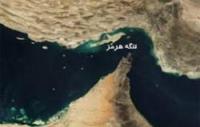
The U.S. is planning to increase its military presence in the Persian Gulf region in preparation for Iran’s possible attempt to block the Strait of Hormuz.

The Wall Street Journal reports that U.S. forces are also adapting weapon systems to their warships to counter Iranian fast-attack boats and shore-launched missiles.

The report adds that the Pentagon has notified Congress of plans for mine-detection and clearing equipment and expanding surveillance in the strait.

In recent months, several Iranian officials have announced that if the world insists on imposing an embargo on Iranian oil, Iran will do everything in its power to block the Strait of Hormuz. That strategic waterway sees the passage of 17 percent of the world’s oil consumption on a daily basis.

The U.S. has responded to Iran’s threats in kind, saying it will not allow any disruption in the region’s usual maritime traffic.

Source: radiozamaneh

Mehdi Khazali Remains in Temporary Detention, on Hunger Strike


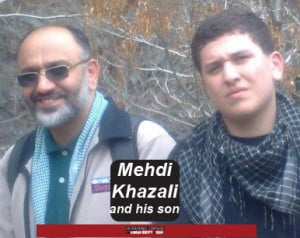
In an interview with the International Campaign for Human Rights in Iran, the son of imprisoned blogger Mehdi Khazali expressed concern about his health 49 days after he began his hunger strike in protest of his “temporary detention” without charges.

“It has been 49 days since he embarked on a hunger strike and he has only had liquids,” Mohammad Saleh Khazali told the Campaign. “Last week, when my father’s condition deteriorated, they transferred him to the hospital. When we saw him in the hospital, we couldn’t believe it was him. His weight loss was unbelievable; he was so thin. We are afraid something bad might happen to my father.”

Mehdi Khazali is one of Iran’s political activists who has spoken of boycotting the upcoming parliamentary elections. His latest arrest came on 9 January, when security forces brutally beat and arrested the dissident blogger and head of Hayyan Publishing House, breaking his arm.

Khazali started the hunger strike on the day of his arrest to protest his temporary detention, stating that he would continue his hunger strike until his release. It is not clear on what charges his January 9 arrest was based. Khazali remains in temporary detention and his case judge extended his temporary detention orders for one more month.

After his condition worsened, Khazali was transferred to the Cardiac Care Unit of Taleghani Hospital on Friday, 17 February. Twenty-four hours later, Intelligence Ministry forces transferred him to the Ministry’s Ghamar Bani Hashem Hospital. He was transferred back to Evin Prison on Monday, 20 February.

“He called from the prison [Tuesday], and said that he is well. But we have not yet visited him. We would have to wait until Monday of next week to see him during a regular visit. We are concerned, because he does not wish to break his hunger strike,” Mohammad Saleh Khazali told the Campaign.

In an earlier interview with the Campaign, Mohammad Saleh Khazali described the family’s frustration about Mehdi Khazali’s case. “When we objected to his case judge about this process, he said, ‘It’s out of my hands!’ Now we don’t know who is in charge of our father’s case and who is issuing orders on it. We don’t know what to do and where to go. We only know one thing, and that is that our father is not well at all and continuing the strike is dangerous for him.”

Branch 26 of Tehran Revolutionary Court under Judge Pirabbasi has previously sentenced Mehdi Khazali to 14 years in prison, 10 years in exile, and 90 lashes. In those cases he was charged with “propagating against the state,” “assembly and collusion against national security,” “acting against national security,” and “writing a critical letter to the Supreme Leader.” He has not yet been charged for his January 9 arrest.


Source: iranhumanrights

What is Iran’s Supreme Leader’s game?


By Pepe Escobar

We interrupt this program to ask the supreme war-or-peace question; what game is Iran’s Supreme Leader Ayatollah Ali Khamenei really playing?

A recurrent theme among the lively Iranian global diaspora is that the Supreme Leader is the perfect US/Israel asset – as he incarnates Iran (although in many cases less than President Mahmud Ahmadinejad) as “the enemy”; in parallel, the military dictatorship of the mullahtariat in Tehran also needs “the enemy” – as in the Great Satan and the Zionists – to justify its monopoly of power.

The ultimate loser, in this case, is true Iranian democracy – as in the foundation for the country’s ability to resist Empire. Especially now, after the immensely dodgy 2009 presidential election and the repression of the Green movement – when even former supporters swear the Islamic Republic turned into neither a “republic” and certainly not “Islamic”.

At the same time, informed Iranian – and Western – critics of Empire swear that the belligerent Likud-majority government of Israel is in fact the perfect Iran asset. This is because Prime Minister Benjamin “Bibi” Netanyahu and former Moldova bouncer turned Foreign Minister Avigdor Lieberman’s non-stop warmongering has only worked to rally Iranians of all persuasions – always proudly nationalistic – behind the regime.

After all, the absolute majority of Iranians feel they are targeted by a heavily weaponized foreign power – US/Israel, followed in the shade by the Sunni Persian Gulf monarchies of the Gulf Counter-revolution Club, also known as Gulf Cooperation Council. The regime was wily enough to instrumentalize this foreign threat and at the same time further smash the Green movement.

Keep your bombs away from me 
Parliamentary elections in Iran are less than a week away, on March 3. These are the first elections after the 2009 drama. InThe Ayatollahs’ Democracy: an Iranian Challenge (Penguin Books), Hooman Majd makes a very strong case detailing how the election was stolen. And that’s the key current problem; millions of Iranians don’t believe in their Islamic democracy anymore.

Gholam Reza Moghaddam, a cleric and the head of the Majlis (parliament) commission that is conducting an extremely delicate move in the middle of an economic crisis – to finish government subsidies on basic food items and energy – recently admitted that the Ahmadinejad government was by all practical purposes bribing the population “to encourage them to vote in the Majlis elections”.

Major General Yahya Rahim Safavi – a senior military adviser to Khamenei and, crucially, former chief of the Islamic Revolutionary Guards Corps (IRGC) – asked Iranians to “take the elections seriously and by voting in maximum numbers create another epic event”. The Supreme Leader believes – or hopes – turnout at the “epic event” will be around 60%.

They may be in for a rude shock. Word in Iran is that the election appeal at universities is close to zero. No wonder; Green movement leader Mir Hossein Mousavi has been under house arrest for a full year. According to Kaleme, a website close to Mousavi and his wife, Dr Zahra Rahnavard, a few days ago they were allowed to speak only briefly, by phone, with their three daughters.

Khamenei’s attention seems to be concentrated more on the external pressure than the internal dynamic. Once again, on Wednesday, he went public to renew his vow that a nuclear weapon is anti-Islamic. His words should – but they won’t – be carefully scrutinized in the West:

We believe that using nuclear weapons is haramand prohibited, and that it is everybody’s duty to make efforts to protect humanity against this great disaster. We believe that besides nuclear weapons, other types of weapons of mass destruction such as chemical and biological weapons also pose a serious threat to humanity. The Iranian nation which is itself a victim of chemical weapons feels more than any other nation the danger that is caused by the production and stockpiling of such weapons and is prepared to make use of all its facilities to counter such threats.

To see the Supreme Leader’s “nuclear” views, warmongers could do worse than consult his website. [1] Of course, they won’t.

What’s certain is that the leader seems to be ready to fight for the long haul. Major General (retired) Mohsen Rezai, the secretary general of the Expediency Council, said it in so many words; Western sanctions will go on for at least another five years, and are much tougher than those imposed during the 1980-1988 Iran-Iraq war.

Rezai also said that for 16 years, when Akbar Hashemi Rafsanjani and then Mohammad Khatami were presidents, Iran tried to reach some sort of deal with the US; but “because the gap [between the two] was too deep, a compromise was not possible … We allowed them to inspect Natanz, we reduced the number of centrifuges, we suspended the Isfahan [uranium conversion facility], and our president [Khatami] began the ‘dialogue among civilizations’. But [president George W] Bush declared that Iran, Iraq and North Korea constitute the ‘axis of evil’ and began a confrontation with us.” [2]

A former spokesman for the Iranian nuclear negotiation team, ambassador Hossein Mousavian, brought this confrontational mood up to date – to the International Atomic Energy Agency (IAEA) team’s October 2011 visit to Iran, led by deputy director general Herman Nackaerts – the same Nackaerts who was back in Iran this week.

According to Mousavian, “during the visit, Fereydoon Abbasi-Davani, the head of Iran’s Atomic Energy Organization, offered a blank check to the IAEA, granting full transparency, openness to inspections, and cooperation with the IAEA. He also informed Nackaerts of Iran’s receptiveness to putting the country’s nuclear program under ‘full IAEA supervision’, including implementing the Additional Protocol [of the nuclear Non-Proliferation Treaty] for five years, provided that sanctions against Iran were lifted.”

Guess what was Washington’s reaction; forget about dialogue, we want sanctions. That set the scene for Washington’s next steps; the Fast-and-Furious plot trying to frame Tehran for the assassination attempt on the Saudi ambassador to the US; the pressure to divert the IAEA’s November 2011 report on Iran by adding a spin on a “possible” military angle to the nuclear program; the oil embargo; the sponsoring of a United Nations resolution against Iran on terrorism; and the list goes on.

Show me the path of the Imam
In all matters external and internal, in Iran the bucks stops with Khamenei – not Ahmadinejad. If the Supreme Leader seems to have his finger firmly on the nuclear dossier, at homely matters he may be unraveling. He may take comfort that outside the big cities, he remains popular – as government loans in rural areas remain generous, at least while the new Western sanctions don’t bite.

But high-ranking clerics in Qom are now openly calling for legal mechanisms to oversee – and criticize – him; his response – hardly a secret in Tehran – was to order all their offices and homes to be bugged.

Khamenei has vehemently rejected any sort of oversight by the Council of Experts – the body that appoints the Supreme Leader, monitors his performance, and can even topple him.

According to Seyyed Abbas Nabavi, the head of the Organization for Islamic Civilization and Development, Khamenei told the experts, “I do not accept the assembly can say that the Supreme Leader is still qualified, but then question why such and such official was directed in a certain direction, or why I allowed a certain official [to do certain things].” [3]

Following the outbursts of outrage in 2009 – when for the first time people in the streets openly called for the downfall of the leader – revolt steadily marches on, with highly educated Iranians deriding Khamenei as stubborn, jealous and vindictive, holding a monster grudge against millions who never swallowed his endorsement of Ahmadinejad in 2009 (he always calls them “seditionists”).

For instance, even the daughter of a well-known ayatollah has gone public saying that Khamenei “holds a grudge in his heart” against Rafsanjani and former presidential candidates Mir Hossein Mousavi and Mehdi Karoubi “because of the Imam’s [Khomeini’s] love and support for them and also because in comparison to these three, in particular Hashemi [Rafsanjani] and Mousavi, he is clearly a second-rate individual.” Khamenei is now being widely blamed for anything from Iran’s falling production capacity to mounting inflation and widespread corruption.

That raises the question; what about the IRGC’s support for the Supreme Leader?

The Iranian diaspora largely considers this to be pure propaganda. Yet the fact is the IRGC is now a monster conglomerate with myriad military-industrial, economic and financial interests. Top managers – and the array of enterprises they control – are bound to the ethos of antagonizing the West, the same West from whose sanctions they profit, handsomely. So, for them, the status quo is nice and dandy – even with the everyday possibility of a miscalculation, or a false flag operation, leading to war.

At the same time, the IRGC may count on the key strategic/political support of BRICS members Russia and China – and is certain that the country will be able to dribble the embargo and keep selling oil mostly to Asian clients.

But what’s really juicy, in terms of the internal dynamic, is the fact that the cream of the IRGC is now engaged in a sort of economic war against the bazaaris – the traditionally very conservative Persian merchants.

It’s crucial to remember that these bazaaris financed the so-called “Path of the Imam” Islamic revolution in 1979. They were – and remain – radically anti-colonialism (especially as practiced by the British and then the Americans); but this does not mean they are anti-Western (something that most in the West still don’t understand).

Once again, as top Iranian analysts have been ceaselessly pointing out, one must remember that the Islamic revolution’s original motto was “Neither East nor West”; what mattered was a sort of curiously Buddhist “middle of the road” – exactly that “Path of the Imam” that would guarantee Islamic Iran as a sovereign, non-aligned country.

And guess who was part of this original “Path of the Imam” coalition of the willing? Exactly; Khamenei (and Ahmadinejad) foes Mousavi, Khatami, Karoubi and Rafsanjani, not to mention a moderate faction of the IRGC, graphically symbolized by former IRGC commander and former presidential candidate Mohsen Rezai.

So what the “Path of the Imam” coalition is essentially saying is that Khamenei is a traitor of the principles of the revolution; they accuse him of trying to become a sort of Shi’ite caliph – an absolute ruler. This message is increasingly getting public resonance among millions of Iranians who believe in a true “Islamic”, but most of all “republic” state.

And that leads us to the Supreme Leader’s supreme fear; that a coalition of Islamic republic purists – including powerful Qom clerics and powerful IRGC commanders or former commanders – may eventually rise up, get rid of him, and finally implement their dream of a true Islamic republic. Only this is certain; the one thing they won’t get rid of is Iran’s civilian nuclear program.


Source: atimes

Ali Khamenei: is the Iranian leader attached to Russia?

0


Breaking news from the depth of the treasure box of secrets of the leading clique in Iran.

There is but one week to go for the parliamentary elections in Iran. Only a certain elite of candidates have been admitted to the elections. Certain other groups are excluded and many opposition groups and figures call for a popular boycott of the elections. The next stage of the infighting is in full swing. But what are the revelations? The revelations go back to the time when the revolution was stolen to the Iranian people.

 V. Kuzichkin

Vladimir Kuzichkin was a double spy for the KGB and the MI6. He lived in Iran for about 20 years and was at the heart of informations and events in Iran of those times (1979). In 1982 he defected to Great Britain and in 1990 he wrote a book named “Inside the KGB”.

But he is not the only source for these revelations.

Akbar Gandji revealed many details about certain Red and Grey Ayatollahs in connection with the chain murders and made everybody believe the Red Ayatollah was Akbar Rafsandjani. Meanwhile Rafsandjani has been pushed from the front row of influential politicians in Iran. Recently Gandji revealed that Ayatollah Khamenei himself is the Red Ayatollah. Furthermore we learn that the Grey Ayatollah must be Ayatollah Mousavi Khoeniha. Both had obvious relations to the former Soviet.

 Ali Khamenei

Khamenei was a student at Moscows International Lumumba University, which is regarded by experts as the KGB cadre forming school. His name is mentioned proudly in 

%20″>a film highlighting the 50th anniversary of the university. Later he was seen once in every two weeks visiting the Soviet Embassy in Teheran. The Soviet had strong interests in Iran – against the USA. Its official stronghold was the Tudeh party. Cold War was fiercly waged between the Superpowers on the territory of Iran. One of the hardest punches that Iranians gave to the USA was the attack and finally the 444 days siege of their embassy in Teheran. Already in February 1979 the Fedajin-e-Khalk had occupied the embassy and only left after Khomeinis order. In November 1979 Ayatollah Khoeniha appeared on the scene and took responsability for the new attack. This time Khomeini stepped back in front of the accomplished facts. When the attack to the embassy had started, the staff of the embassy started to shred top secret documents, in vain. Every single document was meticulously restored and about 100 books were published with their content and sold in front of the Iranian universities. The Soviet authorities must have been very pleased with these results.

 Ayatollah Khomeini

Khomeini had two close students. Ayatollah Montazeri who had the religious qualifications and should have become the successor of Khomeini as the Supreme Leader was pushed out of office for opposing the murder machinery against political prisoners and Ayatollah Seyed Mottahari , father of present parliamentary Ali Mottahari, who was killed by the Forqan group of Akbar Goudarzi. The killer of Mottahari was a close student of Khoeniha.

Ayatollah Khoeniha Ayatollah Khoeniha

Khoeniha is said to be the grey eminence in the background of the leftwing politicians like Khatami, Mousavi and Karoubi, who lately objected the massing of power in Khameneis hands and accused him of ruining the country.

The rightwing stream that is following the Nazi line like CAMFRAS and Ammariyoun with people like Mesbah Yazdi, Ali Saidi and Said Ghasemi is struggeling behind the scenes to rever Khamenei and impose a culture of absolute obedience in Iran.

 Mesbah-Yazdi

In the next show-down during the parliamentary elections Mesbah Yazdi, head of the Front of Resistance (Poidâry) appears to be the gifted film director who acts psychologically clever. While Mahdavi-Khani, chairman of the Assembly of Experts and one faction adversary in the run for the seats in the Parliament, speaks as an authority on his own and gives advises of what to do, Mesbah keeps on refering to Khamenei’s speeches and lectures and brings his own interpretation in the disguise of Khamenei’s words. Mesbah’s faction would like to win a considerable majority of the seats in the Majles in the upcoming round. It would be an important next step for the rightwing hardliner to take over completely the country in the name of hate and brutality. Thus it seems that Iranians only have a choice between the devil and the deep blue sea.

The Cold War has never ceased. It has changed its face. While the USA with President Obama seek reconciliation with the Muslim world there are still those forces in the US political landscape pushing him to attack Iran. Meanwhile the US might follow rather a strategy of provocation to legitimize an intervention for ending the reign of coercion. The pressure and provocations might be successfull as the latest reports indicate. One day ago the deputy head of Iran’s armed forces, Mohammed Hejazi, said: ”We are no longer willing to wait for enemy action to be launched against us. Our strategy now is that if we feel our enemies want to endanger Iran’s national interests, and want to decide to do that, we will act without waiting for their actions … ” By the time it could be all hat and no cattle to impress the people at home.

But in Iran people are not interested to the lies of the regimes gang of crooks, they long for the fall of the regime and dream about a democratic system.

The defrocked Soviet called the Russian Federation together with China slams on the brakes of sanctions and serious UN condemnation of Iran or Syria. Lately both issued a warning to attack Iran. Khamenei still has a big brother in his back. He is surely the Red Ayatollah in a double sense of the word. His political creeds are deeply Stalinist drenched with the responsibility for the blood of so many Iranians.

Why should the general condemn his effective line of defence?

Rasoul Moatamedi


Source: insideofiran

‘Stay home on Election Day’ Green Council calls on Iranians


Just days ahead of parliamentary elections on 2 March, the Coordination Council of the Green Path of Hope has called on Iranians to stay at home on election day.”

In a statement on Thursday, the Council, the most important decision-making body within the opposition Green Movement, praised the people’s turnout in opposition protests on 14 February, which it said was another sign that the Movement was still “alive and vibrant.” Numerous reports from the nation’s major cities suggested a “tight” security atmosphere, while some cities were compared to “military camps,” in reference to the sheer density of the presence of security agents and anti-riot police.

“It has also become clear that the autocrats’ espousal of the region’s freedom movements is nothing but a big lie and [in the regime’s eyes] the freedom to protest is good for everyone but the people of Iran.”

A top Mousavi aide and Council spokesperson Ardeshir Amir-Arjomand, told the BBC that the demonstrations were only “the beginning” of what was to come, indicating that new acts of protest were likely to be announced in the near future. He called on the authorities to submit to the people’s will and to hold free and fair elections in order to prevent a repeat of what occurred in Iraq, Afghanistan and Syria.

The Coordination Council members said that “those who invite the people to participate in the elections do not have the slightest regard for the people’s opinions, and when the first opportunity arises, they will seek to overthrow what’s left of republicanism and democracy [in Iran].”

The Council said that the authorities were trying to “provoke patriotic feelings amongst Iranians so as to cover up the many economic, social and political problems which they themselves have caused while avoiding accountability.”

“Taking part in rubber-stamp elections, which will encourage the dictatorship to continue with its policies against national [interests] and the people and thus consolidate tyranny, is not a revolutionary duty, but is rather contrary to the nation’s ideals in the 1979 Islamic Revolution,” it added. “Not participating in the elections is not a breach of Sharia [law].”

Addressing the country’s autocratic rulers, the Council statement went on to add: “Our people will defend the country in the face of foreign threats, but not you.

In addition to a full boycott, the Council also invited Green Movement supporters to make their presence felt in public spaces on the eve of parliamentary elections (1 March), with the purpose of “raising awareness” about the illegitimacy of the elections. “The Green Path of Hope will remain green until the very end and will not use its hope for prosperity for the people of this land.”

As the Majlis elections draw near, there is a growing concern amongst Iran’s ruling elite over a low turnout on voting day, especially as the rigged 2009 presidential election and its aftermath are still fresh in the people’s memory. The Islamic Republic’s Supreme Leader Ali Khamenei recently called for the people’s mass participation in the elections.

This is the first time since the 1979 revolution that all major opposition groups and factions, including the country’s reformist parties are firmly backing an all-out boycott of the elections.

For its part, the outlawed Freedom Movement of Iran released a statement promoting the election boycott and compared the current situation to the period that followed the US-backed 1953 coup against the country’s democratically elected Prime Minister Mohammad Mosaddegh.

In the months after the coup d’état, a group of Mosaddegh supporters joined forces to set up the National Resistance Movement that sought to further the aspirations of the Freedom Movement, the most central of those goals being Iran’s independence and fighting corruption.

“It is regrettable, that 105 years after the Constitutional Movement of Iran and 33 years after the victory of the Islamic Revolution, it is still not possible to hold free, sound and fair elections in Iran and the majority of Iranians are deprived of choosing their real representatives,” FMI statement said.

The head of the group’s political bureau Mohammad Tavassoli has been in prison for the past four months and its ailing secretary general Ebrahim Yazi, was sentenced to eight years in prison after enduring months of illegal imprisonment.

Two other major reformist groups, the Mujahedin of the Islamic Revolution Organisation and the Islamic Iran Participation Front (IIPF also known as Mosharekat) have also called on Iranians to stay away from polling stations on Election Day.

Calling it an “orchestrated campaign of deceit,” former reformist lawmaker Ali Mazrooei, told the Green Voice of Freedom that the elections were only a desperate attempt designed to win legitimacy for the hard-line elite in power.

Nader Hashemi, an Assistant Professor of Middle East and Islamic Politics at the Josef Korbel School of International Studies, and author of The People Reloaded: The Green Movement and the Struggle for Iran’s Future, told GVF that “while the rest of the region is moving in the direction of democracy, the regime in Iran moving in the opposition direction.”

“The truth that everyone knows, including leaders of the Islamic Republic,” he continued, “is these upcoming elections will not be free and fair. How can they be when the opposition Green Movement is boycotting them?” He predicted that the forthcoming elections would “resemble elections under Hosni Mubarak’s Egypt. They are stage-managed elections meant to give the impression that the regime has political legitimacy. Evidence that these elections will be a farce and that voter turnout will be low can be seen in many places. For example, Mohammad Reza Naghdi, head of the Basij force—two weeks before the elections—has already congratulated the people of Iran for the ‘epic’ participation in the elections!”

Campaigning for the elections officially began on Thursday and will last a week. Like any election in the Islamic Republic, candidates first have to go through a screening process, something pro-democracy activists dismiss as “unfair” and “undemocratic.” Thus far, around 1,200 candidates have been disqualified from the race, including 35 currently serving MPs. Among the disqualified names are Seyed Shahabeddin Sadr (Tehran), Mahmoud Ahmadi Bighash, Seyed Ahmadreza Dastgheib, Soleiman Jafarzadeh (Maku) and Abdolreza Moradi (Mamasani).

The Green Movement’s leaders, currently under house arrest, have cast doubt over the legitimacy of the vote. During one rare meetings with his daughters, former Prime Minister Mir Hossein Mousavi told his daughter that, “Under status quo, one can’t be hopeful about the upcoming [parliamentary] elections and taking part in them,” promising, at the same time that “the future is bright.” Mahdi Karroubi, another other opposition leader in captivity, voiced similar sentiments during a visitation with his wife Fatemeh Karroubi. The former parliament speaker dismissed the elections as nothing more than a “sham,” adding that the authorities were “fully aware of the people’s wrath and dissatisfaction and want to hold rubber-stamp elections by disqualifying [candidates] and certain polling stations, while stuffing ballot boxes with counterfeit votes and then suppressing and arresting [protesters] as well as stirring up terror and fear and enforcing a security [atmosphere] in the country.” The veteran reformer warned of a repeat of the 2009 elections and its aftermath, but said he believed that the Iranian people were informed about the “the nature of the theatrical display.”

In December 2011, former reformist President Mohammad Khatami backed statements made by Ali Mohammad Gharibani, president of Coordination Council of the Reformist Front, who had announced that the country’s pro-reform factions would not be participating in the parliamentary race. He said the council had “decided not to present a unified list [of candidates] and not to support anyone [in the vote].”

“My opinion is the same as the council’s, which is that the reformists cannot and must not have candidates and a unified list in the elections … I don’t speak on behalf of anyone. I think that all indicators suggest that we must not take part in the elections.”

A shadow war from Bangkok to Baku

0


The video, shot by a bystander, is horrific.  A man lies on a Bangkok street, his legs severed below the knee. He is Saeid Moradi, a 28-year old Iranian, injured on February 14 as he tried to throw a device at police.

Minutes earlier, an explosion had rocked the house rented by Moradi and two other Iranians in the Sukhumvit Road area of the Thai capital. (Watch one of the suspects take Thai police to the scene of the explosion)

They left the house before being confronted by police. All three are now under arrest – one detained in neighboring Malaysia as he tried to board a plane for Tehran.Thai police say all the men carried Iranian passports. They are suspected of planning attacks on Israeli targets in Thailand, but they have not yet been charged.

Thai media quote police officials as saying that two improvised bombs were found at the house.  They were portable radios, stuffed with C-4 explosives. Grenades had been inserted as detonators, along with ball bearings intended as shrapnel. The devices had magnetic plates and could kill anyone within five meters (yards), the officials said.

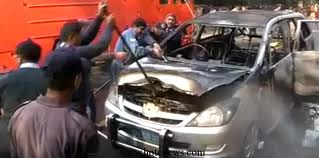
The incident in Bangkok followed attempts the previous day in New Delhi and the Georgian capital, Tbilisi, to blow up Israeli diplomatic vehicles. In the New Delhi attack, the wife of an Israeli diplomat was seriously injured.

And on Tuesday, Azerbaijan – which shares a border with Iran – announced that a number of people had been arrested in connection with an alleged plot against foreign citizens organized by Iran. The National Security Ministry said the plotters had acquired weapons and explosives.

Just last month, Azeri authorities arrested two local people allegedly plotting an attack on the Israeli ambassador and a rabbi in the country’s small Jewish community. It said they too had worked with a criminal figure who had links to Iranian intelligence.

In turn, Iran has furiously accused Azerbaijan of allowing the Mossad, Israel’s intelligence agency, to launch terrorist operations across the border.

Israeli and Western counter-terrorism officials believe that elements within the Iranian regime most likely sponsored these plots, looking for revenge after the killing of several Iranian nuclear scientists.

Iran has strenuously denied involvement, accusing Israel and the United States of trying to provoke conflict. So has its ally Hezbollah, the powerful Lebanese militia, which has a long history of terrorist operations overseas.

The Bangkok explosions followed the arrest there last month of a Lebanese man, Hussein Atris, who has been charged with possession of prohibited substances.  A warehouse he rented in the Thai capital contained several tons of fertilizer and a large amount of ammonium nitrate, commonly used together to make explosives.

Atris, who was once a hairdresser in Sweden, has denied any links to Hezbollah and insisted the materials were destined for export.  He told a Swedish newspaper that he had been “set up” by the Mossad.

Soon after his arrest, Israeli Defense Forces Chief of Staff Lt. General Benny Gantz warned: “We are witnessing efforts by Hezbollah and other hostile elements to carry out vicious terror attacks far from Israeli territory.”

But the February 14 incident in Bangkok seems “too amateurish to be Hezbollah,” says Benedetta Berti, who has written about its counter-intelligence war in the current edition of the CTC Sentinel, published by the Combating Terrorism Center at West Point.

For example, the three suspects had allowed themselves to be photographed relaxing with two Thai women in the resort town of Pattaya.

Hezbollah leader Sheikh Hassan Nasrallah has dismissed allegations of the group’s involvement as “an insult.”

Hezbollah would not target Israeli diplomats and civilians, he said in a televised speech last week. “Those who we will take revenge against know very well who they are; and they will need to keep taking precautions for their safety.”

Vali Nasr, professor of international politics at Tufts University, says there is a “good chance” that Iran is behind the attacks, and that they are not meant to be “of a scale that would provoke an international crisis.”

Nasr, who is on the U.S. State Department’s Advisory Board, says they are “pinpricks designed to send a signal to Israel and the United States about what might be coming down the pike if this conflict escalates.” But such attacks may have unintended consequences, he says.

Several analysts consulted by CNN say elements within or associated with Iran’s Islamic Revolutionary Guard are likely responsible for the recent plots. One branch of the Guard, the Quds Force, is responsible for covert operations overseas.

Israeli Vice-Prime Minister Moshe Yaalon claimed last week that Brigadier-General Qasem Soleimani, commander of the Quds Force, was directing the attacks.

“We see what is happening in India, Georgia and Thailand. It is the same pattern. The same bomb, the same lab, the same factory,” Yaalon told the newspaper Maariv.

Nasr says that the Quds Force is capable of highly professional operations. It may be deliberately mounting unsophisticated, easily discovered plots to try to scare the West – and to demonstrate that it can carry out attacks anywhere in the world.

The Quds Force was also implicated in a plot to assassinate the Saudi ambassador to the United States last year.

According to the criminal complaint, a U.S. citizen of Iranian origin, Manssor Arbabsiar, acknowledged that he had been recruited by his cousin – a high-ranking officer in the Quds Force – to pay a purported member of a Mexican drug cartel to carry out the killing.  The trafficker was, in fact, a paid informant of the U.S. government. (Read the charges against Arbabsiar here)

Arbabsiar said he had a number of meetings in Tehran with senior Quds officers, and identified one of them in a photograph. He has pleaded not guilty in the plot; his trial is slated to begin in October.

Similarly, officials in Azerbaijan suspect elements within the Quds force paid Azeris to attack Jewish targets in the capital, Baku, but, again, the details that have emerged so far suggest a somewhat haphazard plot that also involved figures from Azerbaijan’s criminal underworld.

President Ilham Aliyev of Azerbaijan has long been concerned about what he described to U.S. diplomats as “Iranian provocations.”  In a U.S. embassy cable from 2010 published by WikiLeaks, Aliyev “specifically cited not only the financing of radical Islamic groups and Hezbollah terrorists,” but the organization of violent protests in Azerbaijan.

Now it seems that Azerbaijan has become the latest stage for a shadowy war between Israel and Iran and their respective proxies.


Source: insideofiran

IAEA Says Iran ‘Sharply Increases’ Uranium Enrichment

0


The United Nations nuclear watchdog says Iran has sharply stepped up its uranium-enrichment drive, tripling its capacity, prompting a cautious expression of concern from Washington even as Russia downplayed nuclear fears as a Western ruse.

The Vienna-based International Atomic Energy Agency (IAEA) says in its latest quarterly report about Iran’s atomic activities that it has “major differences” with Iran and “major concerns” about its nuclear program, after inspectors probing suspected weapons work this week returned from a failed mission to Tehran.

The report says the IAEA “continues to have serious concerns regarding possible military dimensions to Iran’s nuclear program.”

The report by the IAEA says Iran has now made more than 100 kilograms of higher-enriched material, less than half the amount needed for a nuclear warhead.

‘Serious Concerns’

In Washington, State Department spokesman Mark Toner declined to comment on the report because it hasn’t been publicly released.

“We continue to have serious concerns about Iran’s lack of compliance, lack of willingness to meet with the international community about its nuclear program,” he said.

The IAEA report will be circulated among member states at their next meeting on March 5. It reportedly details how Iran has carried out a significant expansion of activities at its main enrichment plant near the central city of Natanz, and also increased work at the Fordow underground facility.

Enriched uranium can be used to fuel nuclear power plants, which is Iran’s stated aim, or provide material for bombs if refined much further.

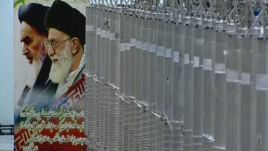
At Natanz, the IAEA report said the number of operating cascades — each of which contains around 170 centrifuges — has gone from 37 in November to 52 now.

At Fordow, almost 700 centrifuges are now refining uranium to a fissile concentration of 20 percent and preparations are under way to install many more, the report said.

Putin Points Finger At West

Russian Prime Minister Vladimir Putin meanwhile has accused the West of seeking “regime change” in Iran under the guise of trying to prevent the spread of weapons of mass destruction. Putin was speaking as he toured a nuclear research center in the once-secret Russian city of Sarov on February 24.

Russia has not opposed four rounds of UN sanctions aimed at pressuring Tehran, but Moscow has condemned unilateral sanctions imposed by the United States and the European Union over the same nuclear concerns.

It is the latest in an increasingly harsh string of IAEA pronouncements on Iran, which was accused by that agency of secret work “specific to nuclear weapons” in November.

Iran denies seeking a nuclear weapon although many foreign governments suspect it is pursuing such weapons or the capability to make them.

UN Secretary-General Ban Ki-moon said in late January that “the onus is on Iran” to prove that “their nuclear development program is genuinely for peaceful purposes.”


Source: rferl

Azerbaijani TV Attacked By Iranian Hacker

0


Azerbaijani state television’s website has been vandalized in a hacking attack, apparently by hackers based in neighboring Iran.

Azerbaijan’s Communications Ministry announced on February 23 that along with AzTV’s website, the homepage of state airline AZAL was also hit by cyberattackers.

Azerbaijani officials say the attacks originated from Iran.

The attacks have taken place amid tensions between the Azerbaijani and Iranian governments.

The Islamic regime in Tehran has reportedly been displeased by friendlier links between Azerbaijan and Israel in recent months.

Azerbaijan has accused Iran of sponsoring Islamic radicals on its territory.


Source: rferl

Kurdish Student Given Suspended Sentence

0


Branch One of Sanandaj Revolutionary Court sentenced Shirzad Karimi, a Kurdish university student and a member of the Kurdish Students Democratic Union, to four years in prison, suspended for three years, on charges of “propagating against the regime,” a local human rights source in Kurdistan told the International Campaign for Human Rights in Iran.

Karimi was summoned to the Sanandaj Intelligence Office and arrested on 12 September 2011, along with several other members of the Kurdish Students Democratic Union, the source said. Karimi spent 22 days inside the detention center of the Sanandaj Intelligence Office, where he was interrogated. He was released later on bail of about 20 million toman (approximately $10,000 at today’s exchange rate).

The human rights source told the Campaign that security forces summoned and arrested seven Kurdish student activists and members of the Kurdish Students Democratic Union last summer. They were released later on bail.

The Sanandaj Revolutionary Court sentenced the spokesperson for the Union, Souran Daneshvar, to one year in prison, suspended for two years, and Milad Karimi, the deputy secretary of the Union, to 1.5 years in prison, which was reduced to six months on appeal.

Suspended sentences, which have been rising in recent years, indicate that the accused will not serve the prison sentence unless the individual is subsequently accused of another offense. Suspended sentences have been used as a tool to dampen political activity and intimidate individuals.