Home Blog Page 486

Khamenei Rejects Constitutional Oversight

0


A cleric close to conservative Mohammad Taghi Mesbah Yazdi, an influential member of the Assembly of Experts, has stated that Supreme Leader Ali Khamenei violated the Assembly’s constitutional right to monitor the Leader’s performance.

According to BBC Persian Service, Abbas Nabavi, Head of the Organization for Islamic Civilization and Development and a member of the Imam Khomeini Education and Research Institute, which is directed by Mesbah Yazdi, stated that Khamenei wrote a letter to the Assembly of Experts communicating that the supervisory role of this body is only limited to “checking the general conditions of leadership.”

According to Iran’s Constitution, the Assembly of Experts is a council of eighty-six clerics popularly elected to eight-year terms. They elect the supreme leader from their ranks in accordance with Article 107 of the 1979 Constitution.

Nabavi talked about the aforementioned letter in a speech given in front of the Ansar-e Hezbollah, a militant conservative group in Iran. The full text of the speech was published in Ya-Lasarat, the official website of the group.

Abbasi continued by adding that Khamenei submitted this letter during the “last days of the previous term” of the Assembly, which indicates the letter was sent to the Assembly while Hashemi Rafsanjani was still the body’s Chairman.

Hashemi Rafsanjani, Iran’s former president and the current Chairman of the Expediency Council, has been politically marginalized following his critical approach to the regime’s handling of the events following the 2009 disputed presidential elections. Rafsanajani was forced to cede his seat as the head of the Assembly of Experts to the traditionalist cleric Mahdavi Kani in March 2011.

“If the Supreme Leader is still fit to rule then I do not allow you to [criticize] the details of [governance].” Nabavi quoted Khamenei as saying.

The constitutional role of the Supreme Leader in relation with other governmental bodies has long been a topic of debate in Iran. Many politicians, analysts, and opposition members have accused the Supreme Leader of overstepping his legal authority by influencing the appointment of ministers and other officials. This was the topic of a heated conflict between Ahmadinejad and Khamenei during the last summer.

In a related development, Ali Motaheri, a conservative member of the parliament, criticized the individuals who he called “devotees” of the Supreme Leader. He added, “We should be able to criticize the Leader and he should be responsive.”

On Sunday, in an interview with Khabar Online, a conservative news site, Motahari added, “The idea has to be accepted that the position and the grandeur of the Supreme Leader’s leadership is protected. However, at the same time [we] should be able to criticize him and he should respond. If this way of thinking is institutionalized many of the criticisms against the principle of velayat-e faqih could be excreted.”


Source: insideofiran
Dozens of Mountain Climbers Arrested for Unknown Reasons

0


Sanandaj Police’s Intelligence Unit raided a meeting of mountain climbing group Chel Cheme in the village of Hassan Abad outside Sanandaj and arrested dozens of meeting participants on 17 February, a local human rights activist told the International Campaign for Human Rights in Iran. It is unclear why these individuals were arrested.

The human rights activist also told the Campaign that the previous day, 16 February, security forces arrested three Kurdish citizens—Salman, Sadegh, and Soheila Jafari—after searching their homes and taking some of their personal items. These arrests occurred as part of a raid on the village of Khorooseh near Shooyesheh in Kurdistan Province, during which security forces also stormed the homes of several other village residents and collected satellite dishes. The reasons for these arrests are not yet known.

Since the arrests, families of the arrested mountain climbers have gathered daily outside the IntelligenceOffice to find news about their detained kin, the source told the Campaign. The source added that the Intelligence Office has promised the families to release their detained relatives on bail of about 40 million toman (the equivalent of $2,000 USD in today’s exchange rate.)

According to the source, the names of the detained mountain climbers are as follows: Shahla Hosseini, Ali Bahrami, Fardin Mehdi, Ghotbeh Ahmadi, Farha Chatani, Reza Niknam, Hashem Rostami, iran Parvin, Bakhtiar Saeedi, Mohammad Goulian, Diako Kakakhani, Nader Peymankar, Heydar Akhteh, Akbar Mohammadi, Souran Khezrani, Shamsollah AbdollaHI< Borhan Pir Khezrani, Abdollah Karimi, Ghaleb Zamani, Ali Ahmadi, Ali Azadi, Rahmat Gouyli, Ghias Hosseini, Jalal Sajjadi, Tofigh Aminpanah, and Mohammad Fatehi.


Source: iranhumanrights

U.S. and Israel coordinated on steps against Iran

0


The United States and Israel are coordinated on steps being taken to combat Iran’s perceived nuclear threat and the two allies have been planning to ensure “all other options” are available, the U.S. ambassador to Israel said on Thursday.

Ambassador Dan Shapiro said both countries were hoping the economic sanctions in place would persuade Iran to abandon its nuclear ambitions, and they were having a “significant effect” but had not yet achieved their goal.

“It is clear that Iran is under significant economic strain … (but the sanctions have) not yet achieved the goal, which is to get that nuclear program stopped … for both us and for Israel this is the preferred strategy, to achieve that all-important objective,” he told U.S.-Jewish community leaders.

Shapiro added: “It’s also true, as the president has said … we are coordinated with our Israeli partners … that other options, all other options, are on the table to achieve that goal … the necessary planning has been done to ensure that those options are actually available if at any time they become necessary.”

Iran says its nuclear program is for peaceful purposes, although a U.N. nuclear watchdog mission ended in failure this week when the Islamic Republic denied officials permission to visit a site suspected of housing a facility to test explosives.

The failure of the visit by the officials from the International Atomic Energy Agency could hamper any resumption of wider nuclear negotiations between Iran and six world powers — the United States, China, Russia, Britain, France and Germany.

Shapiro said a constant stream of visits by senior U.S. officials to Israel and vice versa were ensuring both administrations remained coordinated on how to tackle Iran’s nuclear ambitions.

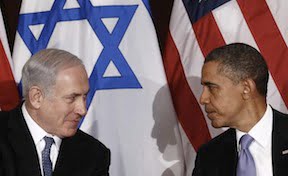
Israeli Prime Minister Benjamin Netanyahu will visit Washington early next month and will meet President Barack Obama on March 5 with Iran set to top the agenda.

The Obama administration has shown signs of being increasingly concerned about the lack of any assurance from Israel it would consult Washington before launching strikes on Iran’s nuclear sites.

But Shapiro indicated U.S.-Israel coordination was intimate and productive.

“It’s the kind of dialogue, I assure you, you would want two allies facing a common security challenge to be having. It is that quality, it’s that detail, it’s that (intimacy) and it’s exactly what should be happening. It will continue when Prime Minister Netanyahu visits Washington,” Shapiro said.

Source: alarabiya

Iranian opposition is boycotting and calling for free and fair elections

0


This year more than 100 Iranian citizens have been detained for non-violent activism around the elections. Two have reportedly died in custody. Opposition parties, high-profile political prisoners, and Nobel Laureate Shirin Ebadi said the elections fail to meet international standards and have called for a boycott.

“These are not elections we will be observing in Iran on March 2. The selection of who may or may not be a member of Parliament has already been made by the unelected Supreme Leader and Guardian Council,” said Dokhi Fassihian, senior advisor for United4Iran.

“Clearly, the lesson of 2009 has been lost on Iranian leaders. It is time for democratic reform that upholds the human rights of the Iranian people to choose their representatives,” Fassihian added.

United4Iran’s statement outlines various crackdowns by Iranian authorities including arrests, internet interruptions and intimidation of media professionals. It also details Iran’s authoritarian power structure and its democratic deficits, which are being exploited to further consolidate autocratic control. For a chart on Iran’s power structure click here.

An international chorus has called for the release of jailed pro-democracy opposition figures. United4Iran is also urging the Iranian government to invite independent electoral assistance and monitoring and to establish an independent electoral commission.

“We are reiterating our call on Supreme Leader Khamenei to allow for freedom of expression and unhindered access to information, to free opposition leaders and all prisoners of conscience and guarantee due process for detained individuals,” Fassihian said. “Authorities should also investigate the deaths of activists and launch a credible accountability process for other alleged human rights violations.”

United4Iran is also calling on Supreme Leader Khamenei to institute democratic reforms to ensure elections reflect the will of the Iranian people, meet international standards and Iran’s obligations under the Universal Declaration of Human Rights and the International Covenant on Civil and Political Rights.


Source: payvand

Iranian opposition leader sends defiant message


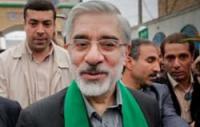
Iranian opposition leader MirHosein Mousavi has told his children in a telephone conversation that he still stands by his former political stance and has in no way retreated from his criticism of the government.

The Kaleme opposition website reports that MirHosein Mousavi, who has been under house arrest by the Islamic Republic along with his wife Zahra Rahnavard since last February, was finally allowed a phone call to his daughters for the first time in recent months.

Mousavi’s daughter reports that her father told him: “Nothing has changed …dear children; I want you to know that I still firmly stand by my former political stance.”

The Mousavis report similar statements of defiance from their mother Zahra Rahnavard.

MirHosein Mousavi also reportedly told his children that they may be denied even the short phone calls that they are sometimes allowed.

Reports indicate that following the telephone conversation, Mousavi’s children began to be subjected to further persecution and were even threatened with arrest.

In addition, Mousavi and Rahnavard’s daughter has been dismissed from her teaching position at Al-Zahra University.

The Iranian opposition leaders MirHosein Mousavi and Zahra Rahnavard as well as Mehdi Karroubi, who is being held in a different location, have been under house arrest since last February after their rally call triggered a large demonstration in solidarity with the Arab uprisings in the region.

Marking one year into the house arrest of their parents, the Mousavi and Karroubi children published a joint letter calling on their compatriots and all “freedom-lovers of the world” to protest against the illegal arrest of their parents and of all political prisoners in Iran.

The letter also expressed grave concern regarding the well-being of their parents, who are denied visits from their own family doctors. The opposition leaders have been cut off from the outside world and are occasionally allowed to make short phone calls to their children.

The house arrest of the opposition leaders in Iran has been challenged by numerous domestic and international human rights groups, as well as political figures who state that putting individuals under house arrest without filing any official charges against them is illegal according to both Islamic Republic and international laws.

Source: radiozamaneh

Iran cuts down to six weeks timeline for weapons-grade uranium

0


Tehran this week hardened its nuclear and military policies in defiance of tougher sanctions and ahead of international nuclear talks. The threat by Iran’s armed forces deputy chief Gen. Mohammad Hejazi of a preemptive strike against its “enemies,” was accompanied by its refusal to allow UN nuclear watchdog inspectors to visit the Parchin facility, following which the IAEA chief cut their mission short.
Western and Israeli intelligence experts have concluded that the transfer of 20 percent uranium enrichment to the underground Fordo site near Qom has shortened Iran’s race for the 90 percent (weapons) grade product to six weeks.
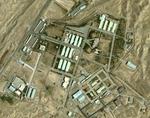
The International Atomic Energy Agency chief Yukiya Amano said Tuesday night, Feb. 21: “It is disappointing that Iran did not accept our request to visit Parchin.” This is the site were Iran conducts experiments in nuclear explosives and triggers.
This diplomatic understatement came amid three major reverses in the quest for a non-military solution to halt Iran’s drive for a nuclear weapon:
1.  Iran placed a large obstacle in the path of resumed negotiations with six world powers on which US President Barack Obama had pinned his strategy for averting a war to arrest its nuclear weapon program. This strategy depended heavily on Iran eventually consenting to making its nuclear projects fully transparent, as his National Security Adviser Tom Donilon assured Israeli leaders earlier this week.
The day after Donilon wound up his talks in Israel, the UN inspectors were sent packing empty-handed from Tehran, putting paid to any hope of transparency.
They were also denied an interview with Mohsen Fakrrizadeh, director of the Parchin project and also believed in the West to be the paramount head of Iran’s military nuclear program.
2.  The transfer of 20 percent uranium enrichment to Fordo is taken by Western and Israel intelligence experts to have accelerated  the pace of enriching large quantities of 20 percent enriched uranium to weapons grade and shortened to an estimated six weeks the time needed for arming a nuclear bomb after a decision in Tehran.
Israeli Prime Minister Binyamin Netanyahu, Defense Minister Ehud Barak and Chief of Staff Lt. Gen. Benny Gantz explained to the US official that Israel cannot afford to live with an Iran capable of build a nuclear bomb in the space of few weeks.
3. The threat that Iran will not wait for “its enemies” – Israel and/or the US – to strike and will act first.
White House spokesman Jay Carney responded to these reverses by saying Tuesday night: “Israel and the United States share the same objective, which is to prevent Iran from acquiring a nuclear weapon,” adding, however, “There is time and space for diplomacy to work, for the effect of sanctions to result in a change of Iranian behavior.”
Seen from Israel, Iranian behavior has already changed – and for the worse. Its tactics in recent days have exacerbated the threat hanging over its head from Iran and brought it that much closer.
Senior Israeli military and intelligence sources said Wednesday, Feb. 22, that Israel’s strategic and military position in the Middle East has taken a sharp downturn. The failure of the IAEA mission and the threat of preemptive action from Tehran present the double threat of Iran’s earlier nuclear armament coupled with military action to sabotage Israel’s preparations for a strike on its nuclear facilities.
As one Israeli source put it:  “Since Wednesday the rules of the game have changed.”

Source: debka

Activist on trial in Tabriz


Iranian women’s rights activist Faranak Farid went on trial today in Tabriz as several women writers, poets, lawyers and other activists attended.

A Zamaneh correspondent reports that Farid has been charged with propaganda against the regime and insulting the leader.

The court cited Farid’s attendance at various conferences abroad, interviews with the media and the publishing of various articles as instances of propaganda against the regime.

The charge of insulting the leader has been substantiated by a number of photos found in her computer system during a search of her home and belongings.

Faranak Farid has already been tried in another court for disturbing public peace and has not yet been sentenced.

Farid was arrested last September during the protests against government inaction over the drying of Lake Oroumiyeh and was released on bail after 41 days in custody.

Farid was reportedly injured due to beatings sustained during her arrest.

Several cities in the Azerbaijani provinces of Iran saw protests when Parliament struck down a plan to redirect water to Lake Oroumiyeh, which according to experts is drying out at an alarming rate.

The protests led to widespread arrests that included at least 12 women. Behjat Faramarzi was sentenced to six months in prison and 20 lashes, Roghieh Hassanzadeh to 91 days in prison and 20 lashes. Three others have been acquitted and others are still awaiting their trial.

Source: radiozamaneh

Iran ‘Orders Execution’ Pastor Youcef Nadarkhani

0


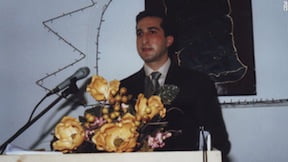
Iran again ordered the death penalty for jailed Pastor Youcef Nadarkhani for refusing to recant his faith in Christ and return to Islam raising fears his execution is imminent, a well-informed church official told BosNewsLife Tuesday, February 21.

“I was informed yesterday evening that the Gilan [Province] Court ordered the execution” said Firouz Khandjani, a council member of the pastor’s Church of Iran, one of the country’s largest house church movements.

Khandjani, who is in hiding with his family, added he feared the pastor could be hanged within 24 hours at the Lakan Prison near the northern city of Rasht. “Officially his lawyer still needs to receive a notification first, but nobody keeps the law in Iran,” he told BosNewsLife.

Several other prisoners are known to have been hanged in the prison facility, including at least two last month, according to rights activists.

Khandjani made clear that even if the pastor is not killed Tuesday, the Church of Iran still fears “the execution is imminent because of this order.” He said the lawyer and church was informed about the decision by a trusted source within Iran’s judiciary.

NADARKHANI PRESSURED

The apparent order came after local Christians said last month that Nadarkhani rejected an offer to be released from prison if he publicly acknowledges Islam’s prophet Mohammed as “a messenger sent by God.”

Iranian authorities reportedly summoned lawyers for Pastor Nadarkhani to his home city of Rasht on December 30, to explain the deal. Local officials indicated they would release the pastor if he agreed to make the statement about Mohammed, Christians with close knowledge about the situation told BosNewsLife at the time.

Christians said the pastor made clear that making the demanded statement about Muhammed would amount to abandoning his faith in Jesus Christ.

The 34-year-old Nadarkhani, who is married with two children, has been detained since 2009 when he was captured in his home city of Rasht to register his house church.

The Gilan Court sentenced Nadarkhani to death in November 2010 on charges of “apostasy”, or abandoning Islam.

SUPREME COURT

His appeal against that ruling was seen as being rejected in 2011. The Supreme Court said “he can be executed” but added it would first ask a “re-examination” by the same court that already sentenced him to death.

The Gilan Court eventually asked Iran’s supreme leader Ayatollah Khameini for an opinion in what critics saw as an attempt to make someone else responsible for his execution.

Khameini is not known to have made a ruling on the case, though Iran has an often highly secretive judicial system.

Church official Khandjani suggested the execution order was part of a new strategy by Iran’s government to take out perceived opponents amid growing international pressure on the country over its nuclear program amid fears the nation develops an atomic bomb.

“If there is ever a war, the regime wants no opponents,” Khanhjani said. Iranian officials have also condemned the spread of Christianity in the country, where church groups have counted at least 100,000 devoted Christians, many of them former Muslims.

DEFENSE SETBACK

The reported execution order came as a setback for the defense team and other observers close to the case who previously said they learned from the court that judges were ordered to “do nothing” for one year.

However Khandjani already warned at that time that Iran’s government may want to execute the pastor earlier. “Saying he will be held one year more does not necessarily mean an earlier execution isn’t possible,” he told BosNewsLife recently.

Iranian officials have defended their actions against Nadarkhani, but recently tried to play down apostasy charges.

Gholam-Ali Rezvani, deputy governor general of the northern province of Gilan where the pastor is being held, told the government linked Fars News Agency (FNA) that Nadarkhani was “a Zionist, a traitor and had committed security crimes,” without elaborating.

Iranian officials have also said their actions are aimed at defending “Islamic values”.

The European and the United States have urged Iran to release Nadarkhani.

MORE DETENTIONS

He is is among several pastors and other Christians being detained in the strict Islamic nation.

Among them is also Farshid Fathi Malayeri, an evangelical church leader who has been held in prison since December 2010, Iranian Christians said Tuesday, February 21. His trial reportedly took place earlier this month, February 5, in a Revolutionary Court based in Tehran’s notorious Evin Prison. The court was expected to deliver its verdict in three months time.

The father-of-two was detained by authorities on December 26, 2010 during raids which targeted a large number of Christian citizens and house church members, many of whom were later released after what rights activists described as “exorbitant bail” payments.

Farshid Fathi Malayeri was kept in solitary confinement for a large part of his incarceration, and interrogated by agents working for the Ministry of Intelligence about his church activities and contacts abroad, said advocacy  group Christian Solidarity Worldwide, (CSW). Eventually, the equivalent of nearly $200,000 was demanded as bail for his release, but when his family eventually managed to raise the money, the authorities refused to release him, rights activists said.

Fathi is reportedly being held in the general ward of the prison. He is believed to be in good health and his family has been allowed to visit him, Christians said.


Source: insideofiran

Widespread arrests in Sanandaj and Mashhad

0


In the past two days, the Iranian ciities of Sanandaj and Mashhad have seen widespread arrests involving 220 people.

The Kordpa website reports that the Intelligence Ministry in Sanandaj arrested 35 people gathered at a house in Hassanabad, a Sanandaj suburb.

The identities of the detainees have not been announced yet, and the charges against them remain unknown.

Meanwhile, the Mokerian news agency reported that last week more than 20 members of the Chelchameh Mountain Climbing Club were arrested by Sanandaj security forces as they returned from a climbing trip.

Yesterday, the Fars news agency reported that the head of the Mashhad security forces announced the arrest of 185 individuals as part of a plan to promote security across the city through monthly police raids and undercover action.

The head of Iran’s security forces, Esmail Ahmadi Moghaddam, said yesterday that the past year has been the “safest” year in Iran’s history.

The statement comes following a marked increase in reports of murder and rape in recent months. Government officials have called on the judiciary to take tougher measures in dealing with criminals.

Source: radiozamaneh

UN Telecommunications Body Requires Iran to Stop Satellite Jamming

0


Rights Groups Prompt Tougher International Laws Regarding Jamming

(22 February 2012) The International Campaign for Human Rights in Iran today welcomed a new International Telecommunication Union (ITU) regulation requiring governments take “necessary action” to stop jamming of satellite broadcasts from within their jurisdiction.

The ITU and its member states should immediately start monitoring Iran’s compliance with the new regulation and take any additional steps needed to ensure Iranian authorities stop interfering with satellite broadcasts, the Campaign added.

“This is the first meaningful action taken by the ITU and the UN to make legal provisions to counter censorship of satellite programs within various countries,” said Aliakbar Mousavi, former Iranian MP who served as deputy head of the Parliamentary Telecommunications Committee.

At the ITU’s 2012 World Radiocommunication Conference (WRC-12) last week, 153 of the 165 member states in attendance voted to amend their telecommunication regulations. The new amendment regarding jamming reads, “If an administration has information of an infringement [of the governing telecommunications regulations] committed by a station under its jurisdiction the administration shall ascertain the facts and take the necessary actions.”

WRC regulations constitute a legally binding international treaty on radio-frequency and satellite broadcasts. The amendment, approved on 17 February 2012 in Geneva, makes particular reference to infringements of Article 45 of the ITU’s Constitution, which prohibits “harmful interference” with broadcasts.

“The Iranian regime will have no more excuses to breach these regulations. I hope similar steps will be taken by the ITU regarding Internet censorship in countries like Iran as well,” said Mousavi, a longtime advocate of freedom of information and expression.

The WRC-12’s decision came after the Campaign, other human rights organizations, and broadcasters called on governments, corporations, and international telecommunication bodies to take action to stop satellite jamming. Just last month, the Campaign urged the WRC-12 to take decisive steps to end the Iranian government’s illegal and widespread jamming of satellite signals.

Satellite jamming and Internet censorship in Iran has increased dramatically since 2009. Targeted satellite stations such as BBC Persian, VOA, and other Persian-language news outlets operating outside Iran have become an important source of information for millions of Iranians inside the country, where independent media outlets are severely censored and repeatedly shutdown.

The ITU, the telecommunications arm of the United Nations, has received numerous complaints about the jamming of Persian and Arabic broadcasts in Iran and Syria on satellites carried by Eutelsat and Arabsat.

Nobel Peace Prize laureate Shirin Ebadi and the Campaign’s spokesperson Hadi Ghaemi expressed concern that Eutelsat, whose satellites host Iran’s state media network the IRIB, and other telecommunications companies have done little or nothing to hold Iran accountable for its censorship. Eutelsat’s failure comes despite the fact that much of the Islamic Republic’s jamming is aimed at other Eutelsat clients, BBC Persian and Voice of America (VOA), and the IRIB has itself been implicated in gross human rights violations for producing televised forced confessions of prisoners of conscience.

“The ITU has now made Iran’s legal obligations perfectly clear. But the international community, including telecommunications corporations like Eutelsat, needs to sustain its efforts to make sure Iran stops jamming satellite broadcasts,” said Ghaemi.


Source: iranhumanrights