Home Blog Page 500

Syria is importing Iranian Snipers to murder anti government protesters

(BusinessInsider) Syria is bringing in snipers from Iran and Lebanon to help crush a resistance movement that continues to threaten President Bashar al-Assad’s violent regime, reports The Times (via The Australian).Mahmoud Haj Hamad, a senior Syrian government defector, told the newspaper that state security forces were importing the trained marksmen as “military consultants” to murder anti-government protestors, after the sharp-shooters successfully suppressed uprisings in their own countries.

Hamad, who fled Syria’s treasury department last month, said the reinforcements were being paid through a slush fund that is being topped up with U.S. dollars flown in from Iran — the same stash that state forces use to pay the violent Shabiha gangs that terrorize Syria’s streets.

The news comes after two days of fighting in Homs, Syria’s third-largest city, left more than 50 people dead and scores more wounded, according to Associated Press (via CBS). The city reportedly suffered a big jump in sectarian kidnappings and slayings, as Assad loyalists fired at residential buildings with guns and mortars.

Fighting has become so lethal that the U.N. has stopped updating its death toll from Syria’s crackdown, which was last estimated to have cost more 5400 lives, France 24 reports.

But Hamad said Syria can’t afford to keep the “thousands” of foreign fighters on its payroll, who each earn at least $100 a day.

“The Syrian economy has collapsed – it won’t last another month,” he told the Times. “In February, I believe it will fall apart. Iran can’t keep giving them money, because their own finances are not that good.”
Source

Imprisoned Student Activist Transferred To Psychiatric Ward


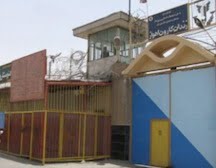
A source close to the family of Abolfazl Tabarzadi, 24, told the International Campaign for Human Rights in Iran that the imprisoned student was transferred from Karoon Prison to the psychiatric ward of a hospital in Ahvaz. According to the source, Tabarzadi suffers from severe paranoia and depression and prison authorities were forced to transfer him to a hospital because they were no longer able to control him inside the prison.

Abolfazl Tabarzadi, a civil engineering student and human rights activist, is the nephew of imprisoned political activist Heshmatollah Tabarzadi. Security forces arrested the former on 19 December 2010 at his father’s house. In an earlier interview with the Campaign, Abolfazl Tabarzadi’s father asked, “Why should Abolfazl be in prison? What sin has he committed? He was just a human rights activist, he was just trying to get furlough and visitation rights and such for his uncle….”

A lower Ahvaz court sentenced the younger Tabarzadi to 15 months in prison on charges of “acting against national security” and “contact with foreign media.” His sentence was reduced to nine months at the appeals level. The 24-year-old human rights activist began serving his sentence in Karoon Prison in Ahvaz on 18 October 2011.

“It seems Abolfazl is suffering from severe paranoia,” a source close to the family told the Campaign. “He constantly thinks he should be responding to interrogators, that agents are after him, and he is worried about his family’s health. Apparently he would wake up screaming in the middle of the night, until prison authorities contacted his family, asking them to go to the prison. The Prosecutor’s Office signed his hospital transfer authorization form, and he was sent to hospital,” the source said.

“The doctors have ordered him to be hospitalized for a month and then to be put under treatment for six months in a tranquil environment. But, unfortunately, he is currently under tight security in the hospital,” the source continued.

“When they send a university student who has never thought about prison or such things to a facility like Karoon Prison in Ahvaz, which is even worse than medieval prisons, well, he would go crazy. There is no separation of inmates by type of crime and all types of prisoners sleep and live next to each other,” the source said.

“Abolfazl has a very sensitive soul; I guess he couldn’t take it anymore. Last year he was under heavy interrogation. They sent him to court in handcuffs and footcuffs without a lawyer, and then to prison. Wouldn’t these things drive anyone crazy?” the source added.


Source

IAEA has proof of Iran’s nuclear-related activities

0


(GulfNews) Davos: “The International Atomic Energy Agency has credible information that Iran is engaged in activities relevant to the development of nuclear explosives,” Yukiya Amano, Director-General of the IAEA said here on Friday.

He was very clear that Iran does not have nuclear weapons, but he listed Iran as engaged in design of weapons, computer modelling, neutron initiators, high explosives, and detonators, as he spoke to Gulf News after a session on Iran at the World Economic Forum.

Iran has agreed to a new IAEA mission to visit Iran, headed by Herman Nackaerts, Deputy Director General for Safeguards which will leave tomorrow for Tehran.

This is despite the IAEA’s unhappiness over the lack of Iranian cooperation over its undeclared nuclear sites, which the IAEA has not seen and does not know anything about, Amano told Gulf News.

Iran’s parliament will meet tomorrow to discuss a bill that would halt oil exports to Europe from next week.


Source

Concern for opposition leader under house arrest

0


The wife of detained Iranian opposition leader Mehdi Karroubi reports that she has been completely cut off from her husband, adding that the authorities are now holding him in solitary confinement.

Fatemeh Karroubi told Saham News: “After my husband announced his opinion on the elections, recommending a boycott of them, he is being denied further visits with me, and the authorities are now stopping me from entering my own home.”

She expressed grave concern about the treatment of her husband by his jailers.

Last month, during a visit from his wife, Mehdi Karroubi told her that, in his opinion, the elections are a “sham” and there is no point in participating in the election process.

In the wake of the last presidential election, candidates Mehdi Karroubi and MirHosein Mousavi, who ran against Mahmoud Ahmadinejad, made allegations of vote fraud and accused the establishment of rigging the outcome. Since last February, both Karroubi and Mousavi, as well as Mousavi’s wife, Zahra Rahnavard, have been under house arrest, completely cut off from the outside world.

Iranian activists have repeatedly condemned the fact that the opposition leaders have been detained despite the complete lack of formal charges against them.

War of attrition brewing with Iran over Gulf oil routes

0


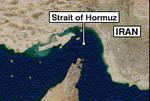
Military tensions in the Persian Gulf shot up again Thursday, Jan. 26, after Dubai police commander Gen. Dhahi Khalfan said on Al Arabiya television that an imminent Gulf war cannot be ruled out and first signs are already apparent. “The world will not let Iran block Hormuz but Tehran can narrow the strait to the maximum,” he said.

He echoed DEBKAfile’s predictions that Iran will not shut down the Strait of Hormuz completely, but gradually cut down tanker traffic which carries 17 million barrels, or one-fifth of the world’s daily consumption, through the waterway. Our Iranian sources report that the rule of thumb Tehran has devised for confront sanctions is to respond to the tightening of an oil embargo by having the Revolutionary Guards gradually narrow the tankers’ shipping lanes through the strategic strait. This will progressively cut down the amount of oil reaching the markets.

Tehran will go all the way and shut the channel down completely for fear of provoking a military showdown with the United States. But each time Washington manages to stop Iran supplying a given country, the IRGC will shut down another section of the strait.
General Martin Dempsey, Chairman of the US Joint Chiefs of Staff admitted on Jan. 8 that Iran has the capacity to block the Strait of Hormuz temporarily but the US would get it reopened within a short time.

Saudi Arabia and Dubai are skeptical about the ability of the American navy and Gulf forces to keep the Strait of Hormuz open at all times in the face of continuous Iranian attacks.
The prevailing view in Gulf capitals is that for the six months from February through July 1, when the European embargo on Iranian oil and the Iranian national bank freeze kick in, a war of attrition will unfold as Iran carries out sporadic strait closures, either by mining the waterway or firing missiles at tankers from unmarked speedboats.

These operations will push up the price of oil and so drum home to oil-dependent Asian and European governments the high cost to them of the alternate opening and closing of the Strait of Hormuz.

A Saudi official said Wednesday, Jan. 1, that Tehran’s threats to punish Riyadh for offering to make up the shortfall incurred from the oil embargo against Iran “could be seen by Saudi Arabia as an act of war.”

The Iranian threats followed the pledge made this week by Saudi Oil Minister Ali al-Naimi to raise daily production by up to 2.7 million barrels per day to supply the countries caught short of supplies from Iran.

However, the Saudi minister could not say how the oil would make its way out of the Persian Gulf to destination if the Strait of Hormuz were to be shuttered partially or fully.

DEBKAfile’s military and Gulf sources report that Persian Gulf capitals are talking less these days about an outbreak of armed hostilities over Iran’s nuclear program and more about the coming war over the oil shipping routes out to market.

The Dubai general’s remarks Thursday about an imminent conflict referred not only to the flow of American reinforcements to the Gulf region but also to the new deployments of the armies of Gulf Cooperation Council states. They are moving into position in expectation of a military confrontation with Iran.

Sari Intelligence Agents Raid Home of Baha’i

0


Intelligence agents in Sari, on January 21, raided the home of a Baha’i, searched the house and confiscated the religious books.

On Saturday, six intelligence officers of Sari, after breaking down the door of  Enayatollah Sanai’s home, a Baha’i author and poet, went into his house.

The Human Rights House of Iran reported that since Mr. Sanai was not home, they could not arrest him. After inspecting the arrest warrant, the original date was found to have expired and its’ extension was done long hand which is not considered legal.

With plenty of insults to those present in the house and to their religious beliefs,  the intelligence officers began to search his house. They then proceeded to seize his prayer books, religious CDs and cassette tapes.

Intelligence officers had also searched last September the home of Enayatollah Sanai. At the time, despite his repeated remarks about the unlawfulness and un-Islamic character of their acts, one of the officers slapped him in the face that tore his eardrum. Enayatollah Sanai went to a forensics doctor and got a confirmation to that effect. He then made a formal complaint about the intelligence officers and also wrote a letter to the Minister of intelligence and the head of judiciary.

In October, he received a summons signed by the prosecutor – Hossein-zadeh –  which, after visiting the prosecutor, he claimed to have no knowledge of the summons. And the prosecutor’s secretary said that his file is in the hands of the intelligence officers.

In January 2012, Mr. Sanai’s wife, Toreh Taghizadeh, was released from a prison in Sari, after spending eleven months out of a twenty-two-months sentence.

During his wife’s imprisonment, Enayatollah Sanai, wrote open letters addressed to the head of the judiciary and the Minister of intelligence.

In an alarming move, the IRG demands that prisoner Saeed Malekpour make another televised confession


Interrogating agents from the Revolutionary Guards (IRG) transferred prisoner Saeed Malekpour to solitary confinement and demanded that he make another televised confession in order to have his death sentence revoked.

Human Rights House of Iran reports that interrogating agents from the Cyber Intelligence unit of the IRG who have been attempting to build a case against Saeed since his arrest have now given him an ultimatum in exchange for being transferred to Evin’s public ward and avoiding execution. They have demanded that Saeed again partake in a false televised confession against himself. In the past days, agents from the “Special Forces unit combating organized crime” transferred Saeed to solitary confinement, and then back to the IRG prison area comprised of very small cells each holding a few prisoners.

Saeed has refused to accept the conditions set by the same interrogating agents who have insisted on the death sentence against him. This move by the interrogating agents has caused great concern; it comes a few months after without warning, the courts re-issued the death sentence that had been struck down by the Supreme Court.

Branch 32 of the Supreme Court, which was in charge of Saeed’s court dossier and had overturned the first death sentence, had not been notified when the death penalty was reinstated for Saeed Malekpour. A different branch of the judiciary with unclear alliances ignored the reversal by Branch 32 of the Supreme Court that had returned the case for further review, and in an unexpected move, re-imposed the death penalty for Saeed without review. Judge Moghiseh presiding over branch 28 of the Revolutionary Court handed down the first death sentence and reissued it after it was struck down.

In November 2011, for the second time Branch 28 of the Revolutionary Court sentenced Saeed Malekpour to death along with 7.5 years in prison. Malekpour has spent a total of 11 months between solitary confinement and cells with very few people in Ward 2A of Evin prison with is controlled by the IRG and is not under the supervision of the prison corps.

When he was first arrested, Saeed spent 6 months in solitary confinement where he endured severe mental duress and physical torture. To date, this engineer and web programmer has spent 3 years and 4 months behind bars.

Saeed Malekpour, born in 1975, is an engineering graduate who received his undergraduate degree from the prestigious Sharif University. He worked in Iran at a research center and as an inspector. He was a resident of Canada before his arrest. He was accepted to Canada’s Victoria University and had moved there for his graduate studies. Saeed had travelled to Iran from Canada to visit his ailing father in 2008. While in Iran, plainclothes officials detained Saeed and transported him behind bars at Evin prison.

Saeed had lived in Canada since 2008 and while working as a developer he designed a program that would allow his clients to upload pictures. Per his lawyer and wife, this program was used in an adult content website without Saeed’s knowledge or permission. Saeed confirmed this in a letter he wrote from behind bars.

Death row political prisoner in critical condition after torture

0


Death row political prisoner Ali Afshari is in critical condition after suffering an internal bleeding as a result of torture in the Central Orumieh Prison.

According to reports, a few days after Afshari was injured while being tortured by prison officials, he was transferred to a hospital outside of prison but was returned to prison after getting treatment.

He is suffering from internal bleeding and is in critical condition.

This Kurd prisoner was sentenced to death on charges of enmity with God by the Mahabad Revolutionary Court. (Human Rights Activists in Iran – Jan. 24, 2012)

Ebadi calls for boycott of elections, release of leaders

0


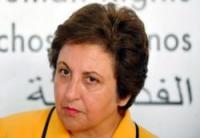
Shirin Ebadi, the Iranian Nobel Peace Laureate, is throwing her support behind the 39 Iranian political prisoners calling for an election boycott and the release of Iran’s opposition leaders from house arrest.

In a statement, Ebadi commends the daring of the 39 prisoners and, in response to their call for support, writes: “I urge all freedom seekers all over the world to make all efforts to secure the release of all political prisoners in Iran, specifically Zahra Rahnavard, MirHosein Mousavi and Mehdi Karroubi.”

She has also called upon all Iranians to boycott the elections. “I call on dear compatriots to boycott the sham elections for the 12th Islamic Parliament in March in order to once more announce to all the world that the Islamic Republic regime lacks legitimacy.”

Ebadi’s statement comes after 39 Iranian political prisoners issued a statement calling on all Iranians to boycott the March elections and persist in their demand for the release of Rahnavard, Mousavi and Karroubi, the Iranian opposition leaders who have been under house arrest since last February.

Mousavi and Karroubi challenged the legitimacy of Mahmoud Ahmadinejad’s victory in the 2009 elections and supported mass demonstrations protesting the alleged vote fraud. They were finally put under house arrest last February after they issued one last call to rally demonstrators in support of the uprisings in Arab countries last winter.

Death Sentences Upheld for Two Kurdish Political Prisoners


The Iranian Supreme Court has upheld the death sentences of two Kurdish political prisoners, local sources told the International Campaign for Human Rights in Iran. Prison authorities from Rajaee Shahr Prison allegedly told Zanyar Moradi and Loghman Moradi that their death sentences were upheld.

On 22 December 2010, Judge Salavati of Branch 15 of Tehran’s Revolutionary Court sentenced the two Kurdish prisoners to a public hanging on the charges of “moharebeh” (enmity with God) and “murder of the son of Marivan’s Friday Imam.”

The source told the Campaign that prison authorities informed the prisoners of this conviction last week. “During a short call to his family, Loghman Moradi confirmed this news, saying that he was shocked upon hearing the verdict, and considering that the notification of the decision was not in writing, he was hopeful that this was done only to intimidate him.”

The lawyer for the two political prisoners told the source that he was also surprised by the announcement, that he has told the families of the prisoners that he had not been formally served a court decision, and that he will be traveling to Tehran to follow up the case at the Supreme Court.

The two political prisoners had previously written letters alleging that they were tortured in prison and forced to make false confessions. (Link in Persian) On 2 February 2011, the two prisoners had submitted the appeal request for their death sentences to the Supreme Court.

In an earlier interview with the Campaign, Zanyar Moradi’s father Eqbal Moradi, a member of the Kurdish opposition group Komalah, said, “How can a 20-year-old kid be a murderer? My son was arrested 20 months ago and after 17 months he was accused of murder and terror. But the people of Mariwan and even the family of the victim know that Zanyar and a few other kids did not do this. All of Mariwan’s people and even the victim’s family know that the murderer in this recent case of murders is none other than the regime, and this has nothing to do with the kids,” he said.

Similarly, Loghman Moradi’s father Osman Moradi told the Campaign, “During the first nine months when [Osman] was at the Intelligence Office Prison, there was no murder charge in his case. Later, during the next seven months when he was held in prison, there was no such talk, either. But they returned him to the Intelligence Ministry again, and held him there for 25 days. He was tortured and abused to the point where he accepted the murder [charge]. I mean he accepted it in order to save himself from those conditions. It took them 17 months to take that confession from him,” Osman Moradi said.