Home Blog Page 509

Can Iran Seal Off the Strait of Hormoz; A Legal Perspective

By: Bahman Aghaee Diba

An Expert in International Law for Sea Affairs

Iran Briefing : The Strait of Hormoz is narrow sea passage which links the Gulf of Oman to the Persian Gulf. Recent threat rhetoric by Islamic Republic officials to close down the Strait of Hormoz in the event that the international community imposes sanction on its oil sector has raised serious concerns about the Strait of Hormoz, which is one of the most important straits for international naval activity. Has Iran practical ability and military capability to seal off the Strait of Hormoz? Under  what circumstances might Iran attempt to close down the Strait of Hormoz? What would be the possible reaction of the Arab States of the Persian Gulf? What would be the reaction of those countries which are dependent on the oil and gas exported through the Strait of Hormoz? Has Iran the right, as it is claimed by the Islamic Republic officials, to seal off the Strait of Hormoz in retaliation against countries which might impose sanction on its oil and gas?

From a military perspective, the Strait of Hormoz is a vital route for export and import activity for the regional countries, and it is a vital sea passage for those countries which are dependent on the energy supplies coming from the Persian Gulf.  Therefore, any attempt by Iran to seal off the Strait of Hormoz would be considered a clear act of war against oil exporting countries such as Saudi Arabia, Kuwait, Iraq, Bahrain, United Arab Emirates and Qatar, and by those countries which are dependent on the  Persian Gulf’s oil and gas such as western European countries, Japan and their allies.

Therefore, it sounds senseless, the  Iranian claim that they can close the Strait of Hormoz, which is at its narrowest 50km away from Iran’s coasts,  by sinking a few ships.

From a military point of view, Iran’s military strength, specially its naval and air forces, can in no way be compared to the military power of the countries in the Persian Gulf and beyond. Even the United Arab Emirates’ air force  is more up to date and  modern than that of Iran.

French forces have set up a special unit off the coasts of the Strait of Hormoz to ensure that the Strait of Hormoz remains open, and the U.S. 5th Fleet with its overwhelming air and naval capability has a commitment to keep the Strait of Hormoz unclosed.

For instance, in 1988, in retaliation for mining of oil-carrying tankers by Iran,  the American forces waged a battle against Iran, which later became known as Operation Praying Mantis, and seriously damaged Iranian naval forces within a span of few hours.

As a matter of fact, any attempt by Iran to close down the Strait of Hormoz or even to hinder the flow of energy supply from the Persian Gulf, which may take place through attacking international naval routes in order to explode oil and gas pipelines of other countries,  not only would be against all international laws but also would amount to the severest possible military reaction by the targeted countries. In such a situation, the pace of the events is so fast that makes it impossible for the international community  to find peaceful solution to such dispute.

From a legal viewpoint, those straits used for international naval activities, like the Strait of Hormoz, are subject to the “transit passage” provisions of the 1982 UN Convention on the Law of the Sea which facilitates use of the world’s straits.

According to the law of the treaties, the Iranian government, which is a signatory to the convention but has not yet ratified it, has a legal obligation to observe the provisions of the convention as long as it remains a signatory to the convention.

As a signatory to the convention, Iran has agreed that it fully observes the right to the “transit passage” through  the Strait of Hormoz of those countries  which have also signed the convention, and it has also accepted to respect the right of the so-called “innocent passage” of other countries in and through the strait.

Iranian officials have recently claimed that the passage of those countries trying to impose sanctions on Iran oil and gas cannot be considered as innocent, thus Iran has the legal right to prevent them from moving through the strait.

However, the following are the legal issues that Iran cannot ignore.

1-      Since the 1982 UN Convention on the Law of the Sea has been for years come into force, the transit passage through the straits which are being used for international naval activity has become part of the international common  law and Iran is legally obliged to respect it.

2-      The legal regime related to the innocent passage through the straits used for international navigation is dissimilar with the legal regime related to innocent passage through territorial waters, and the coastal states have no right to prevent other countries from moving through the straits.

3-      The Strait of Hormoz is divided into three parts. Iran’s territorial water (12 miles from Iran’s coasts), international water and Oman’s territorial water(12 miles from Oman’s coasts).   Iranian government cannot make any decision about other parts of the strait even if the decision is made for improving the shipping activities.

4-      Major part of the ship’s Traffic Separation Scheme (TSS),  which separates inbound from outbound traffic to reduce the risk of collision, is located on the Oman’s part of the Strait of Hormoz, and the Iranian government has no legal right to control or seal them off.

Above all, closing the Strait of Hormoz would be ultimately detrimental to Iran itself. Because Iran, like other coastal states of the Strait of Hormoz,  is highly dependent on  the strait  for exporting its oil as well as for importing petroleum products and goods  from other countries.

The Iranian government will close the Strait of Hormoz only when it sees no chance of survival, and such an act by Iran would definitely trigger a war in the Persian Gulf.
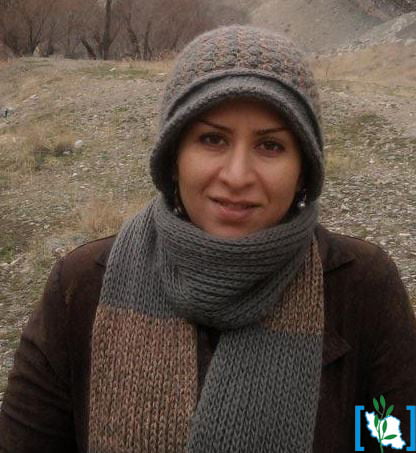
Journalist Fatemeh Kheradmand has been arrested

0


Journalist Fatemeh Kheradmand was arrested last night at her home and transferred to Evin prison.

Human Rights House of Iran _ She is the wife of journalist Massoud Lavasani, who was released from Evin prison on September 8th after enduring approximately two years behind bars.

According to Human Rights House of Iran, Iranian security agents, who introduced themselves as judicial agents, searched Kheradmand’s house before arresting her. During the inspection process at her home, the security agents confiscated Kheradmand’s personal items and computer. The reason for the arrest has not been announced.

Her husband Masoud Lavasani was arrested on September 26, 2009, and transferred to Evin prison. He was initially sentenced to eight and a half years in prison by the lower court, but the Appeals Court reduced the sentence to six years in prison. Eventually, the sentence was reduced to two years in prison. His sentence was issued by branch 26 of the Revolutionary Court, presided by Judge PirAbbasi.

Concern mounts over safety of detained opposition leader


Fatemeh Karroubi, the wife of detained opposition leader Mehdi Karroubi, has expressed concern over the safety of the building where her husband is being held captive.

Saham News reports that Fatemeh Karroubi told a group of political activists on Sunday: “The building adjacent to where Mehdi Karroubi is being held has been demolished, and while they are raking up a few floors, there is a possibility it could collapse into his building.”

Fatemeh Karroubi emphasized that the security forces are intentionally ignoring her warnings, adding: “Some people are concerned that this may be turning into a setup, which we hope is not true.”

Mehdi Karroubi, an opposition leader and one of the challengers of Mahmoud Ahmadinejad’s victory in the controversial 2009 presidential elections, has been under house arrest now for more than 300 days.

Fatemeh Karroubi says: “The government has taken a significant sum of money from the Karroubi family to put Mehdi Karroubi in an old dilapidated building under solitary confinement.”

Karroubi was first put under house arrest in his own apartment with his wife in February of 2011, but in August, he was transferred to a small one-bedroom apartment.

Fatemeh Karroubi, who was involved in political activity alongside her husband even before the establishment of the Islamic Republic, has criticized the treatment of political prisoners by the Islamic regime and repeatedly maintained that the former regime treated the opposition more humanely.

Fatemeh Karroubi said that ever since she relayed Mehdi Karroubi’s statement regarding the coming parliamentary elections, she has been denied further visits with her husband.

Last month, through his wife, Karroubi denounced the coming elections insisting they are a mere “show” and that the establishment has no regard for the public’s actual vote.

Iranian Judiciary Punishes Political Activist Asal Esmaeilzadeh with Prison Sentence

0


Yesterday morning, branch 26 of the Tehran Revolutionary Court sentenced political activist Asal Esmaeilzadeh to four months in prison and eight months *suspended imprisonment. Her charges are: “Propaganda against the regime” and “Gathering and Colluding…”. She is currently not imprisoned.

Esmaeilzadeh was recently arrested in Behesht Zahra cemetery along with activists Peyman Aref and Sharar Konoor Tabrizi under the charge of praying at Neda Agha Soltan’s grave site.  Esmaeilzadeh and Konoor Tabrizi were released after a few days on bail. Peyman Aref remained jailed until last month.

Esmaeilzadeh was also arrested by plainclothes agents in her home back in May 2011. She endured 31 days in solitary confinement in ward 209 of Evin prison. She was released on June 1, 2011 on a $100 thousand [USD] bail.

* A suspended imprisonment sentence means that the sentence will not be implemented, unless the person is found guilty on another charge. There is usually a time limit associated with the suspension.


Source

Top reformist says Supreme Leader’s son in charge of his case


Radio Zamaneh: Prominent reformist Mostafa Tajzadeh, who was jailed along with his wife in the crackdown on reformists following the controversial 2009 elections, says both their judicial cases are being directly handled by Mojtaba Khamenei, the son of Supreme Leader Ayatollah Khamenei.

“All the pressure forced upon me and my family is the direct will of Mojtaba Khamenei,” Tajzadeh says in a report on Norooz website, the news source of the Islamic Iran Participation Front. He added that the judiciary is not involved in processing their cases.

Mostafa Tajzadeh, a senior member of the Islamic Iran Participation Front (IIPF), was arrested in the June of 2009 after the reformists challenged the victory of Mahmoud Ahmadinejad with allegations of vote fraud. He was sentenced to six years in prison and a 10-year ban from political and media activities.

Fakhrosadat Mohtashamipour, Tajzadeh’s wife, was the head of the women’s branch of the IIPF. She was arrested in March of 2010, charged with participation in protests and sentenced to four years in jail. Her sentence has been suspended for five years.

Norooz reports that Mohtashamipour was arrested based on a report from the Revolutionary Guards and the Ministry of Intelligence.

She was charged with “organizing families of prisoners, creating disturbances, attending gathering of women reformists and families of political prisoners, rallying the public to join illegal gatherings to end the house arrest of the leaders of sedition [Iranian authorities refer to opposition leaders as leaders of sedition], referring to the officials of the Islamic Republic regime as dictator and oppressor and presenting disturbers as the oppressed.”

The sentence emphasizes that Mohtashamipour shows “no signs of remorse or regret for her actions;” however, “Islamic mercy is considered for the specific situation in which she has committed these crimes (namely the conviction of her husband) and given the fact that she has committed these acts moved by marital emotions and feelings, the court will suspend her imprisonment term for five years.”

After the re-election of Mahmoud Ahmadinejad in 2009, hundreds of political and civil activists were arrested and given stiff sentences. More than two and a half years after the events, the protests still continue as do arrests and persecutions.


Source

Iran announces arrest of “election disruptors”


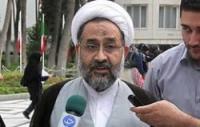
Iranian Intelligence Minister Heydar Moslehi has announced the arrest of several “election disruptors” in Tehran.

ISNA reports that on Sunday night, Moslehi said: “The detainees were in contact with people abroad through cyberspace and were arrested after the investigation of their activities was completed.”

Moslehi said the detainees were “trying to carry out U.S. plots against the ninth parliamentary election process through virtual and social networks” but he added, however, that they “were not a significant group capable of doing anything of consequence.”

Meanwhile, the Reporters Club, an offshoot of the Iranian state radio and television network, announced that four people have been arrested and charged with “building networks and establishing the mechanisms for acting against national security.”

The report indicated that “the detainees had received from foreigners advanced equipment to carry out secret communications in order to organize special cells to issue internet rallies and create disturbances in the country.”

The Reporters Club added that the detainees are charged with having links to several embassies and “anti-Revolutionary elements based in autonomous regions in the neighbouring countries.”

The names of the detainees have not been announced so far, but Iranian media have reported the arrest of Saeed Madani, a sociology scholar, and two journalists, Ehsan Hoshmandi and Fatemeh Kheradmand, in the past two days.

Iranian parliamentary elections are slated for March, and, given the mass demonstrations that followed the controversial 2009 elections, the government is wary of of another possible outbreak of protests.

Iran facing condemnation after sentencing US ‘spy’ to death


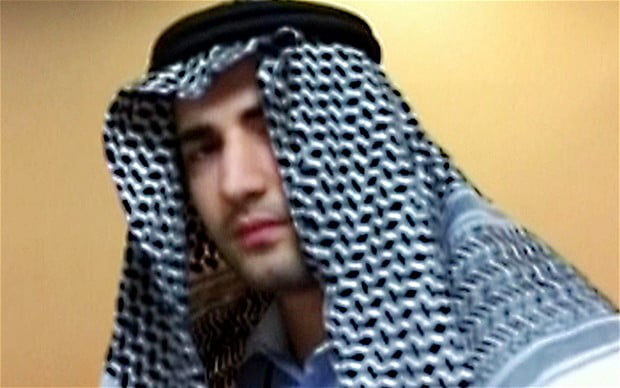
Iran faced worldwide censure after a court in Tehran sentenced an American former marine of Iranian descent to death on spying charges.

Amir Mirzai Hekmati was found guilty of “spreading corruption on earth and waging war against God”, a formulation routinely used against those to be considered enemies of the state and which carries a mandatory death sentence.

Hekmati, who is 28, was “sentenced to death for co-operating with a hostile nation, membership of the CIA and trying to implicate in terrorism,” a judge ruled.

The former marine received espionage training at US bases in Afghanistan and Iran, prosecutors said. Hekmati, who worked as a translator for the US army, was shown on state television last month confessing his crimes.

He also admitted to working for a CIA-backed company that produced computer games manipulating users into holding pro-American views.

The death sentence is the latest in a series of challenges Iran has mounted against the United States amid rising tensions over its nuclear programme.

Three Baha’i Citizens Arrested in Semnan

0


Baha’i citizen Erfan Ehsani has been arrested by the Intelligence agents and without a warrant.

According to the Human Rights House of Iran, he had been summoned several times recently and his request for a written warrant was followed by threats to him and his family.

Moreover, Edalat Firouzian and Faramarz Firouzian were arrested by security forces. They were transferred to an unknown location after their residence was searched.

Web Master & Blogger Vahid Asghri Sentenced to Death


HRANA News Agency – One month after his trial held at the 15th branch of the Revolutionary Court, the authorities have notified Vahid Asghri that a death sentence has been issued for him.

According to a report by Human Rights Watch in Kurdistan, Vahid Asghri, 25, was arrested on October 4, 2008 by plain clothes agents working for IRGC (the Army of the Guardians of the Islamic Revolution).  Judge Abolqasem Salvati presiding over the 15th branch of the Revolutionary Court has sentenced Vahid Asghri to death.

In February 2009, IRGC Cyber Police announced that Vahid Asghri and a few other web masters of Internet sites opposing Islam had been arrested.

Vahid Asghri and other accused individuals were physically and psychologically tortured while in custody and were forced to appear in televised confessions.  These sessions were broadcast in Iran prior to their trials.


Source

U.S. orders expulsion of Venezuelan consul for suspected links to Iranian plot

0


The United States has ordered the expulsion of Venezuela’s consul general in Miami amid reports linking the diplomat to an alleged Iranian plot to target sensitive U.S. facilities with cyber attacks, the U.S. State Department said Sunday.

The U.S. action comes as Iranian President Mahmoud Ahmadinejad was to kick off a Latin American tour in Caracas later Sunday.

The Venezuelan embassy in Washington was notified Friday that Livia Acosta Noguera, the consul general, had been declared persona non grata and had until Tuesday to leave the country, said State Department spokesman William Ostick.

“In accordance with Article 23 of the Vienna Convention on Consular Relations, the department declared Ms Livia Acosta Noguera, Venezuelan consul general to Miami, to be persona non grata. As such, she must depart the United States by January 10,” he said.

“We cannot comment on specific details behind the decision to declare Ms Acosta persona non grata at this time,” he added in a statement.

The State Department had said last month it was looking into “very disturbing” allegations that Acosta was a participant in an alleged Iranian plot to launch cyber-attacks on sensitive U.S. national security facilities.

The allegations were made in a documentary that aired on the Spanish-language television network Univision, which said Acosta was taped discussing the alleged plot with Mexican students who later sought asylum in the United States.

The contacts reportedly took place in 2007 while Acosta was serving at the Venezuelan embassy in Mexico City.

On December 12, a State Department spokesman said the department could not corroborate the Univision report, but said, “We’re looking into it and continue to assess what additional actions we might take.”

Venezuela’s President Hugo Chavez has long been a vociferous opponent of Washington, siding with Iran and Syria against US-led efforts to pressure Tehran over its nuclear program and Damascus on human rights abuses.

Ahmadinejad’s trip to Venezuela and three other leftist-ruled Latin American countries — Nicaragua, Ecuador and Cuba — comes amid spiking international tensions over Iran’s nuclear program.

A preliminary agreement by the European Union to embargo Iranian oil shipments has drawn Iranian threats to close the strategic Strait of Hormuz at the entrance of the Gulf if it does.

US Defense Secretary Leon Panetta, meanwhile, warned Sunday that the United States would not tolerate the closure of the strait and would respond to reopen it.

In October, the United States accused Tehran of plotting to hire Mexican drug traffickers to assassinate the Saudi ambassador to the United States, which Tehran dismissed as “baseless and unfounded.”