Home Blog Page 523

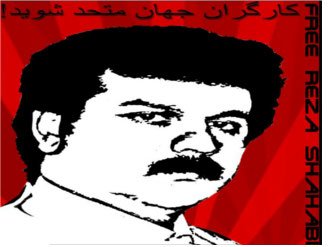
Reza Shahabi on Hunger Strike After 18 Months of Imprisonment

0


HRANA News Agency – On Tuesday, November 22, 2011, Reza Shahabi began his hunger strike to protest against 18 months of imprisonment and legal state of limbo. Reza Shahabi is a labor activist and the board member of SWTSBC, the Syndicate of Workers of Tehran and Suburbs Bus Company.

According to a report by Human Rights Activists News Agency (HRANA), Reza Shahabi was taken into temporary custody on June 12, 2010 and locked up in Evin Prison. Since then, he has been imprisoned indefinitely in a legal state of limbo.

Recently, during a phone conversation with his family, Reza Shahabi informed them that he no longer could bear the current conditions and would begin his hunger strike on Tuesday, November 22, 2011.

Reza Shahabi has begun his hunger strike while he is in very poor health. According to medical experts, due to the loss of cartilage between some of his spinal vertebral joints and excessive pressure applied to his spinal nerves, Reza Shahabi might lose total control over his left arm and leg. Furthermore, the labor activist suffers from extreme pain in his neck, waist and hands and is experiencing heart and kidney problems.

Given Reza Shahabi’s current medical condition, a hunger strike can cause further irreparable damage to his health.


Source

Mysterious explosions pose dilemma for Iranian leaders

0


The Washington Post – A massive blast at a missile base operated by Iran’s Revolutionary Guard Corps nearly two weeks ago was the latest in a series of mysterious incidents involving explosions at natural gas transport facilities, oil refineries and military bases — blasts that have caused dozens of deaths and damage to key infrastructure in the past two years.

Iranian officials said the Nov. 12 blast at the missile base was an “accident,” and they ruled out any sabotage organized by the United States and its regional allies. The explosion on the Shahid Modarres base near the city of Malard was so powerful that it shook the capital, Tehran, about 30 miles to the east.

Despite the official denial of foreign involvement in the latest blast, suspicions have been raised in Iran by what industry experts say is a fivefold increase in explosions at refineries and gas pipelines since 2010.

Explaining the increased number of industrial incidents is proving to be a predicament for Iranian leaders, who do not want to appear vulnerable at a time when Israeli leaders have been debating military intervention against Iran over its controversial nuclear program.

Officials have blamed industrial accidents for most the blasts, saying they were caused by such deficiencies as “bad welding” or “substandard manufacturing.” But media restrictions and the lack of independent investigations have made it hard to verify the claims.

One oil expert said that increasingly strict sanctions prohibiting Western companies from maintaining key installations in Iran could also be to blame.

“Now, many projects are finished by Iranian companies without observing safety standards,” said Reza Zandi, an Iranian journalist who specializes in energy issues.

“There is clearly an increase in incidents in recent years,” said Mohammad Abumohsen, an inspector of oil and gas pipelines.

At least 17 gas pipeline explosions have been reported since last year, compared with three in 2008 and 2009. At the same time, nearly a dozen major explosions have damaged refineries since 2010, but experts say it is complicated to determine the cause of such incidents.

In the United States, Republican presidential contenders have called for President Obama to start covert action against Iran because of its refusal to stop its uranium-enrichment program. U.S. officials suspect the program is aimed at producing fissile material for nuclear weapons. Iran insists that it wants only to make its own fuel for nuclear power plants.

Suspicions that covert action might already be underway were raised when four key gas pipelines exploded simultaneously in different locations in Qom Province in April. Lawmaker Parviz Sorouri told the semiofficial Mehr News Agency that the blasts were the work of “terrorists” and were “organized by the enemies of the Islamic Republic.”

Iran in recent years has improved its ability to hunt spies, using reviews of travel and expense records to round up Iranians suspected of selling information to U.S., British and Israeli intelligence services, the Associated Press reported Monday.

In May, Intelligence Minister Heidar Moslehi announced the arrest of 30 “CIA spies” who he said had been recruited to map out Iran’s energy infrastructure.

“One of their main objectives was carrying out sabotage activities,” Moslehi said, according to the semiofficial Fars News Agency.

Iran’s parliament launched an investigation into the blast at the missile site but did not issue any findings this week as promised. One lawmaker, Mohammad Kazem Hejazi, said revealing such information might give away secrets to the “enemy,” the Iranian Labor News Agency reported Tuesday.

“We are not ruling out sabotage in the Malard missile base,” said one source close to the Revolutionary Guards, speaking on condition of anonymity because of the sensitivity of the subject. “It is not impossible to bribe a single person into doing something bad.”

On Wednesday, an explosion rocked a stronghold in southern Lebanon of Iran’s regional ally, Hezbollah, which is widely believed to be supplied with Iranian missiles capable of hitting major urban centers in Israel. Hezbollah did not comment on the cause of the blast but denied that it occurred at one of the group’s arms depots, Beirut’s Daily Star newspaper reported.

Iran has accused the United States and Israel of organizing the assassinations of three nuclear scientists in Tehran since 2010. The government has also blamed both countries for a computer virus called “Stuxnet,” which President Mahmoud Ahmadinejad acknowledged had disabled centrifuges used to enrich uranium.

In a sign that relations between Iran and the West are further deteriorating, Iran’s parliament voted Wednesday to consider expelling the British ambassador to Tehran. The preliminary vote came after Britain on Tuesday joined the United States and Canada in adopting new financial sanctions against the Islamic Republic. If carried out, an expulsion could prompt other European countries to withdraw their ambassadors, diplomatic sources said.


Source

America’s Exit from Iraq: An Opportunity or Challenge for the Islamic Republic?

0

Hossein Alizadeh (46) former iran’s charge d’affairs in Helsinki,  was a career diplomat in the Iranian Foreign Ministry for 22 years. In protest to Islamic Republic repressive treatment to its innocent people, he resigned form his career  in September 2010 declaring his support for Iran’s Green Movement. He received a master’s degree in International Relations from the School of the Iranian Foreign Ministry. Alizadeh has published many books and articles before and after his defection. He speaks Persian, English and Arabic fluently.He  has recently written an open letter to the UN Human Rights Rapporteur in iran evaluating the Islamic Republic’s refusal to allow the Rapporteur enter Iran’s territory as an evidence on horrible and wide spread violation of human rights in Iran.His contact information is:[email protected]
Farsi Translation of the Article

Introduction

US President Barack Obama has announced that American military forces will leave Iraq by the end of this year. This means that the US will end its eight-year long presence in Iraq two months before the end of 2011.

Considering the Iraqi central government’s vulnerability, such a step will pose a big challenge for the Iraqi government, but what about for the Islamic Republic of Iran? Because of the Islamic Republic’s influence on Iraqi Shiites and part of the Iraqi government, does the US absence bring opportunity or challenge for the Islamic Republic?

Although the American absence in Iraq appears to be an opportunity for the Islamic Republic, this paper argues that it will be a challenge because of the militaristic approach of the IRGC which dominates relations between the Islamic Republic and Iraq. The changes after the US exits Iraq will severely exacerbate tensions between the Islamic Republic and Saudi Arabia—the Islamic Republic being blamed for the ever-intensifying instability in Iraq. This argument is elaborated below.

Iraq: The Islamic Republic’s Swamp
The Iraqi government is not single-minded (or unified), but c0mposed of different currents. Iraqi Shiite factions are very inclined to support Iran against accusations from Iraqi Sunni factions. Since the good and bad [developments] of the situation inside Iraq have been attributed to the US until now, the Islamic Republic will later be scrutinized as it has been overtly expanding its influence in Iraq.

Because Iran’s domestic economy is unstable—the rate of inflation, unemployment, and bureaucratic corruption has skyrocketed—the Islamic Republic must decrease its big assets in war-torn Iraq if it wants to further deepen its presence there. It’s obvious that payment for such big costs will come straight out of the Iranian people’s pockets, despite the fact that Iran can request billions of dollars worth of reimbursement from Iraq (held accountable for the eight year war in the 1980s). Not only has the Islamic Republic failed to claim its reimbursements from the war, but it will be obliged to fill the vacuum following the US exit from Iraq.

At the same time, it’s worthwhile to examine the first development after the US announced its exit—when the arrow of accusations was pointed towards Iran. Shortly after the US announcement, there were bombings in different places throughout Iraq on October 6, 10, and 13, cumulatively killing 60 people. A group called the Ansar al-Islam claimed responsibility for the bombings; one of the explosions targeted the Shiite district of al-Sadr. It’s interesting that some Western media sources stated simultaneously that the Ansar al-Islam is an Iran-backed terrorist network.

Given that the IRGC handled Iraq’s case from the very first day (after Saddam’s government collapsed, both Iranian ambassadors, Hossein Kazemi Qomi and Hassan Danaeifar, were selected from IRGC membership), Iraq’s internal developments after the US exit will undoubtedly go in such a way that similar explosions will threaten Iraq’s internal security and stability.

Although Iraqi Prime Minister Nouri al-Maliki thinks Saudi Arabia is behind the instability, his rival Iyad Alawi also considers Iran responsible for the instability. Therefore, a confrontation between Iran and Saudi Arabia will again happen. These two countries have also clashed over the Bahrain and Lebanon issues.

In a clear reference to what the Islamic Republic will do after the US exit from Iraq, US Secretary of State Hillary Clinton stated, “Iran would be badly miscalculating by taking advantage of the American military’s exit from Iraq.” The US Secretary of State’s statement testifies that America is not ignorant of Iran’s intention—but then why America is so determined to leave Iraq?

It is believed that Obama wants to achieve two goals in leaving Iraq. The first factor is that, as promised during his first presidential campain, Obama pledged to return the troops home. On the threshold of his second presidential campaign, Obama wants to show to the American people that he’s keeping his promise. More importantly, the responsibility for any future instability will be blamed on the most important country influential in Iraq.

Since the Islamic Republic is a Shiite (therefore sectarian) country, it will undeniably continue its sectarian approach after America’s exit from Iraq. We saw how Iran vehemently protested the crackdown on Shiites in Bahrain but remained silent about Assad’s crimes. With the Islamic Republic’s ideologically sectarian approach in Iraq and the IRGC’s military approach, Iraq will experience sectarian conflict similar to what was seen in Lebanon.

Therefore, the prospect of civil war in Iraq as a result of these sectarian conflicts is not far from consideration. In essence, this war will bear a heavy toll to the Islamic Republic and the Arab countries supporting Saudi Arabia’s challenge to the Islamic Republic’s sectarianism.

A Wounded Saudi Arabia
Saudi Arabia feels wounded about the instability going on its own Shiite regions and blames the Islamic Republic for it. In the contest to save the Al Khalifa’s power in Bahrain, Saudi Arabia has played along with the story about the Islamic Republic’s involvement in the assassination plot against the Saudi ambassador to the US. The US recently made an announcement about it and, at Saudi Arabia’s request, has referred this case to the UN Security Council. In the ongoing changes in the Middle East, Saudi Arabia will soon be a [key] actor when it uses its ability produce extra oil in order to hurt the Islamic Republic.

It is strongly believed that after the US exit from Iraq, the Islamic Republic will employ an IRGC-style militaristic approach. Both the IRGC and Saudi Arabia will view the Iraq of tomorrow as a scene of sectarian dispute—although the Islamic Republic’s domestic, regional and international problems will complicate its mission to challenge Saudi Arabia.

The Islamic Republic is now suffering from internal turmoil (power conflict), serious disputes with the EU and US, and increasing sanctions. Therefore, the militaristic approach (which the IRGC has imbued all parts of the Islamic Republic government) is this regime’s deadly poison. After the 2009 presidential elections, the IRGC’s militaristic approach used an iron fist and blind crackdown to respond to the people’s civil protests. Hence there’s no doubt that this same IRGC militaristic approach will be the Islamic Republic’s general tactic in Iraq after the US leaves.

Conclusion
The US exit from Iraq seems like an opportunity for the Islamic Republic to deepen its influence through the Iraqi Shiites; however, because of its sectarian approach on the one side and the IRGC militaristic approach on the other, it’s assessed that the Islamic Republic’s increased involvement in Iraq will be a challenge. Without the US, Iraq could become a swamp for the Islamic Republic.

Hossein Alizadeh

October 31, 2011

[email protected]

Azeri journalist dies after stabbing

0


Azerbaijani writer and journalist Rafiq Tagi has died four days after being stabbed several times in a late-night attack.

Tagi, a noted critic of the Azerbaijani government, neighbouring Iran and political Islam, died in the Baku hospital where he was taken following the 19 November attack.

After surgery 61-year-old Tagi had been reported to be in satisfactory condition. An hour before his death he was filmed telling a reporter that he was recovering well.

Some his friends had complained about a lack of security at the hospital and urged the government to take measures, but Tagi said he did not feel in danger.

Tagi was stabbed seven times outside his Baku home. He thought the attack might have been in retaliation for his opinion piece published earlier this month that criticised the Iranian government.

The Iranian embassy in Azerbaijan countered that the claims were groundless.

In May 2007, Tagi was sentenced to prison for inciting hatred with an article criticising Islam. Following international pressure, President Ilham Aliyev’s government granted him amnesty later that year.


Source

Baha’i Citizen Farhood Eshtiyagh Incarcerated for the Past 5 Months

0


In his 5th month of detention, Baha’i citizen Farhood Eshtiyagh is still suffering from heart problems.

Farhood Eshtiyagh has been in prison since June without an arrest warrant. According to the Human Rights House of Iran, he is held in Mashahd prison after 4.5 months of detention.

he is suffering from heart problems and Guuillain-Barre Syndrome. The judicial authorities prevent his release.

In October, his arrest warrant was extended twice. He was granted prison visits twice during this time and his children are awaiting his release. His family has traveled to Mashhad several times in order to follow up on him.


Source

Iran rules out sabotage in explosion

0


Iran’s Defence Minister said today that investigators have ruled out sabotage as the cause of a recent explosion at a Revolutionary Guards ammunition depot.

The Fars News Agency reports that Commander Ahmad Vahidi, Iran’s Defence Minister, said: “The report of this incident was properly announced by the Revolutionary Guards, and the investigations confirm what was contained in the earlier report.”

The Guards public relations office had announced that the explosion occurred while ammunition was being moved.

Time magazine, however, published a report after the explosion, claiming the Israeli intelligence group Mossad was involved in the incident. The report cited a U.S. security official, who predicted more such incidents will occur in Iran at the hands of Mossad.

Israeli Defence Minister Ehud Barak has denied any prior knowledge of the explosion but did declare that he welcomed the incident and hoped more would follow.

The explosion left 17 people dead, including Brigadier General Tehrani Moghaddam, whom the Guards refer to as the founder of their artillery and missile program.


Source

Nine Political Prisoners on Hunger Strike in Yazd Prison

0


HRANA News Agency – On Tuesday, November 22, 2011, nine political prisoners in Yazd Prison began their hunger strike to protest against being locked up together with ordinary inmates and also the inappropriate behavior of prison officials towards political prisoners.

Norooz News has released the names of political prisoners who are currently on hunger strike in Yazd Prison:

1. Khales Zamani (son of Yusuf)
2. Abdolsaleh Osmani (son of Solieman)
3. Abdolrahman Jangali (son of Abdullah)
4. Ali Salehi (son of Mohammad)
5. Omar Imami (son of Hassan)
6. Mohammad Moradi (son of Abdullah)
7. Hani Bani (son of Sal and an Arab)
8. Rostam Arkia
9. Vali Doroodi (son of Anvar)


Source

Dutch favour tougher sanctions against Iran

0


Reuters – The Netherlands wants to extend the scope of European sanctions against Iran to include measures against its central bank to stop certain types of money flows, the Dutch foreign minister said on Wednesday.

Uri Rosenthal said Iran’s cash and gold transactions that bypass existing sanctions should be stopped, key government officials should be put on a sanctions list and new sanctions for Iran’s oil and gas sector should be considered.

The European agreed in principle on Tuesday to sanction some 200 Iranian people, companies and organisations, adding to measures imposed by the United States, Britain and Canada due to suspicions that Iran is trying to develop nuclear weapons.

Iran dismissed the latest raft of sanctions, saying such steps would only intensify Iranian popular support for a nuclear programme it insists is solely for peaceful purposes.

“The minister is very worried about Iran’s role in the region. In addition, the IAEA (International Atomic Energy Agency) is very worried the country is engaging in operations which are needed to make an atomic bomb,” Rosenthal’s ministry said in a statement.

“The (European ) council of ministers should take on Dec. 1 the decision to take these sanctions which should hit the Iranian government in the heart,” the ministry said.


Source

Rojin Mohammadi, Iranian student and blogger arrested

0


CHRR – Rojin Mohammadi, a medical student at Manila Medical School of Philippines got arrested upon her return to Iran and was transferred to Evin. Ms Rojin Mohammadi flew from Istanbul, Turkey to Iran on Aban 23, 1390 (24 /10 / 2011) and she was arrested and transferred to Evin but was released on bail after spending 24 hours at Evin Prison.

Five days later, Her father’s house was raided by security forces in Kermanshah. ( a city in West Iran) It was proclaimed by the security forces that “They came there to arrest Rojin Mohammadi”.

She was summoned to District Attorney’s office at Shahid Moghaddasi of Evin on Aban 30, 1390.

Upon her interrogation for three days and confiscation of her laptop, she was handed over to Evin authorities. So far, charges against her are unknown and it’s not clear, where she is housed.


Source

Jailed reporter criticizes embattled IRNA chief

0


While international human rights groups are condemning the attacks against Ali Akbar Javanfekr, the presidential press advisor and head of the Islamic Republic News Agency (IRNA), a former IRNA reporter has written a letter from prison to remind the public that not long ago, journalists like him received similar treatment from the very IRNA chief under attack today.

Siamak Ghaderi writes of the “inhumane” treatment he received from intelligence officials, who carried a letter from Javanfekr accusing him of being “anti-regime and anti-Velayat Faqih,” similar to the allegations reportedly now levelled against Javanfekr.

Ghaderi accuses Javanfekr and his allies of “power mongering and amassing wealth” and he criticizes the economic and social polices of the Ahmadinejad administration.

Javanfekr has been using his recent media appearances to denounce the prison term he’s received from the judiciary. He has also criticized the judiciary’s treatment of his allies, especially Mohammad Sharif Malekzadeh, another Ahmadinejad supporter. Malekzadeh was dismissed from the Foreign Ministry under pressure from the judiciary and is currently in jail, charged with financial fraud.

Javanfekr has spoken out against Malekzadeh’s solitary confinement, saying that his family’s inability to visit him in prison led to his wife’s miscarriage.

Gahderi reminds Javanfekr that the Islamic Republic jails are full of prisoners receiving similar or worse treatments. He criticizes Javanfekr for failing to speak out against the injustices of the judicial system prior to his own entanglement with it.

Ghaderi was arrested in August of 2010 at his home and has been sentenced to three years in prison for participating in gatherings and reporting on them. He also has to pay a fine of one million rials for describing the government as “illegitimate.”


Source