Home Blog Page 544

480 Prisoners Hanged From October 2010 to October 2011


HRANA News Agency – The Statistics and Publications Unit of Human Rights Activists in Iran has reported that from October 2010 to October 2011, 480 individuals charged with various crimes have been hanged in Iran. During the same period of time, there have been 641 prisoners sentenced to death and 46 individuals hanged in public.

According to a report by Human Rights Activists News Agency (HRANA), the majority of prisoners who received the death penalty were charged with drug related crimes. It is also noteworthy that Iranian Judiciary Branch neither officially announces the majority of death sentences when they are issued nor the time when they are carried out.

Since the beginning of 2011, 478 individuals have been sentenced to die, and the death penalties for 422 of these prisoners have been carried out. If there are no more hangings in the remaining days of 2011, the number of hanging in the current year will be 22% less than last year.

Analyzing the data further, the Statistics and Publications Unit has reported that since the beginning of the current Persian year (March 2011), 442 individuals have been sentenced to die, and 253 prisoners have been hanged. Amongst those executed, 39 individuals were hanged in public. In comparison to the same period of time last year, executions have increased 45%.

During the last twelve months, the relative frequency of death sentences carried out is mostly related to narcotics, murder, rape and theft in the order listed. Amongst those executed, there were 12 women.Furthermore, the majority of drug related death penalties have been issued in eastern provinces of Iran where narcotics are smuggled into the country from Afghanistan.
 

Source

Reformists say general boycott of elections looms large


The Islamic Iran Participation Front, a reformist party, says: “Boycotting the elections has become a principle for the people.”

The Norooz website reports that the Participation Front attributes the people’s disregard for the elections to “the coup d’etat of 2009.”

The opposition in Iran often refers to the presidential election of 2009, in which Mahmoud Ahmadinejad was deemed the victor, as a coup.

They maintain that the ballot was rigged in order to prevent the election of MirHosein Mousavi and Mehdi Karroubi, the reformist candidates. Mousavi and Karroubi challenged the results, and popular protests rocked the country. But the government responded with a violent crackdown on protesters and, finally, the house arrest of Mousavi and Karroubi, which has completely cut them off from the outside world and has so far silenced the protests.

However, the question of participating in the coming parliamentary elections now looms large in the Islamic Republic’s political arena.

Mohammad Khatami, a former president and another senior reformist figure, has said reformists should participate in the elections only if all political prisoners are released, the parties and media are allowed freedom of activity and elections are free and transparent.

The Islamic Iran Participation Front supports the conditions proposed by Khatami and urged the government to end “the politics of oppression, imprisonment and house arrests” and establish “an open political atmosphere.”


Source

Iran: 14 new suspects arrested in $2.6b financial fraud case

0


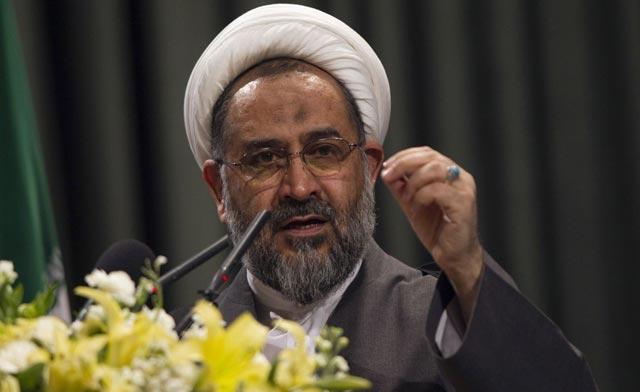
Fourteen new suspects have been arrested in connection with the recent $2.6 billion financial fraud case, Judiciary spokesman Gholam Hossein Mohseni-Ejei has announced.

Ejei, who was assigned on September 15 to investigate the fraud case, made the remarks at a press conference in Tehran on Monday.

“Over the past three days, 20 people were summoned in connection with the recent economic corruption case and were interrogated, and 14 of them were placed in temporary detention,” said Ejei, who is also the national prosecutor general.

A number of bank managers are among those arrested, he added.

He also said, “About two weeks ago, 22 people, who were involved in the case, were interrogated, and a number of these people are being held in detention, and some have been released on bail.”

Ejei also announced that a number of people who were involved in the case have been banned from leaving the country.

Elsewhere in his remarks, Ejei said that the Judiciary is “not under any political pressure.”

The most massive financial fraud case in the history of Iran has triggered a wave of resignations and dismissals of the banking officials.


Source

Iranian broadcaster reacts to BBC film

0


An Iranian official claims the film about Supreme Leader Ayatollah Khamenei, which aired on the BBC, has become “a promotion of his thoughts and sayings.”

The Mehr News Agency reports that Ezzatollah Zarghami, the head of Iran’s National Broadcasting Seda va Sima, told a media gathering on Tuesday: “The enemies think they can put the leader of the Revolution in a bad light by making documentaries about him, while in fact they became inadvertently a promoter of his thoughts and statements and showed his superiority.”

Persian BBC recently aired a documentary about Iran’s Supreme Leader Ayatollah Khamenei, which aims to delineate his political report card. Iranian authorities blocked the satellite airing of the film and then arrested six documentary makers in Iran, charging them with “collaboration with the BBC.”

While two of the filmmakers have been released, the other four remain in custody, and Iranian authorities have since announced that any collaboration with the BBC is illegal for Iranians.

The BBC, on the other hand, has denied having any collaborators or employees in Iran.


Source

Iranian lashed 74 times for ‘insult’ to Ahmadinejad

0


The Guardian – Activist Peyman Aref is whipped hours before release from one-year jail sentence in ‘unprecedented’ punishment

An Iranian student activist has been lashed 74 times for insulting President Mahmoud Ahmadinejad.

Peyman Aref, a student of political science at Tehran University, was sentenced in March 2010 to a year in jail after being found guilty of propaganda against the regime for speaking to foreign media.

Aref, who was initially arrested in the aftermath of Iran‘s disputed presidential elections in 2009, was also sentenced to 74 lashes for writing an “insulting” letter to Ahmadinejad and given a lifetime ban on working as a journalist or membership of any political parties.

His jail sentence came to an end on Sunday but, hours before his release from Tehran’s notorious Evin prison, Aref was told the lashing would be carried out.

A masked prison guard carried out the lashing in presence of Aref’s wife and officials from Iran’s judiciary. News of the lashing come only a few weeks after Somayeh Tohidlou, a female Iranian blogger and campaigner for former presidential candidate Mir Hossein Mousavi, was sentenced to a “symbolic” lashing for the same crime.

Unlike Tohidlou’s symbolic punishment – designed to humiliate rather than harm – Aref was indeed whipped. Pictures taken after his release show his bloodied back covered in wounds.

“Lashing people sentenced to various charges such as those caught drinking alcohol is common in Iran but political activists are usually lashed for ambiguous charges such as desecrating Islam or prophets,” said an Iranian journalist based in Tehran who asked not to be named. “Lashing Aref for insulting Ahmadinejad is shocking and unprecedented.”

In a letter to the president during his 2009 election campaign, Aref attacked Ahmadinejad for his crackdown on students who had been politically active at university and barred from continuing with their studies.

Undergraduates and students who had criticised the government were given up to three “penalty points”, according to the potential threat they were said to pose. Aref was among the “three-starred”MA students who were not not allowed to continue their studies. About 150 were starred.

Speaking to the website Rahesabz, Aref said after his release: “Whenever Ahmadinejad goes to New York [for UN general assembly], he boasts that Iran is the world’s freest country but I was brutally flogged in my country for insulting him.”

He added: “[My crime] was that I wrote an open letter to Ahmadinejad and reminded him of what he did to the universities.” Authorities apparently have taken offence because Aref refused to begin his letter with the formal greeting “Salam” as a sign of protest. Iran’s online community reacted with shock to Aref’s lashing with many people sharing pictures of his back covered in blood on social networking websites.

In a separate incident in Tehran last week, four journalists were arrested. They have been identified as Ali Akarami, Mehdi Afsharnik, Mohmmad Heydari and Mohsen Hakimi

Iran’s embassy in London could not be reached on Sunday for comment.


Source

Iranian actress sentenced to prison and lashings


Marzieh Vafamehr, an Iranian filmmaker and actress who has been detained since last July for acting in the film My Tehran for Sale, has been sentenced to one year in jail and 90 lashes.

The Kaleme opposition website reports that Vafamehr’s lawyer has appealed the decision, and the provincial appellate court is now reviewing the case.

My Tehran for Sale, a film by exiled Iranian poet and filmmaker Geranaz Mousavi, was made in Iran as a university project.

The film depicts the life of a young Iranian artist living on her own in Tehran and later deciding to leave Iran after meeting a young Iranian man who has recently returned from Australia. The film deals with various social problems faced by the young woman. Vafamehr appears in certain parts of the film with a shaved head and no head scarf.

Vafamehr is married to the prominent Iranian filmmaker Nasser Taghvayi, who previously announced that all the people involved in making the film have been released except his wife.


Source

Azerbaijani activists given jail term


Fifteen Iranian activists in Azerbaijan province have been sentenced to four months in prison plus a 20-month suspended jail term.

The Association for the Defence of Azerbaijani Political Prisoners reports that the activists were arrested at a dinner gathering in Tabriz on August 24, during the month of Ramadan, and charged with “assembly with the intention to commit a crime against national security.”

The report adds that the evidence against the detainees is their participation in the Eftar dinner and their discussions about the protests organized around the drying of Lake Oroumiyeh.

The association reports that the activists were tried behind closed doors, adding that “some of the detainees were subjected to torture [during the investigation] and basically were denied the right to see their family or their defence attorney.”

The report indicates that the sentence has already been approved by Azerbaijan’s appellate court.

Iranian authorities arrested scores of Azerbaijani activists this summer during protests slamming government inaction in the face of the rapidly falling water level in Lake Oroumiyeh. The protests intensified after Parliament voted down a plan to redirect water from the Aras River to the lake.

Environmental experts have blamed the drying on falling precipitation levels and the proliferation of dams on the waters that feed the lake.

In September, the government formed a parliamentary commission that will work with the ministry of energy to find the most effective plan to save the lake. It also promised a large budget to fund the solution.


Source

Women murdered in Qarchak prison


The clerical regime raided Gohardasht prison for the second time this week beating the prisoners brutally.

In this brutal assault that took place on Thursday October 6, 2011, the prisoners were beaten brutally and taken to the prison’s yard where they were held for hours under the hot sun.

Simultaneously, the guards inspected the prison cells and destroyed or stole the prisoners belongings.

More than 40 prison guards with dangerous trained dogs and under the guidance of Khadam, the prison’s deputy, and Faraji, the prison’s intelligence chief, were involved in this inhuman attack.

In addition, a female prisoner named Malihe Mashhadi, was killed in Qarchak prison in Varamin in a heinous murder by the criminal gangs who are controlled and guided by the prison administrators.


Source

Mokhtar Asadi Suspended from Teaching in Kurdistan

0


HRANA News Agency – Although the new school year began more than two weeks ago in Iran, Mokhtar Asadi is still forbidden to teach in any schools throughout Kurdistan. Mokhtar Asadi is a member of Teachers’ Union of Kurdistan and a human rights activist.

According to a report by Human Rights Activists News Agency (HRANA), the Department of Education in Kurdistan Province has prevented any schools from accepting Mokhtar Asadi’s teaching credentials. As a result, he remains in a state of limbo and suspended indefinitely.

The Ministry of Education and the Department of Education in Alburz Province have issued several letters to ask the officials in Kurdistan to allow Mokhtar Asadi to teach in Sanandaj. Teachers throughout the city of Sanandaj have signed a petition demanding to restore Mokhtar Asadi to his teaching post in Sanandaj.The petition has been submitted to the director of Kurdistan’s Department of Education, Khosro Saki, while more signatures are being collected.

Mokhtar Asadi holds a Masters degree in Sociology from Tehran University and is a social and human rights activist. In the last few years, he was dismissed from his teaching position for several months and was exiled for years. In 2010, he was arrested and locked up in solitary confinement for months in Rajai-Shahr Prison and then Ward 209 of Evin but was eventually released on bail.


Source

EU targets three Iranian government ministers in new set of sanctions

0


Three Iranian government ministers are on a list of 29 people targeted by new European Union sanctions, diplomatic sources told AFP on Monday.

The present ministers for intelligence (secret services), justice and culture are joined by a former interior minister as well as regional governors, prosecutors and prison directors, the sources added.

The sanctions will take effect on Tuesday when they are published in the EU’s legal log, the Official Journal.

EU foreign ministers signed off the Iranian travel bans and asset freezes, alongside other sanctions on Belarus in Luxembourg on Monday.

They follow a previous wave of restrictive measures in March against 32 Iranians, as well as plans to hit the Commercial Bank of Syria, targeted by a U.S. assets freeze in August, according to diplomats.

Heydar Moslehi, intelligence minister, is responsible for the infamous Evin prison’s torture ward, section 209.

Moslehi stands accused of ordering arbitrary detentions and persecution of opposition figures.

Culture Minister Mohammad Hosseini is held responsible for press censorship as well as the arrests of journalists and artists, the same sources said.

Justice Minister Seyyed Morteza Bakhtiair is said to have harassed prominent Iranians living abroad.

Former interior minister Sadeq Mahsouli and the head of the Iranian police’s computer crimes squad are also on the list, for investigations into opposition figures using the Internet.

In Belarus, where President Alexander Lukashenko has thrown hundreds of opponents behind bars, four of 16 people blacklisted are believed to be involved in a court case against the head of a top human rights group, Ales Beliatsky, that has sparked global outrage and calls for his release.

The 27-nation bloc last month banned the delivery to Syria’s central bank of bank-notes and coins produced in the EU in a seventh round of sanctions designed to step up economic pressure on President Bashar al-Assad’s regime.

The last round also included a ban on European firms making new investments in Syria’s oil industry, biting further at Assad’s regime after an earlier ban on imports of Syrian crude to Europe.

Europe buys 95 percent of Syria’s oil exports, providing the regime with one third of its hard currency earnings.

The sanctions against Syria come on the heels of growing irritation against Russia and China in the EU and the United States, for their veto of a U.N. resolution against the Syrian regime’s unrelenting crackdown on protests.


Source