Home Blog Page 545

Why Can’t She See Her Lawyer and Family? Asks Imprisoned Film Producer’s Sister


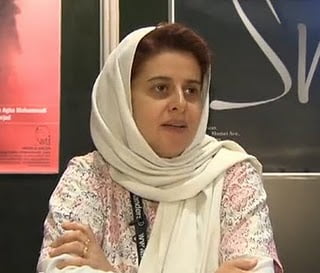
Katayoun Shahabi, a film distributor and producer who was arrested 20 days ago on the charge of cooperating with the BBC Persian Service along with four other documentary filmmakers, still does not have permission to see her lawyer or her family. In an interview with the International Campaign for Human Rights in Iran, Kamnoush Shahabi, Katayoun Shahabi’s sister, stated “we neither know exactly whom we’re dealing with, nor do we know about their conditions … My sister has been in detention for the past 20 days, but no one has been able to see her yet, not even her lawyer. She has only been allowed to call home three times, each time emphasizing that she is only allowed to talk to our mother. Also, my sister has said that she is alone, which means that she is spending time in solitary confinement,” added Kamnoush Shahabi.

Kamnoush Shahabi, a resident of Canada, also spoke about her sister’s recent remarks regarding her treatment in prison. “In her last phone call, my sister said that the authorities have been treating her well, but we are worried. Unless we see her, we won’t be certain whether she is forced to say those things or their treatment of her has really been good,” she told the Campaign.

“The prison authorities have told her husband that my sister and the rest of the documentary filmmakers were arrested following a complaint by a few plaintiffs, one of which is the Islamic Republic of Iran Broadcasting,” said Kamnoush Shahabi, adding that their family has been trying to secure her sister’s release.

“Apparently, she was arrested for selling one or two films to BBC. My sister, who is an international film distributor, had permission from the film producers to sell the two Iranian films, which were produced many years ago by others and had won awards in different film festivals … my sister’s job is selling films,” said Kamnoush Shahabi.

“Assuming these people are guilty, why don’t they have the right to see their lawyers? Why can’t their families see them? If this happened anywhere else in the world, not only would they have rights, but they would also remain free and would appear in court for a review of the charges levied against them, and their lawyers would follow up their court cases. But unfortunately all the doors are closed to them. I don’t really know with whom we are dealing,” said Kamnoush Shahabi.

20 days ago, on 18 September, Katayoun Shahabi was arrested along with Naser Saffarian, Mojtaba Mir Tahmaseb, Hadi Afarideh, and Mohsen Shahrnazdar. Two days after their arrests, the Ministry of Intelligence’s public relations office published a statement levying heavy charges against them, including “fulfilling the needs of the intelligence service of England,” “providing propaganda for psychological war for Iran’s enemies,” and “money laundering.” According to this statement, the filmmakers were performing their unpatriotic missions that were assigned to them. One day before publication of this statement, Sadeq Saba, head of BBC Persian Television, denied any collaboration between these people and the BBC network.


Source

Several Reporters Arrested in Shiraz

0


Ali Nazamolmolki, Farzad Sadri, Saeid Nazari and Hakhamanesh Younesi are among the reporters arrested by Intelligence Ministry and transferred to the No.100 Detention Center.

According to the Human Rights House of Iran, their families have been threatened by the security forces not to contact the media.


Source

ILNA Journalist in Detention for 20 Days

0


Amir Ali Allamehzadeh, journalist and former International Desk Editor of ILNA News Agency, remains in detention since his arrest by plainclothes forces 20 days ago. No security organization has yet accepted responsibility for his arrest. Allamehzadeh was arrested by three plainclothes forces at his father’s home in Tehran on Sunday, 18 September. Though judicial authorities have not revealed the detention location of the journalist, a source told the International Campaign for Human Rights in Iran that he is detained inside IRGC’s Ward 2-A at Evin Prison.

At the time of his arrest, plainclothes forces took several personal items belonging to Allamehzadeh and his family, including several computer hard disks, cell phones, and his handwritten notes. According to the source, the warrant presented at the time of Allamehzadeh’s arrest was issued by Branch 14 of the Government Employees and Media Court. This court is responsible for reviewing media crimes.

During the past 20 days, Allamehzadeh has only been allowed to contact his family once for under two minutes. According to sources close to the journalist, he suffers from spinal disk problems and his family is concerned about his health condition.

According to the source, the journalist’s family has been unable to visit with him, despite their repeated trips to Evin Prison. Considering Allamehzadeh’s warrant came from the Media Court, it appears that he was arrested for his journalistic activities.


Source

Political prisoner and mother on the verge of blindness in Evin prison


Due to prevention of medical care by the Iranian regime, Kobra Amir-Khizi, a political prisoner and a relative of Ashraf residents, is on the verge of losing her eyesight.

Kobra Amir-Khizi, who was arrested during Iranian national uprising in charge of having a sister and two children in Ashraf, is imprisoned in Evin prison.

She has serious eye injury due to torture and pressure by the executioners of the Iranian regime and according to doctors she will loose her eye sight completely if she is not treated.

Despite that, by the order of Iranian regime’s prosecutor, Jafari Dowlatabadi, she is not to be transferred to a hospital outside prison or receive any medical care.

Kobra Amir-Khizi was arrested in January 2009 at Airport when she was leaving the country legally to visit her children in Ashraf.

In prison and under torture, because of the strikes by cable to her head and face by the  regime’s executioners, her vision problem arose. Due to the lack and prevention of treatment, she is in danger of loosing her eyesight.


Source

Iranian regime hangs 8 prisoners in secret mass execution in Rasht Prison


According to reports, eight prisoners in the Lakan Prison in Rasht were hanged.

On Monday, October 3, eight prisoners were hanged in a secret mass execution in the Lakan Prison in Rasht. One of the prisoners was identified as Gholamhossein Akhavan. On Thursday September 30, 12 prisoners were transferred to solitary cells in the Lakan Prison. Eight of these prisoners were hanged yesterday but there are no reports on the fate of the other four. Only a small percent of the numbers of the new wave of executions that has started from a few weeks ago is announced by state run media. The families of those executed have said that the numbers of executions are much higher than official announcements.


Source

26 Kurdish Prisoners of Conscience on Hunger Strike in Rajai-Shahr

0


HRANA News Agency – Twenty six Kurdish prisoners of conscience have gone on hunger strike in Rajai-Shahr Prison located in the city of Karaj.

According to a report by Human Rights Activists News Agency (HRANA), twenty six members of Kurdish ethnic minority locked up in Ward 2 of Rajai-Shahr Prison have begun an open-ended hunger strike to protest against violations of their rights and discriminations imposed on them by prison officials.

It has been reported that a few days ago, Ward 2’s warden, Mr. Soltani, encouraged several regular prisoners to instigate a brawl with one of the Kurdish prisoners of conscience, Hesam Mohammadi. After the fight broke out, Hesam Mohammadi was first transferred to the quarantine ward and then to another cell block in Rajai-Shahr Prison. However, no disciplinary action was taken against regular prisoners who initiated the fight.

Since there have been other instances of such discriminations against Kurdish prisoners of conscience in the past, Hesam Mohammadi’s cellmates decided to react this time and protested against repeated acts of bigotry towards Kurds. However, prison officials refused to address inmates’ concerns and remained indifferent and silent.

Amongst Kurdish prisoners locked up in Ward 2 of Rajai-Shahr Prison, there are Sunni prisoners of conscience such as Mamousta Mohammad Baraie, Abdullah Khosrozadeh, Hossein Heydari, Sobhan Ahmadzadeh, Heyman Mahmoud Takhti and a number of other Kurdish Sunni activists. These prisoners have been denied the right to be kept in the cell block allocated to inmates arrested for political reasons.Additionally, they have not been permitted to use furlough, have regular prison visits with their families or meet with Iranian judicial authorities such as a representative from the prosecutor’s office in Tehran.


Source

Boroujerdi Suffers Heart Attack and Pulmonary Edema


Tehran, 1st October 2011– More than 5 years after Seyyed Hossein Kazemeini Boroujerdi was incarcerated for being a steadfast advocate of strict adherence to the United Nations Charter and the Universal Declaration of Human Rights, he has suffered a severe heart attack, which has led to a pulmonary edema.  Intelligence authorities have rejected all demands by Evin prison officials for him to be treated at a properly equipped medical facility.

For over 1825 consecutive days, Kazemeini Boroujerdi has been denied the freedom for advocating separation of religion from state in Iran, and peace in the Middle East. As importantly he has called for Iran to abide by all its international obligations.

He was brutally arrested at his home by the Iranian state’s feared Law Enforcement Forces (LEF), on 8th October 2006.  Alongside him, those arrested included members of his family and hundreds of supporters who were acting as human shields.  The LEF deployed handguns, tear gas, batons and anti crowd control vehicles to attack the residence and the surrounding streets, beat up, maim and transport the arrested to Section 209 of Evin prison where they were brutishly questioned and held in solitary confinement.  Since then Kazemeini Boroujerdi has been subjected to the most inhumane forms of physical and psychological torture to force him into signing a statement renouncing his beliefs.

To date not one responsible state official has issued any written report or statement explaining the legal case against Kazemeini Boroujerdi and justifying his inhumane treatment.  Inside Iran, audiences have been subjected to total news blackout regarding his situation.

Ayatollah Khamenei, as Supreme Leader and Head of the Special Court of Clergy, has moral, judicial and constitutional duty to provide a written explanation or set him free. Iran is also a state party to the International Covenant on Civil and Political Rights (ICCPR). Article 18 of the ICCPR sets out the right to freedom of thought, conscience and religion, including “the freedom to have or adopt a religion or belief of choice”.

We call upon all supporters of human rights especially the Human Rights Watch and Amnesty International and all European and other countries parliamentarians as well as the United Nations to issue individual all the statements pressuring the Iranian government to free Mr Kazemeini Boroujerdi alongside all Prisoners of Conscience and political prisoners.

Signature:

Shahriar Ahy, ScD. Social Science, MIT University, USA
Mahvash Alasvandi Bakhtiari, mother of Mohammad & Abdollah Fathi, Member of Campaign against Execution in Iran
Hossein Alizadeh, Former deputy ambassador of Islamic Republic Embassy, Finland
Nazanin Ansari, Journalist, Kayhan Publishing, London
Jamshid Anvar, Former Director of UNCR, Switzerland
Akbar Atri, Leading Proponent of Democracy and Human Rights in Iran, Member of Iranian Students for Democracy and Human Rights, USA
Sanya Avazpour Member of Amnesty International, US
Victoria Azad, Member of Amnesty International, Sweden
Potkin Azarmehr, Secular Pro-Democracy Activist, London
Dr. Hossein Bagerzadeh, Writer & Human Rights Activist
Dr. Nasrin Basiiri, Writer & Human Rights Activist
Tahirih Danesh, Independent Human Rights Researcher
Dr. Abdul-Sattar Doushoki, Centre For Balochistan Studies, UK
Dr. Amir Farshad Ebrahimi, Ph.D in Human rights, Online & Broadcast Journalist Goftaniha
Dr. Thamar Eilam, PhD in (Iranian) Linguistics, Researcher in the Hebrew University of Jerusalem, Teacher in Department of Hebrew Language and Linguistics in Oranim College and also Hamburg University, Israel
Dr.Iman Forotan, Spokesman for the New Iran Organization
Dr. Bahieh Jilani, Political Activist
Dr. Mehrdad Hariri, Professor at University Health Network, Canada
Aram Hessami, Professor of Political Science and Philosophy at Montgomery College in Rockville Maryland, Head of Green Seculars in Washington, USA
Shaho Hoseini, Political Activist
Mehdi Hoveizi, Human Right Activist, Canada
Roxaneh Ganji, Political Activist
Marlena Gonzalez, Human Right Activist, USA
Bijan Karimi, Ph.D., Professor, University of New Haven, USA
Roya Kashefi, Chair of the Human Rights Committee for the Association of Iranian Researchers,
Abbas Khorsandi, Political activist, former Political prisoner
Dr. Hossein Ladjevardi, Iranian Research center, France
Bahar Naryndji, International Lawyer, West Minster University
Dr. Hassan Nayeb Hashem, Human rights activist, Austria
Dr. Alireza Nourizadeh, Senior Researcher and Director of the Centre for Arab and Iranian Studies, London
Ramin Nikoo, Political Activist
Dariush Madjlesi, Political Activist
Mohammad Malavan, Master of International Economics & Business- Greenwich University
Shokoh Mirzadegi, Writer and Cultural Activist, USA
Naser Mohammadi, Journalist, Editor of Kayhan Newspaper, London, UK
Esfandia Monfaredzadeh, Iranian composer, Director and Musician, USA
Parvaneh Moradi, Human Rights Activist
Dr. Reza Moridi, Member of Canadian Parliament, the Canadian Parliamentary Assistant to the Minister of Research and Innovation, Canada
Banafsheh Pourzand, Human Right Activist, Daughter of Decedent Political Prisoner Siamak Pourzand, USA
Darvish Ranjbar, Former Deputy Ambassador of Islamic Republic Embassy, USA
Fred Saberi, Chairman of the Liberal Immigrant Association of Stockholm, Sweden
Hassan Shariatmadari, Secretary of Iranian People’s Republican Party (IPRP)
Rouhi Shafii, Author& Women’s Rights Activist, International Coalition against Violence in Iran (ICAVI)
Dr. Roya Toloi, Human Rights Activist and former Political Prisoner
Rebecca Witonsky, Journalist, Blogger, and Independent Scholar of Middle Eastern studies
Mandana Zand karimi, President of the Alliance of Iranian Women, and Iranian Human Rights activist, USA
Hassan Zare Zadeh Ardeshir, Speaker of the Committee for Defense of Political Prisoners, Canada

BACKGROUND

The enmity of the state against Kazemeini Boroujerdi began 20 years ago when he first went public with his support of the Universal Declaration of Human Rights and protestations against the abuses of theocratic rule.  He condemned Islamic fundamentalism, radicalism and terror.  Rejecting anti-Semitism and advocating religious freedom, he led benediction ceremonies in the presence of Shiites and Sunnis, Christians, Jews, Zoroastrians and Baha’is. He called for abolishment of capital punishment, and cruel, inhuman, degrading treatment or punishment such as torture, stoning and whipping. He established welfare centers for helping the poor and assisting victims of natural disasters and condemned personal financial gain from religious activities. His call was welcomed by an increasing number of followers to the extent that until his arrest his gatherings surpassed the theocracy’s organized ceremonies, by their sheers size and numbers.

To date the state has been unable to silence his voice. Inside the prison walls he has assumed responsibility of a human rights watcher reporting abuses and highlighting individual cases of physical and psychological torture to international human rights groups and bodies.  These cases included the absence of proper hygiene and adequate medical care in favor of chronic hunger as well as denial of access to family visits and telephone calls to blackmailing of family members.  Kazemeini Boroujerdi has also brought attention to the punishment of holding prisoners of conscience in sections reserved for murderers and rapists where they are subjected to physical threats, random attacks instigated by interrogators and intelligence agents, in addition to staged deaths.

Despite all the hardship to which he has been subjected mentally, emotionally and physically Kazemeini Boroujerdi has remained resolute in his support for the indivisibility of human rights.  In particular he has been a vocal campaigner for religious and political freedoms, women’s rights and end to all forms of executions: stoning, hanging and through torture.  He has unceasingly supported the restoration of social justice throughout.


Source

Iran Warns of Facebook’s Soft Power


RFE/RL – An Iranian official warned this week that the expansion of social-media networks is harming society and called the country’s 17 million Facebook users a threat to the country’s Islamic values

Mehdi Jafari, who heads the technology and intelligence section of the Pupil’s Basij militia — which runs programs for 12-17 years olds — told a gathering of teachers in the northern town of Amol on October 3 that the effects of the blogosphere on Iranian society can no longer be ignored.

Some 300,000 Persian websites are engaged in activities aimed at undermining the national and religious beliefs of Iranians, he said.

His comments reflect Iran’s repressive media environment, where bloggers, among others, are subjected to arrest and harassment. The regime is always looking for ways to curb access to social-networking websites.

Characterizing the blogosphere as one of the “most effective elements of soft war” against Iran, Jafari said arrogant and imperial powers (meaning the United States) are using social-media sites to push their own values and agendas.

“The blogosphere is so advanced and has so many adherents that Facebook alone has 800 million members,” Jafari said, warning the teachers that because the exchange of information over social networks cannot be monitored or controlled, sites like Facebook “counteract religious values in Iran.”

He also cautioned that “computer games…and films are among the products that are produced [online] with specific political and cultural aims for influencing our young people.”

Amin Sabeti, an information-technology expert and a blogger, told RFE/RL’s Radio Farda that Facebook never said how many Iranian users it has, but after the disputed 2009 presidential election, use of the site soared as people vented their frustration with the regime.

As Internet use in Iran has risen over the last decade, the clerical regime has tried to keep pace by blocking Persian and non-Persian sites from outside the country.The latest “Enemies of the Internet” list from the press-freedom watchdog Reporters Without Borders gives Iran one of the world’s worst scores for Internet freedom.

In August, Interior Minister Mohammad Mostafa Mohammad Najjar characterized satellites, Facebook, and online instant messaging as elements of the “soft war” against Iran. He told the parliament’s Committee for Social Affairs, “The West is using all its power against the Islamic republic by using hundreds of satellite networks in Persian and cyberspace, [as well as] Facebook and Twitter, and the propagation of Satanism.”


Source

Saudis crush dissent and point finger at Iran for trouble in eastern province

0


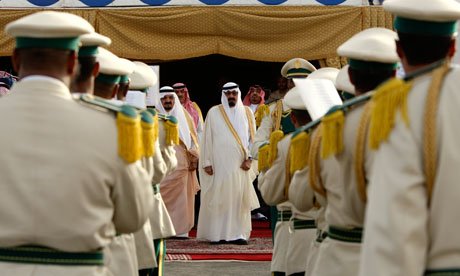
Saudi Arabia has made clear it will not tolerate unrest in its eastern province, where 14 people, 11 of them policemen, were injured in protests this week. Any further trouble would be crushed with “an iron fist,” the government warned, anxious to avoid any perception that the first green shoots of the Arab spring have started to emerge in the Gulf’s conservative heartland.

It is no surprise that the regime’s instinct has been to play down the dimensions and significance of the trouble – an “isolated incident” is the official line in Riyadh. Initial evidence of an over-reaction by security forces gave way to a pullout from the flashpoint, Awamiyah, near the regional capital Qatif, where the Saudi interior ministry accused protesters of carrying arms and throwing petrol bombs. YouTube pictures showed some of that — along with the sound of gunfire and cries of “Allahu Akbar.”

It also alleged that the trouble was directed by an unnamed “foreign country” – no prizes for guessing that meant Iran. Unofficial Saudi experts were far less coy, comparing what happened in Awamiyah to the tactics used by Shia protesters in nearby Bahrain during the Pearl Revolution earlier this year, which was also widely, and misleadingly, blamed on meddling by the Islamic republic. Reinforcing Saudi suspicions, Iranian media have hailed the trouble as a “popular uprising” against the monarchy.

Unrest in the eastern province, home to the kingdom’s 2 million-strong Shia minority and its most significant oilfields, is not new. Activists have long campaigned for equality and employment opportunities, though their demands are often painted as sectarian and treated as a security problem. Indeed, the latest unrest seems to have been sparked by the detention of two elderly men to pressure their fugitive sons to turn themselves in. The novelty this year has been the growth of an embryonic civil rights movement and a sense of empowerment created by the dramatic events elsewhere in the Arab world.

Abdul Aziz al-Saqr, chairman of the Gulf Research Centre, predicted an escalation of such incidents. Other analysts detect a strategy by Iran to make up for the weakening of its ally Syria, where Bashar al-Assad is crushing popular unrest. Al-Arabiyya, the Saudi-owned satellite TV channel, is alsopushing this explanation. But the scholar Madawi al-Rasheed commented: “The Saudis are doing what dictators everywhere always do – blaming trouble on outsiders.”

Until recently the Saudis could claim to have successfully weathered the regional turbulence. The country has seen none of the mass protests that toppled the presidents of Egypt and Tunisia and spread to nearby Yemen as well as Bahrain. In March police opened fire to disperse protesters in Qatif, with the effect that a planned “day of rage” was a damp squib.

King Abdullah has combined repression with financial largesse, pledging to spend $36bn (£23bn) on social welfare and job-creation programmes.

Yet, Rasheed has commented, this has “failed to defuse widespread anger and frustration among Saudi young people especially: over crumbling urban infrastructure, unemployment, corruption and above all arbitrary detentions and abuse of human rights.”

Plans to allow Saudi women to vote in local elections or become members of the Shura council may sound good on paper but will take years to implement and are still largely symbolic.

The Saudis’ western friends constantly urge them to improve their image, while refraining from public criticism. But as blogger Safaa al-Ahmed put it: “If change is to come to Saudi Arabia it won’t be through royal decrees.”


Source

Kouhyar Goudarzi in solitary confinement at Evin’s ward 209

0


Kouhyar Goudarzi who was detained on July 31st is behind bars in solitary confinement in ward 209 of Evin prison.
Committee of Human Rights Reporters (CHRR) has reported that when Kouhyar Goudarzi was apprehended he was taken to ward 240 which is under the control of the Ministry of Intelligence. He was later transferred to solitry confinement in ward 209.

Kouhyar Goudarzi went on hunger strike while behind bars in protest of the intense pressures put upon him along with the illegal detainment of his mother. Goudarzi continued his hunger strike for 17 days after which he had to stop due to the dangerous deterioration of his health.

More than 65 days have passed since the arrest of this CHHR member. However there has been no contact with his family or friends, who have expressed their deep concern as every day passes by with no official information. According to obtained reports, Goudarzi has resisted the physical and psychological pressures inflicted upon him and he is in good spirits despite his dire situation and being held in solitary confinement for this long period of time.

In the past days following the suicides of two of Kouhyar Goudarzi’s friends, human rights activists created the “green protest” campaign sharing their deep worry for the missing activist. The campaign has announced gatherings in cities around the world in protest of the lack of information and the illegal treatment of Goudarzi.

Goudarzi’s mother, Parvin Mokhtareh, who was arrested one day after her son, is awaiting her sentencing behind bars in prison in the city of Kerman. She has also spent this time without receiving any information about the whereabouts or condition of her son.

This is not the first time the courts have arrested a mother for verbally defending her child in Iran. But it has been unprecedented in the past years to press charges, conduct a trial, and hand down a verdict to a mother for the crime of speaking of the plight of her son.

Parvin Mokhtareh is being held among dangerous criminals in the public ward of Kerman’s prison for more than 2 months. She has been deprived of her right to a lawyer and threatened by the judge with a one-year prison sentence.


Source