Home Blog Page 543

US sanctions five over Saudi ambassador plot


WASHINGTON (AFP) — The US Treasury Department on Tuesday announced measures against five individuals allegedly connected to a plot to assassinate the Saudi ambassador to the United States.

The five include Manssor Arbabsiar and Gholam Shakuri, two men charged by the Justice Department with the alleged plot to kill ambassador Adel Al-Jubeir on American soil.

Three other men — Abdul Reza Shahlai, Qasem Soleimani and Hamed Abdollahi — were also named as being linked to the Islamic Revolutionary Guard Corps-Qods Force plot.

Shahlai and Soleimani had been named in previous sanctions and so were already subject to an assets freeze and travel ban.

The announcement came swiftly after the existence of the alleged plot was made public Tuesday.

“Iran once again has used the Qods Force and the international financial system to pursue an act of international terrorism, this time aimed against a Saudi diplomat,” said David Cohen, under secretary for terrorism and financial intelligence.

“The financial transactions at the heart of this plot lay bare the risk that banks and other institutions face in doing business with Iran.”


Source

US on global alert for Iranian reprisal that may jeopardize Shalit release


Washington Wednesday, Oct. 12, published a worldwide travel advisory warning US citizens to beware of Iranian-instigated terrorist attacks following the uncovering of an Iran-directed plot to assassinate Saudi Arabian ambassador Adel Al-Jubeir and bomb the Saudi and Israeli embassies.

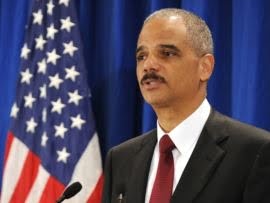
The US holds Iran accountable for its actions, said Attorney General Eric Holder, following which Tehran turned to the UN Secretary General to accuse the US of warmongering.
US officials are deeply concerned that Tehran may not take lying down Washington’s charge that the Revolutionary Guards’ Al Qods Brigades were complicit in the assassination plot or the success of a prisoner exchange deal releasing the Israeli soldier Gilad Shalit from Hamas captivity.

After being caught out, Iran is behaving as though it is under threat of war, its fury fueled by the US-Egyptian-Israeli-Hamas prisoner deal which threatens to cut the Islamic Republic out of Palestinian affairs and curtail its influence in the Gaza Strip, an important outpost.

The Washington advisory issued Wednesday said: “The US government assesses that this Iranian-backed plan to assassinate the Saudi ambassador may indicate a more aggressive focus by the Iranian government on terrorist activity against diplomats from certain countries, to include possible attacks in the United States.”

With a valuable Middle East holding about to be lost, Iran is capable of unleashing terrorists for acts that would force the hands of the United States and Israel. By drawing Hamas into such operations, Tehran would seek to torpedo the Shalit deal a moment before its consummation.

Sources in Washington therefore criticized Prime Minister Binyamin Netanyahu for jumping the gun by his announcing the deal Tuesday for domestic political kudos. “Prisoner swaps are counted successful only after or during the fact,” said one official.

Other Western intelligence sources commented that by letting the cat out of the bag a week in advance, Israel gave Iran and Hizballah time to sabotage it. Both maintain a strong presence of undercover agents in the Gaza Strip who are fully capable of blowing away the deal Hamas political leader Khaled Meshaal struck with Israel in the framework of an accord with the United States for packing up his Hamas bureau and command centers and moving them out of Damascus.

As Israelis joyously celebrated news of the forthcoming release of their soldier from five years in Hamas captivity, US officials in Washington released details of the plot instigated by Iran to murder Saudi ambassador Al-Jubeir, one of King Abdullah’s closest advisers.
US Attorney General Holder and FBI Director Robert Mueller named Iranian-American Mansour Arbabsiar, 56,and a second man, Gohlam Shakuri, an Iranian official, in a five-count criminal complaint filed Tuesday afternoon in the federal court in New York. It included counts of conspiracy to kill a foreign official and conspiracy to use a weapon of mass destruction, a bomb.
Shakuri is still at large in Iran. Holder identified him as an Iran-based member of the Al Qods force.
The complaint described a conversation in which Arbabsiar was allegedly directing the informant to kill the Saudi ambassador and said the assassination could take place at a restaurant. When the informant feigned concern about Americans who also eat at the restaurant, Arbabsiar said he preferred if bystanders weren’t killed but, “Sometimes, you know, you have no choice, is that right?”
The Attorney General said that the plan was “conceived, sponsored and was directed from Iran” by a faction of the government and called it a “flagrant” violation of U.S. and international law. “The US is committed to holding Iran accountable for its actions,” Holder said.

US officials disclosed that Arbabsiar met twice in July with a DEA informant in the northern Mexico city of Reynosa, and negotiated a $1.5 million payment for the assassination of the Saudi ambassador. As a down payment, officials said Arbabsiar wired two amounts of $49,960 on Aug. 1 and Aug. 9 to an FBI undercover bank account after he had returned to Iran.

Those officials stressed that had the plotters succeeded in assassinating a foreign diplomat on US soil, it would have been deemed an act of war. Its actual planning too was an act of Iranian aggression against the United States.


Source

University students protest against mullahs

0


In recent days, students of various universities across the country have been protesting against the reactionary and repressive policies of the Iranian regime in universities and the deteriorating guild situation of the students.

On October 10, Polytechnic University students in Tehran gathered for the fifth day. They protested against the dire guild situation of the students, lack of safety and their exclusion from a university hostel, and lack of addressing the case of Amena Zangeneh, a graduate student of this university who died a few days ago due to lack of safety.

In addition, they protested against not dismissing the mercenary president and vice president of the university, exerting pressure on families of the students, and threatening the protesting students by the agents of a ministry of intelligence services (MIOS) branch known as the disciplinary committee.

Amena Zangeneh, a Polymer Engineering graduate student, lost her life on Tuesday October 4 due to toxic gas and vapour in the bathroom of the university. At nights, she had to sleep in the university’s prayer room due to lack of university hostel.

Also, a group of Meli University (aka Beheshti University) students gathered on Sunday October 9 and protested the poor quality of food in the university.

In Zanjan, the students gathered in the campus of Zanjan university on October 9 protesting the clergy-made reactionary plan of gender segregation. They sang the anthem “Yar-e Dabestani or School Friend” and chanted slogans such as “students die but will not accept humiliation” against the gender segregation plan.

The students of Zanjan university also gathered on October 4 protesting installation of wall between the girls and boys buffet, and gender separation of bus services and the university’s technical and engineering schools libraries.

Moreover, students from Ferdowsi university in Mashhad, and the universities of Shahrekord, Kurdistan, and Yazd were among the university students who protested against the students’ dire guild and welfare conditions last week.


Source

Iran’s alleged Mexican hitman was US drugs informant

0


The Iranian plot the US government says aimed to murder Saudi Arabia‘s ambassador to Washington allegedly fell down because a member of the Mexican Zeta drug cartel hired to carry out the job for $1.5m was actually a US informant.

The informant told the Drugs Enforcement Agency (DEA) in May that he had been contacted by alleged Iranian agent Manssor Arbabsiar. They held several meetings in Mexico which were taped. Methods discussed reportedly included a targeted assassination and a bomb.

Arbabsiar flew to Mexico in late September allegedly to serve as a guarantee that full payment would follow the assassination. The Mexican government has confirmed that it denied him entry and put him on a flight with a stopover in New York, where he was arrested.

The Zetas are one of main protagonists in Mexico’s bloody drug wars, where they are fighting rival cartels and a military-led offensive. Their stronghold is the north-eastern state of Tamaulipas, just over the border from Texas. They also have a presence in Guatemala. The cartel is said to operate trafficking routes into Europe as well as the US.

Arbabsiar and the DEA informant also reportedly discussed bombing the Israeli embassy in Washington and the Saudi and Israeli embassies in Argentina, as well as opening Zeta trafficking routes for opium from theMiddle East through Mexico.

The Zetas are not known for bomb attacks, but have been accused of some of the worst atrocities of the drug wars. These include an arson attack on a gambling centre in the city of Monterrey in August this year that killed 52 people.

The cartel has diversified beyond drugs into extortion and industrial-scale kidnapping of US-bound Central American migrants.

The group was formed in the late 1990s by army deserters recruited by the Gulf cartel to increase its muscle. The Zetas grew in size and accrued more autonomy over the years. The Gulf and the Zetas split in early 2010 and are now enemies.

The Zetas revolutionised cartel enforcement with their superior training and operational planning, a focus on weaponry, willingness to use extreme cruelty and disregard for who might also get killed aside from the original target.

The other main cartels in Mexico have since formed similar units, helping to ensure that the drug wars in the country are both particularly brutal and hard to stop with the kind of inter-capo pacts that have contained underworld rivalries in the past.


Source

Saudis say Iran must ‘pay the price’ for alleged plot as US resists retaliation


The Saudi Arabian government has issued a menancing warning to Iranthat it will have to “pay the price” for the alleged plot to hire a Mexican drugs cartel to assassinate its ambassador in Washington.

The threat from the Saudis came as the Obama administration resisted calls from within the US, mainly from the conservative right, to retaliate against Iran with military action.

But Iran denied it was behind the alleged plot, with officials claiming Washington had fabricated the story to divide Sunni Muslims – the dominant group in Saudi – and Shias, the dominant group in Iran. Tehran’s leadership claimed Barack Obama was using the story to divert attention from the Occupy Wall Street protesters.

The foreign ministry summoned the Swiss ambassador, who handles US interests in the country, to condemn what it called “baseless claims” and warn “against the repetition of such politically motivated allegations.”

A Saudi prince, Turki al-Faisal, a former ambassador to Washington and a former head of the Saudi intelligence service, told a conference in London: “The burden of proof and the amount of evidence in the case is overwhelming, and clearly shows official Iranian responsibility for this. This is unacceptable. Somebody in Iran will have to pay the price.”

The US justice department announced on Tuesday that two men had been charged over the plot to assassinate the Saudi ambassador to Washington, Adel al-Jubeir, in a bomb explosion at one of his favourite restaurants.

One of the men, Manssor Arbabsiar, an American-Iranian, is alleged to have sought the help of a Mexican drugs cartel, Zetas, to provide explosives and carry out the attack. The other man, Gholam Shakuri, is in Iran, according to the US.

Relations between Saudi Arabiaand Iran have long been strained, exacerbated this year by the Saudis sending forces into neighbouring Bahrain to help put down protesters, many of them Shia Muslims.

In spite of increased tension between Saudi Arabia and Iran as a result of the episode, the alleged plot is being met with scepticism within the diplomatic community, as well as from foreign affairs analysts specialising in Iran, who said the plot was amateurish and did not fit in the usual Iranian modus operandi, and questioned what Iran would gain from such an episode.

A former western diplomat with an intimate knowledge of Iranian affairs said: “I don’t believe Iran’s regime was behind the plot. If we assume it was Iran’s plot, it would seem like a group of professional gangsters hiring a careless agent for their most important project. It’s impossible.”

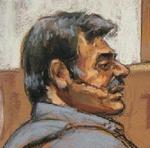
Fresh details emerged on Wednesday about Arbabsiar, the man at the centre of the supposed plot, who appeared in court in New York on Tuesday charged with conspiracy, and who is allegedly linked to the Iranian Revolutionary Guard.

He was a car salesman in Corpus Christi, Texas, where he ran a number of businesses, largely unsuccessful. He does not fit the usual profile of an Iranian agent, who tend to be professional.

The US is taking the issue to the UN security council to seek action against Iran – but it will need to offer evidence to back its claim. One of the main pieces of evidence is a $100,000 sum transferred to the US, allegedly from Iran, as a downpayment for the assassination attempt.

Susan Rice, the UN ambassador to the UN, and a team of experts from the justice department, were briefing individual members of the security council about the plot on Wednesday.

“It is a dangerous esclation of Iran’s long-scale use of violence,” Jay Carney, the White House spokesman, told reporters at a briefing. On a possible military response, he said no options had been taken off the table, but emphasised that the US was focusing on diplomatic and economic measures against Iran, including new sanctions against an airline accused of transporting revolutionary guard personnel.

The vice-president Joe Biden, in an ABC television interview, said the administration was focused on mounting a major diplomatic effort to persuade its allies in Europe and elsewhere to impose tougher economic sanctions on Iran.

As the State Department issued a three-month worldwide travel alert for American citizens, secretary of state Hillary Clinton described the alleged plot as a “reckless act”.

“Such worn-out approaches are … part of the special scenarios staged and pursued by the enemies of Islam and the region to sow discord among Muslims,” the semi-official Fars news agency quoted foreign ministry spokesman Ramin Mehmanparast as saying.

Fars also quoted Alaoddin Boroujerdi, the head of the parliamentary committee on national security and foreign policy, who said: “No doubt this is a new American-Zionist plot to divert the public opinion from the crisis Obama is grappling with.

Today, the United States is witnessing a popular uprising called Wall Street protests which have targeted the hostile policies of that country’s statesmen.

“Thus, Americans are seeking to derail the public opinion from the Wall Street uprising.”


Source

Mothers of Killed Protesters Seek UN Support to Find Their Children’s Murderers

0


Only two weeks before the Special Rapporteur on the situation of human rights in Iran is to present his report, two mothers of the post-election 2009 victims told the International Campaign for Human Rights in Iran that their search for the murderers of their children has not produced any results. Parvin Fahimi, mother of 19-year-old victim Sohrab Aarabi told the Campaign that if the United Nations cannot do anything in this area, “everything is over then and it’s all pointless.”  “From the day Sohrab died, I said that if I cannot find answers in my own country and [if I find that] the official sources in my country are unaccountable, I would have to use international sources,” Fahimi told the Campaign.


Reacting to recent statements made by President Mahmoud Ahmadinejad in which he said that the BBC television network was responsible for her daughter’s death, Hajar Rostami, mother of Neda Agha Soltan, one of dozens of protesters killed during the 2009 presidential election protests, asked the Iranian president to introduce her daughter’s murderer to her family. “Two years, three months, and two days after my daughter’s death, all I want is to first ask Mr. Ahmadinejad why we should have such lack of security in our country for some to come, kill, and go, without any particular consequences. When, speaking with one of the most reputable media outlets in the world, Mr. Ahmadinejad says that Neda was murdered by the BBC operatives, he must have documents and evidence for his statements. Therefore I want him to introduce those behind my daughter’s death,” she told the Campaign.

Parvin Fahimi, who learned about her son’s death several weeks after his 15 June 2009 disappearance, spoke with the Campaign about her pursuit of identifying her son’s murderer with the Iranian Judiciary. “Unfortunately, in the past two years and several months after the incident, none of the families have received any answers. They say that the murderer is unidentifiable; they just said ‘come get the diya (blood money),’ but we didn’t go … Unfortunately, nobody did anything for us, neither human rights activists, nor our country’s authorities. Now we have to resort to the UN to see whether they would do anything for us. If they cannot do anything , everything is over then and it’s all pointless,” said Fahimi.

Rostami also said that her efforts have been fruitless. “The last answer they gave me was that they had to re-construct Neda’s death scene. I have been waiting for seven months for them to call me so that I can go to the death scene. I have followed up and filed complaints many times without results. Now that Mr. Ahmadinejad has reached this conclusion, I would like to ask him to do this for me for sure and to deliver the murderer to me,” said Rostami.

During her search for her son after his disappearance, Fahimi was referred to the Medical Examiner’s Identification Unit on 11 July 2009 to leaf through a photo album of murdered individuals and it became clear on that day that he was among those killed.

During a September press conference with reporters from 20 American media outlets at his hotel, his eighth trip to the United States since his presidency, he said the 2009 post-election protesters that they were a few rioters who destroyed buildings and put cars on fire. He reported the number of those killed during the protests as only 32.

Referring to the release of the two American hikers, Rostam, said, “I would like to ask Mr. Ahmadinejad to act like Mr. Obama and Ms. Clinton, who worked hard for two years to release their two hikers with the help of neighboring countries. I want him to deliver those responsible for my daughter’s death to me.”

Rostami, who was among the first parents to lose a child during the post-election events in 2009, reacted to Ahmadinejad’s statement that only 22 people were killed during the post-election events, comprised of rioters or Basij members. “I have always said and I say it again: Neda left the house to protest and she never returned.  Neda was neither a Basij member, nor did she have any reason to wish to vandalize anything.”

Neda Agha Soltan, 27, was shot dead on Tehran’s Amirabad Avenue on Saturday, 20 June 2009 during popular protests against election results.  A short video showing her death received widespread international attention.  She was the first official victim of the post-election unrest.

Source

Who Are Iran’s Political Prisoners?


At least 28 of the regime’s prisoners of conscience are journalists.

By ROXANA SABERI

Just after my release from a Tehran prison in May 2009, an Iranian prisoner wrote an open letter entitled, ‘I wish I were a Roxana.’ Haleh Rouhi, a follower of Iran’s minority Baha’i faith, was serving a four-year sentence for antiregime propaganda, although she said she was simply ‘teaching the alphabet and numbers’ to underserved children.

She was happy I was released but wondered how her case differed from mine and why she had to remain in prison. ‘What kind of justice system condemned [Roxana] to such punishment,’ Ms. Rouhi asked, ‘and which justice freed her at such speed”?

I asked myself the same question. Why was I released after 100 days, having appealed an eight-year prison sentence for a trumped-up charge of espionage? What is clear is that as a foreign citizen, I was fortunate to receive international support, while the plights of other innocent prisoners were less known outside Iran.

Last month, two American men incarcerated in Iran on accusations of espionage and crossing the border illegally-charges they contested-were freed after being sentenced to eight years in prison. Their release is welcome news and cause for relief.

Abdolfattah Soltani, a human rights lawyer, has been arrested three times in Iran.

At the same time, ordinary Iranians are suffering mounting abuses and prolonged imprisonment for exercising their basic human rights, making Haleh Rouhi’s question as valid today as it was two years ago. Officials from several countries have called for the release of a handful of Iran’s wrongfully imprisoned men and women, but this pressure is rarely consistent-and most of Iran’s hundreds of prisoners of conscience have never gained the attention of foreign governments or mainstream news media. The international community needs to apply the same pressure on Tehran to release these prisoners as it has for high-profile Western citizens.

At least 28 of Iran’s prisoners of conscience are journalists, according to the media rights group Reporters Without Borders, which ranks Iran the third largest jail for journalists in the world after Eritrea and China. In addition, six Iranian filmmakers were recently arrested for allegedly cooperating with BBC Persian. (The station insists no one in Iran works for it).

Well-known attorneys such as Nasrin Sotoudeh, who has been sentenced to six years in prison, also are locked up in Iran. Last month, Abdolfattah Soltani, who like Ms. Sotoudeh defended many political prisoners, was arrested for the third time. I first heard of his courage from my cellmates in Tehran’s Evin Prison. I requested that he represent me, but the prosecutor threatened me against retaining ‘a human rights lawyer’.

Mr. Soltani was arrested while he prepared to defend several Baha’is detained for providing higher education to other Baha’is barred from university in Iran because of their religion. He was also an attorney for my two Baha’i cellmates, Fariba Kamalabadi and Mahvash Sabet, who are each serving 20-year prison sentences for various unsubstantiated charges including espionage.

Most recently, the headlines have focused on Youcef Naderkhani, a Christian convert from Islam who faces possible execution after refusing to renounce his faith.

Many of Iran’s prisoners of conscience have suffered torture-both physical and psychological. It is common for them to be held in solitary confinement for months, even years. They often lack adequate access to their families and attorneys and go through sham trials. Some are coerced to give false confessions and inform on their friends.

If detainees are lucky, their captors offer them release on bail, but the amount is typically exorbitant, and prisoners who can post it tend to live in fear that they could be sent back to jail any day. At the same time, a rising number of executions has made Iran the world’s largest executioner on a per capita basis. According to Amnesty International, in 2010, at least 23 Iranian prisoners convicted of politically motivated offenses were executed.

The Iranian regime needs to address human rights violations instead of denying their existence. If Tehran has nothing to hide, it would permit the recently appointed United Nations special rapporteur on human rights to enter the country. Tehran should also grant access to several other U.N. special experts who have been blocked from visiting since 2005.

U.N. officials-particularly Secretary-General Ban Ki-Moon and High Commissioner for Human Rights Navi Pillay-plus member states and other individuals must place constant pressure on Tehran just as they have in cases such as mine. This will bring attention and justice to the real heroes, the everyday Iranians in prison for pursuing universal human rights and demanding respect for human dignity.

International pressure might not always result in their freedom, but at least they will know they are not alone and can gain courage to carry on. And it can help Iranian authorities realize that the many faces of their justice system will only continue to isolate the Islamic Republic among the family of nations.

Ms. Saberi, an Iranian-American journalist detained in Iran’s Evin Prison in 2009, is the author of ‘Between Two Worlds: My Life and Captivity in Iran’. (WSJ – Oct. 7, 2011)


Source

US Treasury imposes sanctions on Iran’s Mahan Air

0


The US has imposed sanctions on an Iranian airline it says flew members of an elite force linked to an alleged plot to kill the Saudi envoy to the US.

The US Treasury says Mahan Air ferried operatives from Iran’s Quds Force and Hezbollah across the Middle East.

Under the sanctions, the airline’s US assets will be frozen and US firms barred from doing business with it.

Secretary of State Hillary Clinton meanwhile said the alleged plot was a “dangerous escalation” by Iran.

The sanctions were unveiled a day after the authorities announced they had foiled a conspiracy to assassinate the Saudi ambassador to Washington, Adel Al-Jubeir, on US soil using explosives.

‘Secretly ferrying operatives’

The US government accused members of the Iranian government – and the Quds Force, an elite unit of the Revolutionary Guard Corps – of involvement.

“It’s clear that senior levels of Quds force were engaged in the plotting,” White House press secretary Jay Carney told reporters.

On Tuesday, the US also imposed sanctions against five people it linked to the alleged assassination plot, including two men charged over the investigation.

The pair were named as Manssor Arbabsiar, a 56-year-old naturalised US citizen with dual Iranian and US passports, and Gholam Shakuri, who is based in Iran.

Mr Shakuri and three others named in Tuesday’s sanctions were described as members of the Quds Force.

Mr Arbabsiar – accused of wiring $100,000 (£63,000) to a US bank account to finance the alleged $1.5m conspiracy – was charged in a New York City court on Tuesday.

US officials have said that the accused approached a US informant posing as a member of a Mexican drug cartel to carry out the assassination.

‘Mischievous scenario’

Announcing the latest sanctions on Wednesday, Treasury official David Cohen said in a statement: “Mahan Air’s close co-ordination with the IRGC-QF [Islamic Revolutionary Guards Corp-Quds Force] – secretly ferrying operatives, weapons and funds on its flights – reveals yet another facet of the IRGC’s extensive infiltration of Iran’s commercial sector to facilitate its support for terrorism.”

Iranian official media reported on Wednesday that the foreign ministry had summoned the Swiss ambassador to Tehran, who represents US interests in the country.

The purpose of the meeting was to “strongly” protest against the US allegations, the state television website reported.

Iranian Foreign Minister Ali Akbar Salehi was quoted by Iran’s Arabic-language Alalam channel as saying: “America has launched a mischievous scenario. But be certain, they will apologise [to Iran] in the future.”

The Gulf Cooperation Council condemned the alleged plot as a “flagrant violation” of international laws and agreements.

Meanwhile, details have emerged of Mr Arbabsiar’s life in the US, including his background as a secondhand-car salesman in Texas.

David Tomscha, who once owned a used car lot with him, told AP news agency: “I can’t imagine him thinking up a plan like that. I mean, he didn’t seem all that political. He was more of a businessman.”

Mr Arbabsiar was charged with theft in 2001, according to court documents in Texas, although the charge was dropped. He was also arrested several times in the 1990s for traffic violations.

His wife, Martha Guerrero, who lives at a house in an Austin suburb, told a local TV station they were separated and she thought he was blameless of the charges.

“I cannot for the life of me think that he would be capable of doing that,” she told KVUE. “I’m sure of that and I know that his innocence is going to come out.”

The case has strained already fraught relations between Washington and Tehran.


Lawmaker resigns over Parliament’s refusal to question Ahmadinejad

0


Iranian MP Ali Motahari has resigned over Parliament’s failure to follow through on a motion to question the president.

The Mehr News Agency reports that the conservative lawmaker, who was a chief instigator of the motion, has submitted his resignation to the Presiding Board of Parliament for its refusal to put the questioning of the president on its agenda.

Motahari indicated that his is resigning because he is no longer able to protect the rights of the people who elected him.

The motion to question Ahmadinejad, signed by 100 MPs, was handed to Parliament in late June. The long list of proposed questions covered “the government’s legal violations” such as its failure to carry out legislation regarding the subway system and cultural issues such as adherence to hijab [Islamic attire].

While 14 signatories have withdrawn their support for the motion, it still has sufficient signatures to be valid.

Motahari had said he would resign if the signatories were pressured to withdraw their support. He insisted that the names of the signatories should remain classified so no one could be pressured over his decision.

In September, the Presiding Board of Parliament announced that the motion to question the president was not in the country’s best interest.

The announcement came after Iran’s Supreme Leader called for unity among the government branches.


Source

Two Men Charged in Alleged Plot to Assassinate Saudi Arabian Ambassador to the United States


WASHINGTON—Two individuals have been charged in New York for their alleged participation in a plot directed by elements of the Iranian government to murder the Saudi Ambassador to the United States with explosives while the Ambassador was in the United States.

The charges were announced by Attorney General Eric Holder; FBI Director Robert S. Mueller; Lisa Monaco, Assistant Attorney General for National Security; and Preet Bharara, U.S. Attorney for the Southern District of New York.

A criminal complaint filed today in the Southern District of New York charges Manssor Arbabsiar, a 56-year-old naturalized U.S. citizen holding both Iranian and U.S. passports, and Gholam Shakuri, an Iran-based member of Iran’s Qods Force, which is a special operations unit of the Iranian Islamic Revolutionary Guard Corps (IRGC) that is said to sponsor and promote terrorist activities abroad.

Both defendants are charged with conspiracy to murder a foreign official; conspiracy to engage in foreign travel and use of interstate and foreign commerce facilities in the commission of murder-for-hire; conspiracy to use a weapon of mass destruction (explosives); and conspiracy to commit an act of international terrorism transcending national boundaries. Arbabsiar is further charged with an additional count of foreign travel and use of interstate and foreign commerce facilities in the commission of murder-for-hire.

Shakuri remains at large. Arbabsiar was arrested on Sept. 29, 2011, at New York’s John F. Kennedy International Airport and will make his initial appearance today before in federal court in Manhattan. He faces a maximum potential sentence of life in prison if convicted of all the charges.

“The criminal complaint unsealed today exposes a deadly plot directed by factions of the Iranian government to assassinate a foreign Ambassador on U.S. soil with explosives,” said Attorney General Holder. “Through the diligent and coordinated efforts of our law enforcement and intelligence agencies, we were able to disrupt this plot before anyone was harmed. We will continue to investigate this matter vigorously and bring those who have violated any laws to justice.”

“The investigation leading to today’s charges illustrates both the challenges and complexities of the international threat environment, and our increased ability today to bring together the intelligence and law enforcement resources necessary to better identify and disrupt those threats, regardless of their origin,” said FBI Director Mueller.

“The disruption of this plot is a significant milestone that stems from months of hard work by our law enforcement and intelligence professionals,” said Assistant Attorney General Monaco. “I applaud the many agents, analysts and prosecutors who helped bring about today’s case.”

“As alleged, these defendants were part of a well-funded and pernicious plot that had, as its first priority, the assassination of the Saudi Ambassador to the United States, without care or concern for the mass casualties that would result from their planned attack,” said U.S. Attorney Bharara. “Today’s charges should make crystal clear that we will not let other countries use our soil as their battleground.”

The Alleged Plot

The criminal complaint alleges that, from the spring of 2011 to October 2011, Arbabsiar and his Iran-based co-conspirators, including Shakuri of the Qods Force, have been plotting the murder of the Saudi Ambassador to the United States. In furtherance of this conspiracy, Arbabsiar allegedly met on a number of occasions in Mexico with a DEA confidential source (CS-1) who has posed as an associate of a violent international drug trafficking cartel. According to the complaint, Arbabsiar arranged to hire CS-1 and CS-1’s purported accomplices to murder the Ambassador, and Shakuri and other Iran-based co-conspirators were aware of and approved the plan. With Shakuri’s approval, Arbabsiar has allegedly caused approximately $100,000 to be wired into a bank account in the United States as a down payment to CS-1 for the anticipated killing of the Ambassador, which was to take place in the United States.

According to the criminal complaint, the IRCG is an arm of the Iranian military that is composed of a number of branches, one of which is the Qods Force. The Qods Force conducts sensitive covert operations abroad, including terrorist attacks, assassinations and kidnappings, and is believed to sponsor attacks against Coalition Forces in Iraq. In October 2007, the U.S. Treasury Department designated the Qods Force for providing material support to the Taliban and other terrorist organizations.

The complaint alleges that Arbabsiar met with CS-1 in Mexico on May 24, 2011, where Arbabsiar inquired as to CS-1’s knowledge with respect to explosives and explained that he was interested in, among other things, attacking an embassy of Saudi Arabia. In response, CS-1 allegedly indicated that he was knowledgeable with respect to C-4 explosives. In June and July 2011, the complaint alleges, Arbabsiar returned to Mexico and held additional meetings with CS-1, where Arbabsiar explained that his associates in Iran had discussed a number of violent missions for CS-1 and his associates to perform, including the murder of the Ambassador.

$1.5 Million Fee for Alleged Assassination

In a July 14, 2011, meeting in Mexico, CS-1 allegedly told Arbabsiar that he would need to use four men to carry out the Ambassador’s murder and that his price for carrying out the murder was $1.5 million. Arbabsiar allegedly agreed and stated that the murder of the Ambassador should be handled first, before the execution of other attacks. Arbabsiar also allegedly indicated he and his associates had $100,000 in Iran to pay CS-1 as a first payment toward the assassination and discussed the manner in which that payment would be made.

During the same meeting, Arbabsiar allegedly described to CS-1 his cousin in Iran, who he said had requested that Arbabsiar find someone to carry out the Ambassador’s assassination. According to the complaint, Arbabsiar indicated that his cousin was a “big general” in the Iranian military; that he focuses on matters outside Iran and that he had taken certain unspecified actions related to a bombing in Iraq.

In a July 17, 2011, meeting in Mexico, CS-1 noted to Arbabsiar that one of his workers had already traveled to Washington, D.C., to surveill the Ambassador. CS-1 also raised the possibility of innocent bystander casualties. The complaint alleges that Arbabsiar made it clear that the assassination needed to go forward, despite mass casualties, telling CS-1, “They want that guy [the Ambassador] done [killed], if the hundred go with him f**k ‘em.” CS-1 and Arbabsiar allegedly discussed bombing a restaurant in the United States that the Ambassador frequented. When CS-1 noted that others could be killed in the attack, including U.S. senators who dine at the restaurant, Arbabsiar allegedly dismissed these concerns as “no big deal.”

On Aug. 1, and Aug. 9, 2011, with Shakuri’s approval, Arbabsiar allegedly caused two overseas wire transfers totaling approximately $100,000 to be sent to an FBI undercover account as a down payment for CS-1 to carry out the assassination. Later, Arbabsiar allegedly explained to CS-1 that he would provide the remainder of the $1.5 million after the assassination. On Sept. 20, 2011, CS-1 allegedly told Arbabsiar that the operation was ready and requested that Arbabsiar either pay one half of the agreed upon price ($1.5 million) for the murder or that Arbabsiar personally travel to Mexico as collateral for the final payment of the fee. According to the complaint, Arbabsiar agreed to travel to Mexico to guarantee final payment for the murder.

Arrest and Alleged Confession

On or about Sept. 28, 2011, Arbabsiar flew to Mexico. Arbabsiar was refused entry into Mexico by Mexican authorities and, according to Mexican law and international agreements; he was placed on a return flight destined for his last point of departure. On Sept. 29, 2011, Arbabsiar was arrested by federal agents during a flight layover at JFK International Airport in New York. Several hours after his arrest, Arbabsiar was advised of his Miranda rights and he agreed to waive those rights and speak with law enforcement agents. During a series of Mirandized interviews, Arbabsiar allegedly confessed to his participation in the murder plot.

According to the complaint, Arbabsiar also admitted to agents that, in connection with this plot, he was recruited, funded, and directed by men he understood to be senior officials in Iran’s Qods Force. He allegedly said these Iranian officials were aware of and approved of the use of CS-1 in connection with the plot; as well as payments to CS-1; the means by which the Ambassador would be killed in the United States and the casualties that would likely result.

Arbabsiar allegedly told agents that his cousin, who he had long understood to be a senior member of the Qods Force, had approached him in the early spring of 2011 about recruiting narco-traffickers to kidnap the Ambassador. Arbabsiar told agents that he then met with the CS-1 in Mexico and discussed assassinating the Ambassador. According to the complaint, Arbabsiar said that, afterwards, he met several times in Iran with Shakuri and another senior Qods Force official, where he explained that the plan was to blow up a restaurant in the United States frequented by the Ambassador and that numerous bystanders could be killed, according to the complaint. The plan was allegedly approved by these officials.

In October 2011, according to the complaint, Arbabsiar made phone calls at the direction of law enforcement to Shakuri in Iran that were monitored. During these phone calls, Shakuri allegedly confirmed that Arbabsiar should move forward with the plot to murder the Ambassador and that he should accomplish the task as quickly as possible, stating on Oct. 5, 2011, “[j]ust do it quickly, it’s late . . .” The complaint alleges that Shakuri also told Arbabsiar that he would consult with his superiors about whether they would be willing to pay CS-1 additional money.

This investigation is being conducted by the FBI Houston Division and DEA Houston Division, with assistance from the FBI New York Joint Terrorism Task Force. The prosecution is being handled by Assistant U.S. Attorneys Glen Kopp and Edward Kim, of the Terrorism and International Narcotics Unit of the U.S. Attorney’s Office for the Southern District of New York, with assistance from the Counterterrorism Section of the Justice Department’s National Security Division. The Office of International Affairs of the Justice Department’s Criminal Division and the U.S. State Department provided substantial assistance. We thank the government of Mexico for its close coordination and collaboration in this matter, and for its role in ensuring that the defendant was safely apprehended.

The charges contained in a criminal complaint are mere allegations and defendants are presumed innocent unless and until proven guilty.