Home Blog Page 542

Iranian radicals look for a limited armed clash with the US

0


The motivation for the foiled Iranian-instigated plot to murder the Saudi ambassador to Washington at his favorite eatery, Café Milano in Georgetown, is revealed by DEBKAfile’s Iranian sources as a bid by a super-radical faction at the top of the Iranian regime to draw the United States into a limited military clash. Supreme Leader Ayatollah Ali Khamenei approved the plot when his son and heir Mojtaba, 42, and the Al Qods Brigades commander Gen. Qassem Soleimanipresented him with their “grand plan.”
US President Barack Obama said Thursday, Oct. 13 that a person charged with plotting to assassinate Saudi Arabia’s US ambassador “had direct links, was paid by” and “directed by individuals in the Iranian government.  He also said he would not take any options off the table in dealing with Tehran.

The American UN ambassador Susan Rice later met with her Iranian counterpart about the plot. The contents of their conversation were not revealed.
DEBKAfile’s Iranian sources disclose how the “grand plan” was intended to unfold. The first stage was kicked off last week with the flare-up of new Shiite-led riots in Bahrain which Iranian agents helped to expand into the neighboring Qatif oil region of eastern Saudi Arabia.

This week, Revolutionary Guards and Al Qods experts in mayhem organized pilgrims heading for the Umrah, the little pilgrimage, in Mecca starting on Nov. 4, as agents provocateur for stirring up riots among the massed pilgrims. The first batch of 20,000 Iranian pilgrims is already in the shrine cities of Mecca and Medina.

Ambassador Adel Al-Jubeir’s assassination was planned to coincide with riots in the holy cities and disturbances in the oil regions and so cause a breakdown in national security and shake the throne to its foundations.

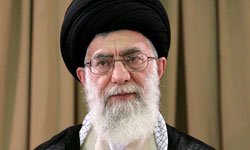
The Americans would then come running to save the kingdom, Mojtaba (picture on the left) and Soleimani figured, and head straight into a limited armed clash with Iran. This is what the pair was aiming for to further the following objectives:
1. To head off the spread of unrest in Syria into the Iranian Republic. The downtrodden ethnic and religious minorities which make up 60 percent of the population would not venture to rise up against the minority Persian rulers at a time of war for fear of being punished as traitors.

2.  To push the controversial Iranian nuclear program down to the bottom of the international agenda and stop in its tracks the US-led campaign to halt its development.
3.  To win international Muslim acclaim for diverting the military focus of the West away from Syria and saving President Bashar Assad’s regime.

4.  By sacrificing a few of Iran’s warships and planes in a limited clash, Tehran would win support from Russia and China, which are both strongly opposed to Western military intervention in Syria or any other part of the Middle East.

5.  They would produce a Tehran-led anti-American Muslim military line-up to stand up against the pro-American Sunni Muslim military bloc sponsored by the West, which Turkish Prime Minister Tayyip Erdogan is assembling.

DEBKAfile’s intelligence sources say there is nothing paradoxical about the super-efficient professional Al-Qods Brigades enlisting a Mexican drug cartel for a hit squad to assassinate Ambassador al-Jubeir. For at least 20 years, Iran’s Lebanese proxy Hizballah has kept itself in funds by drug trafficking, gunrunning and fencing stolen goods and today controls entire networks in Latin America and Africa.
This fact is well known, fully recorded and easily available to anyone interested.

The most competent clandestine organizations often use inept losers like the Iranian-born New York American Mansour Arbabsiar for “dirty operations.” They tend to be a far cry from the high-IQ superspies of film and fiction. In this case, he may have been the best foot soldier available. Al Qods maintains small sleeper cells among the 900,000 Iranian expatriates living in the United States, more than half of them in California and Texas. But its active agents are by and large of the same substandard caliber as Arbabsiar.

There is another possibility: His Al Qods controllers expected the plot to be foiled. They knew Arbabsiar was under FBI surveillance after an unsuccessful attempt to enter the drug market, and watched him walk into a trap when he tried to hire a DEA agent posing as a member of the Mexican drug cartel.

Had the assassination taken place, it would have been treated as an act of war by the United States, Saudi Arabia and Israel. (The Saudi and Israeli embassies were to be bombed at the same time in Buenos Aires.)

Mojtaba and Soleimani did not intend to go that far or provoke a full-blown war. A foiled plot was to be the cue for a limited armed confrontation which was all their “grand plan” required – and that result appears to be building up.


Source

Political prisoner Hadi Abedi Bakhoda transferred to a hospital due to deteriorating condition


The condition of Hadi Abedi Bakhoda, a political prisoner who is imprisoned in Rasht prison, has become worse and wastransferred to a hospital. He was abandoned in the prison despite his deteriorating condition in the prison.

He was arrested in November 2009. He was not able to tolerate the prison condition due to his poor physical condition. The coroner and other medical authorities have now confirmed his medical problem and poor physical condition.

Hadi Abedi is a political prisoner of the 1980′s who has suffered spinal cord injury due to Iranian regime’s revolutionary guards’ firing at him, and is not able to walk


Source


Iran terror plot: agent may have already fled to Iran


British officials disclosed on Wednesday night that the UK had been involved “for weeks” in efforts to track down Gholam Shakuri, the Iranian agent suspected of being behind the plot.

Mr Shakuri is believed to have been implicated in attacks on coalition troops by Iraqi militias armed and supplied by Iran.

One official said he had a record of acting as the field officer in foreign-based terrorist activities carried out by the Islamic state.

America had sought British involvement after it became clear that Mr Shakuri was active in providing materials to make roadside bombs and other explosive devices in southern Iraq. He is also believed to be linked to attacks in Kerbala carried out by a group that kidnapped five British men in Iraq, killing four of them.

“This is something that Britain has been aware of for some time and we have been working to help the American investigation,” a British official said.

While officials have been unable to confirm his whereabouts, there were concerns last night that he had been able to reach sanctuary in Iran. Mr Shakuri was a key lieutenant of Alireza Shahlai, a senior commander in Iran’s Revolutionary Guards’ Quds Force and a cousin of the other plot suspect, Manssor Arbabsiar.

Officials believe it was Shahlai, who is subject to US treasury sanctions for terrorist activities in Iraq, who masterminded the plot, which was to have involved a bomb made from plastic explosives.

It has been claimed that after his arrest in Texas, Mr Arbabsiar made several calls to Mr Shakuri.

U.S. Considering Sanctions Against Central Bank of Iran

0


WASHINGTON — The U.S. Treasury’s top official fighting the financing of terrorism says Washington is considering additional sanctions on the Central Bank of Iran to further isolate the country financially.

Under Secretary of the Treasury David Cohen made the comment today during testimony before lawmakers on the Senate Committee on Banking, Housing, and Urban Affairs.

“Although U.S. financial institutions are already generally prohibited from doing business with any bank in Iran, including the [Central Bank of Iran], further U.S. action against the CBI, if it attained multilateral support, could further isolate the CBI, with a potentially powerful impact on Iran,” Cohen said. “I can assure the committee that all options to increase the financial pressure on Iran are on the table.”

A number of senators on the committee pressed Cohen and other administration officials at the hearing to expand U.S. sanctions on Tehran in the wake of the alleged Iranian-orchestrated plot to assassinate Saudi Arabia’s ambassador to the United States.


Source

Obama promises ‘toughest sanctions’ on Iran over alleged bomb plot

0


President says US will call on international community to further isolate Iran – but doubts remain over whether plot was genuine

The United States will apply the “toughest sanctions” to further isolateIran over the alleged plan to murder the Saudi ambassador to Washington, Barack Obama said on Thursday, despite growing scepticism over the amateurish nature of the plot and the apparently shambolic background of the main suspect.

Obama insisted that the US had evidence to back up the allegations, as he said he would not take any options off the table in dealing with Iran – diplomatic code for the possibility of military action. Tehran has vehemently denied any involvement in the plot.

US authorities said on Tuesday they had evidence of a plot by two men linked to Iran’s revolutionary guard to kill Saudi Arabia‘s ambassador to the United States, Adel al-Jubeir, by setting off a bomb in a Washington restaurant.

Speaking at a joint press conference with South Korean President Lee Myung-bak, Obama said: “Now those facts are there for all to see. We would not be bringing forward a case unless we knew exactly how to support all the allegations that are contained in the indictment.”

In addition to prosecutions, Obama said he would continue “to apply the sort of pressure that will have a direct impact on the Iranian government until it makes a better choice in how it interacts with the rest of the international community”.

The State Department revealed on Thursday that the US had been in direct contact with Iran over the allegations. “We are not prepared at the moment to go any further on the question of who spoke to whom, and where, but just to confirm that we have had direct contact with Iran,” said spokeswoman Victoria Nuland.

The president’s comments came as two congressional committees held hearings on Iran. In testimony to the Senate banking committee, David Cohen, the US Treasury’s under-secretary for terrorism and financial intelligence, said the administration was considering sanctions against Iran’s central bank.

Cohen described the alleged plot as a “dramatic reminder that the urgent and serious threat we face from Iran is not limited to Iran’s nuclear ambitions”.

Ileana Ros-Lehtinen, chair of the House Foreign Affairs committee, said the assassination plot “illustrates Iran’s active campaign” to partner with extremists groups and drug traffickers.

But as more details have emerged, there has been growing scepticism over the true nature of the threat, not least because the main suspect has been revealed to be a chaotic used car salesman, nicknamed “Scarface”, with a string of failed businesses behind him.

Manssor Arbabsiar, a naturalised US citizen, was arrested last month, and stands accused of running a global terror plot that stretched from Mexico to Tehran. He is accused of having links to Quds Force, an elite unit of the Iranian Revolutionary Guard. The other suspect, Gholam Shakuri, is said by the US to be in Iran.

But Tom Hosseini, a friend and former roommate of Arbabsiar’s, questioned his ability to carry out the plot and told the New York Times: “His socks would not match. He was always losing his keys and his cellphone.”

Hosseini said when he last saw his friend two months ago, Arbabsiar told him he had been in Iran and was “making good money”.

US officials concede that the plot and its alleged mastermind are unusual. ”We would expect to see the Quds Force cover their tracks more effectively,” one official told Reuters. Another said a plot to launch a violent attack inside the United States was ”very outside the pattern” of recent Quds Force activities.

Kenneth Katzman, an Iran specialist at the Congressional Research Service, said there were elements of the alleged plot that did not make sense.

”The idea of using a Texas car salesman who is not really a Quds Force person himself, who has been in residence in the United States many years, that doesn’t add up,” Katzman said.

”There could have been some contact on this with the Quds Force, but the idea that this was some sort of directed, vetted, fully thought-through plot, approved at high levels in Tehran leadership I think defies credulity,” he said.


Source

U.S. officials: Iran’s supreme leader likely knew of plot

0


By Mark Hosenball and Tabassum Zakaria

WASHINGTON (Reuters) – Iran’s supreme leader and the shadowy Quds Force covert operations unit were likely aware of an alleged plot to kill Saudi Arabia’s ambassador to the United States, but hard evidence of that is scant, U.S. officials said on Wednesday.

The United States does not have solid information about “exactly how high it goes,” one official said.

The Obama administration has publicly and directly blamed Iran’s government for seeking to kill the Saudi ambassador in Washington, Adel al-Jubeir, and has warned Tehran it will face consequences. The accusation has heightened tensions in the volatile, oil-rich Gulf.

Tehran has called the accusation a fabrication designed to sow discord in the region.

The U.S. officials, who spoke on condition of anonymity, said their confidence that at least some Iranian leaders were aware of the alleged plot was based largely on analyses and their understanding of how the Quds Force operates.

They said it was “more than likely” that Iran’s supreme leader, Ayatollah Ali Khamenei, and Quds Force commander Qasem Suleimani had prior knowledge or approved of the suspected plot. They insisted it was “not a rogue operation in any way,” and was sanctioned and directed by Quds Force operatives in Iran.

But other parts of Iran’s factionalized government may not have known, they said. That included President Mahmoud Ahmadinejad, who “didn’t necessarily know about this,” one said.

New details emerged about Manssor Arbabsiar, the Iranian-American and former Texas resident who is alleged to have tried to hire a Mexican drug cartel figure to assassinate al-Jubeir. That figure turned out to be a U.S. Drug Enforcement Administration informant.

Arbabsiar, the only suspect known to be arrested in connection with the alleged plot, went by “Jack” and moved to Iran about a year ago, according to news reports.

Arbabsiar’s wife, Martha Guerrero, told KVUE TV station in Austin, Texas, he was innocent. “I may not be living with him, being separated, but I cannot for the life of me think that he would be capable of doing that,” she was quoted as saying.

‘VERY OUTSIDE THE PATTERN’

Several senior U.S. government officials acknowledged the alleged plot was unusual in its poor tradecraft — spy jargon for espionage skills and finesse.

“We would expect to see the Quds Force cover their tracks more effectively,” said one official. Another said a plot to launch a violent attack inside the United States was “very outside the pattern” of recent Quds Force activities.

Kenneth Katzman, an Iran specialist at the Congressional Research Service, said there were elements of the alleged plot that did not make sense.

“The idea of using a Texas car salesman who is not really a Quds Force person himself, who has been in residence in the United States many years, that doesn’t add up,” Katzman said.

“There could have been some contact on this with the Quds Force, but the idea that this was some sort of directed, vetted, fully thought-through plot, approved at high levels in Tehran leadership I think defies credulity,” he said.

The U.S. officials said Quds Force operations until now had principally involved providing covert Iranian support to anti-American and anti-Israeli militants and insurgents in the Middle East and South Asia.

But the officials also noted a history of antagonism between Iran’s theocratic Shi’ite government and Saudi Arabia’s Sunni monarchy. That hostility manifested itself in the 1996 bombing of Khobar Towers, a Saudi residential complex housing U.S. servicemen, in which U.S. officials say the Quds Force played a significant role.

Officials said the poor tradecraft and loose talk by Arbabsiar left open a strong possibility that officials in Tehran believed the U.S. government would not necessarily view an attack on Saudi Arabia’s ambassador as an attack on the United States itself.

ACTIVE AGAINST U.S. OVERSEAS INTERESTS

Historically, Quds Force operatives have been active against U.S. interests overseas, including providing arms and other support to both Shi’ite and Sunni insurgents fighting U.S. forces in Iraq.

Iranian government operatives or militant groups supported by Iran, such as the Lebanese Shi’ite militia Hizbollah, have been implicated in attacks on U.S. and other Western targets, including bombings in the 1980s of the U.S. Embassy and a U.S. Marine barracks in Beirut, and the 1994 bombing of a Jewish center in Buenos Aires in which 85 people died.

After his arrest, Arbabsiar confessed that a cousin in Iran, whom U.S. officials identified as Abdul Reza Shahlai, was a senior Quds Force official, the indictment against him said. Federal authorities say that under their supervision after his arrest, Arbabsiar discussed the alleged assassination plot on the phone with Gholam Shakuri, whom one U.S. official identified as a Quds Force “case officer,” or agent handler.

A U.S. official said Shahlai in the past had come to the attention of U.S. security officials responsible for monitoring Quds Force activities. Another official said that after his arrest, Arbabsiar identified photographs of two Quds Force operatives that had been provided by U.S. intelligence.

U.S. officials said apart from their historical knowledge about how the Iranian leadership and Quds Force interact, they believed high-level Iranian government support for the plot was corroborated by the fact that Arbabsiar allegedly managed to arrange a $100,000 wire transfer to fund the plot.

The money passed through at least one Asian financial haven, one official said, adding the Iranians were relatively sloppy in concealing the funds’ origin.


Source

Execution of six in Orumieh and suppression of prisoners in Kerman


The clerical regime, in continuing the wave of repression and increasing executions, has executed 6 others in Orumieh prison on Monday October 10.

The names of six victims who were hanged on Monday are: Farhad Islam-Doust, Mohammad Jangali, Jamal Sheikh-Zadeh, Farhad Khalkeh, Reza Khalkeh, and Dehghan Salamati.

In addition, the Iranian regime has tortured the prisoners in groups and in front of each other to create fear and intimidation.

The regime’s tortures took 12 prisoners out of the ward and transferred them to the prison’s information office. They forced the prisoners to go through the guards who were equipped with plastic batons and sticks.

While passing through the tunnel of guards, the prisoners were beaten and injured by the blows of the guards’ batons and sticks. The prisons’ deputy, Ali Ameri, and The prison’s information chief, Akbar Shahabi, ordered and supervised these brutal actions.


Source

Opposition supporter gets 5-year jail-term

0


GVF — A supporter of a pro-reform party has been sentenced to five years in prison.

According the Mizankhabar website, Jafar Ganji, a supporter of the outlawed Freedom Movement of Iran has been sentenced to five years in prison.  The sentence was handed down by the presiding judge of Branch 15 of the Revolutionary Court, Judge Salavati.

Ganji had been charged with “assembly” and “collusion to disrupt national security” by means of taking part in “illegal” gatherings, forming a history study group, and propaganda against the Islamic Republic. He has twenty days to appeal the verdict.

Ganji, graphic designer, was imprisoned in Evin Prison for 62 days after his arrest on 14 February.


Source

Death Penalty Upheld for Two Kurdish Political Prisoners


HRANA News Agency – The Supreme Court has upheld the death penalty for two Kurdish political prisoners locked up in Rajai-Shahr Prison. Both prisoners, Zanyar Moradi and Lughman Moradi, have been verbally notified of the Supreme Court’s ruling.

According to a report by Human Rights Activists News Agency (HRANA), the public defender assigned to these cases was unable to confirm the ruling although his clients have already been notified verbally by the authorities.

Zanyar Moradi and Lughman Moradi have been accused of killing the son of Friday Prayer Imam in Marivan and two members of his entourage on the orders of the British Secret Intelligence Services (MI6) and with the help of a Kurdish political party. After their confessions were aired on the state television, Judge Abolqasem Salvati presiding over the Revolutionary Court, Branch 15, sentenced them to be hanged in public.

When Zanyar Moradi and Lughman Moradi were transferred to Rajai-Shahr Prison, they wrote a letter detailing the account of physical tortures endured by them in prison and declared the confessions false and void since they were obtained under means of torture. In their letter, Zanyar Moradi and Lughman Moradi further explained that in addition to being severely tortured, they were threatened to be raped using a bottle if they didn’t confess to the crime.


Source

EU publishes list of Iranian officials under sanction

0


The European Union has published the names of the 29 Iranian officials under sanctions for “violations of human rights including acts such as torture and carrying out executions ordered through vague charges and unfair trials.”

The 29 individuals are banned from entering EU countries, and all their assets in European countries are to be frozen.

The list contains the names of Islamic Republic judiciary officials as well as security forces, Revolutionary Guards and Basij senior members and commanders. Iran’s Intelligence Minister Heydar Moslehi and Culture Minister Mohammad Hosseiny are also on the list.

Previously, the EU published another list of 32 sanctioned top Islamic Republic officials.

While the international community accused Iran of “violating human rights,” Iran dismisses such reactions as meddling in the internal affairs of the country.


Source