Home Blog Page 541

The Guards’ Nominee for the Next Presidency

0


A group of Revolutionary Guard (IRGC) commanders and representatives of the supreme leader in the force met with the secretary general of Iran’ supreme national security council Saeed Jalili last week. An informed source told Rooz that the commanders had asked Jalili to prepare himself to run in the next presidential elections.

According to this informed official, IRGC commanders believe that Goftemane Sevom Tir group, which at one time viewed Mahmoud Ahmadinejad as its leader, still enjoyed vast popular support and therefore had to be used.

At this meeting, the head of IRGC’s political office commander Yadollah Javani described the conditions in Iran in these words: “At the next presidential election the forces of sedition (the name that the Iranian regime gives to the Green Movement) will again try to revive themselves by participating in the elections. Even if they try to boycott the elections, they shall not do this passively and will most certainly present a radical candidate hoping that he will be disqualified so that they can again launch a pandemonium.” He continued, “Our most serious competitors in the next presidential election shall be groups of Principlists (groups that proclaim to follow the radical ideals of the 1979 revolution). This includes the representative of Mr. Ahmadinejad who will of course not run on a Principlist ticket, and others such as Qalibaf.”

Javadi laid out the force’s strategy in these terms: “Ahmadinejad’s representative must be easily disqualified and not allowed to enter the elections. But others such as Qalibaf must be driven out of the race through proper planning. I think Qalibaf’s zeal must be eliminated prior to the elections and not allow them to make it to the election campaigns and television interviews. This is because as mayor of Tehran he has made accomplishments putting him in a good position. We must act in a manner that will not allow Qalibaf to come to the actual voting. If he does however, then the competition will be hard. We must come up with a fundamental plan for Qalibaf.”

After discussing various issues and discussions among the IRGC commanders, Saeed Jalili said, “I had also been contacted in the past by the supreme leader’s house and I have been pondering over this since. I have been a follower of the supreme leader my whole life, so if he calls on me to do this, I cannot turn him down. But I also have some conditions. I believe that conditions must be prepared prior to the elections so that we can rapidly get rid of the reformist for the future elections, so that we can remain confident in this regard. At the same time, we must ensure that individuals such as Qalibaf do not make it to the scene. If they do, then things will be difficult.”

Explaining how this preparation may be accomplished, Jalili said, “If our friends can plan things in a manner that Jebhe Paydari (the Steadfast Front) succeeds in the Majlis elections and attains a strong majority in the parliament, many issues will have been resolved. Then, we can confidently get engaged in the presidential election. I disagree in starting my political and media activities now because the more secret the activities, the greater will be the chances of their success. So I kindly request you to now only talk about the criteria. No matter what, simple living, supporting thevelayate faghih (supreme religious ruler) and battling imperialists are the issues that the supreme leader has identified. It should suffice to tell these criteria of the supreme leader to the public. God willing, if He give me a longer life then we shall sit and talk about how to implement these goals (of the leader).”

Jalili ended his remarks by saying that in his 32 years of service he had refrained from advertising his work or himself in the media. “But I too am dedicated to the revolution and the velayat and it is the kindness of friends who believe that I deserve this position which I consider an honor. It is not possible to enter (the race) right now. God willing these sessions shall continue and I shall remain at your service and if ultimately the supreme leader orders me to participate in the elections, I shall obey and we shall win,” Jalili concluded.
 

Source

Iran under fire at U.N. Human Rights Committee


Iran came under fire Monday at the U.N. Human Rights Committee over its lack of respect for women’s rights as well as its failure to provide data on executions.

“I don’t see any concrete measures taken in Iran to end violence against women,” said Dutch expert Cornelis Flinterman, who condemned the failure of social services to come to the aid of women suffering from domestic violence.

“Are there cases that have been dealt in court? What are the verdicts? It seems that there continue to be discriminatory laws against women,” he added during an examination of measures taken by Tehran to advance civil and political rights.

French expert Christine Chanet meanwhile criticized Tehran over its failure to provide the number of people executed each year under the death penalty.

“What is the exact number of capital punishment carried out in Iran and executed… and for which offences were these punishments pronounced and executed? There is no way of finding an exhaustive list” in Tehran’s report, she said.

Chanet also deplored that the country imposed the death penalty on crimes which were not considered the most serious by international laws, pointing out according to sources, some were sentenced to death for being non-Muslims and homosexuals.

“A state does not have the right to life and death on people under its jurisdiction and the committee must realize… that the information is completely insufficient,” Chanet said.

Romanian expert Iulia Antoanella meanwhile took Tehran to task over the impunity given to security forces during its crackdown on protestors in 2009.

“An investigation must be carried out to show what happened after these events, what is the number of victims and who were guilty. We see that these people were given impunity,” she said.

The Iranian delegation is due to give its response to the allegations on Tuesday.

Concern over situation of detained journalists


A source close to detained Iranian journalist Amirali Allamehzadeh says he is increasingly concerned about the prisoner’s well-being.

The unidentified source told the International Campaign for Human Rights in Iran on Monday that Allamehzadeh has been allowed only one family visit since his arrest. He added: “The officials forbade them at the meeting to discuss anything regarding his case, the nature of his interrogations or where he is being held.”

Allamehzadeh is reportedly being held in section 2-Aleph of Evin Prison, which is the section supervised by the Revolutionary Guards. The charges against the detained journalist have not been announced yet.

According to the International Campaign for Human Rights in Iran, detainees in section 2-Aleph have often been subjected to beatings and torture so that they’ll confess to fabricated charges.

Allamehzadeh was arrested on September 18 in Tehran through a warrant issued by the Media and Culture Court.

The International Campaign’s report adds that Allamehzadeh has not been allowed a defence attorney, and the source indicates that the detained journalist may be undergoing torture so that he’ll make a false confession.

In recent weeks, several journalists have been arrested in Tehran and other cities in a new wave of a government crackdown on Iranian media activists.


Source

Concern over Abbas Lesani’s Condition


In a short telephone conversation with his family, Lasani has stated that if something happens to me, it has not been due to hunger strike.

Lesani has been in the solitary confinement unit of the Intelligence Ministry since his arrest. He had gone on hunger strike for 16 days to protest his arrest and the interrogations but was forced to end his hunger strike due to the pressure of his interrogator.


Source

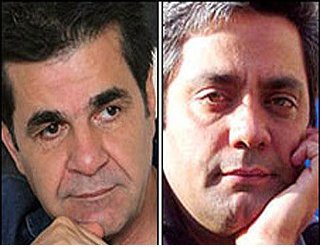
Final Ruling for Jafar Panahi & Mohammad Rasoulof

0


HRANA News Agency – The Appeals Court of Tehran Province has issued its rulings for Jafar Panahi and Mohammad Rasoulof who were sentenced to prison terms and bans by the lower court. Jafar Panahi and Mohammad Rasoulof are two Iranian filmmakers and directors charged with acting against national security and propaganda against the regime.

According to a report by Iran Newspaper, Jafar Panahi and Mohammad Rasoulof previously appeared in the 26th Branch of the Revolutionary Court with Judge Mir Abbasi presiding over the trial. During the proceedings, a representative of Tehran’s Prosecutor read the charges against the accused and said, “Jafar Panahi and Mohammad Rasoulof have been convicted of acting against national security through social activities and conspiracy to disturb public peace and safety and the crime of propaganda against the regime.”

Jafar Panahi and Mohammad Rasoulof intended to make a film titled “Farda” in order to illustrate the current social and cultural conditions in the Islamic society.

The representative of Tehran’s Prosecutor asked the court to punish the two filmmakers based on sections 500 and 610 of the Islamic Penal Code. Following the prosecutor’s statements, Jafar Panahi and Mohammad Rasoulof presented their written answers to the judge’s questions, and attorneys defended their clients.

At the end, citing all the evidence presented to the court, Judge Mir Abbasi sentenced both defendants to 6 years in prison and banned Jafar Panahi from making or directing any films, writing any movie scripts, conducting any forms of verbal or written interviews with domestic or foreign media and leaving the country for a period of 20 years. According to the court’s ruling, Jafar Panahi is allowed to leave the country for pilgrimage to Mecca or for seeking necessary medical care after posting bail.

Following the defendants’ objections and requests for appeal, their cases were reviewed by the 54thbranch of the Appeals Court in Tehran Province. The Appeals Court then issued its final rulings upholding the verdict against Jafar Panahi but reducing Mohammad Rasoulof’s prison sentence to one year.


Source

Student Activist Javad Abuali Sentenced to 1 Year in Prison

0


HRANA News Agency – Javad Abuali was sentenced to one year in prison and has reported to the authorities to begin serving his term.Javad Abuali is a political and social activist and a student at Azad University in the city of Behbahan, Khuzestan Province.

According to a report by Daneshjoo News, Javad Abuali was arrested in August 2010 by Iran’s Intelligence Agency in Behbahan and held incommunicado for months. The 2nd branch of Revolutionary Court in Mahshahr sentenced Javad Abuali to 12 months in prison, and the 13th branch of Khuzestan Province Appeals Court upheld the verdict.

For propaganda against the regime, Javad Abuali received 6 months in prison and for insulting the Supreme Leader, another 6 months were added to his punishment.


Source

Continued Arrests in Kurdistan; No News of Kurdish Activists

0


HRANA News Agency – Last week, Iranian security forces arrested two Kurdish citizens in Mahabad, West Azerbaijan Province. Citing Norooz Website, Human Rights Activists News Agency (HRANA) has reported that Jalal Naseri and Qasem Rahimi have been arrested and taken to the Intelligence Agency’s office in the city of Mahabad.

On Thursday, October 13, 2011, Rahim Bajor was summoned to the Intelligence Agency in the city of Marivan and was detained subsequently.Rahim Bajor is a student in Payam Nur University in Marivan.

Furthermore, another Kurdish student, Khabat Arefi, has been locked up behind bars for more than a month in the Intelligence Agency’s detention center in Marivan, and there has been no news of him thus far. Khabat Arefi is a resident of Chor Village near the city of Marivan.


Source

Iran ‘most significant’ threat to world: Canada PM

0


AFP — Iran is the “most significant” threat to world peace and security, Canadian Prime Minister Stephen Harper said Friday after the US accused Tehran of plotting to kill the Saudi ambassador to Washington.

“We have no quarrel with the Iranian people, but the regime in Tehran represents probably the most significant threat in the world to global peace and security,” Harper said.

This week, Canada’s Foreign Minister John Baird said Ottawa and its partners were considering “consequences” for Iran over the alleged plot.

“Canada condemns this planned attack on the Saudi ambassador on US soil,” Baird said.

“Indications of the Iranian regime’s involvement are extremely serious. Canada will work with our international partners in considering the consequences for Iran’s actions.”

Iran has strongly denied any involvement in what the US says was a plot by the Iranian Revolutionary Guards’ elite Quds force to kill the Saudi envoy by hiring assassins from a Mexican drug cartel for $1.5 million.


Source

Obama: Iran Must be Held Accountable

0


VOA – President Barack Obama says Iran’s government must be held accountable for what he calls “dangerous and reckless behavior” in what the U.S. has alleged was a plot to assassinate Saudi Arabia’s ambassador to the United States. President Obama spoke during a joint news conference with South Korean President Lee Myung-bak.

Though their talks were wide-ranging, including the U.S.- South Korea free-trade agreement and tensions with North Korea, Mr. Obama was pressed about the U.S. response to the alleged plot.

Saying the facts are there for all to see, he said the United States knows Manssor Arbabsiar, a naturalized U.S. citizen with an Iranian passport charged in the case, had direct links and was paid and directed by individuals in Iran’s government.

Mr. Obama called it a “dangerous escalation” and part of a pattern of dangerous and reckless behavior, adding Iran must pay a price in terms of further isolation.

“For Iran to have been involved in a plot like this indicates the degree to which it has been outside of the accepted norms of international behavior far too long,” he said. “This is just one example of series of steps they have taken to create violence and to behave in a way that we don’t see other countries doing.”

Mr. Obama had this response when asked specifically if the United States knew whether Iran’s top leaders had knowledge of the plot.

“Even if, at the highest levels, there was not detailed operational knowledge, there has to be accountability with respect to anybody in the Iranian government engaging in this kind of activity,” he said.

At the State Department, spokeswoman Victoria Nuland said U.S. and Iranian diplomats had a meeting this past Wednesday, which an official said occurred at the United Nations, in which the alleged plot was discussed. She provided no details.

A U.S. official said the United States is sending out special teams to brief foreign governments on the case, saying among those requesting briefings were China, Russia and Turkey.

On other subjects, President Obama and President Lee reaffirmed the strength of the U.S.-South Korea alliance, saying they remain completely united on their approach toward North Korea.

“Our principled approach will remain steadfast,” President Lee said. “We agreed that North Korea’s continued pursuit of nuclear weapons poses a serious threat to peace and stability of the Korean peninsula and the world. We will continue to work toward denuclearization of the peninsula.”

“The choice is clear for North Korea,” said President Obama. “If Pyongyang continues to ignore its international obligations, it will invite even more pressure and isolation. If the North abandons its quest for nuclear weapons and moves toward denuclearization, it will enjoy greater security and opportunity for its people.”

Ratification by the U.S. Congress of the U.S.-South Korea free-trade agreement was a key focus of the Obama-Lee talks. Both said the deal, which still must be approved by South Korea’s national assembly, will help create jobs and expand exports.

President Lee conveyed his gratitude directly to U.S. lawmakers as he also addressed a joint meeting of Congress, before a state dinner at the White House.

Other topics in Thursday’s discussions included Afghanistan, support for democratic transitions in the Middle East and North Africa, the global economy and the G20 and APEC summits in November, and South Korea’s planning for the next Nuclear Security Summit in March.


Source

U.S. can win U.N. over Iran with evidence of terror plot against Saudi envoy

0


If the United States has evidence and plays its cards right, history shows that it can win the powerful U.N. Security Council to its side in the case of Iran’s alleged plot to assassinate a Saudi ambassador.

The United States has accused Iran’s Islamic Revolutionary Guard Corps elite Quds Force of orchestrating a plot to assassinate Saudi Arabia’s envoy to Washington and suggested it could push for council action against Iran.

Iran denies the U.S. allegations, which Tehran’s U.N. Ambassador Mohammad Khazaee said in a letter to U.N. Secretary-General Ban Ki-moon and the Security Council was U.S. “warmongering” and an “evil plot” against Tehran.

U.S. Ambassador Susan Rice forwarded details of the case against Iran to Ban, telling him that Tehran’s actions were “a serious threat to international peace and security.” She said Washington was speaking with council members about the case and asked Ban to forward the case details to the General Assembly.

The U.S. delegation has not made up its mind whether to approach the council with the Iranian case. But diplomats say that Washington is considering it.

“They haven’t settled on a game plan yet,” a council ambassador told Reuters. “They’re considering all options. More sanctions, a resolution, a condemnation, it’s all possible.”

If the United States follows the example of previous U.S. administrations and presents its case at a public meeting of the 15-nation Security Council, it might be able to galvanize public support against doubters and critics who have suggested that the new charges against Iran border on the preposterous.

That was the case during the 1962 Cuban missile crisis, when U.S. Ambassador to the United Nations Adlai Stevenson unveiled during a televised council meeting photos taken by U-2 spy planes of Soviet missiles and launch pads on Cuba and confronted Soviet Ambassador Valerian Zorin with the charges.

“Do you, Ambassador Zorin, deny that the U.S.S.R. has placed and is placing medium- and intermediate-range missiles and sites in Cuba? Yes or no?”

The Soviet envoy refused to give a definite answer, telling Stevenson: “I am not in an American courtroom.”

“You are in the courtroom of world opinion right now, and you can answer yes or no,” Stevenson responded. He never got a clear answer from Zorin, and the Soviet veto power made it impossible to get any formal Security Council action against the Soviets.

But Washington did win in the “courtroom of world opinion.” On that same day, Oct. 23, 1962, the Organization of American States unanimously backed the U.S. plan to impose a naval blockade around Cuba to stop further missile shipments.

In 1983, U.S. Ambassador Jeane Kirkpatrick played an audio recording of a Soviet interceptor pilot involved in the shooting down of Korean Airlines flight 007 over the Sea of Japan, which killed all 269 passengers and crew. Afterwards, it was impossible for the Soviets to deny their involvement.

‘Good theater’

But recent history also shows that if the evidence is weak, skeptics on the Security Council – the only U.N. body with the power to impose sanctions or authorize military force – will prevail and Washington will be unable to bring it around.

That was the case with U.S. Secretary of State Colin Powell’s Feb. 2003 speech to the Security Council in which he presented U.S. intelligence on Iraqi leader Saddam Hussein’s alleged nuclear, biological and chemical weapons programs.

Perhaps attempting to follow in Stevenson’s and Kirkpatrick’s footsteps, Powell’s speech had visual aids – images, audio recordings, even a small vial of white powder that was intended to look like enough deadly anthrax to kill off the entire U.S. Senate.

That speech, based on evidence that is now known to have been erroneous, did nothing to sway the skeptical French, Russians and Germans, who eventually forced the frustrated United States and Britain to abandon their efforts to secure a U.N. green light for their March 2003 invasion of Iraq.

David Bosco, a professor at American University in Washington, said using the council can be good “public theater” but may not convince doubting council members.

“Dramatic public presentations are usually more effective at swaying domestic public opinion than other states,” he said. “Powell’s speech didn’t change the dynamic on the council in terms of support for the war, but it was a major hit at home.”

U.N. diplomats said that Washington was already doing the preliminary work to persuade council members of the strength of a case that a number of analysts have raised questions about. Many analysts say they find it hard to believe that the Quds force would behave as stupidly as the case documents suggest.

Envoys said a team of experts from the Central Intelligence Agency, Federal Bureau of Investigation, Drug Enforcement Administration and State and Justice Departments joined Rice and her Saudi counterpart on Wednesday to brief council members on the details of the plot.

The allegations against Iran made a strong impression on some diplomats but clearly did not sway all of them.

French Ambassador Gerard Araud described the allegations as “credible and very convincing,” adding that France would be “very supportive” of any U.S. initiative at the council.

Russian Ambassador Vitaly Churkin said Moscow would “look at it very, very seriously.” Chinese envoy Li Baodong said only that he had “sent it back to Beijing.”

Council diplomats said that Washington had dispatched teams of CIA, FBI and DEA experts to Moscow and Beijing, which are among the council’s most skeptical members and hold a veto.

Brazil’s U.N. Ambassador Maria Luiza Ribeiro Viotti appeared less than convinced, however, suggesting to reporters the U.S. judicial process should be allowed to play out first.

Council envoys say the other two members of the five-nation “BRICS” club of powerful emerging market nations – India and South Africa – might also be hard sells for Washington. The BRICS – Brazil, Russia, India, China and the South Africa – have resisted Western efforts on Syria and other issues.


Source