Home Blog Page 562

Dervishes Seriously Injured, One Dead, Mosque Under Survillance, Says Spokesperson

0


Following a violent confrontation of plainclothes forces with Gonabadi Dervishes in Kavar town of Fars Province which led to shots being fired and arrests of the principles of Majzooban-e Noor, a website that reported on the religious group’s news, the International Campaign for Human Rights in Iran was able to talk with Seyed Mostafa Azmayesh, the International Spokesperson for Gonabadi Nematollahi Dervishes and International Relations Director of The International Organisation to Protect Human Rights in Iran.

Campaign: Were the latest round of clashes limited to the town of Kavar in Fars Province?

No. The confrontations did not end in Kavar. Just on Sunday and Monday, they attempted to round up the news websites of dervishes. They forcefully entered the homes of lawyers and managers of Gonabadi Dervishes news websites. They arrested 15 people. The Governor of Kavar had asked for representatives from the Dervishes, or their lawyers, to talk with them and to end the debacle. When they showed up, they were arrested, too. Therefore this was more than cracking down on a small town. It appears to be a coup d’etat against all dervishes.
Campaign: Who are the people who are responsible for these arrests. What group or organization did this?

They are clearly affiliated with the seminary student Basij [paramilitary] members. They are a group of seminary student Basijis who are being trained as missionaries. They are being trained as missionaries by the Qom Seminary under the oversight of the Commission to Combat Emerging and Psudo- Spiritual Beliefs. [They are being trained] by the Association of Qom Seminary Teachers, under the direction of Mohammad Yazdi and others, to go around and commit these acts.

Campaign: Have those arrested been able to contact their families? How many people were arrested?

No, they have not had any contact with their families. Overall, the number of those arrested in Kavar township exceeds sixty people. The people arrested in Tehran have been taken to an unknown location and no one has any information about them.

Campaign: Did the clashes leave any injuries?

Yes. Six people were injured when they were shot with bullets. They were transferred to a hospital. One of them was shot in the head. He is still alive and God willing, he will get better and be discharged from the hospital. But the doctors said that he is in critical condition.

Campaign: What is the situation in Kavar right now?

The atmosphere is one of a complete state of security, like martial law. I mean closed circuit cameras have been installed where the dervishes used to gather, their Hosseinieh [Mosque], so that they can identify any of the dervishes that go through, so that they can go to their homes and arrest and detain them. For this reason, there is a complete, heavy, and intense atmosphere of a security and martial state.

Campaign: What kind of follow-up has been done about the detained dervishes?

Inside the country, those lawyers who have not yet been arrested are trying to identify the detained individuals so that they can file complaints with judicial authorities and head of the Judiciary. Those dervishes who are outside the country, and especially supporters of The International Organisation to Protect Human Rights in Iran, have received documents and evidence about this. [They have received] photographs of those who were injured by bullets during these clashes. They have prepared a file and after translating the documents, they sent it to the office of Ahmad Shaheed, the UN Special Rapporteur for Iran in Geneva. More information will be sent to him, too.

Campaign: Why do you think there is increased pressure on Gonabadi Dervishes?

I must say this is not unrelated to what happened before the election. There are two factors in operation here. One is that dervishes have traditionally voted for those who have defended the rights of dervishes. Because in the past Mr. Karroubi had repeatedly defended the rights of dervishes, during the presidential election the dervishes voted for him…This is one of the reasons that has brought on the forceful crackdown on the dervishes to seek revenge on them. The other reason is that the faction affiliated with Esfandiar Rahim Mashaei (Mahmoud Ahmadinejad’s Chief of Staff) is considered the “Deviant Group,” and they believe that they…are not following the Sharia….and that is why by suppressing the dervishes, they wish to prepare the groundwork for cleansing the slate for the parliamentary elections…someone by the name of Shahbazi was dispatched to Sarvestan, Kavar, and the Shiraz suburbs, and because the number of people around there who have recently been attracted to dervish ways and Sufism has grown large, things led to such clashes in the end.

Names of those arrested during the recent days’ clashes, according to IOPHRI:

1. Hojjat Valizadeh from Kavar, 2. Kazem Hosseinzadeh from Sarvestan, 3. Hojjat Keshavarz from Sarvestan, 4. Rahim Pour Rostam from Kazeroon, 5. Yadollah Parsian from Nourabad, 6. Ali Asghar Saeedi from Sarvestan, 7. Nasrollah Heydari from Nourabad, 8. Saeed Karimaee from Karaj, 9. Massoud Ahmadi from Karaj, 10. Amin Saffari from Karaj, 11. Iman Karami from Shiraz, 12. Hamid Moradi Sarvestani, 13. Reza Entesari, 14. Alireza Roshan, 15. Ali Karami, 16. Mehdi Asnaloo, 17. Mehdi Hosseini, 18. Ali Astaraki, 19. Mostafa Abadi, 20. Mehran Rahbari, 21. Hamid Pour Rezagholi, 22. Khosro Dari, 23. Majid Mottaghian, 24. Hossein Asadi Fereidooni, 25. Hassan Visgheli, 26. Hamid Parhizgar, 27. Hekmat Naderi, 28. Khosro Dari, 29. Hossein Asadi, 30. Majid Mottaghian.


Source

Political Prisoner’s Friend Commits Suicide After Release

0


The International Campaign for Human Rights in Iran – Confirming news of Behnam Ganji Khaibari’s suicide, a friend of his spoke with the International Campaign for Human Rights in Iran about the 22-year-old student who was arrested on 31 July, along with human rights activist Kouhyar Goudarzi, and was later released on 8 August. He told the Campaign that “Behnam Ganji did not have any political or student activities in his the past and was merely arrested for his friendship with Kouhyar Goudarzi.”

Campaign:  You spoke with Mr. Ganji after his release.  What did he share with you about his detention period?

Kouhyar Goudrarzi, Behnam, and another one of their friends were arrested illegally at Behnam’s house on 31 July. Behnam had gone to buy bread and just as he entered the home, plainclothes forces who were hiding ambushed him and entered the house behind him by force. During the illegal and forceful entry into the home, they treated Behnam very forcefully. They were arrested by those plainclothes forces and were transferred to solitary cells inside Ward 240 of Evin Prison. Behnam himself told me these details after his release.

Behnam did not have any political or student activities in his past, but he was interrogated every morning and afternoon inside Ward 240 of Evin Prison. And he was under increasing pressure from security forces and interrogators [who pushed him] for confessions against himself and Kouhyar Goudarzi. The interrogators questioned him about his personal affairs and his private life and tried to put him under pressure to confess against Kouhyar, but they did not succeed.

Campaign:  How did his time in prison affect him?

Given that he was not politically active, he was not mentally prepared for arrest and solitary confinement, stressful interrogations with blindfolds and under psychological pressure, and white torture. These events had a huge impact on him and caused severe depression and isolation for him during the days after he was released from prison. After his release from Wards 240 and 209, he was so frightened, he even feared his own shadow and never went anywhere alone.

Campaign:  Was he abused during his detention?  What was the reason for his arrest?  Or what did he think it was?

Behnam did not tell me anything about his physical torture or being beaten during his interrogations. However, the white torture and psychological pressure and detention in a small solitary cell can be a lot more psychologically destructive than physical torture. Without a doubt, government authorities are responsible for his death, because by illegally detaining him they caused his severe depression. The reason for Behnam’s arrest was merely his friendship with Kouhyar Goudarzi. He was informed of his charge as “acting against national security through contact with Kouhyar Goudarzi” at the Second Branch of Evin Prison Court.

Campaign:  Did you know him before his arrest?  Was he depressed?  Does his family know what pills he took and at what time and how? Were they able to get him to a hospital? Or did they see him once he had already passed away?

I have known Behnam for years. He was a jovial fellow with a great sense of humor. He did not have any kind of depression or mental disorder prior to his arrest and it is not clear what they did to him in solitary cells and interrogation rooms to cause him such depression. His depression after his release was so bad that when he went to see a psychiatrist with his family the psychiatrist authorized him to go under treatment inside a clinic. I don’t know what kind of pills he used. His family got home at around 3:00 a.m. on Friday morning and found him dead and were unable to do anything for him. The last contact the family had with him was at 11:30 p.m. on Thursday night. He attempted suicide at about 12:00 midnight. After police forces appeared at the scene, they disrespected the family and the corpse, and did not even help to transfer the body downstairs from the fourth floor. His father and brother had to carry the body down four flights of stairs in their residential complex.

Campaign:  What did he say about Kouhyar?  Did they see each other there?

After being transferred to Ward 240, Behnam and Kouhyar were kept in solitary cells and did not have any information about each other. Behnam told me that he only heard the sound of Kouhyar’s interrogations several times, when he was discussing the law with his interrogators, calling their actions against the [Islamic Republic’s] Constitution. And once, also, while the two were transferred to the Evin Prison Court, he saw Kouhyar in the Evin Prison compound.

Campaign:  What conditions is the family in right now?

The family is extremely saddened by this event. Behnam was the youngest child in the family. He was only 22. This tragedy is a big shock to them. His parents had come to Tehran from Mashad to try to release him from prison. Behnam was released, but now his parents have to take his body instead of him to Mashad.

According to JARAS website, Behnam Ganji’s body has been transferred to his home city of Mahsad, and his funeral was held there on Sunday.


Source

Senior Iranian Activist Says Revolutionary Courts ‘Illegal’

0


RFE/RL – A founding member of the opposition Freedom Movement of Iran has written an open letter to Iranian Supreme Leader Ayatollah Ali Khamenei calling for the dissolution of the country’s revolutionary courts, Radio Farda reports.

Ahmad Sadr Haj Seyed Javadi, a 94-year-old political activist based in Tehran, wrote in the letter published on various opposition groups’ websites that the revolutionary court system in Iran is “illegal” and the orders handed down by such courts are illegitimate.

In an interview with Radio Farda on September 5, Haj Seyed Javadi said innocent men and women are held in Tehran’s Evin Prison based on the verdicts made in revolutionary courts.

He said the revolution which took place 32 years ago in Iran has ended and therefore the existence of revolutionary courts no longer makes any sense.

“In my opinion, these [revolutionary courts] are institutions run by security bodies in order to get some people in trouble or to detain them,” he added.

Haj Seyed Javadi said it is the security officials who open files against people, tell the judge to issue prison sentences against them, and then incarcerate them.

What such institutions issue is not a verdict, but a “big lie,” he added.

The pressure on the Freedom Movement of Iran has intensified since President Mahmud Ahmadinejad took office in 2005.

In the course of the crackdown against opposition-led protests following Iran’s controversial June 2009 presidential election, a number of the party’s members along with their relatives were taken into custody.


Source

Iranian Regime Orders 5 Christians To Report To Prison, Group Says

0


InsideofIran: Iran on Tuesday, September 6, ordered five Iranian Christians, including a heavily pregnant woman, to report to prison on charges linked to their Christian activities, a mission group working in the region said.

“Five believers and [church] ministers convicted of “crimes against the Islamic Order on March 8, 2011 in [Iran’s southwestern city of] Shiraz,” have been told “to report to prison immediately to serve a one year prison sentence,” explained Jason DeMars who leads Present Truth Ministries.

DeMars identified the Christians as Behrouz Sadegh-Khandjani, Mehdi “Petros” Furutan, Mohammed “William” Belyad, Nazly Belyad and Parviz Khalaj.

Nazly, he said, “is about seven months pregnant”. DeMars added that “This absolutely breaks our heart.” He told BosNewsLife that he had urged supporters to “Please pray for these brothers, our sister, and the little baby that is growing inside of her.”

“PRAYING FOR MIRACLES”

He said he had asked Christians to “pray for miracles to take place so that she does not have to be in prison.”

Iran’s leadership had no immediate comment.  However, the government and officials linked to President Mahmoud Ahmadinejad have earlier warned of “the danger of spreading Christianity” in this strict Islamic, but youthful, nation.

“Islam approves Christianity in general, but with regard to the religious teachings of Christianity, unfortunately we witness the spread of Christianity among our youth,” said Ayatollah Hadi Jahangosha, an influential Islamic scholar close to the government, in recent comments.

Iran’s Supreme Leader Ayatollah Ali Khamenei has also condemned the growing house churches.

There may be as many as at least 100,000 Christians in Iran, many of them former Muslims, according to church groups.


Source

Mousavi says no point in joining Iran’s parliamentary elections


In his first meeting with all three of his three daughters since he was put under house arrest in February, opposition leader MirHosein Mousavi said the restricted political situation does not warrant participation in the coming parliamentary elections.

On Wednesday September 7, the Kaleme opposition website reported on Mousavi’s meeting with his daughters and quoted him saying: “In view of the rigidity of the current situation, one cannot rest any hopes on the election and participating in it.”

MirHosein Mousavi and his wife, Zahra Rahnavard, have been under house arrest since February, virtually cut off from the outside world.

Kaleme writes that the family meeting was unprecedented because it took place in the home of one of the daughters, away from the house where Mousavi and Rahnavard have been confined for the past seven months. A senior member of the judiciary was also present at the meeting.

Mousavi and Rahanavard have reportedly told their children that they are denied access to newspapers, radio and even pen and paper in an attempt to “erase the truth from our minds.” They have said that government forces have confiscated many of their belongings, including a number of paintings and artifacts.

MirHosein Mousavi and Zahra Rahnavard were put under house arrest after Mousavi, along with the other Iranian opposition leader, Mehdi Karroubi, rallied Iranians on February 14 to demonstrate in support of the Arab uprisings in the region.

The two opposition leaders have each been held under house arrest, together with their wives, and completely cut off from the outside world without being officially charged with any crime.

The two had challenged Mahmoud Ahmadinejad’s victory in the 2009 presidential election, which led to widespread protests across the country.

The Islamic Republic will hold parliamentary elections in March, and for months reformists have been hotly debating whether they should take part as candidates.

Mohammad Khatami, a former Iranian president and top reformist figure, has said reformists cannot participate until: all political prisoners are released; the strict political atmosphere is opened up; the media is allowed to report freely; and political parties commit to a transparent election process.


Source

Ahwaz refugees await aid in Iraq camp, fear clampdown by Iran allies

0


By SAUD AL-ZAHED

The case of Ahwazi refugees fleeing Iran and currently awaiting rescue at the Syrian borders constitutes another chapter in the ongoing saga of the persecution of Arab Iranians whether at the hand of the Persian state or its allies in the region.

Ahwazis living in al-Walid refugee camp on the Iraqi-Syrian borders are caught between pro-Iranian militias, who are bound to persecute them if they try to enter Iraq, and the Syrian regime, which had previously handed Ahwazi refugees over to the Iranian authorities, said Dr. Karim Abdian, director of the Ahwaz Human Rights Organization.

“They are only left with Jordan, yet to go there they still have to pass through the Syrian territories and this is extremely dangerous,” he told Al Arabiya.

Abdian explained that because of lobbying from pro-Iranian groups the Iraqi government decided to demolish the camp and ordered its inmates to leave by the end of September.

“More than 95 Ahwazis belonging to 17 families live in the camp and suffer severe water shortage, lack food, have no access to medical care, and have not received any schooling since 2007.”

Abdian said he is scheduled to hold a meeting at the headquarters and the UNHCR in Geneva and will submit a list of the Ahwazi refugees trapped in al-Walid camp, as well as those living in other Arab countries.

Abdian added that a series of meetings have already taken place in the UNHCR Middle East headquarters, located in the Jordanian capital Amman, as well as in several of the Commission’s offices in Turkey, Syria, and Iraq.

He explained that the organization has since 2007 been working hard to relocate Ahwazi refugees who fled persecution in Iran.

“We managed to send many of them to Europe, the United States, and Australia.”

While searching for countries willing to host the inmates of al-Walid camp, Abdian expressed his disappointment that Arab countries have not intervened to save their brethren.

Despite complaints of indifference on the part of Arab countries, the initiative made by a disabled Bahraini to help the refugees at al-Walid camp is bound to set a positive precedent.

According to the Bahraini website Daily News, former employee Ali Khaja donated during the holy month of Ramadan an amount of $7,000 to the homeless Ahwazis.

“These people are suffering in the desert. They have no food, water or other necessities of life,” he said.

“It’s been six years since they have been staying in these dilapidated camps and they haven’t got any aid or a ray of hope from any government.”

Khaja said he feels for the refugees who are living in the middle of the desert and are, therefore, subjected to sizzling summers and freezing winters, in addition to continuous sandstorms.

“Even the nearest hospital is 200 kilometers away,” he added.

Al-Walid camp was originally established and inhabited by Palestinians who fled violence-ravaged Baghdad in 2006. They were later joined by Ahwazis from Iran and Kurds from Iraq.


Source

Bahareh Hedayat returned to prison after end of furlough

0


Bahareh Hedayat, student activist, member and spokesperson of the Central Council of Daftar Tahkim Vehdat (National Student Organization), was released from prison on August 1st for temporary leave in order to receive follow up treatment for her illness.

The family of Bahareh Hedayat told Human Rights House of Iran that this student activist returned to prison on Monday afternoon due to the end of her furlough and the denial of an extension for her medical leave.

Bahareh Hedayat suffers from gastrointestinal and internal disease, which was being treated during her time outside of prison.

Hedayat is sentenced to 9 ½ years in prison and has served her time behind bars in the public ward of Evin prison.


Source

My Father was Assassinated Because He Refused to Give a Falsified Testimony

0


Interview with Dr. Abdolreza Soudbakhsh’s son:

Dr. Soudbakhsh’s son has told the Rooz that his father was killed by the regime’s agents because he refused to give falsified testimony of the victims of the infamous Kahrizak prison.

Behrang Soudbakhsh told Rooz, “My father was asked to give a written testimony, confirming that Kahrizak’s victims have died of meningitis and his patients who had been freed from Kahrizak have been suffering from meningitis too. But my father refused to do so and he was assassinated afterwards.”

Although   11 months have passed since his death, no one responds to his family’s inquiries.

Abdolreza Soudbakhsh, a specialist in infectious diseases at Imam Khomeini hospital and professor at Tehran University, was shot dead on 21st September 2010 in front of his private clinic. Following his assassination, the police chief denied his murder had anything to do with the cases of alleged rapes in Kahrizak prison. But the reports suggest that Dr. Soudbakhsh had treated and done a medical examination on some of the victims who were reportedly raped in Kahrizak prison.

Some of detainees in Kahrizak who had become afflicted with infectious diseases in their genital organs had sought Dr. Soudbakhsh’s medical advice after they were set free from the prison.

Behrang Soudbakhsh, Dr. Soudbakhsh’s son, says “My father was killed because he did not want to lie, and he did not lie.”

The following is the Rooz interview with Behrang Soudbakhsh.


Mr. Soudbakhsh, 11 months have passed since your father‘s assassination. Where does your father’s case stand at the moment?

-Nothing has been done on my father’s case. No one has been arrested in regard to my father’s assassination. And whenever we ask about the case they say that it is under investigation and nothing else.

 They have been from the beginning claiming that there had been a personal motivation behind your father’s murder. But they gave no explanation and have kept silent. Is that right?

Yes. They knew well that there had not been any personal motivation. We are absolutely confident that there was no personal motivation behind his murder. My father was not a wealthy man to be killed for his money or possessions, and he had no enemies either. All his patients loved him, and he had very friendly relations with them. Lots of people had come for his funeral that we didn’t know, and we later realized that they were my father’s patients. My father was really a good human being and he used to do whatever he could for help his patients. Even one day my mother realized that nearly $12,000 had been deducted from her account. When she asked my father, she realized that my father had given the money to one of his needy patient without taking any receipt or note.  He used to do a lot of these kinds of jobs. We told the officers in the criminal investigation department (CID) that if there had been a personal motivation behind my father’s death, my father had to lodge a complaint not the one who had taken the money. Even the CID officers said that it could not be the case. We told CID officers that there cannot be a personal motivation behind my father’s murder. Ironically, I was asked very silly questions by CID officers. I had recently come back from India, and they were asking me questions about the life in India. How much is the rent for a flat? How much is the price of bread? How much is the price of petrol and these sorts of questions, as if they were to travel to India and asking for information.  They asked me nothing about my father. The only question regarding my father’s case was whether I suspect anyone. I said no and said that I am confident that there is no personal motivation behind my father’s murder.


It was later said that your father’s file has been taken from CID. Where is your father’s file now? Do you have any news?

No. we don’t know. They refused to cooperate with inquiries to my father’s death.

 What sorts of inquiries have you about the case?

According to the eye witness accounts, two unmasked men on a motorbike were roaming around my father’s private clinic for about half an hour. The killers appear to have been so unworried about being caught that they did not cover their faces. Secondly my father was shot from his side. They had though that my father had worn a bullet proof vest, but they shot him from his side where the vest didn’t protect his body. It shows that they were very well trained. Exactly at the same time a taxi driver had blocked the road for ten minutes. But the officials don’t say anything about the taxi driver and his role. We asked them about the taxi driver but they said that the CCTVs were not working at that moments and there was no footage available. Acts of murder happen everywhere in the world. But what has happened here to my father is pretty unique.  CCTVs did not work exactly at the same the time when my father was killed, the taxi driver has not been identified, well trained killers came unmasked and killed my father and after 11 months no suspect has been arrested. That doesn’t happen anywhere. It is absolutely clear where they have been trained.


Where have they been trained? Who has organized the incident?

Look, everything is clear. These people had a gun with a silencer which itself carries heavier charges in Iran, because it is regarded as political crime. The killers were so confident of not being caught that they didn’t cover their faces, and after they shot my father, they left the scene and ran away through the Keshavarz BLV in opposite direction.  After my father’s assassination, within 7 minutes approximately 100 security forces from a different organization came to the location. How could they do that in such short period of time? Had they been in a state of alert? Did they know anything about it beforehand? If we have such high security status in our country, why aren’t they able to arrest even a single suspect after eleven months? How is it possible that the CCTVs had not been working exactly at that time? Both the drug store and the clinic had CCTVs. The officers have taken the footage from the CCTVs to identify the killers. Can they really not identify them from the footages? That is impossible.  We asked them to look up the footage, but didn’t reply to us. I assure you, and I am confident, that the entire story has been arranged by someone who is powerful. Even we were told that a person who had seen the killers and had gone to the CID to identify them was severely beaten by the officers. My brother had met with somebody who had been fined at exactly the same time and in same place. He then asked the officers that how the CCTVs could register a license plate number but not register the killer’s face.  The only thing they said was that the CCTVs were not working at that time.


It was believed that some of Kahrizak’s detainees were your father’s patients. But the police said that your father had nothing to do to with Kahrizak?

It is like claiming that I have nothing to do with my father. How is it possible? My father’s files are there and everything is registered. Among my father’s patients were victims of  Kahrizak prison who were raped there. My father specialized in infectious diseases. I still remember that he was taken aback by what had happened at Kahrizak prison. Once my father asked  how could they rape an 18-year-old kid so severely that he died after that?  How could they rape the children? My father’s medical files are available and no one can deny that.


Mr. Soudbakhsh, you believe that your father was killed because he knew what had happened at Kahrizak. Is that what you want to say?

Yes. My father was really a good man. He had an honorable life, and he never lied. He was a simple man who was committed to law and moral principles. My father was told to say that victims of Kahrizak had meningitis. He asked to see the dead bodies, and when he examined them, he concluded that they had died under torture, not meningitis. He was even under pressure to report that his patients’ genital and urinary infections were result of meningitis.  But my father refused to give in. Once my father had made an interview with German radio in which he disclosed the genital infections in some victims of Kahrizak. My father was about to leave Iran on the night of his assassination. We are three brothers, and we live abroad. Only my mother and sister live inside Iran. They thought that my father had sent his family overseas and he himself was to leave Iran. They were thinking that my father was going to the US to reveal his information in detail in an open society. My father was one of the few experts in Iran who had precise information on the issue.

What are you going to do in the end? 11 months have passed since your father’s assassination and no investigation has been made so far. How are you going to follow your father’s case?

If they don’t introduce the killer or killers, we will definitely follow the case through the international bodies and institutions.

What would like to say as conclusion?

My father was really a good man. Those who knew my father know this. He was killed because he was an honest man and did not lie. He was asked to lie, but he didn’t lie. He was entire our life who was unfortunately killed. Though there is not promising prospect for a just trial of the killers, we definitely follow the case, and we will not let my father’s killers run away.

Imprisoned Actor’s Family Awaits His Release After Pardon

0


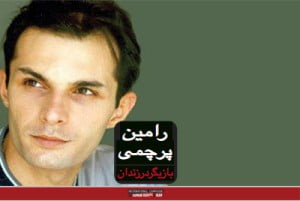
On Saturday, 3 September, several Iranian websites reported the release of Iranian stage and screen actor, Ramin Parchami. However, he remains at Evin Prison’s Ward 350.  His wife, Shokouh Jiroodi, told the Campaign that Parchami’s pardon letter was signed by the judge, and he is therefore is expected to be released any moment.

While waiting outside Evin Prison for her husband’s release for hours on Monday, his wife spoke with the International Campaign for Human Rights in Iran. “It’s 10 p.m. now and many of the pardoned prisoners have already come out  It is no longer crowded outside the prison, but I continue to wait for Ramin. I have been coming and standing outside Evin Prison for three nights now, but Ramin has not been released yet. I saw his pardon letter, written by the judge. But his name has not been read by prison authorities like the other pardoned prisoners. Each of the soldiers in front of the prison say something different. In a few minutes, the lights-out bell will go off in the prison, and then no prisoners will be sent out. He will not be released tonight, either,” said Jiroodi.

Parchami’s wife told the Campaign that she had a booth visit with her husband on Saturday. “Thank God, he was very well and very happy for his release.  I think it must be hard for him to be waiting for his release at any moment and yet, not be released,” she said. “Tonight they read the names of 40 prisoners who have been pardoned, but Ramin’s name wasn’t among them. Many of the pardoned prisoners had financial charges, and a few of them were security prisoners. While I was standing here, I saw Mostafa Tajzadeh come with his family and go inside the prison. His leave was over,” she added.

“His case judge says that he sent the pardon letter to prison three days ago, but the prison officials were saying the letter has not arrived, until today, when they said his name is on the pardon list. But one of the soldiers said that if a large crowd gathers outside the prison, they won’t release Ramin. So I, along with 13 members of Ramin’s family who had came to welcome him, waked away from the prison gate and waited for Ramin on a street corner, but he was not released,” said Jiroodi.

Two days ago, Ramin Parchami’s family was informed that his name was on the list of pardoned political prisoners, advising them to appear at Evin Prison for his release. But for the third night in a row, his family waited for hours and he was not released. The actor was arrested on 14 February 2011 during street protests and transferred to Evin Prison.


Source

Alireza Roshan arrested along with a number of administrators from Majzooban Noor, a Gonabadi Dervish website


Ali Reza Roushan, poet, writer and head of the book section of Shargh Newspaper, was arrested at his home and transferred to an undisclosed location. Ali Reza Roushan is a poet who has published a collection of poems called “There is no book” and his poetry has been translated into French.

Reporters at Majzooban Noor website reported that a number of their colleagues and supervisors have been arrested. The names of the arrested are Hamid Moradi Sarvestani, Reza Entesari, Alireza Roshan, Ali Karami, Mehdi Osanloo, Mehdi Hosseini, Ali Astaraki, Mostafa Abdi, and Mehran Rahbari. Despite being arrested by plainclothes officials, judiciary authorities have not shared any information regarding the whereabouts of the arrested.

This website has reported that in addition to the 9 colleagues mentioned above who were arrested in Tehran, another 2 have also been detained. They are 2 dervishes by the names of Nusrat Tabasi and Ali Moazami.

Nosrat Tabasi is a dervish who was arrested on September 4th at his home and transferred to an undisclosed location by security agents.

Prior to this there was a violent incident on Friday September 2nd in Kavar County at Fars Province where Basij forces used tear gas and opened fire on scores of dervishes from the Nematollahi Gonabadi order, resulting in many injuries.

During these clashes a large number of dervishes in the city of Kavar were arrested. Also on September 3rd several plainclothes officials raided the homes of 2 dervishes named Shahbaz Zareh and Amanollah Cheraghi without arrest warrants. When they discovered these two individuals were not home, the agents arrested their fathers, Manouchehr Zareh and Hossein Ali Cheraghi.

Majzooban Noor website reported that on Sunday September 4th, a group of dervishes from Sirjan and Kurd City who were on their way to Kavar county were arrested by plainclothes officials. The names of the arrested are Ahmad Reza Hosseini, Akbar Ahmadi, Mehdi Azizi, Mohammad Mousavi, Jamal Hosseini, Khosrow Dari, Hasan Veyes Ghali, Hossein Asadi, Majid Moteghian, and Hamid Pourreza Ghali.

Also on the early morning hours of September 4th, 13 plainclothes officials accompanied by 2 soldiers attacked the home of Abdolreza Arayesh, a member of the Nematollahi Gonabadi dervish order. The plainclothes officials detained him and transferred him to an undisclosed location after confiscating personal documents and cultural items from his home.

Also arrested were a number of Gonbadi Dervishes who were visiting relatives or had accompanied the injured from the incident at Kava, to the Rajai Shiraz Hospital. The names of those arrested are Hamid Pourreza Gholi, Khosrow Dari, Majid Moteghian, Hossein Assadi Fereidooni, Hassan Veisghali, Hamid Parhizgar and Hekmat Naderi.

All the detained Gonbadi dervishes from the Kavar county incident were transferred to the headquarters of the Shiraz security police.


Source