Home Blog Page 561

Iran using Syria, Libya chaos to boost nuclear bid: envoy

0


UNITED NATIONS, September 7, 2011 (AFP) – Iran is taking advantage of chaos in Syria and Libya to boost efforts to build a nuclear weapon, a western envoy told the UN Security Council on Wednesday.

With international attention focused on the Middle East uprisings “Iran may believe it can profit from the situation,” France’s UN representative told a Security Council meeting on UN sanctions against Iran.

“It is accelerating its efforts. It has increased the number of centrifuges and provocative statements. But we are not fooled by this,” deputy ambassador Martin Briens told the council, highlighting western demands for the tougher application of sanctions.

“Iran’s military, nuclear and ballistic ambitions pose a growing threat,” said Briens. “The alarming signals are accumulating.”

Iran denies western allegations that it seeks a nuclear bomb. But the UN Security Council has passed four rounds of sanctions against Iran’s uranium enrichment. France’s President Nicolas Sarkozy said last week he would seek international support for even tougher measures.

France, Britain, Germany and the United States have reported Iran’s firing of a satellite in June to the UN sanctions committee as a potential violation. They say the launcher could also be used to carry missiles.

The Western powers say that Iran’s move in August to transfer centrifuge production to a secretive plant inside a mountain near Qom, south of Tehran, is a new sign that its nuclear program is not peaceful.

The EU nations and United States are seeking to persuade Iran to end its program through negotiations while applying the UN sanctions.

They are calling for tougher application of the current trade, financial and travel ban measures against Iranian officials linked to the nuclear drive however.

“We have made important progress in strengthening our implementation and enforcement of UN sanctions on Iran,” said US ambassador Susan Rice.

“We must redouble our efforts to sharpen the choice for Iran’s leaders to abandon their dangerous course.”


Source

Assad takes secret trip to

0


According to a report released minutes ago by Fars News Agency (the mouthpiece of the Revolutionary Guards of Iran), Alzaman newspaper (an Arabic paper out of London) has just revealed that Bashar Assad recently made a secret trip to Iran and consulted with Ayatollah Khamenei, the Iranian supreme leader and the Iranian President, Mahmoud Ahmadinejad.

Fars News Agency goes on to defend Assad and what’s happening in Syria by referring to the uprising of the Syrian people as an act inspired by the Zionist regime in Israel and enemies of the Center of Resistance (referring to Iran, Hezbollah and Syria).


Source

Growing pressure and arrests of Gonabadi dervishes, following the murder of Dervish “Martyr Vahid Ba


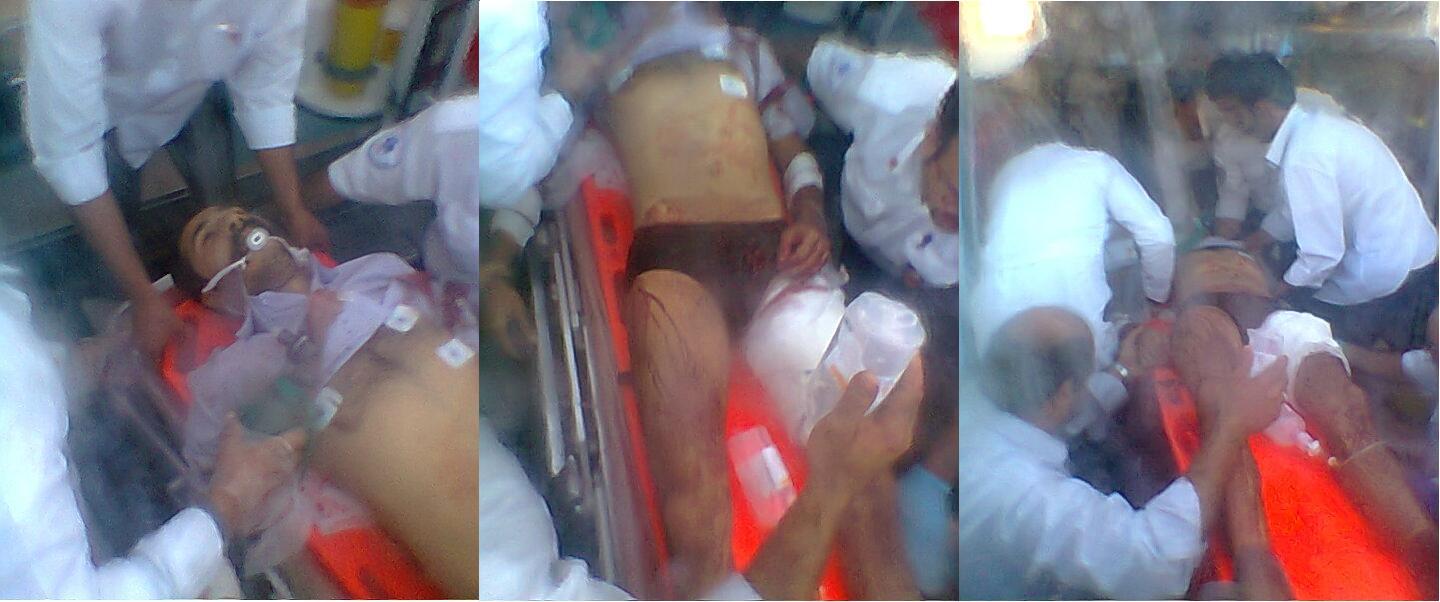
InsideofIran – In the last week, there has been growing pressure on the Gonabadi’s Sufi Order. As a result of the attacks to Gonabadi Sufis, severely injuring and arresting them, one of  the dervishes called Vahid Banani, who was gunshot in one of his main arteries, died in Namazi Hospital in Shiraz, on 6th September 2011.

Also the pressure has increased to dervishes’ lawyers. In the past few days, three lawyers, a group of administrators and supervisors of one of the News websites for dervishes have been arrested.

In follow-up to the press boycott on different religious groups in Iran, the followers of Nematollahi Gonabadi Sufi Order have been under heavy pressure by the Intelligent Security Forces.

A tight security atmosphere prevailing in the city of Sarvestan due to “Martyr Vahid Banani” funeral.

It has been reported that the Martial Law has been extended from Kovar to Sarvestan and the security of the city is very tight.

According to witnesses’ reports from Kovar, fifteen special Police Force cars and three coaches of armed Security Forces have been escorting the body of “Martyr Vahid Banani” from Shiraz to Sarvestan, for his funeral service.

The security forces have threatened the family of Vahid Banani that “if anyone except the family participate in the funeral, they will be faced with brutal force”. They have also been warned they would take the body of Vahid Banani and bury it in an unknown location.

In continuing the curfews in Estate of Fars cities, all entrances and exits to the cities are being controlled by the security and plainclothes forces. They are also restricting dervishes from entering to the city of Sarvestan in order to prevent them from participating in Vahid Banani funeral.

Ignoring the wounded Dervishes complaints and not addressing to their conditions.

Three other Gonabadi Dervishes (Ibrahim Fazli, Asghar Karimi, Mohammad Ali Saadi ), who were also shot by the security forces, are now in a very critical condition.

Currently due to pressure of security forces, the doctors and nurses have not been able to treat the wounded dervishes. The security forces have handcuffed them to the hospital beds and their families are forbidden to visit them or even to take them to a different hospital.

Furthermore, the wounded raised objections to the authorities for ignoring their complaints against the security forces, for unlawfully shooting, attacking and severely injuring them.

In reaction to this report, the families of the wounded dervishes have expressed their concerns regarding the transfer of the wounded in their serious physical condition from the hospital to the prison.

Arresting the lawyers of Gonabadi Dervishes.

Following the ongoing, systematic arrests of Gonabadi’s Sufi lawyers, Mr Omid Behrouzi, as one of Gonabadi Sufis’ lawyer was arrested by the security and plainclothes secret agents, on Wednesday 7thof September at 10: 00 am, from Gole Sourkh Roundabout in Shiraz. His arrest was without any legal warrant and Mr Behrouzi’s car was confiscated by the Police.

Mr Omid Behrouzi’s license to practice law was suspended by the judiciary system in the time the Sufis Worship House in Qom was demolished.

The latest updates on the conditions of the administrators of one of the dervishes news websites

The dervishes who have been unlawfully arrested by the security and plainclothes agents on early morning of Monday 5th September, are now transferred to Evin prison. Up to this point there is no news about their conditions and why they have been arrested.

Due to pressure of the dervishes’ family on Evin prison authorities, they have been told that the dervishes are “in a security section of Evin prison, and are not allowed to have any visitors”.

The follow up to the reports, dervishes are forbidden to have lawyers and are under pressure.

The Security Forces attacked the house of the director of Maste Yar website.

On Wednesday 7th September at 2:00pm the security forces with a warrant from court, entered the house of the director of Maste Yar website. By using force and terror to his family, they confiscated all his computers, mystical books and pictures of the masters of Gonabadi Sufi Order.

Although the director of the website Mast Yar was absent at the time, the security forces harassed and abused his family.


Report by The International Organisation To Preserve Human Right in Iran” (IOPHRI)

7th September 2011


Source

Tony Blair criticises Iran and Syria regimes

0


BBC – Tony Blair has blamed Iranian intervention for prolonging conflicts in Iraq and Afghanistan.

Regime change in Tehran would make him “significantly more optimistic” about the region’s prospects, the former prime minister told The Times.

He also said Syrian president Bashar al Assad’s position was “untenable”.

Ahead of the 10th anniversary of 9/11, Mr Blair told the Daily Mirror defeating radical Islamic terrorism would take “a generation of effort”.

Mr Blair, who was PM when the attack took place and is the current Middle East envoy for “the Quartet” which is made up of the United Nations, the European , Russia and the United States, said the number of radical Muslims had been underestimated.

‘Not capable of reform’

Ten years on from the attacks of the World Trade Center, Mr Blair said the Iranians “continue to support groups that are engaged with terrorism and the forces of reaction.

“In Iraq one of the main problems has been the continued intervention of Iran – and likewise in Afghanistan.”

He added: “Regime change in Tehran would immediately make me significantly more optimistic about the whole of the region.”

The former premier also urged the international community to increase pressure on the Syrian regime of Bashar al Assad.

The Syrian president had shown he was “not capable of reform”, Mr Blair added.

“His position is untenable. There is no process of change that leaves him intact.”

‘Make fanatics irrelevant’

In the Daily Mirror, Mr Blair said that if he had known that the UK would still be fighting in Afghanistan after a decade, he would have been “profoundly alarmed”.

But he said what has happened has not made him “any less committed to the fight we began” after the 9/11 attack.

Mr Blair added that the “extremist ideology” which spurred the 9/11 attacks on the US still existed.

“While the number of extremists is small, we underestimated the numbers who share the narrative of radical Islamism and who believe they are in fundamental conflict with us who do not share it,” he said.

“The majority, as the Arab Spring shows, want what we want. But the minority are well organised and very determined and they are not confined to the ranks of suicide bombers.

“It will take a generation of effort at many levels – including, importantly, to support open-minded and tolerant people of all religions to change hearts and minds and make the fanatics irrelevant.”


Source

Faranak Farid severely beaten by plainclothes agents, in critical condition

0


CHRR- According to reliable reports from Tabriz, women’s rights activist Faranak Farid has been severely beaten by plainclothes agents at the time of her arrest.

As a result of the beating, her arm has been severely injured and her left eardrum has been seriously damaged. She has allegedly lost her hearing in that ear. Additionally, due to the lack of medical care and medical facilities at Tabriz’s police detention center, her general health condition has deteriorated.

According to the reports, during the first days of her detention, Faranak Farid was interrogated for long hours by the Tabriz Ministry of Intelligence agents. Her charges were announced as, “Insulting the Supreme Leader”, “Propaganda against the Islamic Republic regime”, and “Acting against national security”.

Faranak Farid was secretary of the First Azerbaijan Women’s Congress on March 8, 2005. She was also the editor of the women’s section of the banned journal Dilmaj and editor of the special edition of this journal.

This researcher for Azerbaijan women’s issues was arrested on September 3rd during peaceful protest gatherings against the gradual drying of Lake Orumiyeh. This peaceful gathering turned violent by the interference of security forces in Tabriz and Orumiyeh.


Source

Iranian Christian Pays for Faith with 105 Days in Evin Prison

0


It was early in the morning the day after Christmas. It was cold. Mehdi Forootan sat in the back seat of an undercover police car in front of his house in Tehran, Iran. He was barely awake. An officer pointed a camcorder at him.

CDN ) – The officer had recorded the entire police raid on his house, where he and three other officers claiming to be from the anti-narcotics squad confiscated Forootan’s books, computers and other important documents.

Forootan, 33, wasn’t afraid; he was not guilty of anything. He had heard of Christian friends being arrested and released, and he thought he could manage being in prison as they had. The officers said they wanted to ask him some questions and that they would return him home in a few hours. Forootan thought he might make it back in time for the Christmas sermon he had prepared for a group of Iranian believers who were going to meet in a home that evening. The camera was still on him.

“Do you know why you were arrested?” the officer behind the camcorder asked him calmly.

“No,” Forootan said dryly.

“I’ll ask you a second time,” said the officer with the camera. “Do you know why we took you?”

“No!” Forootan replied. “Why don’t you tell me why you are taking me?”

The officer turned off the camera and looked Forootan in the eyes.

“I can beat you until blood is coming out of your mouth and every part of you. The next time I turn on the camera, you tell me why we are taking you,” the officer said and turned the camera back on.

“Ok, I guess you arrested me for Christianity and my faith in Jesus Christ,” Forootan said.

The officer turned off the camera and asked: “Do you want to come back to Islam?”

“No,” Forootan said.

“We want to take you to a bad place,” the officer said. “Do you know anything about Evin?”

Forootan’s heart sank at the mention of the ill-famed prison, though he tried not to show it. “Yes, I know.”

On Dec. 26, 2010, authorities had arrested Forootan in a wave of persecution against Iran’s underground church movement. It is estimated that Iranian authorities arrested over 120 Christians in a two-month period. Most of them were released within days, but Forootan was among a small group who were not. Without explanation, authorities freed him on April 9.

Farshid Fathi was arrested on the same day as Forootan and is still in prison. There has been no news on Noorollah Ghabitizadeh, who was arrested Dec. 24, 2010 in Khuzestan. Abrahim Firouzi, arrested Jan. 8 in in Robat Karim, and Masoud Delijani, arrested March 17 in Kermanshah, were released in recent months. The condition and whereabouts of Mostafa Zangooyee, a university student who was arrested on June 30, are not known.

Solitary Confinement

zendanForootan couldn’t believe his ears – the car was headed to the harshest prison in Iran. There was no telling what could happen there, or when he could return home.

At Evin Prison, authorities ordered him to change into a blue uniform and took pictures of him from the front, left and right. Forootan felt like a murderer, he told Compass. Authorities took him down a long corridor of single occupancy cells and showed him his: two meters wide, three meters long.

There was no bed, no chair, no table – only a thin blanket, a small toilet and a metallic washing basin. There was a Quran and a Muslim prayer book on the windowsill.

“Settle in and relax,” the prison guard told him. “You’ll be here a long time.”

Forootan spent the first of many nights sleeping on the bare, cold floor. In the morning a prison guard took him out of his cell and left him in the corridor for a few minutes.

“Pst, pst, Mehdi!” Forootan heard familiar voices behind him. Farshid Fathi, Rasool Abdolahi, Mohammad Zardouz and other Christian friends were in cells along his corridor. They had all been arrested the same morning as he was.

“Farshid, why are you here?” Forootan asked.

“In the early morning they arrested us,” said Fathi. “Don’t worry, in a week we’ll be free!”

Of those arrested last Christmas, Fathi and one other are the only Christians still in prison. With the benefit of hindsight, Forootan chuckled ironically to think of how long he and his friends spent in one of Iran’s most notorious prisons for the crime of being a Christian. There were dark circles under his eyes, and though being in prison with friends was a consolation, his time there made his voice break as he spoke.

He sat on a simple Turkish carpet in his rented house in southeastern Turkey where, like so many Iranian Christians, he had fled in hopes for a better future.

Forootan said Evin interrogation authorities brought him to a separate room to ask him endless questions. They blindfolded him. Who did he work for? Why did he visit Afghanistan, Turkey and Armenia? Was he a Christian? They accused him of being a spy, a mason and a friend of Israel.

“They told me that if I told them everything, I could be free in two to three weeks,” Forootan said. “When I heard ‘two to three weeks,’ I understood this was a bad situation and we would be there for a long time.”

His interrogators told him he was charged with threatening national security because of his evangelization activities and his work with a Christian ministry.

There were always two officers in his interrogations: One was rough and threatened to kill him or keep him in prison forever. The other was reassuring and promised him help if he told all. The interrogations would sometimes take place every three days. Sometimes they would leave him alone for 10 days without questions.

“They are playing with your mind,” Forootan said. “It is a very bad situation when you are alone and you can never do anything. I would start praying, and after some time I would be really sad. ‘God, please get me out of this situation, I want to speak to people.'”

In his solitary cell he once heard the sound of a soccer match playing on the guards’ television down the hall. The commentator’s voice shouted “Goal!” and Forootan got excited.

“I understood there was a football game going and I love football, so I started to listen to the game,” he said.

Finally Forootan could no longer contain himself, and he pounded on his door to get the authorities’ attention. A gruff prison guard appeared.

“What?” he barked.

“Could you please turn up the volume?” Forootan asked shyly, “because I want to hear the match!”

“Shut up!” the guard said, marched back to the TV and turned it off.

‘We Can Do Anything We Want’

One morning while he was in his cell, he heard someone call him. Forootan looked out the little window on his door and saw Fathi in handcuffs, blindfolded. He was on his way to an interrogation, but the guard had left him for a moment alone in the corridor.

“Mehdi, don’t worry!” Fathi said, “We’ll get out of here soon!”

Forootan responded and the two laughed together, then Forootan saw the guard angrily walking back to Fathi. The guard pushed Fathi and kicked him on the floor, telling him that he would shave his head as punishment.

A few days later, during visitation hours when prisoners can talk to relatives from behind a glass pane, Forootan saw Fathi in passing. Fathi’s head was shaved. He looked tired.

“I think he was tired because he misses his children,” said Forootan, “it’s hard for him.”

He said authorities probably kept Fathi incarcerated to make an example of him.

“They keep Farshid because they want the people to be afraid about this situation,” Forootan said. “And they are really afraid of cell groups in Iran. They say, ‘If you are Christian you can go to a [church] building,’ so they can monitor what churches do.”

Forootan didn’t respond to his interrogators until three weeks into his imprisonment, when a police officer walked into the interrogation room with a stack of documents from a friend’s laptop.

“If you continue to be silent, we can keep you in prison for two, three, four years,” the officer said. “You won’t have a lawyer. We can do anything we want.”

That day Forootan wrote his first statement, one of many about his life as a Christian leader in Iran – trying to guess what his interrogators already suspected about him and his activities as a cell group leader in Iran.

Every time he wrote statements, he said he made sure to write from one edge of the paper to the next, careful not to leave any blank space. He scribbled in the blank spots of his paper so that authorities could not alter or add to his statement.

During one interrogation, an officer turned on a camcorder and pointed it toward him.

“Tell us about your crime!” he said, ordering Forootan to speak into the camera.

“I started to tell them how, when I was a teenager, I struggled with substance abuse and how when I was in university I found Jesus and He saved me, and I have been free ever since,” Forootan said. “But he became angry and turned off the camera. He said: ‘I asked you to tell about your crime, not evangelize us.'”

Long Path to Freedom

Forootan was tired of the questions, prison and solitary confinement. He missed his family and his fiancée’s voice, he said.

That is when he remembered the biblical character David, and how in the book of Samuel he acted crazy to get out of a precarious situation.

“Because I was alone and I wanted to get out of the situation,” said Forootan, “I started to act like a mad person. I said, ‘I’m ill, I want to get out of here.'”

Forootan said he did not expect that authorities would prescribe him psychiatric medication for pretending to be ill. They gave him three pills that made him want to sleep, he said, and he told authorities that he was feeling better and didn’t want to take the medication anymore. They force-fed the pills to him for the remainder of his detention.

After 38 days of solitary confinement, around the time he was prescribed the psychiatric medication, his prayer was answered to move from solitary confinement to a group cell, he said. Forootan later learned that his friend Fathi spent 50 days in solitary confinement.

For the next two months, Forootan shared a cell with about 30 other inmates. Some of them were Baha’i, some from Al Qaeda and some from political groups like the Green Movement that protested Iran’s elections in 2009 and demanded President Mahmoud Ahmadinejad step down.

“When I said I’m a Christian and I came out of Islam, they were really angry,” Forootan said of the Al Qaeda members in his prison cell. “A friend in prison told me be careful, ‘These people want to kill you!’ He was from the Green Movement. After a week I started to speak about the Bible with them. I asked them why they kill people with bombs and guns. Is this really Islam? They started to talk about Quran, and I started to talk about Bible, and we became friends after a week … Because we all have one enemy in prison: the Islamic Republic of Iran.”

On April 9, the heavy door of Evin Prison opened and Forootan stood inside, looking out the entrance. If they were releasing him, he did not know why. He squinted at the sun.

He had been in prison for 105 days. As he stood there, he thought that perhaps he might soon find himself back in his prison cell, as had happened to his friend Fathi. A few weeks prior, he had heard from a fellow inmate in his group cell that authorities had played a cruel joke on Fathi. As the rumor went, authorities told Fathi he could put his clothes on and took him to the prison door. They told him he was free. Then the guard stopped him and told him he had to take him back to his cell.

“This is a game, and after this Farshid [Fathi] was really crushed,” Forootan said, having seen him in passing during the weekly visitations.

At the prison door, Forootan prayed as his head raced. He suspected it was a cruel ruse to break him, too. He waited at the door for three minutes expecting someone to call him back to his cell.

“I thought they were lying to me,” he said. “When they pushed me out the door, and I saw the sun and the free space, I started to run.”

Forootan ran for 30 minutes – to the nearest soccer stadium, where he bought a ticket for a match. He said the best thing for him was to be in a crowd. When the game was over, he called some friends, who picked him up and brought him home, “because for 105 days I hadn’t walked, and my feet were weak,” Forootan said.

For the next five days Forootan couldn’t sleep. His body had developed a dependence on the medication authorities had given him, he said, and he was overcome by fear and paranoia. He thought authorities were listening to his phone, monitoring him through his computer.

“My eyes were wide open,” he said. “I went to a Christian doctor, who told me that whatever they gave me in prison was like a drug, and I needed to be strong because it was a really hard situation.”

In a few weeks, he said his body recovered from his experience in prison and the substances authorities forced him to take.

Forootan said his first month out of prison was one of the worst of his life. He couldn’t speak to anyone of his prison experience for fear that authorities were watching and would re-arrest him. His parents had given the deed of their house to authorities as bail.

He and his fiancée decided it was best for him to leave Iran and go to Turkey as a refugee. For Forootan, this meant an illegal escape through the mountains, because authorities had confiscated his passport.

“I came out of Iran with 70 Afghanis,” Forootan said. “I went to the mountains and walked in the mountains for eight hours, and after eight hours I came to Turkey…That was really hard, because I really love Iran, and I’m really sad about this land. Maybe I can’t see my country again.”

When Forootan arrived in Turkey, he and his fiancée, also a convert to Christianity, got married. They found a house and were together for two months before she had to return to Norway, where she had been granted asylum.

In southeast Turkey for three months, Forootan said the only thing more difficult than leaving his parents in Iran was not knowing what his future held. He said he hopes he can join his wife in Norway one day and finally start a Christian family of his own in freedom. For now, as he seeks refugee status in Turkey, he said he feels stateless.

“I miss Iran,” Forootan said. “I read in the Bible once about how the Jewish people were banished in Babylon; it says there that when my child is born in the banished land, then I will feel this is my land. When my child is born in Norway, I can say that is my land.”


Source

Ramin Yaghoubi Died After Being Assaulted by Police Force

0


HRANA News Agency – Ramin Yaghoubi died in hospital after he was arrested and beaten by Iranian police force. He was a resident of Darrud in Lorestan Province.

On July 14, 2011, Iranian police officers raided a house in Darrud County and arrested a number of young individuals who had attended a non political gathering. After a few hours, all detainees except one were released on bail.Since Ramin (Mohammad) Yaghoubi couldn’t afford to post bail, he remained in police custody.

On the following morning, Intelligence Agency’s Special Unit picked up Ramin Yaghoubi in order to transport him to the court house to be arraigned. However, Ramin Yaghoubi was beaten severely and then delivered to prison officials in critical condition. From prison, he was taken to a hospital where he died five hours after being admitted for urgent medical care.

In an interview with Jaras News, Ramin Yaghoubi’s mother said, “In a matter of hours, they took my son who had committed no crime and killed him. Ramin was a guest in his friend’s house. He was arrested and taken to Police Station #11 together with others. Everyone was released except Ramin. He remained in the detention center. At 4:00pm, Ramin called me and said that he was arrested. I took some juice for him. At 12:00am, I also took food and some fruit with me to prison and stayed there with him until 2:00am. My innocent son was healthy then.”

“Next day, Intelligence Agency’s Special Unit took custody of him at 8:00am. Before taking him to see the judge, they beat him so severely that he didn’t have the strength to talk when he faced the judge. Then, the judge sentenced him to one week in prison. When Ramin was taken to jail, the warden made an observation and stated that my son wasn’t feeling well at all. However, the judge ordered the prison officials to take custody of Ramin according to a verdict issued by the judiciary.”

“Ramin became very ill while in prison. At 4:30pm, he was transferred to a hospital. I am upset because no one informed his family. At 11:00pm, they called us, and we went to the hospital where they delivered his lifeless body to us.”

Ramin Yaghoubi’s mother further explained, “My heart aches because Ramin was plain and modest. He had committed no crimes. He wasn’t political; he was neither a drug addict nor a smuggler.  He had no criminal record. He was arrested only because he was a guest in his friend’s house. Then they beat him so badly that he lost his life. I swore to God that I am losing my mind wondering why this innocent child was murdered. When I went to the hospital, I saw Ramin’s lifeless body. I didn’t recognize him at all. His back, head and face were bruised; all black and blue. The night before, I had taken dinner for him to prison; he was healthy then, but after only one night, his corpse was lying on a hospital bed in such condition.”

“Ten minutes before Ramin died, they told us to pay the hospital bill for the Intensive Care Unit. So we did. Ten minutes later, they said that our child passed away! I suppose they took him to the ICU just because they could claim that Ramin died there. They knew what they had done would cost him his life.”

To explain the cause of his son’s death, Ramin Yaghoubi’s mother said, “We live in Darrud County, Lorestan Province. The Prosecutor in town told us that my son’s body had to be sent to the medical examiner in Tehran or Ahvaz for a period of one week. At the time, we were so upset that Ramin’s father didn’t give his consent. We know there are medical examiners in Khoramabad and Borujerd.”

“Threatening and harassing us, they put so much pressure on us that we were forced to bury him quickly.In the hospital report, one physician noted that Ramin had convulsions; another one wrote that he died of drug intoxication. Yet, the third one reported that his death was due to a heart attack. Nevertheless, we have pictures of our son’s body covered with bruises, black and blue.”

To explain what the family has done in order to identify and punish those responsible for her son’s death, Ramin Yaghoubi’s mother stated, “We have filed a complaint against two intelligence agents who took custody of Ramin when he was in good health. There have been no answers yet. We can’t do anything but be patient; we don’t have much power to confront the government and can’t afford hiring an attorney. We can only ask God to deliver us justice.”

At the end, Ramin Yaghoubi’s mother said, “They took my 23 year old, young son from me. I ask the authorities to do something so that this won’t happen to others. Also, murderers must be punished according to the law. My innocent child had committed no crime.”

“How long must we tolerate insecure and unsafe conditions? How long are they going to beat and kill our youth and then deliver their corpses to us? Is this the meaning of security? My heart aches from the pain of losing my beloved murdered innocently. What else can I say? You know what a mother and a father have to go through when their son has been killed like this.”

“We just visit his grave to calm down. Returning again, we ask God for justice.”


Source

US and European allies accuse Iran of violating ban on using ballistic missile technology

0


The Washington Post – The United States, Britain, France and Germany are accusing Iran of violating U.N. sanctions prohibiting any launches using ballistic missile technology, as well as an arms embargo. U.S. Ambassador Susan Rice said the four countries reported the ballistic missile violation to the Security Council committee monitoring sanctions against Iran.

She spoke after a Security Council briefing by Colombia’s U.N. Ambassador Nestor Osorio, who heads the sanctions committee and reported on several alleged sanctions violations.

Osorio said the committee is examining allegations by four U.N. members that Tehran violated the ban on using missile technology.

Britain’s U.N. Ambassador Mark Lyall Grant said the violation occurred when Iran launched the Rasad 1 satellite in June,, “which is dependent on ballistic missile technology.”


Source

Iranian filmmaker banned from leaving country

0


An Iranian filmmaker has been banned from leaving Iran, the website Aftab-News reported Wednesday.

Mojtaba Mirtahmaseb was supposed to attend a conference in Paris to discuss his latest movie, This is Not a Film, which he jointly made with Jafar Panahi.

Mirtahmaseb also planned to attend film festivals in New York and Toronto, where the film is being screened.

Iranian authorities banned him from leaving the country on Monday and confiscated his passport, computer and camera, the website reported.

Panahi is banned form leaving the country after he was sentenced last year to a six-year jail term for propagating against the Islamic establishment. He was banned for 20 years from writing scripts, making films, travelling abroad and even giving interviews to local and foreign media.

The main charge against Panahi, currently free on bail, and other Iranian filmmakers and actors is their support for the opposition Green Movement. They accused the government of electoral fraud in the 2009 presidential election and refused to acknowledge the re-election of President Mahmoud Ahmadinejad.

Iranian filmmakers claim that since Ahmadinejad became president in 2005, greater restrictions have been imposed on artists, especially filmmakers.


Source

The First Sings of Sanctions’ Effect on Revolutionary Guard

0

Translation by Iran Briefing:  Farsi Version

Hossein Alizadeh (46) former iran’s charge d’affairs in Helsinki,  was a career diplomat in the Iranian Foreign Ministry for 22 years. In protest to Islamic Republic repressive treatment to its innocent people, he resigned form his career  in September 2010 declaring his support for Iran’s Green Movement. He received a master’s degree in International Relations from the School of the Iranian Foreign Ministry. Alizadeh has published many books and articles before and after his defection. He speaks Persian, English and Arabic fluently.He  has recently written an open letter to the UN Human Rights Rapporteur in iran evaluating the Islamic Republic’s refusal to allow the Rapporteur enter Iran’s territory as an evidence on horrible and wide spread violation of human rights in Iran.His contact information is:[email protected]


In the latest round of the sanctions slapped against the Islamic Republic of Iran, the EU has specifically targeted the Quds Force of Iran’s Revolutionary Guard. This round of sanctions has nothing to do with Iran’s nuclear activities, nor does it have anything to do with Iran’s grave record in human rights violations. According to the official communiqué issued by all 27 member states of the EU, the sanctions are leveled at the Quds force of Iran’s Revolutionary Guard for its direct involvement in helping the Syrian regime quell the popular uprising and suppress Syrian dissents. Therefore, not only has more pressure been ramped up against this formidable military institution of the Islamic Republic, but also new allegations, which carry heavier charges than all the previous allegations, have been made against this important security force of the Islamic Republic.

According to the recently released announcement, the EU has added to its sanction list 15 individuals and 5 entities, including Quds force, the Revolutionary Guard’s unit operating overseas in relation with Syria’s affairs.  The reason for sanction was the direct involvement of the Quds force in providing equipment to and helping the Syria regime suppress protests in Syria. Among the targets of the latest round of the sanction are Mohammad Ali Jafari, the Revolutionary Guard’s Commander; Ghasem Soleimani, Commander of the Quds force; and Hossein Taeb, the Revolutionary Guard’s deputy commander for intelligence and head of the Basij militia during the disputed 2009 presidential election.

Although there has been speculation that the revolutionary guard supports Bashar Al-Assad to repress the civilian protests in Syria, the EU’s move to sanction the Quds force substantiates the rumors over the Revolutionary Guard’s role in Syria.  The EU has simultaneously imposed sanctions on Syrian commanders who operate at the behest of Maher Assad, Bashar al-Assad’s little brother.  The name of Hassan Torkamani, Bashar Al-Assad’s special envoy, can be noticed in the list as well.

The EU has also announced that suppression of protestors by the Assad’s regime bears significant similarities to what the Iranian regime did to repress the protests triggered in the wake of the disputed 2009 presidential election. In case sufficient documents are prepared, a team consisting of the EU legal experts is currently formed to probe the case and bring legal action against the perpetrators, and possibly indict them in international criminal court on the charge of crimes against humanity. Should the decision be made, it would be the first time in the Islamic Republic’s history that Islamic Republic officials are indicted by the international criminal court on the charges similar to those made against Pinochet and Omar Al-Bashir.

Reviewing Previous Sanctions on Iran

We all know that the Islamic Republic has so far experienced various sorts of sanctions. Undoubtedly, the UN resolutions (Specially 1737, 1747 and 1803 resolutions), which according to the chapter 7 of the UN charter (violating and threatening International peace and security) target Iran’s nuclear activities, are the most important sanctions imposed on Iran so far.

It seems that the EU sanctions imposed on 32 Iranian officials, and the US sanction imposed on 7 Iranian officials for human rights violations are to mark the beginning of new round of purposeful sanctions against Iran. These sanctions are imposed due to the role played by these individuals in suppressing Iranian protestors. However, the EU’s recent move to sanction Islamic Republic officials shows the Islamic Republic’s role in suppression of people of another country (Syria), which is indeed more scandalous for the Islamic Republic.

This time both the EU and the US have imposed sanctions on Iranian officials for the role they played in suppressing the Syrian protestors.

The US had previously put on its sanction list high ranking officials from the Iran’s Revolutionary Guard and the law enforcement force. However, for the first time in June 2011, the American officials announced that they have tangible evidences showing that the Islamic Republic has dispatched trained personnel to Syria to assist the Syrian regime to quell the protest movements, and to provide the Syrian regime with advanced technologies which help it trails the Syrian dissents in social networking sites. Consequently and on May 18th, 2011, Washington imposed sanctions on the Revolutionary Guard’s two high ranking commanders known as Ghasem Soleimani and Mohsen Chizari.

The US Treasury Department has recently unveiled that some officials of Iran’s law enforcement force, including Ahmad Reza Radan, deputy police chief, have traveled to Syria to offer expertise to the Bashar Al-Assad’s regime and help him deal with the oppositions and  protest movement.  The US Treasury Department has subsequently slapped sanctions on Esmaeel Ahmadi Moghadam, Police chief, and his deputy, Ahmad Reza Radan, accusing them of helping the Syrian regime to orchestrate crackdown on Syrian dissidents.

A Sanction with Different Characteristic

The history of sanctions against the Islamic Republic is as old as history of the Islamic Republic itself. Yet, there are substantial differences between the sanctions imposed on the Quds force and those  previously imposed  by Canada, Australia, the EU and the US on investments in  Iran’s oil industry, Iran’s banking system, sale of aircrafts to Iran, and the sanctions imposed on Iran due to human rights violations.

Iran has so far admitted all the sanctions under the pretext that it is defending its indispensible right for the peaceful use of nuclear energy. Nonetheless the sanctions imposed on the Quds force due to its role in supplying equipment to the Syrian regime for suppression of the opposition and protestors is of  different in nature altogether. Such allegations are likely to leave destructive impact on the position of the Islamic Republic before the world’s public opinion especially before the Arab states and Islamic societies. If such allegation, under which the US and EU have imposed sanctions against Iran, is to be proven, there remains no chance for the Islamic republic to shy away from its responsibility and justify the Basij, police and Revolutionary Guard’s  brutal crackdown on  Iranian protestors as necessary measure against what it called hooligans, and actions to restore law and order.

Recent accusations will definitely usher in the relegation of the Islamic republic to the likes of repressive regime of Stali n., and will disclose the regime’s irreligious and inhuman nature.

First Signs of Impact of the Sanctions on Iran

Although the UN has not yet joined the EU, and the US and has not yet independently imposed any sanctions against the Islamic Republic’s officials for their role in repressing the Syrian dissidents, there are contradictory reactions from the Islamic republic officials which show that the sanctions are biting the Islamic republic.

Although Ramin Mehman-Parast, Iran’s foreign ministry     in suppression of protests in Syria, Iran foreign minister, Ali Akbar Salehi, has made a belated and an unprecedented remark urging Bashar Al-Assad to meet the legitimate  demands of his people. In an interview with ISNA news agency Salehi says “the governments have to be able to meet the legitimate demands of their people. Be it in Syria, Yemen or other countries. People of these countries have legitimate demands which need to be quickly responded by the governments.”

In another development, Ahmad Avaei,  member of Iranian parliament’s national security and foreign policy committee,  criticized the Islamic Republic’s all-out support  of Bashar Al- Assad’s  regime and said, “Unfortunately, the Syrian leadership has realized too late the necessity of entering the reform process and should have done that much earlier to avoid the current crisis. The fact is that supporting the Syrian rulers at any cost was not right, as those who staged the protests were Muslims, and their protests were legitimate. That is despite the fact that the Americans and the west have been attempting to turn the events in Syria to their own advantage by sending arms to the Syrian rebels and protestors.”

Salehi and Avaei have made the remark at the same time when Khamenei, Iran’s supreme leader, has described the Syrian uprising as being mimicry of what was happening in other Arab states and called it deviatory.

As it can be seen Tehran has taken somehow inconsistent and contradictory position in relation with Syria. While the supreme leader of the Islamic Republic describes the Syria’s event as deviatory and concocted, the Islamic Republic’s foreign minister calls on Bashar Al-Assad to respond to the legitimate demands of his people.

Such conflicting statements in Islamic republic foreign policy might be possibly read as the first indication of the impact of sanctions imposed on the revolutionary guard especially if they are going to be more severe.

After years of massive investment by the Islamic Republic in Syria, which led to the growth of Syria’s economy, the Islamic Republic could never envisage its flag being set alight by the Syrian protestors.

On the other side, the event in Libya, which led to the fall of Gadhafi’s regime, has made the Islamic republic cognizant of the fact that Assad’s repressive policy against his people will have no fruit but early collapse of his regime, and he will sooner or later follow Gadhafi’s fate. The Islamic Republic has seemingly realized that it has to remain aloof from Syria affairs, at least in words if not actions, if it is willing to maintain its real position among Syrians and like Turkey play its real role in Syria’s affairs, and if it is willing to prevent further sanctions against its security and military institutions which to date hold sway over Iran’s economy, parliament, government and etc.