Home Blog Page 560

Amir Khorram Detained to Serve Prison Sentence

0


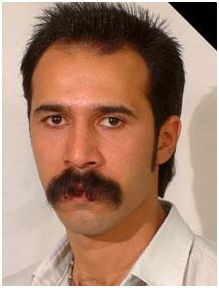
Amir Khorram was kidnapped following the summons order by the court in order to serve his sentence.

His 6 year prison sentence was issued for his participation in the Ashura protests and for his membership in the Freedom Movement of Iran. He is an Iran-Iraq War veteran. He  has been the member of the Freedom Movemnet of Iran since 1986.

He was arrested in 2001 along with several other members of the group for the charge of attempting to overthrow the governmnet. The accusation was later forgotten. He spent 3 months in solitary confinemnet. He was senetnecd to 4 years and 8 months in prison for acting agianst national security by membership in the Freedom Movemnet if Iran.

There is no information as to his whereabouts.


Source

A Moving Letter from Dr. Maleki to UN Special Rapporteur


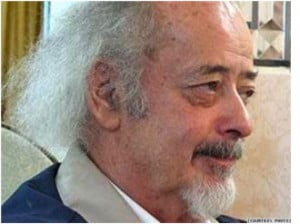
HRANA News Agency – Dr. Mohammad Maleki, the first president of Tehran University after the revolution, has written an open letter to Dr. Ahmad Shaheed, the Special Rapporteur appointed by the United Nations Human Rights Council. Pointing out the tragic plight of human rights in Iran, Dr. Maleki has underscored the crimes committed by totalitarian rulers and has announced that he is ready and available to testify about the torture and execution of prisoners in Iran. Dr. Maleki has also declared that he stands by his words and is prepared to face the consequences of his testimony.

Dr. Mohammad Maleki has spent a long time behind bars in various Iranian prisons and was once sentenced to death. During his last incarceration, Dr. Maleki spent 191 days locked up in prison while being harmed and harassed throughout that time until he was temporarily released from Evin Prison because of his deteriorating health. Although Dr. Maleki received a seven year suspended prison term in March 2000, he remains in a legal state of limbo thus far.

The content of Dr. Maleki’s letter in its entirety as released by Daneshjoo News is as follows:

In the Name of Justice
Your Excellency, Dr. Ahmad Shaheed

With warm greetings, I wish you success in the grand, humanitarian endeavor you have undertaken.

I am Dr. Mohammad Maleki, a retired professor and the first president of Tehran University appointed after the revolution. I am writing this letter in order to share with you a small portion of human rights violations in my country as witnessed by me. I provide this information to you with the hopes of taking a step towards rescuing my people from the tyranny, corruption and cruelty of the rules oppressing this nation.

My brother, Mr. Shaheed, I am one the tens of thousands of individuals whose human rights have been violated multiple times by authoritarian and oppressive rulers reigning the Islamic Republic of Iran for thirty two years. In Iran’s prisons, I have witnessed numerous crimes but can draw your attention to only a small number of them in this letter.

In 1979, after the revolution succeeded and following my appointment to the presidency of Tehran University, in order to achieve one of the revolutionary goals, I strived to establish a democratically elected council consisting of professors, students and employees who would run all university affairs.This undertaking wasn’t received favorably by a government monopolizing all aspects of life within the country. At last, a coup d’état dubbed as “the Cultural Revolution” was orchestrated to attack universities, kill a number of students, injure scores of them and finally arrest the rest. Then, universities were closed down, and student dissidents detained, tortured severely and eventually executed.

The Management Council of Tehran University and the High University Council responsible for the day to day operations of the university opposed “the Cultural Revolution” and raised their voices against it.Nonetheless, instead of addressing these concerns, the government detained a number of dissidents including me and under the pretence of opposing the Supreme Leader’s (Ayatollah Khomeini) decree, imprisoned us.

I was unlawfully tried in a court without legal representation and was sentenced to death at first. This verdict was then modified to ten years in prison. During this time, I have endured the most brutal treatments such as being beaten on the soles of my feet and elsewhere with an electric cable and being hung from the ceiling. My head was repeatedly banged against the wall, and I was punched, kicked and forced to tolerate a number of other forms of torture. As a result, I lost vision in my left eye and suffered from a broken bone in my right wrist. The markings of some of those tortures still remain, and my body bears the scars to this day.

After five years, I was supposedly released from prison, but for months, I had to report to the judiciary every few days to be interrogated and tormented in other forms.

Together with tens of other activists, I was arrested again in March 2000 under the pretext of plotting to overthrow the government and was locked up in an isolation cell measured 1×2 meters in one of the most gruesome and dreadful prisons (Eshratabad) operated by IRGC. Legal experts and psychiatrists refer to the incarceration of prisoners under extreme sensory deprivation and isolation as “white torture.” After tolerating approximately seven months of “white torture,” I was released in order to stand trial.Subsequently, I was illegally tried again behind closed doors and received seven years of suspended prison sentence.

On August 22, 2009, intelligence agents raided my house in the early hours of the day. After searching the premises and seizing many books, they took me out of my sickbed and directly transferred me to Evin Prison, Ward 209, where I spent three months in solitary confinement. At the time of my arrest, I suffered from prostate cancer, irregular heartbeats and abnormal blood pressure. I was also receiving chemotherapy and struggled with regular fainting spells and blackouts.

During interrogations, I was insulted and humiliated in so many different ways, and only because of my writings, I was charged with the crime of Moharebeh [Waging War Against God] and insulting the supreme leaders of Iran, Mr. Khomeini and Mr. Khamenei. Eventually, after 191 days of incarceration and due to rapidly deteriorating health, I was granted a sick leave from prison in order to continue my chemotherapy and undergo a surgery to implant a pacemaker in my heart.

Recently, I have been summoned to court to stand trial behind closed doors once more against the laws of the Islamic Republic of Iran. For now, I spend very difficult and agonizing days, waiting to find out the court’s ruling. Although I am a 78 year old, sick elderly man, I am ready to face any verdict issued against me because my goal has always been and will remain to be fighting against tyranny, oppression and injustice imposed by those holding power in Iran.

I lean on God and the masses and fear no punishment. I wish to meet with you in order to recount the reality of what has happened in Iran during the last three decades and what injustice has been inflicted upon this nation.

Your Excellency, Dr. Shaheed, I will testify that during 1980s, how young prisoners and students including men and women, after being brutally tortured, were taken in groups of tens or hundreds every night to face the gallows. And down that road they went to face their destiny while chanting songs. I am prepared to cite the facts as witnessed by me in the prisons of the Islamic regime and stand by my words to pay the price for such testimony.

At the end, as an Iranian, I wish you every success in all your undertakings. Rest assured that God is with you. With warmest regards and hoping to meet you,

Dr. Mohammad Maleki
Political Prisoner and Tehran University Retired Professor

September 2011


Source

Iranian political prisoners unrepentant: detained journalist

0


Ali Malihi, a detained member of the student organization Advar-e Tahkim-e Vahdat, says recently released political prisoners have in no way recanted their political views, despite statements to the contrary issued by Tehran’s prosecutor.

The Advar News website published Malihi’s letter that he wrote from inside Evin Prison. He says his assertion is based on his nearly two years spent in prison with numerous political prisoners.

“In view of some of the rumours in the media in recent days, I feel it necessary to explain that in my 20 months in prison, I have applied to the judiciary for various legal provisions available to detainees, including the appeal of a preliminary sentence, reduced sentencing,a conditional release and furloughs. But at no time have I ever repented of my beliefs and actions, and I have complete faith that the green path of hope that the Iranian people are following will continue.”

When the recent holy month of Ramadan culminated with the feast of Fetr, Iranian authorities released several political prisoners. Most of them had already served half of their prison terms and, thus, were eligible for conditional release. Many had only weeks left in their prison term.

Iranian authorities, however, told the media that the prisoners’ release stemmed from “the pardon and mercy of the leader”. Tehran prosecutor Abbas Jafari Dowlatabadi claimed the released prisoners had repented of their deeds.

Malihi was arrested in February at his home during the a wave of widespread arrests of political and media activists.

The detained journalist was charged with “assembly and collusion against the regime, propaganda against the regime, participation in illegal gatherings, publishing falsehoods and insulting the president.”

Last August he was sentenced to four years in prison and a cash fine for insulting the president.

Malihi was given a three-day furlough this past May.


Source

Human Rights Watch condemns crackdown on Lake Oroumiyeh protests

0


Human Rights Watch has condemned the arrest of protesters in various Iranian cities who were demanding government action to stop the drying of Lake Oroumiyeh.

In a statement, the rights organization urged the Islamic Republic government to allow peaceful demonstrations against government policies that may be accelerating the ebbing of the lake in Western Azerbaijan province. The group calls for the “release of people arrested for exercising their right to assemble or speak out against the government.”

On August 27 and September 3, protesters gathered in Tabriz and Oroumiyeh calling for action to preserve the lake, where water levels are rapidly falling.

Yashar Hakkakpour, the public relations officer for the Association for the Defense of Azerbaijani Political Prisoners in Iran, spoke to Zamaneh about the September 3 protests, saying: “Oroumiyeh protests were received with great violence and some protesters were even shot at.”

He added that a significant number of protesters were arrested, including one who was bleeding badly after anti-riot police beat him with batons.

Joe Stork, the deputy Middle East director at Human Rights Watch, said: “This latest round of arrests shows how intolerant Iranian authorities are toward any form of public criticism.” He added that the detained residents of Azerbaijan should be released because “they appear to have been arrested solely for gathering peacefully.”

The Fars news agency has linked the gathering in Tabriz to ethnic separatist movements.

The authorities first arrested about 30 people at a private gathering in Tabriz. The guests had gathered for iftar, the breaking of the fast of the Muslim month of Ramadan. Human Rights Watch reports that, according to family members, none of those detainees has been released yet.

In Oroumiyeh on September 3, about 300 people reportedly were arrested, and dozens have been released so far.

Human Rights Watch reports that Iran has “for years rejected government responsibility for the drying up of the lake and has instead contended that global warming and other uncontrollable environmental factors are at play.”

Following the protests, on September 5, the Iranian Parliament finally announced that it has approved a $95-million budget to divert water from the Aras and Kurdistan Rivers into Lake Oroumiyeh. According to Human Rights Watch: “Local activists have largely dismissed the measure as a disingenuous face-saving measure, and there are reports that more demonstrations have been planned.”

Stork condemned the Iranian government’s lack of tolerance for anti-government protests and advised the Islamic Republic authorities that: “Instead of criticizing protesters for not getting proper permission for previous protests, [they] should free all those arrested for demonstrating peacefully and allow them to participate in future protests.”


Source

Trial Held for Parvin Mokhtare, No News on Her Kidnapped Son Causes Serious Concerns

0


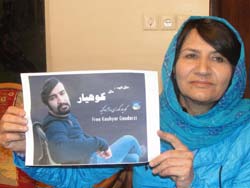
The Committee of Human Rights Reporters – The trial for Parvin Mokhtare, Kouhyar Goudarzi’s mother, was held in the Kerman Revolutionary Court last Tuesday, more than one month after her arrest and transfer to Kerman prison.

Parvin Mohktare has no history of civil or political activism; she had only defended Kouhyar Goudarzi. Nevertheless, she was unlawfully arrested on August 1st, a day after her son’s arrest. Her charges and what transpired in court have not yet been officially announced. The Judge in possession of her case file has however made reference to the interviews Parvin Mokhtare gave [to the media and human rights groups] about her son’s imprisonment [last year].

In a recent meeting in prison with her family Parvin Mokhtare said that, during her interrogation sessions, she was accused of many crimes, including, “Acting against national security” and “Disturbing the public”.

Several days ago news was published on the Internet regarding Parvin Mokhtareh’s release from prison, however the news was proven to be false. Parvin Mokhtare is still detained in Kerman prison.

40 days ago human rights activist Kouhyar Goudarzi was kidnapped by the Iranian security agents.

Telephone contact and in-person visitation are the fundamental rights of a defendant, yet Kouhyar Goudarzi has been deprived of these rights. Judicial authorities have remained silent on the reason for his arrest and even the location of his detention. There are serious concerns regarding Kouhyar Goudarzi’s current condition and fate.


Source

Karroubi says reformists have no place in next elections

0


Detained Iranian opposition leader Mehdi Karroubi says there is no place for reformists in the coming parliamentary elections.

Esmail Gerami Moghaddam, the spokesman for Karroubi’s National Trust Party, told Saham News that the opposition leader told his eldest son during their last meeting that “there is no place for reformists in the next parliamentary elections, where only principalists will be competing.”

The conservative faction of the Islamic Republic establishment is sometimes referred to as the principalists.

Karroubi has been under house arrest since last February. He and the other opposition leader, MirHosein Mousavi, as well as their wives, have been under house arrest and denied any access to the outside world.

Mousavi had told his daughter during their last visit that in view of the regime’s oppressive policies, no good can come from participating in the elections.

Gerami Moghaddam added that since the National Trust party has not been allowed to hold any meetings, he can make no firm statements regarding the parliamentary elections. But he added that the party does support the conditions for participation laid out by former president Mohammad Khatami.

Khatami has called for the release of all political prisoners, the opening of of the political atmosphere as well as an open and transparent election process as the basic conditions for reformists to join the coming elections.


Source

Qum Seminary Basiji attempting to steal Vahid Banani identity

0


Inside of Iran – After the disgraceful action of Qum Seminary Basiji students (members of so called “Battle Against New Mysticism” organisation), which finally led to an increasing conflict in the Estate of Fars, the cities of Sarvestan and Kovar, special Riot Police Forces were sent to intervene in the conflict and the security climate of these cities became Martial Law.

Now the propaganda system of the Qum Seminary Basiji students are trying to expropriate Dervish Vahid Banani as a Basiji. They are using the same tactic as Hussain Shariatmadari, in the murder of Saane Jale. These actions are a desperate effort by the shameless press and the regime of Iran.

The Basiji students are the followers of Ahmad Janati, Mesbah Yazdi and Mohammad Yazdi ect…. They always show the reverse of what happens and lie about the occurrence of the real events. However with being humiliated by the international media for their disgraceful actions, they can no longer cover-up their actions and their bosses’ disgraceful reputation.

The news below, taken from the Voice of Revolution website, is a sign of unlimited useless attempts of Qum Seminary Basiji attempting to steal Vahid Banani’s identity. You are able to judge for yourself these disgraceful actions after reading their false statements about the death of Vahid Banani.

The report from Voice of  website nedaye enghelab which depend on the Iranian Intelligent Service;

The Gonabadi Dervishes are mob ruled. They have always been claiming that they have no role in politics, however their action is opposite to what they claim.

The recent bitter conflict in Kovar started by Gonabadi Dervishes insulting a very respected Clergy. The people from this part of our Islamic country held a protest march against Gonabadi Sufis.

What happened?

The follow-up to the protest of people against dervishes. Some of the Dervishes attended the protest with a pre-organised plan, bringing with them a van full of stones and cold weapons. Therefore when the conflict escalated, the Security Forces were forced to intervene and in order to avoid the increase of the clashes between the two groups, they used open firearm and Vahid Banani, who was not a dervish, was shot accidently.

The process of creating murder scene begins:

In the same time Dervishes instead of taking the injured Vahid Banani to hospital they brought him to an unknown house belonging to a dervish. Because Vahid Banani was not taken to hospital on time, he lost too much blood and died.

The Dervishes’ speakers outside of Iran become active.

After Vahid Banani death, the speakers of this sect living outside of Iran, such as Mostafa Azmayesh, who has a long history of spreading rumors and seems to have been waiting for this incident, knew about the details. Because without wasting any time they appeared in foreign media to take the most advantage from the death of Vahid Banani for their own benefits.

Questions without any Answers

1)    Why didn’t they take Vahid Banani to a hospital and instead took him to one of the dervish’s house, which resulted in Vahid Banani death?

2)    Why did they take Vahid Banani to hospital when they knew it was too late for him to survive?

3)    What is the reason for Dervishes of Sarvestan, congratulating each other and saying “we got a holy martyr as well”?

4)    In normal circumstances, it is very hard to have phone reception in this city. How did they manage to give reports of the incidents to Paris, second by second?

5)    Why wasn’t Vahid Banani seen even once to be participating in Sufi gatherings?

6)    How can you explain the history of Vahid Banani activities in the Basij militia?


Source


Iranian artillery commander killed by PJAK forces

0


Abbas Ali Jannesari, the commander of artillery and air defence in Esfahan, has been killed in a battle with Free Life Party of Kurdistan (PJAK) forces.

Fars reports that Jannesari, an artillery specialist, was in charge of the 15 Khordad air defence during the past five years.

Two days ago, Iran announced that its forces had killed Majid Kavian, “the number two person in PJAK,” but no date was given.

Iran’s Revolutionary Guards Corps has been fighting PJAK forces for several months, with each side claiming it has inflicted dozens of casualties.

Last week the IRGC announced that it has renewed attacks against PJAK after a month-long reprieve during the Muslim month of Ramadan. Two days later, PJAK announced that, in accordance with the recommendations of intermediaries, it was willing to announce a ceasefire.

In response, IRGC Commander Colonel Hamid Ahmadi said any ceasefire would be “meaningless” unless PJAK forces left Iran’s border regions.

The Free Life Party of Kurdistan claims to fight for the rights of the Kurdish minority in Iran, but Iran regards PJAK as a terrorist organization.

Previously, an unidentified senior IRGC official at Hamzeh Base was quoted by Fars news agency, saying operations at the Iran-Iraq border will continue until the Iraqi government establishes its forces in the region.

He added that, for years, the Kurdistan Regional Government has provided PJAK forces with “an area 150 km long and 20 km wide in northern Iraq… without the knowledge or permission of the central Iraqi government.”

The Kurdistan Regional Government denies that accusation.

Opposition calls for release of Iranian leaders


The Iranian opposition is demanding the release of opposition leaders MirHosein Mousavi and Mehdi Karroubi so they can participate in the coming parliamentary elections. The Iranian constitution stipulates that those elections must be open and competitive, says the opposition.

The participation of reformist figures in the elections set for next March has been a topic of hot political debate in recent months.

Ardeshir Amirarjmand, a spokesman for the Iranian opposition umbrella group the Coordination Council of the Green Path of Hope, told the Kaleme website: “Without the release of Mousavi and Karroubi, the political situation has not really changed… How can we imagine a free election process while the opposition leaders are in chains?”

The Iranian opposition leaders have been under house arrest since February, when they rallied people to march in solidarity with the recent Arab uprisings. Iran’s prosecutor recently told reporters that the house arrest does not necessarily mean the opposition leaders are in custody; he said it is in the best interest of certain people to be restricted, but there are no such provisions in the legal system.

Amirarjmand criticized those statements from Mohseni Ejei, saying they ignore the role of the judiciary and the rule of law.

Amirarjmad also criticized the government for pressuring Iran’s Sunni minority to refrain from praying in their own mosques during public Fetr Eid. Iranian Sunnis in larger cities are not allowed their own mosques.

Amirarjmad, who is MirHosein Mousavi’s spokesman, also expressed support for the people of Azerbaijan who are struggling to save the rapidly drying Lake Oroumiyeh; he emphasized that the Iranian government must heed the demands of all the ethnic and religious groups and minorities living in Iran.

Amirarjmand went on to criticize the Islamic Republic’s shifting stance on the Syrian uprising; he summarized his view, saying: “Reform or a change in the dictatorships that rule in the region must be accomplished by the people of the country, with complete reliance on the courage and wisdom of national forces, not outsiders.”


Source

Checkpoints & Inspection Stations Throughout Western Provinces

0


HRANA News Agency – During the last few days, Iranian security and military forces have been placed on alert in different regions of Kermanshah Province and the city of Kamyaran.

According to a report by Human Rights Activists News Agency (HRANA), military forces have been positioned in all roads leading into and out of Kermanshah and Kamyaran. Furthermore, checkpoints and inspection stations have been set up between these locations and the neighboring cities. The heavy presence of security forces has created a tense military atmosphere throughout these regions.

Plain clothes agents working for the Intelligence Bureau of IRGC have been stopping vehicles and conducting searches and interrogations in Naleh Shakineh Road, Shamshir Road, the gates leading into the cities of Paveh and Nosod and also along Ghazanchi Highway.

It has been reported that plain clothes agents ambush vehicles at night throughout the region to perform searches and question the passengers. As a result, a tense atmosphere of fear and apprehension hangs over Iran’s western provinces. In several incidents, native Basiji Militia members with concealed faces have harassed and insulted passengers and local residents.


Source