Home Blog Page 566

Political Activists Held Captive for 5000 days without Furlough

0


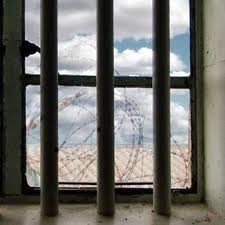
Vali Doroudi, a Kurdish political activist, has been held in prison for over 5000 days without being allowed a single day of furlough.

“Vali Doroudi, a Kurdish political activist, was arrested by revolutionary guard forces on June 2, 1996 while he had severe injuries. He is being held in solitary confinement in Yazd central prison and has been denied a single day of furlough for over five thousand days.” Reported Harana, a news agency run by Iranian human rights activists.

Under pressure from Kamyaran’s intelligence office, he was transferred to Kermanshah’s “Dizel Abad” Prison. He was held in that prison for several years and was tried on November 27 of that year by Kermanshah Revolutionary court for his alleged membership in one of the Kurdish political parties. He was sentenced to life imprisonment on December 30th.

After several years, he was banished from Kermanshah’s “Dizel Abad” prison to Yazd’s central prison. He was held in solitary confinement all these years, and his family was not able to visit him because of the long distance between Kamyaran and Yazd.


Zolnour: Ahmadinejad and Mashaei Are Like Laleh and Ladan, They Would Die if Separated

0


Mojtaba Zolnor, Vice Representative of the Supreme Leader in the IRGC, has stated that Ahmadinejad and Mashaei are like the conjoined twins Laleh and Ladan: they would die if separated. Laleh and Ladan died during a 1999 surgery to separate them.

According to Mehr News during a Monday evening conference on Insight and Scientific Jihad held by the Supreme Leader’s offices in the universities, Zolnour said regarding the Majlis’ determination to remove Ahmadinejad from office: “Majlis representatives belong to various groups. Some have acted anti-revolutionary towards the government from the very beginning.” He continued, “One group is conservative controlling the majority of seats, while others are ineffective in the Majlis.” He called the third group Hezbollahi. “They supported the president from the beginning. They supported the president because they considered him valuable and faithful to Velayat.”

Concerning the Majlis’ determination to impeach Ahmadinejad during his 11 day withdrawal from public service in April, Zolnour said: “In those 11 days, 200 military figures talked to him either in person or by telephone, but it was futile. Ahmadinejad tried hard not to come to work, but he eventually came out of aversion, necessity, and force. The Majlis had fired up and continued to be hasty. If he didn’t show up for work that day, he would have been impeached the next day.” Zolnour added, “If a vote of confidence had taken place, it would have been the biggest no vote in history.”

In another part of his speech, he answered a question about the best current interpretation of the so-called deviated movement. “Some say that if we separate Ahmadinejad and Mashaei, it’s problem solved.”

Conservatives supporting Ayatollah Khamenei call Ahmadinejad’s friends as a deviated movement. Zolnour brought up an example. “Laleh and Ladan were two girls conjoined at the head. And they both died during a surgery to separate them. Ahmadinejad many times said that ‘I am Mashaei and Mashaei is me’. Therefore their situation is such that if they surgery, or separate, they both die.” Zolnour emphasized that, “The social climate is not ripe for the appropriate approach, therefore we must be careful. Meaning that we prevent the deviated group from doing whatever it wants.”

In explaining that both feather and wing must be cut, he said: “We cannot let the ominous melodies run abound, and with the lowest possible cost live the era of free pass.” Zolnour also said, “It is not possible to separate Mashaei and Ahmadinejad from each other. Such a separation comes with a cost.”

Political Prisoner Zahra Jabbari in Serious Condition

0


Political prisoner and member of a noble combatant family, Zahra Jabbari, was transferred from prison to the Aminabad psychiatric hospital due to high stress coming from the clerical dictatorship in Iran. She is now in serious condition.

Zahra Jabbari, who has a small child, was arrested two years ago during the unrest and was brutally physically and psychologically tortured. One of Khamenei’s headsmen pulled off her nails. She screamed that the cruel clerical dictatorship pulled off her nails, but the criminal head of the oppressive prison with utmost impudence responded that she pulled off her own nails.

Zahra Jabbari suffers from heart problems and rheumatism, and doctors say that she must receive medical care at the hospital. However, the headsmen of the inhuman cleric dictatorship transferred her to a psychiatric hospital instead of a regular hospital. Reports indicate that the family of this political prisoner protest against the regime and at the same time demand her to be taken to the hospital for proper treatment, yet the headsmen are still holding her up at Aminabad. The regime’s mercenaries didn’t even give Jabbari the clothes her family had brought for her.


Student Activist Tara Sepehrifar Sentenced to 7 Years in Prison and 74 Lashes


(IranBriefing Human Rights Service): Student activist and former secretary of the Islamic Council at Sharif University, Tara Sepehrifar, has been sentenced to 7 years in prison and 74 lashes. IranBriefing reports that this student activist’s case was conducted by the 26th Branch of the Revolutionary Court and presided over by Judge Pir Abbas. This indicates that even her lawyer could not contribute to this trial and the court issued Sepehrifar’s sentence in absentia.

Miss Sepehrifar is now accused of conspiring and rallying against national security. She is also accused of disrupting public order (for which she must serve 1 year in prison and be lashed 74 times) and publicizing against the regime (an additional 1 year in prison). Also, the Tehran public prosecutor has seized the bail paid in Spring 2010 for her release. It is necessary to note that Tara Sepehrifar was arrested twice during the post-election protests in Iran. She was arrested for the first time in July 2009 and spent one week in Evin Prison.  Her second arrest occurred on 9th February 2010, and after spending more than one month in prison, she was released on bail days before the Persian New Year.

Widows of Shahid Hemmat and Shahid Hamid Bakeri Send Message to Evin and Rajaeshahr Hunger Strikers

0


Fatemeh Amirani and Jila Badihian, widows of Shahid Bakeri and Shahid Hemmat, have asked Evin and Rajaeshahr prisoners to stop their hunger strike. In their message, the widows said: “We know that never innocent blood shall remain on Earth. History showed us that. We humbly implore you to stop this hunger strike.”

IranBriefing has obtained the full version of the message as follows:

“On that account: We ordained for the Children of Israel that if they slew one person—unless it be for murder or for spreading mischief in the land—it would he as if he slew the whole people. And if anyone saved a life, it would be as if he saved the life of the whole people. The although there came to them Our Messengers with Clear Signs, yet, even after that, many of them continued to commit excesses in the land. (Qu’ran, 5:78)

Peace to you dear brothers.

We know how much these past few days were difficult for you. Certainly, according to your human and spiritual duty, you show dissent by not touching food. Meaning that with the only means at your disposal you have placed your lives on the line. So that you can block such clear oppression.

The day which the oppressed obtains his right will be more difficult than the day when the oppressor oppresses the oppressed.

We know that never innocent blood shall remain on Earth. History showed us that. We humbly implore you to stop this hunger strike.”

Jila Badihian, widow of Shahid Mohammad Ibrahim Hemmat

Fatemeh Chehel Amirani, widow of Shahid Hamid Bakeri

Former Commander of the Sarallah Brigade, Iranian Commander of the Crackdown on Syria Protests


Who is the Iranian commander behind the crackdown in Syria? Today’s column will answer that question.

Everywhere there’s talk of the IRGC’s involvement in the crackdown against the ongoing protests in Syria. This crackdown is being carried out by the IRGC’s special unit known as the “Syrian IRGC.” Contrary to common belief, it did not form after the recent protests began; it has been active for more than two decades. Before the popular protests, the Syrian IRGC was an operations brigade in opposition to Israel and Lebanon. Aside from providing intelligence, the Syrian IRGC’s most important duty was to militarily and logistically support Lebanon’s Hezbollah and Hamas, the Palestinian Islamic Jihad, and a group (The Khalq Front to Free Palestine) led by Ahmad Gibrail.

The Commander of the Syrian IRGC was secretly appointed. Neither he nor his unit is ever officially mentioned in any of the Islamic Republic’s press conferences or meetings. However, we know that the Commander of the Syrian IRGC was previously a top IRGC commander.

Now who is in charge of the Syrian IRGC? None other than former Commander of the Sarallah Brigade, Brigadier General Ali (Mohammad Reza) Zahedi. He was also exclusively in charge of providing Tehran security. Now he’s active and stationed in Damascus. Brigadier General Zahedi is one of the top commanders from the Iran-Iraq War. During the eight year war with Iraq, he led a group, battalion, and finally the 14th Imam Hossein Brigade of Esfahan. From 2005-2008 he was also commander of the IRGC Ground Forces. During this period, Zahedi was also Commander of the Sarallah Brigade and responsible for providing security for Tehran against popular protests.

In 2008 he went to Syria as an IRGC commander. After the unrest and popular protests against Bashar Assad began, the team under Zahedi’s command was backed by anti-demonstration expeditionary forces. Some other Basij and IRGC commanders with operational, field, and leadership experience from past crackdowns in Tehran were sent to the Syrian IRGC to help the Assad government rein in the popular protests. Some commanders have been temporarily stationed in Syria while others are stationed permanently.

Baha’i Citizen Masoud Mahmoudi Detained

0


The security forces have arrested Masoud Mahmoudi and have transferred him to an unknown location.

According to the Human Rights House of Iran, there are no reports as to the reason for his arrest or his whereabouts.

Currently, several Baha’i citizens are serving their prison sentences in the Province of Khorasan.


Source

Iranian MP warns against “absolute” support for Syria

0


Iranian MP Ahmad Avayi has warned against giving “absolute” support to the Syrian government, maintaining that the protests are legitimate popular movements staged by “pious people.”

Avayi told the Khabar-on-line website today: “It is true, however, that the U.S. and the West are inciting protesters and trying to take over the movement by sending them arms.”

The Iranian lawmaker maintained: “The similarity of the Syrian situation with the other revolutions in the region is that there is no real freedom or proper elections in these countries, and the minority rules the majority there.”

Avayi, however, went on to distinguish the Syrian situation from the other movements in the region, saying Syria has always maintained its independence from regional and international powers. “Among the Arab countries, Syria is the one and only country that has never acquiesced to the Zionist regime and has consistently supported Hezbollah.”

The Iranian MP went on to add that “domestic reform” was the only option for the Syrian government, which should have responded much earlier to the people’s protests.

Iran has been a staunch supporter of the Beshar Assad government. Ayatollah Khamenei confirmed Iran’s support for Syria in July by distinguishing between the popular uprising in Syria and those in the other Arab countries in the region. The Supreme Leader insisted that Syria was the “first line of resistance” against the Zionist regime.

Iranian Foreign Minister Ali Akbar Salehi called on the Syrian government to heed the legitimate demands of the people as the best way to deliver the country from its current “crisis.”

Russia and China have also rejected Western moves to impose sanctions on Syrian officials, supporting internal reforms in Syria rather than the removal of the Beshar Assad government.

According to UN reports, 2,200 people have been killed so far in the crackdown on protesters. The Syrian government insists that its crackdown only affects “armed rioters supported by foreign conspirators.”


Source

Assad regime in Syria crucial to Iran

0


CNN – After months of opposition in Syria to the rule of President Bashar al-Assad, if Syrian government were to fall “ it would be a tremendous blow to the Iranian regime,” says Iran expert, Karim Sadjadpour. Not only is Syria Iran’s chief regional ally, Syria is the country which allows Iran to supply its “crown jewel” in the Middle East, the Hezbollah movement in Lebanon. He also says that it is unlikely that the comments made by Iran’s foreign minister over the weekend that Syria should take account of the views of the protestors was a serious remark. He says that Iran believes strongly that one should not give in to protestors because to do so “doesn’t alleviate the pressure, it projects weakness and invites even more pressure.”

How is Iran reacting to the upheavals in the Arab world? They’ve been fairly quiet haven’t they?


I’m sure they aspire to influence the upheavals and power vacuums that are taking place in various Arab countries as much as possible, but their ability to do so is somewhat limited. I don’t see Iranian influence being a major factor, for example, in post-Ghaddafi Libya . There aren’t strong cultural or religious links between the two countries. Iran has perhaps greater inroads with the Muslim Brotherhood in Egypt given their mutual ties to Hamas, but it’s unlikely that proud, predominantly Sunni Arab Egypt will take its cues from Shiite Iran.


Initially Iran wholeheartedly embraced the Arab upheavals when it appeared that only U.S.-allied autocracies were at risk, but the uprisings in Syria are hugely concerning to Tehran. The Assad family in Damascus has been Iran’s only regional ally since the 1979 revolution, and if it were to fall it would be a tremendous blow to the Iranian regime. Hezbollah in Lebanon is the crown jewel of the Iranian revolution, and Syria has been the key conduit to Iran’s patronage of it. If the Assad regime were to fall it would make it logistically very difficult for Iran to continue to support Hezbollah the same way it has over the past few decades.


Why do you think about the comments over the weekend from the Iranian foreign minister who said that Syria should listen to the protests of its people?


I think the violence and brutality in Syria escalated to such a level that Iran was forced to publicly acknowledge it. But I am sure that at the same time, in private, the Iranians have offered Assad their unequivocal support and advised him not to compromise or reform. While publicly they’ve asked the Assad regime to listen to the voice of the people, I am sure privately they’ve advised him not to succumb to popular demands. The long held strategy and philosophy of the hardliners in Iran is that you never compromise under pressure because it doesn’t alleviate the pressure; it projects weakness and invites even more pressure.


We’re at a loss to know exactly what’s going on, but are there signs that the Iranians are giving tangible support through their intelligence and other security agencies to the Assad regime?


Given how crucial the Syrian-Iranian relationship is to Iran, I am sure that Tehran is offering everything it possibly can to buoy Assad, whether it’s financial, tactical, or military support. We’ve heard that Iran has offered Syria technological aid to help control the internet and jam satellite broadcast. I suspect Iran is doing everything in its power to ensure is that the Assad regime does not fall.


Has anything come of Iran’s efforts to reopen relations with Egypt?


Despite the fact that the chief impediment, from Iran’s vantage point, to better relations with Egypt was President Hosni Mubarak and his alliance with the United States, this issue is still complicated in Tehran. Supreme Leader Ayatollah Ali Khamenei sees it as his duty to remain loyal to the policies and ideals of Ayatollah Khomenei, and the breaking of ties with Egypt was something that Khomeini initiated given late-President Anwar Sadat’s friendship with the Shah of Iran.


If Egypt maintains its close rapport with the United States—including its strong military alliance–I think it could be some time before Egypt and Iran normalize relations. Another point of contention is the street in Tehran named after Sadat’s assassin, Khalid Islambouli. Egypt has long requested that Iran change the name of that street and Iran has long refused.


On other international issues affecting Iran, what do you think will happen to the American hikers who were recently sentenced to eight years in prison?


I think the term we should be using is no longer “hikers” but “hostages.” Iran has made it very clear that they would like to barter these young men for Iranians who are in U.S. prisons for various reasons, whether it be arms trading or other illicit activities. What I find interesting is that when you look at Iran’s neighbors Dubai and Turkey, they’ve managed to build thriving economies by trading in goods and services. Yet Iran, even 32 years after the Iranian revolution and subsequent hostage taking, remains in the business of trading in human beings.


It is somewhat reminiscent of the hostages which Iran took not only in 1979, but also the hostage taking in 1980s Lebanon via Hezbollah. It is very difficult for the U.S. government to deal with hostage taking because the concern is that if you release Iranian prisoners in exchange for Americans, you are simply rewarding bad behavior and encouraging hostage taking in the future.


On the internal situation, there are continuing reports of people close to the Supreme Leader Khamenei seeking to get rid of President Mahmoud Ahmadinejad. How big a split is there in the leadership in Iran?


I think Ayatollah Khamenei and his royal court grew tired of Ahmadinejad’s insubordination and delusions of grandeur and wanted to put him in his place. That said, I think Khamenei will want to keep Ahmadinejad in office until his term ends in 2013 because Khameni’s modus operandi is to wield power without accountability; that requires a president who has accountability without power. So a weakened, lame-duck Ahmadinejad who can absorb popular criticism for deteriorating economic conditions or political and social repression is ideal for Khamenei. He can continue to try and project the image of a magnanimous guide staying above the fray, though I think far fewer people are fooled by this ruse after the contested 2009 election.


I thought it was interesting over the weekend that Mehdi Karrubi who was one of the leaders of the opposition to Ahmadinejad in 2009, has been not even seen by his wife for six weeks, and is reportedly been under psychiatric pressure to “confess” to crimes.


Both Karrubi and Mir Hossein Moussavi have been essentially in solitary confinement for the better part of the last year. I think the regime was shrewd not to send them to Evin prison, which could have provoked an international or domestic outcry. Instead their homes are their prisons. They are not allowed to see anyone, they’re not allowed contact with the outside world. An advisor to Karoubi told me that if they were in Evin they’d at least be allowed 30 minutes daily “outdoor time”, which they are currently deprived.


Looking at the Iranian opposition and comparing it to the opposition movements elsewhere in the Middle East, I think there is one key distinction. Whereas the opposition movements in places like Syria, Egypt, and Libya have all been seemingly united in wanting to bring down their respective regimes, the Iranian opposition still remains divided about their precise endgame.


People like Moussavi and Karrubi who were participants in the 1979 revolution, and up until 2009 were insiders in the Islamic Republic, still claim that they are seeking a reform of the system. But I think many among Iran’s younger generations would like to see a more dramatic change. I think that’s one reason, among many, why you haven’t seen the protests in Iran snowball like they have elsewhere in the Middle East; the Iranian opposition has yet to coalesce around a common end game.


Do you get the impression if students, if they had their druthers would like a different kind of regime?


In my experience few younger generation Iranians, many of whom have access to the internet and satellite television, and have traveled to nearby countries like Turkey and Dubai, think that having a Supreme Leader who purports to be the Prophet’s representative on earth, is an attractive form of government in the 21st century.


Yet at the same time I think the word ‘revolution’ is not romanticized in Iran the same way it is currently in the Arab world. My friend Rami Khouri, a well-regarded Arab intellectual, recently wrote that it is condescending to refer to the current upheavals in the Arab world as an “Arab Spring”, they should be referred to as “Arab Revolutions”.


In Iran I think it’s precisely the opposite. Given the experience of the last 32 years, the term “revolution” doesn’t have positive connotations for many Iranians. It represents intolerance, repression, and backwardness. “Spring” on the other hand has positive connotations, a rebirth of sorts, something more progressive and tolerant. I suspect far more Iranians would welcome an Iranian spring rather than another unpredictable revolution.


Source

Dozens of Post-Election Political Prisoners Released; Is there a Chance for Hundreds More?

0


The Campaign for Human Rights – Last Saturday, Tehran Prosecutor Abbas Jafari Dolatabadi announced that on the occasion of Eid al-Fitr, marking the end of the holy month of Ramadan, Ayatollah Ali Khamenei will pardon 100 political prisoners. According to various sources, more than 30 inmates have been released over the past two days, among them a few students and political activists arrested in the aftermath of the 2009 presidential election.

Only hours after Dolatabadi’s announcement, the state-owned Fars News Agency wrote that some of the 100 pardoned prisoners were those whose detention was related to the 2009 presidential election. Kaleme, a website close to Mir Hossein Mousavi, wrote that several of these prisoners’ sentences would have been fully served within the next few weeks, and another group of them have also served half of their prison terms, qualifying them for conditional release according to Iranian law. “Among these 100 individuals, the sentences of 8 were suspended, and 12 other prisoners’ sentences were reduced,” said Dolatabadi. It is expected that the release of political prisoners will continue.

Despite the release of some political prisoners, a very large number remain inside various Iranian prisons, some of whom have not been on a single day of furlough during their detention. Some of these prisoners have become ill, and have not been able to receive permission for even a short medical furlough despite having received authorization from prison doctors to be hospitalized or to visit specialists. Among them are Hossein Ronaghi Maleki, Abdollah Momeni, Heshmatollah Tabarzadi, Abolfazl Ghadyani, and others who remain under very difficult conditions at Evin Prison. Prisoners with special circumstances, such as lawyer and human rights activist Nasrin Sotoudeh, who is mother of two young children, has not been given a single day of furlough to be with her children during the 12 months she has been imprisoned.

According to a list of 28 released prisoners published by Kaleme website, several university students and political activists arrested after the 2009 presidential elections were released. Some of these individuals are: Ehsan Abdoh Tabrizi, Laleh Hassanpour, Zahra Jabbari, Kayvan Farzin, Amir Aslani, Sourena Hashemi, Mohsen Ghamin, Mohammad Pour Abdollah, Arsalan Abadi, Nazanin Hassan Nia, Soussan Tebyanian, Akram Heydarian, Sama Shamloo, Fatemeh Darvish, Ali Behzadian Nejad, Hamid Reza Nojoomi, Abolfazl Ghassemi, Kourosh Ghassemi, Artin Ghazanfari, Gholamreza Azadi, Meysam Roudaki, Amir Hossein Ghanbari, Omid Sharifi Dana, Behnam Ansari, Rouhollah Mirzakhani, Massoud Yazdchi, Mohsen Mokhtari, and Sajjad Moradi. Some of the other released inmates are Arash Alaei, Ali Malihi, Milad Asadi, Fatemeh Khorramjoo, Kiarash Kamrani, Hamid Samiei, Mousavi (an Isfahan University professor), Omid Esmailzadeh, and Mojtaba Hashemi.

Currently, there are more than 200 political prisoners inside Ward 350 of Evin Prison, more than 120 of whom were imprisoned in the aftermath of the 2009 presidential election or as Green Movement supporters. Other prisoners inside Ward 350 are affiliated with the Kingdom Assembly of Iran, independent human rights organizations, the Mujahedin-e Khalq Organization, etc. Some of them are also foreign subjects who are detained on political charges. These statistics do not include prisoners inside Rajaee Shahr Prison in Karaj, or other prisons around Tehran and in other cities.


Source