Home Blog Page 594

Imprisoned Photojournalist Maryam Majd in Dire Physical Condition

A source close to the family of photojournalist Maryam Majd told the International Campaign for Human Rights in Iran that she is having digestive problems. Majd has spent more than 20 days in solitary confinement in Evin Prison. ”Maryam is not in good physical condition and her family is extremely worried about her health. She has developed digestive and kidney problems, and for this reason, her mother wrote a letter to Tehran’s Prosecutor today, asking for care for her daughter. She is in a 2 square meter solitary cell inside Evin Prison and is not at all physically active — all of these are causes for her illness,” the source told the Campaign.

“After 12 days without any contact with her family, Maryam was able to have a booth visit with her family for a few minutes. Apparently, in that meeting she was not feeling well at all and was constantly crying, saying she wants to go home,” said the source, who spoke with the Campaign on condition of anonymity.

“Security forces searched and confiscated all her equipment and know she is not a security problem. When her family went to the judge, he told them that Maryam will be released soon. Her family is waiting for her release every day, and want Maryam to leave prison in good condition,” the source said.

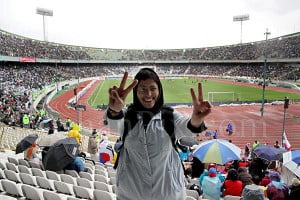
Maryam Majd was arrested in her place of residence on 21 June, a day before a planned trip to Germany to photograph the 2011 FIFA Women’s World Cup. She is one of a few Iranian photographers who specializes in women’s sports. She is a member of the campaign to seek women’s attendance inside sports complexes, and also worked for the banned monthly magazine Zanan.


Source


Heshmatollah Tabarzadi’s Son: ‘My Father Says Furlough is Impossible’

In an interview with the International Campaign for Human Rights in Iran, political prisoner Heshmatollah Tabarzadi’s son, Hossein Tabarzadi, told the Campaign that his father is in poor condition and his family is concerned about his health. “Our family’s last visit with my father was last Thursday. He appeared well, because his spirits are high, he always maintains himself well and always faces us in a happy mood. But he said that his health had deteriorated during the week and he had to go to the prison infirmary. They did an EKG on him and said that he has a heart condition. My father did not have any heart problems before going to prison,” Tabarzadi said.

“To be sure, long-term hunger strikes damage the prisoners’ bodies, especially when prison conditions are not good, either. The poor food conditions, short daily fresh-air breaks, over-crowding in prison wards, unsuitable hygiene and other things all lead to illness,” continued Tabarzadi.

“Our pursuit of his furlough or transfer to a hospital is dependent on his own actions in prison. But my father is seriously against such actions and says that considering the difficult process in prison, even thinking about a furlough is an impossibility. We saw this time that those whose conditions became critical were only transferred to the prison infirmary, never to [hospitals] outside. Of course, as his son, I do pursue his furlough, but when I talk to him he says don’t pursue it because I’m not following it up from inside the prison,” said Hossein Tabarzadi.

Political activist and Secretary General of the Iran Democratic Front, Heshmatollah Tabarzadi was arrested on 27 December 2009 and transferred to Evin Prison. After protesting the execution of five political prisoners, including Kurdish teacher Farzad Kamangar, Tabarzadi was transferred to Rajaee Shahr Prison. He was sentenced to seven years in prison by Branch 26 of Tehran’s Revolutionary Court. Tabarzadi has participated in several long hunger strikes to protest various issues.


Source

Two Iranian Political Prisoners Denied Medical Leave

The relatives of two jailed Iranian political activists have expressed concern about the health of their loved ones, RFE/RL’s Radio Farda reports.

Ali Tabarzadi, son of prominent political activist Heshmatollah Tabarzadi, told Radio Farda on July 10 that his father has developed heart disease in prison.

He said his father has been transferred to the infirmary at Rajaee Shahr prison in Karaj, west of Tehran, but was given only basic treatment and needs to leave prison for serious medical care.

Heshmatollah Tabarzadi, the head of the banned opposition Democratic Front, was detained by Intelligence Ministry officials in Tehran after bloody protests on the holy day of Ashura (December 28) in 2009.

He has not been allowed to leave the prison — where he is serving an eight-year sentence — since his arrest.

Meanwhile Fatemeh Adinehvand, the wife of jailed student activist Abdollah Momeni, told Radio Farda on July 10 that her husband is suffering from intestinal problems as a result of his recent hunger strike.

She said Momeni has also developed a skin disease in prison which has not been treated yet.

Momeni, a spokesman for Iran’s largest reformist student organization, the Office to Foster Unity, was arrested during the crackdown that followed the controversial June 2009 presidential election.

Adinehvand said her husband needs medical treatment outside the prison because the prison infirmary doctors have not been able to cure him.

She added that Momeni has been denied permission to leave prison because of an open letter he published last September detailing the physical and psychological torture to which he was subjected to in jail.

Momeni is currently serving a four-year, 11-month sentence in Tehran’s Evin prison.


Source

12 dead in Iran arms blast at Cyprus naval base

AFP – Huge blasts in a seized Iranian arms cache at a Greek Cypriot naval base in southern Cyprus killed at least 12 people on Monday, triggering power and water outages at the height of the summer.

In what Commerce Minister Antonis Paschalides called a “tragedy of Biblical dimensions” for the small Mediterranean island, the explosions devastated the adjacent Vassiliko power station.

The plant accounts for almost 60 percent of supply.

The blasts also caused massive damage to homes in the nearby village of Mari, forcing the evacuation of its population of 150 people, its mukhtar or headman, Nikos Asprou, told AFP.

Government spokesman Stefanos Stefanou said 62 people were injured, two of them seriously, announcing three days of official mourning with flags on state buildings to be flown at half-mast.

Defence Minister Costas Papacostas and Greek Cypriot National Guard commander Petros Tsaliklides resigned over the blasts at an emergency cabinet meeting, Stefanou said.

The defence ministry had held talks last week about the storage conditions after National Guard chiefs reportedly expressed concerns about them being kept in the open as temperatures touched 40 degrees Celsius (104 Fahrenheit).

“Decisions were taken on protecting the material but unfortunately this was not possible as time ran out,” Stefanou said, promising a “thorough investigation”.

The official CNA news agency said the death toll of 12 killed could rise as a number of people were posted as missing at the blast site which had been reduced to scorched earth.

Firefighters were called to tackle a small fire in the storage area at 4:24 am (0124 GMT) and the explosions followed at 5:50 am (0250 GMT), according to public radio.

Five firefighters were among the dead, who also included four Guard members and two sailors. There was no immediate word on the identity of the other victim.

An AFP correspondent saw magazine casings, shrapnel and other debris from the explosion littered throughout the village of Mari. Windows and doors were blown in, some roofs had collapsed and structural damage was widespread.

Debris was hurled as far as three kilometres (two miles) from the site of the blast in the Evangelos Florakis naval base between Mari and the fishing village of Zygi to the west, the correspondent reported.

Hundreds of trees on nearby hillsides were flattened by the force of the blast and several of the generator buildings and fuel tanks at the Vassiliko plant were reduced to shells.

Virtually every window was blown in Zygi, a village whose seafront fish restaurants are popular with locals and tourists to the resort island.

The main motorway connecting Nicosia with the island’s second-largest city Limassol runs less than a kilometre (half a mile) from the Vassiliko plant and passing motorists reported seeing debris flying through the air.

State television broadcast images of damaged vehicles, twisted road signs and debris strewn across the central reservation.

Prior to handing in his resignation, Tsaliklides had told public radio the blasts struck among containers of Iranian munitions seized from Cypriot-flagged vessel M/V Monchegorsk in 2009.

It was intercepted in the eastern Mediterranean en route to Syria in January that year and, after repeated searches, its cargo was eventually seized.

A UN Security Council panel concluded that March that the shipment was in clear violation of an arms embargo against Iran under UN sanctions imposed over Tehran’s controversial nuclear programme and the weapons were put into storage.

President Demetris Christofias visited the blast scene.

“I want to express my sympathy and condolences to the families of the people who died while selflessly performing their duty,” he said. “The material damage can be repaired, but lives do not come back.”

The chairman of the Electricity Authority of Cyprus, Charis Thrassou, warned that it would take a long time to repair the Vassiliko plant and added that an emergency rationing plan would be put to ministers.

Power outages hit large swathes of the island.

The loss of power supply also prompted the closure of the island’s desalination plants which had allowed the gradual abandonment of summer water rationing over the past two years.

The Nicosia Water Board announced that as a result consumers in the capital would be supplied with water for just 12 hours in every 48.

At the island’s main international airport in Larnaca, morning flights were severely disrupted. When they returned to usual, passengers were forced to cope with severely reduced air conditioning in the terminals.

There was no immediate word on any damage to naval vessels at the Evangelos Florakis base but officials who visited spoke of a scene of “devastation”.

The defence ministry in Greece said it would fly a team of explosives experts to Cyprus on Monday to aid investigations following a request from the government in Nicosia.


Source

 

U.S. may act unilaterally vs Iran-armed Iraq militias

0

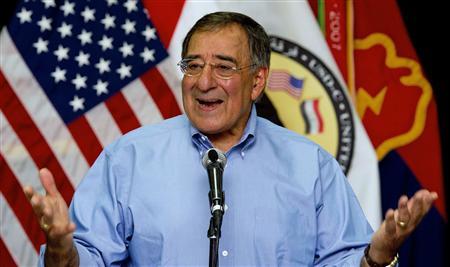
Reuters – The United States will take unilateral action when needed to deal with the threat to American troops in Iraq from Shi’ite militias armed by Iran, Secretary of Defense Leon Panetta said Monday.
Panetta’s comments came during his first trip as defense secretary to Iraq, where he also vented frustration over Baghdad’s failure to decide whether it wanted to keep some of the remaining 46,000 U.S. troops in the country beyond an end-year deadline for their withdrawal.

U.S. forces officially ended combat operations in Iraq last August but have come under increasing fire in recent weeks. A senior U.S. defense official described it as part of a campaign by militants to “bloody our noses on the way out.”

Fourteen U.S. service members were killed in hostile incidents in June, the highest monthly toll in three years. [ID:nLDE75T11D] At least three more have been killed in July, including one Sunday, the day Panetta arrived in Baghdad.

“We are very concerned about Iran and the weapons they are providing to extremists here in Iraq,” the former CIA director said in an address to U.S. troops in Baghdad.

“In June we lost a hell of a lot of Americans as a result of those attacks. And we cannot just simply stand back and allow this to continue to happen …”

Panetta said Washington’s first effort would be to press Iraq to go after Shi’ite groups responsible for the attacks, a point he raised in a meeting with Shi’ite Prime Minister Nuri al-Maliki and President Jalal Talabani.

“Secondly, to do what we have to do unilaterally, to be able to go after those threats as well, and we’re doing that,” he said, referring to the right of U.S. forces to defend themselves on Iraqi soil.

U.S. officials blame Shi’ite militias armed by Iraq’s Shi’ite neighbor Iran for most of the recent attacks and U.S. military explosives experts showed reporters traveling with Panetta pieces of rockets used for attacks in Iraq that they linked to Iran.

General Lloyd Austin, the commander of U.S. forces in Iraq, declined to comment on what specific measures unilateral action might involve.

“I think what the secretary was pointing to was we’ll do what’s necessary to protect ourselves and that could include a host of things … so we’ll just leave it at that,” he said.

MAKE A DECISION!

During his talks, Panetta stressed that the clock was ticking for Baghdad to decide whether it would ask some troops to remain in Iraq beyond 2011, a Pentagon official said.

But Maliki’s office offered little clarity, saying in a statement that the decision was “up to the national consensus and what the political parties and parliament agree on.”

Panetta, unafraid of blunt, colorful language, made no secret earlier Monday about his frustration with Iraq’s failure to come to a decision — even as he acknowledged that the delays were part of the country’s democratic process.

“Do they want us to stay? Don’t they want us to stay? … Dammit, make a decision,” Panetta told U.S. troops. “So it gets frustrating. But that’s the nature of democracy …it’s that kind of debate, that kind of dialogue goes on.”

Earlier Monday, militants fired three Katyusha rockets into Baghdad’s heavily fortified Green Zone, home to the massive U.S. embassy complex and Iraqi government buildings, according to an Iraqi Interior Ministry source.

Panetta, who as CIA director helped oversee the covert raid that killed Osama bin Laden, said his number one priority since becoming defense secretary was to defeat al Qaeda. He has estimated there are around 1,000 al Qaeda fighters in Iraq.

In language reminiscent of the Bush era, he appeared to link the Iraq war to the September 11, 2001 attacks in his comments to troops.

“The reason you guys are here is because on 9/11 the United States got attacked, and 3,000 … innocent human beings got killed because of al Qaeda,” Panetta said. “And we’ve been fighting them as a result.”

He told reporters he was not talking about the justification for the 2003 invasion — intelligence, later proved wrong, that Saddam Hussein had weapons of mass destruction.

Instead, he said it was the fact that in the years since then, “al Qaeda had really developed a presence here.”


Source

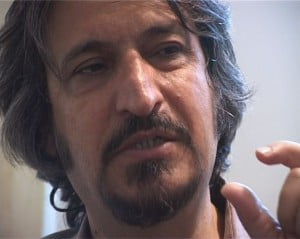
Arzhang Davoudi describes nature of Velayat-e Faqih regime in letter from Rajai Shahr prison

Insideofiran: In a letter delivered to the Human Rights and Democracy Activists in Iran group, political prisoner Arzhang Davoudi described the nature of the Velayat-e Faqih regime. He also revealed the organized crimes committed against defenseless prisoners in the ward 1 solitary confinement cells at Rajai Shahr ‘Gohardasht’ prison (Karaj, Iran).


After 33 years, the *Velayat-e Faqih brutes have not yet been civilized

*Guardianship of the Islamic Jurist (ruled by Ali Khamenei)


In the name of God,


Liberals of the world,

My fellow countrymen,


I remember in 1980 in Ahvaz a controversy was raised [regarding] Mohammad Gharvi, the governor of Khuzestan then, whose obscenity exceeded the Velayat-e Faqih agents. He had boldly stated to the people in Ahvaz, “Don’t worry, we will turn Koroush, the wealthy neighborhood of Ahvaz, into a skid-row like Asiababad.”


The “mostazafin”, [the name used in Iran to refer to the oppressed], who were listening to him, wondered disappointingly whether he had come to construct or destruct the city. If he is incapable of turning Asiababad into a better neighborhood than Kourosh when he has access to money from the export of oil, then why did he also want to destroy the Koroush neighbourhood and turn the entire city into ruins?


On May 19th, in cell 22 of ward 1, I reminded Hassan, one of the guards who had come to take one of the unfortunate prisoners to the Intelligence department of the prison that it had been a while since [we had used the rest room]. [Hassan] replied with a peculiar coolness, “Farajinejad, the head of the information security department, has ordered, that since solitary confinement cells in wards 1 and 2 are intended for tormenting stubborn and unruly prisoners to death, hygienic services [like the infirmary and rest rooms will be removed]. [Farajinejad said] to let them dirty themselves [to become] disciplined, and if anybody protests, take him to the empty [torture] room and beat the hell out of him with batons. [Farajinejad said] in case something happens [he] would be held responsible.”


Unfortunately, after 33 years, these brutes have still not realized that the increasing rate of all social crises in the country is due to the undeniable consequence of imposing the inhumane behavior of the mentally and psychologically abnormal regime agents on the society. [The destructive personality traits of the agents] allow them to even deprive prisoners of the right to relieve themselves [in the rest room].


…Velayat-e Faqih agents, although they use privileges like education, still do not value humanity.


I told the guard Hassan, whose expression and tone of speech attempted to express regret so he may be considered innocent on the brutalities, “After 30 of serving as prison guards, [you guys] have not yet learned that violence produces the opposite result. Is imprisoning people and separating them from their families and the society not excruciating enough? Is transferring a prisoner from the public ward to solitary confinement and isolating him/her in a dark and dingy cell lacking a toilet not additional torment? Is using the unsightly and stinky toilets in hall 2, ward 1 of Rajai Shahr prison not torture?


The fact is that Lajavardi, who was a psychopath and a born criminal in the truest sense of the word, employed the most ill people from the Prisons Organization including lunatics like Kolivands, Naderi, Bakhshi, Mirzai, Zanusi, and Khaki, who, without any exception, suffered from severe mental disorders. Even now in their old age, they take pleasure in and are somehow entertained by torturing people and hearing their painful appeals; just like the leaders of the regime whose evil souls are satisfied by the most hideous enemies and oppressors of the people. However, the Farajinejads who rule the psychopaths are a nastier and more ailing sort.


The Turks, Tatars, Arabs, Mongols, or any other race that invaded Iran, transformed after a few years and adapted to the grand Persian culture. However, considering the sinister nature of the Velayat-e Faqih tribe, they have not yet been civilized after 33 years.

Iranians all around the world, unite to defeat the tyrannical mullah regime.


Arzhang Davoudi


Source

Basij leader slams senior reformists

0

The head of Iran’s Basij militia, Mohammadreza Naghdi, has condemned recent attacks against the Revolutionary Guards, saying those who insult the Corps are “mercenaries and the scum of political hypocrisy.”

In a recent statement, senior reformist figure Mohammadreza Khatami said the commander of Iran’s Revolutionary Guards Corps (IRGC) has been interfering in political matters. Khatami accused Commander Jaffari of speaking as if the Islamic Republic were under a coup d’état.

IRGC Commander Jaffari recently announced that only those reformists who had not “crossed the red lines” could participate in the upcoming elections. He added that former president Mohammad Khatami would likely not qualify because he is too close to opposition leaders MirHosien Mousavi and Mehdi Karroubi, who are currently under house arrest.

Naghdi referred to Mohammadreza Khatami without directly naming him, saying:: “Do you expect such mercenaries to praise the Revolutionary Guards? … these people are aliens who are bound to speak against the guards and attack other sacred organs of the Islamic regime.”

He stressed that the Islamic Republic has been too lenient with these individuals, adding: “Such characters are no longer prominent in this country. The people have seen through these mercenaries; they are the scum of political hypocrisy, and the people have already pushed them aside and will never allow them back into the arena.”

The reformists accuse the Revolutionary Guards of interfering in the elections, which is illegal under Iran’s constitution.


Source


They want to kill my son: father of jailed blogger

Ahmad Ronaghi Maleki, the father of jailed Iranian blogger, Hossein Ronaghi Maleki is concerned for his son’s failing health and something even worse, saying: “My son’s interrogators had told me earlier in a phone call that they will kill my son and now they are proving their words right.”

Ahmad Ronaghi Maleki told the International Campaign for Human Rights in Iran that each day during his son’s solitary confinement, he used to contact the interrogators and they would tell him: “We will kill Hossein, we won’t let him live, and judiciary officials cannot do anything about it either.”

He added that he has received a call from Evin Prison informing him that Hossein is not well and is currently at the prison infirmary.

The father of the imprisoned blogger said he has written a letter to the Islamic Human Rights office in Tehran, as well as to the Tehran Prosecutor, declaring that his son’s life is in jeopardy and that he will die if his kidney becomes infected once again.

The senior Ronaghi has asked Ayatollah Khamenei, Iran’s Supreme Leader and judiciary officials to allow his son a temporary leave from prison.

The son has had a kidney transplant and still suffers from kidney problems, as well as gallstones. In a letter, the jailed blogger recently urged the Tehran Prosecutor to grant him sick leave.

Hossein Ronaghi Maleki was arrested in the crackdown on widespread protests that followed the 2009 presidential election. He spent almost a year in solitary confinement and has been sentenced to 15 years in jail. His sentence is currently in the appellate court.

He received a kidney transplant in June after many appeals for medical treatment and was returned to jail against the advice of the doctors.


Source

Four Year Prison Sentence Upheld for Baha’i Citizen Houshang Fanaian

HRANA News Agency – The Appeals Court has upheld a four-year prison sentence issued for Houshang Fanaian, a Baha’i citizen from the city of Amol in Mazandaran Province.

According to a report by Human Rights Activists News Agency (HRANA), Houshang Fanaian has been locked up in Amol Prison for more than four months. Recently, on charges of attending a special Baha’i religious ceremony and membership in a Baha’i social group, he was sentenced to 3 years in prison. Additionally, Houshang Fanaian was convicted of acting against national security through his membership in Facebook and sentenced to one year in prison.

The Appeals Court, however, overturned a six month prison term issued by the lower court for insulting the Supreme Leader of Iran.

The decision by the Appeals Court was issued within two days after the request for review was filed.Although Houshang Fanaian’s attorney, Abdolfattah Soltani, had also asked to meet with the judge assigned to review the case, the Appeals Court denied this request and announced the verdict in absentia.


Source

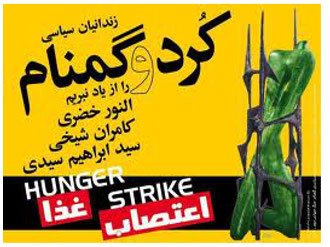
Kurdish Political Prisoner Anvar Khezri on Hunger Strike – Day 40

HRANA News Agency – After forty days of hunger strike in Rajai-Shahr Prison, Kurdish political prisoner Anvar Khezri is in critical condition and alarmingly poor physical health.Meanwhile, prison officials continue to ignore his requests.

According to a report by Kalame News, Anvar Khezri began his hunger strike forty days ago to protest against the conditions under which he has been locked up in Rajai-Shahr Prison, Ward 6, Hall 18. Since two years ago when he was arrested, Anvar Khezri has been in a state of limbo without any formal charges or a trial. Additionally, he hasn’t even been interrogated.

To protest against the uncertainty surrounding his case and also having been locked up amongst ordinary inmates in Rajai-Shahr Prison, Anvar Khezri continues his hunger strike. He refuses to eat any food and only drinks water and tea.

Anvar Khezri has two main demands. First, he has requested to be formally charged and tried after being in a legal limbo behind bars for two years. Second, he has demanded to be transferred to the ward housing political prisoners.

Two other Kurdish political prisoners, Kamran Shakhi and Ebrahim Seyedi, were also on hunger strike but ended it a few days ago.

Anvar Khezri, Kamran Shakhi, Ebrahim Seyedi, Ahmad Kamal Ramzan, Ramzan Saeedi and Hadi Amini are all political prisoners in Rajai-Shahr Prison who have been locked up amongst inmates convicted of violent crimes and also prisoners with dangerous communicable diseases. These six political prisoners have requested to be transferred to the ward housing other political prisoners.


Source