Home Blog Page 6

Iranian police break neck of Afghan teen amid deportation crackdown

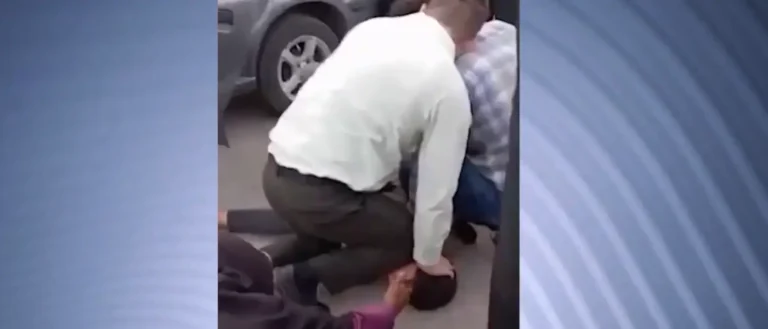
A 15-year-old Afghan has sustained severe injuries including a broken neck after Iranian police knelt on his neck amid escalating efforts to expel a growing number of Afghan immigrants.

According to Afghanistan International, Seyed Mehdi, who suffers from partial hearing problems, was fleeing from the police as they launched a series of attacks on migrants in a village in Damavand country in Tehran.

In a video of the incident, verified by Afghanistan International, two plainclothes officers and one uniformed officer are seen pinning the teenage to the ground next to a police vehicle.

Initially, two officers are seen applying their total weight on the boy’s body, with one subsequently placing his knee on his neck, in scenes echoing the death of George Floyd in the US in the hands of police. The teenager is seen crying out in pain with several nearby women screaming and attempting to intervene, but the security officers stop them.

The video depicts that after some time, Seyed Mehdi’s cries fall silent, and the officers then drag him into the police vehicle.

According to Afghanistan International, the teenager is currently hospitalized, though his exact condition remains unknown.

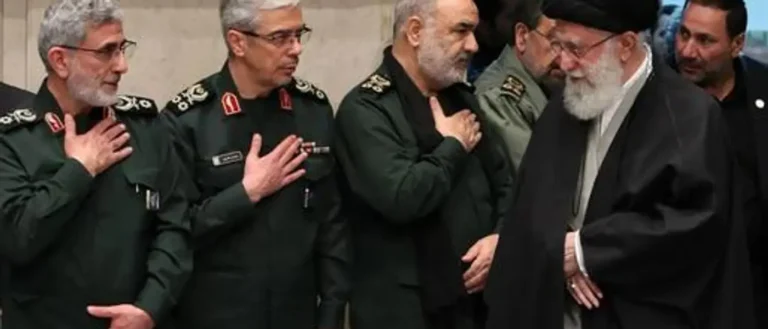
Analysts have noted the irony that in 2020, Iran’s Supreme Leader Ali Khamenei condemned the murder of George Floyd as evidence of the “true nature” of American leadership, yet he is silent regarding similar actions perpetrated by Iranian police.

“The crime committed against this black man is the same thing the US government has been doing against all the world,” Khamenei said in televised speech. “This is the US government’s true nature and character that is being exposed today.”

In recent weeks, the intensity of pressure exerted by Iranian security forces and certain segments of the Iranian populace on immigrants has markedly escalated, accompanied by a surge in reported incidents of aggression.

On Wednesday, Iran Police Chief Ahmadreza Radan said all illegal immigrants must leave the country and return home by the end of the current Iranian year (March 20, 2025).

Meanwhile, the governor of Shahriar in Tehran Province announced a “rapid action plan for arresting illegal immigrants.” Alireza Fatehi-Nejad said on Wednesday that undocumented Afghans will be returned to their country under the plan.

Also on Wednesday, Hamidullah Fitrat, the deputy spokesperson for the Taliban, announced the expatriation of 4,000 Afghan prisoners from Iranian prisons back to Afghanistan.

Furthermore, the IRGC-affiliated Tasnim News Agency reported in March that a comprehensive police initiative had been launched to apprehend and repatriate unauthorized immigrants from Tehran Province.

Additionally, it was announced that a “special patrol” has been established in Shahr-e Rey, south of Tehran, specifically tasked with identifying and detaining illegal foreign nationals.

Afghans represent the predominant group among both legal and undocumented immigrants in Iran, often referred to as “foreign nationals” by government authorities and media outlets. Official estimates suggest that the Afghan immigrant population in Iran could be as substantial as eight million.

International human rights organizations have meticulously documented years of systemic mistreatment faced by Afghan refugees and migrants in Iran, highlighting their persistent deprivation of essential services such as healthcare, employment opportunities, and housing.

The substantial influx of Afghan refugees following the Taliban’s takeover in 2021 has exacerbated these issues, provoking a backlash from some Iranians who argue that their country is already grappling with severe economic and social crises and is ill-equipped to accommodate additional refugees.

According to Afghan authorities, Iran deported over 20,000 Afghan children last year, many of whom were unaccompanied and without guardians.

Last week, Iranian authorities expelled Kobra Gholami, an outspoken Afghan social researcher, allegedly for failing to comply with the country’s mandatory hijab regulations.
IRGC media rejects NYT report about Haniyeh assassination

0

The IRGC-affiliated media has vehemently rejected a report by the New York Times regarding the assassination of Hamas leader Ismail Haniyeh, which claimed he was killed by an explosive device hidden in his room two months before the hit.

“These lies are being propagated while the results of the experts’ investigation indicate that Haniyeh was struck by a projectile, in which involvement of the Zionist regime cannot be ruled out,” read a report by Fars news agency.

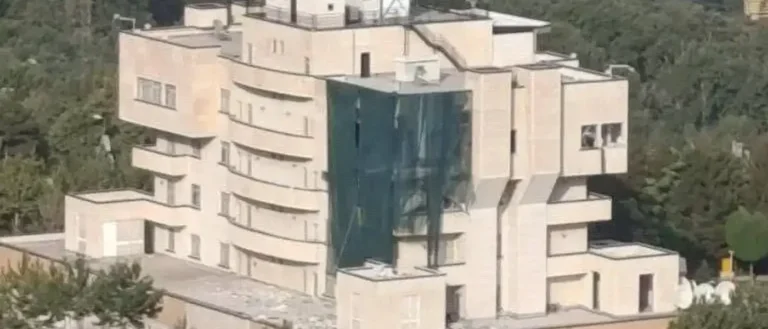
Citing five Middle Eastern officials, the New York Times report claimed the bomb was hidden in the Islamic Revolutionary Guards Corps-run guesthouse in the Neshat compound in northern Tehran, the report states.

The newspaper detailed that the explosion, which occurred around 2am local time, was triggered remotely and caused significant damage. It shook the building, shattered windows, and partially collapsed an exterior wall.

It is not clear who the Middle Eastern officials are, and if they are from countries friendly with Iran, that would have an interest in offering a scenario less damaging to the IRGC or the Iranian regime. Some Iranian journalists and activists shed doubt on the veracity of the report, saying that the Iranian regime does not want to appear totally unable to defend itself against foreign missile or drone attacks. However, the Fars News insistence that a projectile hit the building appears to weaken this argument.

The assassination of Haniyeh, who was in Tehran for the inauguration of President Masoud Pezeshkian, has sparked speculation about the method of his killing.

Earlier, most observers had said that the killing was done by a projectile hitting the specific part of the building where Haniyeh was spending the night.

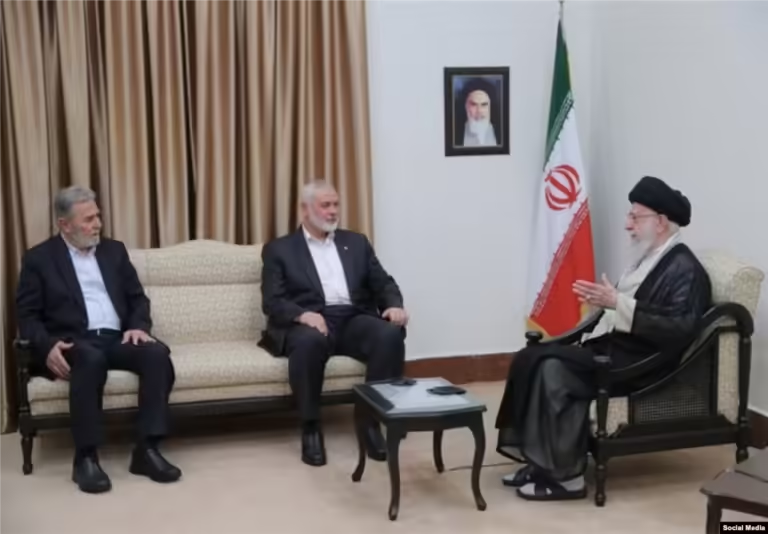
However, the NYT article says the meticulous planning behind the attack was such that, despite the proximity of Ziyad al-Nakhalah, leader of the Palestinian Islamic Jihad, who was staying next door, his room sustained minimal damage, as claimed by two Iranian officials.

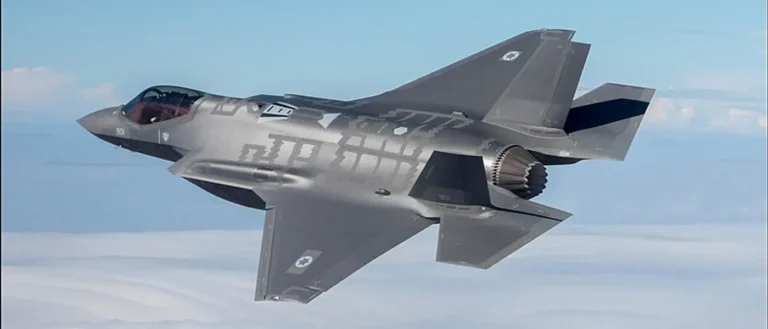
Reports, including those from Iranian state media, suggest he may have been targeted by a drone or a precision-guided missile, with special forces in Tehran directing the strike from nearby windows.

Another theory posited by Iranian media suggests that spyware was installed on his phone, enabling his location to be monitored and ultimately leading to his tracking and assassination.

To date, Iranian officials have not commented on the specific circumstances surrounding the death of the figure who had been the key bridge between Iran and Hamas since 2017.

The report lacks several key explanations, including why Haniyeh, who had stayed at the guesthouse multiple times during his visits to Tehran, was targeted on this occasion without clarifying the specific reasons for the timing of the attack.

The NYT’s report contradicts statements by Pezeshkian’s supporters who have insisted that the attack was aimed at his new administration. If the bomb was placed two months ago, at that time Pezeshkian was not even a presidential candidate.

‘Reformist’ journalist and political activist Ahmad Zeidabadi stated on Thursday that the “primary objective” of the attack on Haniyeh was to “destabilize and potentially paralyze the Pezeshkian government from the outset.”

Regardless of the method employed, it is evident that even Iranian officials acknowledge a significant failure on Iran’s part to protect Haniyeh, reflecting a profound lapse in adequate security.


According to three Iranian officials speaking to the New York Times, such a breach “was a catastrophic failure of intelligence and security for Iran and a tremendous embarrassment for the Guards, which use the compound for retreats, secret meetings, and housing prominent guests like Mr. Haniyeh.”

Some officials such as IRGC commander Qasem Soleimani’s deputy and former MP, Mansour Haqiqatpour, have even suggested that a purge within the security forces is necessary.

He condemned the assassination for the impact it will have on Iran’s security apparatus, telling Rouydad 24 that the killing “casts a negative light on Iran’s security officials”. He called for accountability among certain political, military, and security officials, suggesting that “some may need to be dismissed.”

The conservative Iranian newspaper Jomhouri-e Eslami also criticized the security forces for failing to eliminate infiltrators within their ranks.

The article condemned the focus on “getting revenge” rather than preventing terror acts and recommended a “comprehensive purge of intelligence and security agencies” to safeguard against such assassinations.

Iranian voices call for security probe and overhaul after Haniyeh’s killing

Some Tehran media and politicians continue to demand answers over security lapses that allowed the assassination of Hamas leader Ismail Haniyeh in a government guesthouse in Tehran last week.

While many Iranian officials and politicians call for a strong retaliation against Israel for Haniyeh’s brazen killing by an explosive projectile while he was sleeping, a few insiders insist that the priority should be to understand how such an operation was possible.

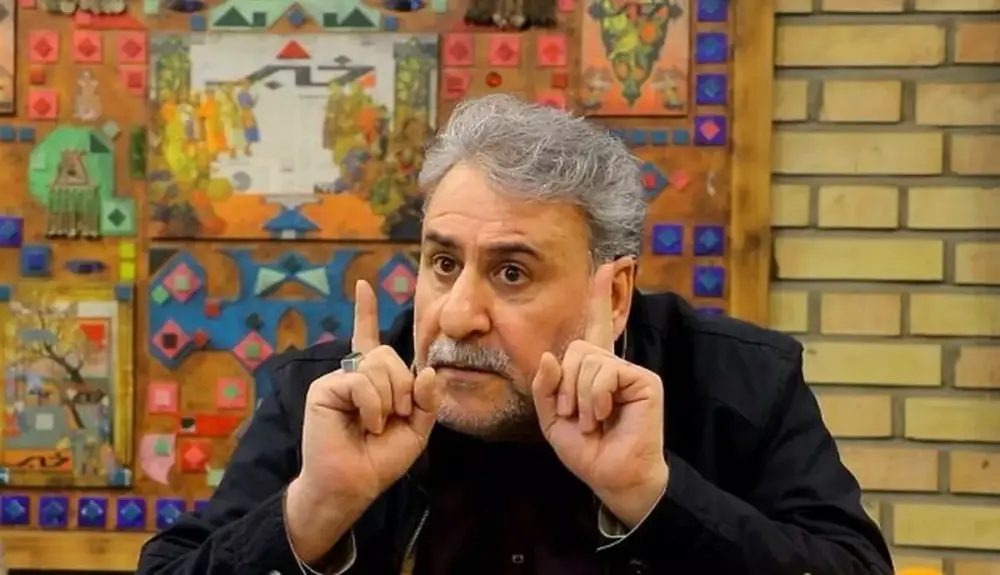
One of these voices is an influential commentator and former senior lawmaker Heshmatollah Falahatpisheh who spoke to Etemad newspaper.

“The most important scenario to consider regarding the assassination of Haniyeh is the scenario of infiltration. This issue needs to be carefully analyzed and evaluated. I hope that the scenarios being presented by some experts on state television and in certain radical media outlets are not being used as an excuse to avoid accountability,” Falahatpisheh said.

He is one of a dozen or so commentators allowed to often speak out on government-controlled media about sensitive issues. He often voices opinions critical of some government policies, including its foreign policy.

Iranian politician and commentator Heshmatoolah Falahatpisheh

Iranian security and intelligence officials remained largely silent in the first three days after the assassination about the exact circumstances what kind of weapon was used. This led to plenty of speculation both in Iranian and foreign media. The New York Times went as far claiming that a bomb placed in the guesthouse two month earlier killed Haniyeh, not any projectile fired from the air or the ground.

Finally, on Saturday, the Revolutionary Guard issued a statement rejecting this scenario and announcing that Haniyeh was killed by a small and short range projectile fired from the vicinity of the compound.

However, criticism of security and intelligence agencies continue. Javad Emam, a politician from the Reform Front in a tweet asked President Pezeshkian to act. “The assassination and martyrdom of Ismail Haniyeh on Iranian soil was a warning about the incompetence and inefficiency of certain parts of the country’s intelligence and security apparatus.”

Emam urged Pezeshkian to make personnel and other changes.

“First, take action to reorganize the intelligence and security forces, and if necessary, reselect them.

Second, where possible, and not in a rushed manner, work towards merging parallel intelligence agencies to prevent further costs to the country due to lack of coordination and the actions of inexperienced personnel.

Third, by establishing truth-finding committees and punishing those at fault, and following the example of several important national cases, work to restore a sense of security in society,” he argued.

Falahatpisheh, in turn, mocked statements by officials who periodically claim they have demolished enemy networks within the country. One such statement by the intelligence minister was made just days before the Haniyeh incident.

“A while ago, one of the officials openly stated that they had uncovered and neutralized all areas of Zionist infiltration in the country. However, incidents like the assassination of Martyr Haniyeh show that there are still specific security vulnerabilities that need to be addressed urgently. Addressing these gaps and deficiencies should be one of the key priorities for the new administration,” the former lawmaker stated.

Despite these calls for a serious investigation and holding security officials responsible for the failure to protect a high-level foreign guest, so far there is no sign of action. What occupies most headlines in Iran is the issue of a retaliatory attack against Israel.

Iran officials react to Haniyeh killing, revealing security gaps

0

Iranian officials condemned the Wednesday assassination of Hamas leader Ismail Haniyeh in Tehran, blaming Israel and vowing “retribution,” while downplaying security lapses.

Following the Palestinian leader’s death, Iran’s Supreme Leader Ali Khamenei stated, “The criminal and terrorist Zionist regime, with this action, has paved the way for severe punishment for itself. We consider it our duty to seek justice for him, who was martyred within the territory of the Islamic Republic of Iran.”

The Islamic Revolutionary Guard Corps (IRGC) issued a statement blaming “the Zionist regime” for the attack. They declared that this “crime” would be met with a “harsh and painful response” from the Resistance Front, particularly from Iran.

Early indications suggest that Haniyeh and his bodyguard died when a rocket or drone struck the residence where they were staying, raising the possibility of Israeli infiltration. This has inevitably turned attention towards Israel, which had vowed to hunt down and punish all Hamas leaders following the brutal attacks of October 7, resulting in the deaths of approximately 1,200 Israelis and foreigners.

Israel typically refrains from commenting on its operations abroad. However, this attack might mirror the pattern of multiple Israeli operations, the latest being targeting Iranian air defenses around its nuclear facility in Natanz on April 19.

Observers assert that this incident exposes significant vulnerabilities within the Islamic Republic’s security apparatus. The assassination occurred on a day designated for heightened security measures due to the inauguration of President Masoud Pezeshkian which took place the day before, underscoring a severe breach. Pezeshkian vowed that the Islamic Republic would defend its territorial “integrity, dignity, honor, and pride,” promising to make the “terrorist occupiers” regret their actions. “Yesterday, I raised his victorious hand, and today, I have to carry him on my shoulders for his funeral,” Pezeshkian added.

Members of Iran’s Parliament, in their denunciation of the assassination, emphasized that “the Zionist regime is increasingly mired in the depths of its demise with each passing day,” repeating typical rhetoric of Islamic officials in Iran.

First Vice President Mohammad Reza Aref stated that the assassination was driven by “sinister objectives” aimed at creating a new crisis in the region and complicating Iran’s regional and international relations, particularly at the onset of the new administration’s term.

Parliament Speaker Mohammad Bagher Ghalibaf announced on his X account that “Iran and the Resistance Front will not disregard the blood of Ismail Haniyeh.”

Former Foreign Minister Mohammad Javad Zarif stated on X, “The cowardly assassination of our guest will only strengthen our resolve to defend our territory and support the Palestinian people’s fight for their freedom.”

The Iranian currency immediately lost value, trading at more than 600,000 rials per one US dollar in the wake of the assassination. For a relatively long time the rial was hovering around 570,000 to 590,000 per dollar.

Many Iranians on social media expressed views highlighting the apparent weakness of the Islamic government in protecting their own high-level foreign guets.

Haniyeh hit in Tehran reveals glaring security lapses, say experts

Experts suspect the assassination of Hamas’s political leader Ismail Haniyeh possibly used a special precision missile with special forces in Tehran guiding it to its target.

It meant that such a strike would take out the Iran-backed terror-designated group’s figurehead while causing the least collateral damage.

Major Andrew Fox, a research fellow at the Henry Jackson Society and a former British paratrooper, said locating Hamas leader Ismail Haniyeh had made the assassination, early on Wednesday, nothing more than “fairly straightforward intelligence”.

Haniyeh made regular media appearances during his multiple visits to Tehran, making it an accessible target for Israel, which had promised Qatar not to strike him there—one of Hamas’s two exile offices, alongside Turkey.

“They put themselves on the radar so it’s fairly straightforward intelligence work to find them. The time of day was very sensible. In Afghanistan we did night raids as we knew where the target would sleep.”

Based on his many years of experience, he said the likelihood of the cause of the strike was a missile launched from outside Iran and guided in with precision laser technology, operated by special forces on the ground.

“The soldier on the ground points a laser pointer at the exact spot they want to hit so the laser guides the missile to the point of impact,” he said. “The UK, US and others have this technology.”

Causing minimal damage, it also came in almost unnoticed with very little sound to warn of its approach.

“There are kinetic missiles Israel has been using that kill using kinetic energy that essentially uses the speed and weight of the warhead to do the killing. We’ve seen that in strikes on kills where a classroom is hit that’s being used by Hamas. It explains why less people got killed and it was less noisy than an explosive warhead,” he explained.

What this also means is that, unlike the assassination in Beirut of Hezbollah’s top commander on Tuesday, Fuad Shuker, which injured at least 60 others and damaged a huge chunk of a large building, the impact is far less.

“It’s really clever to use this as it doesn’t wipe out a whole chunk of Tehran. There isn’t so much damage that Tehran is forced to retaliate with huge force. If they’d levelled a city block, Iran would have no choice but to be more aggressive than I think they will be. It was one house. It’s embarrassing for Iran but in terms of damage it’s not a huge beast,” added Maj Fox.

Israeli intelligence and security analyst, Ronen Solomon, said the hit in Tehran will be a major embarrassment for Iran. While in Qatar, Haniyeh has a huge circle of security around him. However, he had just one bodyguard in Tehran, ironically, the one place he felt he was safe.

But he left a huge footprint leading Israel straight to him. “Ismail Haniyeh came with a group of Palestinians so there is a wide [intelligence] signature. They came from Qatar and usually it’s by a private plane,” he explained.

The root of the strike remains unconfirmed by either Iran or Israel but Solomon said what was unusual was the lack of sound and sight.

“Usually if there is an explosion we see it. You can hear it. We didn’t get this on this occasion. If there was a strike, north of Tehran there is the Caspian Sea,” he said, suggesting this was the direction of attack.

“If I’m a special unit with guided missiles I can do it from the sea with roaming missiles” The Caspian Sea in the north is not far from Tehran, he said.

With Israel’s close ally, Azerbaijan, bordering Iran, Solomon says the chances of it having been used to launch the attack are high. Just a few hundred kilometers away, it already has Israeli weaponry and shared intelligence.

However, he says another option, as has been seen before, is a drone attack that could be done with a range of 30km sent from inside Tehran, launched by an opposition cell.

Such a method would be realistic for an operation of this kind, and Israel has this capability as has been seen in the past with operations Iran accused Israel of plotting.

“This would have been a very quick operation with little time to plan after the announcements he was in Tehran which also shows the determination of Israel,” Solomon said.

However, with both sides staying silent on the details, the operation remains a mystery. “There wasn’t any kinetic signature and Israel hasn’t taken responsibility, so it’s still unclear, which is good for Israel as it gives room for denial,” he said.

Israeli Defense Minister Yoav Gallant has already said, “We don’t want war, but we are preparing for all possibilities.”

Iran’s Revolutionary Guards said that “the killing of Haniyeh will be met with a harsh and painful response,” and Ali Larijani, adviser to supreme leader Ali Khamenei, said Israel will “fall into a new quagmire” due to the attack.

Iranian netizens speculate about Hamas leader’s assassination

Iranians have taken to social media to express their views on Ismail Haniyeh’s targeted killing in Tehran, raising concerns about the security and intelligence agencies’ failure to protect him.

The political leader of Hamas who had traveled to Tehran to participate in the inauguration of President Masoud Pezeshkian Tuesday was targeted at a highly guarded compound set within a park at the foothills of high mountains in the northern Niavaran district in the early hours of Wednesday.

Supreme Leader Ali Khamenei has vowed revenge for Haniyeh’s killing without specifying its type. Still, ultra-hardliners on social media are demanding a missile and drone strike on Israel similar to the attack in April dubbed “Operation True Promise” with the hashtag “Operation True Promise 2”.

Iranian netizens are extensively speculating about Israeli Prime Minister Benjamin Netanyahu’s possible motivations in choosing the time and place of the assassination. They are concerned that a retaliation, if Khamenei decides to strike Israel again, may ignite a full-on regional war.

“Haniyeh’s assassination in the heart of Tehran was the most humiliating action against the Islamic Republic that Israel or America have taken in recent years,” a dissident netizen posted on X.

“It was even more humiliating than the killing of [Qasem] Soleimani,” he wrote while pointing out that Soleimani was killed under very different circumstances in a different country where Iran did not exercise its own intelligence and security controls.

There are allegations of significant Israeli infiltration within these agencies, which many Iranians claim are diverting their resources to suppress intellectuals and activists, and to crack down on women for hijab violations, rather than focusing on real threats.

These agencies are predominantly under the control of hardliners and ultra-hardliners. Some netizens are alleging that these agencies have been heavily infested with Israeli infiltrators and spies given the many operations that Jerusalem is believed to have conducted in Iran since 2010.

“Iran’s intelligence and security apparatus has been totally destroyed since [Mahmoud] Ahmadinejad’s time [in office],” a tweet about the assassination contended while holding “spies and infiltrators” responsible for the intelligence failure in this instance.

“Tehran has practically become the stage for Israel’s operations! The best place for Israel to assassinate Haniyeh was Tehran so that it would not entail problems in its relations with Arab [states] for assassination on their soil and to show off its power in Tehran,” a post on X said about the choice of location for the operation.

Netizens are also extensively speculating about the equipment — a quadcopter, a drone, or a cruise missile, and the possible involvement of a “neighboring country” from where the attack could have been launched.

In a tweet, journalist Ata Bahrami asked why no one heard the blast in Niavaran if Haniyeh was targeted by a rocket launched from outside Iran which could have caused a massive explosion. “The assassination was done from inside [the country]!” he speculated.

“The problem now is not whether it was a missile or a knife [that killed Haniyeh]. The message and the security disaster is what matters,” another netizen responded to such speculations.

Others have accused the Israeli Prime Minister of seeking to sabotage any future talks between the new government in Tehran and Washington that could improve their relations.

“The cowardly Zionists always try to sabotage whenever they feel talks and improvement of the situation is possible,” one of them posted on X.

Iran’s former Communications Minister Mohammad-Javad Azari-Jahromi who played a major role in Pezeshkian’s campaign in a tweet has similarly accused Israel of trying to sabotage Pezeshkian’s promised efforts to improve Iran’s relations with the world.

“The people of the world should know that the occupying Zionist regime committed a terrorist act on the same day that the Iranian President, on his first day in office, called the world to peace and friendship,” Azari-Jahromi wrote while calling Israel a “cancerous tumor” that threatens peace in the whole world. He failed to mention that during Pezeshkian’s swearing-in ceremony in parliament those present were chanting “death to America.”

Expatriate journalist Dariush Memar responded to Azari-Jahromi that the Islamic Republic cannot form “the biggest terrorist network in the world” and invite its leaders to the inauguration of its president while calling the world to peace and calm. “The world cannot be deceived,” he tweeted. Other netizens have expressed similar views.

Attack on Hamas chief’s Tehran residence kills Haniyeh, his bodyguard: IRGC

0

Hamas chief Ismail Haniyeh and one of his bodyguards were killed after his residence was targeted in Tehran, Iran’s Islamic Revolutionary Guard Corps (IRGC) confirmed in a statement early Wednesday.

The statement by the IRGC’s Public Relations Department said the attack was carried out early Wednesday, adding that a probe is underway to find the cause of the incident.

The statement offered condolences to the people of Palestine, the Muslim world, and the Resistance Front’s fighters over the Hamas leader’s death.

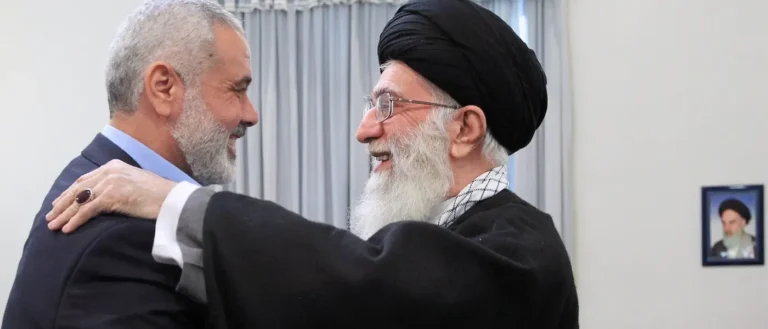
Earlier on Tuesday, Haniyeh had attended the inauguration of Iran’s new president and met Iran’s Supreme Leader.

  • Hamas says Israel was behind Haniyeh’s assassination

    A statement by Hamas says a “treacherous Israeli raid” killed the Palestinian group’s politburo chief in Tehran.

    • Hezbollah MP: Israel wants war, and we are ready for It

      A member of parliament from Lebanese armed group Hezbollah said on Wednesday that his group would be ready to fight a war with Israel, after an Israeli strike on the southern suburbs of Beirut targeted Hezbollah’s top military commander.

      Ali Ammar spoke to local broadcasters amid the ruins of Tuesday’s strike.

      The Tuesday airstrike killed Fuad Shukr, the “right-hand man” of Hezbollah Secretary-General Hassan Nasrallah who served as his adviser for planning and directing wartime operations, the Israel Defense Forces (IDF) said.

      Syria says Haniyeh’s hit will ignite a regional conflagration

      The Syrian Foreign Ministry has held Israel responsible for the killing of Ismail Haniyeh, warning that this attack could potentially lead to “the ignition of the entire region.”

      Killing of Haniyeh highlights Israel’s deep intel and operational sway in Iran

      Kambiz Ghafouri, a journalist, commented on the circumstances surrounding the death of Ismail Haniyeh, stating that the attack demonstrates Israel’s significant intelligence penetration in Iran, as it required meticulous planning days in advance.

      Speaking to Iran International, Ghafouri mentioned that if the attack was carried out using guided drones within Iran, it implies that Israel has operational forces inside Iranian territory.

      He added that if the airstrike was executed by precision-targeting fighter jets originating from another country, as some reports suggest, it would still indicate Israel’s operational capabilities within Iran’s borders.

      Iran declares three days of public mourning

      Following the death of Ismail Haniyeh, the government has announced three days of public mourning in Iran.

      IRGC threatens ‘harsh’ response after killing of Ismail Haniyeh

      The Islamic Revolutionary Guard Corps (IRGC) has issued a second statement on Wednesday condemning the assassination of Ismail Haniyeh, the head of Hamas political bureau, and one of his bodyguards in Tehran.

      The IRGC blamed “the Zionist regime” for the attack and declared that this “crime” will be met with a “harsh and painful response” from the Resistance Front, particularly from Iran.

      Iran’s First VP: Haniyeh’s assassination aimed at creating regional crisis

      Iran’s First Vice President Mohammad Reza Aref stated in a message that the assassination of Ismail Haniyeh was driven by “sinister objectives,” aimed at creating a new crisis in the region and complicating the regional and international relations of Iran, particularly at the onset of the new administration’s term.

      Iran, its ‘resistance’ forces to seek justice for Haniyeh’s death – Parliament speaker

      Mohammad Bagher Ghalibaf, Speaker of the Iranian Parliament, announced on his X account that “Iran and the Resistance Front will not disregard the blood” of Ismail Haniyeh.

      Turkish President Erdogan condemns killing of Haniyeh

      Turkish President Recep Tayyip Erdogan condemned the killing of Hamas Political Bureau Chief Ismail Haniyeh in Tehran.

      In a statement on X, Erdogan denounced the act as a “treacherous assassination”. He said that “Zionist actions” will not help to achieve their goals.

      Hamas armed wing warns of ‘major repercussions’

      The armed wing of Hamas said on Wednesday that the killing of Hamas leader Ismail Haniyeh in Tehran would “take the battle to new dimensions” and have major repercussions.

      Jordan condemns killing of Ismail Haniyeh

      The Jordanian government has condemned the killing of Hamas leader Ismail Haniyeh, stating that the act violates international law and escalates tensions in the region.

      In a statement, the Jordanian Ministry of Foreign Affairs said that the incident could lead to further chaos and instability in the Middle East.


      Haniyeh to be buried in Qatar

      Qatari sources have reported that the funeral and burial ceremony for Ismail Haniyeh, the head of Hamas’s political bureau, will be held on Friday in Doha, Qatar.

      IRGC-affiliated Tasnim news agency also reported that a procession ceremony will be held in Tehran for Ismail Haniyeh. The ceremony is likely to take place on Thursday.

      Khamenei warns of retaliation against Israel

      Iran’s Supreme Leader Ali Khamenei said in a statement following the killing of Hamas leader Ismail Haniyeh in Tehran that “The criminal and terrorist Zionist regime, with this action, has paved the way for severe punishment for itself.”

      “We consider it our duty to seek justice for him, who was martyred within the territory of the Islamic Republic of Iran,” he added.

      Iran prosecutor’s office warns people against posts about Haniyeh hit

      In a statement regarding the killing of Ismail Haniyeh, the Prosecutor General’s Office warned journalists and social media users to refrain from discussing topics that “disrupt the psychological security of society.”

      The office also instructed security agencies to monitor cyberspace and report any media outlets or individuals who “spread rumors or disrupt psychological security” to the judiciary.

      The statement reads: “Those who, through irresponsible remarks, dissemination of false information, spreading lies, and insults, disturb the psychological security of society will be dealt with according to the law.”

      Al Arabiya identifies Haniyeh’s bodyguard killed in Tehran

      Al Arabiya reported that the bodyguard of Ismail Haniyeh, who was also killed alongside him in Tehran, is identified as Wasim Abu Shaban.

      Yemeni Houthis declare three days of mourning for Haniyeh’s death

      The Yemeni Houthis have announced a three-day public mourning period following the death of Hamas leader Ismail Haniyeh in Tehran.

      Israel has long been able to operate within Iran or launch air attacks

      Since at least 2010, Israel has allegedly conducted dozens of attacks inside Iran, including sabotage of sensitive nuclear and military installations, as well as assassinations of experts and individuals deemed a threat.

      Israeli attacks became more frequent from July 2020, when a huge explosion took place in the Natanz uranium enrichment site in central Iran, destroying one of the buildings. In November of the same year, Mohsen Fakhrizadeh, a prominent official in Iran’s nuclear program, was assassinated in a roadside attack near Tehran. Western and Israeli intelligence had long suspected that Fakhrizadeh was the father of Iran’s covert nuclear weapons program.

      Many small and bigger attacks on various targets have occurred since Fakhrizadeh’s assassination, which allegedly involved a high-tech, remote operated machine gun. Israel has never acknowledged its involvement in any of these attacks, but it is widely believed that many incidents at military and industrial sites were the result of either Israeli sabotage or drone attacks.

      Since at least 2010, Israel has allegedly conducted dozens of attacks inside Iran, targeting sensitive nuclear and military installations and carrying out assassinations of individuals deemed a threat.

      These attacks became more frequent after July 2020, when a massive explosion occurred at the Natanz uranium enrichment site in central Iran, destroying one of the buildings. In November of that year, Mohsen Fakhrizadeh, a key figure in Iran’s nuclear program, was assassinated in a roadside attack near Tehran. Western and Israeli intelligence had long suspected Fakhrizadeh of being the architect of Iran’s covert nuclear weapons program.

      Since Fakhrizadeh’s assassination, which reportedly involved a high-tech, remote-operated machine gun, numerous small and large-scale attacks have continued to target various sites. While Israel has never acknowledged its involvement, it is widely believed that many incidents at military and industrial sites were the result of Israeli sabotage or drone attacks.

      Iran has on many occasions claimed that it has unmasked and demolished Israeli infiltrators, most recently in July. But few observers believe these claims, as Iran has never produced concrete evidence of success against Israeli covert operations.

      China, Russia condemn assassination of Hamas leader

      China firmly opposes and condemns the assassination of Hamas leader Ismail Haniyeh in Iran, the Chinese foreign ministry said on Wednesday, adding that the incident could lead to further regional instability.

      Deputy Russian Foreign Minister Mikhail Bogdanov said, “This is an absolutely unacceptable political murder, and it will lead to further escalation of tensions.”

      Iranian president vows retaliation after killing of Hamas leader

      Iranian President Masoud Pezeshkian has vowed that the Islamic Republic will defend its territorial “integrity, dignity, honor, and pride,” promising to make the “terrorist occupiers” regret their actions.

      His statement follows the killing of Hamas leader Ismail Haniyeh in Tehran early Wednesday.

      “Yesterday, I raised his victorious hand, and today I have to carry him on my shoulders for his funeral,” Pezeshkian added.

      Hezbollah: Haniyeh’s death strengthens our resolve against Israel

      Iran-backed Hezbollah of Lebanon issued a statement declaring that the death of Ismail Haniyeh has “reinforced the fighters’ determination in all areas of resistance and strengthened their resolve to confront the enemy.”

      The statement honored Haniyeh as “one of the great leaders of the resistance era” who “bravely stood against the US domination and Israeli occupation.”

      Haniyeh’s hit is a severe blow to Tehran’s prestige

      Mohammad Ghaedi, an international relations expert, suggested that the Islamic Republic is likely to mobilize its resistance forces and bring them onto the streets of Tehran in response to the assassination of Ismail Haniyeh.

      Ghaedi told Iran International, “Haniyeh, formerly the Prime Minister of the Palestinian Authority, is the highest-ranking Palestinian official ever to be assassinated, posing a significant challenge to Tehran’s prestige.”

      According to Ghaedi, the Islamic Republic may attempt to bring the issue to the United Nations Security Council and demonstrate its power regionally and domestically by mobilizing its forces and showcasing them in public displays.

      Qatar says killing of Haniyeh is a dangerous escalation

      Qatar strongly condemned killing of Hamas chief Ismail Haniyeh in Tehran, warning that the assassination is a dangerous escalation.

      Meeting scheduled over Haniyeh’s death in Tehran

      The spokesperson for the National Security Committee of Islamic Republic’s parliament announced that it will hold a meeting regarding the assassination of Ismail Haniyeh in Tehran.

      Ebrahim Rezaei, the spokesperson for the committee, expressed his condolences over the death of Ismail Haniyeh in an interview with Tasnim News Agency. He stated, “The Zionist regime, in a cowardly and desperate act, assassinated Ismail Haniyeh, the prominent leader of Palestinian resistance, which is a sign of the regime’s desperation and inability.”

      He added that the National Security Committee will hold a meeting to examine this development with the presence of all relevant agencies, and the results will be made public.

      Israeli Air Force about to show its range, pundit tweeted before Haniyeh’s hit

      Richard Goldberg, a senior advisor at the Foundation for Defense of Democracies, tweeted “The Israeli Air Force is about to demonstrate its range tonight” hours before Haniyeh’s assassination.


      Israel would ‘pay a heavy price’ – Former IRGC general

      A former commander of Iran’s Revolutionary Guards, Mohsen Rezaie, warned on Wednesday that Israel would “pay a heavy price” for assassinating Hamas leader Ismail Haniyeh in Tehran, Iranian state media reported.

      Taliban express condolences over Haniyeh’s death

      The Taliban government in Afghanistan expressed condolences over the death of Hamas leader Ismail Haniyeh, saying, “The martyrdom of Ismail Haniyeh leaves a great sorrow for the Ummah, but it also heralds the demise of the usurping Zionists.”

      The statement extended sympathies to his family and the entire Islamic community.

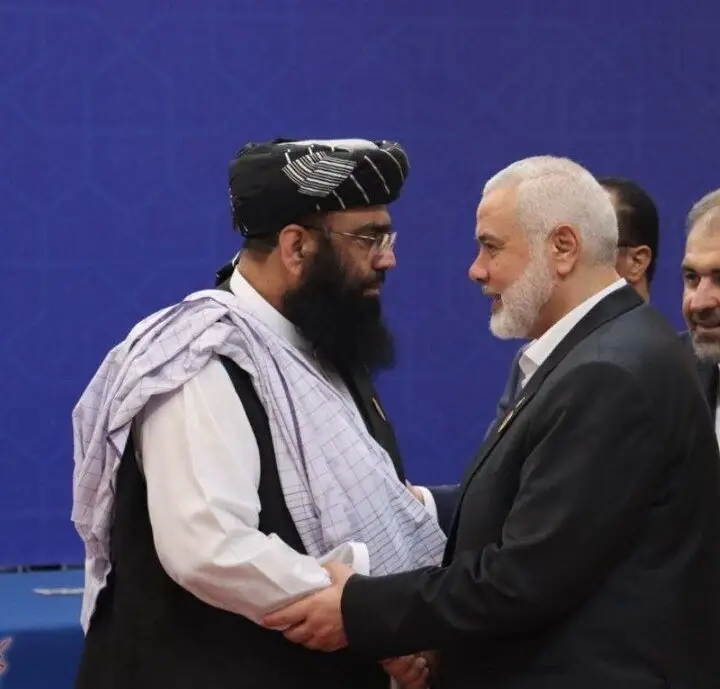
      Taliban’s Foreign Minister Amir Khan Muttaqi and Haniyeh during Iranian President Masoud Pezeshkian’s inauguration in Tehran, July 30, 2024

      Hamas leader killed with a missile fired from abroad – Hezbollah media

      Al-Mayadeen, a news outlet affiliated with the Hezbollah, said the Hamas leader was assassinated with a “missile fired from abroad,” citing an unnamed Iranian official.

      The official called it an act of “aggression against Iran” which “necessitates a decisive response.”

      Iran’s Nournews says “further investigations are underway to determine the details of this terrorist operation like the location from which the projectile was launched.”

      The website, close to Iran’s Supreme Council of National Security, added that “crossing Iran’s redlines has always been costly for the enemy”

      Turkey says Haniyeh’s killing aimed at igniting regional war

      The Turkish foreign ministry in a statement condemned the “heinous” assassination of Hamas Political Bureau Chief, saying “it once again made it clear that the Netanyahu government has no intention of achieving peace.”

      The statement said, “This attack also aims to spread the war in Gaza to a regional scale. If the international community does not act to stop Israel, our region will face much larger conflicts.”

      Haniyeh killed after being hit by ‘aerial projectile’: IRGC media

      Ismail Haniyeh was killed after being hit by an “aerial projectile” in his residence in northern Tehran at 02:00 am (local time), the IRGC-affiliated Fars News reported, without giving further details about the projectile.

      Hamas leader last seen visiting ‘Resistance’ theme park in Tehran

      Russia says Haniyeh’s ‘unacceptable’ killing to escalate tensions

      The killing of Hamas’ chief political leader is “an absolutely unacceptable political murder”, a deputy Russian foreign minister told RIA state news agency on Wednesday.

      “This is an absolutely unacceptable political murder, and it will lead to further escalation of tensions,” RIA cited Deputy Foreign Minister Mikhail Bogdanov as saying.

      Haniyeh’s blood not shed in vain, Iran says in first reaction

      Iran’s Foreign Ministry spokesperson said in a statement that Haniyeh’s killing will “strengthen the deep and unbreakable bond between Iran, Palestine, and the resistance.”
      “Undoubtedly, the pure blood of this resolute fighter was not (shed) in vain,” Nasser Kanaani said in Iran’s first official reaction to the assassination.

      US says will help Israel defend itself if attacked

      US Defense Secretary Lloyd Austin said on Wednesday he did not think a wider war in the Middle East was inevitable, referring to rising tensions in the region.

      Speaking during a visit to the Philippines, Austin also said the US would help defend Israel if it were attacked.

      “We don’t want to see any of that happen. We’re going to work hard to make sure that we’re doing things to help take the temperature down, and address issues through diplomatic means,” Austin told reporters.

      Back in April, the US military successfully helped Israel stop a massive wave of Iranian missiles and drones.

      Oil prices surge over 1% on report of Haniyeh’s assassination

      Oil prices surged in Asian trading on Wednesday following reports of Haniyeh’s death in a suspected Israeli strike in Iran’s capital, potentially signaling increased tensions in the Middle East, Investing.com reported.

      By 03:05 GMT, Brent oil futures for September delivery rose 1% to $79.45 a barrel, while West Texas Intermediate crude futures increased 1.2% to $75.64 a barrel,

      Iran holding emergency national security meeting: Reports

      Iran is holding an emergency meeting of its Supreme National Security Council at the supreme leader’s residence, an event that happens during extraordinary circumstances, New York Times reported citing two Iranian officials.

      The IRGC Quds Force chief, Esmaeil Qa’ani, is also attending the meeting, the report said.

      Iran’s top security body will decide about Iran’s strategy in reaction to Haniyeh’s assassination in Tehran, Reuters reported, citing unnamed sources.

      Haniyeh’s killing ‘dangerous’ development: Palestinian President

      Palestinian Authority President Mahmoud Abbas condemned the assassination of Ismail Haniyeh, calling it a “cowardly act and a dangerous development

      Yemen’s Houthis say ready to pay any price in war on Israel

      “We have entered into a full-scale war for the liberation of Quds and are ready to pay any price in this path,” Yemen’s Iran-backed Houthis said in a statement on the assassination in Tehran of Ismail Haniyeh.

      Hamas official calls Haniyeh’s killing ‘grave escalation’

      The assassination of Hamas leader in Iran is a grave escalation that will not achieve its goals, Hamas official Sami Abu Zuhri told Reuters.

      Even Iran’s IRGC couldn’t save Hamas chief: Congressman

      Haniyeh’s death makes world ‘a little better’: Israeli minister

      “This is the right way to clean the world from this filth. No more imaginary “peace”/surrender agreements, no more mercy for these mortals,” Israeli Heritage Minister Amihai Eliyahu said in a post on his X account in reaction to Haniyeh’s assassination.

      “The iron hand that will strike them is the one that will bring peace and a little comfort and strengthen our ability to live in peace with those who desire peace. Haniyeh’s death makes the world a little better,” he added.

      Last photos of Haniyeh in Tehran

      Haniyeh killed hours after praising Iran’s support for Hamas

      The Palestinian leader was assassinated hours after praising Tehran’s support for Hamas and Palestine during his meeting with Iran’s President Masoud Pezeshkian.

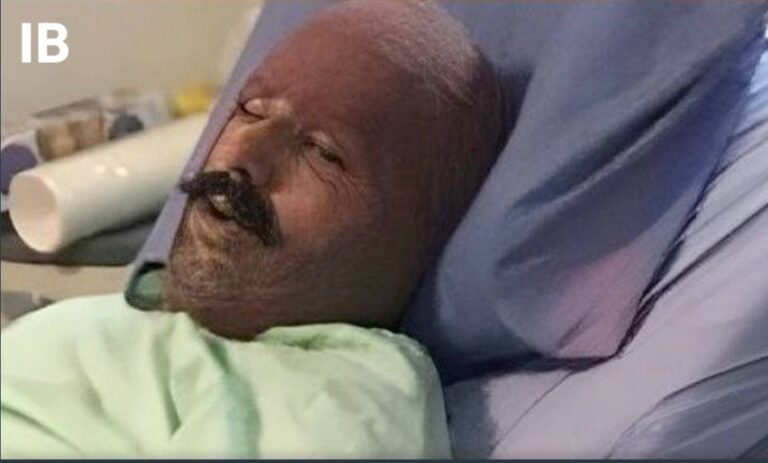
Khalid Pirzadeh’s last condition in Tehran’s Evin prison

0

Khaled Pirzadeh was deprived of the right to make phone calls for more than three months due to the fact that he made a wooden sign in support of the plaintiffs and engraved the words “Cho Iran nadasde tun man mobad” [ If not Iran. I don’t want to be either]on that sign.
Now it is clear that the interrogators had asked Khaled Pirzadeh to stop supporting the families of the plaintiffs in return for the return of work tools and the right to call. that Khalid set himself on fire in protest.

Khaled Pirzadeh, a champion of bodybuilding, a civil activist who was arrested while writing slogans in 2017. In 2018, he was sentenced to 7 years in prison. He was tortured many times and even twice while his eyes were closed, he was hanged with the rope. During his detention, he went on hunger strike several times in protest against repeated disrespect to his family.

Khaled was sentenced to 5 years and eight months in prison again in 2023 on charges of “assembly and collusion” and “propaganda against the system”. He had boiled beer in prison, he suffered 15% second degree burns on his hands, face and chest.
After his condition worsened in Beheshti Hospital in Tehran and lack of proper care, this political prisoner was transferred to Motahari Hospital in Tehran at his own expense this morning and underwent surgery yesterday (July 19).
Khalid Pirzadeh, a constitutionalist political prisoner in Evin prison, committed self-immolation in protest against the ban on telephone calls and visits for more than seventy days.
This political prisoner has been deprived of making phone calls with his family for more than seventy days.
Khaled Pirzadeh is currently serving his sentence in Evin prison and is facing a ban on visits and contacts.
Mr. Pirzadeh suffers from heart disease, he has been denied the possibility of making a phone call with his family since the 30th of April due to making a sign for a group of petitioning families.
The authorities of Evin prison have banned Khaled Pirzadeh from contacting his family since April 30 because of making a signboard for a group of petitioning families.

On this board, which is made of wood, it is written: “If not Iran. I don’t want to be either”
Depriving this political prisoner of the right to contact his relatives while he is suffering from a heart disease, and this situation “caused the concerns of his relatives and friends.

Khaled Pirzadeh was arrested last time in September 2023 by the agents of the Ministry of Information of the Islamic Republic in Ahvaz.

Khalid Pirzadeh, the former bodybuilding champion of Iran, was first arrested in June 2018 by government forces. In February of the same year, he was sentenced to seven years in prison on the charge of “association and collusion” and “insulting the leadership” and during his imprisonment he contracted many diseases, so that he lost his ability to move and even control his excrement. .
While this political prisoner was released in December 2023 , he was arrested again in September of this year while traveling to Turkey and has been in prison since then.

Vessel smuggling missiles, personnel for Iran-backed Houthis goes missing: Report

0

A vessel smuggling foreign experts and military materials for missile production destined for Iran-backed Houthis of Yemen has gone missing in the Red Sea, media reports say.

The vessel, now missing for three days, has triggered a patrol and reconnaissance mission by the Houthis, as reported by UAE-based Al-Ain news website.

“Iranian experts and senior Houthi security leaders participated in a special meeting held in Sanaa to review and discuss a report on the large boat that was lost in the Red Sea,” the report said, citing informed sources.

For years, Iran has been accused of supplying the Houthis with weapons and expertise for developing long-range missiles and drones. The shipments, often disguised as commercial vessels, have sometimes been intercepted by the US Navy and other international forces.

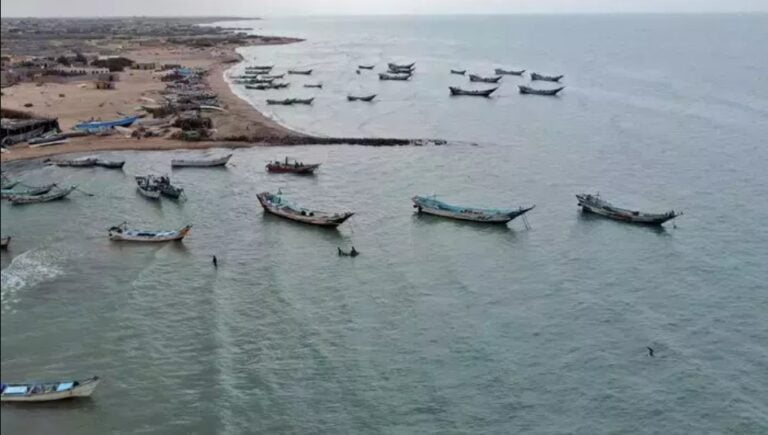
Security sources in Yemen revealed to Al-Ain that the Houthi militias lost contact with the large transport boat that was on a smuggling mission via a regular sea route from the Horn of Africa countries to the coasts of the governorate overlooking the Red Sea.

The news outlet said Yemeni security sources confirmed the ship was expected to arrive in Yemen on Friday but disappeared on Saturday. The Houthis, lacking a robust navy, have mobilized small boats and drones for the search, but their fishing boats lack the necessary technology for such operations. No distress calls have been detected.

Speculation is rife that the ship may have been targeted by the US-backed Prosperity Guardian mission, aimed at protecting Red Sea shipping from Houthi attacks amid the blockade launched by the terror group since November.

Claiming to be in solidarity with Iran-backed Hamas in Gaza, amid its war with Israel, the Houthis began a maritime blockade of the critical Red Sea corridor, targeting commercial shipping.

The Houthis fear the vessel could have been intercepted by US or European navies, given the intensified crackdown on Iranian arms shipments.

In a related development, US Central Command announced on Sunday that its forces had destroyed two Iranian-backed Houthi drones and one kamikaze boat in the Red Sea.

The Houthis started targeting maritime commercial traffic in mid-November following a call by Iran’s Supreme Leader Ali Khamenei for Muslim countries to blockade Israel. Initially focused on the Red Sea, the attacks have now extended to other critical waterways, including the Indian Ocean, with international shipping affected and dozens of seamen taken hostage.

A US-led coalition of over 20 nations has formed to combat the threat to global trade and freedom of movement.

New report: EU can list IRGC a terrorist entity

0

A new report commissioned by the Hague Initiative refutes the EU foreign policy chief’s argument for not listing the Islamic Revolutionary Guard Corps (IRGC) on the EU’s terror list.

Pieter Hoogendoorn, the author behind the new report, blasted EU foreign policy chief Josep Borrell, saying he’s making ‘excuses’ when it comes to taking action against the IRGC.

Borrell told reporters on Jan. 23 before a meeting of foreign ministers in Brussels, that there are legal reasons why the EU can’t list the organization as a terror entity.

“It is something that cannot be decided without a court, a court decision first,” said Borell according to Reuters.

The European Parliament called on the EU to list the IRGC as a terrorist entity in January, blaming it for the harsh repression of domestic protests and the supply of drones to Russia for use in its war against Ukraine.

The argument that the EU cannot list the IRGC as terrorists until an EU court has determined that they are, is baseless according to Hoogendoorn.

“This is false. This is misleading. We have brought the case to the European Court of Justice, and they have confirmed that in order to put a person, a group or an organization on the EU terror list that it has to have a competent authority starting an investigation into the matter, or to put the IRGC on the list in their country,” explained Hoogendoorn.

Hoogendoorn cited Council Common Position (CP 931), which states that any person, group, or entity involved in terrorist acts can be designated “when a decision has been taken by a competent authority in respect of the person, group or entity concerned.” That decision could be instigation of an investigation or prosecution for either a terrorist act or even just an attempt to carry out such an act. It could also be merely a “condemnation” without conviction.

Despite Borrell’s statement, CP 931 also states that enlisting a terrorist organization can be made on information from non EU member states.

That means a court decision is not a necessary condition for designation.

The report points out that the evidence of Iran attempting such acts is already public knowledge.

Criminal gangs operating on the behest of the Islamic Republic of Iran, for example, are behind a string of terror attacks on Israeli embassies in Europe since October 7, according to Israeli and Swedish Intelligence agencies.

The Trump administration sanctioned the IRGC as a foreign terrorist organization in 2019. Canada followed suit in June of this year after immense pressure from the Iranian-Canadian community and family members of victims of PS752.

In early July, the EU reportedly accepted a request from Germany to consider designating IRGC as a terrorist entity. Germany is not the only European country pushing for the listing of the Revolutionary Guard.

Since Germany is one of the EU states that has already taken the lead on this initiative, there is no need for an EU court to determine the IRGC as a terror organization.

Once it is agreed between European members states to label the IRGC as terrorists, then the European Council is legally obliged to implement the consequences of having them on the EU terror list.

The author of the report told Iran International that Borell is making ‘excuses’ and called him ‘anit-semetic.’

“He’s just looking for excuses not to do what democratic states wants him to do. He hates Israel. He’s an anti-Israel person. He’s…sorry to say, but he’s an anti-Semite,” said Hoogendoorn.

The executive director of UN watch, Hillel Neuer, said this latest report provides more evidence that there is no legal reason not for the EU not to purse enlisting the IRGC a terror organization.

“This latest report only underscores what we have known for a long time. EU high commissioner Josep Borrell has no more excuses, ” said Neuer.

“The evidence is clear to anyone who has eyes and ears. The IRGC is a terrorist organization that continues to carry out terrorist attacks around the world.”