Home Blog Page 7

Drone attack reported on US base in Iraq

0

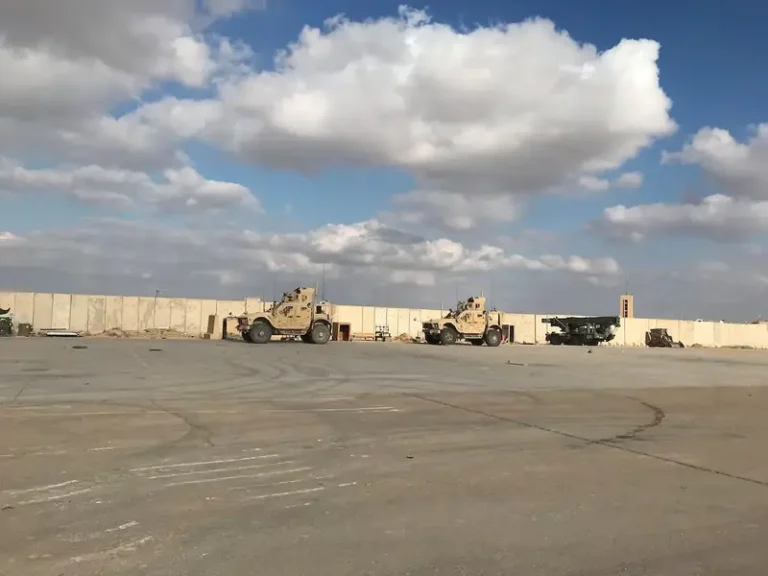
Two armed drones on Tuesday targeted Iraq’s Ain al-Asad airbase, which hosts US forces and other international forces in western Iraq, two Iraqi military sources told Reuters.

It was the second attack against US forces in Iraq since early February when Iranian-backed groups in Iraq stopped their attacks against US troops. In January, the United States launched retaliatory air strikes against Iran-backed militias who were targeting its forces in Iraq and Syria. Since then, only a few incidents had been reported.

An Iraqi military official said defense systems downed one drone near the base perimeter.

In April, two drones were shot down near Ain al-Asad base, according to a US official.

No casualties have been reported, said the sources.

The latest reported attack comes after Masoud Pezeshkian, who is presented as a “moderate” won the presidential election in Iran, raising some expectations in the West that he might restart nuclear talks. However, the United States has dismissed such suggestions, giving little credence to major changes under the new president.

Iraqi army stepped up patrolling the areas around the base to prevent possible further attacks, said an Iraqi army official.

The attack came less than a week before an expected visit by a high-level Iraqi military delegation to Washington to continue talks on ending the US -led military coalition in the country.

Washington and Baghdad in January initiated talks to reassess the draw-down of the US-led coalition in Iraq, formed in 2014 to help fight Islamic State after the extremist Sunni Muslim militant group overran large parts of the country.

A US official, speaking on condition of anonymity, said a projectile appears to have targeted the base, but without causing casualties.

Iran denies alleged plot to assassinate Trump

0

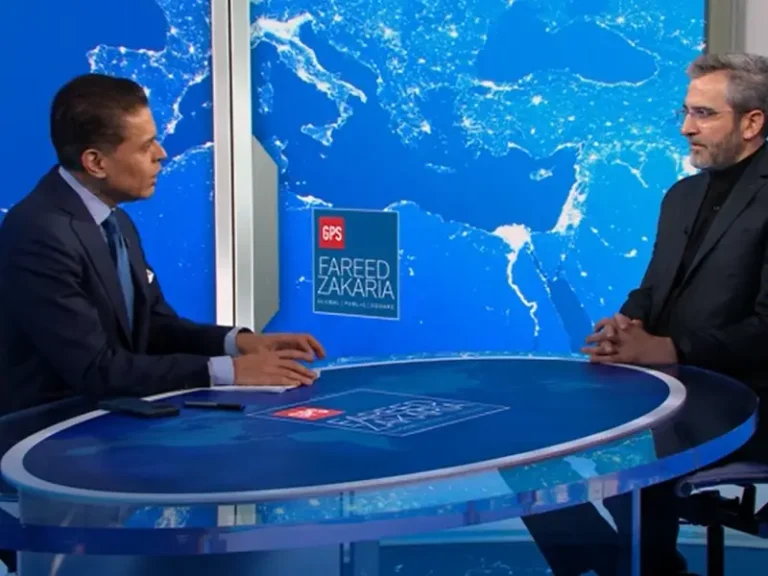
Iran’s acting Foreign Minister has denied allegations of an Iranian plan to assassinate former US President Donald Trump just days after an assassin shot him during a campaign rally.

Recent human source intelligence obtained by US authorities indicated a potential threat from Iran against Trump. However, there is no evidence linking Thomas Matthew Crooks, who attempted to assassinate the former president on Saturday, to the alleged plot.

Ali Bagheri-Kani admitted that Iran is still seeking justice for the assassination of IRGC Commander Qasem Soleimani, killed in a drone strike in Iraq ordered by Trump in 2020, through legal channels.

“I told you explicitly that we would resort to legal and judicial procedures and frameworks at the domestic level and international level in order to bring the perpetrators and military advisers of General Soleimani’s assassination to justice,” he told CNN’s Fareed Zakaria.

Iranian authorities, both political and military, have continued to issue threats against Trump and his administration to avenge the death of Soleimani, responsible for Iran’s proxies across the region. For example, in February 2023, Amirali Hajizadeh, the head of the Revolutionary Guards aerospace force directly stated that the Islamic Republic intends to kill Trump.

In January 2022, Iran’s former President Ebrahim Raisi vowed revenge for Soleimani’s killing unless former US President Donald Trump was put on trial.

“If Trump and (former Secretary of State Mike) Pompeo are not tried in a fair court for the criminal act of assassinating General Soleimani, Muslims will take our martyr’s revenge,” Raisi said in a televised speech.

Spokesperson for Iran’s Foreign Ministry, Nasser Kanaani, also refuted the claims of Iran’s involvement in any recent armed attack on Trump. “Iran strongly rejects any involvement in the recent armed attack on Trump or claims about Iran’s intention for such an action, considering such allegations to have malicious political motives and objectives,” Kanaani stated.

The Permanent Mission of Iran to the United Nations echoed the denials.

“These accusations are unsubstantiated and malicious. From the perspective of the Islamic Republic of Iran, Trump is a criminal who must be prosecuted and punished in a court of law for ordering the assassination of General Soleimani. Iran has chosen the legal path to bring him to justice,” a spokesperson for the mission told CNN.

In 2022, the US Justice Department announced charges against an IRGC member for allegedly plotting to assassinate John Bolton, Trump’s former national security adviser, likely in retaliation for Soleimani’s death.

Similar threats have been made against other former Trump administration officials, including Mike Pompeo and Robert O’Brien, who have maintained security details due to ongoing risks.

Soleimani was instrumental in Iran’s external military and intelligence operations involved in hostilities against US forces in the region.

Despite Iran’s denials, the security concerns for those involved in the decision to kill Soleimani remain significant, with ongoing protection measures in place.

Threats Facing Dr. Pezeshkian’s Presidency: IRGC Mafia

0


By: Josef Namin

In the recent 2024 Iranian presidential election, Dr. Masoud Pezeshkian’s victory marks a potentially transformative moment for the nation. His election, amid the severe economic downturn and widespread social discontent, brings a glimmer of hope to many Iranians yearning for change. Pezeshkian’s campaign, which resonated with a broad spectrum of society, including ethnic and religious minorities, was built on promises of reform, particularly in the areas of internet freedom and freedom of speech.

Iran’s Political Landscape: A Power Struggle

Iran’s political system, characterized by its totalitarian nature, is heavily influenced by the Iranian Revolutionary Guard Corps (IRGC), a powerful military organization that exerts significant control over the country’s economy, politics, and media. The IRGC’s dominance has created a system where true political power often lies not with the elected president or even the Supreme Leader, Ayatollah Ali Khamenei, but with the IRGC itself. This military mafia oversees vital economic sectors, including oil, banking, and major industries, effectively controlling the country’s financial lifeblood.

Pezeshkian’s election is significant not just for his moderate stance but also for his ability to communicate in multiple languages, including Turkish and Kurdish, fostering a sense of inclusivity among Iran’s diverse population. His vocal criticism of the regime’s discrimination against minorities, particularly Kurds and Sunni Muslims, has garnered him substantial support from these communities.

The Economic Crisis and the Path Forward

Iran’s economy is in dire straits, with high unemployment rates and increasing international isolation exacerbating the country’s woes. Pezeshkian’s presidency is seen by many as a last-ditch effort by the regime to stave off further decline and potential collapse. His history as the only member of parliament to openly protest against the regime’s killings during previous unrest underscores his commitment to justice and equality, albeit at significant personal risk.

However, Pezeshkian faces immense challenges. The IRGC’s grip on the nation’s resources means that any meaningful economic reform will require navigating the complex power dynamics within Iran’s political landscape. The IRGC’s influence extends to critical ministries, including intelligence, interior, defense, and foreign affairs, which are directly appointed by the Supreme Leader, effectively limiting the president’s power.

The IRGC’s Role and the Quest for Reform

The IRGC’s pervasive control is a significant barrier to Pezeshkian’s reform agenda. Historically, the IRGC has hampered efforts to liberalize the economy and society, driven by its interest in maintaining power and control. Former Foreign Minister Javad Zarif’s admissions about the IRGC’s overriding influence on foreign policy and negotiations with the West highlight the depth of the organization’s reach.

For Pezeshkian to succeed, he must secure access to the resources controlled by the IRGC, a formidable task given the organization’s reluctance to relinquish any control. The Iranian constitution stipulates that the IRGC should only function as a military entity, not as a political or economic powerhouse. Yet, the reality is starkly different, with the IRGC playing a central role in exporting terrorism, engaging in money laundering, and perpetuating conflicts in the region.

The Road Ahead

Pezeshkian’s presidency represents a critical juncture for Iran. His success depends not only on his ability to implement reforms but also on the willingness of the Iranian people to demand the IRGC’s retreat from political and economic spheres. The IRGC’s resistance to change is expected to be fierce, and any attempts to block Pezeshkian’s reforms will likely be orchestrated by the IRGC and conveyed through the Supreme Leader.


For Iran to prosper, it must push back against the IRGC’s overreach, returning the organization to its constitutional role.  Only then can the nation hope to improve its economy, reduce unemployment, and enhance the quality of life for all Iranians. Pezeshkian’s presidency, supported by a populace eager for change, could pave the way for a more just and equitable Iran, breaking free from the shadow of military domination.

The new president faces a daunting task, but with the support of the Iranian people and a steadfast commitment to reform, there is hope for a brighter future. The international community will be watching closely, ready to support Iran’s journey towards greater freedom and prosperity.

Cyber ​​spies of the Islamic Republic

0

Meta, the parent company of Facebook, has announced the removal of two separate cyber espionage groups from Iran that were using the company’s platforms to target academics, activists, journalists, and other victims.

According to Meta, one of the groups, which had been previously identified, posed as a legitimate company and used a complex network of fake personas on Facebook, Telegram, and other platforms to target its victims.

This group, known as UNC788, had already been identified and disrupted by Meta, Google, and several other major platforms.

Meta added that the other newly identified Iranian cyber espionage group targeted companies in the energy, maritime, semiconductor, and telecommunications sectors in multiple countries, including the United States, Israel, Russia, and Canada.

This is not the first time that the Islamic Republic has used social networks such as Facebook to spy on Israel and Western countries.

In a similar operation in recent weeks, the Shin Bet revealed the actions of an Iranian intelligence officer that led to the recruitment of five Israeli women.

The Israeli internal security agency, Shin Bet, announced that four Iranian-Israeli women who had tried to provide information to the Iranian Ministry of Intelligence had been arrested.

Based on reports from Israeli security officials, the link between these four women and a man named Rambod Namdar on Facebook was established.

The Israeli internal security service, Shin Bet, said about the modus operandi of “Rambod Namdar”:

  • He claimed to be Jewish and initiated contact with several Israeli women.
  • In the next step, Namdar asked them to communicate with him through WhatsApp instead of Facebook.
  • Namdar recruited the women through chats.
  • He never showed his face.
  • Namdar also spoke to them several times via “video chat”, but each time he refused to show his face under the pretext of a broken phone camera or that he was using a tablet that did not have a camera.

Although some of these women suspected that he might be an Iranian intelligence officer, they were persuaded to continue talking to him using Namdar’s common emotional techniques, and in the end, in exchange for money, they agreed to carry out his requests.

Where is Rambad Namadar now?

Rambad Namdar is currently in prison for security crimes in the country. Israel is trying to transfer him to Israel, which has faced resistance from Portugal.

On the other hand, there is news from Tehran that the Islamic Republic is interested in exchanging him with a Portuguese businessman who is currently in prison in Mashhad on charges of drug trafficking.

Interrogation and Trial

Shin Bet also stated that the operation was neutralized in cooperation with the police and that all five women arrested in connection with the case are currently under interrogation.

The latest reports indicate that indictments have been issued for some of them, but at the request of the defendants’ lawyers, their names have been withheld from publication.

Prime Minister Naftali Bennett praised the Shin Bet for stopping the spy ring.

Bennett, thanking the Israeli security forces and being briefed on this security and cyber operation, said: “Israel is fighting against Iran. We are witnessing the overt and relentless efforts of the Islamic Revolutionary Guard Corps to recruit Israeli citizens.”

The Israeli prime minister also warned that Iran is not only trying to physically attack Israel but is also looking for civilians and the Israeli community to try to sow discord and destabilize Israel politically.

Bennett said: “I urge Israeli citizens to be aware of these efforts. The person behind the information you consume or share online may be Iranian. Make no mistake, the long arm of the Israeli security forces will reach anyone who seeks to harm Israel’s security.”

Who are the defendants?

The names of the defendants have not been released due to the security nature of the case and at the request of their lawyers, but the Israeli Internal Security Agency has released a brief description of the defendants, their recruitment methods, and the services they provided to Namdar.

The first defendant is a 35-year-old married woman. She and her husband have been in contact with Namdar online for several years.

Her 40-year-old husband, although suspicious that Namdar was acting as an intelligence officer for the Iranian authorities, nevertheless could not resist Namdar’s offers and the sums of money he offered them. He took pictures of the US Embassy in Tel Aviv, pictures from inside the buildings of the Ministry of Interior and Social Affairs and Social Services in Tel Aviv, and also provided information about security arrangements and pictures of a shopping mall in Holon.

Shin Bet said: “The investigation shows that the suspect’s husband was aware of his wife’s relationship with Namdar and even spoke to Namdar himself, although he suspected that he was an Iranian intelligence officer.”

It is also said that this woman’s husband, who is a taxi driver, even helped her by bringing her to the US Embassy in Tel Aviv so she could take pictures there.

Namdar not only asked them to gather information about senior IDF officers but also asked her husband to tell their son, who was about to be drafted into the Israeli army, to serve in military intelligence.

The couple received a total of $45,000 in US currency in Bitcoin in exchange for the services they provided to Namdar.

Iran protests swell on anniversary of lethal 2019 crackdown

0

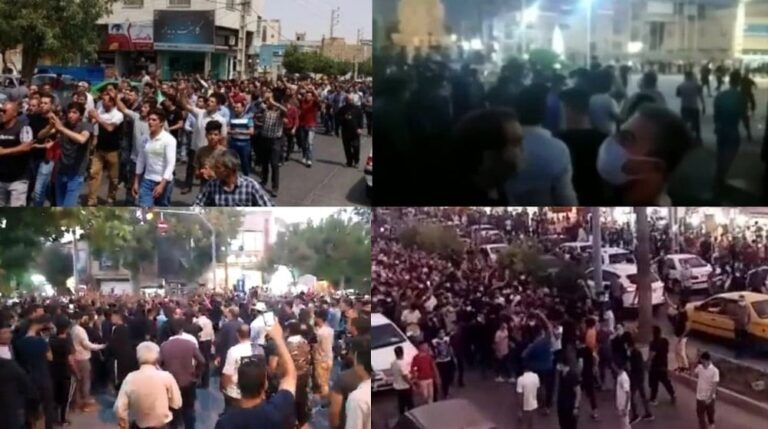
Iran protests saw civilians in the streets today after organizers of protests over Mahsa Amini’s death called for demonstrations marking three years since a lethal crackdown on unrest sparked by a fuel price hike.

The call to commemorate that slain in the 2019 crackdown gave new momentum to the protests that erupted following the death of 22-year-old Amini on September 16, after her arrest for allegedly flouting the strict dress code for women.

Shops were shuttered in Tehran’s famed Grand Bazaar and its neighborhood of Tehranpars, according to online videos verified by AFP.

Iran’s Mehr news agency reported that most of the bazaar’s shops were closed or closing, but quoted one merchant as saying they had shut after people who chanted slogans “threatened to burn our stores”.

The UN Human Rights Office called on Iran to immediately release thousands of people arrested for taking part in peaceful demonstrations.

“Instead of opening space for dialogue on legitimate grievances, the authorities are responding to unprecedented protests with increasing harshness,” spokesman Jeremy Laurence told reporters in Geneva.

In Tehran, the din of honking car horns reverberated as protesters blocked a major roundabout at Sanat Square and yelled “Freedom, freedom”, according to online videos verified by AFP.

People later poured onto the streets of other cities, including Bandar Abbas and Shiraz, where women were seen peacefully waving their headscarves above their heads.

“This year is the year of blood, Seyed Ali will be toppled,” a large crowd chanted outside a Tehran metro station, in a video verified by AFP, referring to Iran’s supreme leader Ayatollah Ali Khamenei.

Workers downed tools and university students boycotted classes in Amini’s home province of Kurdistan, in western Iran, said the Oslo-based Hengaw human rights group.

In the province’s flashpoint city of Sanandaj, protesters were seen burning tyres in a street and chanting anti-government slogans, in other online footage.

“Woman, life, freedom” and “Man, homeland, prosperity,” chanted male and female students at Islamic Azad University in the northwestern city of Tabriz, in a video published by the 1500tasvir social media channel.

The call for protests today is to mark the third anniversary of the start of “Bloody Aban”—or Bloody November—when a surprise overnight fuel price hike sparked bloody street violence that lasted for days.

Amnesty International said at least 304 people were killed, but a tribunal in London this year by various rights groups said expert evidence suggested the toll was likely far more, possibly as high as 1,515.

Today, in a video shared by activists, students at Tehran’s Khajeh-Nasir university chanted “1,500 people were killed in Aban”.

The Iranian IRGC continues brutal suppression of popular protests

0

Iran has entered the second month of upheaval with an average of one child murder a day by the Basij, part of the Iranian IRGC, amid the crackdown against the “woman, life, freedom” movement.

The protests began in September 2022 after 22-year-old Mahsa Amini died in the custody of the morality police for allegedly violating the country’s strict Islamic dress code for women.

But the broad scope of the protests since September is showing the oppression isn’t limited to women but also the various religious, ethnic and gender minorities who have joined the movement.

Iranian IRGC uses propaganda and false information in their crackdown on protesters, downplaying the movement’s strength and offering false narratives about the crackdown.

One news organization reports that a dead protester’s family was pressured into saying his death was an accident in exchange for the return of his body.

To further intimidate freedom fighters, the UN says as many as 14,000 people have been arrested since September, including journalists, lawyers, activists and educators. Among them is Toomaj Salehi, a rapper who supported the uprisings by creating protest songs and now faces a death sentence.

Massive internet outages and censorship are in place across Iran. Nonetheless, many Iranians are managing to send videos and photos from hundreds of protests and events that include prison fires, university shootings, massacres of members of ethnic minorities in Zahedan and Sanandaj, women and girls refusing to wear the hijab and general street chaos.

The people sending these images and videos are risking their lives. Diaspora Iranians who are publicly supporting the protests and efforts to overthrow the regime are also at risk of being banned from returning to Iran as punishment.

It’s highly unlikely things are going to go back as they were in Iran, before Amini’s death in September.

Whether the government falls or there’s major reform, exerting both domestic and international pressure, increasing economic sanctions, signing valid and verified petitions and holding local representatives accountable for the situation in Iran is long overdue.

Iranian Intelligence officers arrest sister of executed wrestler

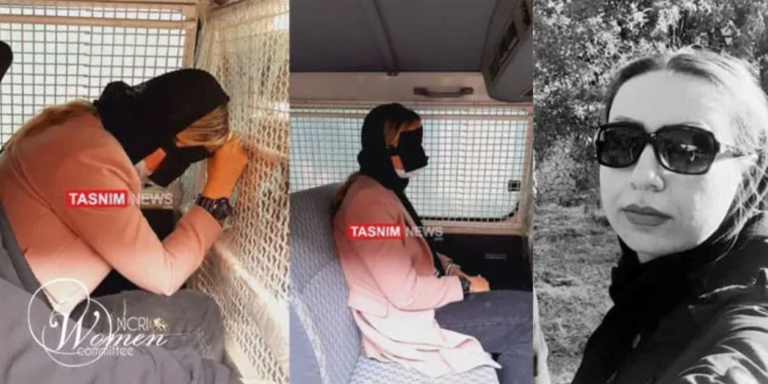
Iranian Intelligence service has reported they have identified the “Iran International agent” arrested Thursday as Elham Afkari, the sister of famous Iranian wrestler Navid Afkari, who was executed two years ago, according to state news agency IRNA.

The opposition television broadcaster, which was called a “terrorist” organization by the Iranian intelligence minister on Tuesday, has denied any association with Elham.

In a statement sent to CNN, the London-based broadcaster said Elham “is not an employee of Iran International, nor is she an associate or agent of the company.”

Her brother, Navid Afkari, was convicted of killing Hassan Torkman, a water company security employee, during a protest in Shiraz in 2018.

Initially, Afkari confessed to the crime, but in court he retracted those words, arguing that he had been tortured into making a false confession.

“It should be noted that she [Elham Afkari] is the sister of Navid Afkari, the killer of martyr Torkman, an employee of the regional water company of Fars province,” IRNA reported.

“Intelligence operatives have been monitoring the activities of Elham Afkari for the past few years,” IRNA said, adding that “she was one of the main leaders in organizing recent riots.”

State media shared pictures allegedly showing Elham’s arrest. The pictures show a woman seated in the backseat of a vehicle with barred windows, with a black blindfold over her face.

Saeed Afkari, Elham and Navid’s brother, confirmed his sister’s arrest on Twitter on Thursday, saying that Elham’s three-year-old daughter was also missing.

He later said Elham had been taken to a department of Iran’s intelligence ministry, and that his sister’s spouse and daughter had been released.

“Elham was taken to No.100 intelligence ministry department,” he tweeted.

Since Navid Afkari was executed, his family has faced many court cases over involvement in the demonstrations in 2018.

Vahid Afkari, one of his brothers, remains in solitary confinement, according to the rights group Iran Human Rights.

Iran security forces attack people dancing in the streets

0

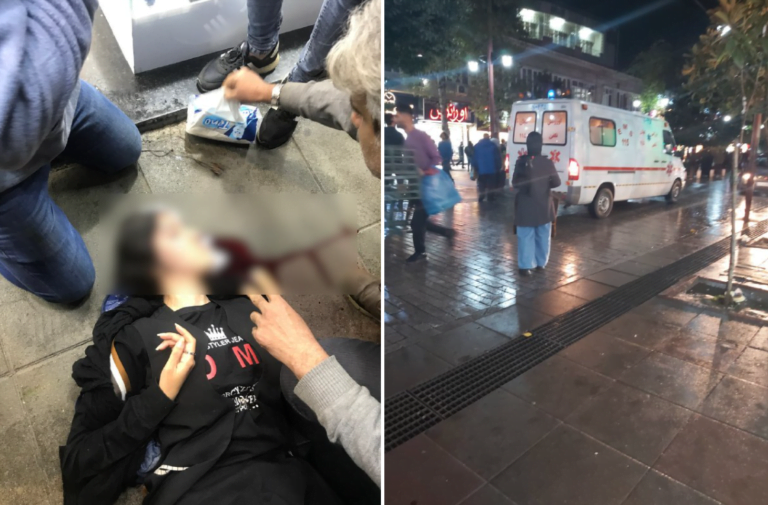
In the evening of Thursday 19 Aban (November 10), the Rasht Municipality Square was the scene of a confrontation between the security forces and the people who had gathered in this square.

According to the pictures and videos published on social networks, many women were without hijab in this gathering alongside men.

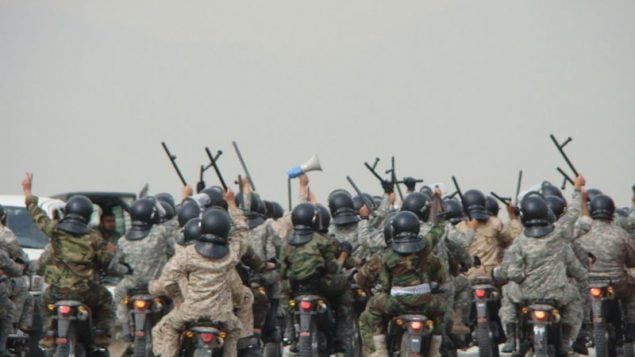
It can be seen in the pictures, with the increase in the crowd and the dancing of a group of these people, motorcyclists approached this group and tried to disperse them, but they faced the opposition of the crowd.

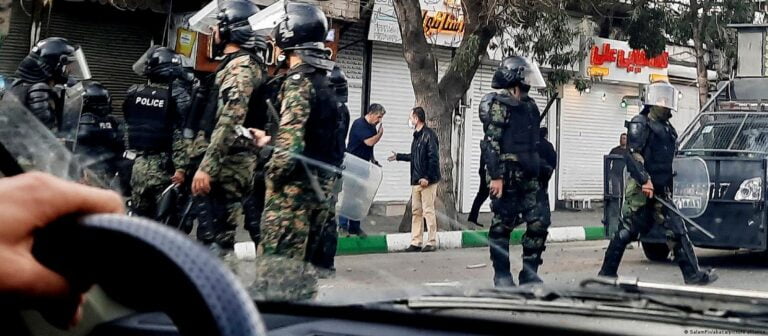
Security forces in plainclothes shot and fired tear gas after the anti-government slogans of the crowd. Some sources have reported that a young girl was injured in tonight’s rally in Rasht Municipality Square.

A user wrote: “We were dancing in Rasht Municipality, there were many people and everyone was very happy.

The officers drove a motorcycle and ran over a father and shot several people with arrows. A girl was also shot in the head.”

Protests in Iran raged on streets into Thursday with demonstrators remembering a bloody crackdown in the country’s southeast, even as the nation’s intelligence minister and army chief renewed threats against local dissent and the broader world.

Meanwhile, a top official in Iran’s paramilitary Revolutionary Guard claimed it had “managed to achieve” having so-called hypersonic missiles, without providing any evidence.

The protests in Iran, sparked by the Sept. 16 death of a 22-year-old woman after her detention by the country’s morality police, have grown into one of the largest sustained challenges to the nation’s theocracy since the chaotic months after its 1979 Islamic Revolution.

At least 328 people have been killed and 14,825 others arrested in the unrest, according to Human Rights Activists in Iran, a group that’s been monitoring the protests over their 54 days. Iran’s government for weeks has remained silent on casualty figures while state media counterfactually claims security forces have killed no one.

Iranian IRGC forces beating and arresting protesters

0

A human rights group says security forces, predominantly the Iranian IRGC and its Basij militia, have killed at least 328 people in Iran’s antigovernment protests ignited by death of a 22-year-old woman in custody of hijab police in September.

The US-based Human Rights Activists News Agency (HRANA) said Wednesday that at least 50 minors were among the casualties.

The new numbers cover the period between September 17 and November 8.

The group added that at least 41 government agents, including the Iranian IRGC paramilitary Basij forces and police, have also been killed during the unrest.

While the Islamic Republic has not provided accurate figures of those detained in the recent protests, HRANA says nearly 15,000 people are estimated to have been arrested, with the identity of 1,928 confirmed. About 431 of the detainees are students, it added.

According to HRANA over 877 city and university protest gatherings have been held in 137 cities and 136 universities during the period, while protest rallies show no sign of abating in what has become the boldest challenge to Iran’s clerical regime since the Islamic revolution of 1979.

The Oslo-based Iran Human Rights Organization (IHR) said November 6 that at least 304 protesters, including 41 children and 24 women have been killed in the current protests.

Protesters have been killed in 22 provinces, with the most reported in Sistan and Baluchistan, Mazandaran, Tehran, Kordestan and Gilan respectively, says IHR.

The Iranian IRGC forces that perpetuate the most violence are the Basij paramilitary who are used to spread the state’s ideology, serve as propaganda machine in political campaigns, justify clerical rule, protect politicians, and enforce Islamic morality and rules. They are part of the Islamic Republic’s of Iran’s overall avowed plan to have millions of informers. The Basiji also undermine dissent; for instance, they play a key role in suppressing uprisings and demonstrations.

To prepare for war, the Basij are indoctrinated about the benefits of martyrdom.

Iranian Kurdish cities strike in solidarity with Balochis killed by IRGC

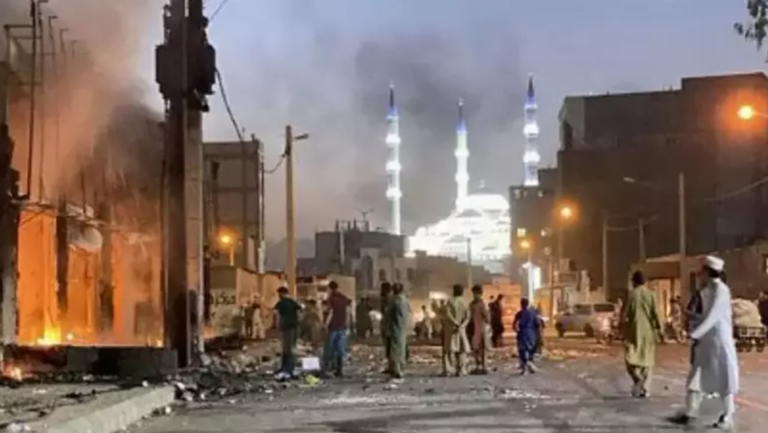
Businesses across Kurdish cities in western Iran have closed on Wednesday in solidarity with the people of Zahedan, marking the 40th day since the massacre led by the Islamic Revolutionary Guard Corps (IRGC) which killed at least 100 protesters in September.

The IRGC fired at protesters on September 30 in the city of Zahedan killing at least 100 and wounding many more when thousands of Baluchis protested the raping of a teenage girl by a senior police official, as well as the killing of Mahsa (Zhina) Amini at the hands of Tehran morality police.

“Businesses in … Kermanshah, Sanandaj, Mariwan, Saqqez and Baneh are on complete strike to mark the 40th day of the victims of Zahedan resistance,” Hengaw Organization for Human Rights tweeted, adding that in some areas people have started blocking the roads.

Videos from Zahedan showed that businesses are on strike with a large gathering expected on Friday to remember the victims of two massacres committed in Zahedan and Khash by the security forces.

Iran’s judiciary announced that two members of a militant group were hanged in Zahedan on Wednesday, a move that Iran has used in the past to intimidate protesters.

The top Sunni cleric in Baluchestan region and the Sunni population in Iran have come under fierce attack by state media and IRGC-linked outlets for supporting protesters and criticizing authorities for committing the massacres in Zahedan and Khash.

Abdolhamid Ismaeezahi, the cleric that presides over the Makki mosque which is the main house of worship in Zahedan, has been a fierce critic of the Islamic Republic for killing protesters and has been threatened by a number of officials.

Iran has blamed the US, Israel, and Saudi Arabia for being behind the protests but on Tuesday, Intelligence Minister Esmail Khatib threatened the UK with retaliation for hosting Iran International, a news outlet that has become a popular among Iranians to receive news about their country as the internet is severely restricted.

At least 304 people have been killed by the security forces as of Saturday, including at least 41 children across the country according to the latest tally by the Oslo based Iran Human Rights.

Kurdistan Human Rights Network said on Sunday that at least 53 protesters have been killed in Kurdish cities while Hengaw Organization for Human Rights put the number at 61.