Home Blog Page 8

Iranian IRGC plot to kill two journalists in UK

0

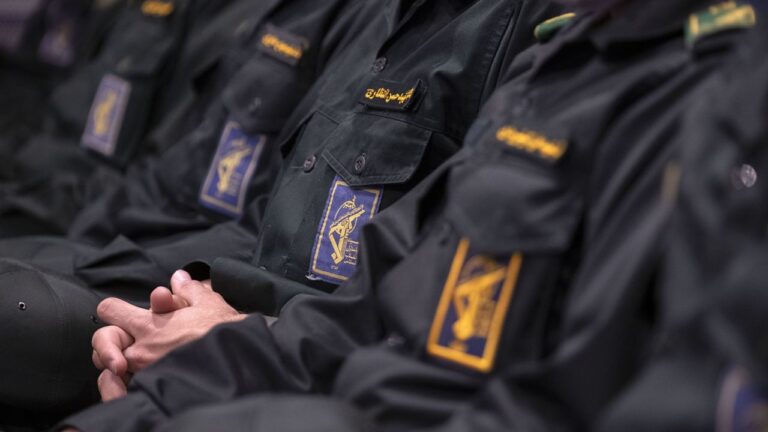
Two British-Iranian journalists working in the United Kingdom have been warned by police of a “credible” plot by the Iranian IRGC to kill them, according to their employer, London-based news channel Iran International.

In a statement Monday, the Farsi-language broadcaster said it was “shocked and deeply concerned” by the alleged lethal threats, while accusing Iran’s Islamic Revolutionary Guard Corps (IRGC) of being part of a “significant and dangerous escalation” of Tehran’s “campaign to intimidate Iranian journalists working abroad.”

“Two of our British-Iranian journalists have, in recent days, been notified of an increase in the threats to them,” Iran International said in the statement. “The Metropolitan Police have now formally notified both journalists that these threats represent an imminent, credible and significant risk to their lives and those of their families.”

Iran International did not name the journalists for security reasons.

The IRGC is a branch of the Iranian Armed Forces, founded after the Iranian Revolution in 1979 by the order of Ayatollah Ruhollah Khomeini. It is designated by the United States as a terrorist organization.

Iran International has become one of the go-to sources for many Iranians looking for news on the protests following the death in custody of Mahsa Amini – a 22-year-old Kurdish Iranian woman detained by morality police for allegedly not wearing her hijab properly.

“These lethal threats to British citizens on British soil come after several weeks of warnings from the IRGC and Iranian government about the work of a free and uncensored Farsi-language media working in London,” the news channel added in its statement.

Iran International said other members of its staff have also been warned by the police of separate threats, according to the statement.

“We hope that the UK Government, international governments and other organizations will join us in condemning these horrific threats and continue to highlight the importance of media freedom,” the statement added.

London’s Metropolitan Police told CNN they would not comment on matters of protective security in relation to any specific individuals.

“We would advise anyone with concerns over their safety to contact police so that officers can assess the situation and offer any safety and security advice as and where necessary,” the police said.

The IRGC could not be immediately contacted when CNN reached out for comment.

The Iranian government has labeled Iran International as a “terrorist organization,” Iran’s state-aligned news agency ISNA reported Tuesday, citing the country’s information ministry.

“The International Network has been recognized as a terrorist organization by Iran’s security apparatus and its operatives will be wanted by the Ministry of Information, and from now on, any kind of connection with this terrorist organization will be considered as entering the terrorist domain and threatening national security,” the ministry said, according to ISNA.

CNN reached out to Iran International for comment.
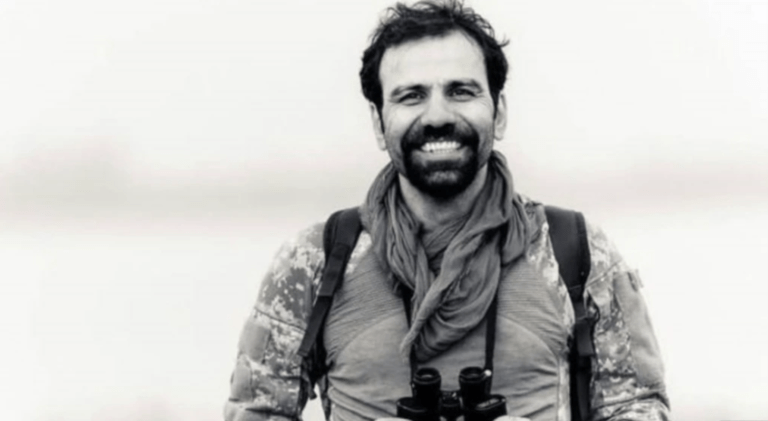
Iranian human rights lawyer Mustafa Nili arrested by IRGC officers

Iranian human rights lawyer Mustafa Nili was arrested on Monday by the Iranian Revolutionary Guards Corps (IRGC), his sister wrote on Twitter.

“An hour ago, Mustafa Nili was arrested and taken away [by police] after they inspected my mother’s house,” Fatemeh Nil wrote late on Monday.

Later on Monday evening, the lawyer’s sister claimed he was arrested at Tehran’s Mehrabad Airport by IRGC intel officials. She added that four IRGC agents, three males and a female, “inspected” her mother’s home after the arrest of her brother.

Known for having represented student union activists and political prisoners captured by the Islamic Republic, Nili was detained several times by Iranian security forces since 2009 after he took part in demonstrations against former Iranian president Mahmoud Ahmadinejad‘s election victory that year.

According to Dublin-based human rights organization Front Line Defenders, Nili served a three-year prison sentence after being convicted of “gathering and collusion to act against the national security” of Iran by a military court.

He served an additional six months for charges accusing him of spreading “propaganda against the state.” He was released on November 18, 2014.

Nili was also one of seven Iranian lawyers arrested in August 2021 for filing a complaint to Iran’s National Coronavirus Combat Task Force over its handling of the COVID-19 pandemic. According to local reports at the time, Iranian security officers arrested the lawyers in the midst of a meeting with the Tehran Citizen’s Rights Protection Association on the issue.

Front Line Defenders reported that he was released on December 18 on an eight billion Iranian rial ($188,679) bail following his arrest, during which he was detained in the infamous Evin prison in Tehran that caught fire last month.

Nili’s arrest comes amid nationwide unrest in the Islamic Republic following the death of 22-year-old Mahsa Amini at the hands of Iran’s so-called “morality police.”

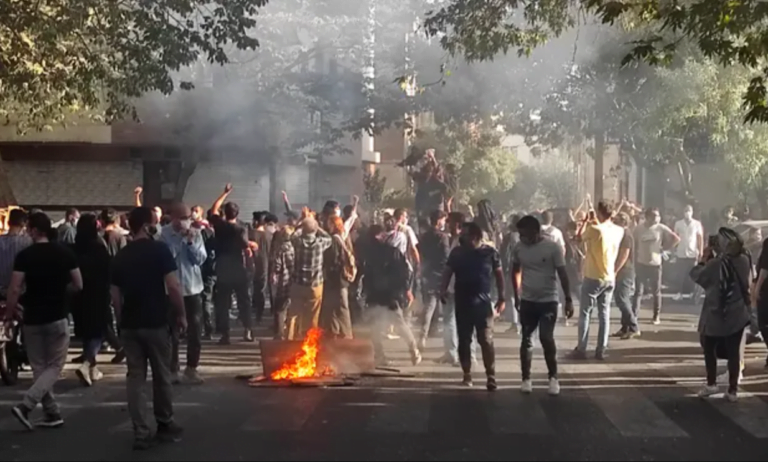
The protests, ongoing for nearly two months, have seen thousands of Iranian demonstrators arrested by security forces.

Iran-Iraq war veteran families support Iran popular protests

0

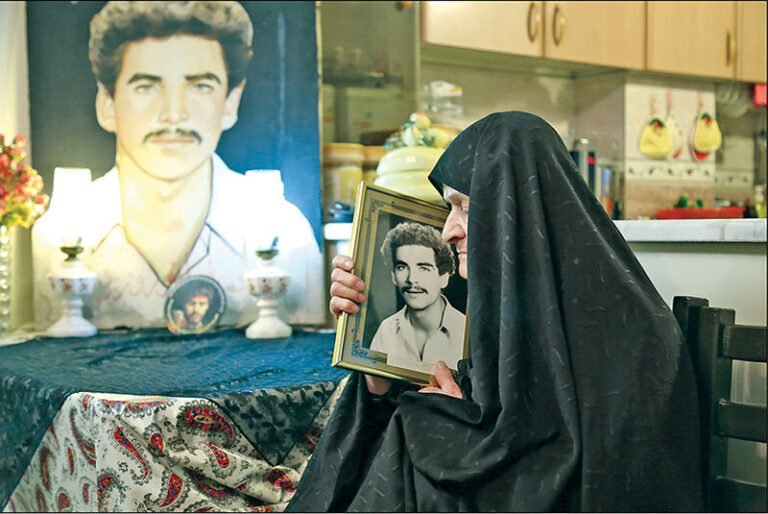
The children of high-ranking Islamic Revolutionary Guard Corps (IRGC) commanders who died during the Iran-Iraq war (1980-88) announced their support of the anti-government uprising and expressed outrage over the government’s propaganda in the name of their fathers.

As the protests entered their eighth week, family members of slain IRGC generals distanced themselves from the establishment, urging the government to stop the brutal crackdown on the demonstrations.

Asieh, the daughter of a leading IRGC commander Hamid Bakeri, strongly criticised the government in a social media post widely covered by the Farsi media based in the West.

“Don’t use my father’s name to oppress people of my country,” Bakeri wrote on Instagram, whose father was killed in 1984 during the war with Iraq.

Bakeri also posted a photo showing one of the banners the authorities installed in Tehran with the images of the Iran-Iraq war fallen soldiers and the Farsi writing: “The martyrs are looking”. In Iran’s official narrative, the soldiers who died during the war are dubbed ‘martyrs’.

Asieh Bakeri, who is politically close to the reformists, accused the authorities of exploiting his father’s name for propaganda goals.

“What have you done, misters? What have you done after those dear lives were lost? Why your domestic legitimacy has declined so low? For years you talked of security, and security, so then why have you failed to provide security to Shah Cheragh,” Bakeri added, referring to the 26 October terrorist attack in the Iranian city of Shiraz.

“Pull down these posters from the city walls and hang them in your own homes … however I doubt these eyes would wake you up,” she concluded.

Using images of the Iran-Iraq war dead soldiers has been one of the main pillars of the Iranian authorities’ propaganda apparatus during the past four decades; however, since the 2009 Green Movement, a widening gap has been shaped between the regime and the families of those fighters.

As the latest wave of anti-government demonstrations began on 16 September, several other family members of the killed commanders and soldiers, known as the “Martyrs’ Family” in Iran, heavily criticised the establishment.

Before Bakeri’s Instagram post, a video went viral on Farsi social media, in which a person introduced himself as the son of the slain commander of Salman Battalion from division 42, Haj Hossein Malmir, denouncing the crackdowns in Iran.

Iranian universities under spotlight as protests persist

0

In videos circulating on social media, male and female students on Iranian university campuses are seen eating together, often outside the gender-segregated dining halls that were closed after students tore down the walls dividing men and women.

Eating together in front of the closed cafeterias is considered act of resistance. The videos are an act of protest and solidarity with anti-government demonstrations that have been going on for months in Iran.

In many videos, protesters holding placards also draw attention to fellow students who have been arrested. According to media reports, about 300 students have been detained by authorities .

The protesters appear not to be intimidated by the government’s clampdown on the demonstrations.

“A student may die but will not accept humiliation,” they chanted at Shahid Chamran University of Ahvaz, in the southwestern province of Khuzestan, in an online video verified by AFP.

Students of Iranian universities also show solidarity with Iranian schoolchildren, who are active in the protests and, as a result, paying a price.

Schoolgirls at the Shahid Sadr Girls’ Vocational School in Tehran, for instance, were recently beaten for taking part in the demonstrations, according to activists.

“Schoolgirls from Sadr High School in Tehran were attacked, strip-searched and beaten,” the activist group 1500tasvir reported.

Iran’s Education Ministry has denied reports that a female student was killed in the confrontation, according to the ISNA news agency.

The students can still count on the liberal leanings of many professors. At the end of September, about 70 professors from Tehran University published an open letter to the government in the newspaper Etemad.

In it, they clearly described the political and economic grievances of the country and demanded the release of all demonstrators.

In the days that followed, the faculty of other universities formulated similar letters. However, this also widened the rift within the universities, as leadership roles within these institutions are held by confidants of the regime.

Iran ramps up arming terrorist groups in Sahel region

0

Iran has been more actively engaged in Africa in recent months, especially in the Sahel region of western and north-central Africa, which lies between the Sahara desert and the Sudanian savanna.

Iranian drones and weapons have been used in recent conflicts in Ethiopia and Somalia, according to some reports, fuelling speculation that Iran intends to increase its arms sales to Africa.

The actions and agenda of the Islamic Republic and its ally Russia in the Sahel region also have come under increased scrutiny of late — especially since the French withdrawal from Mali — with both accused of disrupting stability and security.

At an October 4 press conference, Moroccan foreign minister Nasser Bourita accused Iran of working through intermediaries to destabilise north and west Africa.

Bourita said Iran supports separatist and extremist groups by providing them with weapons and drones, undermining peace and security in the region.

Morocco has made the same accusations before, and in 2018 severed ties with Iran, accusing Iran-backed Lebanese Hizbullah of arming and training the separatist Polisario Front.

Both Iran and the Polisario denied the claims, the Morocco World News media outlet reported, but Morocco said it had backed its claims with extensive reports detailing meetings held in Algeria between Hizbullah and Polisario officials.

According to the Atalayar media outlet, the reports revealed the military assistance Tehran provided to the Polisario Front by Kassim Tajideen, a Lebanese businessman linked to Hizbullah.

A report just this week presented evidence that Iran was also playing a central role in a network of arms traffickers that have facilitated weapons transfers to multiple terrorist groups in the Horn of Africa.

Iran typically uses diplomacy and economic relations as a gateway to advance its expansionist policies, which is the approach it has chosen in Mali, Sahel region analyst Mohammed al-Amin al-Dah said.

Amid the recent tensions, Iran has intensified its activities in Mali, he said, in an apparent attempt to fill the void left by the withdrawal of France, and to take advantage of the ruling military junta’s pursuit of a new direction.

IRGC’s death threats to journalists in fearmongering campaign

0

Iran International announced that the London police have reported serious death threats to the TV staff in the UK from the Islamic Revolutionary Guard Corps (IRGC).

The IRCG is a military organization that is supervised by the Iranian regime’s supreme leader Ali Khamenei.

The regime of the Islamic Republic has repeatedly criticized the Iran International network for its extensive coverage of the nationwide uprising by Iranian citizens.

The UK-based Farsi-language network announced in a statement that its employees have been informed of the death threats against them by the London Metropolitan Police.

The statement referred to increasing death threats from the Islamic Republic and added, “The Metropolitan Police has now officially informed our two British-Iranian journalists that these threats pose an imminent, credible, and significant threat to their lives and their families.”

Iran International stated, “Our journalists have been harassed on a daily basis on social media, but these threats against the lives of British-Iranian journalists working in the UK are a significant and dangerous escalation of the government’s campaign to intimidate Iranian journalists working abroad.”

Iran International statement added, “The death threat to British citizens on British soil comes after several weeks of warnings by the IRGC and the Iranian government about the activities of a free and uncensored Persian-language media operating in London.”

This statement emphasized that the UK has been the symbol of freedom of speech and Iran International is “proud to serve the 85 million people of Iran by providing independent and uncensored information”.

Iran International referred to the repressions of the Islamic Republic in its statement and added that the “Islamic Republic of Iran and especially the IRGC cannot be allowed to export its brutal media repression to the United Kingdom”.

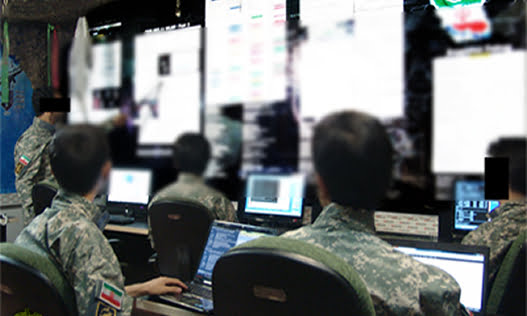
The Iranian Cyber Army is an Iranian computer hacker group. It is thought to be connected to Iranian government, although it is not officially recognized as an entity by the government. It has pledged loyalty to Supreme Leader of Iran.

According to Tehran Bureau, the Islamic Revolutionary Guard initiated plans for the formation of an Iranian Cyber Army in 2005. The organisation is believed to have been commanded by Mohammad Hussein Tajik until his assassination.

More than 14,000 Iranians arrested for opposing tyranny

The Islamic Republic is holding more than 14,000 Iranians arrested for opposing it since September, according to a top United Nations official.

“Over the past six weeks, thousands of men, women and children – by some accounts over 14,000 persons – have been arrested, which includes human rights defenders, students, lawyers, journalists and civil society activists,” said Javaid Rehman, special rapporteur on the Situation of Human Rights in the Islamic Republic of Iran on Wednesday.

The “unabated violent response of security forces” in the country has led to the reported deaths of at least 277 people, Rehman added in an address to the UN Security Council, a figure backed by reports from human rights groups.

We cannot independently verify the figure of Iranians arrested on the death toll – precise figures are impossible for anyone outside the Iranian government to confirm – and different estimates have been given by opposition groups, international rights organizations and local journalists.

Rehman also referenced Iran’s decision to hold public trials for 1,000 people arrested in connection to the ongoing protests, noting that some of the charges carry the death penalty.

Iranian state media – a mouthpiece for the government – has itself reported on the 1,000 or so people indicted in Tehran province for their alleged involvement in nationwide protests.

The demonstrations were first ignited by the death of Mahsa Amini, a 22-year-old Kurdish-Iranian woman who died in mid-September after being detained by the country’s morality police.

Since then, protests across Iran have coalesced around a range of grievances with the regime.

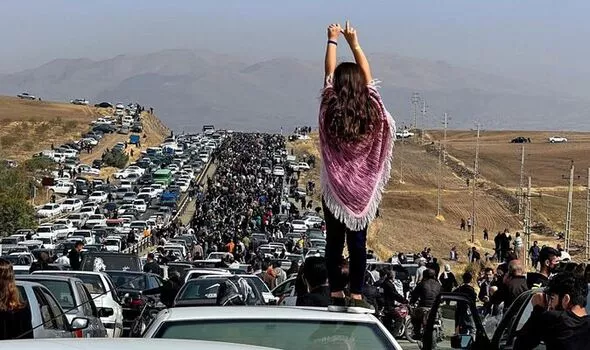
Increasingly, activists and experts are characterizing the protests as a national uprising and one of the biggest challenges to the Iranian regime since its founding.

“This is not a protest for reform,” Roham Alvandi, an associate professor of History at the London School of Economics, told CNN. “This is an uprising demanding the end of the Islamic Republic. And that is something completely different to what we’ve seen before.”

Iran’s involvement in Horn of Africa weapons trafficking network

0

Iranian fingerprints are all over a multi-million dollar arms trafficking enterprise, blacklisted by the United States on Tuesday (November 1), that funneled weapons between Iran, Yemen and the Horn of Africa.

Iranian weapons and money are deeply entangled in the illicit network, allegedly feeding the violence by al-Shabaab, an al-Qaeda affiliate based in Somalia, and the “Islamic State of Iraq and Syria” in Somalia (ISIS-Somalia).

The US sanctions, targeting eight individuals and one company, were announced two days after al-Shabaab claimed responsibility for October 29 bombings that killed at least 100 and injured 300 in Somalia’s capital, Mogadishu.

Of the eight individuals blacklisted Tuesday, four had clearly documented links with Iranian nationals or with Iran’s proxies in Yemen, the Houthis.

Abdirahman Mohamed Omar, who smuggled arms from Yemen to Somalia, was considered the most active illicit arms importer in Puntland as of 2020, and has executed more than $2 million worth of transactions over a four-year period.

This shipment, procured at the request of ISIS-Somalia members, contained more than 30 G3 rifles from Iran, among other weapons, including more than 30 boxes of machine guns and rifles and improvised explosive device initiators.

As of early 2022, Iranian businesses were contracting Houthi-connected fishing agents and dhows to conduct deep-sea blast fishing off the Somali coast.

These vessels belonged to a network that used fishing as a cover to work on Iranian weapons trafficking, transportation, and money laundering. Yusuf owned a dhow that was used for deep-sea fishing activities as part of this network.

The purpose of deep-sea blast fishing was to get the maximum number of fish from the floor of the sea by blasting dynamite.

Iran has been accused previously of helping itself to Yemen’s fish wealth via illicit fishing operations, even as that country teeters on the brink of famine.

Yusuf has purchased fuel in Qandala, Somalia, to sell in Yemen, using the profits to purchase weapons from AQAP to sell to pirates back in Qandala.

Islamic Republic of Iran in de facto war against Ukraine

“Pariah state” has become increasingly synonymous with Iran’s status in recent years, but the Islamic Republic has taken it one step further lately with its sale of drones to Russia amid its war on Ukraine.

Isolated, sanctioned, and bankrupt, the Iranian regime continues to commit gross political, human rights, and economic violations on the home front and in the region — and now on the world stage as well.

In a photo shared on Ukrainian president Volodymyr Zelenskyy’s website on October 28, the embattled leader stands next to the remnants of an Iranian-manufactured drone, Shahed-136.

Kyiv and its Western allies have repeatedly accused Russia of using Iranian-made unmanned aerial vehicles (UAVs), commonly known as drones, in attacks on Ukraine in recent weeks.

Russia has deployed those drones in its attacks on electrical infrastructure and other civilian targets in Ukraine, media outlets report.

Russia’s use of Iranian drones in Ukraine is “appalling,” US Secretary of State Antony Blinken said on October 27, adding that the United States and its allies would seek to block such shipments.

Russia has used the drones to “kill Ukrainian civilians and destroy the infrastructure they rely on for electricity, for water, for heat”, Blinken said.

In addition to supplying Russia with drones, the Islamic Republic has sent trainers to occupied Ukraine to help Russians overcome problems with the fleet of drones they purchased from Tehran, the New York Times reported on October 18.

The Iranian trainers, members of the Islamic Revolutionary Guard Corps (IRGC), are operating from a Russian military base in illegally annexed Crimea where many of the drones have been based since being delivered from Iran, the newspaper said.

According to Zelenskyy, Moscow has ordered about 2,000 drones from Iran, 400 of which have been deployed against the civilian population of Ukraine already.

So far, two models of Iranian drones have been identified in Ukraine’s skies: Shahed-136 and Mohajer-6. Both belong to a type broadly referred to as Medium Altitude, Long Endurance (MALE) unmanned aircraft.

Insight Media on October 17 quoted Jean-Christophe Noel, a researcher at the French Institute for International Relations, as saying that the initial success of the drones comes “from being a new weapon on the battlefield”.

Such drones are “a money-saving move for Russia, because it saves valuable cruise missiles worth $1.5 million to $2 million” per shot, said Sorbonne University researcher Pierre Grasser.

But “their main shortcoming is they can only hit stationary targets”, he added.

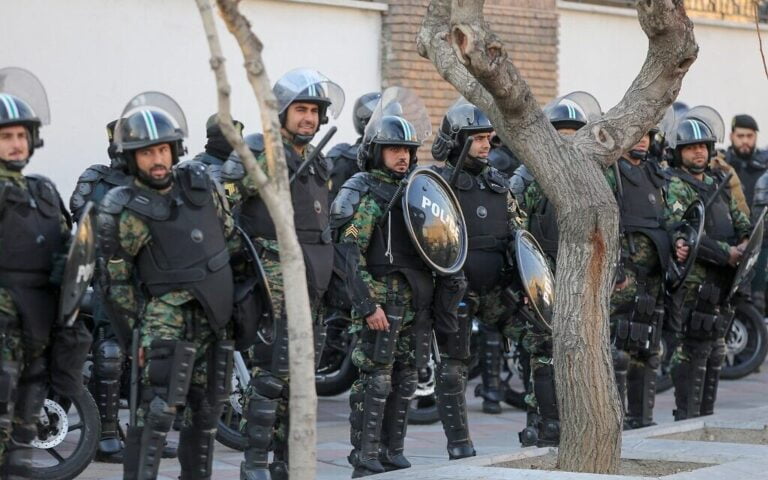
Iranian security forces violently beat and shoot unarmed protestor

Iranian police said they would investigate an incident caught on camera showing security forces attacking and shooting a man, as a leading rights group condemned what it called the “crisis of impunity” in the country.

The video shows a number of security officers beating a man who lay on the ground in front of a residential building, before one officer points his gun at the man and shoots. The person filming the video is heard saying, “They shot the guy with shotgun pellets … they must have killed the guy.”

It is unclear what happened prior to when the video was shot, or what condition the man is in. CNN could not independently verify the date or location of the video, which has circulated widely on social media.

“Following the publishing of a video clip showing the beating of a citizen by police officers, a special order will be issued immediately to investigate the exact time and place of the incident, and to identify the offenders at the scene,” the police said in a statement, state-the Fars News Agency reported Tuesday. “The police does not approve of such violent and unconventional behavior, and will surely deal with the violators.”

Amnesty International shared the same video and said on Tuesday it was “another horrific reminder that the cruelty of Iran’s IRGC forces knows no bounds.”

“Amid a crisis of impunity, they’re given free rein to brutally beat and shoot protestors,” Amnesty added, and called on the United Nations Human Rights Council to “urgently investigate these crimes.”

This is not the first time police have called for an investigation into videos of security forces attacking civilians.

In October, the police said it would “issue a special order” to deal with officers who physically harassed a woman in the streets of Tehran, state-aligned ISNA reported. The incident was captured on camera, and showed a policeman groping a woman inappropriately while attempting to arrest her with a group of other officers.