Home Blog Page 9

Life of Iranian dissident rapper kidnapped by IRGC in danger

0

Authorities in Iran have arrested Toomaj Salehi, an Iranian dissident rapper who has gained fans among Iranians who are angry at the country’s Islamic establishment.

People close to Iranian dissident rapper Toomaj Salehi say state and hardliner media’s claims that he was trying to flee Iran when he was arrested last week are baseless.

Toomaj’s London-based cousin Azadeh Babadi told Iran International Monday that the family has found out he is being severely tortured to denounce the youth movement against the clerical rule.

In September 2021 Toomaj’s home in Esfahan was raided by twelve intelligence ministry agents and he was arrested. Thousands of Iranians on social media condemned his arrest and Amnesty International demanded his immediate release in a statement on September 17.

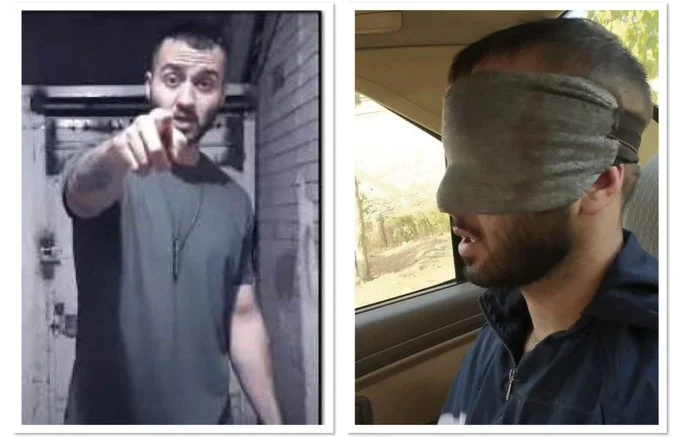
This time his fans are vowing to continue his path and stay on the streets as he wanted. “We swear on the blood on Toomaj’s blindfold that we will take revenge for all the blood that you have shed,” one of the rapper’s fans tweeted Monday referring to a blood stain on the blindfold put over his eyes in a photo released by the state media.

Toomaj used his social media influence to encourage protesters not to give up the streets and join strikes to topple the regime, although he had already been arrested once before. He also taught them ways to circumvent internet censorship. He was never allowed to release his music in Iran or hold concerts and connected with his fans only through online platforms such as YouTube.

In the past four decades, top religious authorities have prevented musical instruments from being shown in action on state television although very reluctantly they have withheld objection to music being broadcast. Female singers are totally banned from publishing their work and concerts are allowed only for all female audiences or if they sing in a chorus.

Iran to hold trials for 2,000 protestors held by the IRGC

Iran’s judiciary has announced it will hold public trials for as many as 1,000 people detained by the IRGC during recent protests in Tehran alone – and more than a thousand others outside the capital – as international concern grew over Iran’s response to the protests that began with the death of 22-year-old Mahsa Amini after her arrest.

The German chancellor Olaf Scholz said he was shocked by the number of innocent protesters that were being illegally and violently arrested. Germany’s foreign minister, Annalena Baerbock, has already announced she is to ask the European Union to sanction the Islamic Revolutionary Guards Corps (IRGC) as a terrorist organisation.

Canada meanwhile announced the fourth round of sanctions against senior Iranian officials and its law enforcement forces, which Canada accuses of participating in the suppression and arrest of unarmed protesters.

Ukraine has meanwhile formally asked for Iran’s football team to be banned from the World Cup starting next month in the wake of Iranian manufactured drones being used by Russia to hit civilian and infrastructure targets inside Ukraine.

In a sign of the justice being handed out, Mohammad Ghobadlo, a protester who was arrested on the charge of “corruption on earth” after participating in an anti-government rally, was sentenced to death after just one hearing, his mother said on Monday.

Security services have unleashed a fierce crackdown on the mainly peaceful protests, in which at least 253 people have been killed, including 34 Iranians under 18, according to one human rights organisation. Several thousand people have been arrested, many taken to the IRGC detention centres.

The Iranian elite nevertheless remains divided between those who want to treat the protests solely as the product of a well laid foreign conspiracy best brought to a halt by repression, and those that say the disturbances now in the sixth week reveal deep problems in Iranian society including an untrusted muzzled official media that leaves young Iranians dependent on western satellite channels.

Iran’s IRGC seize vessel carrying $7M worth of fuel

0

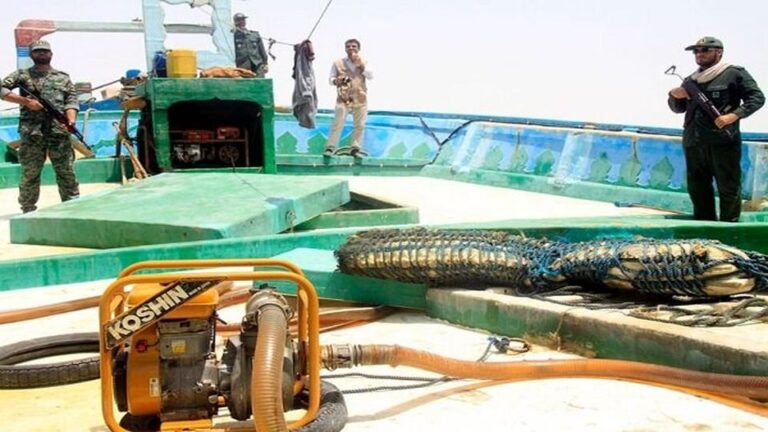
Iran’s IRGC, the terrorist-designated Islamic Revolutionary Guard Corps, has seized the crew and cargo of a foreign ship that was carrying 11 million liters (2.9m gallons) of fuel, according to a local judiciary official.

The judiciary chief of the southern province of Hormozgan, Mojtaba Ghahremani, announced on Monday that Iran’s IRGC naval force confiscated the unnamed vessel in the waters of the Gulf.

“The captain and crew of this foreign tanker are also detained as investigations and legal procedures are being completed,” he said in a video message released by the semi-official Tasnim news website, while flanked by IRGC and judiciary personnel on the ship’s deck.

The nationality of the vessel or its crew was not announced, but Ghahremani said the value of its cargo amounted to 2.2 trillion rials (about $6.6m).

Tasnim also released a clip that showed the fuel on the tanker.

“All vessels which have delivered fuel to the violating tanker will also be subject to prosecution,” the judiciary official said.

Ghahremani said the arrested crew will be slapped with a financial penalty of up to 10 times the value of the confiscated cargo in addition to receiving jail sentences, while the vessel will be seized in favor of the Iranian government.

He also described the bust as a “major blow” to organized fuel operations in Iran’s southern waters, which is believed to be lucrative due to Iran’s allocation of fuel subsidies and the country’s cheap currency.

Iran’s IRGC has in recent years ramped up its aggression in the south of the country and from time to time announces seizures of cargo carried by foreign vessels while mostly refraining from disclosing which countries the vessels and crew belong to.

But the quantity of the confiscated fuel announced on Monday appeared to be larger than usual. By comparison, another vessel that was announced seized last month was said to be carrying 757,000 liters (200,000 gallons) of fuel.

Crack down on Iranian arms smuggling in Yemen

0

Yemeni forces, in cooperation with the Arab coalition, have successfully blocked Iranian arms smuggling attempts to the Houthis via Yemeni ports and border crossings, curbing Iran’s support for its proxies, officials said.

Yemeni and Arab coalition operations in al-Mahra province recently netted a number of weapons and suspected drug smugglers with links to the Houthis and Iran.

On October 10, security services in al-Mahra referred 16 individuals to the specialised criminal prosecution in Hadramaut province in connection with charges of smuggling weapons and bringing in drugs.

Of this number, a seven-member Houthi cell was charged with smuggling weapons from Iran to Yemen, and six Iranian sailors were accused of bringing in narcotic substances. Drug traffickers and dealers also were charged.

These arrests and court summonses come as a direct result of operations carried out by Yemeni forces in co-operation with Arab coalition forces, said Deputy Minister of Legal Affairs and Human Rights Nabil Abdul Hafeez.

These efforts aim “to contain Iranian smuggling and communication in support of terrorism, whether with weapons or drugs”, he told Al-Mashareq.

Yemeni forces and allied forces operating in the region have “succeeded in clamping down on the smuggling operations carried out by sea and by land by the Islamic Revolutionary Guard Corps (IRGC) to support its Houthi militias”, he said.

Deputy Minister of Justice Faisal al-Majeedi told Al-Mashareq the IRGC has been engaged in smuggling “weapons and war technology to the Houthis via various sea and land routes”.

Certain Iranian ports, including Bandar Abbas, are known to have been used for smuggling arms to the militia, he said.

The IRGC relies on a network of pirates and duped seafarers in the Gulf region for its smuggling operations, in a bid to circumvent the arms embargo on the Houthis that was imposed by the UN Security Council in April 2015.

The IRGC and its proxies, including the Houthis, Hizbullah and affiliated militias in Syria and Iraq, depend entirely on the war economy, Abaad Centre for Strategic Studies director Abdul Salam Mohammed said.

Iran is living in a war economy, and is using all illegal tools at its disposal to make money

VIDEO: Iranian mother Shirin Alizadeh shot by Islamic Republic’s militiamen

A video released by anonymous users on October 26 show the last moments of Shirin Alizadeh, an Iranian mother who sits on the passenger side of a car and films protests on a street in the city of Salman Shahr, capital of Abbasabad county, Iran, in October 2022. The woman is killed by gunshots fired by security forces of Islamic Republic of Iran.

In the video, Shirin Alizadeh can be heard saying, “Don’t let them hit the car. They are shooting in the air.” Then she excitedly adds: “She was hit. They shot the girl.” Her last sentence is: “They killed her, the girl was killed.” Finally, she is hit and her phone falls.

The human rights group Hengaw said police shot dead a male protester in Mahabad and another in Sanandaj. The BBC has not verified this.

Widespread unrest has rocked Iran since Kurdish Iranian woman Mahsa Amini died in police custody 40 days ago.

A cemetery near Kharamabad was also a flashpoint for Thursday’s protests.

Demonstrators gathered at the cemetery to mourn another young woman, Nika Shakarami, who disappeared soon after Amini’s death and has become another symbol of the protest movement.

Videos from Kharamabad showed protesters chanting anti-state slogans including “down with the dictator”, a reference to Iran’s supreme leader, Ayatollah Khamenei.

Overnight, tens of thousands of people took to the streets in major cities, as well as other places where demonstrations had subsided recently.

It is the most serious challenge to the Islamic republic since its inception.

The Islamic Republic of Iran has seen protests before. But not like this.

The authorities are still trying to dismiss and discredit them as “rioters influenced by foreigners”.

It’s hard to square that with extraordinary images of teenage schoolgirls rejecting obligatory headscarves, of women of all ages walking bare-headed in public spaces.

It’s hard, too, to see Iran returning to days where so-called morality police can police women’s dress the way they’ve done for decades.

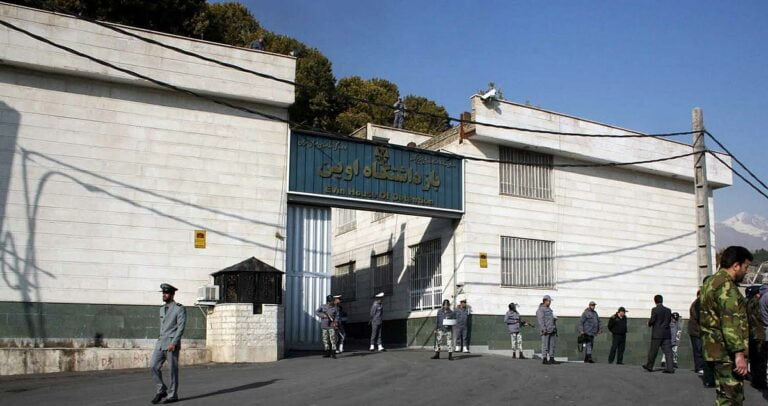
Extrajudicial execution of inmates in Iran Evin prison

Two political prisoners who were held in Tehran’s notorious Evin prison during a deadly incident at the detention facility earlier this month have said that security forces shot live bullets at inmates, according to their mother.

In a video posted on Instagram, Toran Kabiri said she was allowed to meet with her sons Kaveh and Yashar on Monday, 24 October, nine days after a fire and riot broke out at Evin prison.

The two brothers were held in the prison’s ward 8 before they were transferred to Gohardasht prison after the compound was hit by what Toran called a “human tragedy.”

Details remain scarce over what happened on the evening of October 15 in ward 7 of the secretive compound known for housing political prisoners and for the ill-treatment of inmates. But evidence suggests the blaze was intentional and meant to cover up the shooting of prisoners.

Videos from the scene shared online showed flames and smoke at the site, while gunshots could be heard amid the sound of an alarm.

The judiciary’s Mizan news agency described the incident as a “fight between inmates and a fire,” though it offered no evidence. It said eight prisoners had died in the tragedy, while IranWire sources put the death toll at 13. Mizan also claimed that all of those killed had been imprisoned on theft charges.

Sources inside the prison have told IranWire that wards 7 and 8, where common criminals were held, witnessed a riot as reinforcements arrived at the scene.

The authorities have been using Evin prison for detaining, interrogating and jailing political prisoners. The facility holds many detainees facing security-related charges, including dual citizens. Hundreds of the protesters arrested in recent weeks for their participation in the ongoing anti-government protests have been sent to the detention center.

Kaveh and Yashar Kabiri saw officers shooting live bullets at prisoners who were falling on the ground, their mother said.

The brothers also told her that prisoners held in Ward 8 managed to break the locks of their cells and get out after officers fired tear gas inside the cells.

She said that security forces forced more than 2,000 prisoners of wards 7 and 8 to stand in the prison’s closed stadium after being beaten by soldiers and prison civilian personnel.

The ground was so hot that “the prisoners were forced to urinate on each other,” said Toran Kabiri, herself a former political prisoner.

“The conditions were so bad that even if the older people wanted to sit for a while, they did not allow them to sit and subjected them to terrible insults and humiliation.”

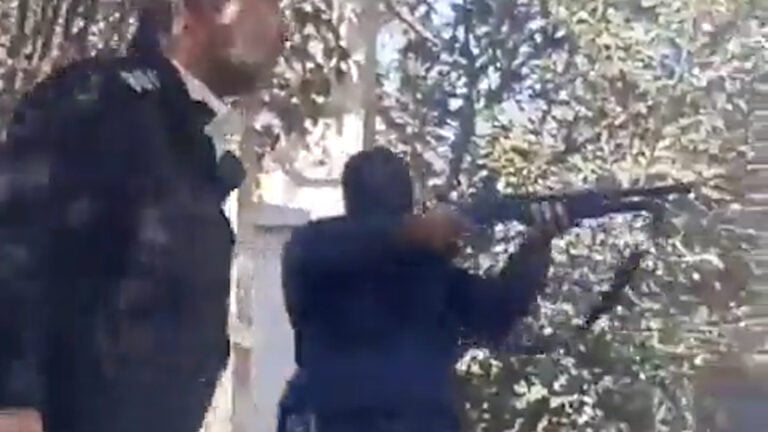
Video shows Iranian government forces shooting civilians

0

A video recorded on the 26th of October 2022 shows Iranian government forces shooting unarmed civilians on the streets of Saqez.

Thousands of mourners gathered outside the grave of Jina Mahsa Amini, whose death sparked nationwide protests, as Wednesday marked the end of the traditional mourning period in Islam.

Demonstrators made their way to the grave in the city of Saqez in Kurdistan province on foot, after Iranian government forces blocked the routes leading to the city. Others used their vehicles to navigate alternative routes.

Government forces later opened fire on the protesters, according to a rights monitor and a witness on the ground.

“Security forces have shot tear gas and opened fire on people in Zindan square, Saqez city,” Hengaw, a Norway-based group tweeted without specifying whether there were any dead or wounded.

The semi-official ISNA news agency characterized the crackdown as clashes between Iranian government forces and protesters, adding that the internet had been cut for security reasons.

Dozens of mourners chanted “woman, life, freedom” and “death to the dictator” in the Aichi cemetery, the French news agency AFP reported, citing videos shared online.

Meanwhile, businesses in Saqez, and other Kurdish cities like Sanandaj, Divandarreh, Marivan and Kamyaran went on strike on Wednesday, the local Hengaw human rights organization said. There also unconfirmed reports of a strike at a Tehran refinery.

On Tuesday, students protested at multiple universities across Iran, defying a crackdown as tensions mounted on the eve of the planned events to mark 40 days since Amini’s death.

Authorities closed schools and universities in Kurdistan province on Wednesday, citing a “wave of influenza,” state media reported.

Activists said on social media that protests around Tehran’s medical school on Wednesday turned violent, when security forces used tear gas to disperse protesters.

At least 141 demonstrators have been killed in the protests gripping Iran since Amini’s death on September 16, as per local rights groups. Some groups are citing a death toll as high as 250.

Iran security forces kidnapping woman amid protests

0

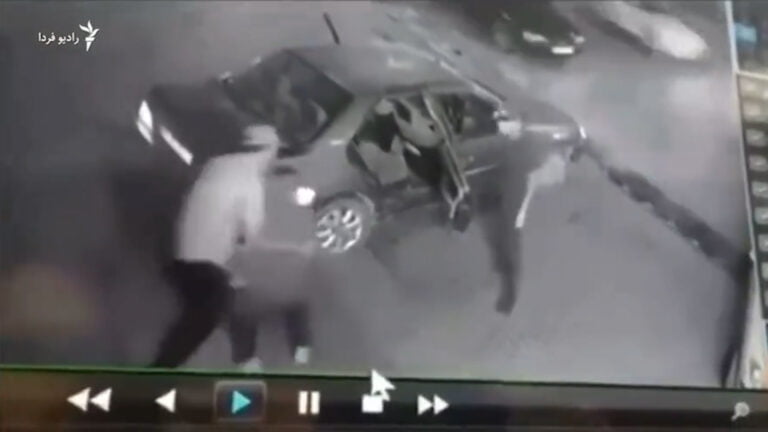
Iran security forces wearing plain clothes have been caught kidnapping a female protester on video in Iran. On October 22, in Ekbatantown in Tehran.

More than 300 people have been indicted over Tehran protests sparked by the death of Mahsa Amini, including four charged with an offence that can carry the death penalty, Iran’s judiciary said today.

The Islamic republic has witnessed a wave of protests over the death of 22-year-old Amini on Sept 16 after her arrest by the morality police in Tehran for allegedly violating the country’s strict dress code for women.

The street violence has led to dozens of deaths, mostly among demonstrators but also among Iran security forces, and hundreds of protesters have been arrested.

Tehran prosecutor Ali Salehi said that indictments have been issued for 315 people on charges of “congregating and colluding with the intention of acting against the country’s security”, “propaganda against the system” and “disturbing public order”, the judiciary’s Mizan Online news website reported.

He added that “indictments were also issued for four rioters on charges of moharebeh,” which means ‘war against God’, a charge that can carry a death sentence.

They are accused of “using a weapon to terrorise the society and people, injuring security officers, setting fire to and destroying public and government property with the intent to disrupt the country’s security and confronting the holy system of the Islamic republic of Iran,” Salehi added.

Meanwhile, Iran’s judiciary chief Gholamhossein Mohseni Ejei announced that the processing of cases related to protesters “has already started,” he was quoted as saying by Mizan Online.

“The trial of those who committed crimes… and were affiliated with counter-revolutionary elements inside and outside and with foreigners will be held carefully and according to the law, and these people will be punished according to the law,” he stressed.

The judiciary had previously announced on Oct 12 that more than 100 people had been charged in Tehran province and Hormozgan province over the unrest.

Iranian instructors train Russian troops in Belarus

0

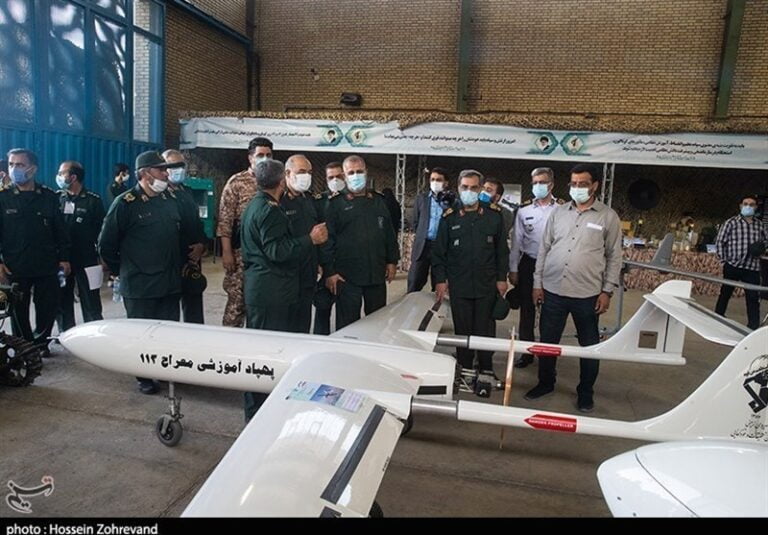
Iranian instructors from the Islamic Revolutionary Guard Corps (IRGC) were seen in Belarus training Russian troops and coordinating launches of Iranian-made drones, a report said on Sunday.

According to the Ukrainian National Resistance Center, “a group of Iranian instructors, officers of the IRGC, who are under the highest protection of the Russian National Guard and FSB (Federal Security Service) officers” was spotted in the village of Mykulichi, in the Gomel region, which borders Ukraine in the east.

“According to information from Belarusian partisans, it was these instructors who coordinated the launches of the “Shahed-136” UAVs at infrastructure facilities in the Kyiv region and the northern and western regions of Ukraine,” the report said, adding that Russian troops have taken control of major air bases in western Belarus and use them to carry out attacks on Ukrainian territory.

The center has previously reported that Iranian instructors were seen in the occupied region of Kherson which is currently being evacuated by the Russian authorities amid the Ukrainian counter-offensive. Last week, U.S. officials also confirmed the center’s reports on Iranian personnel being deployed to the annexed Crimea peninsula.

Earlier in October, Belarusian President Alexander Lukashenko announced that Minsk and Moscow will deploy a joint military task force in response to what he called an “aggravation of tension” on the country’s western borders. His statement came shortly after the explosion on the Crimea bridge that provoked Russian troops to strike Ukrainian cities using Iranian-made kamikaze drones, which Tehran has denied.

A senior Ukrainian official confirmed to The New York Times, that Israel is sharing intelligence with Ukraine on Iranian drones after Jerusalem refused last week to provide Kyiv with air defense systems, avoiding direct confrontation with Russia.

Video of Iranian girl shot by security forces spreads online

0

Ghazaleh Chalabi , a 32 year old Iranian girl, was filming the protests with her mobile phone in Iran.

She was killed by a direct bullet fired by the Islamic Republic regime’s security forces.

Her last words were “Don’t be afraid we are together” before getting shot in Iran’s Amol city.

It all started with the death of Mahsa Amini, a 22-year-old Iranian girl arrested by morality police in Tehran on 13 September for allegedly violating Iran’s strict rules requiring women to cover their hair with a hijab, or headscarf.

There were reports that officers beat her head with a baton. The police said she suffered a heart attack. To support their claim, authorities released footage of Ms Amini collapsing in a police station, but the clip – along with images of her in a coma – enraged ordinary Iranians.

The first protests took place after Ms Amini’s funeral in the western city of Saqqez, when women ripped off their headscarves in solidarity.

Since then the protests have swelled, with demands from more freedoms to an overthrow of the state.

Videos have shown them defiantly setting their headscarves on fire and cutting their hair in public to chants of “Woman, life, freedom” and “Death to the dictator” – a reference to the Supreme Leader, Ayatollah Ali Khamenei.

While some women have publicly protested against the hijab before, cases have been isolated and dealt with severely. There has been nothing compared to the current scale.

In an unprecedented show of support, Iranian girls and students have also been demonstrating in playgrounds and on the streets.

Men and teenage boys have also participated in large numbers and backed the women’s demands.

They have played down the protests and tried to suppress them with force.

Ayatollah Khamenei has accused the United States and Israel, Iran’s arch-enemies, of orchestrating “riots” – dismissed by critics as fabricated.

The BBC and other independent media are barred from reporting from inside Iran, making it difficult to verify what is claimed by state media. Social media, activists and human rights groups help provide a picture, although authorities have disrupted internet and phone services.

Iran Human Rights, a Norway-based group, has said at least 201 people, including 23 children, have been killed by security forces.

Security forces have denied killing peaceful demonstrators, but they have been filmed firing live ammunition on the streets.